If you've been researching DC fast-charging options for a road trip or daily top-ups, you may have encountered the term Oasis Supercharger and wondered how it fits into the broader EV charging landscape. Oasis-style Supercharger hubs — high-power DC fast-charging stations designed to deliver rapid 10–80% charges — represent one tier of the public charging ecosystem. This guide breaks down exactly what these stations offer, how they compare to home Level 2 charging, what connectors you'll need, and what you'll actually pay per mile.
Understanding Charging Levels: From Level 1 to DC Fast
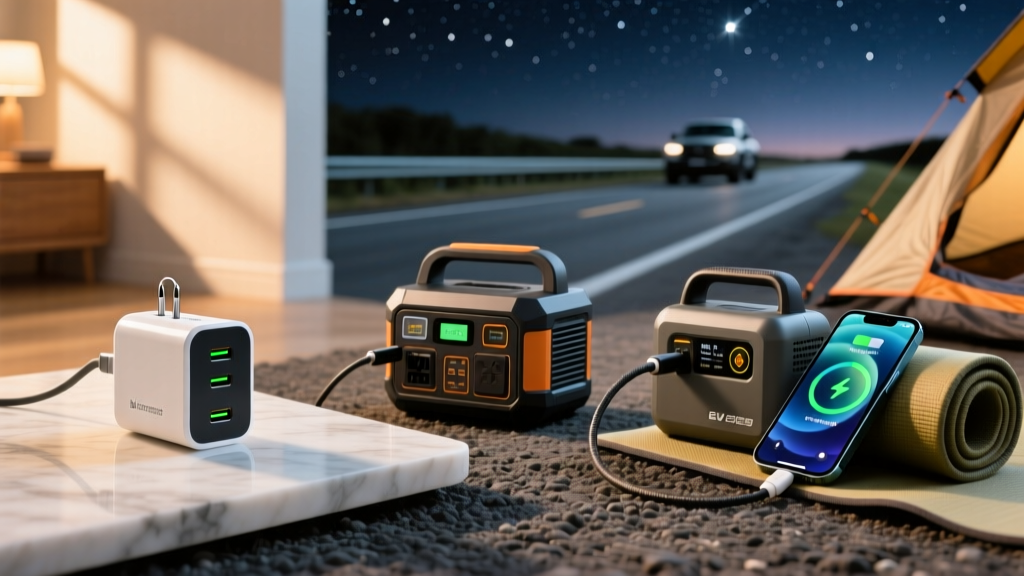
Before evaluating any public network, it's essential to understand the three charging tiers and how much range each adds per hour. The distinction between kW (power, or charge rate) and kWh (energy, or battery capacity) is critical here — kW tells you how fast energy flows into your battery, while kWh tells you how much total energy your battery stores.
| Level | Voltage | Power (kW) | Miles of Range Added per Hour | Typical Use Case |
|---|---|---|---|---|
| Level 1 (120V AC) | 120V | 1.0–1.4 kW | 3–5 mi/hr | Overnight trickle; PHEVs or low-mileage drivers |
| Level 2 (240V AC) | 240V | 7.2–19.2 kW | 20–60 mi/hr | Home daily charging; workplace; destination |
| DC Fast Charge | 400–800V DC | 50–350 kW | 150–1,000+ mi/hr (peak) | Road trips; rapid top-ups; Oasis Supercharger hubs |
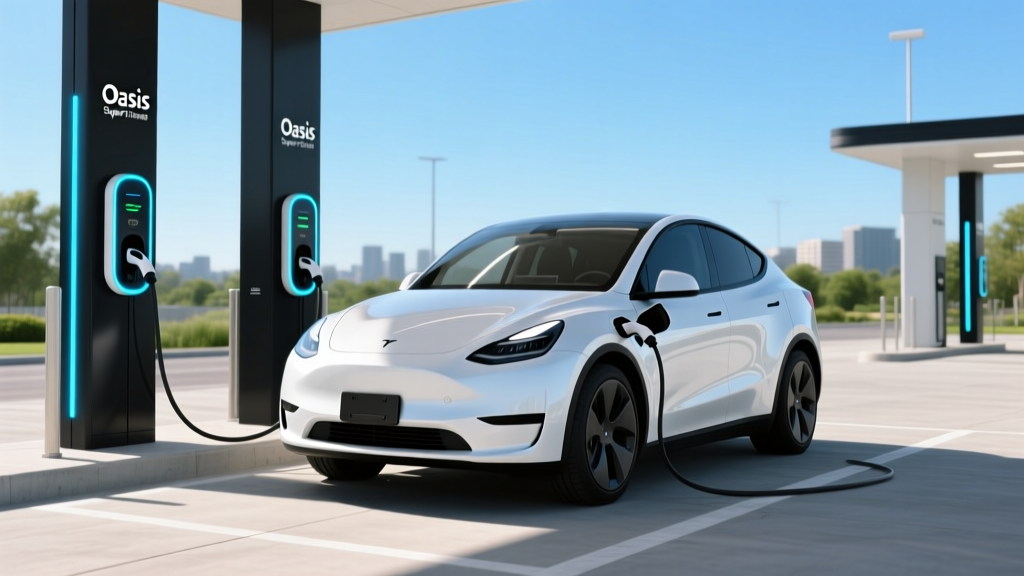
An Oasis Supercharger station falls squarely in the DC fast-charge category. Depending on the specific stall generation and your vehicle's onboard charge acceptance, you can expect peak rates between 150 kW and 250 kW — enough to add roughly 150–200 miles of range in a 20-minute session for a mid-size EV like the Hyundai Ioniq 5 or Tesla Model Y.
How Fast Will Each Charging Level Add Range?
Real-world charging speed depends on three variables: the station's maximum kW output, your vehicle's peak charge acceptance rate, and the battery's state of charge (SoC). Batteries charge fastest between roughly 10% and 50% SoC, then taper significantly above 80% to protect cell longevity — this is known as the charge curve taper.
Here's what typical 10–80% charging sessions look like across common battery sizes:
| Battery Size (kWh usable) | Example Vehicles | At 150 kW Peak | At 250 kW Peak | At 350 kW Peak |
|---|---|---|---|---|
| 58 kWh | VW ID.4 (Standard) | ~28 min | ~22 min | ~18 min* |
| 77 kWh | Tesla Model Y LR, Ford Mustang Mach-E ER | ~32 min | ~25 min | ~20 min* |
| 84 kWh | Hyundai Ioniq 5 (800V architecture) | ~30 min | ~18 min | ~18 min |
| 100 kWh | Tesla Model S, Rivian R1S (Max Pack) | ~40 min | ~30 min | ~24 min* |
*Vehicles must support the higher charge rate; many cap at 250 kW even on 350 kW stalls. Hyundai/Kia E-GMP vehicles sustain higher rates on 800V architecture.
At an Oasis Supercharger hub delivering 150–250 kW, plan for 20–35 minute sessions to go from 10% to 80%. The final 80–100% top-off can take as long as the 10–80% session due to taper — a key reason road-trippers typically charge to 80% and move on.
Connector Compatibility: NACS, CCS1, and CHAdeMO
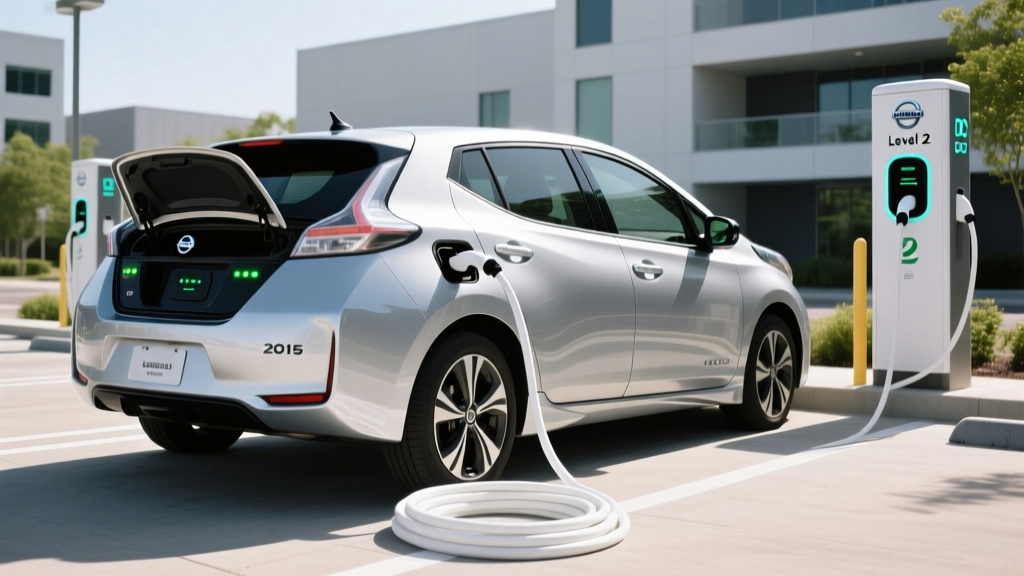
The connector landscape has shifted dramatically. As of the 2025–2026 model years, nearly every major automaker — Ford, GM, Rivian, Volvo, Hyundai, BMW, and others — has adopted the North American Charging Standard (NACS), originally developed by Tesla. CCS1 remains on many 2022–2024 vehicles, and CHAdeMO is largely legacy (Nissan Leaf).
| Connector | Brands Using It (Native) | Adapter Needed for Oasis Supercharger? |
|---|---|---|
| NACS (Tesla-style) | Tesla (all), Ford (2025+), GM (2025+), Rivian (2025+), Hyundai (2026+), Volvo/Polestar (2025+) | No — native plug |
| CCS1 | Hyundai/Kia (2024 and earlier), VW ID.4 (2024 and earlier), BMW iX/i4, older Ford/GM EVs | Yes — NACS-to-CCS adapter or CCS-equipped stall required |
| CHAdeMO | Nissan Leaf (legacy) | Yes — limited adapter availability; seek CHAdeMO stations |
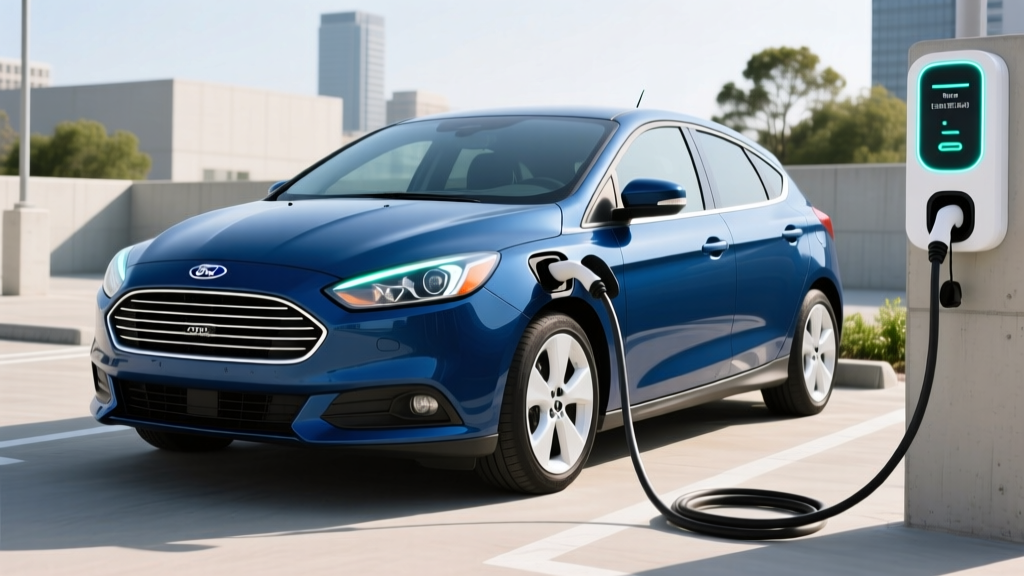
If you drive a CCS1-equipped EV, confirm that the Oasis Supercharger location offers CCS cables or that you carry a certified NACS-to-CCS adapter (such as the Ford-provided adapter or aftermarket options from Lectron or A2Z). Adapters rated for 250 kW DC are now widely available for $150–$250.
How Much Does Charging Cost Per Mile vs. Gas?
Charging cost varies enormously depending on whether you're charging at home on off-peak utility rates, at a public Level 2 station, or at a DC fast charger like an Oasis Supercharger. Here's a realistic breakdown using a 2026 Tesla Model Y Long Range (approximately 3.5 miles per kWh efficiency) as a baseline:
| Scenario | Rate | Cost per kWh | Cost per Mile |
|---|---|---|---|
| Home Level 2 (off-peak utility rate) | $0.08–$0.14/kWh | $0.11 avg | $0.031 |
| Home Level 2 (standard rate) | $0.12–$0.22/kWh | $0.17 avg | $0.049 |
| Public Level 2 (workplace, mall) | $0.20–$0.40/kWh | $0.30 avg | $0.086 |
| DC Fast Charge (Oasis Supercharger / public) | $0.30–$0.55/kWh | $0.42 avg | $0.12 |
| Gasoline (30 MPG combined, $3.40/gal) | $3.40/gal | — | $0.113 |
The takeaway: home charging is almost always cheaper than gas, often by 60–75%. DC fast charging at public rates is roughly cost-competitive with gasoline on a per-mile basis — you're paying for speed and convenience, not savings. For road trips, budget roughly $0.10–$0.14 per mile at DC fast chargers. According to fueleconomy.gov, the average EV achieves 100–130 MPGe combined, making home charging the clear economic winner for daily driving.
Home Level 2 Charging: Installation Requirements and Costs
Most EV owners do 80–90% of their charging at home on a Level 2 (240V) circuit. Installing a dedicated home charger is the single highest-impact upgrade you can make for EV ownership — but costs vary widely depending on your electrical panel, the distance from panel to charger location, and local permitting.
Electrical Requirements
A standard Level 2 home charger requires a dedicated 240V circuit, typically rated at 40A or 50A. The National Electrical Code (NEC) requires that continuous loads (like EV charging) not exceed 80% of the circuit's rated capacity. So a 40A circuit delivers up to 32A (7.7 kW) to the vehicle, and a 50A circuit delivers up to 40A (9.6 kW).
Homes with a 100A main panel may need a panel upgrade to 200A to accommodate an EV charger alongside existing loads (HVAC, electric range, dryer). This is one of the most common — and most expensive — surprises for older homes.
| Component | Typical Cost Range | Notes |
|---|---|---|
| Level 2 Charger (equipment) | $300–$700 | Hardwired or NEMA 14-50 plug; 32A–48A |
| Electrician labor (standard install) | $500–$1,500 | Short run from panel, no panel upgrade |
| Electrician labor (complex install) | $1,500–$3,500 | Long conduit run, trenching, sub-panel |
| Electrical panel upgrade (100A → 200A) | $1,500–$3,000 | Required for older homes; varies by region |
| Permit and inspection | $50–$300 | Required in most jurisdictions; varies by city/county |
| Total (simple install, no panel upgrade) | $850–$2,200 | Most newer homes with 200A service |
| Total (with panel upgrade) | $2,500–$6,500 | Older homes, 100A service |
Always hire a licensed electrician and pull the required permits. Unpermitted electrical work can void homeowner's insurance and create fire hazards. The IRS residential clean energy credit (IRC §25C) may cover up to 30% of charger equipment and installation costs (capped at $1,000 for EV supply equipment) — consult a tax professional for eligibility.
What Electrical Upgrades Might I Need?
Beyond a panel upgrade, you may need:
- Dedicated circuit breaker: Your charger must have its own breaker — it cannot share with other appliances.
- NEMA 14-50 outlet or hardwired connection: Plug-in units offer portability; hardwired units allow higher amperage (48A+) and avoid GFCI breaker nuisance trips common with some 14-50 installations.
- GFCI protection: NEC 2020+ requires GFCI protection for outdoor receptacles; some EV chargers have built-in GFCI, which can conflict with GFCI breakers. Hardwiring avoids this issue.
- Outdoor-rated equipment: If your charger is mounted outside, it must carry a NEMA 4 or IP65 rating for weather resistance.
Recommended Home Level 2 Chargers
The right home charger depends on your electrical capacity, connector needs, and whether you want smart scheduling features. Here are three proven options for 2025–2026:
ChargePoint Home Flex (NACS or CCS)
- Power output: Up to 12 kW (50A) on a 60A circuit; adjustable down to 16A
- Connector: Available in NACS and CCS1 configurations
- Cable length: 23 feet
- Smart features: Wi-Fi, app-based scheduling, Alexa integration, energy tracking
- Price: ~$550–$650
- Best for: Flexible amperage adjustment for older panels; strong app ecosystem
Tesla Wall Connector (NACS)
- Power output: Up to 11.5 kW (48A) on a 60A circuit
- Connector: NACS native; CCS adapter required for non-Tesla EVs
- Cable length: 24 feet
- Smart features: Wi-Fi, OTA updates, Power Sharing (link multiple units), load management
- Price: ~$475
- Best for: Tesla owners; best value for NACS-native vehicles
Emporia Vue Level 2 Charger (NACS or J1772/CCS)
- Power output: Up to 11.5 kW (48A) on a 60A circuit
- Connector: NACS or J1772 (CCS1 combo)
- Cable length: 24 feet
- Smart features: Wi-Fi, solar integration with Emporia Vue energy monitor, time-of-use scheduling, V2H-ready
- Price: ~$400–$450
- Best for: Solar homeowners wanting integrated energy management; budget-friendly smart charger
Oasis Supercharger and Public DC Fast Charging: What to Expect
Public DC fast-charging hubs — including Oasis Supercharger-style stations — typically offer stalls rated at 150 kW, 250 kW, or in newer deployments, 350 kW. Pricing models vary: some networks charge per kWh ($0.30–$0.55/kWh), while others use per-minute billing (less transparent and often more expensive for slower-charging vehicles).
When planning a stop at a high-power DC hub:
- Precondition your battery: Most EVs (Tesla, Hyundai/Kia E-GMP, BMW) warm the battery to optimal temperature when you navigate to a charger. This can improve peak charge rates by 20–40% in cold weather.
- Arrive at 10–20% SoC: Charging speed is fastest at low SoC. Arriving at 50%+ means you'll hit the taper zone almost immediately.
- Check stall power ratings: Not all stalls at a hub are equal. A "V3" or "V4" stall may deliver 250 kW, while older units at the same site cap at 150 kW. The station's app or display typically shows max kW per stall.
- Expect real-world speeds below peak: A vehicle rated for 250 kW peak may sustain that rate for only 5–10 minutes before tapering. Average power across a 10–80% session is typically 60–75% of the peak number.
Safety, Code, and Best Practices
Whether you're installing a home charger or using public infrastructure, safety fundamentals don't change:
- Dedicated circuit: Never share a circuit between your EV charger and another major appliance. The continuous-draw nature of EV charging generates sustained heat.
- Proper wire gauge: A 48A charger on a 60A circuit requires 6 AWG copper wire minimum; longer runs may need 4 AWG to prevent voltage drop.
- Torque-rated connections: NEMA 14-50 receptacles must be torqued to spec — loose connections are a leading cause of melted outlets in EV charging. Many electricians now recommend hardwiring over 14-50 outlets for this reason.
- Outdoor rating: Any outdoor charger must be rated NEMA 4 (splash-resistant) or IP65+. Check that cable management prevents tripping hazards and connector exposure to standing water.
- Utility notification: Some utilities require you to notify them before installing a Level 2 charger, especially if you're on a time-of-use (TOU) rate plan. Many utilities offer rebates of $200–$500 for smart charger installation — check with your provider.
Frequently Asked Questions
How much does it cost to install a home EV charger?
A straightforward Level 2 installation (short wire run, no panel upgrade) typically costs $850–$2,200 including equipment, electrician labor, and permit. If your home has a 100A electrical panel and needs an upgrade to 200A, total costs can reach $2,500–$6,500. Always get 2–3 quotes from licensed electricians and verify they have EV charger installation experience.
How fast will each charging level add range?
Level 1 (120V) adds 3–5 miles per hour — suitable for PHEVs or very low daily mileage. Level 2 (240V, 32–48A) adds 20–45 miles per hour and fully recharges most EVs overnight. DC fast charging at 150–250 kW adds 150–250+ miles in 20–30 minutes, making it practical for road trips. Your vehicle's charge acceptance rate is the limiting factor — a car capped at 150 kW won't charge faster on a 350 kW stall.
Which connector/charger is compatible with my EV?
For 2025–2026 model-year vehicles, check whether your EV uses NACS (Tesla, Ford, GM, Rivian, Hyundai 2026+) or CCS1 (most 2022–2024 non-Tesla EVs). CHAdeMO is limited to the Nissan Leaf and a few older models. If your EV has CCS1 and you want to use NACS-equipped stations (including many Oasis Supercharger-style hubs), you'll need a NACS-to-CCS adapter rated for DC fast charging.
How much does charging cost per mile vs. gas?
Home charging on off-peak rates averages $0.03–$0.05 per mile — roughly 60–75% cheaper than gasoline at $3.40/gallon and 30 MPG. Public DC fast charging averages $0.10–$0.14 per mile, which is roughly comparable to gas. The economic advantage of EV ownership depends heavily on home charging access. See fueleconomy.gov for MPGe ratings on specific models.
What electrical upgrades might I need?
The most common upgrade is a 200A electrical panel (replacing an older 100A panel), which costs $1,500–$3,000. You'll also need a dedicated 40A–60A breaker, proper wire gauge (6 or 4 AWG copper), and a permit. Homes with limited panel space may need a sub-panel installed. Consult a licensed electrician for a load calculation before purchasing equipment.
Is an Oasis Supercharger station the same as a Tesla Supercharger?
Not exactly. "Oasis Supercharger" typically refers to high-power DC fast-charging hubs that may serve multiple networks or use Tesla's open NACS standard. Since 2024, Tesla has opened portions of its Supercharger network to non-Tesla NACS-equipped vehicles via the Tesla app. However, station naming, pricing, and access protocols vary by operator. Always check the specific station's app or signage for connector availability and pricing before relying on it for a trip.
Can I use a Supercharger-style station with my CCS-equipped EV?
Yes, if the station has CCS1 cables or you carry a certified NACS-to-CCS adapter rated for DC fast charging (up to 250 kW). Adapters from Lectron, A2Z EV, and OEM providers (Ford, GM) are widely available. However, some Tesla Supercharger stalls remain NACS-only — verify CCS availability in your charging app before routing to a specific station.