The electric vehicle industry has undergone a seismic connector shift. What began as Tesla's proprietary plug has become the North American Charging Standard (NACS) — the dominant charging connector for nearly every major automaker by 2026. If you're shopping for an EV, installing a home charger, or planning road trips, understanding NACS is no longer optional. It's the single most important hardware decision in your EV ownership journey.
This guide breaks down exactly what NACS means for your charging setup at home and on the road, with precise numbers on speed, cost, and installation requirements.
What Is the North American Charging Standard (NACS)?
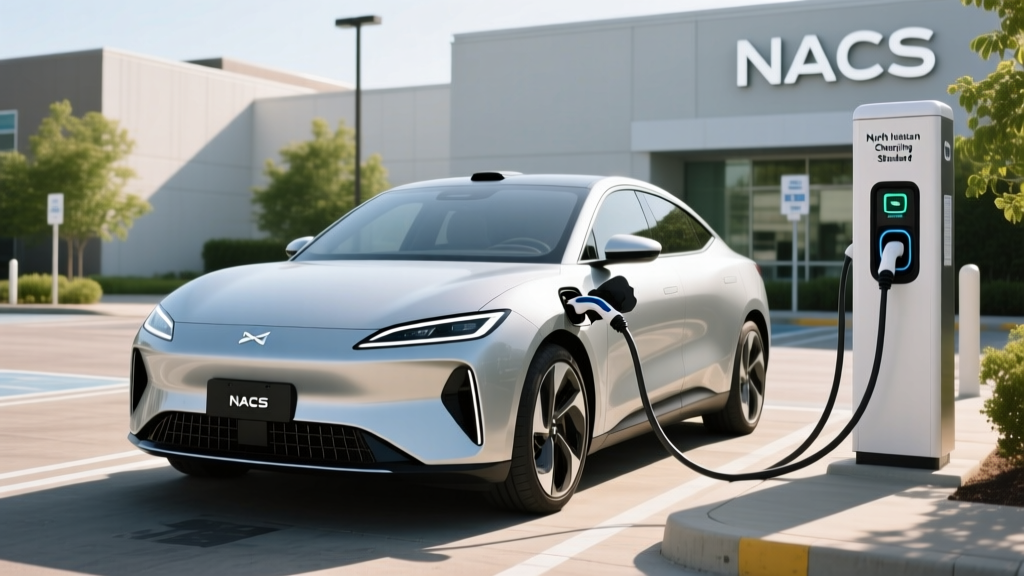
NACS is the charging connector standard originally developed by Tesla and opened to the broader industry in late 2022. By 2026, automakers including Ford, General Motors, Rivian, Hyundai, Kia, BMW, Volvo, Polestar, and Mercedes-Benz have adopted NACS as the native charging port on their new electric vehicles. Legacy CCS1-port vehicles can access Tesla's Supercharger network using a NACS adapter.
The NACS connector handles both AC Level 2 charging and DC fast charging through a single compact plug — unlike the larger CCS1 connector, which integrates separate AC and DC pins. This unified design simplifies the charging experience and reduces cable bulk.
Charging Levels Explained: Speed, Power, and Range Added
Every EV owner charges across three levels depending on location and urgency. Here's how each level performs with real-world numbers:
| Level | Voltage | Power (kW) | Miles of Range / Hour | Best Use Case |
|---|---|---|---|---|
| Level 1 | 120V AC | 1.0–1.4 kW | 3–5 mi/hr | Overnight top-off, PHEVs, low-mileage commuters |
| Level 2 | 240V AC | 7.2–19.2 kW | 25–65 mi/hr | Home daily charging, workplace, destinations |
| DC Fast Charge | 400–800V DC | 50–350 kW | 150–1,000+ mi/hr (peak) | Road trips, quick top-ups, commercial fleets |
Real-world context: A Level 2 home charger at 11.5 kW (48A on a 60A circuit) adds roughly 35–40 miles of range per hour for a mid-size EV like the Hyundai Ioniq 5 or Ford Mustang Mach-E. That means an overnight charge of 8 hours replenishes approximately 280–320 miles — more than enough for most drivers' daily needs. DC fast charging speeds vary dramatically based on battery temperature, state of charge (SoC), and the vehicle's charge curve. A 350 kW peak rate is rarely sustained; expect meaningful tapering above 80% SoC.
Connector Compatibility: NACS vs. CCS1 vs. CHAdeMO
By 2026, the connector landscape has simplified significantly, but legacy vehicles still require attention:
| Connector | Native Vehicles | Adapter Available? | Network Access |
|---|---|---|---|
| NACS (J3400) | Tesla (all), Ford F-150 Lightning/Mach-E, GM Ultium vehicles, Rivian (2025+), Hyundai/Kia (2025+), BMW, Volvo/Polestar, Mercedes-Benz | CCS1-to-NACS adapters widely available ($150–$250) | Tesla Supercharger network (20,000+ stalls), Electrify America, EVgo, ChargePoint NACS stations |
| CCS1 | Older VW ID.4, pre-2025 Hyundai Ioniq 5/Kia EV6, Ford Mach-E (pre-2025), BMW i4/iX (pre-2025), Stellantis EVs | NACS-to-CCS1 adapters available ($200–$300) | Electrify America, EVgo, ChargePoint, non-Tesla networks; Supercharger access via adapter |
| CHAdeMO | Nissan Leaf (legacy), Mitsubishi Outlander PHEV (legacy) | Limited; no direct NACS adapter for DC | Declining network; Electrify America retains some CHAdeMO stalls |
Adapter reality check: If you own a CCS1-equipped vehicle, a NACS adapter from Tesla, Lectron, or A2Z gives you access to the Supercharger network — the most reliable DC fast-charging network in North America, per Tesla's network data. However, adapter use adds a slight charging-speed penalty (typically 5–10% reduction in peak kW) and one more connection point that can introduce resistance or communication errors. For long-term ownership, a native NACS vehicle is the cleaner path.
Home Charger Installation: Electrical Requirements and Costs
Installing a Level 2 home charger is the single highest-impact upgrade an EV owner can make. Here's what's involved electrically and financially.
Electrical Requirements
A standard Level 2 home charger requires a 240V dedicated circuit — the same voltage as an electric dryer or oven. The most common configurations:
- 40A circuit / 32A continuous draw: 7.7 kW output — sufficient for most EVs with onboard chargers rated at 7.2–7.7 kW
- 50A circuit / 40A continuous draw: 9.6 kW output — matches higher-capacity onboard chargers (Tesla Model 3/Y at 11.5 kW can accept this, though won't max out)
- 60A circuit / 48A continuous draw: 11.5 kW output — the sweet spot for Tesla owners and future-proofing
- 80A circuit / 64A continuous draw: 15.3–19.2 kW — only useful if your EV supports >11.5 kW AC charging (most don't; the Ford F-150 Lightning extended-range is an exception at 19.2 kW onboard)
Panel upgrade reality: Most modern homes with 200A electrical service can accommodate a 60A EV circuit without a panel upgrade. However, older homes with 100A service, homes with multiple high-draw appliances (electric heat, dual ovens, hot tubs), or homes already near panel capacity may require a service upgrade to 200A or 400A. This adds $2,000–$5,000+ to the project and should be assessed by a licensed electrician during the initial site visit. Never skip this assessment — an overloaded panel is a fire risk.
Installation Cost Breakdown
| Component | Simple Install (panel nearby) | Complex Install (long run, conduit) | Panel Upgrade Required |
|---|---|---|---|
| Level 2 Charger (hardware) | $350–$700 | $350–$700 | $350–$700 |
| Electrician labor | $300–$600 | $800–$2,000 | $1,200–$2,500 |
| Materials (wire, conduit, breaker) | $50–$150 | $200–$600 | $200–$600 |
| Permit fee | $50–$150 | $50–$200 | $100–$300 |
| Panel upgrade (if needed) | — | — | $2,000–$5,000 |
| Total Estimated Cost | $750–$1,600 | $1,400–$3,500 | $3,850–$9,100 |
Federal incentive note: The residential clean energy credit (IRS §25D) may cover 30% of charger hardware and installation costs up to $1,000 through 2032. Additionally, many utilities offer rebates of $250–$750 for Level 2 charger installation — check with your local provider. These incentives can substantially offset the cost, especially for straightforward installations.
Safety and Code Considerations
- Dedicated circuit required: Your EV charger must have its own breaker — never share a circuit with other high-draw appliances
- GFCI protection: NEC 2023/2026 code requires Ground Fault Circuit Interrupter protection for outdoor receptacles; hardwired chargers with built-in GFCI are preferred and avoid nuisance tripping common with GFCI breakers
- Outdoor rating: If mounting outdoors, ensure the charger carries a NEMA 4 (weatherproof) rating — most major units (ChargePoint, Tesla, Emporia) are rated for outdoor use
- Cable management: Longer cables (24–25 ft) provide flexibility for parking position but require a holster or cable organizer to prevent trip hazards and UV/abrasion damage
- Hardwired vs. plug: Hardwired installations (no NEMA 14-50 receptacle) are generally safer for high-amperage circuits (48A+) and avoid the receptacle loosening and overheating issues documented with high-use 14-50 outlets
Top NACS Home Chargers: Equipment Recommendations
Here are the highest-performing NACS home chargers available in 2026, selected for reliability, power output, smart features, and value:
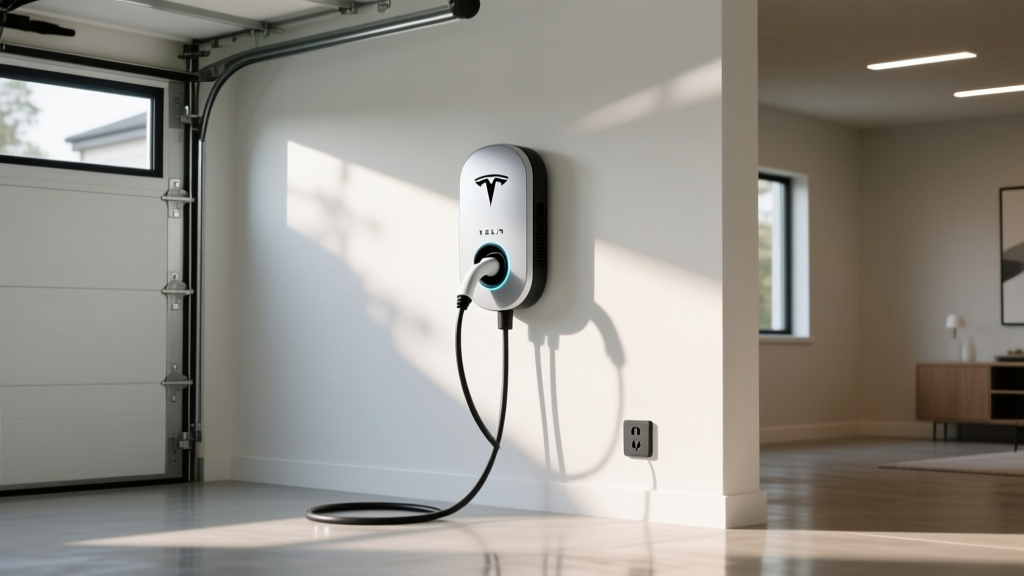
Tesla Wall Connector (NACS)
- Power output: 11.5 kW (48A) max
- Connector: Native NACS
- Cable length: 24 ft
- Smart features: Wi-Fi, OTA updates, power sharing (link up to 6 units on one circuit), Tesla app integration, access control
- Price: ~$475
- Best for: Tesla owners; excellent value-to-performance ratio
ChargePoint Home Flex (NACS)
- Power output: Up to 12 kW (50A) — adjustable via DIP switches to match circuit
- Connector: Native NACS (2025+ model) or J1772 with adapter
- Cable length: 24 ft
- Smart features: Wi-Fi, ChargePoint app with scheduling and energy tracking, Alexa integration, amperage flexibility
- Price: ~$649
- Best for: Non-Tesla NACS owners wanting robust app features and flexible amperage
Emporia Vue Smart EV Charger
- Power output: 11.5 kW (48A) max
- Connector: Available in NACS and J1772 configurations
- Cable length: 24 ft
- Smart features: Integrates with Emporia Vue home energy monitor for solar-aware charging, time-of-use optimization, detailed energy analytics
- Price: ~$399
- Best for: Solar owners and energy-monitoring enthusiasts; best value in smart chargers
Grizzl-E Smart (NACS)
- Power output: Up to 11.5 kW (48A) — adjustable
- Connector: NACS and J1772 versions available
- Cable length: 24 ft
- Smart features: OCPP-compatible (works with utility demand-response programs), adjustable amperage, rugged aluminum enclosure
- Price: ~$549
- Best for: Cold-climate and outdoor installations; built for extreme temperatures (-40°F rated)
Editor's note: Match your charger's amperage to both your EV's onboard charger capacity and your home's circuit. A Tesla Model 3 has an 11.5 kW (48A) onboard charger — pairing it with a 48A charger on a 60A circuit is ideal. A Hyundai Ioniq 5 with a 10.9 kW onboard charger won't benefit from a 64A charger; a 48A unit is the correct match.
Charging Cost: Home vs. Public vs. Gas
One of the strongest economic arguments for EVs is fuel cost savings — but the actual numbers depend heavily on where and when you charge.
| Scenario | Rate | Cost per Mile* | Annual Cost (12,000 mi) |
|---|---|---|---|
| Home — off-peak TOU rate | $0.08–$0.12/kWh | $0.024–$0.036 | $288–$432 |
| Home — standard residential rate | $0.14–$0.18/kWh | $0.042–$0.054 | $504–$648 |
| Public Level 2 (network) | $0.25–$0.40/kWh | $0.075–$0.12 | $900–$1,440 |
| DC Fast Charge (public) | $0.35–$0.55/kWh | $0.105–$0.165 | $1,260–$1,980 |
| Gasoline (28 MPG combined, $3.40/gal) | $3.40/gallon | $0.121 | $1,452 |
*Based on an EV efficiency of 3.3 miles/kWh (approximately 30 kWh/100 mi, typical for a mid-size crossover like the Tesla Model Y or Ford Mach-E). Gasoline figure based on EPA combined MPG averages for comparable ICE crossovers.
The takeaway: Home charging on an off-peak rate delivers a 3–5× cost advantage over gasoline. Even public DC fast charging at premium rates is roughly cost-competitive with gas. However, exclusive reliance on public DC fast charging eliminates most of the EV fuel-cost advantage — home charging access is the economic linchpin of EV ownership.
Charging Time Examples for Common Battery Sizes
Here's how long realistic 10–80% charges take across common EV battery sizes and charger types:
- Tesla Model Y (75 kWh usable): 10–80% at a 250 kW V3 Supercharger in ~25 minutes; at home on 11.5 kW Level 2 in ~4.5 hours
- Hyundai Ioniq 5 (77.4 kWh usable): 10–80% at a 350 kW Electrify America stall in ~18 minutes (800V architecture); at home on 10.9 kW in ~5 hours
- Ford F-150 Lightning Extended Range (131 kWh usable): 10–80% at a 150 kW DC charger in ~55 minutes; at home on 19.2 kW in ~6.8 hours (or ~11 hours on 11.5 kW)
- Chevrolet Equinox EV (85 kWh usable): 10–80% at a 150 kW charger in ~35 minutes; at home on 11.5 kW in ~5.2 hours
Charge curve reality: Peak DC fast-charge rates (e.g., 250 kW or 350 kW) are only sustained at low states of charge, typically 10–40%. Above 50% SoC, charge speed tapers significantly, and above 80%, it drops to roughly 20–40 kW to protect battery health. This is why 10–80% times are the industry-standard metric — the final 20% takes nearly as long as the first 70%.
Public NACS Charging Network: Where Can You Charge?
As of 2026, the NACS public charging footprint is the largest in North America, driven primarily by Tesla's Supercharger network opening to non-Tesla vehicles:
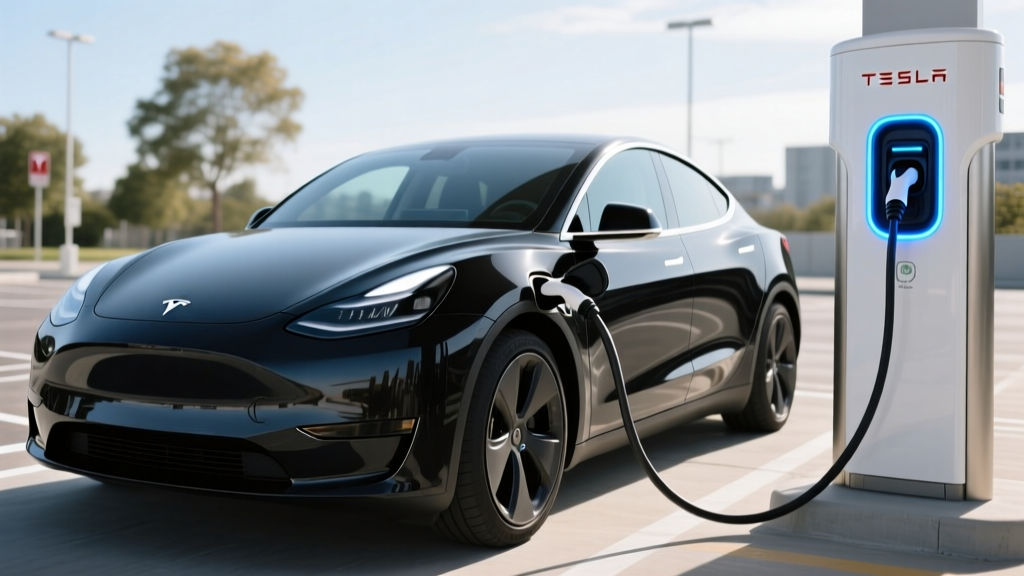
- Tesla Supercharger network: 25,000+ stalls across North America, with V3 (250 kW) and V4 (up to 350 kW) hardware. Non-Tesla NACS vehicles can charge natively; CCS1 vehicles require a NACS adapter. Reliability consistently exceeds 97% uptime, per third-party monitoring data.
- Electrify America: Adding NACS connectors to new and retrofitted stations alongside CCS1. Peak speeds up to 350 kW on Hyperchargers.
- EVgo: Deploying NACS connectors at new stations; existing CCS1 stations accessible via adapter.
- ChargePoint: Expanding NACS-equipped Express charging stations.
The U.S. Department of Energy's Alternative Fuels Data Center maintains a searchable map of all public charging stations by connector type — an essential tool for road-trip planning in transitional connector areas.
Frequently Asked Questions
How much does it cost to install a home EV charger?
A typical Level 2 home charger installation costs $750–$1,600 for a straightforward setup (electrical panel close to the garage, no upgrade needed). Complex runs with long conduit paths cost $1,400–$3,500. If your home requires a 200A panel upgrade, total costs can reach $3,850–$9,100. Federal tax credits (30% up to $1,000 under §25D) and utility rebates can offset 20–40% of the expense.
How fast will each charging level add range?
Level 1 (120V) adds 3–5 miles per hour. Level 2 (240V) adds 25–65 miles per hour depending on amperage and your EV's onboard charger. DC fast charging adds 150–1,000+ miles per hour at peak, but real-world 10–80% sessions take 18–55 minutes depending on battery size and charger power. For daily driving, Level 2 at home covers virtually all needs overnight.
Which connector or charger is compatible with my EV?
Check your vehicle's charge port. If you have a 2025+ model from Ford, GM, Rivian, Hyundai, Kia, BMW, Volvo, or Mercedes-Benz, it likely has a native NACS port. Older CCS1 vehicles can use NACS adapters to access Tesla Superchargers. CHAdeMO vehicles (Nissan Leaf) have limited adapter options and declining public infrastructure. For home charging, buy a charger with the connector that matches your vehicle natively to avoid adapter complications.
How much does charging cost per mile vs. gas?
Home charging on off-peak electricity costs roughly $0.03–$0.04 per mile — about 3–4× cheaper than gasoline at $3.40/gallon and 28 MPG combined ($0.12/mile). Public DC fast charging at $0.35–$0.55/kWh costs $0.10–$0.17 per mile, roughly matching gasoline. The economic case for EVs depends heavily on consistent home charging access.
What electrical upgrades might I need?
The most common upgrade is a new 240V circuit with an appropriately sized breaker (typically 60A for a 48A charger). Homes with older 100A electrical service, homes already near panel capacity, or homes with long wire runs from panel to garage may need a panel upgrade to 200A ($2,000–$5,000). A licensed electrician should perform a load calculation before any installation to determine if your existing panel can handle the additional draw.
Is NACS the same as a Tesla plug?
Yes — NACS originated as Tesla's proprietary connector. When Tesla opened the design in 2022 and it was subsequently formalized as SAE J3400, it became an industry standard. The physical connector on a 2026 Ford F-150 Lightning is identical to the one on a Tesla Model Y. The key difference is that non-Tesla vehicles access Superchargers through their own automaker's app or payment system rather than Tesla's native integration.
Should I hardwire my charger or use a NEMA 14-50 outlet?
For chargers at 48A or above, hardwiring is strongly recommended. High-amperage NEMA 14-50 receptacles can loosen over time with repeated plug insertion/removal, leading to overheating and potential fire risk — a documented issue in EV owner communities. Hardwired connections eliminate this failure point, often cost less (no receptacle hardware), and may be required by local code for circuits above 50A. Use a NEMA 14-50 outlet only for portable chargers at 32A or below, or if you need the flexibility to move the charger.