For years, Tesla's Supercharger network was the walled garden of EV charging — fast, reliable, and exclusive. That era is over. As of 2026, nearly every major automaker selling EVs in the United States has either adopted the North American Charging Standard (NACS) connector or provides access via adapter. But the practical question for buyers and owners remains: can non-Tesla cars use Superchargers in the USA, and what does that actually look like at the stall?
The short answer is yes — but the details matter. Your experience depends on whether your EV has a native NACS port, whether you need an adapter, which Supercharger generation you're visiting, and how your vehicle's charge curve interacts with the stall's peak output. This guide breaks down the real-world picture of non-Tesla Supercharger access, then expands into the broader home and public charging ecosystem every EV owner needs to understand.
Non-Tesla Supercharger Access: How It Works in 2026
Tesla began opening its Supercharger network to non-Tesla vehicles in late 2024 through the "Supercharger for Non-Tesla EVs" program, initially at select stations with built-in CCS-to-NACS adapters (the so-called "Magic Dock" stations). By 2026, the landscape has shifted dramatically:
- Native NACS vehicles: Ford (F-150 Lightning, Mustang Mach-E), General Motors (Cadillac Lyriq, Chevy Blazer EV, Equinox EV), Rivian (R1T, R1S), Hyundai/Kia (Ioniq 5, EV6, EV9 from 2025+), and others now ship with NACS charge ports. These plug directly into any Supercharger V3 or V4 stall with no adapter needed.
- CCS1 vehicles with adapter: Older-model EVs with CCS1 ports (Volkswagen ID.4 pre-2025, BMW iX, Hyundai Ioniq 5 pre-2025, etc.) can use Tesla's official CCS-to-NACS adapter or third-party equivalents to access Superchargers. Tesla sells its adapter for approximately $250.
- CHAdeMO vehicles: Legacy Nissan Leaf and Mitsubishi Outlander PHEV owners have very limited Supercharger compatibility. CHAdeMO-to-NACS adapters are not widely supported, and Tesla's non-Tesla program has not broadly included CHAdeMO access.
Access is managed through the Tesla app (for non-Tesla vehicles) or the vehicle's native infotainment system (for NACS-equipped models from partner automakers). Pricing for non-Tesla vehicles is typically 10–25% higher per kWh than Tesla-owner rates, though membership plans can narrow the gap.
| Vehicle Port | Supercharger Access | Adapter Needed? | Example Vehicles |
|---|---|---|---|
| NACS (native) | Full network access | No | Ford F-150 Lightning, GM Lyriq, Rivian R1T, 2025+ Ioniq 5 |
| CCS1 | Yes (via adapter or Magic Dock) | Yes — CCS-to-NACS (~$250) | VW ID.4 (pre-2025), BMW iX, pre-2025 EV6 |
| CHAdeMO | Limited / not supported | No reliable adapter | Nissan Leaf, Mitsubishi Outlander PHEV |
Understanding Charging Levels: Speeds in kW and Miles Per Hour
Before we get into home installation and costs, let's establish the three charging levels. The critical distinction: kW (kilowatts) measures power — how fast energy flows into your battery. kWh (kilowatt-hours) measures energy — the total capacity of your battery. Think of kW as the width of a hose and kWh as the size of the bucket.
| Level | Voltage | Power (kW) | Miles of Range Added Per Hour | Typical Use |
|---|---|---|---|---|
| Level 1 | 120V AC | 1.0–1.4 kW | 3–5 mi/hr | Overnight trickle; PHEVs; emergencies |
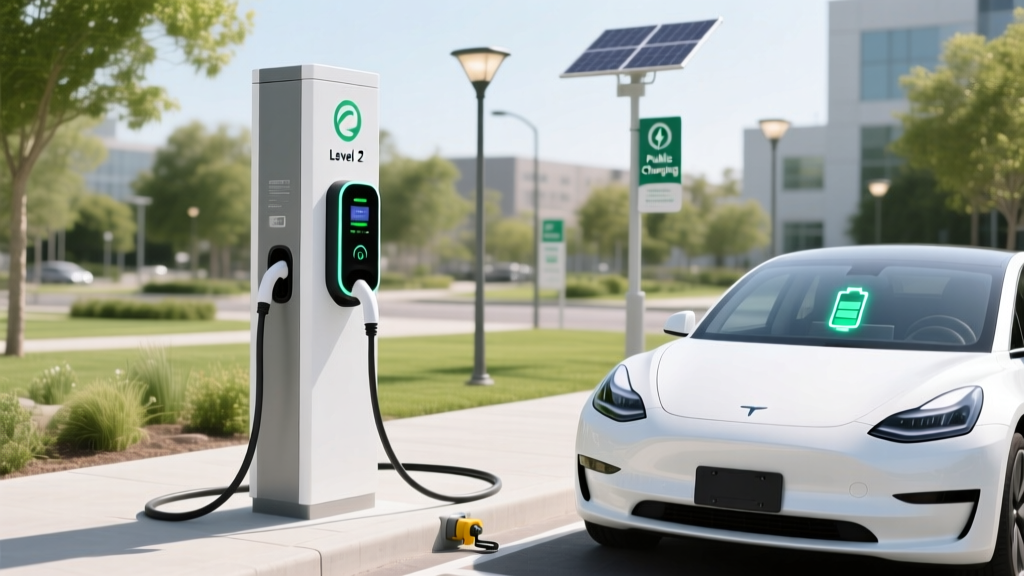
| Level 2 | 240V AC | 7.2–19.2 kW | 20–60 mi/hr | Home daily charging; workplace; hotels |
| DC Fast Charging | 400–800V DC | 50–350 kW | 150–1,200 mi/hr (peak) | Road trips; rapid top-ups; Superchargers |
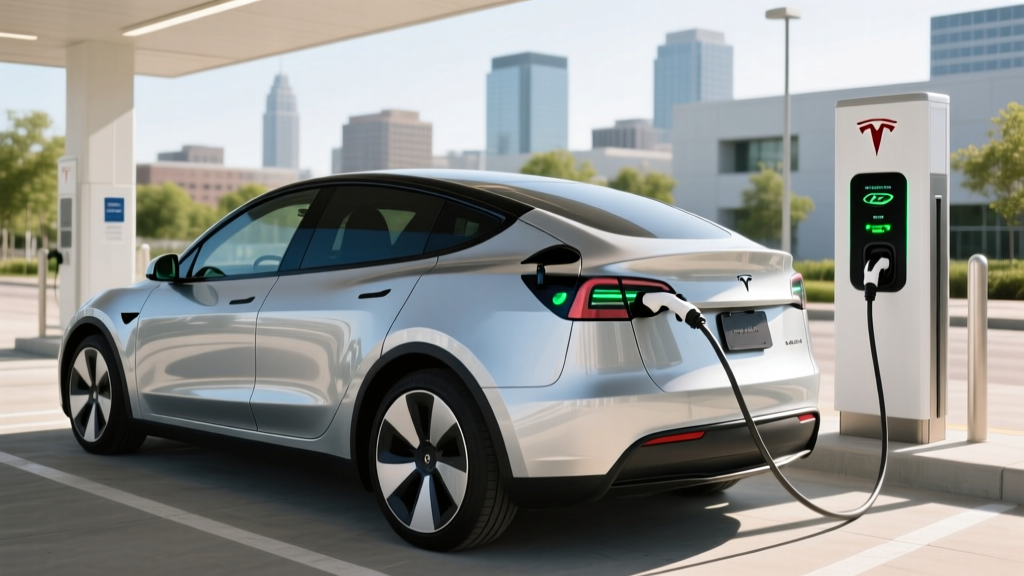
For context, a Tesla Supercharger V3 stall delivers up to 250 kW peak. A V4 stall (rolling out through 2025–2026) can deliver up to 350 kW to vehicles with 800V architectures like the Hyundai Ioniq 5 and Kia EV6. But peak kW is not sustained kW — charging curves taper significantly above 80% state of charge (SoC). A typical 75 kWh battery charging at a V3 Supercharger might see:
- 10–80% in approximately 18–25 minutes (depending on battery chemistry and preconditioning)
- 80–100% can take an additional 20–30 minutes as the charge rate drops to 20–40 kW
This is why road-trip strategy focuses on 10–80% charges. Preconditioning your battery (warming it to optimal temperature before arrival) is essential for achieving peak charge rates, especially in cold weather. Most NACS-equipped vehicles now automatically precondition when you navigate to a Supercharger.
Home EV Charger Installation: Requirements, Costs, and Panel Upgrades
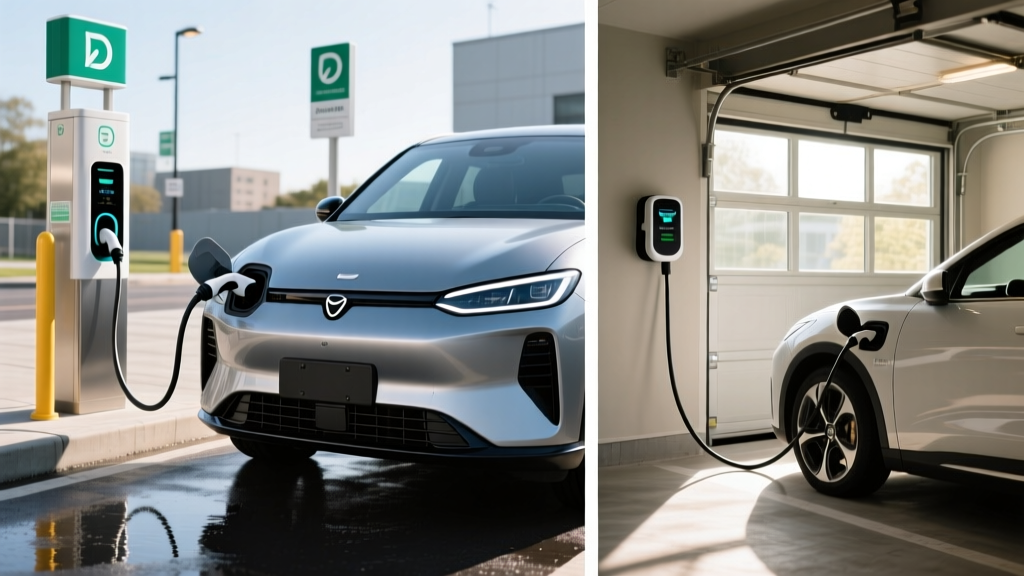
Over 80% of EV charging happens at home. A properly installed Level 2 home charger is the single biggest quality-of-life upgrade for EV ownership. But installation costs vary enormously based on your home's electrical infrastructure.
Electrical Requirements for a Level 2 Charger
A typical Level 2 home charger requires a 240V dedicated circuit on a breaker rated for at least 125% of the charger's continuous draw. Here's what that means in practice:
- 40A circuit / 32A continuous: Delivers 7.7 kW — sufficient for most EVs overnight (adds ~200 miles in 8 hours on an efficient sedan)
- 50A circuit / 40A continuous: Delivers 9.6 kW — good for larger batteries (F-150 Lightning, Rivian R1T)
- 60A circuit / 48A continuous: Delivers 11.5 kW — maximizes most onboard chargers; ideal for future-proofing
- 80A circuit / 64A continuous: Delivers 15.4+ kW — requires compatible vehicle (few accept this); significant panel load
The National Electrical Code (NEC) requires a dedicated circuit — you cannot share it with other appliances. For outdoor installations, a GFCI (ground-fault circuit interrupter) breaker is required in most jurisdictions, and the charger must carry a NEMA 4 or NEMA 4X outdoor rating.
Panel Upgrade: The Hidden Cost
Homes built before 2000 often have 100A or 150A electrical panels. Adding a 40–60A EV circuit to a panel that's already near capacity (running electric range, dryer, HVAC) may require a panel upgrade to 200A, which is the single largest variable in installation cost. A licensed electrician will perform a load calculation (NEC Article 220) to determine if your panel can handle the additional draw.
| Component | Simple Install (panel has capacity) | Complex Install (panel upgrade needed) |
|---|---|---|
| Level 2 charger unit (hardware) | $350–$700 | $350–$700 |
| Electrician labor (2–4 hrs simple; 8–16 hrs complex) | $400–$1,200 | $1,500–$3,500 |
| Electrical permit | $50–$200 | $50–$200 |
| Panel upgrade (if needed) | N/A | $1,500–$3,500 |
| Conduit, wiring, misc. materials | $100–$400 | $200–$600 |
| Total estimated range | $900–$2,500 | $3,600–$8,500 |
Some utilities offer rebates of $250–$1,000 for home charger installation, and the federal Residential Clean Energy Credit (which covers certain energy property through 2032) may apply to specific equipment — consult a tax professional for eligibility. Always hire a licensed electrician; unpermitted work can void home insurance and create fire risk.
Equipment Picks: Best Home Level 2 Chargers for 2026
The home charger market has matured considerably. Here are proven units we recommend, each with a NACS connector option (or native NACS), smart scheduling features, and UL certification:
ChargePoint Home Flex (NACS)
- Power: Up to 12 kW (50A circuit) configurable down to 16A
- Connector: NACS (also available in J1772 for legacy vehicles)
- Cable length: 23 feet
- Smart features: Wi-Fi, app scheduling, Alexa integration, energy tracking
- Price: ~$550
Emporia Level 2 EV Charger
- Power: Up to 11.5 kW (48A on 60A circuit)
- Connector: NACS or J1772 options
- Cable length: 24 feet
- Smart features: Wi-Fi, app control, solar integration, TOU scheduling
- Price: ~$400
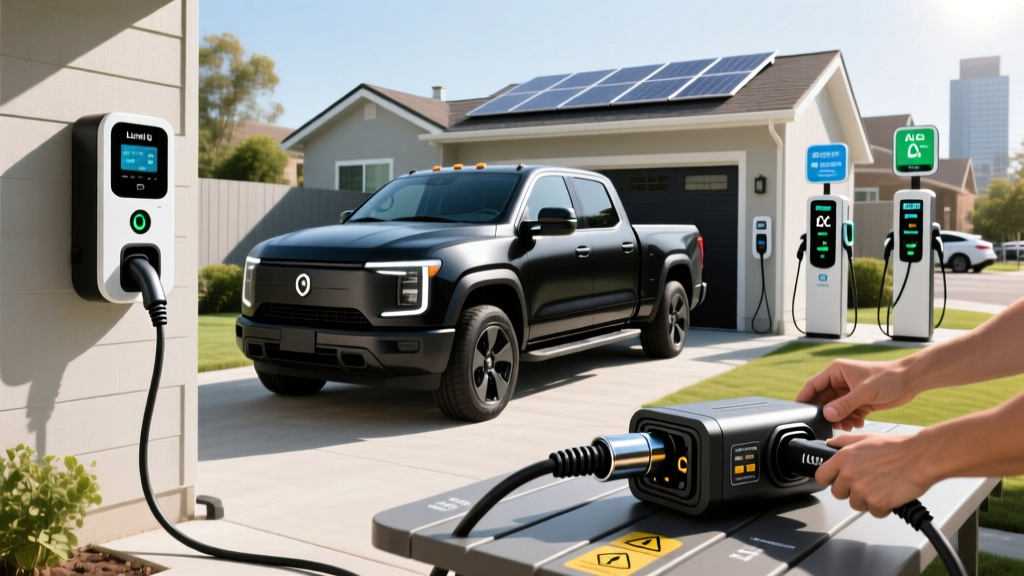
Tesla Wall Connector (Universal)
- Power: Up to 11.5 kW (48A on 60A circuit)
- Connector: NACS with integrated J1772 adapter (Magic Dock style)
- Cable length: 24 feet
- Smart features: Wi-Fi, OTA updates, Powerwall integration, load sharing
- Price: ~$600
All three units are UL-listed, NEMA 4 rated for outdoor use, and support time-of-use scheduling to take advantage of off-peak electricity rates. The Tesla Universal Wall Connector is particularly compelling if your household has both NACS and J1772 vehicles.
Charging Costs: Home vs. Public vs. Gas — Real Numbers
Charging economics depend heavily on where and when you plug in. Here's a realistic breakdown using the national average electricity rate and current gas prices:
| Scenario | Rate | Cost for 75 kWh Fill (≈250 mi) | Cost Per Mile |
|---|---|---|---|
| Home (off-peak TOU rate) | $0.08–$0.12/kWh | $6.00–$9.00 | $0.024–$0.036 |
| Home (standard residential) | $0.15–$0.18/kWh | $11.25–$13.50 | $0.045–$0.054 |
| Public Level 2 (ChargePoint, etc.) | $0.25–$0.40/kWh | $18.75–$30.00 | $0.075–$0.12 |
| DC Fast (Supercharger, non-Tesla rate) | $0.30–$0.48/kWh | $22.50–$36.00 | $0.09–$0.144 |
| DC Fast (Electrify America, peak) | $0.35–$0.55/kWh | $26.25–$41.25 | $0.105–$0.165 |
| Gasoline (28 MPG combined, $3.40/gal) | $3.40/gallon | $30.36 (8.9 gal) | $0.121 |
The takeaway: home charging on off-peak rates is 3–5× cheaper per mile than gasoline. Even DC fast charging on the road is competitive with or cheaper than gas in most scenarios. But if you rely exclusively on public DC fast charging at peak rates, your per-mile cost can exceed gasoline — which is why home charging access remains the economic linchpin of EV ownership.
Charging Time Examples: 10–80% for Common Battery Sizes
Charge time depends on battery capacity (kWh), the charger's peak output (kW), and your vehicle's charge curve. Here are representative 10–80% times assuming a preconditioned battery and sustained peak rate (real-world times may be 10–20% longer due to taper):
- 40 kWh battery (Nissan Ariya base): ~12 minutes at 200 kW peak DC fast charger
- 62 kWh battery (Chevy Equinox EV): ~18 minutes at 200 kW peak
- 77 kWh battery (Ford Mustang Mach-E Extended Range): ~22 minutes at 250 kW peak (V3 Supercharger)
- 84 kWh battery (Hyundai Ioniq 5, 800V): ~18 minutes at 350 kW peak (V4 Supercharger or EA Hyperfast)
- 131 kWh battery (Ford F-150 Lightning Extended Range): ~35 minutes at 250 kW peak
LFP (lithium iron phosphate) batteries, found in some Tesla Model 3/Y Standard Range vehicles and the Ford Mustang Mach-E Select, can generally tolerate higher sustained charge rates and regular 100% charging without degradation concerns — a notable advantage for daily charging routines. NMC (nickel manganese cobalt) batteries benefit from staying in the 20–80% SoC window for longevity.
Safety, Code, and Best Practices
EV charging installation is electrical work governed by the National Electrical Code (NEC Article 625). Key requirements and best practices include:
- Dedicated circuit: Your EV charger must have its own breaker — no sharing with dryers, ovens, or HVAC.
- GFCI protection: Required for outdoor receptacles and in many jurisdictions for indoor garage installations as well.
- NEMA 4 rating: Any outdoor charger must be rated for weather exposure (rain, dust, ice).
- Permit and inspection: Most municipalities require an electrical permit and post-installation inspection. Skipping this can void your homeowner's insurance.
- Cable management: Use a wall-mounted holster or retractor to prevent tripping hazards and cable damage.
- Ventilation: While EVs don't produce exhaust, charging in a tightly sealed garage with a lead-acid 12V battery can theoretically produce trace hydrogen. Standard garage ventilation is sufficient.
Frequently Asked Questions
How much does it cost to install a home EV charger?
A straightforward Level 2 installation on an existing 200A panel with nearby capacity typically runs $900–$2,500 (charger hardware + electrician labor + permit). If your home needs a panel upgrade from 100A to 200A, total costs can reach $3,600–$8,500. Get at least two quotes from licensed electricians, and ask about utility rebates in your area.
How fast will each charging level add range?
Level 1 (120V) adds roughly 3–5 miles of range per hour — fine for plug-in hybrids with small batteries but impractical for full EVs. Level 2 (240V) adds 20–60 miles per hour depending on amperage and the vehicle's onboard charger, easily replenishing a daily commute overnight. DC fast charging adds 150–1,200 miles per hour at peak rates, though sustained rates taper above 80% SoC.
Which connector or charger is compatible with my EV?
Check your vehicle's charge port. If it's NACS (the Tesla-style connector, now adopted by Ford, GM, Rivian, Hyundai/Kia, and others), you can plug directly into Superchargers and any NACS-equipped home or public charger. If it's CCS1 (the older standard used by VW, BMW, pre-2025 Hyundai/Kia), you'll need a CCS-to-NACS adapter (~$250) for Supercharger access and can use CCS public stations natively. CHAdeMO (Nissan Leaf) has minimal Supercharger compatibility. For home charging, purchase a wall connector matching your vehicle's port or use the Tesla Universal Wall Connector with its integrated adapter.
How much does charging cost per mile compared to gas?
Home charging on off-peak electricity ($0.08–$0.12/kWh) costs approximately $0.02–$0.04 per mile — roughly one-quarter the cost of gasoline at $3.40/gallon in a 28 MPG vehicle ($0.12/mile). Standard residential rates ($0.15–$0.18/kWh) bring EV cost to $0.04–$0.05/mile. Public DC fast charging at $0.30–$0.48/kWh costs $0.09–$0.14/mile, which is competitive with gas. The savings compound: a driver covering 12,000 miles/year saves $600–$1,200 annually by charging primarily at home versus buying gas.
What electrical upgrades might I need?
The most common upgrade is a panel capacity increase. If your home has a 100A or 150A service panel that's already loaded with electric appliances (range, dryer, water heater, HVAC), adding a 40–60A EV circuit may exceed the panel's rated capacity. An electrician will perform a NEC Article 220 load calculation. If you're over capacity, a 200A panel upgrade costs $1,500–$3,500. In some cases, a "smart splitter" device (like the NeoCharge Smart Splitter, ~$500) can share an existing 240V outlet (e.g., a dryer circuit) with your EV charger, avoiding a panel upgrade — but this limits charging speed and requires electrician approval. Homes with 200A panels and gas appliances rarely need upgrades.
Can I use a Supercharger if my non-Tesla EV has a CCS port?
Yes, with a CCS-to-NACS adapter. Tesla sells an official adapter for approximately $250, and third-party options are available. You'll also need the Tesla app to initiate and pay for the charging session at Superchargers that support non-Tesla vehicles. Note that some older Supercharger stalls with short cables may not physically reach your vehicle's charge port depending on its location — Tesla's app shows compatible stalls per station.