Can You Use a Tesla Supercharger With a Non-Tesla EV?
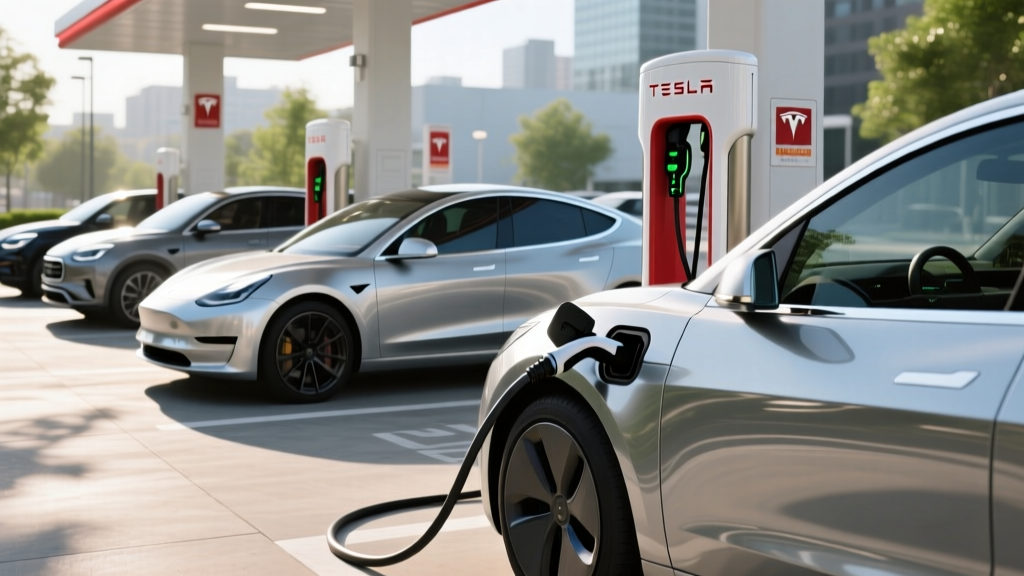
Yes — and in 2026, the answer is easier than ever. Tesla's Supercharger network, long the gold standard for DC fast-charging reliability, has opened to non-Tesla vehicles through two pathways: vehicles factory-equipped with the North American Charging Standard (NACS) port, and vehicles using a CCS-to-NACS adapter at designated "Open" Supercharger stalls. For EV owners shopping for a non-Tesla Supercharger solution, understanding which path applies to your vehicle — and what speeds, costs, and adapters are involved — is essential before you pull up to a stall.
This guide breaks down how non-Tesla EVs access the Supercharger network, the charging hardware you need, what you'll pay per kWh, and how to set up reliable home charging so public sessions are the exception, not the rule.
Charging Levels Explained: kW, kWh, and Miles Per Hour
Before discussing Supercharger access, let's lock down the single most important EV charging distinction: kW (kilowatts) is power — the rate at which energy flows into your battery. kWh (kilowatt-hours) is energy — the total capacity of your battery, like gallons in a fuel tank. A 75 kWh battery charged at 150 kW will fill faster than at 50 kW. Confusing the two is the most common EV literacy mistake.
| Level | Voltage | Power (kW) | Miles of Range Added Per Hour | Typical Use Case |
|---|---|---|---|---|
| Level 1 | 120V AC | 1.0–1.4 kW | 3–5 mi/hr | Overnight trickle, PHEVs |
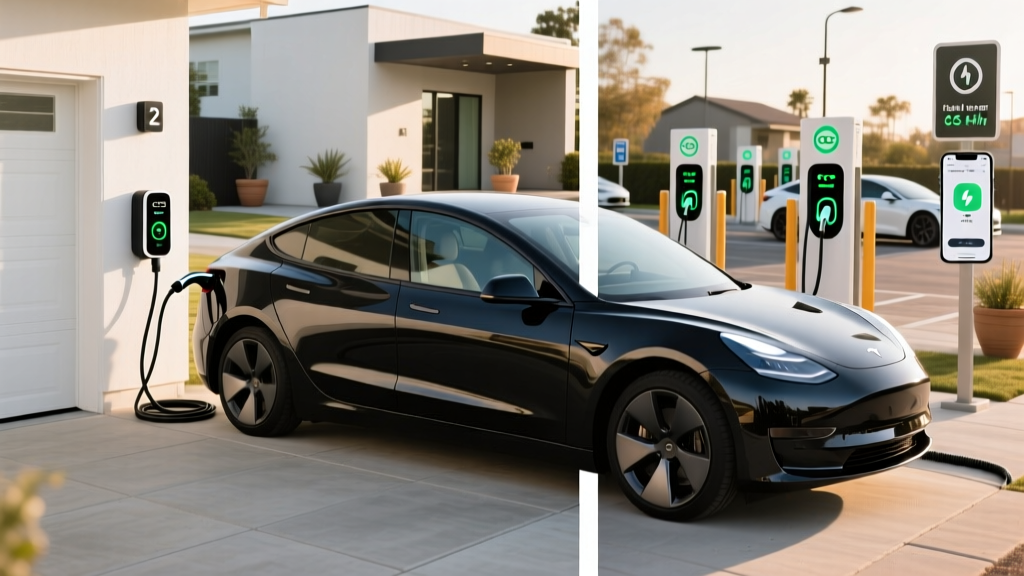
| Level 2 | 240V AC | 7.2–19.2 kW | 25–75 mi/hr | Home daily charging, workplace |
| DC Fast (incl. Supercharger) | 400–800V DC | 50–350 kW | 150–1,000+ mi/hr | Road trips, rapid top-ups |
At a Tesla V4 Supercharger stall, non-Tesla vehicles with NACS ports or approved adapters can see peak rates up to 250 kW (some newer stalls support 350 kW for compatible 800V architectures). A 10–80% charge on a 75 kWh battery at a sustained ~180 kW average takes roughly 18–22 minutes. However, peak kW is not sustained kW — charging speed tapers significantly above 80% State of Charge to protect battery health, which is why manufacturers and networks quote 10–80% times rather than 0–100%.
How Non-Tesla EVs Connect to Superchargers
As of 2026, nearly every major automaker selling in the U.S. has adopted NACS as the standard charge port on new vehicles. If you're driving a 2025 or 2026 Ford F-150 Lightning, Hyundai Ioniq 5, Rivian R1S, Cadillac Lyriq, or BMW iX (to name a few), your vehicle likely has a native NACS port and can plug directly into any Open Supercharger stall using the Tesla app.
If your EV was built with a CCS1 port (common on 2023 and earlier models from Hyundai, Kia, Volkswagen, BMW, and others), you'll need a NACS-to-CCS adapter. Tesla sells an official adapter, and several third-party options from brands like Lectron and A2Z have entered the market. CHAdeMO vehicles (primarily the Nissan Leaf) face the most limited access, as CHAdeMO-to-NACS adapters remain scarce and expensive.
| EV Port Type | Supercharger Access | Adapter Needed | Approx. Adapter Cost |
|---|---|---|---|
| NACS (native) | Direct plug-in at Open stalls | None | $0 |
| CCS1 | Via adapter at Open stalls | NACS-to-CCS1 adapter | $150–$250 |
| CHAdeMO | Limited / not widely supported | CHAdeMO-to-NACS (rare) | $300–$450 |
Critical note: Not every Supercharger stall is open to non-Tesla vehicles. Tesla designates specific stalls (marked in the Tesla app and on in-app maps) as "Open" — typically a subset of a station's total stalls. Before routing to a Supercharger, always confirm in the Tesla app that the station supports non-Tesla charging.
What Does Charging at a Non-Tesla Supercharger Cost?
Non-Tesla vehicles pay a per-kWh rate that is typically 10–25% higher than Tesla owners' rates at the same station. As of early 2026, non-Tesla Supercharger pricing in the U.S. averages $0.48–$0.62 per kWh, varying by location, time of day, and local utility rates. Some states require per-minute pricing instead, which can penalize vehicles with slower charge acceptance.
| Scenario | Cost per kWh or Gallon | Cost Per Mile (3.5 mi/kWh avg) | Annual Cost (12,000 mi) |
|---|---|---|---|
| Home Level 2 (off-peak utility rate) | $0.13/kWh | $0.037/mi | $444 |
| Home Level 2 (standard rate) | $0.18/kWh | $0.051/mi | $612 |
| Non-Tesla Supercharger (DC fast) | $0.55/kWh | $0.157/mi | $1,884 |
| Electrify America / EVgo (DC fast) | $0.48–$0.58/kWh | $0.137–$0.166/mi | $1,644–$1,992 |
| Gas vehicle (25 MPG combined) | $3.40/gal | $0.136/mi | $1,632 |
The takeaway: home Level 2 charging at off-peak rates is roughly 3–4× cheaper per mile than DC fast charging and significantly cheaper than gasoline. DC fast charging — whether at a Supercharger or a competing network — is best reserved for road trips and occasional top-ups, not daily use. According to fueleconomy.gov, the average EV achieves 3–4 miles per kWh, making per-kWh pricing easy to convert into per-mile cost.
How Much Does a Home EV Charger Installation Cost?
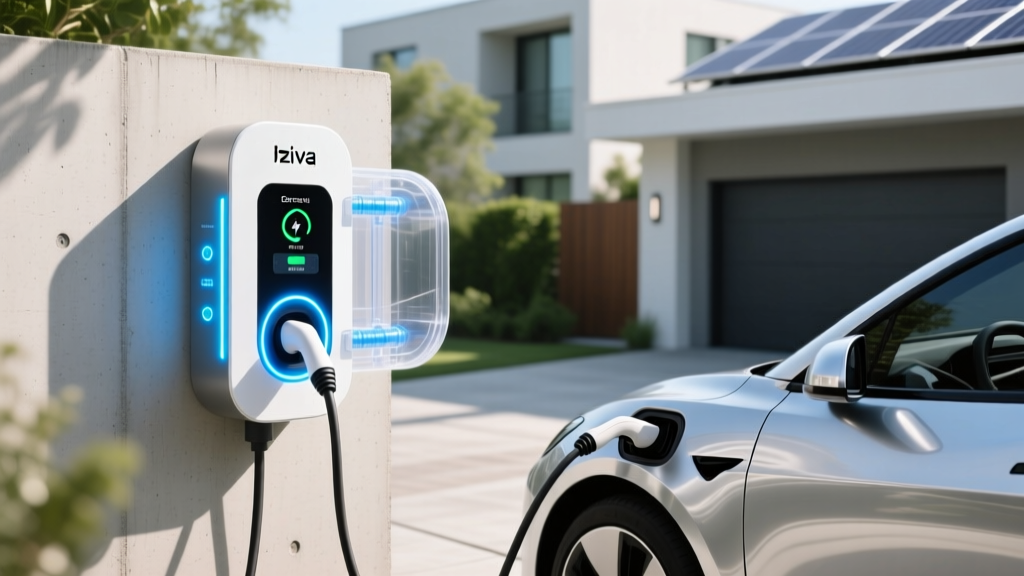
Most non-Tesla Supercharger sessions could be avoided with a properly installed Level 2 home charger. A 240V Level 2 unit delivering 40–48 amps (9.6–11.5 kW) adds 30–45 miles of range per hour of charging — more than enough to replenish a full day's driving overnight.
| Component | Low Estimate | High Estimate | Notes |
|---|---|---|---|
| Level 2 charger hardware | $350 | $750 | 40A–48A smart charger, 25ft cable |
| Electrician labor (standard install) | $500 | $1,500 | Assumes panel is nearby, conduit run <50ft |
| Permit and inspection | $50 | $300 | Varies by municipality |
| Electrical panel upgrade (if needed) | $1,500 | $3,500 | 100A → 200A service upgrade for older homes |
| Total (no panel upgrade) | $900 | $2,550 | |
| Total (with panel upgrade) | $2,400 | $6,050 |
Panel upgrade reality check: Homes built before 1990 often have 100-amp electrical service. Adding a 48A EV charger (which draws ~50A continuous under NEC derating rules, requiring a 60A breaker) may exceed available capacity. A licensed electrician will perform a load calculation before installation. If an upgrade is needed, budget an additional $1,500–$3,500 for a 200A panel swap. Some utilities offer rebates of $200–$500 toward panel upgrades when paired with EV charger installation.
Recommended Level 2 Home Chargers for Non-Tesla EVs
Whether you drive a NACS-equipped EV or a CCS vehicle, choosing the right home charger matters. Below are top-rated 2026 units with specific power output, connector options, and smart features.
ChargePoint Home Flex (NACS or J1772)
- Power: Up to 11.5 kW (48A) on a 60A circuit; adjustable down to 16A
- Connector: Available in NACS or J1772 (CCS vehicles use J1772 + CCS adapter for DC)
- Cable length: 23 feet
- Smart features: Wi-Fi, scheduling, energy tracking, Alexa integration
- Price: ~$550–$650
- UL listed: Yes; indoor/outdoor rated (NEMA 4)
Wallbox Pulsar Plus (J1772)
- Power: Up to 11.5 kW (48A)
- Connector: J1772 (NACS vehicles can use a J1772-to-NACS adapter for home Level 2)
- Cable length: 25 feet
- Smart features: Wi-Fi + Bluetooth, load balancing, solar integration, Power Boost
- Price: ~$450–$550
- UL listed: Yes; NEMA 4 outdoor rated
Emporia Level 2 EV Charger (J1772)
- Power: Up to 11.5 kW (48A)
- Connector: J1772
- Cable length: 24 feet
- Smart features: Wi-Fi, real-time energy monitoring via Emporia app, solar-aware scheduling
- Price: ~$350–$400 (best value)
- UL listed: Yes; indoor/outdoor rated
Tesla Wall Connector (NACS)
- Power: Up to 11.5 kW (48A)
- Connector: NACS — ideal for non-Tesla EVs with native NACS ports (2025+ models)
- Cable length: 24 feet
- Smart features: Wi-Fi, over-the-air updates, power sharing between two units
- Price: ~$475
- UL listed: Yes; NEMA 3R outdoor rated
Charging Time Examples for Common Battery Sizes
Charge times depend on battery capacity (kWh), the charger's power output (kW), and your vehicle's charge acceptance rate. The following estimates assume a 10–80% State of Charge window, which is the practical charging range most EV owners use to preserve battery longevity.
| Battery Size | Example Vehicles | Level 2 (11.5 kW) | DC Fast (150 kW peak) | DC Fast (250 kW peak) |
|---|---|---|---|---|
| 58 kWh | VW ID.4 Std, Hyundai Kona EV | ~3.5 hours | ~24 min | ~18 min |
| 77 kWh | Ford Mustang Mach-E ER, BMW i4 | ~4.7 hours | ~32 min | ~22 min |
| 84 kWh | Hyundai Ioniq 5 (2026) | ~5.1 hours | ~28 min | ~18 min |
| 100 kWh | Ford F-150 Lightning ER, Rivian R1T | ~6.1 hours | ~40 min | ~28 min |
| 123 kWh | GMC Hummer EV, Silverado EV | ~7.5 hours | ~48 min | ~35 min |
Important caveats: DC fast-charge times assume optimal battery temperature (preconditioning engaged), a stall delivering its rated power, and a vehicle capable of accepting the peak rate. Many CCS1 vehicles from 2022–2024 peak at 150–175 kW and taper early, so a 250 kW Supercharger stall won't speed them up. Vehicles with 800V architectures (Hyundai Ioniq 5/6, Kia EV6/EV9, Porsche Taycan) sustain higher rates longer and benefit most from high-power stalls.
Safety, Electrical Code, and Installation Best Practices
Home EV charger installation is electrical work that must comply with the National Electrical Code (NEC) and your local jurisdiction's amendments. Key requirements include:
- Dedicated circuit: Your Level 2 charger must have its own dedicated breaker — no sharing with other appliances. A 48A charger requires a 60A breaker under NEC continuous-load rules (125% of rated current).
- GFCI protection: NEC 2020 and later require GFCI (Ground Fault Circuit Interrupter) protection for EV charging outlets. Many hardwired chargers include built-in GFCI; plug-in units require a GFCI breaker.
- Outdoor rating: If your charger is mounted outside or in an unconditioned garage, it must carry at least a NEMA 3R (rain-resistant) or NEMA 4 (watertight) rating.
- Wire gauge: A 60A circuit requires 6 AWG copper wire for runs under 50 feet; longer runs may need 4 AWG to prevent voltage drop.
- Permit and inspection: Nearly all jurisdictions require a permit for new 240V circuits. The inspection ensures proper grounding, breaker sizing, and conductor rating — don't skip this step, as unpermitted work can void home insurance coverage.
Always hire a licensed electrician experienced with EV charger installations. Ask whether they'll perform a panel load calculation before quoting — any electrician who skips this step is cutting a critical safety corner.
Frequently Asked Questions
How much does it cost to install a home EV charger?
A standard Level 2 home charger installation costs $900–$2,550 when no panel upgrade is needed, covering the charger unit ($350–$750), electrician labor ($500–$1,500), and permit fees ($50–$300). If your home requires a 100A-to-200A panel upgrade, add $1,500–$3,500, bringing the total to $2,400–$6,050. The IRS Residential Clean Energy Credit does not currently cover EV charger hardware for most taxpayers (the §30C alternative fuel infrastructure credit expired for residential use), but some state utilities offer $200–$500 rebates.
How fast will each charging level add range?
Level 1 (120V) adds 3–5 miles per hour. Level 2 (240V, 48A) adds 30–45 miles per hour depending on vehicle efficiency. DC fast charging at 150–250 kW adds 150–1,000+ miles per hour, but only for short sessions — practical road-trip stops take 18–35 minutes for a 10–80% charge.
Which connector or charger is compatible with my EV?
Check your vehicle's charge port. 2025–2026 models from Ford, GM, Hyundai, Kia, Rivian, BMW, Mercedes, and others now ship with NACS ports and plug directly into Open Supercharger stalls. Older CCS1 vehicles need a NACS-to-CCS adapter ($150–$250). CHAdeMO vehicles (Nissan Leaf) have the most limited Supercharger access. For home Level 2 charging, all EVs use either a NACS or J1772 connector — verify which your car has before purchasing a wall unit.
How much does charging cost per mile vs. gas?
Home Level 2 charging at off-peak utility rates ($0.13/kWh) costs about $0.04 per mile — roughly one-quarter the cost of gasoline at $3.40/gallon in a 25 MPG vehicle ($0.14/mile). Public DC fast charging at $0.55/kWh costs $0.16/mile, slightly more than gas. The economic advantage of EV ownership depends heavily on access to affordable home charging.
What electrical upgrades might I need?
The most common upgrade is a 100A-to-200A electrical panel replacement, needed in older homes that lack capacity for a 60A dedicated EV circuit alongside existing loads (HVAC, electric range, dryer). A licensed electrician performs a NEC Article 220 load calculation to determine if your panel can handle the added draw. Homes with 200A service typically need no panel upgrade. Some homeowners opt for a smart panel or load-management device (like the Wallbox Power Boost or Emporia VUE) to dynamically share capacity and avoid an upgrade.