If you own a Hyundai Ioniq 5, Ford Mustang Mach-E, Chevrolet Equinox EV, or any non-Tesla electric vehicle, finding reliable non Tesla charging stations — both at home and on the road — is the single most important ownership decision you'll make. The public charging landscape shifted dramatically in 2025 when most major automakers adopted the North American Charging Standard (NACS), opening Tesla Superchargers to non-Tesla EVs via adapter. But the vast majority of daily charging still happens at home, and navigating the mix of public networks, connector types, and home electrical requirements takes real planning.
This guide breaks down exactly how fast each charging level adds range, what a home installation actually costs (including the panel upgrade trap), which connector your EV uses, and how charging costs compare to gasoline — with hard numbers throughout.
Charging Levels Explained: Speeds, Power, and Range Added
Before evaluating any non Tesla charging stations, you need to understand the three charging levels and what they deliver in practical terms. The critical distinction: kW (kilowatts) measures charging power — how fast energy flows into your battery. kWh (kilowatt-hours) measures energy capacity — the size of your battery. Think of kW as the width of a hose and kWh as the size of the bucket.
| Level | Voltage / Power | Typical kW Output | Miles of Range Added Per Hour | Best Use Case |
|---|---|---|---|---|
| Level 1 | 120V / 12-16A | 1.4 – 1.9 kW | 3 – 5 miles | Overnight top-ups, PHEVs, low-mileage drivers |
| Level 2 | 240V / 16-80A | 3.8 – 19.2 kW | 14 – 60 miles | Daily home charging, workplace, hotels |
| DC Fast Charging | 400V-800V DC | 50 – 350 kW | 150 – 1,200+ miles (theoretical/hr) | Road trips, rapid top-ups on the go |
Real-world charging time examples (10% to 80% State of Charge):
- 77 kWh battery (Hyundai Ioniq 5, Ford Mach-E Extended Range): ~18-22 minutes on a 250+ kW DC fast charger; ~8-9 hours on a 7.7 kW Level 2 home charger; ~54 hours on Level 1.
- 85 kWh battery (Chevrolet Silverado EV, Rivian R1T): ~20-25 minutes on 250+ kW DC fast; ~10-11 hours on 7.7 kW Level 2.
- 60 kWh battery (Chevrolet Equinox EV, Nissan LEAF): ~25-30 minutes on 150 kW DC fast (peak taper limits speed); ~7-8 hours on 7.7 kW Level 2.
One nuance many new EV owners miss: DC fast charging is not linear. Your vehicle may peak at 240 kW from 10-40% SoC, then taper to 100 kW from 40-60%, and drop below 50 kW past 80%. That's why manufacturers quote 10-80% times — the final 20% takes disproportionately long due to battery management system (BMS) thermal and voltage protections. For daily driving, charging to 80% at home on Level 2 is both faster in total wall-clock time and healthier for long-term battery State of Health (SoH).
Home EV Charger Installation: Costs, Electrical Requirements, and Gotchas
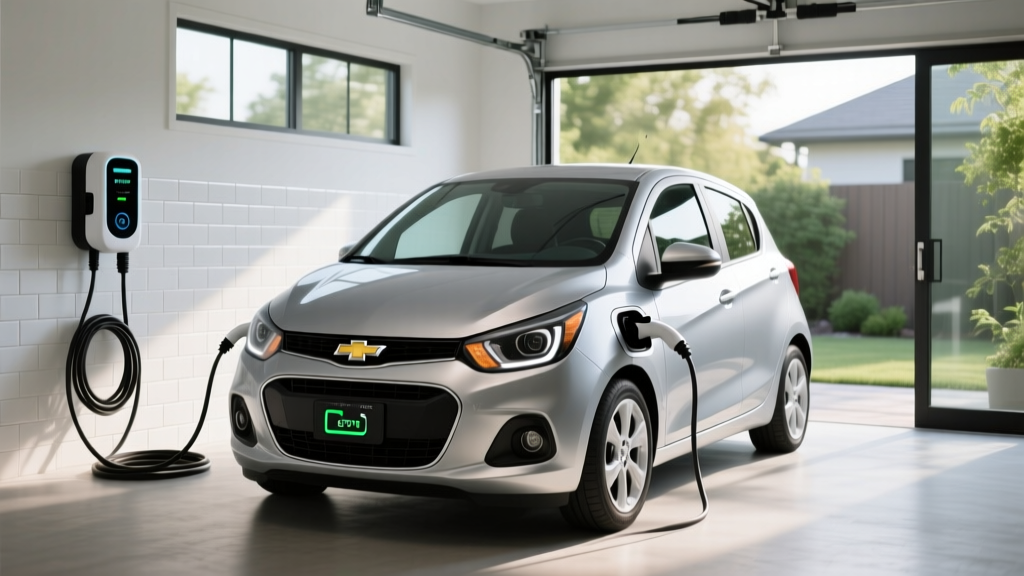
How much does it cost to install a home EV charger? The honest answer depends heavily on your home's existing electrical panel. For most non Tesla charging stations at home, you're installing a Level 2 (240V) charger — and the total cost breaks down into equipment, electrical labor, permits, and potentially a panel upgrade.
| Component | Typical Cost Range | Notes |
|---|---|---|
| Level 2 Charger (Equipment) | $300 – $750 | Smart Wi-Fi chargers, 32A-48A, 25ft cable |
| Electrician Labor (standard install) | $500 – $1,500 | Run 240V/50A circuit from panel to garage/driveway |
| Permit & Inspection | $50 – $300 | Varies by municipality; required in most jurisdictions |
| Electrical Panel Upgrade (if needed) | $1,500 – $4,000+ | 100A → 200A service upgrade for older homes |
| Total (no panel upgrade) | $850 – $2,550 | Most homes built after 2000 with 200A panels |
| Total (with panel upgrade) | $2,350 – $6,550+ | Homes with 100A or older 150A panels |
Electrical Requirements for Level 2 Charging
Most residential Level 2 chargers require a dedicated 240V circuit — the same voltage as your electric dryer or oven. The amperage depends on the charger:
- 32A charger (7.7 kW): Requires a 40A breaker (NEC rule: circuit must be rated 125% of continuous load).
- 40A charger (9.6 kW): Requires a 50A breaker.
- 48A charger (11.5 kW): Requires a 60A breaker.
Panel upgrade reality check: If your home has a 100-amp electrical service (common in homes built before 1990), adding a 40A-50A dedicated EV circuit may push total load beyond safe capacity — especially if you already run electric heat, an electric dryer, and an electric stove. A licensed electrician will perform a load calculation per NEC Article 220. If you're near capacity, a panel upgrade to 200A (or even 400A for larger homes) becomes necessary. This is the single biggest surprise cost in home EV charging, and it's non-negotiable for safety.
Safety and Code Considerations
Any compliant installation of non Tesla charging stations at home must follow National Electrical Code (NEC) requirements:
- Dedicated circuit: Your EV charger cannot share a circuit with other appliances.
- GFCI protection: NEC 2020 and later requires GFCI (Ground Fault Circuit Interrupter) protection for all EV charging outlets — though most hardwired chargers have built-in GFCI, eliminating the need for a GFCI breaker.
- Outdoor rating: If your charger is mounted outside, it must carry a NEMA 4 (weatherproof) rating. Most quality chargers (ChargePoint, Emporia, Wallbox) are rated for outdoor use.
- Hardwired vs. plug: Chargers above 40A (9.6 kW+) are typically hardwired rather than using a NEMA 14-50 outlet, because NEC requires GFCI breakers for receptacles, adding $150-$300 to the install. Hardwired installations are simpler and often cheaper.
Connector Compatibility: NACS, CCS1, and CHAdeMO Explained
Which connector/charger is compatible with my EV? This is where the non-Tesla charging landscape has changed most dramatically. Here's the current connector map for 2026 model-year EVs:
| Connector Type | Brands Using It (2026) | Access to Tesla Superchargers? | Adapter Needed? |
|---|---|---|---|
| NACS (Tesla standard) | Tesla (all models), Ford (2025+), GM (2025+), Rivian (2025+), Hyundai/Kia (2026+), Volvo/Polestar (2025+), BMW (2026+), Mercedes-Benz (2026+) | Yes — native | None (native NACS port) |
| CCS1 (Combined Charging System) | Hyundai/Kia (pre-2026), Volkswagen ID.4 (pre-2026), BMW iX/i4 (pre-2026), Stellantis, legacy models | Yes — with adapter | NACS-to-CCS adapter ($150-$250); many automakers provide free |
| CHAdeMO | Nissan LEAF (discontinued 2025), Mitsubishi Outlander PHEV (legacy) | No | CHAdeMO-to-CCS adapters are rare and expensive ($400+) |
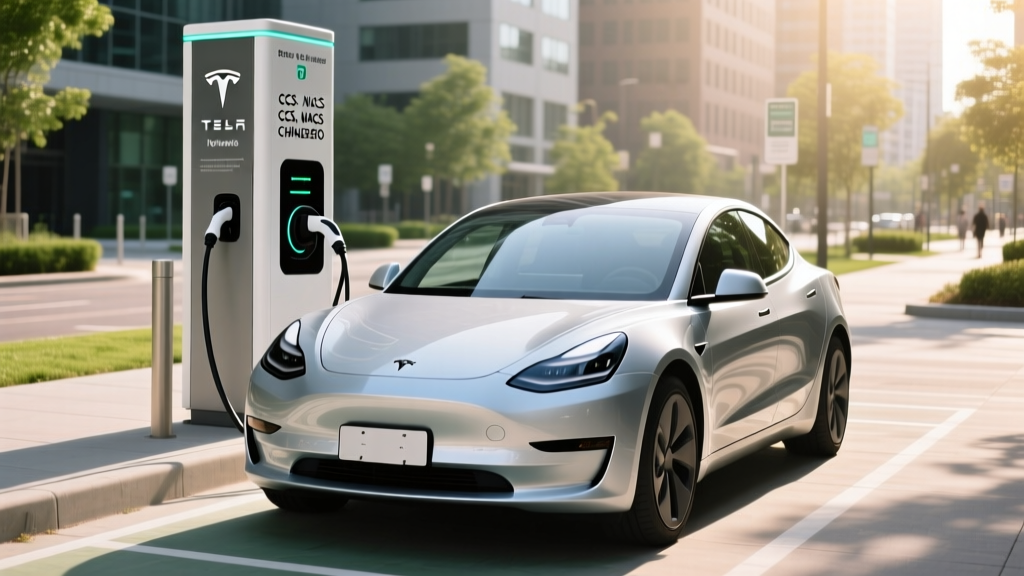
The industry-wide migration to NACS means that by 2026, nearly every new EV sold in the US has either a native NACS port or ships with a CCS-to-NACS adapter. This gives non-Tesla EV owners access to the Tesla Supercharger network — over 28,000 stalls in North America — which has historically been the most reliable and widely available DC fast-charging network.
For CCS-equipped vehicles (2023-2025 model years), adapters from Ford, GM, and Rivian are available through dealerships. Third-party adapters from brands like Lectron and A2Z also work, but verify they are UL-listed for safety. CHAdeMO is effectively a legacy standard in the US — new CHAdeMO infrastructure is no longer being deployed, and Nissan has transitioned to NACS for its replacement EV models.
Public Non Tesla Charging Stations: Networks, Reliability, and Pricing
Beyond Tesla Superchargers, the major public DC fast-charging networks serving non Tesla charging stations include:
- Electrify America (EA): ~1,000 stations, up to 350 kW CCS/NACS chargers. Pricing averages $0.48-$0.56/kWh. Reliability has improved but remains inconsistent at older sites.
- EVgo: ~1,100 stations, up to 350 kW. Pricing $0.40-$0.55/kWh. Partners with GM and Toyota for co-branded stations.
- ChargePoint: Largest network by station count (~30,000+ ports), but mostly Level 2. DC fast stations are fewer. Pricing set by site host — highly variable.
- Shell Recharge: Growing DC fast network at Shell gas stations, 150-180 kW typical. Pricing $0.45-$0.55/kWh.
- Mercedes-Benz High Power Charging: Premium network rolling out 400 kW chargers. Open to all brands. Pricing ~$0.50/kWh.
For non-Tesla EVs using Tesla Superchargers via adapter or native NACS, Tesla's pricing typically ranges from $0.25-$0.40/kWh depending on location and time of day — generally the cheapest DC fast-charging option available. Non-Tesla vehicles accessing Superchargers pay the same rates as Tesla owners at most locations, though some states may see a small surcharge.
Cost to Charge: Per-Mile Comparison vs. Gasoline
How much does charging cost per mile vs gas? The answer depends on where and when you charge. Here's a data-driven breakdown using a representative EV averaging 3.0 miles per kWh (roughly equivalent to a Hyundai Ioniq 5 or Tesla Model Y):
| Charging Scenario | Cost per kWh | Cost per Mile (3 mi/kWh EV) | Equivalent Gas MPG at $3.50/gal |
|---|---|---|---|
| Home Level 2 (national avg. $0.16/kWh) | $0.16 | $0.053 | ~66 MPG |
| Home Level 2 (off-peak TOU rate, $0.09/kWh) | $0.09 | $0.030 | ~117 MPG |
| Tesla Supercharger (avg. $0.32/kWh) | $0.32 | $0.107 | ~33 MPG | $0.50 | $0.167 | ~21 MPG |
| Gas vehicle (28 MPG combined at $3.50/gal) | — | $0.125 | 28 MPG (baseline) |
The takeaway: Home charging — especially on time-of-use (TOU) off-peak rates — costs roughly $0.03-$0.05 per mile, making it 2-4x cheaper than gasoline on a per-mile basis. Public DC fast charging at Electrify America or EVgo ($0.48-$0.56/kWh) can actually exceed the per-mile cost of a fuel-efficient gas car. The economics of EV ownership strongly favor home charging as your primary strategy, with public DC fast charging reserved for road trips.
If your utility offers TOU rates, programming your charger (via app or vehicle scheduling) to charge between 11 PM and 6 AM can cut charging costs by 40-50%. Most smart chargers and EV infotainment systems support scheduled charging natively.
Best Home EV Chargers for Non-Tesla EVs (2026)
Here are the top Level 2 home chargers that serve as reliable non Tesla charging stations for CCS and NACS-equipped vehicles:
Emporia Vue EV Charger
- Power Output: 48A (11.5 kW on 240V/60A circuit)
- Connector: NACS (native) or J1772 (with included adapter)
- Cable Length: 24 feet
- Smart Features: Wi-Fi, energy monitoring, solar integration, scheduling via app
- Price: ~$400
- Best for: Budget-conscious buyers who want 48A power and energy tracking
ChargePoint Home Flex
- Power Output: Up to 50A (12 kW) — configurable from 16A to 50A
- Connector: NACS (2025+ model) or J1772
- Cable Length: 23 feet
- Smart Features: Wi-Fi, Alexa integration, scheduling, amperage adjustment to match panel capacity
- Price: ~$550-$650
- Best for: Homes with limited panel capacity (dial down amps to avoid panel upgrade)
Wallbox Pulsar Plus
- Power Output: 48A (11.5 kW)
- Connector: NACS or J1772
- Cable Length: 25 feet
- Smart Features: Wi-Fi + Bluetooth, load balancing, compact form factor, Eco-Smart solar mode
- Price: ~$500-$600
- Best for: Tight garage spaces and solar-panel-equipped homes
Grizzl-E Smart
- Power Output: 40A (9.6 kW)
- Connector: J1772 (NACS adapter available)
- Cable Length: 24 feet
- Smart Features: Wi-Fi, OCPP-compatible, extreme cold rated (-40°C), built in Canada
- Price: ~$450
- Best for: Cold-climate outdoor installations, durability-focused buyers
All four chargers above are UL-listed (or ETL-listed to UL standards), carry NEMA 4 outdoor ratings, and include at minimum a 2-year warranty. For homes with constrained electrical panels, the ChargePoint Home Flex's adjustable amperage is a standout — you can set it to 24A or 32A to stay within your panel's capacity without triggering an expensive upgrade.
Frequently Asked Questions
Can I use a Tesla Supercharger with my non-Tesla EV?
Yes, in most cases. If your EV has a native NACS port (2025+ Ford, GM, Rivian, Hyundai, Kia, Volvo models), you can plug directly into any Tesla Supercharger. If your EV has a CCS1 port (2023-2024 models from most brands), you'll need a NACS-to-CCS adapter — many automakers provide these free or for ~$200. Tesla's Supercharger network is open to non-Tesla vehicles at all locations in the US as of 2025. CHAdeMO-equipped vehicles (older Nissan LEAF) cannot access Superchargers.
Is Level 1 (120V) charging practical for a full-size EV?
Only if you drive less than 30-40 miles per day and can charge for 12-16 hours overnight. Level 1 adds roughly 3-5 miles of range per hour, meaning a full charge from empty on a 77 kWh battery would take 50+ hours. For PHEVs with smaller batteries (10-20 kWh), Level 1 is perfectly adequate — most PHEVs fully recharge overnight on a standard outlet. For BEVs, Level 2 at home is strongly recommended.
Do I need a permit to install a home EV charger?
In most US jurisdictions, yes. Electrical permits for a dedicated 240V circuit typically cost $50-$300 and require a post-installation inspection. Skipping the permit risks voiding your homeowner's insurance in the event of an electrical fire, and it can create problems during a home sale. Your licensed electrician will typically pull the permit on your behalf.
What if my home only has a 100-amp electrical panel?
A 100A panel may not have enough spare capacity for a 40A-50A EV charging circuit, especially if you have other high-draw electric appliances (heat, water heater, dryer, oven). Options include: (1) upgrading to a 200A panel ($1,500-$4,000), (2) installing a lower-amperage charger (16A-24A) that still provides adequate overnight charging, or (3) using a smart load-management device like the Emporia Smart Load Center that dynamically reduces charger draw when other appliances activate. A licensed electrician can perform a NEC Article 220 load calculation to determine your exact options.
How does cold weather affect charging speed?
Cold batteries charge significantly slower — a phenomenon governed by lithium-ion electrochemistry. At temperatures below 32°F (0°C), DC fast charging speeds can drop 30-50% until the battery warms. Most modern EVs (Ioniq 5, Model Y, Mach-E) include battery preconditioning: if you set a DC fast charger as your navigation destination, the vehicle will pre-heat the battery en route to restore near-peak charging speeds. Without preconditioning, expect 10-80% charging to take 30-40 minutes instead of 18-22 minutes in cold weather. Level 2 home charging is less affected because the slower charge rate generates less thermal stress.
Are public charging networks reliable enough for road trips?
Reliability has improved but remains inconsistent. J.D. Power's 2025 EV Charging Satisfaction Study found that Tesla Superchargers continue to lead in uptime and reliability. Among non-Tesla networks, Electrify America and EVgo have improved to ~90-95% uptime at newer stations, but older sites can experience payment-system failures, broken cables, or derated power. For road trips, plan routes with backup charging options using apps like A Better Routeplanner (ABRP) or PlugShare, and always carry your CCS-to-NACS adapter for Supercharger access as a fallback.
Sources: fueleconomy.gov (EPA efficiency data), IRS §30C Alternative Fuel Vehicle Refueling Property Credit, National Electrical Code (NEC) requirements for EV charging circuits.