From Supercharged V6 to Kilowatts: What Xterra Owners Need to Know About EV Charging
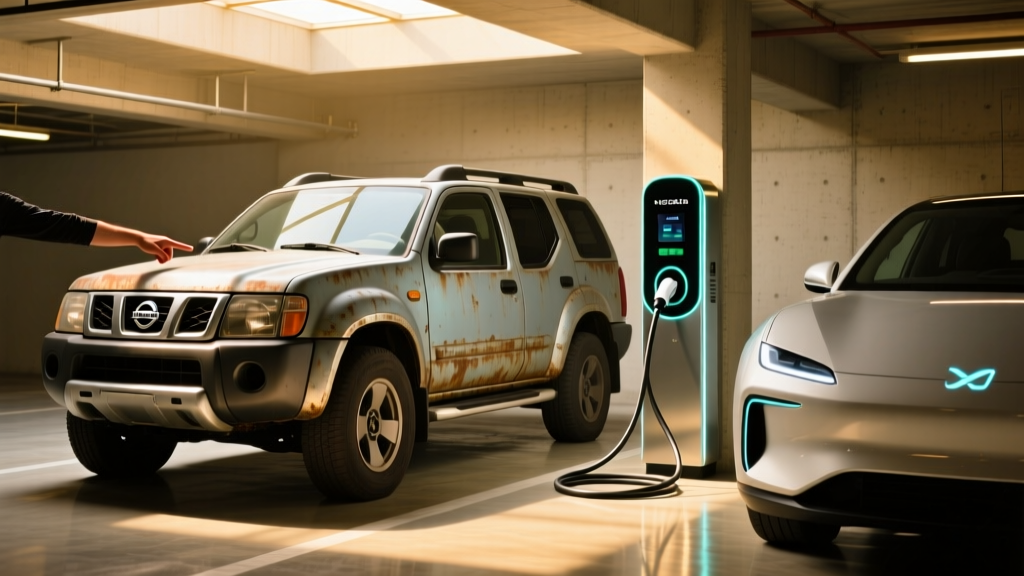
If you've spent years behind the wheel of a 2002 Nissan Xterra Supercharged — with its 3.3L VG33ER V6 pushing 210 horsepower and returning roughly 14–16 MPG combined — the jump to an electric vehicle isn't just a powertrain swap. It's a complete refueling paradigm shift. The Xterra's supercharger gave it a torquey, off-road-capable character that many owners love, but at the pump, that supercharged engine drinks fuel at a rate that makes EV ownership look increasingly attractive in 2026.
This guide is built for enthusiasts making the transition. We'll break down exactly how EV charging works — in precise kilowatt (kW) and kilowatt-hour (kWh) terms — what it costs to install a home charger, which connectors your future EV will need, and how the per-mile economics compare to filling up that Xterra's 19.4-gallon tank.
Critical distinction upfront: kW (kilowatts) measures power — the rate at which energy flows into your battery, like water pressure from a hose. kWh (kilowatt-hours) measures energy — the total amount stored in the battery, like gallons in a tank. A 240 kW charger fills a 75 kWh battery faster than a 50 kW charger. Confusing these two is the single most common EV literacy mistake.
Charging Levels Explained: Level 1, Level 2, and DC Fast Charging
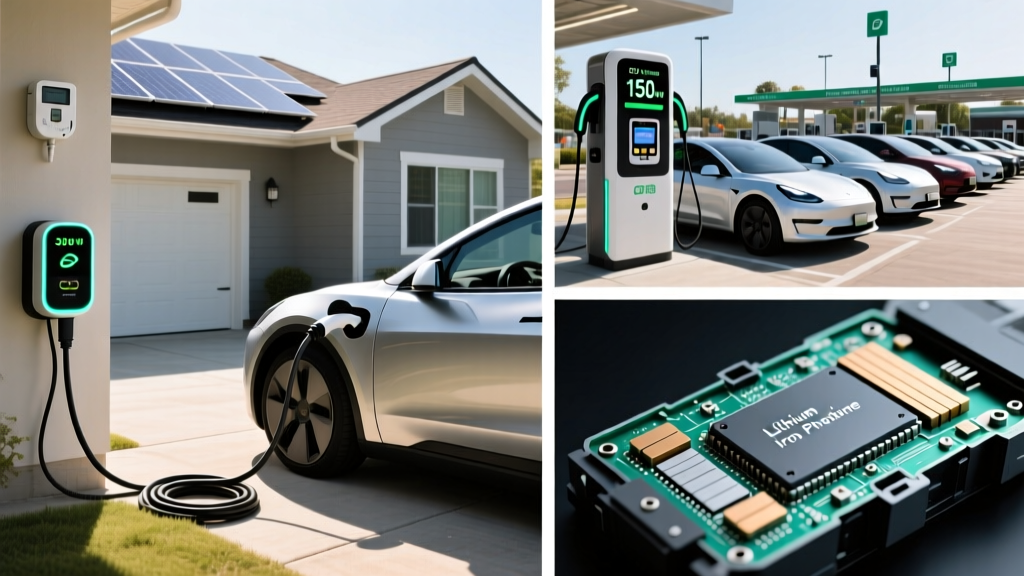
EV charging operates across three tiers, each defined by voltage, amperage, and resulting power delivery. Here's how they translate to actual miles added per hour of charging:
| Level | Voltage / Amperage | Power (kW) | Miles of Range Added/Hour | Best For |
|---|---|---|---|---|
| Level 1 | 120V / 12A | 1.4 kW | 3–5 mi/hr | Overnight top-ups, PHEVs, emergency use |
| Level 2 | 240V / 32–48A | 7.7–11.5 kW | 25–44 mi/hr | Daily home charging, overnight full fills |
| DC Fast Charge | 400–800V DC | 50–350 kW | 150–1,200+ mi/hr (peak) | Road trips, highway corridors |
Real-world context: If you're replacing an Xterra with something like a 2026 Ford F-150 Lightning (extended-range, 131 kWh usable battery, EPA ~320 miles), Level 1 charging adds roughly 4 miles per hour — meaning a full 10–100% fill would take nearly 33 hours. Level 2 at 11.5 kW cuts that to about 11 hours. A 150 kW DC fast charger can take that truck from 10–80% in roughly 41 minutes, though the charge curve tapers significantly above 80% state of charge (SoC) to protect the NMC battery chemistry.
Home Level 2 Installation: Electrical Requirements, Costs, and Panel Upgrades
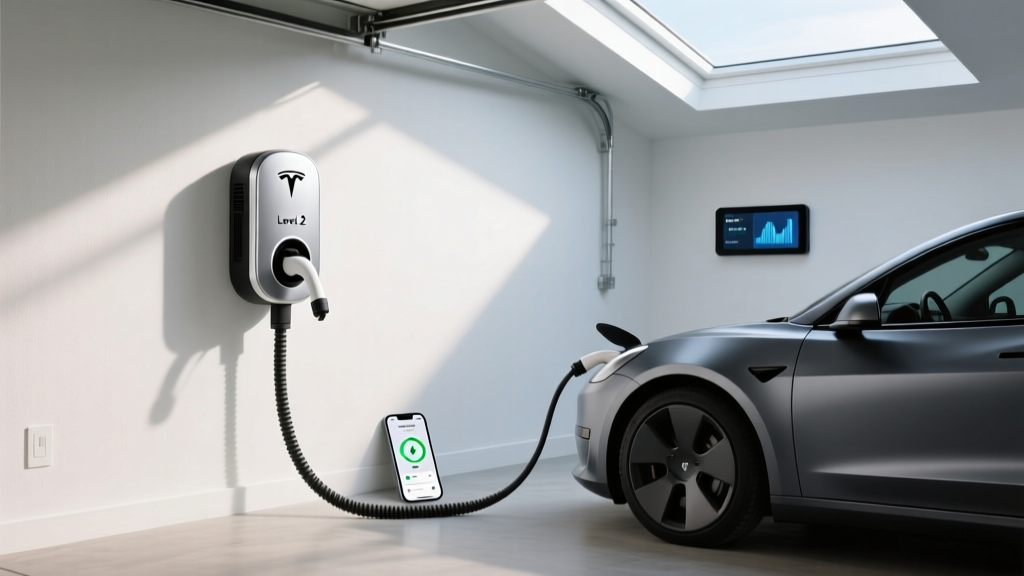
Installing a Level 2 home charger is the single most impactful upgrade an EV owner can make. Here's what's involved electrically and financially.
Electrical Requirements
A Level 2 charger requires a dedicated 240V circuit — the same voltage your electric dryer or oven uses. Common configurations:
- 40-amp circuit (delivering 32A continuous / 7.7 kW) — minimum recommended for most EVs
- 50-amp circuit (40A continuous / 9.6 kW) — ideal balance of speed and cost
- 60-amp circuit (48A continuous / 11.5 kW) — maximum for vehicles with large batteries like the F-150 Lightning or Rivian R1T
The National Electrical Code (NEC) requires that continuous loads not exceed 80% of a circuit's rated capacity. So a 48A charger needs a 60A breaker. Your electrician will size wire accordingly — typically 6 AWG copper for 50A or 4 AWG for 60A runs.
Panel Upgrade Reality
Many homes built before 2010 have 100A or 150A main service panels. Adding a 50–60A EV circuit may push your panel's calculated load beyond its rating, triggering a required upgrade to 200A service. This is especially common in older homes — the kind of house where someone might still be parking a well-loved 2002 Xterra in the garage.
A panel upgrade from 100A to 200A typically costs $1,500–$3,500 including permit, depending on your utility's requirements and whether a new meter base is needed. Factor this into your EV transition budget honestly.
| Component | Low End | High End | Notes |
|---|---|---|---|
| Level 2 Charger (hardware) | $250 | $700 | Varies by brand, power, smart features |
| Electrician labor (standard install) | $400 | $1,200 | Shorter runs from panel = lower cost |
| Electrical permit | $50 | $200 | Varies by municipality |
| Panel upgrade (if needed) | $1,500 | $3,500 | 100A → 200A service upgrade |
| Conduit/wire (long runs, 50+ ft) | $200 | $800 | Garage-adjacent panel = cheaper |
| Total (no panel upgrade) | $700 | $2,100 | Typical straightforward install |
| Total (with panel upgrade) | $2,200 | $5,600 | Older homes with 100A service |
Pro tip: The federal §30C Alternative Fuel Vehicle Refueling Property Credit covers up to 30% of home charging equipment and installation costs (capped at $1,000), but only if you live in an eligible census tract. Check IRS guidelines for current-year qualification maps before assuming you'll receive it.
Connector Compatibility: NACS, CCS1, and CHAdeMO Explained
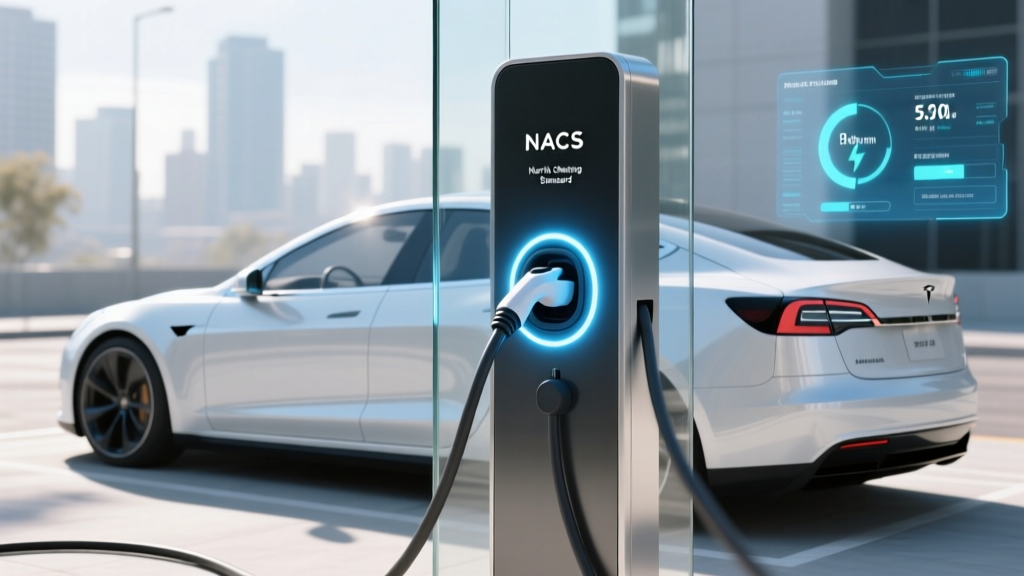
The EV charging connector landscape has consolidated dramatically. As of 2026, the North American Charging Standard (NACS) — originally developed by Tesla — has become the dominant connector, with nearly all major automakers adopting it for new vehicles. Here's how this affects your purchase decision:
| Connector | Brands Using It (Native) | DC Fast Charge Network Access | Adapter Needed? |
|---|---|---|---|
| NACS | Tesla, Ford, GM, Rivian, Volvo, Polestar, Hyundai (2026+), Kia (2026+), Toyota, Nissan (Ariya 2026+) | Tesla Supercharger network (20,000+ stalls), growing third-party NACS stations | No (native). CCS-to-NACS adapters available for older CCS vehicles. |
| CCS1 | VW ID.4 (pre-2026), some legacy models, 2024–2025 Hyundai/Kia models | Electrify America, EVgo, ChargePoint DC stations | NACS-to-CCS adapter needed for Tesla Superchargers (~$200–$250) |
| CHAdeMO | Nissan Leaf (legacy — all model years), Mitsubishi Outlander PHEV | Limited and declining network | No native adapter to NACS/CCS for DC charging |
For Xterra owners considering a Nissan: If you're loyal to the brand, the 2026 Nissan Ariya now uses NACS natively, giving you direct Supercharger access. The older Leaf (discontinued after 2025) used CHAdeMO, which has severely limited fast-charging infrastructure. This connector difference alone is a strong argument for choosing a newer Nissan EV over a used Leaf.
Cost to Charge: Per-Mile Economics vs. Your Supercharged Xterra
The 2002 Nissan Xterra Supercharged with its VG33ER engine averages approximately 15 MPG combined per fueleconomy.gov. With a 19.4-gallon tank, that's about 291 miles of range — costing roughly $65–$78 to fill at $3.35–$4.00/gallon (2026 national average for regular unleaded).
Let's compare that to charging a representative EV — say, a 2026 Ford Mustang Mach-E Premium (extended range, 91 kWh usable, EPA 310 miles, 3.5 mi/kWh efficiency) — across common charging scenarios:
| Scenario | Cost Per kWh / Gallon | Cost Per Mile | Full "Tank" Cost (≈300 mi) |
|---|---|---|---|
| 2002 Xterra SC (15 MPG, regular) | $3.50/gal | $0.233/mi | ~$70.00 |
| Home Level 2 (off-peak utility rate) | $0.12/kWh | $0.034/mi | ~$10.29 |
| Home Level 2 (standard rate) | $0.18/kWh | $0.051/mi | ~$15.43 |
| Public Level 2 (ChargePoint, etc.) | $0.28/kWh | $0.080/mi | ~$24.00 |
| DC Fast Charge (Electrify America) | $0.48/kWh | $0.137/mi | ~$41.14 |
| Tesla Supercharger (average) | $0.35/kWh | $0.100/mi | ~$30.00 |
The bottom line: Home charging at off-peak rates saves roughly $0.20 per mile compared to the supercharged Xterra. Over 15,000 annual miles, that's approximately $3,000/year in fuel savings alone — and that's before factoring in the Xterra's higher maintenance costs (supercharger belt service, oil changes every 5,000 miles, transmission fluid, spark plugs).
Even exclusive DC fast charging — the most expensive EV scenario — still undercuts the Xterra's per-mile fuel cost by roughly 40%. The savings are real, but they're maximized when you charge at home.
Charging Time Examples: What to Expect with Common Battery Sizes
Charging time depends on the battery's usable capacity (in kWh) and the charger's sustained power output (in kW). Here are real-world estimates for popular 2026 EVs that Xterra owners might cross-shop as replacement vehicles:
| Vehicle | Usable Battery (kWh) | Peak DC Rate (kW) | 10–80% DC Fast Time | Level 2 Home Time (0–100%, 11.5 kW) |
|---|---|---|---|---|
| Tesla Model Y Long Range | 75 kWh (NMC) | 250 kW | ~22 min | ~6.5 hr |
| Ford F-150 Lightning Ext. Range | 131 kWh (NMC) | 150 kW | ~41 min | ~11.4 hr |
| Hyundai Ioniq 5 (2026, NACS) | 77.4 kWh (NMC) | 240 kW | ~18 min | ~6.7 hr |
| Chevrolet Equinox EV 3LT | 85 kWh (NMC) | 150 kW | ~33 min | ~7.4 hr |
| Nissan Ariya (2026, NACS) | 87 kWh (NMC) | 130 kW | ~38 min | ~7.6 hr |
| Tesla Model 3 Standard Range (LFP) | 57.5 kWh (LFP) | 170 kW | ~25 min | ~5.0 hr |
LFP vs. NMC charging note: Lithium Iron Phosphate (LFP) batteries, like the one in the Model 3 Standard Range, tolerate regular 100% charging better than NMC chemistries. Tesla and Ford recommend charging LFP packs to 100% at least weekly to maintain battery calibration. NMC packs last longest when daily charging is limited to 80% SoC, reserving 100% fills for road trips.
Equipment Recommendations: Best Home Level 2 Chargers for 2026
Based on power output, reliability, smart features, and connector compatibility, here are our top Level 2 home charger picks for EV owners transitioning from vehicles like the Xterra:
Best Overall: ChargePoint Home Flex (2026 model)
- Power: Up to 11.5 kW (48A) on a 60A circuit
- Connector: NACS native (CCS1 adapter included)
- Cable length: 23 feet
- Smart features: Wi-Fi, scheduled charging, Alexa/Google integration, energy dashboard
- Price: ~$549
- Why: Adjustable amperage (16A–48A) lets you match your circuit without buying a new unit if you move homes. UL-listed, NEMA 4 outdoor-rated.
Best Value: Emporia Level 2 EV Charger
- Power: Up to 11.5 kW (48A)
- Connector: NACS (2026 model); CCS1 on older units
- Cable length: 24 feet
- Smart features: Wi-Fi, solar integration, time-of-use scheduling, load management
- Price: ~$349
- Why: Lowest-cost 48A smart charger with energy monitoring. Pairs with Emporia's whole-home energy monitor for solar-aware charging.
Best for Tesla Owners: Tesla Wall Connector (Gen 4)
- Power: Up to 11.5 kW (48A)
- Connector: NACS native (J1772 adapter included for non-Tesla EVs)
- Cable length: 24 feet
- Smart features: Wi-Fi, OTA updates, power sharing between multiple units, Tesla app integration
- Price: ~$450
- Why: Seamless Tesla integration, clean design, and power-sharing capability lets you install two connectors on one 60A circuit — useful if you add a second EV.
Best for Heavy-Duty/Outdoor: Grizzl-E Smart
- Power: Up to 10 kW (40A)
- Connector: NACS (2026+); CCS1 available
- Cable length: 24 feet
- Smart features: Wi-Fi, OCPP-compatible, adjustable amperage
- Price: ~$449
- Why: Built in Canada for extreme cold (rated to -40°F). IP67-rated, impact-resistant aluminum case. Ideal for unheated garages or outdoor mounts in mountain/winter climates where an Xterra owner might actually take the vehicle.
Safety, Code, and Installation Best Practices
A Level 2 charger installation is permanent electrical work that must comply with the National Electrical Code (NEC Article 625) and your local jurisdiction's amendments. Key requirements:
- Dedicated circuit: Your EV charger must be on its own breaker — no shared circuits with other appliances.
- GFCI protection: NEC 2020 and later require ground-fault circuit interrupter protection for outdoor receptacles and many jurisdictions now require it for indoor garage installations as well. Hardwired chargers (no plug) often avoid the GFCI nuisance-tripping issues that plug-in units on NEMA 14-50 receptacles can experience.
- Outdoor rating: If mounting outside, choose a NEMA 4 or IP66-rated unit. Look for chargers rated for your local temperature extremes.
- Hardwired vs. plug-in: Hardwired installations (direct wire, no receptacle) are generally more reliable, allow higher amperage, and avoid the NEC requirement for GFCI breakers on receptacles — saving $100–$200 on the breaker itself. We recommend hardwired for most installations.
- Permit and inspection: Most jurisdictions require an electrical permit ($50–$200) and a post-installation inspection. Skipping this can void home insurance coverage for electrical fires.
Panel capacity check: Before your electrician visit, add up your existing major loads (HVAC: 30–50A, electric range: 40–50A, dryer: 30A, water heater: 30A). If your total approaches your panel's main breaker rating, a load calculation per NEC Article 220 will determine whether a panel upgrade is required. Many electricians perform this calculation for free during a site visit.
Frequently Asked Questions
How much does it cost to install a home EV charger?
A typical Level 2 home charger installation costs $700–$2,100 when no panel upgrade is needed (charger hardware: $250–$700, electrician labor: $400–$1,200, permit: $50–$200). If your home has a 100A panel and requires an upgrade to 200A service, total costs range from $2,200–$5,600. Always get a load calculation from a licensed electrician before assuming your panel has capacity.
How fast will each charging level add range?
Level 1 (120V) adds 3–5 miles per hour — suitable only for PHEVs or overnight top-ups. Level 2 (240V, 48A) adds 25–44 miles per hour and can fully recharge most EVs overnight. DC fast charging (50–350 kW) can add 150–1,200+ miles per hour at peak, but real-world sessions are measured in 10–80% time: typically 18–41 minutes depending on the vehicle and charger.
Which connector/charger is compatible with my EV?
For 2026 models, nearly all new EVs from Tesla, Ford, GM, Hyundai, Kia, Rivian, Toyota, Volvo, and Nissan use the NACS connector. Older CCS1-equipped vehicles (2024–2025 model years) can access Tesla Superchargers with a CCS-to-NACS adapter (~$200–$250). CHAdeMO (used on the Nissan Leaf) has very limited DC infrastructure and no viable adapter path. For home Level 2 charging, all connectors use the same J1772 protocol, so any Level 2 charger works with any EV using the appropriate plug or adapter.
How much does charging cost per mile vs. gas?
Charging at home on off-peak electricity ($0.12/kWh) costs approximately $0.034/mile for a typical EV — roughly 85% cheaper than fueling a 15 MPG vehicle like the 2002 Xterra Supercharged at $3.50/gallon ($0.233/mile). Even the most expensive DC fast charging ($0.48/kWh) costs about $0.137/mile — still 41% less than the Xterra. Over 15,000 miles/year, home charging saves approximately $3,000 annually.
What electrical upgrades might I need?
The most common upgrade is a panel capacity increase from 100A to 200A ($1,500–$3,500), required when your existing loads plus the new EV circuit exceed your panel's rating. Other potential costs include: running new conduit for long wire runs from panel to garage ($200–$800), upgrading your utility service drop if the meter can't handle 200A, or installing a smart load-management device ($200–$400) that throttles charger power when other major appliances are running — an alternative to a full panel upgrade in some cases.
Can I install a Level 2 charger myself?
While physically possible for experienced DIYers, we strongly recommend hiring a licensed electrician. A 240V circuit carries lethal current, improper installation can cause fires, unpermitted work may void your homeowner's insurance, and most jurisdictions require a licensed professional to pull the permit. The labor cost ($400–$1,200) is justified by safety and code compliance.
Sources: EPA fuel economy data via fueleconomy.gov; IRS §30C refueling property credit via irs.gov; NEC Article 625 via NFPA.