The Nissan Leaf remains one of the most accessible used and new electric vehicles on the road, but its real-world usability hinges on one question: can you keep it charged efficiently? Whether you drive the standard 40 kWh pack or the larger 60 kWh Leaf SV Plus, understanding how charging infrastructure maps to your Nissan Leaf range miles is the difference between a seamless EV ownership experience and frustrating range shortfalls.
This guide covers every charging scenario a Leaf owner will encounter — from overnight Level 1 trickle charging to DC fast charging on road trips — along with home installation costs, connector compatibility (including the CHAdeMO-to-NACS adapter reality in 2026), and what you'll actually pay per mile compared to a gas car.
Nissan Leaf Range and Battery Specs at a Glance
Before discussing charging, let's anchor the numbers. The 2025–2026 Nissan Leaf is offered in two battery configurations. Note that Nissan has signaled the Leaf's eventual discontinuation in favor of newer platforms, so current inventory may be limited.
| Specification | Leaf S (Standard) | Leaf SV Plus |
|---|---|---|
| Usable Battery Capacity | 40 kWh | 60 kWh |
| Battery Chemistry | NMC (Lithium-ion) | NMC (Lithium-ion) |
| EPA Range | 149 miles | 212 miles |
| Real-World Range (highway/cold) | ~110–130 miles | ~165–185 miles |
| Max DC Fast Charge Rate | ~50 kW (CHAdeMO) | ~100 kW (CHAdeMO) |
| Onboard AC Charger | 6.6 kW | 6.6 kW |
| EPA Efficiency | 111 MPGe | 109 MPGe |
| Battery Warranty | 8 yr / 100,000 mi (capacity) | 8 yr / 100,000 mi (capacity) |
| Base MSRP (when available) | ~$28,140 | ~$36,190 |
Charging Levels Explained: How Fast Will Each Add Range to Your Leaf?
Understanding the three charging levels is essential. The critical distinction: kW (kilowatts) measures power — how fast energy flows into your battery. kWh (kilowatt-hours) measures energy — the total capacity of your battery. Think of kW as the width of a hose and kWh as the size of the bucket.
| Charging Level | Voltage | Power (kW) | Miles of Range Added per Hour | Best For |
|---|---|---|---|---|
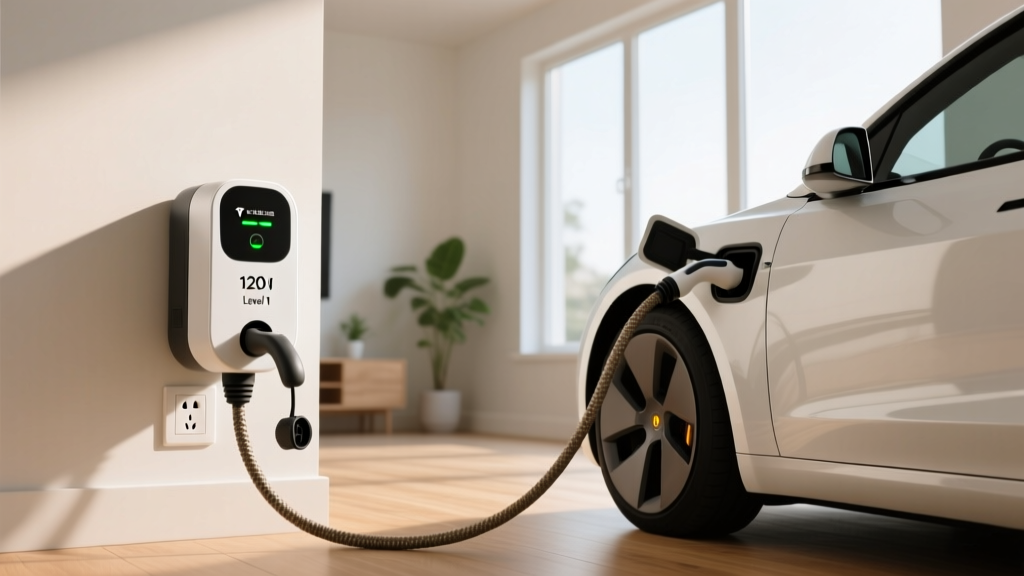
| Level 1 (120V outlet) | 120V AC | ~1.4 kW | ~4–5 miles/hr | Overnight top-ups, low daily mileage |
| Level 2 (240V home/public) | 240V AC | 3.3–6.6 kW (Leaf maxes at 6.6 kW) | ~20–25 miles/hr at 6.6 kW | Daily home charging, destination charging |
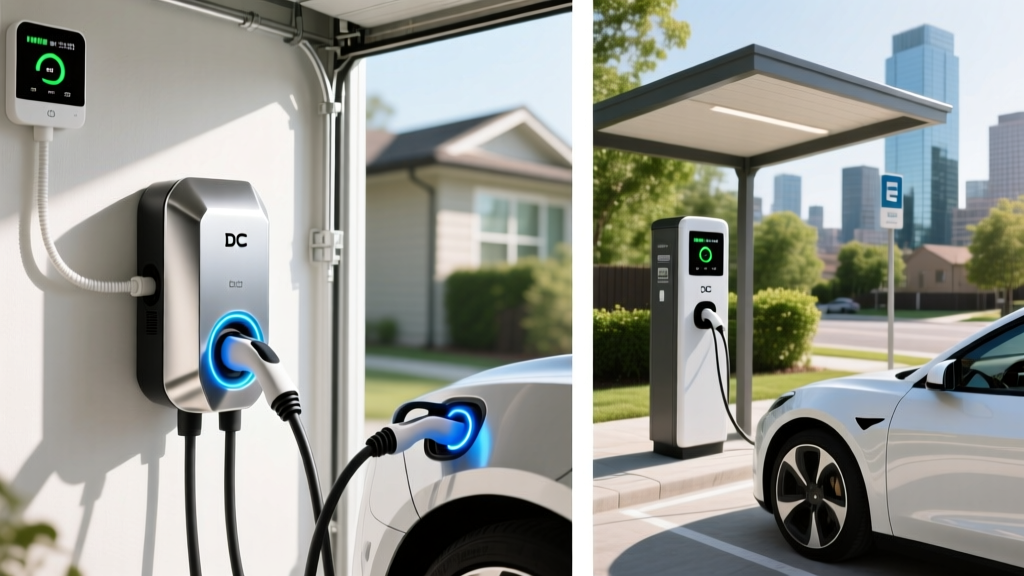
| DC Fast Charging | 400V+ DC | 50–100 kW (Leaf CHAdeMO dependent) | ~120–200 miles/hr (peak) | Road trips, rapid top-ups |
Charging Time Examples: 10% to 80% State of Charge
Charging times depend on your battery size and the charger's output. Note that DC fast charging slows significantly above 80% to protect battery health — this is the "charge curve taper" every EV owner should understand.
- Leaf S (40 kWh) on Level 1 (1.4 kW): 10–80% in ~20 hours (overnight + next day)
- Leaf S (40 kWh) on Level 2 (6.6 kW): 10–80% in ~4.2 hours
- Leaf SV Plus (60 kWh) on Level 2 (6.6 kW): 10–80% in ~6.4 hours
- Leaf S (40 kWh) on 50 kW CHAdeMO DCFC: 10–80% in ~40–45 minutes
- Leaf SV Plus (60 kWh) on 100 kW CHAdeMO DCFC: 10–80% in ~35–45 minutes
Home Charger Installation: Costs, Electrical Requirements, and Panel Upgrades
Most Leaf owners will install a Level 2 home charger for daily use. The Leaf's 6.6 kW onboard charger means you don't need the most powerful wallbox on the market — a 32A or 40A circuit delivering 7.7–9.6 kW is more than sufficient, and gives headroom for a future EV with a larger onboard charger.
Electrical Requirements
- Circuit: Dedicated 240V circuit, typically 40A (for a 32A continuous charger) or 50A (for a 40A continuous charger)
- Wire gauge: 6 AWG copper for 50A circuits; 8 AWG for 40A
- Breaker: Must be rated 125% of continuous load (NEC Article 625) — a 32A charger requires a 40A breaker
- Panel capacity: Your electrical panel must have room for a double-pole breaker AND sufficient remaining amperage. A 200A panel is standard for modern homes; older 100A panels may need an upgrade
Installation Cost Breakdown
| Cost Component | Typical Range | Notes |
|---|---|---|
| Level 2 Charger (Equipment) | $250–$700 | Varies by brand, smart features, cable length |
| Electrician Labor | $400–$1,500 | Depends on run length from panel to garage/carport |
| Permit Fees | $50–$250 | Varies by municipality; some jurisdictions waive EV permits |
| Panel Upgrade (if needed) | $1,500–$3,500 | Required if panel is at capacity or is 100A with no room |
| Total (no panel upgrade) | $700–$2,450 | Most homes with 200A panels fall here |
| Total (with panel upgrade) | $2,200–$5,950 | Older homes with 100A service |
Safety and Code Considerations
- Dedicated circuit: NEC Article 625 requires EVSE to be on its own dedicated circuit — no sharing with other appliances
- GFCI protection: 2023 NEC update requires GFCI protection for receptacles used for EV charging; hardwired units may have different requirements depending on local code
- Outdoor rating: If installing outside, choose a NEMA 4-rated (weatherproof) charger or install under cover. The J1772 connector itself is weather-rated, but the charger enclosure must be too
- Hardwired vs. plug: Hardwired installations avoid the need for a 240V receptacle (NEMA 14-50 or 6-50) and are often preferred for permanent installations; plug-in units offer portability
Connector Compatibility: CHAdeMO, NACS, and the Adapter Question
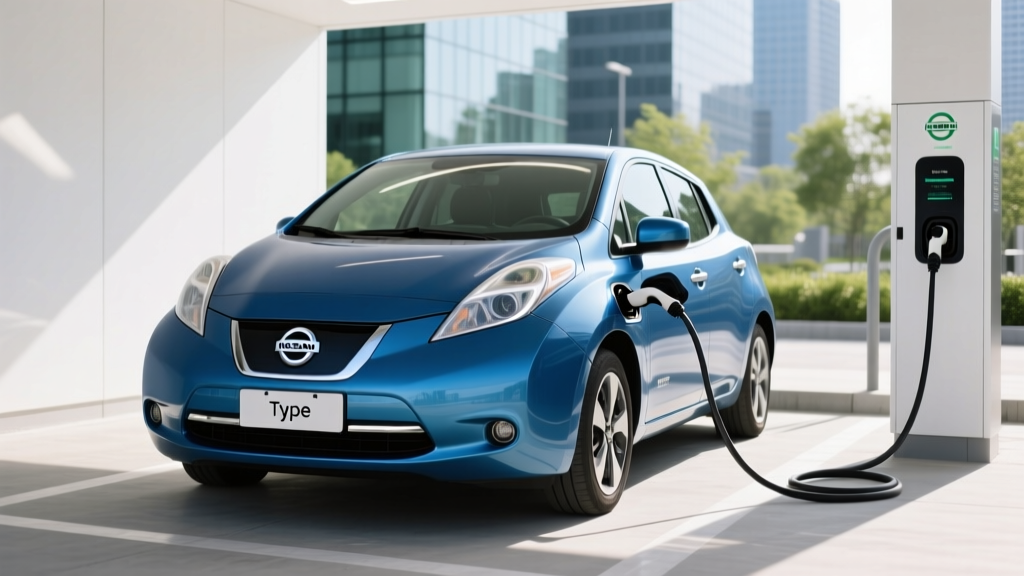
The Nissan Leaf uses the CHAdeMO DC fast charging connector — a legacy standard that is being phased out across North America in favor of the Tesla-developed NACS (North American Charging Standard). For Level 2 AC charging, the Leaf uses the standard J1772 connector, which is universal across all non-Tesla EVs.
| Connector Type | Used For | Nissan Leaf Compatibility | 2026 Network Status |
|---|---|---|---|
| J1772 | Level 1 & 2 AC charging | ✅ Native — all Leaf models | Universal at public Level 2 stations |
| CHAdeMO | DC Fast Charging | ✅ Native — all Leaf models | Declining; some Electrify America and independent stations still offer it |
| NACS (Tesla) | DC Fast + AC (Supercharger & destination) | ⚠️ Requires CHAdeMO-to-NACS adapter (limited availability) | Dominant standard; Tesla Superchargers opening to non-Tesla via NACS |
| CCS1 | DC Fast Charging | ❌ Not compatible (adapter options extremely limited) | Being replaced by NACS at most networks |
Recommended Level 2 Chargers for the Nissan Leaf
Since the Leaf's onboard charger maxes out at 6.6 kW, you don't need a 48A charger. However, installing a 32A or 40A unit provides future-proofing if you add a second EV with a larger onboard charger. Here are specific recommendations:
Emporia Vue Level 2 Charger
- Power Output: Up to 48A (11.5 kW) — Leaf will draw max 6.6 kW
- Connector: J1772 (NACS adapter available separately)
- Cable Length: 24 ft
- Smart Features: Wi-Fi, app scheduling, energy monitoring, solar integration
- Price: ~$350–$400
- Best For: Budget-conscious buyers who want smart scheduling for off-peak rates
ChargePoint Home Flex
- Power Output: Configurable 16A–50A (up to 12 kW) — set to 32A for Leaf
- Connector: J1772 (NACS version also available)
- Cable Length: 23 ft
- Smart Features: Wi-Fi, app-based scheduling, Alexa integration, flexible amperage
- Price: ~$550–$650
- Best For: Flexibility — adjustable amperage matches your circuit and future EVs
Grizzl-E Smart
- Power Output: Up to 40A (9.6 kW)
- Connector: J1772
- Cable Length: 24 ft
- Smart Features: Wi-Fi, OCPP-compatible, works with utility demand-response programs
- Price: ~$450–$550
- Best For: Cold-climate durability (rated to -40°F) and utility program participation
Cost to Charge a Nissan Leaf: Per-Mile Breakdown vs. Gas
Charging cost is where the Leaf shines — but the rate you pay depends heavily on where and when you charge. Here's a realistic cost comparison using the Leaf SV Plus (60 kWh battery, ~185 real-world miles per full charge, ~3.2 miles/kWh efficiency).
| Charging Scenario | Cost per kWh | Cost for Full Charge (60 kWh) | Cost per Mile |
|---|---|---|---|
| Home (off-peak utility rate) | $0.08–$0.12 | $4.80–$7.20 | $0.026–$0.039 |
| Home (standard residential rate) | $0.13–$0.18 | $7.80–$10.80 | $0.042–$0.058 |
| Public Level 2 (workplace/mall) | $0.20–$0.35 | $12.00–$21.00 | $0.065–$0.114 |
| DC Fast Charging (CHAdeMO, where available) | $0.35–$0.55 | $21.00–$33.00 | $0.114–$0.178 |
| Gas car comparison (30 MPG, $3.40/gal) | — | — | $0.113 |
Maximizing Your Nissan Leaf Range Miles: Practical Tips
Given the Leaf's modest EPA range (especially the 40 kWh model), these habits meaningfully extend your real-world miles:
- Use Eco mode and increase regen: The Leaf's B-mode (on the shifter) increases regenerative braking, recapturing more energy in stop-and-go traffic. Combine with Eco mode for 5–10% range improvement.
- Precondition while plugged in: Use the NissanConnect app to warm or cool the cabin while still connected to your Level 2 charger. This uses grid power instead of battery power for HVAC, preserving range.
- Manage highway speed: The Leaf's efficiency drops sharply above 65 mph due to its aerodynamic profile. Dropping from 75 to 65 mph can recover 15–20 miles of range on a 200-mile trip.
- Plan DC fast stops around CHAdeMO availability: Use PlugShare or A Better Routeplanner to confirm CHAdeMO connectors are active at planned stops. Many older CHAdeMO stations have been decommissioned.
- Monitor battery State of Health (SoH): The Leaf's battery bars (visible on the dashboard) indicate degradation. Without active thermal management, the Leaf's NMC battery degrades faster in hot climates. Annual SoH checks via LeafSpy or a dealer diagnostic are recommended.
Frequently Asked Questions
How much does it cost to install a home EV charger for my Nissan Leaf?
For most homes with a 200A electrical panel, expect $700–$2,450 total (equipment + electrician + permit). If your home has an older 100A panel that needs upgrading, add $1,500–$3,500 for the panel work, bringing the total to $2,200–$5,950. Always get a load calculation from a licensed electrician before purchasing equipment.
How fast will each charging level add range to my Leaf?
Level 1 (120V) adds about 4–5 miles per hour — enough for overnight replenishment if your daily drive is under 40 miles. Level 2 (240V at 6.6 kW, the Leaf's maximum) adds roughly 20–25 miles per hour, fully recharging the SV Plus overnight in about 9 hours. DC fast charging on CHAdeMO can add 80–120 miles in 30 minutes at peak rate, but slows substantially above 80% SoC.
Which connector and charger is compatible with the Nissan Leaf?
For Level 2 AC charging, the Leaf uses the standard J1772 connector — any J1772 home charger or public Level 2 station will work. For DC fast charging, the Leaf uses CHAdeMO, which is becoming scarce in 2026 as networks transition to NACS. CCS1 adapters for CHAdeMO vehicles are extremely limited and generally not recommended. If Tesla Supercharger access is critical to you, consider that the Leaf's CHAdeMO port is a growing limitation.
How much does charging cost per mile vs. gas?
Charging at home on off-peak rates ($0.08–$0.12/kWh), the Leaf costs about 3–4 cents per mile — roughly one-third the cost of a 30 MPG gas car burning $3.40/gallon fuel. On standard residential rates ($0.13–$0.18/kWh), you're at 4–6 cents per mile. DC fast charging at public rates ($0.35–$0.55/kWh) pushes costs to 11–18 cents per mile, which can exceed gas-car costs. Home charging is where the savings live.
What electrical upgrades might I need for a home charger?
The most common upgrade is a panel capacity increase from 100A to 200A, required when your existing panel lacks headroom for a 40A EV circuit. Other potential needs: a new conduit run from panel to garage (adds $200–$800 depending on distance), a GFCI breaker (required by updated NEC for receptacle-based charging, ~$80–$150), or a sub-panel installation if your garage is far from the main panel. A licensed electrician's load calculation will identify these requirements before you commit to equipment.
Is the Nissan Leaf still a good EV to buy in 2026?
The Leaf offers strong value in the used market — well-maintained SV Plus models can be found for $15,000–$22,000, making them one of the cheapest ways into EV ownership. However, the CHAdeMO connector's declining infrastructure, passive battery thermal management (leading to faster degradation in hot climates), and modest DC fast charge rates are real limitations. If you have reliable home Level 2 charging, a short commute, and access to remaining CHAdeMO stations, the Leaf remains a practical and economical choice. For road-trip-heavy drivers, a NACS or CCS-equipped EV will serve you better in 2026's charging landscape.