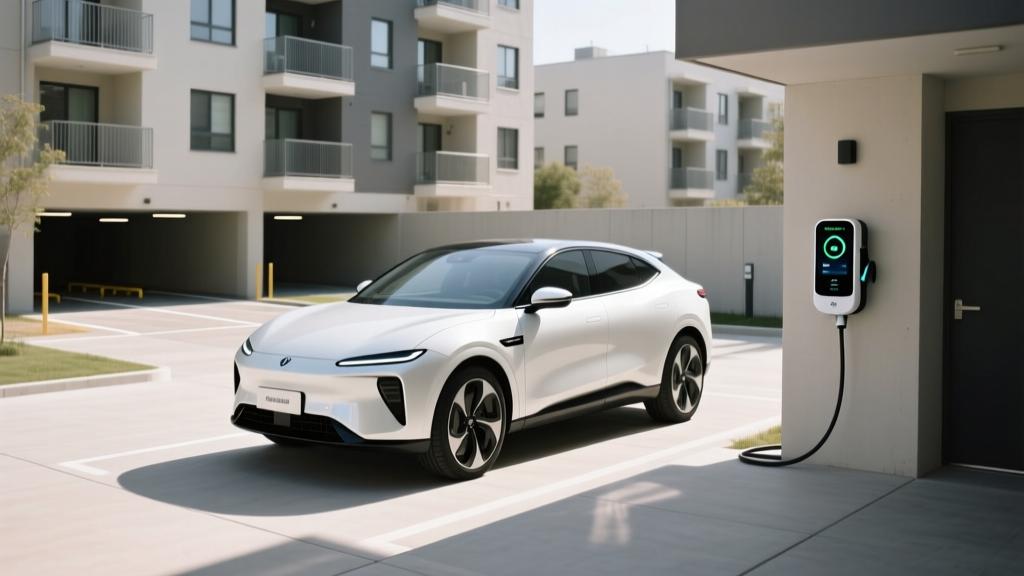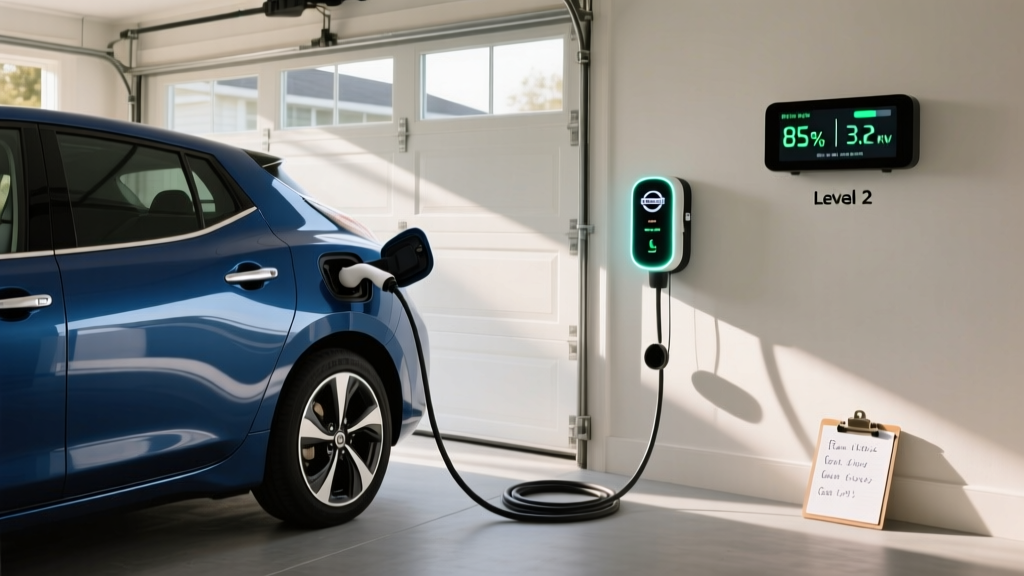
Shoppers researching the new Nissan Leaf range quickly encounter a second, equally important question: how do I actually charge it, and what will that cost? The 2026 Nissan Leaf offers two battery packs — a 40 kWh pack delivering an EPA-estimated 149 miles and a 60 kWh pack rated for 212 miles. But those sticker numbers only matter if you have a practical charging plan at home and on the road.
This guide breaks down exactly how fast each charging level replenishes a Leaf, what a home Level 2 installation really costs (including the panel upgrade that older homes often need), which connectors you'll encounter, and how charging per mile compares to gasoline. Whether you're considering the Leaf SV or the longer-range Leaf SL, the charging fundamentals below apply directly to your ownership experience.
Nissan Leaf Range and Battery Specs at a Glance
| Specification | Leaf S / SV (Standard) | Leaf SV Plus / SL Plus |
|---|---|---|
| Battery Capacity (usable) | 40 kWh (NMC) | 60 kWh (NMC) |
| EPA Range | 149 miles | 212 miles |
| Real-World Highway Range | ~115–130 miles | ~170–190 miles |
| Real-World Cold Weather (32°F) | ~100–115 miles | ~150–170 miles |
| Combined MPGe | 111 MPGe | 109 MPGe |
| Motor Output | 147 hp / 236 lb-ft | 214 hp / 250 lb-ft |
| 0–60 mph | ~7.9 sec | ~6.5 sec |
| Max DC Fast Charge Rate | ~50 kW (CHAdeMO) | ~100 kW (CHAdeMO) |
| Base MSRP (2026) | ~$28,140 | ~$36,190 |
| Battery Warranty | 8 years / 100,000 miles (capacity loss below 9 bars of 12) | 8 years / 100,000 miles (capacity loss below 9 bars of 12) |
Charging Levels Explained: Speeds in kW and Miles Per Hour
Before we calculate costs, let's clarify the most common EV terminology mix-up: kW (kilowatts) measures power — the rate at which electricity flows. kWh (kilowatt-hours) measures energy — the total amount stored in the battery. A 60 kWh battery charged at 7.2 kW takes roughly 8.3 hours from empty. Here's what each level delivers:
| Level | Power Source | Typical kW | Miles Added Per Hour (Leaf 60 kWh) | Best Use Case |
|---|---|---|---|---|
| Level 1 | 120V standard outlet | 1.2–1.4 kW | ~3–5 miles/hr | Overnight top-up for short commutes |
| Level 2 | 240V dedicated circuit | 3.3–7.2 kW (Leaf onboard charger max ~6.6 kW) | ~14–25 miles/hr | Daily home charging, full overnight replenishment |
| DC Fast Charging | 480V+ public station | 50–100 kW (CHAdeMO) | ~150–250 miles/hr (peak) | Road trips, rapid replenishment |
Critical detail for Leaf owners: The Nissan Leaf uses a CHAdeMO DC fast charging connector, not the CCS1 or NACS (Tesla) connectors increasingly dominant in North America. This matters enormously for public charging access in 2026, as Electrify America and most new networks have standardized on CCS1/NACS. CHAdeMO stations still exist — primarily at older Electrify America locations, some EVgo stations, and select Nissan dealers — but availability is narrowing.
How Much Does It Cost to Install a Home Level 2 Charger?
Home Level 2 charging is the backbone of practical EV ownership. For a Nissan Leaf, a 240V/32A circuit delivering 7.7 kW (though the Leaf's onboard charger caps intake at ~6.6 kW) is the sweet spot. Here's what a professional installation actually costs:
| Component | Typical Cost Range | Notes |
|---|---|---|
| Level 2 Charger (Equipment) | $300–$700 | 32A–48A smart chargers; Wi-Fi enabled models at the higher end |
| Electrician Labor | $400–$1,200 | Depends on run length from panel to garage/driveway; longer runs cost more |
| Electrical Permit | $50–$200 | Required in most jurisdictions; inspection included |
| Panel Upgrade (if needed) | $1,500–$3,500+ | Older homes with 100A service often need a 200A upgrade to add a 40A EV circuit |
| Total (No Panel Upgrade) | $750–$2,100 | Most homes built after 2000 with 200A service |
| Total (With Panel Upgrade) | $2,250–$5,600+ | Common in homes built before 1990 or with significant existing loads |
What electrical upgrades might you need? A Level 2 charger on a 40A breaker requires a dedicated 240V/40A circuit (NEMA 14-50 outlet or hardwired). If your electrical panel has fewer than four open breaker slots, is rated below 200 amps, or is already near capacity from HVAC, electric water heating, and appliances, an electrician will recommend a panel upgrade or a load-management device. Some utilities offer load-management programs that let you avoid a panel upgrade by throttling charger draw during peak household usage.
Always hire a licensed electrician and pull a permit. Unpermitted EV charger installations can void homeowner's insurance claims and create fire risk from undersized wiring.
Connector Compatibility: CHAdeMO, CCS1, and NACS
The connector landscape has shifted dramatically. Here's where the Nissan Leaf fits in 2026:
| Connector | Used By | Nissan Leaf Compatible? | Notes |
|---|---|---|---|
| CHAdeMO (DC Fast) | Nissan Leaf, Mitsubishi Outlander PHEV (older) | Yes — native | Declining public availability; check PlugShare before road trips |
| CCS1 (DC Fast) | Most non-Tesa EVs: VW, Hyundai, Kia, Ford, BMW, GM | No — adapter not commercially available | Dominant standard at Electrify America |
| NACS / Tesla (DC Fast) | Tesla, Ford, GM, Rivian, Volvo, and most 2025+ EVs | No — no reliable adapter exists for CHAdeMO-to-NACS | Tesla Supercharger network; rapidly expanding |
| J1772 (Level 1 & 2 AC) | All non-Tesla EVs including Nissan Leaf | Yes — native | Standard for all home and public AC charging |
Bottom line for Leaf buyers: Home Level 2 charging (J1772) works perfectly. Public DC fast charging requires planning around CHAdeMO-equipped stations, which are becoming less common. Use the PlugShare app to verify CHAdeMO availability along your regular routes before committing to a Leaf for road-trip duty.
Charging Cost Per Mile: Leaf vs. Gasoline
One of the strongest arguments for the Leaf is operating cost. Here's a realistic comparison using the 60 kWh Leaf (212-mile EPA) versus a comparable gas compact hatchback averaging 30 MPG combined:
| Scenario | Cost per kWh | Leaf Cost per Mile | Gas Car (30 MPG, $3.40/gal) | Annual Savings (12,000 mi) |
|---|---|---|---|---|
| Home Off-Peak Charging | $0.09–$0.13/kWh | $0.03–$0.04/mi | $0.11/mi | $840–$960 |
| Home Peak Charging | $0.18–$0.25/kWh | $0.05–$0.07/mi | $0.11/mi | $480–$720 |
| Public Level 2 (e.g., ChargePoint) | $0.25–$0.39/kWh | $0.07–$0.11/mi | $0.11/mi | $0–$480 |
| DC Fast Charging (CHAdeMO public) | $0.35–$0.55/kWh | $0.10–$0.15/mi | $0.11/mi | -$120 to -$480 (more expensive) |
The Leaf consumes roughly 28–30 kWh per 100 miles (its efficiency rating, per fueleconomy.gov). At the national residential average of ~$0.16/kWh, that's approximately $0.045 per mile — less than half the cost of a 30 MPG gas car. The savings are most dramatic when you charge at home on off-peak utility rates. Exclusive reliance on DC fast charging, however, can erode or even eliminate the cost advantage.
Recommended Level 2 Home Chargers for the Nissan Leaf
Since the Leaf's onboard AC charger caps at ~6.6 kW, even a 48A charger won't push more than that through. However, installing a higher-amperage charger gives you flexibility for a future EV. Here are proven options:
Emporia Vue Level 2 Smart Charger
- Power Output: Up to 48A / 11.5 kW (hardwired) or 40A / 9.6 kW (NEMA 14-50)
- Connector: J1772 (native for Leaf)
- Cable Length: 24 feet
- Smart Features: Wi-Fi, energy monitoring via Emporia app, solar integration, scheduled charging
- Price: ~$399
- Best For: Budget-conscious buyers wanting smart scheduling and energy tracking
ChargePoint Home Flex
- Power Output: Adjustable 16A–50A / up to 12 kW (hardwired)
- Connector: J1772
- Cable Length: 23 feet
- Smart Features: Wi-Fi, ChargePoint app, Alexa integration, works with utility demand-response programs
- Price: ~$649
- Best For: Reliable network-connected charger with broad utility program compatibility
Grizzl-E Smart Level 2
- Power Output: Up to 40A / 9.6 kW (NEMA 14-50)
- Connector: J1772
- Cable Length: 24 feet
- Smart Features: Wi-Fi via United Chargers app, OCPP-compatible, outdoor-rated (NEMA 4)
- Price: ~$499
- Best For: Outdoor installations in harsh climates; Canadian-built, rugged design
For the Leaf specifically, any of these chargers at 32A (7.7 kW) will fully replenish the 60 kWh battery overnight in roughly 9–10 hours. A 40A or 48A install is smart if you anticipate a future EV with a larger onboard charger.
DC Fast Charging Times and the Leaf's Charge Curve
DC fast charging the Leaf is straightforward but limited by the car's thermal management system. The Leaf uses passive (air) cooling rather than liquid cooling, which means:
- Leaf 40 kWh (CHAdeMO 50 kW): 10–80% in approximately 40–50 minutes under ideal conditions.
- Leaf 60 kWh (CHAdeMO ~100 kW peak): 10–80% in approximately 45–60 minutes. Peak rate is rarely sustained; expect 40–60 kW average through the session.
- Thermal throttling: On hot days or after consecutive fast charges, the Leaf's battery management system reduces charge rate to protect cells. This "Rapidgate" phenomenon — well-documented since the Leaf's earlier generations — means a second DC fast charge in the same day may be significantly slower than the first.
For road trips exceeding 200 miles, plan stops conservatively and check CHAdeMO station availability in advance. The Leaf is best suited to daily commuting and regional trips with overnight Level 2 charging at each end.
Safety, Electrical Code, and Installation Best Practices
A Level 2 charger installation must comply with the National Electrical Code (NEC Article 625) and local amendments. Key requirements:
- Dedicated circuit: The charger must be on its own breaker — no shared circuits with other appliances.
- GFCI protection: NEC 2020 and later require GFCI protection for outdoor receptacles used for EV charging; hardwired installations may have different rules depending on jurisdiction.
- Outdoor rating: If the charger is installed outside, it must carry a NEMA 3R or NEMA 4 rating for weather resistance. The Grizzl-E and ChargePoint Home Flex both meet this standard.
- Wire gauge: A 40A circuit typically requires 8 AWG copper wire; a 50A circuit requires 6 AWG. Undersized wire is a fire hazard.
- Permit and inspection: Required in virtually all jurisdictions. The inspection verifies wire gauge, breaker sizing, grounding, and GFCI compliance.
Never use an extension cord for EV charging, and never plug a Level 1 charger into a power strip or multi-outlet adapter. The sustained high draw of EV charging generates heat that standard household wiring accessories are not rated to handle continuously.
Frequently Asked Questions
How much does it cost to install a home EV charger for the Nissan Leaf?
A typical Level 2 installation without a panel upgrade runs $750–$2,100, including the charger ($300–$700), electrician labor ($400–$1,200), and permit ($50–$200). If your home has older 100A electrical service, a panel upgrade to 200A adds $1,500–$3,500+, bringing the total to $2,250–$5,600+.
How fast will each charging level add range to the Leaf?
Level 1 (120V) adds roughly 3–5 miles per hour. Level 2 (240V, 32A) adds approximately 20–25 miles per hour for the 60 kWh Leaf. DC fast charging on CHAdeMO can add 100+ miles in 30 minutes at peak rate, but sustained averages are lower due to charge curve taper and thermal management.
Which connector is compatible with the Nissan Leaf?
The Leaf uses a J1772 connector for Level 1 and Level 2 AC charging (universal for all non-Tesla EVs) and a CHAdeMO connector for DC fast charging. The Leaf is not compatible with CCS1 or NACS (Tesla) connectors, and no reliable adapter currently bridges CHAdeMO to these standards.
How much does charging the Leaf cost per mile versus gas?
At home on off-peak rates ($0.09–$0.13/kWh), the Leaf costs approximately $0.03–$0.04 per mile — roughly one-third the cost of a 30 MPG gas car at $3.40/gallon ($0.11/mile). Annual savings for a 12,000-mile driver typically range from $840 to $960. Exclusive DC fast charging at $0.35–$0.55/kWh can cost more per mile than gasoline.
What electrical upgrades might I need for a home charger?
You'll need a dedicated 240V circuit (typically 40A) with appropriate wire gauge and breaker. Homes with 100A electrical service, few open panel slots, or high existing loads (electric heat, water heater, dryer) may require a panel upgrade to 200A. A licensed electrician can assess your panel capacity during a site visit.
Does the new Nissan Leaf qualify for the federal EV tax credit?
Federal §30D tax credit eligibility depends on MSRP caps (currently $55,000 for cars), buyer income limits, and battery critical-mineral sourcing requirements that change annually. The Leaf's MSRP falls well under the cap, but sourcing compliance varies by model year. Check the latest rules at IRS.gov or consult a tax professional. Some dealers offer point-of-sale credit transfers if you qualify.
Is the Nissan Leaf a good choice for road trips?
The 60 kWh Leaf with 212 miles of EPA range handles regional trips reasonably well, but its CHAdeMO connector limits DC fast charging options compared to CCS1/NACS vehicles. Thermal throttling in hot weather further reduces road-trip practicality. If frequent long-distance travel is a priority, a vehicle with CCS1 or NACS and liquid-cooled battery (e.g., Hyundai Ioniq 5, Tesla Model 3) offers a more reliable road-trip experience.
Final Assessment: Is the New Nissan Leaf's Range and Charging Practical for You?
The 2026 Nissan Leaf's 212-mile EPA range (60 kWh variant) is adequate for most daily commutes and errands, and home Level 2 charging makes ownership effortless and inexpensive. The Leaf's Achilles' heel is public DC fast charging: CHAdeMO infrastructure is shrinking, thermal management limits repeated fast charging, and no adapter bridges to the CCS1/NACS networks now dominant in North America.
If your driving pattern is primarily local — under 100 miles daily with reliable home charging — the Leaf remains one of the most affordable new EVs on the market, with strong efficiency and low per-mile operating costs. If you regularly drive 200+ miles in a day or live in an area with limited CHAdeMO stations, consider the charging-access limitation carefully before purchasing. The Leaf's range is real; the charging ecosystem around it is what requires scrutiny.