The Nissan Leaf Range Answer: EPA Stickers vs. Real-World Miles
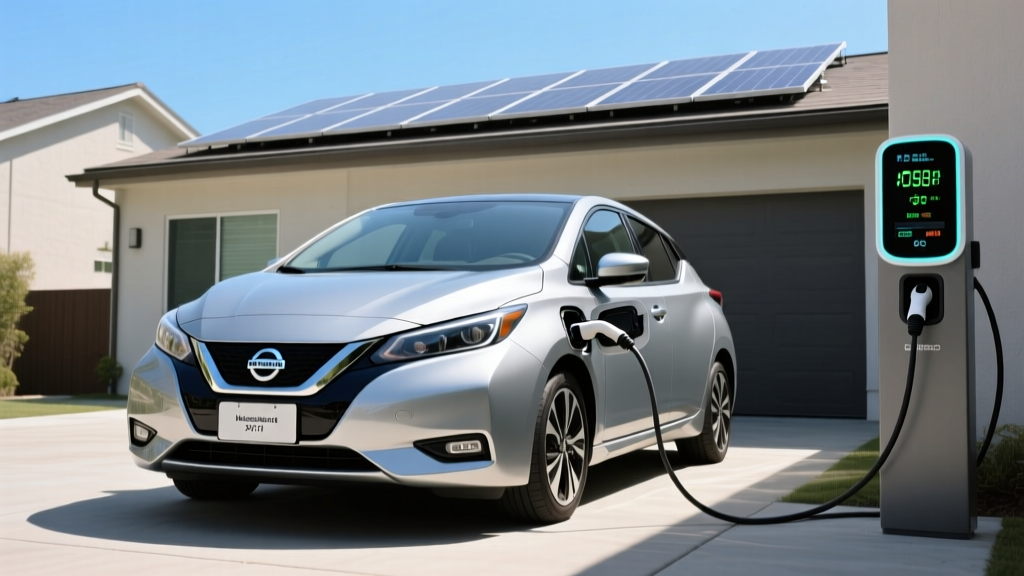
If you're shopping for an affordable used or new electric vehicle, you've likely asked: what is the range of a Nissan Leaf? The answer depends on which battery pack you choose and how you drive. For the 2025–2026 model years, Nissan offers two configurations:
- Leaf S (40 kWh battery): EPA-estimated 149 miles of range
- Leaf SV Plus (60 kWh battery): EPA-estimated 212 miles of range
Those are the official numbers from fueleconomy.gov, but the EPA sticker tells only part of the story. Real-world range varies significantly based on temperature, highway speed, terrain, and climate-control use.
- EPA sticker: 212 miles
- Mixed driving (55–65 mph, moderate climate): ~185–200 miles
- Highway-only (70+ mph): ~165–180 miles
- Cold weather (below 32°F): ~140–165 miles (20–30% reduction)
The 40 kWh Leaf S scales proportionally — expect roughly 105–130 miles in mixed real-world conditions and as low as 90–100 miles in deep cold.
The Leaf's air-cooled battery pack (as opposed to the liquid-cooled systems in competitors like the Hyundai Ioniq 5 or Tesla Model 3) makes it more susceptible to temperature extremes. In hot climates, repeated DC fast charging can cause the battery management system to throttle charge speeds to protect cell health — a phenomenon owners call "Rapidgate." In cold weather, the lack of a heat pump means cabin heating draws heavily from the traction battery, compounding range loss.
Charging Levels Explained: How Fast Will Each Level Add Range?
Understanding EV charging requires distinguishing between kW (kilowatts), which measures the rate of power delivery, and kWh (kilowatt-hours), which measures the total energy stored in the battery. Think of kW as the speed of water flowing through a hose and kWh as the total volume of the tank you're filling.
| Level | Power (kW) | Voltage / Amps | Miles of Range Added per Hour | Full Charge Time (60 kWh) |
|---|---|---|---|---|
| Level 1 (120V household outlet) | 1.2–1.4 kW | 120V / 12A | ~4–5 mi/hr | ~43–50 hours |
| Level 2 (240V home/public) | 3.3–6.6 kW | 240V / 16–28A | ~12–25 mi/hr | ~9–18 hours |
| DC Fast Charging | Up to 100 kW (peak) | 400V+ DC | ~150–200 mi/hr (at peak) | 10–80% in ~40 min |
Key constraint for Leaf owners: The Nissan Leaf uses a CHAdeMO connector for DC fast charging, not the CCS1 standard now adopted by most automakers or the NACS (Tesla) standard. The Leaf's onboard charger for Level 2 is capped at 6.6 kW, meaning even if you plug into a 48-amp Level 2 station delivering 11.5 kW, the Leaf will only accept 6.6 kW. Plan your charging setup accordingly — there's no benefit to installing a 48-amp charger specifically for a Leaf.
Which Connector and Charger Is Compatible with the Nissan Leaf?
Connector compatibility is one of the most confusing aspects of EV ownership. Here's how the Leaf fits into the current landscape:
| Connector Type | Use Case | Leaf Compatible? | Adapter Needed? |
|---|---|---|---|
| J1772 | Level 1 & Level 2 AC charging | ✅ Yes (native) | No |
| CHAdeMO | DC fast charging | ✅ Yes (native) | No |
| CCS1 | DC fast charging (most non-Tesla EVs) | ❌ No | No reliable adapter exists |
| NACS (Tesla) | Tesla Superchargers & NACS stations | ❌ No | Limited; no DC adapter for CHAdeMO→NACS widely available as of 2026 |
The CHAdeMO situation matters for road trips. While Electrify America, EVgo, and some ChargePoint stations still maintain CHAdeMO connectors, the industry has largely standardized on CCS1 and NACS. Before traveling, use the AFDC station locator to confirm CHAdeMO availability along your route. If you rely primarily on home charging and take occasional short trips, this limitation is manageable. For frequent long-distance travel, the Leaf's connector and range combination becomes a significant constraint.
How Much Does It Cost to Install a Home EV Charger?
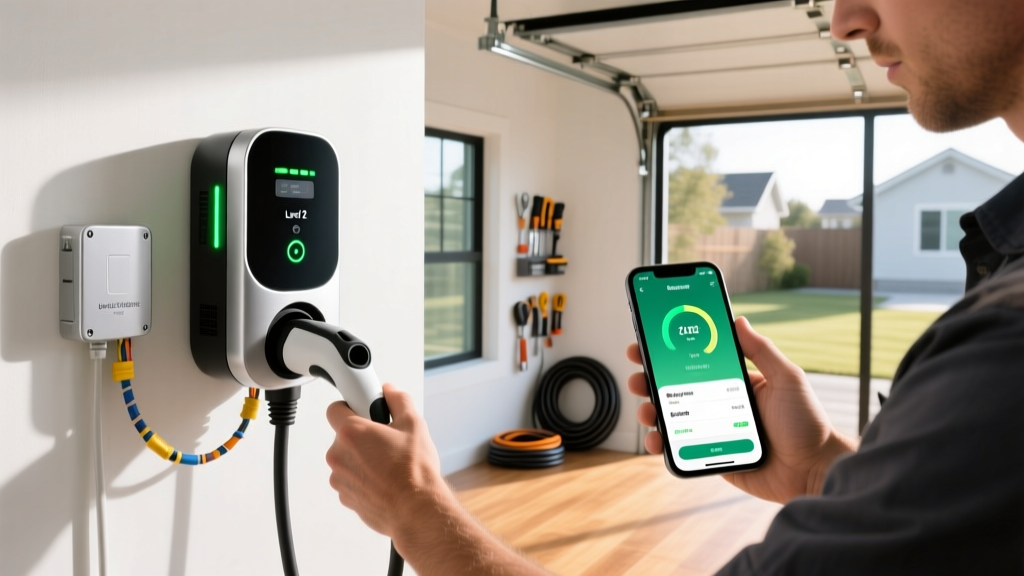
For most Leaf owners, a Level 2 home charger is the practical sweet spot — it fully replenishes the 60 kWh battery overnight. Here's what installation actually costs, broken down honestly.
| Component | Simple Install (panel nearby) | Complex Install (long run / panel upgrade) |
|---|---|---|
| Level 2 charger equipment (32A, 7.6 kW) | $350–$600 | $350–$600 |
| Electrician labor (240V/40A dedicated circuit) | $400–$800 | $1,200–$2,500 |
| Permit & inspection | $50–$200 | $100–$300 |
| Electrical panel upgrade (100A → 200A, if needed) | N/A | $1,500–$3,500 |
| Total estimated cost | $800–$1,600 | $3,150–$6,900 |
Electrical requirements for a Leaf-compatible Level 2 charger:
- Voltage: 240V (NEMA 14-50 outlet or hardwired)
- Amperage: 32A circuit (40A breaker) is sufficient — the Leaf caps at 6.6 kW (28A), so a 32A charger is the practical maximum
- Circuit: Must be dedicated — not shared with other appliances
- GFCI protection: Required by NEC 2020+ for EV charging outlets (625.41)
- Outdoor rating: If installing outside, use a NEMA 4-rated enclosure and outdoor-rated charger (IP55 or higher)
How Much Does Charging Cost per Mile vs. Gas?
One of the strongest arguments for the Leaf is running cost. Let's compare real charging scenarios against a similar gas vehicle (approximately 30 MPG combined, like a Nissan Sentra).
| Scenario | Rate | Cost per Mile | Annual Cost (12,000 mi) |
|---|---|---|---|
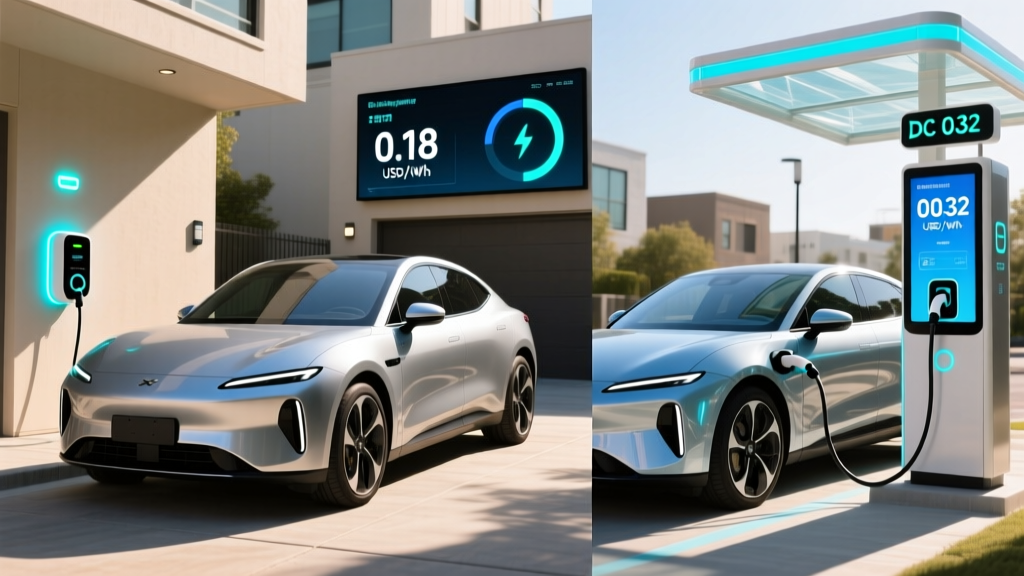
| Home charging (off-peak utility rate) | $0.09/kWh | $0.027 | $324 |
| Home charging (national avg rate) | $0.16/kWh | $0.048 | $576 |
| Public Level 2 (ChargePoint, EVgo) | $0.25–$0.35/kWh | $0.075–$0.105 | $900–$1,260 |
| DC fast charging (public) | $0.35–$0.55/kWh | $0.105–$0.165 | $1,260–$1,980 |
| Gas equivalent (30 MPG @ $3.40/gal) | $3.40/gallon | $0.113 | $1,360 |
The Leaf's efficiency is approximately 3.0–3.3 kWh per mile (or roughly 111 MPGe combined per the EPA). At home off-peak rates, you're paying roughly one-quarter what a gas car costs per mile. Even at public DC fast-charging rates, the Leaf can match or beat gas on a per-mile basis — though frequent DC fast charging erodes the cost advantage and accelerates battery degradation on the Leaf's air-cooled pack.
Charging Time Examples: What to Expect with the Leaf's Battery Sizes
Because the Leaf's Level 2 onboard charger maxes out at 6.6 kW, charging times are straightforward to calculate:
Leaf S (40 kWh usable)
- Level 1 (1.4 kW): ~29 hours (0–100%)
- Level 2 (6.6 kW): ~6 hours (0–100%)
- DC Fast (50 kW CHAdeMO): ~40 min (10–80%)
- DC Fast (100 kW CHAdeMO): ~30 min (10–80%) — where available
Leaf SV Plus (60 kWh usable)
- Level 1 (1.4 kW): ~43 hours (0–100%)
- Level 2 (6.6 kW): ~9 hours (0–100%)
- DC Fast (50 kW CHAdeMO): ~60 min (10–80%)
- DC Fast (100 kW CHAdeMO): ~40 min (10–80%) — where available
Charge-curve reality: The Leaf's DC fast-charge speed peaks early (typically between 10–40% state of charge) then tapers significantly. A "100 kW" peak doesn't mean you're getting 100 kW for the entire session. Average power across a 10–80% session is typically 45–60 kW on the 60 kWh pack. In hot weather, repeated fast charging in a single day will trigger thermal throttling that can cut charge speeds to 20–30 kW — another consequence of the passive air-cooling system.
Recommended Home Chargers for the Nissan Leaf
Since the Leaf uses J1772 for Level 2 and caps at 6.6 kW, you don't need the most powerful charger on the market. A 32-amp (7.6 kW) unit is ideal — it covers the Leaf's maximum acceptance rate and leaves headroom if you later switch to a different EV. Here are three well-regarded options:
Emporia Vue Level 2
- Power: 48A max (11.5 kW); Leaf will use 28A (6.6 kW)
- Connector: J1772 (native)
- Cable: 24 ft
- Smart features: Wi-Fi, app scheduling, solar integration, energy monitoring
- Price: ~$399
- Best for: Budget-conscious buyers who want smart scheduling for off-peak rates
ChargePoint Home Flex
- Power: Configurable 16A–50A (up to 12 kW); set to 32A for Leaf
- Connector: J1772 (native)
- Cable: 23 ft
- Smart features: Wi-Fi, Alexa, app scheduling, flexible amperage
- Price: ~$549
- Best for: Flexibility if you plan to upgrade to a higher-power EV later
Grizzl-E Smart
- Power: 40A max (9.6 kW); Leaf will use 28A (6.6 kW)
- Connector: J1772 (native)
- Cable: 24 ft
- Smart features: OCPP-compatible, app control, outdoor-rated (IP67)
- Price: ~$449
- Best for: Outdoor/garage installs in extreme climates; rugged build
All three chargers use the J1772 connector the Leaf requires natively — no adapter needed. Note that while you can install a 48-amp charger, the Leaf will never draw more than its 6.6 kW (28A) limit. The advantage of a higher-capacity unit is future-proofing for your next EV.
Safety, Code, and What Electrical Upgrades You Might Need
EV charging installations must comply with the National Electrical Code (NEC Article 625) and local building codes. Key requirements:
- Dedicated circuit: Your Level 2 charger must have its own breaker — not shared with a dryer, oven, or other large appliance
- GFCI protection: NEC 625.41 requires ground-fault circuit interrupter protection for EV supply equipment; most modern chargers have this built in, but your electrician should verify
- Continuous load rule: EV chargers are classified as continuous loads, meaning the circuit must be rated for 125% of the charger's maximum draw (a 32A charger requires a 40A breaker)
- Outdoor installations: Require NEMA 4-rated enclosures for receptacles and IP55+ rated chargers; conduit must be weatherproof
- Permit and inspection: Most jurisdictions require a permit for new 240V circuits; skipping this can void home insurance coverage in the event of an electrical fire
Frequently Asked Questions
What is the range of a Nissan Leaf in cold weather?
In temperatures below 32°F, expect a 20–30% range reduction. The 60 kWh SV Plus drops from its EPA 212 miles to roughly 140–165 miles. The Leaf lacks a heat pump (standard on competitors like the Hyundai Ioniq 5 and Kia EV6), so resistive cabin heating draws significant energy from the traction battery. Preconditioning the cabin while plugged in helps preserve range.
Can I use a Tesla Supercharger with the Nissan Leaf?
No. Tesla Superchargers use the NACS connector, and there is currently no widely available, safety-certified DC adapter from CHAdeMO to NACS. The Leaf is limited to CHAdeMO-equipped DC fast chargers and J1772 Level 2 stations. This is a meaningful limitation for road-trip planning in 2026, as the charging industry has largely shifted toward CCS1 and NACS.
How much does it cost to replace a Nissan Leaf battery?
Nissan's official battery replacement pricing for the 60 kWh pack ranges from approximately $6,500 to $9,000 including labor (as of recent reports). The Leaf's battery warranty covers 8 years/100,000 miles against capacity loss below 9 bars (out of 12) on the capacity gauge, or roughly 66% state of health. The air-cooled battery design tends to degrade faster in hot climates compared to liquid-cooled packs, so this warranty is worth monitoring.
Is the Nissan Leaf still worth buying in 2026?
The Leaf remains one of the most affordable new EVs available, with a base MSRP around $28,140 for the S trim (before any incentives). It excels as a commuter car with home charging. However, its CHAdeMO connector, air-cooled battery, and 149–212 mile range make it less competitive for road trips or hot-climate buyers compared to the Chevrolet Equinox EV, Hyundai Kona Electric, or Volvo EX30. If your use case is daily commuting under 80 miles round-trip with reliable home charging, the Leaf's value proposition holds.
Does the Nissan Leaf qualify for the federal EV tax credit?
Under current IRS §30D rules, the Leaf's eligibility for the up-to-$7,500 federal tax credit depends on battery sourcing, critical mineral requirements, buyer income caps ($150K single / $300K joint), and MSRP limits ($55,000 for cars). The Leaf's MSRP falls well under the cap, but battery-component and critical-mineral sourcing requirements have tightened. Check the latest eligibility list at fueleconomy.gov and consult a tax professional, as rules are subject to legislative changes. The credit can now be transferred to the dealer at point of sale, reducing your purchase price directly.