If you're coming from a supercharged gasoline truck — whether that's a modified 01 Nissan Frontier Supercharged or a comparable ICE midsize — the jump to an electric pickup like the Ford F-150 Lightning, Rivian R1T, or Chevrolet Silverado EV requires a total rethink of how you "refuel." The good news: most charging happens at home, and the economics strongly favor electrons over gasoline. But getting your home setup right, understanding public charging networks, and choosing the correct equipment is where most new EV truck buyers stumble.
This guide breaks down every layer of EV charging — from Level 1 trickle charging to 350 kW DC fast charging — with exact numbers, real costs, and the electrical realities of upgrading your garage for a battery-electric truck with a 100+ kWh battery pack.
Charging Levels Explained: How Fast Does Each Level Add Range?
The single most important distinction in EV literacy is between kW (kilowatts), which measures power — the rate at which energy flows — and kWh (kilowatt-hours), which measures energy — the total amount stored in your battery. Think of kW as the width of the hose and kWh as the size of the bucket. A wider hose (higher kW) fills the bucket faster, but the bucket size (battery capacity in kWh) determines total range.
| Level | Voltage / Amperage | Power Output (kW) | Miles of Range Added per Hour | 10–80% Charge Time (approx.) |
|---|---|---|---|---|
| Level 1 (Standard Outlet) | 120V / 12A | 1.4 kW | ~2–3 mi/hr | ~65+ hours |
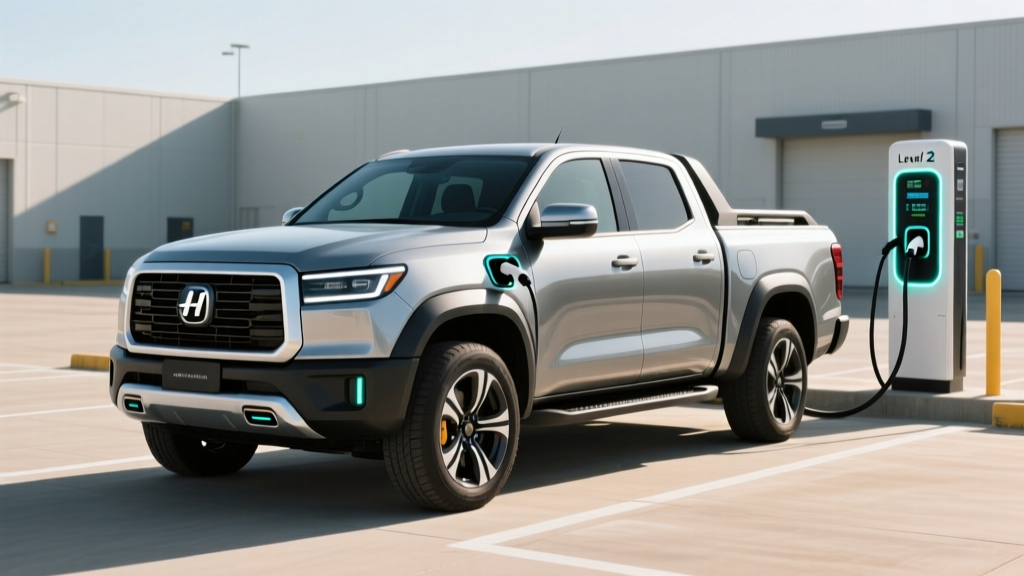
| Level 2 (Home / Public AC) | 240V / 32–48A | 7.7–11.5 kW | ~16–30 mi/hr | ~8–12 hours |
| DC Fast Charging (Level 3) | 400V–800V DC | 50–350 kW | ~120–500+ mi/hr (peak) | ~20–45 minutes |
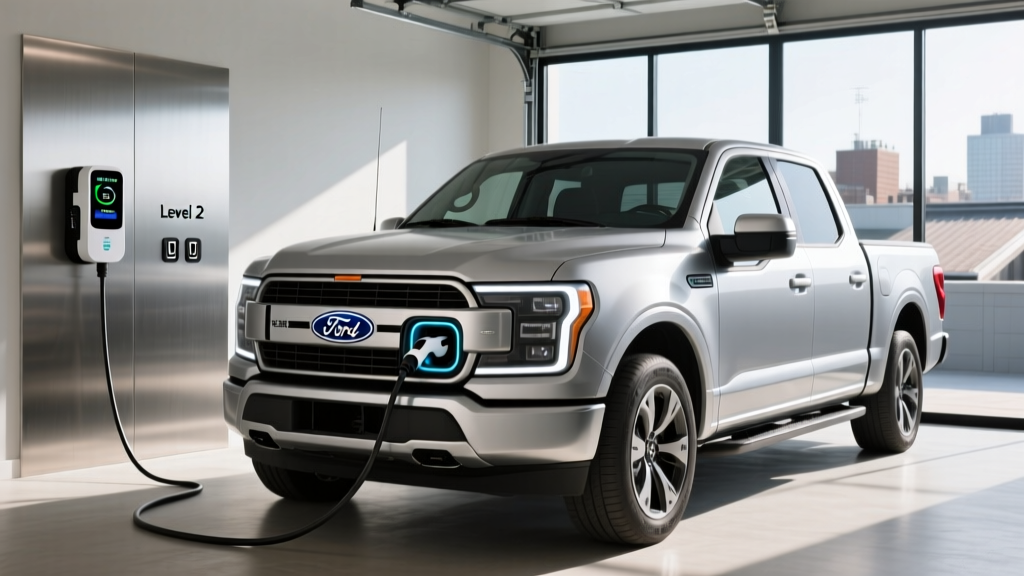
Real-world context: The Ford F-150 Lightning Extended Range carries a 131 kWh usable battery. On a 48-amp Level 2 home charger delivering 11.5 kW, you'll add roughly 25–28 miles of range per hour — enough to fully replenish overnight from a typical daily drive. On a 150 kW DC fast charger, Ford quotes a 10–80% charge in approximately 41 minutes. However, charging speed tapers significantly above 80% state of charge (SoC) to protect battery health, so plan your road-trip stops around the 10–80% window for optimal speed.
Home EV Charger Installation: Electrical Requirements and Costs
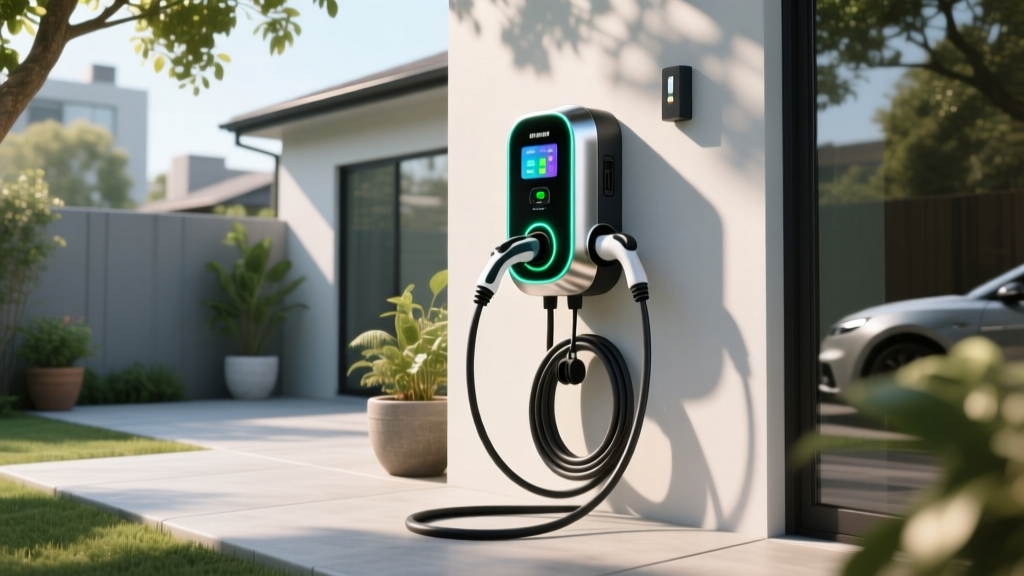
Most EV truck owners will want a Level 2 home charger — it's the only practical way to wake up to a full battery in a vehicle with a 100+ kWh pack. Here's what that requires electrically:
- Circuit: A dedicated 240V circuit, typically 40A, 50A, or 60A depending on charger amperage.
- Charger amperage: Most Level 2 units draw 32A (7.7 kW) or 48A (11.5 kW). The National Electrical Code requires the circuit breaker to be rated at 125% of the continuous load — so a 48A charger needs a 60A breaker.
- Wiring: 6 AWG copper wire for 48A circuits; 4 AWG for 60A.
- Panel capacity: Your home's main electrical panel must have enough spare capacity. A 200-amp panel with existing heavy loads (electric range, dryer, HVAC) may need a load calculation or upgrade to 400A.
Do You Need a Panel Upgrade?
Homes built before 2000 often have 100A or 150A panels. Adding a 60A EV circuit to an already-loaded 100A panel is frequently impossible without upgrading to 200A or installing a smart panel load-management system (like the Span smart panel or a Span Drive charger with circuit-sharing). A panel upgrade from 100A to 200A typically costs $1,500–$3,500 depending on your utility and local code.
| Component | Low-End Estimate | High-End Estimate | Notes |
|---|---|---|---|
| Level 2 Charger Hardware | $350 | $750 | 32A–48A smart Wi-Fi chargers |
| Electrician Labor (install) | $400 | $1,200 | Depends on run length, wall type, conduit |
| Electrical Permit | $50 | $250 | Varies by municipality |
| Wiring & Materials | $100 | $400 | 6 AWG copper, conduit, junction boxes |
| Panel Upgrade (if needed) | $1,500 | $3,500 | 100A → 200A service upgrade |
| Total (no panel upgrade) | $900 | $2,600 | Most common scenario |
| Total (with panel upgrade) | $2,400 | $6,100 | Older homes with 100A service |
The IRS Residential Clean Energy Credit (IRC §25C) covers up to 30% of home EV charger equipment and installation costs, capped at $1,000 per year — potentially saving you $270–$780 on a standard install. Verify current-year eligibility with a tax professional, as incentive rules are subject to legislative change.
Connector Compatibility: NACS, CCS1, and CHAdeMO
The connector landscape has consolidated significantly. As of 2026, nearly every major automaker has adopted the North American Charging Standard (NACS) — the Tesla-designed connector — either natively on new vehicles or via adapter. Here's what that means for your EV truck:
| Vehicle | Native Connector | DC Fast Charging Access | Adapter Needed? |
|---|---|---|---|
| Ford F-150 Lightning (2025+) | NACS | Tesla Superchargers + third-party | None (CCS adapter for older stations) |
| Rivian R1T (2025+) | NACS | Tesla Superchargers + Rivian Adventure Network | None |
| Chevrolet Silverado EV | NACS | Tesla Superchargers + third-party | None |
| Hyundai Ioniq 5 (2024 and earlier) | CCS1 | Electrify America, EVgo, third-party | CCS-to-NACS adapter for Superchargers |
| Nissan Ariya | CCS1 | Electrify America, EVgo | CCS-to-NACS adapter for Superchargers |
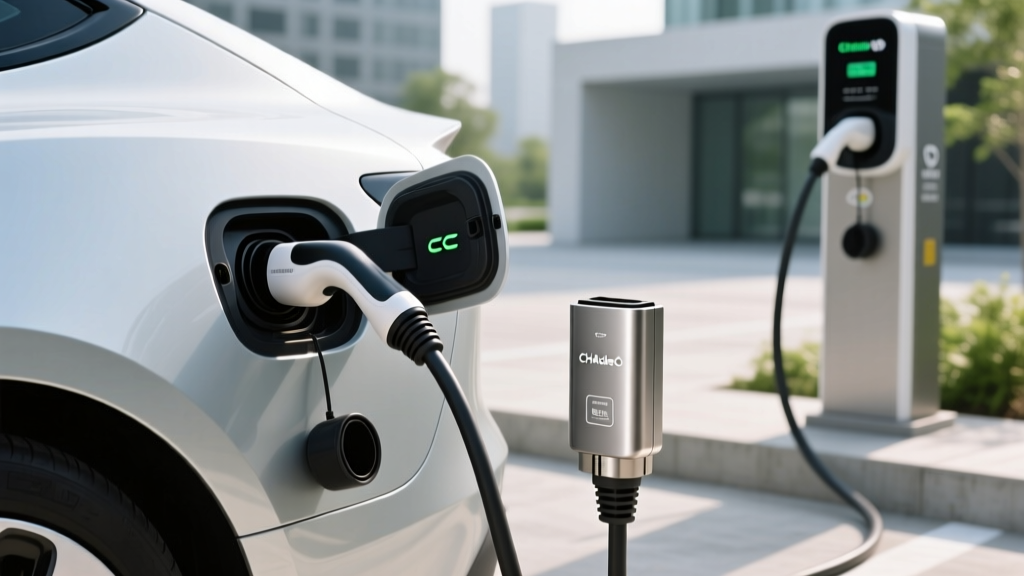
CHAdeMO note: The CHAdeMO connector is effectively discontinued in North America. If you own an older Nissan Leaf with CHAdeMO, public fast-charging options are shrinking. For any new EV truck purchase in 2026, CHAdeMO is not a factor.
For home Level 2 charging, all EVs use a J1772 connector (or NACS, which supports Level 2 AC via the same pins). Most home chargers ship with J1772; if your vehicle has a native NACS port, you'll either need a NACS-equipped home charger (like the Tesla Wall Connector) or a J1772-to-NACS adapter.
Cost to Charge: Per-Mile Economics vs. Your Gas Truck
This is where EV ownership decisively wins — especially compared to a supercharged gasoline truck. A modified 01 Nissan Frontier Supercharged or stock V6 Frontier might achieve 14–17 MPG combined, burning expensive fuel at every fill-up. Let's compare with real numbers.
| Scenario | Energy Cost | Efficiency | Cost Per Mile |
|---|---|---|---|
| Gas Truck (15 MPG combined) | $3.40/gallon (national avg.) | 15 MPG | $0.227/mi |
| EV Truck — Home Off-Peak | $0.11/kWh | 2.0 kWh/mi (50 MPGe) | $0.055/mi |
| EV Truck — Home Peak | $0.22/kWh | 2.0 kWh/mi | $0.110/mi |
| EV Truck — Public Level 2 | $0.30/kWh | 2.0 kWh/mi | $0.150/mi |
| EV Truck — DC Fast Charging | $0.48/kWh (avg.) | 2.0 kWh/mi | $0.240/mi |
The takeaway: Charging at home on off-peak electricity delivers fuel costs roughly 75% lower than a 15 MPG gas truck. Even public DC fast charging at premium rates is roughly cost-neutral with gasoline. If you drive 15,000 miles per year and charge primarily at home off-peak, you're looking at approximately $825/year in electricity vs. $3,405/year in gasoline — a $2,580 annual savings.
Time-of-use (TOU) utility plans are critical here. Many utilities offer overnight rates of $0.08–$0.12/kWh. Schedule your EV to charge between 11 PM and 6 AM to capture the lowest rates. Most smart chargers and EV onboard systems support scheduled charging natively.
Equipment Recommendations: Best Home Level 2 Chargers for EV Trucks
For EV trucks with large battery packs, prioritize chargers that deliver 48A (11.5 kW) on a 60A circuit — this cuts overnight charge time by roughly 30% compared to a 32A unit. Here are proven options:
ChargePoint Home Flex
- Power: Up to 50A (12 kW) on a 60A circuit; configurable 16A–50A via DIP switches
- Connector: J1772 (NACS adapter available)
- Cable Length: 23 feet
- Smart Features: Wi-Fi, app scheduling, energy tracking, Alexa integration
- Price: ~$549 (hardware only)
- Best For: Flexibility across circuit sizes; strong app ecosystem
Tesla Wall Connector
- Power: Up to 48A (11.5 kW) on a 60A circuit
- Connector: NACS native (J1772 adapter included for non-Tesla vehicles)
- Cable Length: 24 feet
- Smart Features: Wi-Fi, power-sharing between multiple units, OTA updates
- Price: ~$475
- Best For: NACS-native EVs; best value at 48A; multi-charger garages
Emporia Level 2 EV Charger
- Power: Up to 48A (11.5 kW) on a 60A circuit
- Connector: J1772
- Cable Length: 24 feet
- Smart Features: Wi-Fi, solar integration (pairs with Emporia Vue energy monitor), scheduled charging
- Price: ~$399
- Best For: Budget-conscious buyers; solar-home integration
Grizzl-E Smart
- Power: Up to 40A (9.6 kW) on a 50A circuit
- Connector: J1772 or NACS (selectable at purchase)
- Cable Length: 24 feet
- Smart Features: Wi-Fi, OCPP compatibility, adjustable amperage
- Price: ~$449
- Best For: Cold-climate durability (rated to -40°F); outdoor installs
Safety, Code Compliance, and Installation Best Practices
EV charging is a continuous high-draw electrical load — the equivalent of running a clothes dryer for 8–12 hours straight. Safety and code compliance aren't optional:
- Dedicated circuit: Your EV charger must have its own dedicated circuit — never share with other appliances. The NEC (National Electrical Code) treats EV charging as a continuous load requiring 125% circuit headroom.
- GFCI protection: The 2023 NEC and most 2026 local codes require GFCI (Ground Fault Circuit Interrupter) protection for outdoor EV outlets. Hardwired chargers often have built-in GFCI; plug-in units on a NEMA 14-50 receptacle may need a GFCI breaker (~$50–$100 extra).
- Outdoor rating: If mounting outdoors, ensure the charger carries a NEMA 4 or IP65 weather rating. All chargers listed above meet this standard.
- Permit and inspection: Nearly all jurisdictions require an electrical permit for EV charger installation. Your electrician should pull the permit; inspection typically occurs after installation and before energizing. Skipping the permit risks insurance denial in the event of an electrical fire.
- Plug-in vs. hardwired: A NEMA 14-50 receptacle offers portability (take the charger when you move), but hardwired installations are generally more reliable, avoid GFCI breaker nuisance trips, and allow full 48A operation (plug-in units on 14-50 are limited to 40A/9.6 kW per NEC derating rules).
Charging Time Examples: How Long Does a Full Charge Actually Take?
EV truck batteries are massive — the largest in any consumer vehicle segment. Here are realistic charge times for common pack sizes:
| Vehicle (Battery Size) | Level 1 (1.4 kW) | Level 2 — 32A (7.7 kW) | Level 2 — 48A (11.5 kW) | DC Fast (150 kW peak) |
|---|---|---|---|---|
| Ford F-150 Lightning Std (98 kWh) | ~72 hrs | ~13 hrs | ~9 hrs | 10–80%: ~33 min |
| Ford F-150 Lightning Ext (131 kWh) | ~96 hrs | ~17 hrs | ~12 hrs | 10–80%: ~41 min |
| Rivian R1T Dual-Motor (106 kWh) | ~78 hrs | ~14 hrs | ~10 hrs | 10–80%: ~30 min |
| Chevy Silverado EV 4WT (200 kWh) | ~147 hrs | ~26 hrs | ~18 hrs | 10–80%: ~45 min (350 kW capable) |
Critical charge-curve note: DC fast charging speeds are peak rates, not sustained rates. A truck that peaks at 150 kW may only sustain that rate between 10–40% SoC, then taper to 100 kW, then 50 kW above 70%. This is why manufacturers quote 10–80% times rather than 0–100% — the last 20% can take as long as the first 70%. For road trips, plan stops at 15–20% remaining SoC and charge to 80% for the fastest overall travel time.
Cold-weather impact: Lithium-ion batteries charge slower in cold temperatures. Below 32°F, expect DC fast-charge times to increase 15–30% unless your vehicle has active battery preconditioning (the F-150 Lightning, Rivian R1T, and Silverado EV all include this feature). Always navigate to a fast charger using the vehicle's built-in nav to trigger preconditioning — arriving at a charger with a cold battery can cut peak charge rate in half.
Frequently Asked Questions
How much does it cost to install a home EV charger?
A typical Level 2 home charger installation costs between $900 and $2,600 when no panel upgrade is needed — this includes the charger hardware ($350–$750), electrician labor ($400–$1,200), permit ($50–$250), and wiring materials ($100–$400). If your home requires a panel upgrade from 100A to 200A service, add $1,500–$3,500, bringing the total to $2,400–$6,100. The IRS §25C Residential Clean Energy Credit may offset up to $1,000 (30% of costs). Always get a load calculation from a licensed electrician before committing to equipment.
How fast will each charging level add range?
Level 1 (120V standard outlet) adds roughly 2–3 miles of range per hour — essentially useless for EV trucks with 100+ kWh batteries except as an emergency trickle. Level 2 (240V, 32–48A) adds 16–30 miles per hour, which is the practical home-charging standard. DC fast charging (50–350 kW) can add 120–500+ miles per hour at peak rates, though real-world sustained rates are lower due to charge-curve tapering above 80% SoC.
Which connector/charger is compatible with my EV?
For 2025–2026 model-year EV trucks (F-150 Lightning, Rivian R1T, Silverado EV), the native connector is NACS. Older EVs and some current models (Hyundai Ioniq 5 pre-2025, Kia EV6 pre-2025, Nissan Ariya) use CCS1 and may require a CCS-to-NACS adapter (~$200–$250) for Tesla Supercharger access. For home Level 2 charging, any J1772 charger works with CCS1 vehicles directly; NACS vehicles need a NACS home charger or a J1772-to-NACS adapter. CHAdeMO is discontinued for new vehicles.
How much does charging cost per mile vs. gas?
At home on off-peak electricity ($0.11/kWh), an EV truck averaging 2.0 kWh/mile costs approximately $0.055/mile — roughly 75% less than a gas truck getting 15 MPG at $3.40/gallon ($0.227/mile). Even at public DC fast-charging rates ($0.48/kWh), the cost is approximately $0.24/mile, essentially parity with gasoline. The savings are maximized by charging at home overnight on a time-of-use utility plan.
What electrical upgrades might I need?
The most common upgrade is a new 240V dedicated circuit with a 60A breaker and 6 AWG wiring. Older homes with 100A electrical service may need a full panel upgrade to 200A ($1,500–$3,500) to safely accommodate EV charging alongside existing loads. Some homes can avoid a full panel upgrade by installing a smart load-management system that throttles the charger when other heavy appliances are running. Your electrician should perform a NEC Article 220 load calculation to determine if your current panel has sufficient capacity.
Transitioning from a gas-powered truck to an electric pickup fundamentally changes your refueling workflow — mostly for the better. With a properly installed Level 2 home charger, you'll start every morning with 250–340 miles of range, spend a fraction of what gasoline costs, and never visit a gas station again for daily driving. The upfront investment of $900–$2,600 for home charging installation pays for itself within 12–18 months through fuel savings alone.