What Is the New Motion Charging Station?
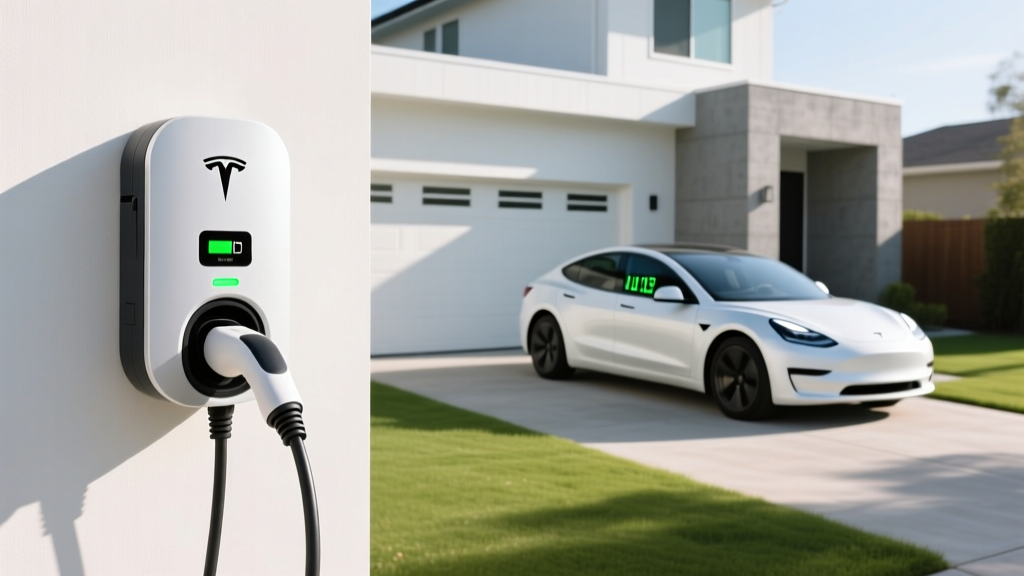
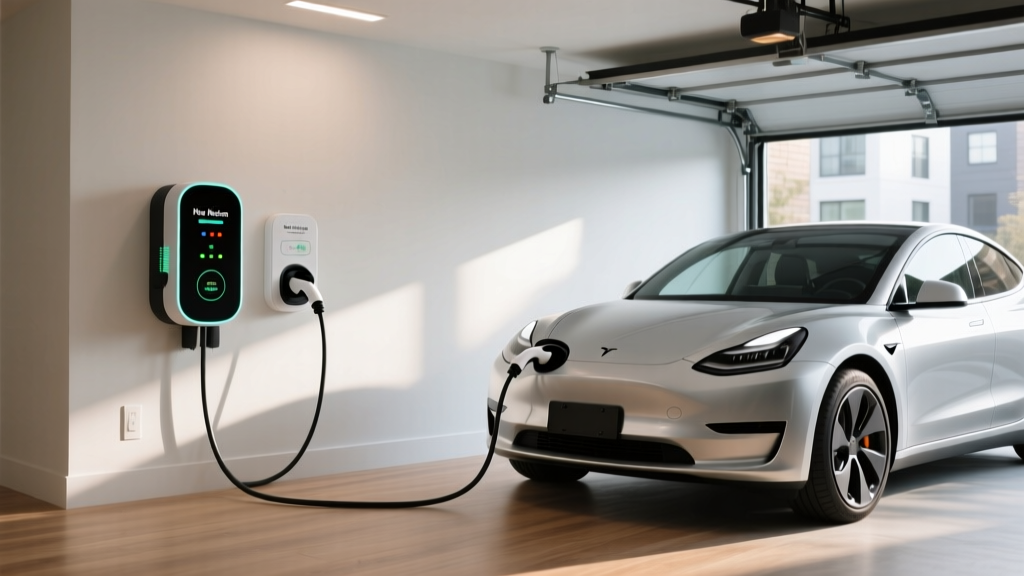
The New Motion charging station — sold under the Shell Recharge Solutions brand since the 2017 acquisition — is a compact, wall-mounted Level 2 EV charger designed for residential and light-commercial use. New Motion units have been popular in Europe for years, and their North American lineup targets homeowners who want a reliable, smart-enabled 240V charger without paying Tesla Wall Connector or ChargePoint premiums. The flagship homeCharge 22 delivers up to 22 kW (on three-phase power) or approximately 7.4–11.5 kW on standard North American single-phase 240V circuits, depending on amperage configuration.
Before we break down installation, costs, and compatibility, it's essential to understand one distinction that trips up many first-time EV buyers: kW (kilowatts) measures power — how fast energy flows into your car — while kWh (kilowatt-hours) measures energy capacity, the size of your battery. A 50 kW charger fills a 75 kWh battery faster than an 11 kW charger. Think of kW as the diameter of a hose and kWh as the size of the bucket.
Charging Levels Explained: Speed, Power, and Range Added Per Hour
Every EV owner needs to understand the three charging tiers. Here's how they stack up in real-world terms:
| Level | Voltage | Power (kW) | Miles of Range Per Hour | Typical Use Case |
|---|---|---|---|---|
| Level 1 | 120V AC | 1.2–1.9 kW | 3–5 mi/hr | Overnight top-ups, PHEVs, low-mileage drivers |
| Level 2 | 240V AC | 3.3–19.2 kW | 12–75 mi/hr | Home daily charging, workplace, retail |
| DC Fast (Level 3) | 400–800V DC | 50–350 kW | 150–1,000+ mi/hr | Road trips, highway corridors |
For most EV owners, Level 2 is the daily workhorse. A New Motion homeCharge unit running at 7.4 kW (32A on a 40A circuit) adds roughly 25–30 miles of range per hour — enough to fully replenish a 60–80 kWh battery overnight. If your home electrical panel supports a 48A or 60A dedicated circuit, you can push to 11.5 kW and gain closer to 40–45 miles per hour of charging.
Home Installation: Electrical Requirements, Costs, and Panel Upgrades
The New Motion homeCharge 22 requires a dedicated 240V circuit. Here's what that means for your home's electrical system:
- Voltage: 240V single-phase (standard North American split-phase)
- Amperage: 32A (requires a 40A breaker) or 48A (requires a 60A breaker)
- Wiring: 8 AWG copper for 40A; 6 AWG copper for 60A (runs over 50 feet may require thicker gauge)
- Circuit: Must be dedicated — no sharing with dryers, ovens, or HVAC
- GFCI protection: Required by NEC 2020 Article 625 for EV charging equipment; most New Motion units include built-in ground fault protection, but your electrician will verify code compliance
How Much Does It Cost to Install a Home EV Charger?
Installation costs vary dramatically based on your home's electrical infrastructure. Here's a realistic breakdown based on 2026 electrician rates and equipment pricing:
| Component | Simple Install (panel nearby) | Moderate Install (50–80 ft run) | Complex Install (panel upgrade needed) |
|---|---|---|---|
| New Motion homeCharge 22 unit | $550–$700 | $550–$700 | $550–$700 |
| Electrician labor | $300–$600 | $600–$1,200 | $1,500–$3,000 |
| Permit & inspection | $50–$150 | $50–$200 | $100–$300 |
| Wiring & conduit materials | $50–$100 | $200–$500 | $300–$800 |
| Electrical panel upgrade (100A → 200A) | N/A | N/A | $1,500–$3,500 |
| Total estimated cost | $950–$1,550 | $1,400–$2,600 | $3,950–$8,300 |
Always hire a licensed electrician familiar with NEC Article 625 (Electric Vehicle Charging System Equipment). DIY installation voids most charger warranties and creates fire and liability risks.
Connector Compatibility: NACS, CCS1, and CHAdeMO
The New Motion homeCharge 22 ships with a J1772 connector — the North American standard for Level 2 AC charging. Here's what that means for your specific EV:
| Connector Type | EV Brands Using It | Works with New Motion? | Adapter Needed? |
|---|---|---|---|
| J1772 (native) | Ford, GM, Hyundai, Kia, VW, BMW, Rivian (pre-2025), most non-Tesla | Yes — direct plug | No |
| NACS (Tesla native) | Tesla (all years), Ford/GM/Rivian/Volvo/Polestar (2025+ models) | Yes, with adapter | Tesla J1772-to-NACS adapter (~$100–$175) |
| CCS1 (DC Fast only) | Most non-Tesla EVs for DC charging | N/A — CCS1 is DC only, not used at home Level 2 | N/A |
| CHAdeMO | Nissan Leaf (legacy), Mitsubishi Outlander PHEV | Yes — J1772 port is separate from CHAdeMO DC port | No |
Key takeaway: Every EV sold in North America has a J1772 inlet for Level 2 AC charging — or ships with (or can purchase) a J1772-to-NACS adapter. The New Motion homeCharge 22 will charge any EV you can buy today. If you drive a 2025+ Ford F-150 Lightning, GM Equinox EV, or Rivian R1S with a native NACS port, you'll need Tesla's official J1772 adapter (approximately $125) or a third-party equivalent.
Charging Cost: Home vs. Public vs. Gas — What You'll Actually Pay Per Mile
One of the strongest arguments for home charging is cost. Let's compare real numbers using 2026 national averages:
| Scenario | Rate | Cost Per Mile* | Notes |
|---|---|---|---|
| Home Level 2 (off-peak TOU rate) | $0.08–$0.12/kWh | $0.025–$0.04 | Best-case: overnight utility rates |
| Home Level 2 (standard rate) | $0.14–$0.18/kWh | $0.04–$0.06 | National residential average |
| Public Level 2 (networked) | $0.25–$0.49/kWh | $0.07–$0.15 | ChargePoint, EVgo, Shell Recharge |
| DC Fast Charging (public) | $0.30–$0.60/kWh | $0.09–$0.18 | Electrify America, Tesla Supercharger |
| Gasoline (25 MPG avg) | $3.30/gal | $0.13 | US average regular unleaded |
| Gasoline (35 MPG efficient) | $3.30/gal | $0.09 | Efficient ICE/hybrid comparison |
*Based on an EV consuming 3.0–3.5 kWh per mile (typical midsize SUV like Tesla Model Y or Hyundai Ioniq 5). Source: fueleconomy.gov
Charging at home on off-peak rates costs roughly one-third to one-quarter of what gasoline costs per mile. Even public DC fast charging is competitive with efficient gas vehicles. However, if you rely exclusively on expensive public Level 2 chargers (some networks charge $0.49/kWh in urban areas), your cost advantage narrows significantly. This is why home charging infrastructure is the single most important factor in EV ownership economics.
Charging Time Examples: How Long Does a New Motion Charger Take?
Here are realistic 10–80% charge times using the New Motion homeCharge 22 at its North American single-phase maximum of 7.4 kW (32A) and 11.5 kW (48A), for common EV battery sizes:
| Vehicle (2025–2026) | Battery (usable kWh) | At 7.4 kW (32A) | At 11.5 kW (48A) |
|---|---|---|---|
| Tesla Model Y Long Range | 75 kWh | ~7 hr 5 min | ~4 hr 35 min |
| Hyundai Ioniq 5 (Standard Range) | 58 kWh | ~5 hr 30 min | ~3 hr 30 min |
| Ford F-150 Lightning (Extended) | 113 kWh | ~10 hr 40 min | ~6 hr 50 min |
| Chevrolet Equinox EV | 85 kWh | ~8 hr | ~5 hr 10 min |
| Toyota RAV4 Prime (PHEV) | 14.5 kWh | ~1 hr 25 min | ~55 min |
Note that these times assume a full 10–80% session. In practice, most EV owners plug in nightly and only need to replenish 20–40% of battery — typically 2–4 hours at 7.4 kW. The 80% ceiling matters because lithium-ion batteries accept charge more slowly above 80% State of Charge (SoC) to protect cell health. Charging from 80–100% can take as long as 10–80%.
Equipment Comparison: New Motion vs. Competing Home Chargers
Here's how the New Motion homeCharge 22 stacks up against the most popular residential Level 2 chargers available in 2026:
New Motion homeCharge 22
- Power output: 7.4 kW (32A) or 11.5 kW (48A)
- Connector: J1772 (25 ft cable)
- Smart features: Shell Recharge app, scheduled charging, energy monitoring, RFID access control
- WiFi: Yes, 2.4 GHz
- Outdoor rating: IP55 (weather-resistant)
- Price: $550–$700
Tesla Wall Connector
- Power output: 11.5 kW (48A)
- Connector: NACS native (J1772 adapter sold separately)
- Smart features: Tesla app integration, load sharing with multiple units, firmware OTA
- WiFi: Yes
- Outdoor rating: IP55
- Price: $475
ChargePoint Home Flex
- Power output: Up to 12 kW (50A adjustable)
- Connector: J1772 (23 ft cable)
- Smart features: ChargePoint app, Alexa/Google Home, flexible amperage dial
- WiFi: Yes
- Outdoor rating: NEMA 4
- Price: $650–$700
Emporia Vue Level 2
- Power output: 11.5 kW (48A)
- Connector: J1772 (24 ft cable)
- Smart features: Emporia app, solar integration, whole-home energy monitoring
- WiFi: Yes
- Outdoor rating: IP55
- Price: $400–$450
The New Motion homeCharge 22 occupies a middle ground: more affordable than ChargePoint, slightly pricier than Tesla's Wall Connector, and comparable in features. Its key differentiator is RFID-based access control — useful for shared garages or driveway installations where you want to prevent unauthorized use. The Shell Recharge app is functional but less polished than Tesla's or ChargePoint's offerings.
Safety, Code, and Installation Best Practices
EV charging draws sustained high current for hours — far longer than a dryer or oven cycle. Proper installation isn't optional. Here's what your electrician must address:
- Dedicated circuit: NEC Article 625 requires EVSE to be on its own breaker. No shared circuits.
- GFCI protection: Ground-fault circuit interrupter protection is mandatory for all EV charging outlets and hardwired units. The New Motion homeCharge 22 has integrated GFCI, but your electrician will confirm the breaker panel meets local amendments.
- Outdoor rating: If mounting outdoors, the unit must carry at least an IP55 or NEMA 4 rating. The homeCharge 22 qualifies. Ensure the conduit entry point is sealed against moisture.
- Cable management: A 25-foot cable dragging on a garage floor creates a trip hazard and accelerates cable wear. Install a wall-mounted cable organizer or retractable reel.
- Load calculation: Your electrician should perform a NEC 220 load calculation to verify your panel can handle the new circuit. This is the step that reveals whether a panel upgrade is needed.
- Permit and inspection: Most jurisdictions require an electrical permit ($50–$300) and a post-installation inspection. Skipping this can void homeowner's insurance coverage in the event of an electrical fire.
Frequently Asked Questions
How much does it cost to install a New Motion home charger?
Expect $950–$1,550 for a straightforward install (panel within 20 feet, no upgrades needed) or $1,400–$2,600 for a moderate run. If your home needs a 200A panel upgrade, total costs can reach $4,000–$8,300. Get three quotes from licensed electricians and ask specifically about their NEC Article 625 experience.
Can the New Motion homeCharge 22 charge a Tesla?
Yes. All Teslas have a J1772 adapter included (or available for purchase for newer NACS-only models). Plug the New Motion's J1772 connector into the Tesla adapter, then into your car. Charging speed will be limited to the homeCharge 22's output — typically 7.4 or 11.5 kW depending on your circuit.
Is the New Motion charger eligible for a federal tax credit?
The federal Alternative Fuel Vehicle Refueling Property Credit (IRS Form 8911) covers up to 30% of home charger equipment and installation costs, capped at $1,000. Eligibility requires installation at your principal residence and is subject to income phase-outs. Consult a tax professional — rules and caps change annually.
How fast will a New Motion charger add range to my EV?
At 7.4 kW (32A), expect roughly 25–30 miles of range per hour of charging. At 11.5 kW (48A), expect 40–45 miles per hour. Actual rate depends on your EV's onboard charger acceptance rate — some vehicles cap Level 2 intake at 7.2 or 9.6 kW regardless of charger output.
Do I need a WiFi connection for the New Motion homeCharge 22?
WiFi enables smart features like scheduled charging, energy monitoring, and firmware updates via the Shell Recharge app. The charger will function as a basic Level 2 unit without WiFi — plug in and charge — but you lose scheduling and remote monitoring capabilities.
What electrical upgrades might I need for a home EV charger?
The most common upgrade is a panel capacity increase from 100A to 200A service ($1,500–$3,500). Older homes may also need aluminum-to-copper wiring replacement, a new meter base, or upgraded grounding. Your electrician's load calculation will determine what's required before any work begins.