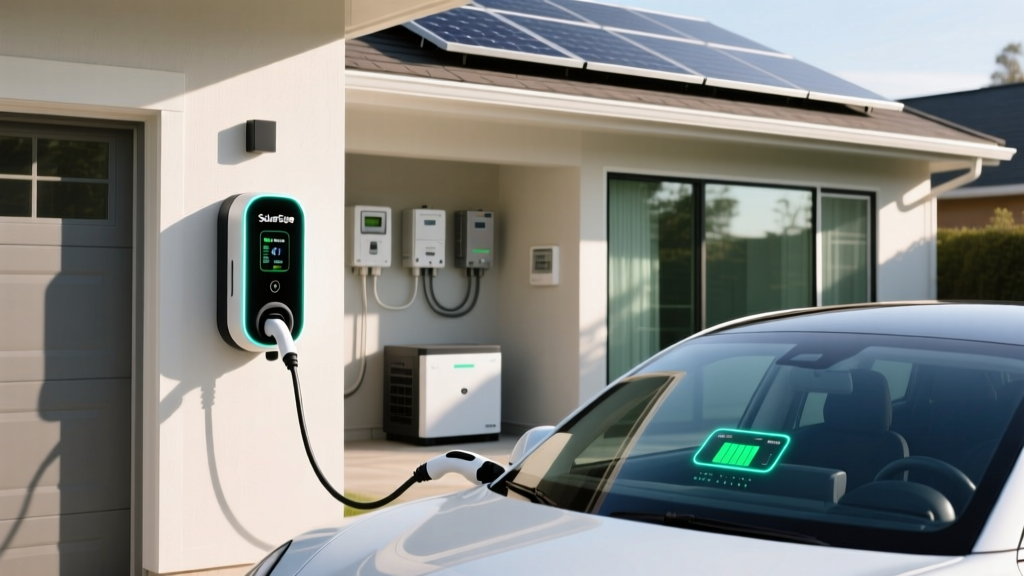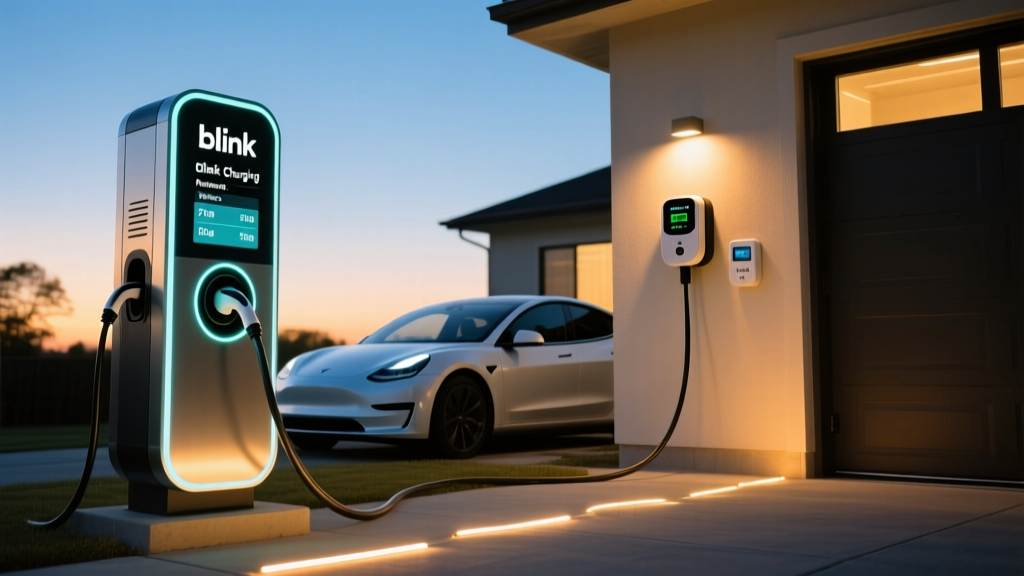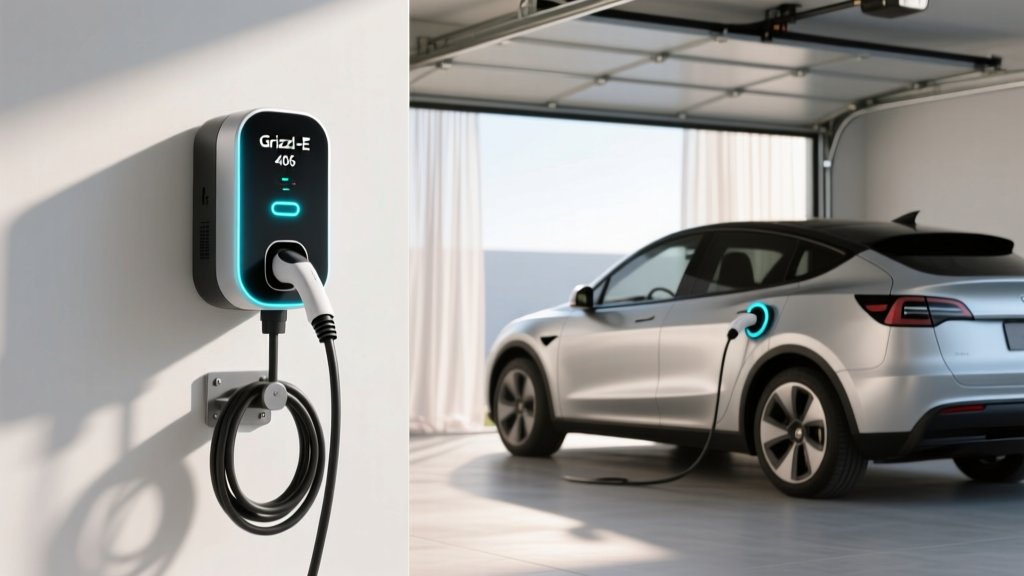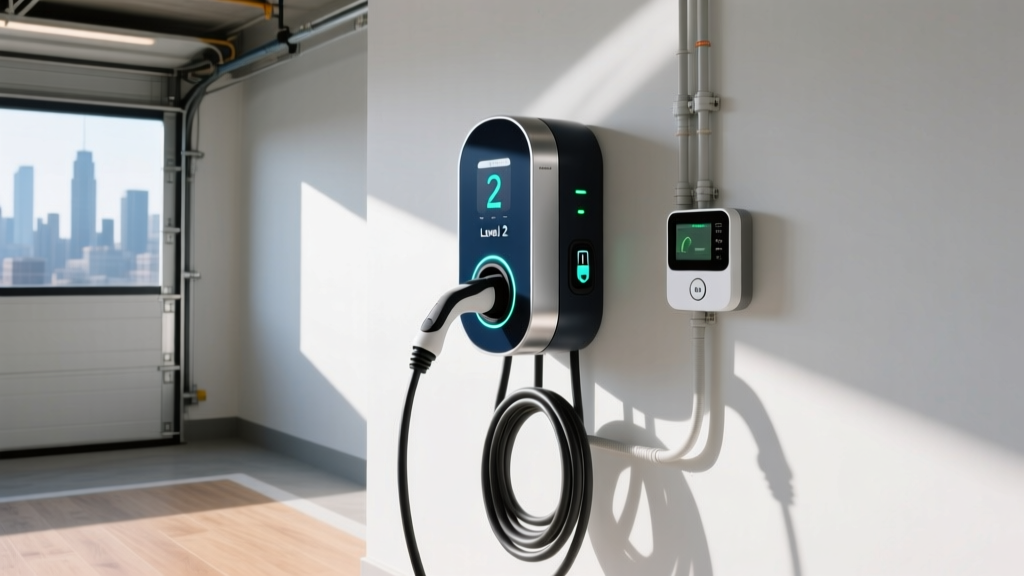
If you have just taken delivery of an EV or are planning to, figuring out your charging setup is the single most impactful ownership decision you will make. A well-matched home charger eliminates daily range anxiety, cuts fueling costs to a fraction of gasoline, and protects your battery's long-term health. But the terminology — kW versus kWh, NACS versus CCS, 40-amp versus 48-amp circuits — can derail even experienced car buyers.
This guide walks through every variable that matters when selecting a new electric charger for your home or evaluating public options: charging speeds, electrical requirements, real installation costs, connector compatibility, and the specific hardware models worth buying in 2026.
Charging Levels Explained: How Fast Will Each Add Range?
EV charging is categorized into three tiers. The critical distinction to internalize: kW (kilowatts) measures power — how fast energy flows into your battery. kWh (kilowatt-hours) measures energy capacity — the total amount your battery stores. Think of kW as the flow rate of a hose and kWh as the size of the bucket.
| Level | Voltage | Power (kW) | Miles of Range Added Per Hour | Typical Use Case |
|---|---|---|---|---|
| Level 1 | 120V AC | 1.0–1.4 kW | 3–5 mi/hr | Overnight top-ups, PHEVs, emergencies |
| Level 2 | 240V AC | 7.2–11.5 kW | 25–44 mi/hr | Daily home charging, workplace |
| DC Fast Charging | 400–800V DC | 50–350 kW | 180–1,200+ mi/hr (peak) | Road trips, highway corridors |
- 60 kWh battery (e.g., Chevrolet Equinox EV): Level 2 at 11.5 kW = ~5.5 hours | DC fast at 150 kW peak = ~25 minutes
- 85 kWh battery (e.g., Tesla Model Y Long Range): Level 2 at 11.5 kW = ~6.5 hours | DC fast at 250 kW peak = ~20 minutes
- 110 kWh battery (e.g., Ford F-150 Lightning Extended): Level 2 at 11.5 kW = ~8 hours | DC fast at 150 kW peak = ~40 minutes
Note: DC fast charging follows a tapering curve. You will hit peak kW between roughly 10–40% SoC, then speed declines as the battery fills. A "350 kW charger" does not deliver 350 kW for the entire session — and most EVs cannot accept that peak rate regardless.
How Much Does It Cost to Install a Home EV Charger?
Home Level 2 installation costs vary enormously based on your electrical panel's capacity, the distance from panel to charger location, and local permitting. Below is a realistic breakdown based on 2025–2026 electrician rate data across U.S. metro areas.
| Component | Simple Install (Panel Nearby, 200A Service) | Complex Install (Long Run, Panel Upgrade Needed) |
|---|---|---|
| Level 2 Charger Equipment (hardwired, 48A) | $350–$650 | $350–$650 |
| Electrician Labor (2–4 hrs simple; 8–16 hrs complex) | $300–$800 | $1,200–$3,000 |
| Electrical Materials (conduit, wire, breaker) | $100–$300 | $300–$800 |
| Permit & Inspection | $50–$200 | $50–$300 |
| Panel Upgrade (100A → 200A, if needed) | N/A | $1,500–$3,500 |
| Total Estimated Range | $800–$1,950 | $3,400–$8,250 |
What Electrical Upgrades Might I Need?
Before purchasing a new electric charger, have a licensed electrician evaluate your panel. The key factors:
- Service capacity: Most modern homes have 200-amp service, which typically supports a 48-amp (60A breaker) Level 2 circuit alongside normal household loads. Older homes with 100-amp service may require an upgrade.
- Available breaker slots: A Level 2 charger requires a dedicated double-pole breaker. If your panel is full, a sub-panel or tandem breakers may be needed.
- Wire run distance: A 50-foot run from panel to garage uses 6 AWG copper wire (~$3–$5/ft). Runs over 100 feet may require thicker 4 AWG wire to prevent voltage drop, adding cost.
- Load calculation: Per NEC Article 220, your electrician must calculate whether adding a 40–60A continuous load exceeds 80% of your service rating. This is non-negotiable for safety and code compliance.
The National Electrical Code (NEC) requires that EV chargers be treated as continuous loads — meaning a 48-amp charger must be on a 60-amp breaker with wire rated accordingly. Never undersize the circuit.
Which Connector Is Compatible With My EV?
The connector landscape shifted dramatically between 2023 and 2026. Here is where things stand now for new vehicles and chargers:
| Connector | Brands Using It (New Vehicles) | Notes |
|---|---|---|
| NACS (North American Charging Standard) | Tesla, Ford, GM, Rivian, Volvo, Polestar, Mercedes-Benz, Nissan, Honda, Fisker, BMW (2025+) | Becoming the dominant standard; compact design, no CCS latch |
| CCS1 (Combined Charging System) | Hyundai, Kia, Volkswagen, Audi, Porsche, Stellantis, legacy models pre-2025 | Still widely available at public stations; adapters to NACS exist |
| CHAdeMO | Nissan Leaf (legacy only — discontinued after 2025) | Effectively phased out; do not choose for new EV purchases |
Adapter reality: If you own a CCS-equipped EV (e.g., 2024 Hyundai Ioniq 5) and want to access Tesla Superchargers, you will need a CCS-to-NACS adapter. Tesla sells an official adapter for ~$250, and third-party options from brands like Lectron are available for ~$150–$200. Confirm your vehicle's firmware supports NACS adapter handshake before purchasing.
For home chargers, the safest approach in 2026 is to buy a NACS-connector unit if your EV has a NACS port, or a CCS1 unit if your vehicle is CCS-equipped. Universal chargers with swappable connectors exist but add cost and complexity.
Charging Cost Per Mile: EV vs. Gasoline
The economics of EV charging depend on your electricity rate, whether you can charge during off-peak hours, and how often you rely on public DC fast charging. Below compares realistic scenarios against a 30 MPG gasoline vehicle at $3.50/gallon.
| Scenario | Rate | Cost per kWh | Cost per Mile (at 3.5 mi/kWh) | Annual Cost (12,000 mi) |
|---|---|---|---|---|
| Home, off-peak utility rate | Time-of-use plan | $0.09–$0.13 | $0.026–$0.037 | $310–$445 |
| Home, standard rate (no TOU) | Flat rate | $0.14–$0.18 | $0.040–$0.051 | $480–$615 |
| Public Level 2 (ChargePoint, etc.) | Varies by network | $0.25–$0.49 | $0.071–$0.140 | $855–$1,680 |
| DC Fast Charging (Electrify America, EVgo) | Per-session pricing | $0.35–$0.55 | $0.100–$0.157 | $1,200–$1,885 |
| Gasoline (30 MPG, $3.50/gal) | — | — | $0.117 | $1,400 |
Even at public DC fast-charging rates, most EVs match or beat gasoline on cost per mile. At home on off-peak rates, you are paying roughly one-quarter to one-third the per-mile cost of gas. According to fueleconomy.gov, the average EV efficiency in 2026 is approximately 3.0–4.0 miles per kWh, with aerodynamic sedans at the high end and large SUVs/trucks at the low end.
Top New Electric Charger Picks for 2026
These are the home Level 2 units we recommend based on power output, build quality, smart features, connector options, and price as of early 2026.
ChargePoint Home Flex (NACS)
- Power: Up to 11.5 kW (48A) on 60A circuit; adjustable down to 16A
- Connector: NACS (also available in J1772/CCS variants)
- Cable Length: 23 feet
- Smart Features: Wi-Fi, app scheduling, Alexa integration, energy tracking
- Price: ~$599
- Best For: Most EV owners; flexible amperage fits panels with limited headroom
Tesla Wall Connector
- Power: Up to 11.5 kW (48A) on 60A circuit
- Connector: NACS native; includes J1772 adapter in box
- Cable Length: 24 feet
- Smart Features: Wi-Fi, OTA firmware updates, power sharing (link multiple units on one circuit)
- Price: ~$475
- Best For: Tesla owners and multi-EV households
Emporia Vue Level 2 Charger
- Power: Up to 11.5 kW (48A)
- Connector: J1772 (CCS-compatible); NACS adapter sold separately
- Cable Length: 24 feet
- Smart Features: Deep energy monitoring via Emporia Vue panel integration, solar-aware scheduling
- Price: ~$399
- Best For: Budget-conscious buyers; homes with Emporia energy monitoring
Grizzl-E Smart (United Chargers)
- Power: Up to 10 kW (40A) on 50A circuit
- Connector: J1772 (NACS adapter available)
- Cable Length: 24 feet
- Smart Features: OCPP-compatible, adjustable amperage, extreme cold rating (-40°F)
- Price: ~$449
- Best For: Cold-climate outdoor installations; no-frills reliability
Safety, Code, and Installation Best Practices
EV chargers draw sustained high current for hours — this is fundamentally different from intermittent loads like a dryer or oven. Cutting corners on installation is a fire risk. Here is what proper installation requires:
- Dedicated circuit: Your Level 2 charger must have its own breaker — never share a circuit with other appliances.
- GFCI protection: NEC 2023 and later require GFCI protection for all EV charging outlets. Hardwired units may have GFCI built into the charger itself; receptacle-based installs need a GFCI breaker.
- Outdoor rating: If installing outside, confirm the charger carries a NEMA 4 (weatherproof) rating. All units listed above are outdoor-rated.
- Hardwired vs. plug: Hardwired installations (no plug) are preferred for 48A+ chargers — they eliminate the NEMA 14-50 receptacle as a failure point and are required by some local codes for circuits above 40A. A NEMA 14-50 outlet offers portability but limits you to 40A (9.6 kW) continuous.
- Permit and inspection: Most jurisdictions require an electrical permit for new 240V circuits. The inspection ensures proper wire gauge, breaker sizing, grounding, and torque specs. Budget $50–$300 depending on your locality. The NFPA National Electrical Code is the governing standard.
Federal Tax Credit for Home Charger Installation
The IRS Alternative Fuel Vehicle Refueling Property Credit (Form 8911) covers 30% of home EV charger equipment and installation costs, up to $1,000. Key eligibility rules for 2026:
- The charger must be installed at your primary residence in the United States.
- Your home must be located in a qualifying census tract (non-urban or low-income community as defined by the IRS). The IRS provides a lookup tool for eligible tracts.
- The credit is non-refundable — it can reduce your tax liability to zero but will not generate a refund beyond that.
- Both equipment and labor costs qualify.
Always consult a tax professional to confirm eligibility based on your specific situation, income, and census tract.
Frequently Asked Questions
Can I just plug my EV into a regular household outlet?
Yes, using the Level 1 cord that came with your vehicle. At 120V/12A (1.4 kW), you will add roughly 3–5 miles of range per hour. For a PHEV with 30 miles of electric range, overnight Level 1 charging is sufficient. For a full BEV with a 75+ kWh battery, Level 1 adds only ~35–50 miles over 10 hours — inadequate for most daily driving. A Level 2 home charger is strongly recommended for BEV owners.
Is a 48-amp charger always better than a 40-amp charger?
Not necessarily. A 48-amp charger requires a 60-amp breaker and 6 AWG wire, delivering up to 11.5 kW. A 40-amp charger needs a 50-amp breaker and delivers up to 9.6 kW. The difference is roughly 20% faster charging. If your panel has limited headroom or you want to avoid a panel upgrade, a 32-amp or 40-amp charger may be the smarter choice. Most EVs fully recharge overnight at either rate.
Do I need a smart charger, or is a "dumb" charger fine?
Smart chargers (Wi-Fi connected, app-controlled) offer scheduling for off-peak electricity rates, energy usage tracking, and remote start/stop. If your utility offers time-of-use rates, a smart charger can save $100–$300 per year by charging only when rates are lowest. If you have a simple flat-rate plan and don't need scheduling, a non-connected unit like the Grizzl-E saves money upfront.
Will frequent DC fast charging damage my battery?
Modern EV battery management systems (BMS) actively manage temperature and charge rate to minimize degradation from DC fast charging. However, data from Recurrent Auto and other fleet studies shows that vehicles DC fast-charging more than 3 times per week exhibit slightly higher degradation over 5 years — typically 2–5% more capacity loss compared to predominantly Level 2 charging. The practical recommendation: use Level 2 at home for daily needs and reserve DC fast charging for road trips.
What about the federal EV tax credit — does it cover the charger?
The §30D Clean Vehicle Credit (up to $7,500) applies to the vehicle, not the charger. The charger is covered separately under the Alternative Fuel Vehicle Refueling Property Credit (up to $1,000, 30% of cost). These are separate credits with different eligibility rules. Vehicle credit eligibility depends on MSRP caps, buyer income limits, and battery mineral sourcing requirements per current IRS guidance.