When EV owners talk about "net charging," they're usually asking one of two questions: how much does it actually cost to keep my car fueled, and how much range am I genuinely adding per hour plugged in? Unlike a gas pump where the price per gallon is the whole story, EV charging involves a web of variables — power levels measured in kilowatts (kW), energy stored in kilowatt-hours (kWh), time-of-use electricity rates, and connector compatibility. This guide breaks down the real numbers behind net charging in 2026, from a standard 120V outlet in your garage to a 350 kW DC fast charger on the highway.
The Three Charging Levels Explained: kW, Miles Per Hour, and Real-World Times
The single most important distinction in EV charging is between kW (kilowatts), which measures the rate of power delivery — think of it as the width of the water pipe — and kWh (kilowatt-hours), which measures total energy stored in your battery, like the size of the tank. A charger's kW rating tells you how fast energy flows; your battery's kWh capacity tells you how much it holds.
| Level | Voltage / Amps | Power Output (kW) | Miles of Range Added Per Hour | Best For |
|---|---|---|---|---|
| Level 1 | 120V / 12-16A | 1.4 – 1.9 kW | 3 – 5 mi/hr | Overnight top-ups, PHEVs, low daily mileage |
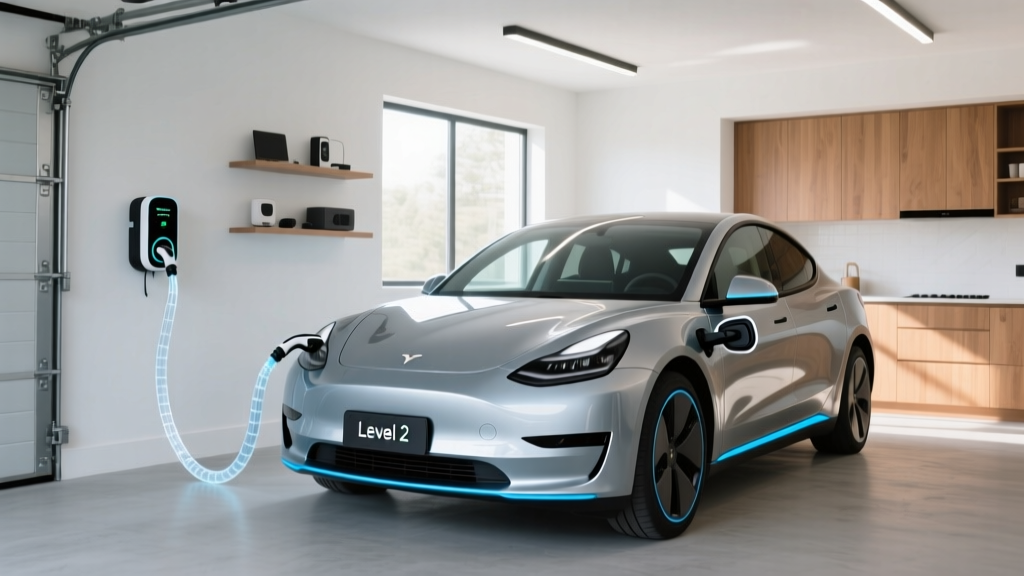
| Level 2 | 240V / 32-48A | 7.7 – 11.5 kW | 25 – 44 mi/hr | Daily home charging, most EVs |
| DC Fast Charge | 400V–800V DC | 50 – 350 kW | 150 – 1,200+ mi/hr (peak) | Road trips, rapid top-ups away from home |
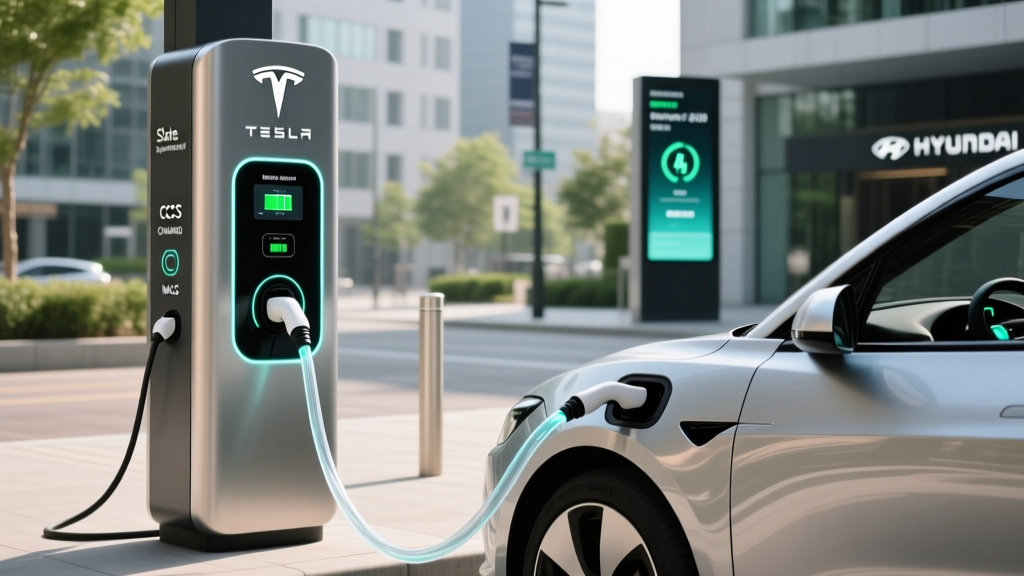
Real-world charging time examples: A 2026 Tesla Model Y Long Range (75 kWh usable battery, EPA 310 miles) charging from 10% to 80% on a Level 2 home station at 11.5 kW takes roughly 7 to 8 hours — perfect for overnight. On a 250 kW Tesla Supercharger, that same 10-80% session takes approximately 18 to 22 minutes, though the charge curve tapers significantly above 80% to protect the battery. A Hyundai Ioniq 5 (77.4 kWh, EPA 303 miles) on a 350 kW Electrify America stall can hit 10-80% in about 18 minutes thanks to its 800V architecture, which sustains higher charge rates longer than 400V systems.
How Much Does It Cost to Install a Home EV Charger?
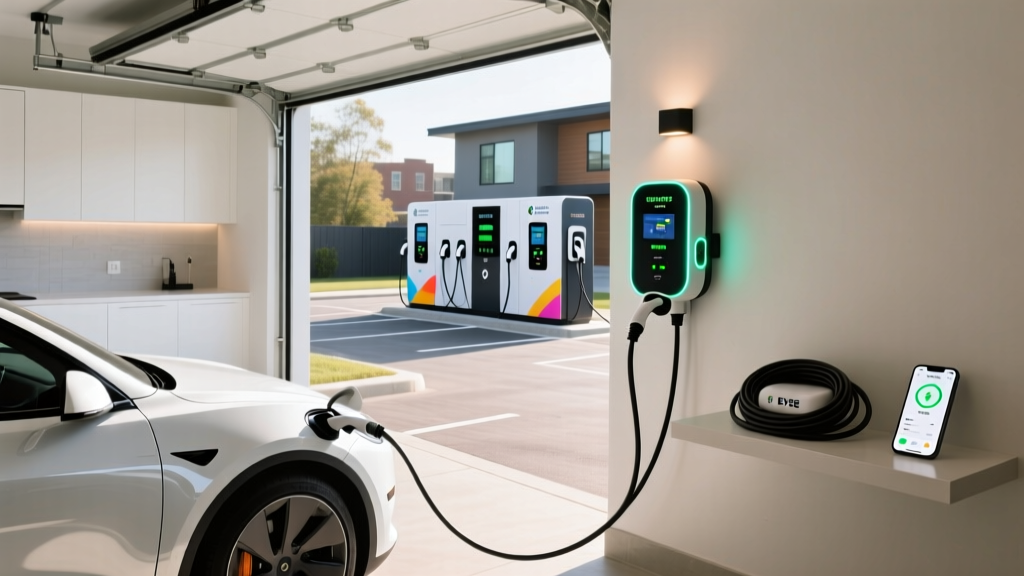
Level 2 home charging is where the economics of EV ownership really work. But the total install cost varies enormously depending on your home's electrical panel, the distance from panel to charger location, and local permit requirements. Here's what to budget:
| Component | Typical Cost Range | Notes |
|---|---|---|
| Level 2 Charger Equipment | $350 – $750 | Smart Wi-Fi-enabled, 32A-48A, 240V, NACS or J1772 connector |
| Electrician Labor | $400 – $1,500 | Depends on run length, conduit needs, wall material |
| Electrical Permit | $50 – $250 | Varies by municipality; required by code in most jurisdictions |
| Panel Upgrade (if needed) | $1,500 – $3,500 | Required if panel lacks capacity for a dedicated 40A-60A circuit |
| Total (no panel upgrade) | $800 – $2,500 | Most homes with 200A service and nearby panel |
| Total (with panel upgrade) | $2,300 – $5,750 | Older homes with 100A service or distant panel |
Electrical Requirements and Panel Capacity
A standard Level 2 home charger requires a dedicated 240V circuit — the same voltage your electric dryer or oven uses. The most common configurations are:
- 40-amp circuit (delivers 32A / 7.7 kW continuous) — sufficient for most EVs, requires a 50A breaker
- 50-amp circuit (delivers 40A / 9.6 kW continuous) — faster charging, requires a 60A breaker
- 60-amp circuit (delivers 48A / 11.5 kW continuous) — fastest Level 2, requires a 70A+ breaker, ideal for large batteries like the F-150 Lightning's 131 kWh pack
The National Electrical Code (NEC) requires that continuous loads like EV chargers use no more than 80% of a circuit's rated capacity. So a 40A circuit delivers 32A continuously. Your electrician will perform a load calculation on your panel to ensure adding a 40A-60A EV circuit won't overload the system. Homes with 200A service typically have enough headroom; homes with 100A service often require an upgrade.
Safety and Code Considerations
Per the NEC and most local codes, your Level 2 installation should include:
- A dedicated circuit — never share the EV charger circuit with other appliances
- A GFCI breaker (Ground Fault Circuit Interrupter) — required by 2026 NEC for all EV charging outlets, especially critical for outdoor installations
- NEMA 14-50 outlet or hardwired connection — hardwired is preferred for 48A+ chargers (no plug rated above 50A for continuous EV use); outlet-based gives you portability
- Outdoor-rated (NEMA 4) equipment if installed outside, with proper weatherproofing and UV-resistant cable
- Proper conduit and wire gauge — typically 6 AWG copper for 48A circuits, 8 AWG for 32A
Connector Compatibility: NACS, CCS, and CHAdeMO in 2026
The connector landscape has consolidated significantly. As of 2026, the North American Charging Standard (NACS), developed by Tesla, has been adopted by virtually every major automaker for new vehicles. Here's where each connector stands:
| Connector | Brands Using It (New Vehicles) | Public Network Access | Adapter Needed? |
|---|---|---|---|
| NACS (Tesla) | Tesla, Ford, GM, Rivian, Volvo, Polestar, Hyundai, Kia, BMW, Mercedes, Nissan (new models) | Tesla Superchargers + growing NACS stalls on EA, ChargePoint | CCS-to-NACS adapters available (~$200) for older CCS vehicles at Superchargers |
| CCS1 | Legacy models from VW, older Hyundai/Kia, pre-2025 Ford/GM EVs | Electrify America, EVgo, ChargePoint, most non-Tesla networks | NACS-to-CCS adapters for charging at Superchargers |
| CHAdeMO | Nissan Leaf (discontinued after 2025), Mitsubishi Outlander PHEV | Limited and shrinking — some EA and EVgo stalls | No practical adapter to NACS/CCS for DC fast charging |
For home Level 2 charging, most EVs still use the J1772 connector (or NACS for Teslas). If you buy a NACS-equipped home charger, you can charge Teslas natively and use a J1772-to-NACS adapter for non-Tesla EVs — or vice versa. The key is matching your charger's connector to your vehicle's inlet, or budgeting ~$100-$200 for an adapter.
Net Charging Cost: Home vs. Public vs. Gas Per Mile
The true "net" cost of EV charging depends entirely on where and when you charge. Here's how the economics break down using national averages and real utility rates:
| Scenario | Electricity/Fuel Cost | Vehicle Efficiency | Cost Per Mile |
|---|---|---|---|
| Home charging (national avg. $0.17/kWh) | $0.17/kWh | 3.5 mi/kWh (typical EV like Model Y) | $0.049/mi |
| Home charging (off-peak TOU rate $0.09/kWh) | $0.09/kWh | 3.5 mi/kWh | $0.026/mi |
| Public Level 2 (avg. $0.35/kWh) | $0.35/kWh | 3.5 mi/kWh | $0.10/mi |
| DC Fast Charging (avg. $0.48/kWh) | $0.48/kWh | 3.5 mi/kWh | $0.137/mi |
| Gas vehicle (25 MPG combined, $3.40/gal) | $3.40/gal | 25 mi/gal | $0.136/mi |
According to fueleconomy.gov, the average EV achieves roughly 3-4 miles per kWh. At home on an off-peak rate, net charging costs can be one-fifth the cost of gasoline per mile. Even at public DC fast-charger rates, EV charging is roughly cost-parity with a 25 MPG gas vehicle — and dramatically cheaper than the 18-22 MPG many trucks and SUVs achieve.
Recommended Home Level 2 Chargers for 2026
Emporia Level 2 Smart Charger
- Power Output: 48A / 11.5 kW (hardwired) or 40A / 9.6 kW (NEMA 14-50 plug)
- Connector: J1772 (NACS adapter included in 2026 bundle)
- Cable Length: 24 feet
- Smart Features: Wi-Fi, energy monitoring, solar integration, TOU scheduling via app
- Price: ~$399
- Best For: Budget-conscious buyers wanting full smart features and energy tracking
ChargePoint Home Flex
- Power Output: Up to 50A / 12 kW (adjustable via DIP switches to match your circuit)
- Connector: J1772 (NACS pigtail option available)
- Cable Length: 23 feet
- Smart Features: Wi-Fi, Alexa/Google integration, scheduling, ChargePoint network account
- Price: ~$649
- Best For: Flexibility across circuit sizes and proven reliability
Tesla Wall Connector
- Power Output: 48A / 11.5 kW (hardwired, requires 60A circuit)
- Connector: NACS native (J1772 adapter available for ~$200)
- Cable Length: 24 feet
- Smart Features: Wi-Fi, OTA updates, power sharing between two units, Tesla app integration
- Price: ~$475
- Best For: Tesla owners or NACS-equipped EVs wanting native integration
Wallbox Pulsar Plus
- Power Output: 40A / 9.6 kW (NEMA 14-50) or 48A / 11.5 kW (hardwired)
- Connector: J1772 (NACS version available)
- Cable Length: 25 feet
- Smart Features: Wi-Fi + Bluetooth, Power Boost (load management), scheduling, Eco-Smart solar mode
- Price: ~$549
- Best For: Homes needing dynamic load balancing to avoid panel upgrades
Public Charging Networks: What to Expect in 2026
While home charging covers 80-90% of most EV owners' needs, public charging infrastructure has expanded considerably. The NHTSA-monitored national network now includes over 75,000 public charging ports, with major growth in 350 kW-capable stalls.
Tesla Supercharger Network: Now open to NACS-equipped non-Tesla EVs (Ford, GM, Rivian, and others with native NACS or approved adapters). Over 30,000 stalls in North America, predominantly 150-250 kW, with V4 stalls reaching 350 kW. Pricing averages $0.28-$0.36/kWh depending on location and demand.
Electrify America: Largest non-Tesla DC fast-charging network, with most new stalls offering 350 kW capability. Pricing averages $0.43-$0.56/kWh for guest users, reduced to $0.36-$0.48/kWh with a Pass+ subscription ($7/month). CCS1 and NACS connectors available at newer stations.
EVgo: Over 1,100 public fast-charging stations, predominantly 50-150 kW, with newer 350 kW stalls in metro areas. Pricing averages $0.40-$0.50/kWh. Offers NACS connectors at select locations.
For road trip planning, use fueleconomy.gov to check your vehicle's real-world highway efficiency (expect 10-15% below EPA combined range at sustained 70+ mph speeds) and apps like PlugShare or A Better Routeplanner to map charger stops with realistic range buffers.
Net Charging FAQ
How fast will each charging level add range to my EV?
Level 1 (120V) adds 3-5 miles per hour — roughly 30-50 miles overnight. Level 2 (240V, 48A) adds 30-44 miles per hour, fully replenishing most EVs in 7-9 hours. DC fast charging at 150-350 kW can add 100-250 miles in 15-25 minutes, depending on battery size and the vehicle's charge curve. Always check your specific vehicle's max charge rate — a Chevy Equinox EV peaks at 150 kW while an Ioniq 5 accepts 350 kW, even at the same charging stall.
Which connector and charger is compatible with my EV?
For 2026 model-year vehicles: Tesla, Ford, GM, Rivian, Hyundai, Kia, Volvo, BMW, and most others now use NACS. Older CCS1-equipped EVs (pre-2025 models) can access Tesla Superchargers using a manufacturer-approved CCS-to-NACS adapter (~$200). CHAdeMO vehicles (Nissan Leaf) have limited and shrinking DC fast-charge access. For home Level 2, match your charger's connector to your vehicle's inlet or use an adapter.
How much does charging cost per mile compared to gas?
At the national average residential electricity rate of ~$0.17/kWh, a typical EV (3.5 mi/kWh) costs about $0.049 per mile — roughly one-third the cost of a 25 MPG gas vehicle at $3.40/gallon ($0.136/mi). On off-peak TOU rates ($0.09/kWh), EV charging drops to $0.026/mi. Public DC fast charging at $0.48/kWh costs $0.137/mi, roughly matching gasoline. The net savings are largest when you charge at home overnight.
What electrical upgrades might my home need for a Level 2 charger?
The most common upgrade is a panel capacity increase from 100A to 200A service, costing $1,500-$3,500. You'll also need a dedicated 240V circuit (40A-60A breaker) run from the panel to the charger location. If the run exceeds 50-75 feet, wire costs increase substantially. Some homes need a new conduit path through walls or underground. A licensed electrician's load calculation will determine if your current panel can handle the added circuit — always get this assessment before purchasing equipment.
Is a smart charger worth the extra cost over a basic "dumb" unit?
For most owners, yes. Smart chargers ($350-$700) offer scheduled charging to exploit off-peak TOU rates — potentially saving $200-$400/year versus unmanaged charging. They provide energy monitoring, remote start/stop, and integration with solar systems or utility demand-response programs. A basic non-smart charger ($250-$350) works fine if your utility offers a flat rate or you're disciplined about manually scheduling charges. The price difference is typically $100-$200, easily offset by TOU savings in the first year.