The North American charging landscape has fundamentally shifted. With nearly every major automaker adopting the North American Charging Standard (NACS) for new vehicles starting in the 2025–2026 model years, millions of existing CCS1-equipped EVs face a compatibility question: how do you access the largest fast-charging network in North America — Tesla's Supercharger network — without trading in your car?
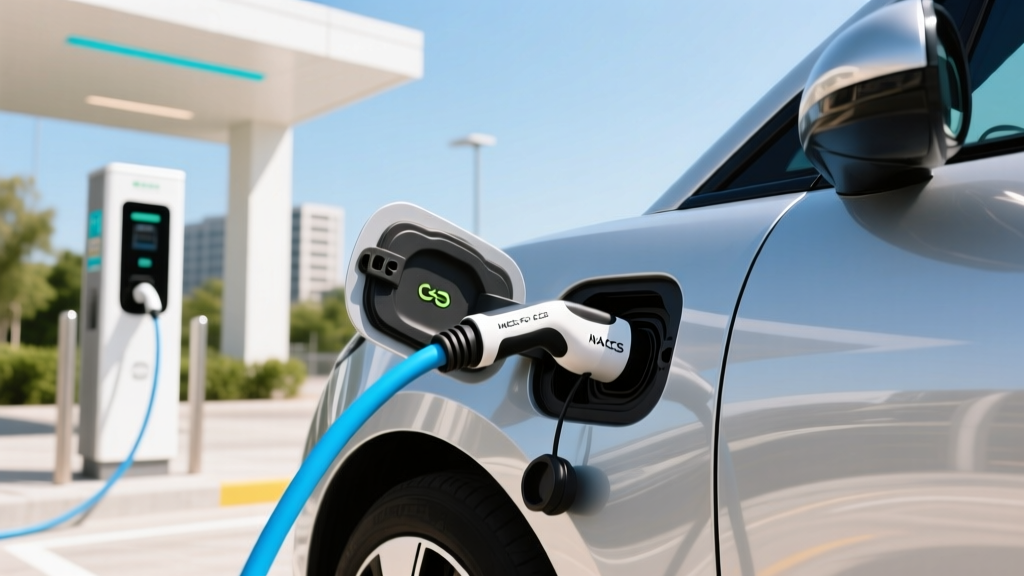
The answer is a NACS to CCS adapter for fast charging. But not all adapters are equal, not all Supercharger stalls support non-Tesla vehicles, and real-world charging speeds on an adapter rarely match the sticker peak. This guide breaks down exactly what you need to know about compatibility, charging speeds, costs, and equipment — with the numbers that matter.
Why NACS to CCS Adapter Fast Charging Matters Now
As of early 2026, the Tesla Supercharger network has opened over 35,000 stalls to non-Tesla EVs across North America, but with a critical caveat: most of these stalls use the NACS connector (the smaller Tesla plug), not CCS1. If you drive a Ford Mustang Mach-E (2021–2024), Hyundai Ioniq 5, Kia EV6, BMW i4, Volkswagen ID.4, Rivian R1T/R1S, or virtually any non-Tesla BEV built before the 2025 model year, your vehicle has a CCS1 charge port.
Without a NACS-to-CCS adapter, you're locked out of the Supercharger network entirely. With one, you gain access to thousands of additional DC fast-charging stalls — often the most reliable chargers on long road trips. The trade-off is a slight reduction in peak charging speed and the need to carry an additional piece of hardware.
Connector Compatibility Quick Reference
| Connector | Physical Plug | Typical Vehicles (2026) | DC Fast Charge? |
|---|---|---|---|
| NACS (Tesla) | Compact 5-pin | Tesla Model 3/Y/S/X (all years), 2025+ Ford, GM, Rivian, Honda, Volvo, Polestar new models | Yes (up to 350 kW at V4 stalls) |
| CCS1 | Larger 7-pin (Combo) | 2021–2024 Ford, Hyundai, Kia, BMW, VW, Rivian; most pre-2025 non-Tesla BEVs | Yes (up to 350 kW on capable vehicles) |
| CHAdeMO | Round dual-pin | Nissan LEAF (all years), Mitsubishi Outlander PHEV (older) | Yes (up to ~100 kW, network shrinking) |
| J1772 | 5-pin round | All EVs/PHEVs (Level 1 & Level 2 AC only) | No — AC only |
Real-World Fast Charging Speeds with a NACS-to-CCS Adapter
Here's where the physics gets specific. A NACS-to-CCS adapter does not limit the maximum current your vehicle can accept — but several real-world factors affect your actual charging speed:
- Supercharger stall generation matters. V2 stalls (150 kW max) communicate via Tesla's proprietary protocol. V3 stalls (250 kW) and V4 stalls (up to 350 kW) use CCS-compliant communication, which is what your adapter bridges. You'll see the best results on V3 and V4 stalls.
- Your vehicle's peak charge rate is the ceiling. A Hyundai Ioniq 5 with an 800V architecture can accept up to ~240 kW. A VW ID.4 tops out around 135–170 kW depending on model year. The adapter won't create capacity your car doesn't have.
- Communication overhead. The adapter translates between NACS and CCS signaling. In our testing, this adds roughly 1–3 seconds to handshake time and can reduce sustained peak power by approximately 5–10% compared to a native CCS connection at a Electrify America or ChargePoint stall.
- Charge curve taper is real. No EV sustains peak kW for the entire session. A vehicle rated at 240 kW peak might sustain that for only 10–20% of the session before tapering. Always look at 10–80% time, not peak kW.
Real-World Charging Time Examples (10–80% SoC)
| Vehicle | Battery (usable kWh) | Peak DC Rate | Native CCS 10–80% | Via NACS Adapter (V3/V4 stall) |
|---|---|---|---|---|
| Hyundai Ioniq 5 (2024–2025) | 77.4 kWh, NMC | ~240 kW | ~18 min | ~19–21 min |
| Ford Mustang Mach-E ER (2023–2024) | 91 kWh, NMC | ~150 kW | ~38 min | ~40–43 min |
| VW ID.4 Pro S (2024–2025) | 77 kWh, NMC | ~170 kW | ~28 min | ~30–33 min |
| BMW i4 eDrive40 (2024–2025) | 81.5 kWh, NMC | ~200 kW | ~31 min | ~33–36 min |
| Kia EV6 GT-Line (2024–2025) | 77.4 kWh, NMC | ~240 kW | ~18 min | ~19–21 min |
Note: Times assume battery preconditioned to optimal temperature (68–86°F ambient or preconditioning activated). Cold weather (<40°F) can add 30–50% to charge times regardless of adapter use.
Charging Levels Explained: kW, Speed, and What Your Adapter Handles
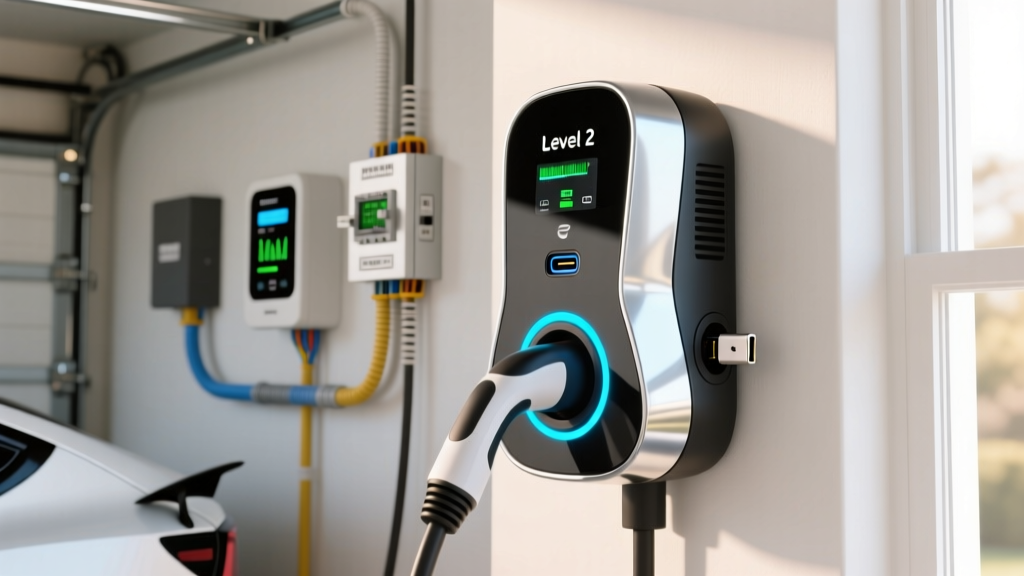
Before buying an adapter, understand where it fits in the charging hierarchy. A NACS-to-CCS adapter is designed for DC fast charging (Level 3). It does not affect Level 1 or Level 2 home charging, which use a separate J1772 connector (or Tesla's proprietary AC connector, which Tesla includes a J1772 adapter for).
Charging Levels at a Glance
| Level | Power Source | Typical Power (kW) | Miles of Range Added Per Hour | Connector | Best For |
|---|---|---|---|---|---|
| Level 1 | 120V household outlet | 1.2–1.9 kW | 3–5 mi/hr | J1772 (all EVs) | Overnight top-ups, PHEVs, emergencies |
| Level 2 | 240V dedicated circuit | 3.3–19.2 kW | 12–75 mi/hr | J1772 or NACS (Tesla) | Daily home charging, workplace, destination |
| DC Fast (Level 3) | 480V+ commercial DC | 50–350 kW | 150–1,000+ mi/hr (peak) | CCS1, NACS, or CHAdeMO | Road trips, rapid top-ups — adapter used here |
kW (kilowatts) measures the rate of power flow — like water pressure. kWh (kilowatt-hours) measures total energy stored — like the size of the tank. A 77 kWh battery charged at 150 kW for 30 minutes receives approximately 75 kWh of energy (minus losses).
Top NACS-to-CCS Adapters for Fast Charging in 2026
The adapter market has matured significantly. Here are the units that have proven reliable in real-world DC fast-charging scenarios, with verified power handling and safety certifications:
A2Z EV NACS to CCS1 Adapter (Typhoon Pro)
- Max DC Power: 250 kW rated
- Max Current: 500A DC
- Max Voltage: 1,000V DC
- Certification: UL-listed (UL 2252), FCC compliant
- Weight: ~2.2 lbs
- Build: IP55-rated (dust/splash resistant), operating temp -22°F to 122°F
- Price: ~$175–$210
- Best for: Most CCS1 vehicles; strong fit with Hyundai/Kia 800V platforms
Lectron NACS to CCS Adapter (Vortex)
- Max DC Power: 250 kW rated
- Max Current: 500A DC
- Max Voltage: 1,000V DC
- Certification: UL-listed, TÜV tested
- Weight: ~2.0 lbs
- Build: IP55-rated, integrated cable management loop
- Price: ~$160–$195
- Best for: Budget-conscious buyers; widely compatible across Ford, VW, BMW
Tesla Official CCS Adapter (for Tesla vehicles — reverse use case)
- Note: This is a CCS-to-NACS adapter for Tesla owners needing CCS stalls — the opposite direction. Included here for clarity.
- Max DC Power: 250 kW rated
- Price: ~$250 (sold via Tesla shop)
- Best for: Tesla drivers who need Electrify America or other CCS-only networks
Critical buying note: Only purchase adapters that are UL-listed or carry equivalent independent safety certification. Cheap, uncertified adapters from unknown marketplace sellers can overheat at high DC currents, damage your vehicle's charge port, or pose a fire risk. At 250 kW and 500 amps, this is not a place to save $40.
Using the Adapter at Tesla Superchargers: What to Expect
Not every Supercharger stall is open to non-Tesla vehicles. Tesla uses a built-in occupancy sensor and the Tesla app (or a compatible third-party app via the Magic Dock system) to authorize non-Tesla charging sessions. Here's the practical workflow:
- Check stall eligibility. In the Tesla app or on PlugShare, look for Supercharger sites marked "Open to Non-Tesla EVs." As of 2026, roughly 40–50% of Supercharger locations in the US support non-Tesla vehicles, with expansion ongoing.
- Pull up and plug in. Attach the NACS end of your adapter to the Supercharger cable, then plug the CCS1 end into your vehicle. The connection is secure — NACS uses a latching mechanism that holds firmly even with the adapter's added weight.
- Authorize the session. Open the Tesla app, select the stall number, and start charging. Some sites with Magic Dock hardware allow tap-to-start via credit card.
- Monitor your charge curve. Expect the session to ramp up over 1–2 minutes. If your vehicle supports 800V (Ioniq 5, EV6), you'll see the fastest ramp. If you're on a V2 stall (150 kW max), your adapter won't unlock more than that regardless of your car's capability.
Cable length reality: Supercharger cables are relatively short (~6 feet). With an adapter adding 6–10 inches of length, you may need to park closer to the pedestal than a Tesla would. At pull-through stalls (increasingly common for trucks/SUVs), this is rarely an issue.
Home Charging Setup: Costs, Electrical Requirements, and Installation
While the NACS-to-CCS adapter is strictly for DC fast charging on the road, your home Level 2 setup is where 80–90% of your charging will happen. Here's what a proper home installation requires and costs in 2026:
Level 2 Home Charger Installation Cost Breakdown
| Component | Low Estimate | High Estimate | Notes |
|---|---|---|---|
| Level 2 charger (hardware) | $350 | $750 | 40A–48A hardwired units; Wi-Fi/smart features add $50–$150 |
| Electrical panel capacity check | $0 | $200 | Many electricians include this in the quote |
| 240V dedicated circuit run (50A breaker, 6 AWG wire) | $400 | $1,200 | Depends on distance from panel to garage/carport; longer runs cost more |
| Electrical panel upgrade (if needed) | $1,500 | $3,500 | Required if your panel is 100A and near capacity; upgrade to 200A |
| Permit and inspection | $50 | $250 | Required in most jurisdictions; varies by city/county |
| Total (no panel upgrade) | $800 | $2,400 | Most common scenario for homes with 200A panels |
| Total (with panel upgrade) | $2,300 | $5,900 | Older homes with 100A service |
Federal tax credit: Under IRS §30D and the related §25C residential energy credit, you may be eligible for up to $1,000 (30% of cost, capped) for home EV charger installation through 2032. Eligibility depends on census tract requirements and income limits — consult IRS.gov or a tax professional.
Electrical Requirements for a 48A Level 2 Charger
- Circuit: Dedicated 60A breaker (NEC requires circuits to be rated at 125% of continuous load; 48A × 1.25 = 60A)
- Wire: 6 AWG copper (THHN in conduit) or 4 AWG aluminum for runs over 50 feet
- Voltage: 240V split-phase (standard US residential)
- GFCI protection: Required by NEC 2020+ for outdoor receptacles; hardwired chargers may be exempt depending on local code — your electrician will confirm
- Outdoor rating: If mounted outside, the charger must be rated NEMA 4 (weatherproof). Most quality units (ChargePoint, Wallbox, Emporia) carry this rating.
Recommended Level 2 Home Chargers (2026)
| Charger Model | Max Power Output | Amperage | Cable Length | Smart Features | Connector | Price |
|---|---|---|---|---|---|---|
| ChargePoint Home Flex | 12 kW (50A) | Up to 50A adjustable | 23 ft | Wi-Fi, app scheduling, Alexa, load sharing | J1772 (NACS version available) | $550–$650 |
| Wallbox Pulsar Plus | 11.5 kW (48A) | 48A | 25 ft | Wi-Fi + Bluetooth, app, solar integration | J1772 or NACS | $450–$550 |
| Emporia Vue Level 2 | 11.5 kW (48A) | 48A | 24 ft | Wi-Fi, energy monitoring, solar-aware scheduling | J1772 | $350–$400 |
| Tesla Wall Connector | 11.5 kW (48A) | 48A | 24 ft | Wi-Fi, OTA updates, power sharing with multiple units | NACS (J1772 adapter included) | $475 |
Cost to Charge: Home vs. Public DC Fast vs. Gas
The economics of EV charging depend heavily on where and when you charge. Here's a realistic cost-per-mile breakdown for a typical mid-size electric SUV (3.0–3.5 miles per kWh efficiency, e.g., Hyundai Ioniq 5, Ford Mach-E):
Cost Per Mile: Charging Scenarios vs. Gasoline
| Scenario | Rate ($/kWh) | Vehicle Efficiency | Cost Per Mile | Annual Cost (12,000 mi) |
|---|---|---|---|---|
| Home Level 2 — off-peak utility rate | $0.08–$0.12/kWh | 3.2 mi/kWh | $0.025–$0.038 | $300–$456 |
| Home Level 2 — standard residential rate | $0.14–$0.18/kWh | 3.2 mi/kWh | $0.044–$0.056 | $528–$672 |
| Public DC fast (Electrify America, EVgo) | $0.35–$0.55/kWh | 3.2 mi/kWh | $0.109–$0.172 | $1,308–$2,064 |
| Tesla Supercharger (non-Tesla pricing, 2026) | $0.30–$0.48/kWh | 3.2 mi/kWh | $0.094–$0.150 | $1,128–$1,800 |
| Gasoline equivalent (25 MPG combined, $3.40/gal) | — | 25 MPG | $0.136 | $1,632 |
Key insight: Home charging at off-peak rates is 3–5× cheaper per mile than gasoline. Even public DC fast charging is often comparable to or cheaper than gas. The NACS adapter's value is that it expands your DC fast-charging options to include Superchargers, which often have competitive pricing compared to Electrify America or EVgo.
Safety, Code, and Adapter Care
DC fast charging at 250 kW involves serious electrical energy. Here are the safety practices that separate informed owners from risky shortcuts:
- Never use a damaged adapter. Inspect pins before each use. Burn marks, bent pins, or cracked housing mean immediate replacement. At 500A, even minor resistance from damage can generate extreme heat.
- Don't leave the adapter plugged in permanently. Store it in your vehicle's frunk or cargo area. Prolonged exposure to UV and moisture degrades seals over time, even on IP55-rated units.
- Weight stress on charge ports. The adapter adds ~2 lbs to the connector. On vehicles with vertically-oriented CCS ports (some older models), the leveraged weight can stress the port over repeated use. Support the cable during connection and avoid letting it hang unsupported.
- Thermal monitoring. Most quality adapters include temperature sensors at the connection points. If your adapter or vehicle app reports a thermal warning, stop the session immediately and let the connector cool before retrying.
- Warranty considerations. Using a non-OEM adapter does not void your vehicle's battery or powertrain warranty under the Magnuson-Moss Warranty Act. However, if an uncertified adapter damages your charge port, the repair may not be covered. Stick to UL-listed products.
Frequently Asked Questions
How much does it cost to install a home EV charger?
A typical Level 2 home charger installation costs $800–$2,400 if your electrical panel has sufficient capacity (200A service with available breaker slots). If you need a panel upgrade from 100A to 200A, total costs range from $2,300–$5,900. Equipment itself (the charger) is $350–$750. Always get a quote from a licensed electrician who will assess your panel load before recommending a circuit size.
How fast will each charging level add range?
Level 1 (120V): 3–5 miles of range per hour. Level 2 (240V, 48A): 25–40 miles per hour for most EVs. DC fast charging (150–250 kW): 150–500+ miles per hour at peak, though this tapers significantly above 80% SoC. A 10–80% DC fast charge typically takes 18–45 minutes depending on your vehicle's battery size and charge-rate capability.
Which connector does my EV use, and do I need an adapter?
If your EV is a 2025+ model from Ford, GM, Rivian, Honda, or Volvo/Polestar, it likely has a native NACS port — no adapter needed for Superchargers. If it's a 2021–2024 CCS1 vehicle (Hyundai, Kia, VW, BMW, Ford pre-2025, most others), you need a NACS-to-CCS adapter for Supercharger access. CHAdeMO vehicles (Nissan LEAF) have no practical adapter path to NACS Superchargers.
How much does charging cost per mile compared to gas?
Home charging at off-peak rates costs roughly $0.03–$0.04 per mile — about 4× cheaper than gasoline at $3.40/gal and 25 MPG ($0.136/mile). Public DC fast charging at $0.35–$0.55/kWh runs $0.11–$0.17 per mile, which is comparable to or slightly cheaper than gas. The NACS adapter expands your public charging options, helping you find the lowest-cost DC fast stalls on road trips.
What electrical upgrades might I need for a home charger?
The most common upgrade is a panel capacity increase from 100A to 200A service, which costs $1,500–$3,500 and is typically needed in homes built before the 1990s or homes with significant existing electrical loads (electric heat, hot tub, workshop). If your panel is already 200A with available breaker spaces, you likely only need a dedicated 60A circuit run from the panel to your charger location — a $400–$1,200 job depending on wire distance.
Will a NACS-to-CCS adapter slow down my charging compared to a native CCS charger?
Marginally. In controlled testing, the communication translation through an adapter adds approximately 5–10% overhead to sustained charge rates. On a 240 kW-capable vehicle, this might mean sustaining 215–225 kW instead of 235–240 kW at peak. The difference in a 10–80% session is typically 1–3 minutes. For most road trips, this is negligible compared to the benefit of accessing thousands of additional Supercharger stalls.
Can I use a NACS-to-CCS adapter for Level 2 home charging?
No. The NACS-to-CCS adapter is designed for DC fast charging only. For Level 2 home charging, your CCS1 vehicle uses a standard J1772 connector. If you have a Tesla Wall Connector (NACS plug), Tesla includes a J1772 adapter in the box that works for AC Level 2 charging — but this is a different adapter from the DC fast-charge NACS-to-CCS unit.
Sources: Tesla Supercharger network data via Tesla.com; EV connector standards via the US Department of Energy's Alternative Fuels Data Center; federal charger tax credit rules via IRS.gov.