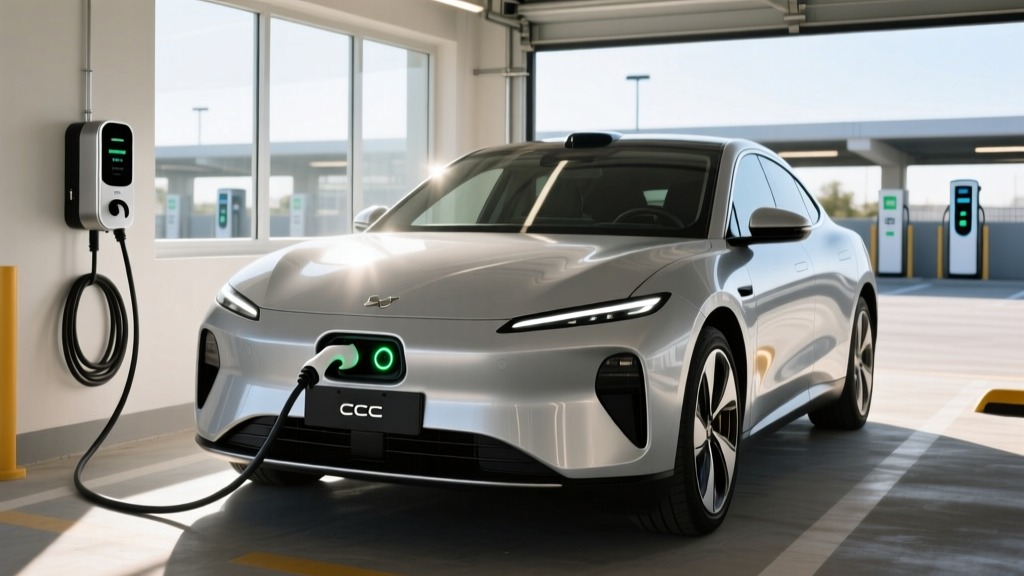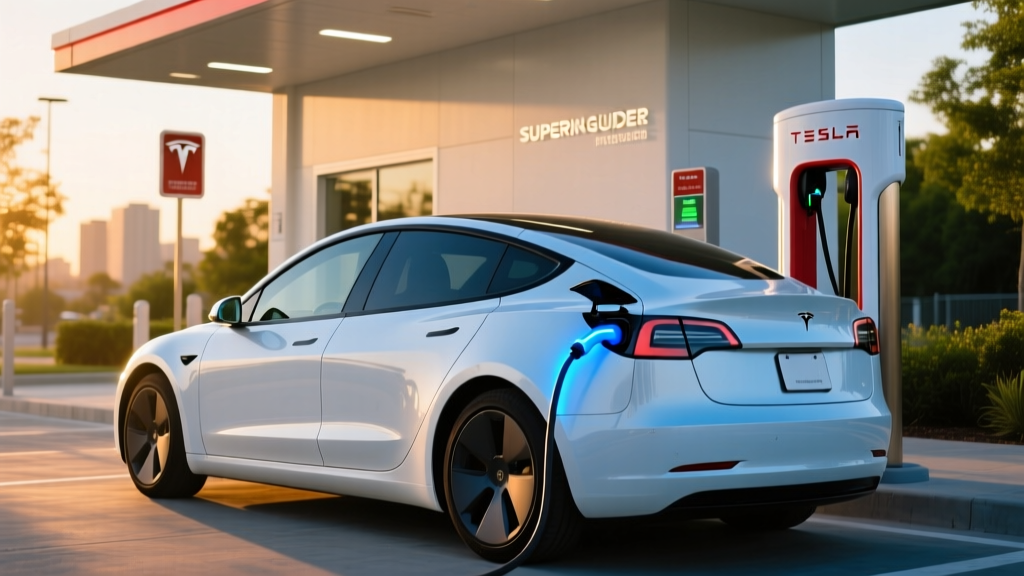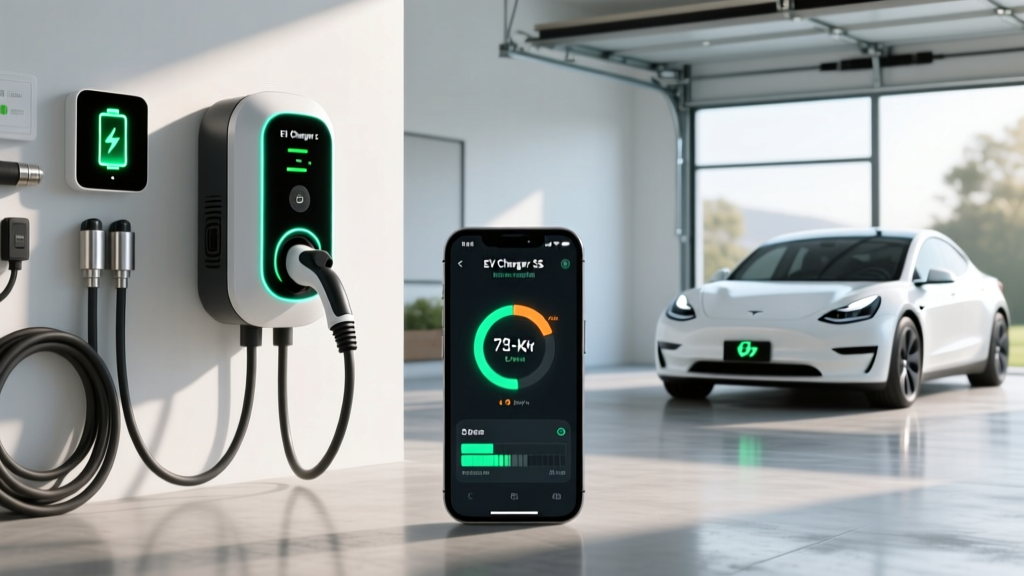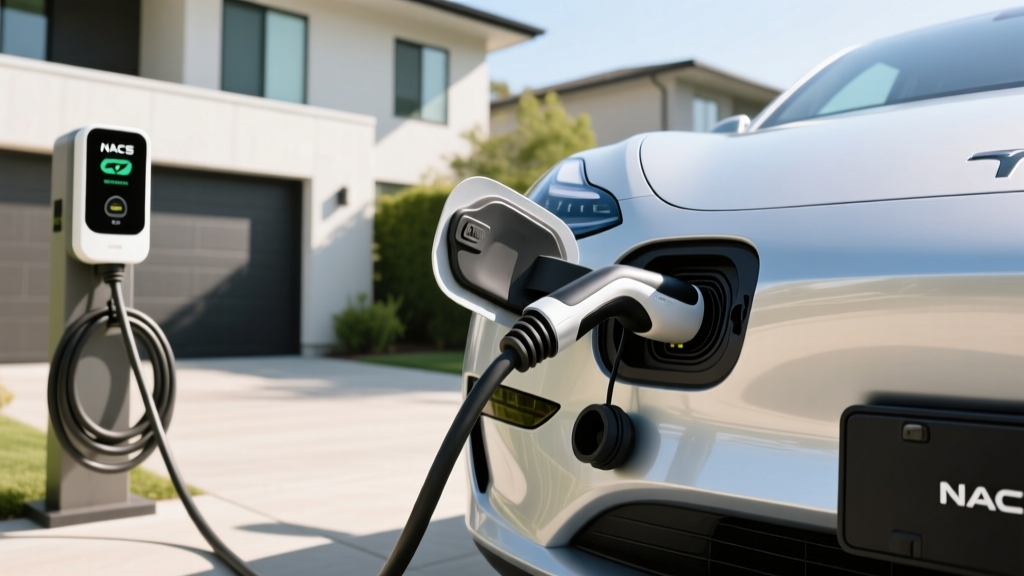
The North American Charging Standard (NACS) plug has rapidly become the dominant EV connector in the United States. Originally developed by Tesla and opened to the industry in late 2022, the NACS plug is now standard on every new Tesla and, as of the 2025–2026 model years, has been adopted by Ford, General Motors, Rivian, Hyundai, Kia, BMW, and nearly every other major automaker selling in North America. If you're buying an EV today or planning a home charging setup, understanding the NACS plug ecosystem — including what adapters you may still need — is essential.
This guide covers the NACS plug in full context: how it compares to legacy CCS1 and CHAdeMO connectors, what it means for home Level 2 installation, DC fast charging speeds, real-world costs, and the specific equipment you should consider for your garage.
Understanding Charging Levels: What Speeds Are We Talking About?
Before diving into connectors, it's critical to distinguish between kW (kilowatts — the rate of power delivery) and kWh (kilowatt-hours — the total energy stored in your battery). Think of kW as the speed of water flowing through a hose and kWh as the size of the bucket you're filling. A 72 kWh battery charged at 11.5 kW takes roughly 7 hours; that same battery at 150 kW DC fast charging can reach 80% in about 25 minutes.
| Level | Voltage | Power (kW) | Miles of Range Added per Hour | Typical Use Case |
|---|---|---|---|---|
| Level 1 | 120V AC | 1.2–1.9 kW | 3–5 miles/hr | Overnight top-ups, PHEVs, emergency |
| Level 2 | 240V AC | 3.3–19.2 kW | 12–75 miles/hr | Home daily charging, workplace, public AC |
| DC Fast Charge | 200–800V DC | 50–350 kW | 150–1,000+ miles/hr (peak) | Road trips, highway corridors, 10–80% in 15–30 min |
For most EV owners, Level 2 at home is the workhorse — handling 90% or more of total charging. DC fast charging is reserved for road trips and situations where you need a quick top-up. The NACS plug is used for both Level 2 AC and DC fast charging on Tesla and NACS-native vehicles, which is one of its key design advantages over the larger CCS1 connector.
The NACS Plug vs. CCS1 vs. CHAdeMO: Connector Compatibility
The connector landscape in North America has simplified dramatically since 2024. Here's where things stand for 2026-model-year vehicles:
| Connector | Brands Using It (New Vehicles) | Status |
|---|---|---|
| NACS (native) | Tesla, Ford, GM, Rivian, Hyundai, Kia, BMW, Volvo, Polestar, Mercedes-Benz, Nissan (Ariana), Subaru, Lucid, Toyota (bZ series) | Industry standard — growing network access |
| CCS1 | Legacy: older VW ID.4, Hyundai Ioniq 5 (pre-2025), Kia EV6 (pre-2025), Ford Mustang Mach-E (pre-2025) | Being phased out on new models; supported at most DC stations via adapter or dual-cable dispensers |
| CHAdeMO | Nissan Leaf (discontinued), Mitsubishi Outlander PHEV (legacy) | Effectively discontinued for new vehicles |
What this means practically: If you're buying a new EV in 2026, it almost certainly has a NACS plug. If you own a 2022–2024 EV with CCS1, you'll likely need a CCS-to-NACS adapter (such as the Ford or GM-approved adapters, typically $150–$250) to access Tesla Supercharger stalls, which are NACS-only. Conversely, newer NACS-equipped vehicles from non-Tesla brands can access the entire Supercharger network — now over 25,000 stalls in North America — without any adapter.
Most Electrify America, EVgo, and ChargePoint DC fast charging stations now offer both NACS and CCS1 cables on new dispensers, so NACS-native vehicles are increasingly well-served across all networks. According to the U.S. Department of Energy's AFDC station locator, NACS-compatible DC fast chargers have grown substantially since 2024.
Home Level 2 Charging: Electrical Requirements and Installation Costs
Installing a Level 2 home charger is the single biggest quality-of-life upgrade for an EV owner. Here's what's involved from an electrical standpoint:
Electrical Specifications
- Voltage: 240V (same as a dryer or oven circuit)
- Amperage: Typically 40A, 48A, or 60A dedicated circuit
- Charger output: A 48A charger delivers up to 11.5 kW; a 60A circuit supports up to 14.4 kW (though few EVs accept more than 11.5 kW on AC)
- Wire gauge: 6 AWG copper for 48A; 4 AWG for 60A (your electrician will confirm)
- Connector: Hardwired (no plug) or NEMA 14-50 receptacle — hardwired is preferred for 48A+ circuits and is required by code in many jurisdictions for continuous loads above 40A
Panel Upgrade: The Hidden Cost
Many homes built before 2000 have 100A or 150A main electrical panels. Adding a 48A EV circuit to an already-loaded panel may require a panel upgrade to 200A, which is a significant expense. Your electrician will perform a load calculation per NEC Article 220 to determine if your existing panel has sufficient capacity.
If a panel upgrade is needed, expect costs between $1,500 and $3,500 on top of the charger installation. Some homeowners opt for a lower-amperage circuit (e.g., 32A / 7.7 kW) to avoid a panel upgrade, which still provides 25–30 miles of range per hour — plenty for overnight charging.
| Component | Cost Range | Notes |
|---|---|---|
| Level 2 charger (equipment) | $350 – $750 | 48A smart charger; NACS connector models |
| Electrician labor (standard install) | $500 – $1,500 | Assumes panel has capacity; run within 20–40 ft of panel |
| Permit & inspection | $50 – $200 | Required in most jurisdictions; varies by municipality |
| Electrical panel upgrade (if needed) | $1,500 – $3,500 | 100A → 200A upgrade; not always required |
| Total (no panel upgrade) | $900 – $2,450 | Typical scenario for newer homes |
| Total (with panel upgrade) | $2,400 – $5,950 | Older homes with 100A/150A panels |
Always hire a licensed electrician and pull a permit. Unpermitted EV charger installations can void home insurance claims and create fire hazards. The National Electrical Code (NEC) requires a dedicated circuit for EV charging and GFCI protection for outdoor receptacles. For hardwired installations, GFCI is typically built into the charger unit itself.
Charging Time Examples: How Long Does 10–80% Actually Take?
Charge times vary based on battery size, charger power, and the vehicle's onboard charger capacity (for AC) or charge curve (for DC). Here are realistic 10–80% estimates for common 2026 EV battery sizes:
| Battery Size | Example Vehicles | Level 2 (11.5 kW / 48A) | DC Fast (peak rate → sustained avg) | DC 10–80% Time |
|---|---|---|---|---|
| 60 kWh usable | Tesla Model 3 RWD, Hyundai Kona Electric | ~4.5 hours | 170 kW peak → ~110 kW avg | ~22 minutes |
| 75 kWh usable | Tesla Model Y LR, Ford Mustang Mach-E ER | ~5.5 hours | 250 kW peak → ~140 kW avg | ~25 minutes |
| 85–100 kWh usable | Tesla Model S, Rivian R1T, GMC Sierra EV | ~7–8 hours | 350 kW peak → ~175 kW avg | ~28 minutes |
| 110+ kWh usable | GMC Hummer EV, Chevy Silverado EV Max | ~9.5+ hours | 350 kW peak → ~200 kW avg | ~32 minutes |
The charge curve matters. Peak DC fast charge rates (e.g., "250 kW") are sustained only between roughly 10–40% State of Charge (SoC). Above 60%, the rate tapers significantly to protect the battery. Above 80%, charging slows dramatically — which is why road-trip strategy focuses on 10–80% segments. Preconditioning the battery (warming it to optimal temperature before arrival at a charger) is critical in cold weather and is handled automatically when you navigate to a Supercharger or compatible DC station in most modern EVs.
Cost to Charge: Home vs. Public vs. Gas
One of the strongest ownership arguments for an EV is per-mile fuel cost. Here's how different scenarios compare using a 2026 average U.S. electricity rate and regular unleaded at $3.40/gallon:
| Scenario | Rate | Cost per Mile (3.5 mi/kWh EV) | Cost per Mile (30 MPG gas car) |
|---|---|---|---|
| Home charging (off-peak utility rate) | $0.09–$0.14/kWh | $0.03–$0.04 | $0.11 |
| Home charging (standard residential avg) | $0.16/kWh | $0.046 | $0.11 |
| Public Level 2 (ChargePoint, workplace) | $0.20–$0.35/kWh | $0.06–$0.10 | $0.11 |
| DC fast charging (Electrify America, EVgo) | $0.35–$0.55/kWh | $0.10–$0.16 | $0.11 |
| Tesla Supercharger (avg 2026) | $0.28–$0.38/kWh | $0.08–$0.11 | $0.11 |
The takeaway: home charging on an off-peak rate is roughly one-quarter the per-mile cost of gasoline. Even expensive DC fast charging is often comparable to or slightly cheaper than gas. However, if you rely exclusively on premium-priced public DC chargers, the cost advantage narrows or disappears. This is why home Level 2 installation is the single most important economic decision in EV ownership.
Many utilities offer time-of-use (TOU) plans that drop electricity to $0.06–$0.09/kWh between midnight and 6 AM. Scheduling your EV to charge during these windows maximizes savings and reduces grid strain.
Equipment Recommendations: Best NACS Home Chargers for 2026
Here are four well-regarded NACS-connector Level 2 chargers available in 2026, selected for reliability, smart features, and value:
Tesla Wall Connector (Gen 4)
- Power output: Up to 48A / 11.5 kW (hardwired, 60A circuit)
- Connector: Native NACS
- Cable length: 24 ft
- Smart features: Wi-Fi, OTA updates, Power Sharing (daisy-chain up to 6 units on one circuit), integrated cable management
- Price: ~$475
- Best for: Tesla and NACS-native EV owners who want the simplest, most integrated solution
ChargePoint Home Flex (NACS version)
- Power output: Up to 50A / 12 kW (adjustable down to 16A for panel-limited homes)
- Connector: Native NACS (2025+ models); older models used J1772 with adapter
- Cable length: 23 ft
- Smart features: Wi-Fi, app scheduling, Alexa integration, amperage dial adjustment
- Price: ~$550–$650
- Best for: Homes needing flexible amperage settings to avoid panel upgrades
Emporia Vue Level 2 EV Charger
- Power output: Up to 48A / 11.5 kW
- Connector: Native NACS (2025+ version)
- Cable length: 24 ft
- Smart features: Wi-Fi, solar integration (pairs with Emporia Vue energy monitor), TOU scheduling, load management
- Price: ~$400–$500
- Best for: Solar-equipped homes and budget-conscious buyers
Grizzl-E Smart (NACS)
- Power output: Up to 40A / 9.6 kW
- Connector: Native NACS
- Cable length: 24 ft
- Smart features: Wi-Fi, OCPP-compatible, adjustable amperage, extreme cold rating (-40°F)
- Price: ~$450
- Best for: Cold-climate installations and outdoor mounting; rugged Canadian-built unit
Safety, Code, and Installation Best Practices
EV charging is a continuous load (defined by the NEC as running for 3 hours or more), which triggers specific electrical code requirements:
- Dedicated circuit: Your EV charger must have its own dedicated breaker — it cannot share a circuit with other appliances.
- 80% rule: A 60A breaker supports a maximum continuous load of 48A. A 50A breaker supports 40A continuous. Your charger's rated amperage must not exceed 80% of the breaker rating.
- GFCI protection: Required for all outdoor receptacles (NEMA 14-50). Hardwired chargers typically have built-in ground-fault protection. Some jurisdictions now require GFCI breakers even for hardwired indoor installs — check local code.
- Outdoor rating: If mounting outside, ensure the charger carries a NEMA 4 or NEMA 4X rating for weather resistance. All chargers listed above meet this standard.
- Permit and inspection: Required virtually everywhere. An unpermitted installation may cause issues during a home sale or insurance claim. Permit fees are typically $50–$200.
- Wire sizing and conduit: Your electrician will size wire gauge and conduit per NEC Table 310.16. Do not attempt DIY electrical work for a 240V circuit — the shock hazard is lethal.
Frequently Asked Questions
How much does it cost to install a home EV charger?
A typical Level 2 home charger installation runs $900–$2,450 including equipment, electrician labor, and permit — assuming your electrical panel has sufficient capacity. If a panel upgrade from 100A to 200A is required, add $1,500–$3,500, bringing the total to $2,400–$5,950. Get at least three quotes from licensed electricians; prices vary significantly by region and job complexity.
How fast will each charging level add range?
Level 1 (120V) adds 3–5 miles per hour. Level 2 (240V, 48A) adds roughly 30–45 miles per hour for most EVs. DC fast charging adds 150–1,000+ miles per hour at peak rates, though the sustained average over a 10–80% session is lower due to the charge curve taper above 60% SoC.
Which connector or charger is compatible with my EV?
If your EV is a 2025–2026 model from Tesla, Ford, GM, Hyundai, Kia, Rivian, BMW, or most other major brands, it uses a NACS plug natively. Buy a NACS-connector home charger. If you own a 2022–2024 EV with a CCS1 port, you can either buy a CCS1 home charger or use a CCS-to-NACS adapter ($150–$250) to access Tesla Superchargers. CHAdeMO vehicles (Nissan Leaf) are limited to CHAdeMO DC stations, which are increasingly rare.
How much does charging cost per mile compared to gas?
Home charging on an average residential rate (~$0.16/kWh) costs about $0.04–$0.05 per mile for a typical EV getting 3.5 miles per kWh. A 30 MPG gasoline car at $3.40/gallon costs about $0.11 per mile. Even public DC fast charging at $0.45/kWh comes in around $0.13/mile — competitive with gas. The biggest savings come from charging at home on off-peak utility rates, where costs drop to $0.03/mile or less.
What electrical upgrades might I need?
The most common upgrade is a panel capacity increase from 100A or 150A to 200A, needed when your existing panel cannot accommodate the additional 40–60A load of an EV charger alongside existing appliances. Your electrician will perform a NEC Article 220 load calculation. Other possible upgrades include adding a sub-panel closer to the garage (to reduce wire run costs), replacing an outdated fuse box with a modern breaker panel, or upgrading the utility service drop for homes with very old electrical infrastructure.