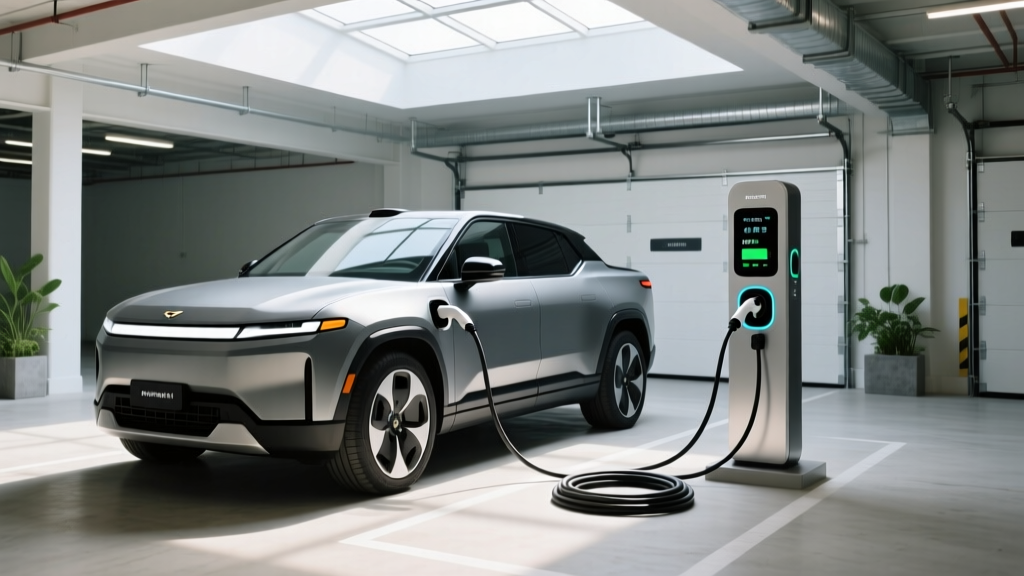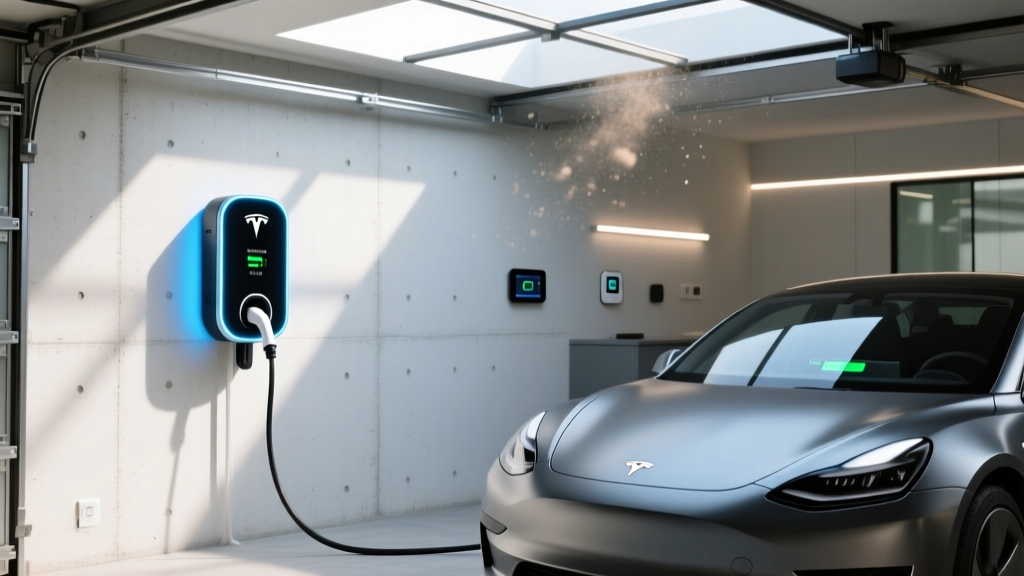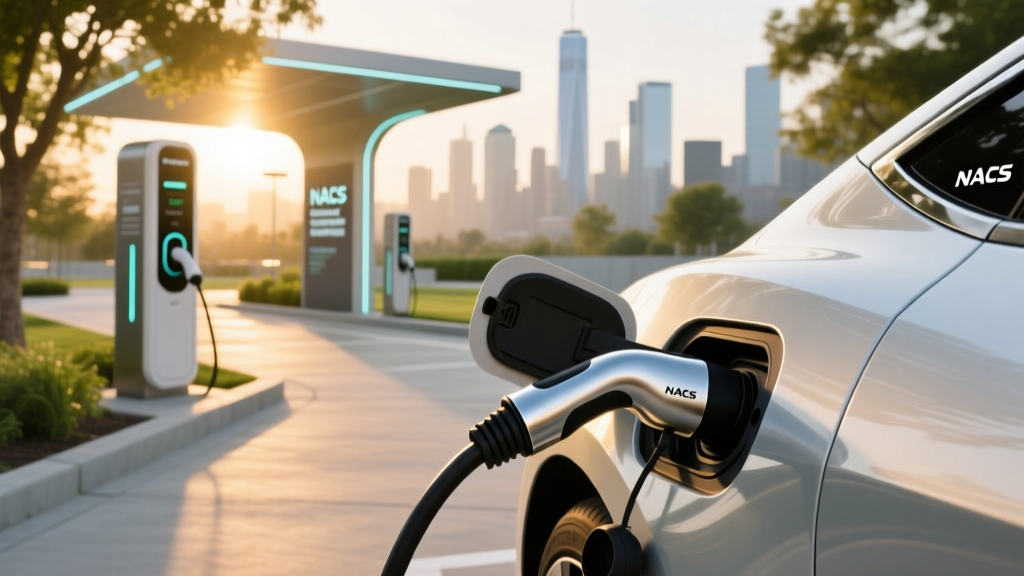
If you've been shopping for an electric vehicle or a home charger in 2025–2026, you've almost certainly encountered the acronym NACS. But NACS meaning goes beyond a simple definition — it represents a fundamental shift in how North America charges electric vehicles. This guide unpacks exactly what NACS is, why it replaced CCS1 as the dominant standard, and what you need to know about home installation, public charging, and equipment selection.
What Does NACS Mean in EV Charging?
NACS stands for North American Charging Standard. Originally developed by Tesla as a proprietary connector, the design was opened to the broader industry in late 2022 and subsequently adopted by nearly every major automaker selling EVs in North America. By 2026, NACS is the de facto standard for both Level 2 AC charging and DC fast charging on new vehicles from Ford, GM, Rivian, Hyundai, Kia, BMW, and others.
The NACS connector is physically smaller and lighter than the CCS1 (Combined Charging System) plug it replaces. It uses the same pins for both AC and DC charging, eliminating the need for the bulky lower DC pins found on CCS1 connectors. For the driver, this means a more ergonomic plug that's easier to handle in cold weather or tight parking spaces.
Charging Levels: Speeds, Power, and Range Added Per Hour
Understanding NACS requires understanding the three charging levels available to EV owners. Each level delivers power at a different rate, and NACS connectors are used across Level 2 and DC fast charging.
| Level | Voltage | Power (kW) | Miles of Range Added Per Hour | Typical Use |
|---|---|---|---|---|
| Level 1 | 120V AC | 1.0–1.4 kW | 3–5 miles/hr | Emergency / overnight trickle |
| Level 2 (NACS) | 240V AC | 7.2–19.2 kW | 25–65 miles/hr | Home / workplace / public AC |
| DC Fast (NACS) | 400–800V DC | 50–350 kW | 150–1,000+ miles/hr (peak) | Highway travel / rapid top-up |
Real-world context: Most EV owners do 80% or more of their charging at home on Level 2. A typical commuter driving 40 miles per day needs only about 8–10 kWh replenished overnight — easily handled by a 48-amp (11.5 kW) Level 2 NACS charger in 1–2 hours. DC fast charging is reserved for road trips, where a 10–80% session on a 150 kW NACS Supercharger adds roughly 200 miles in 20–25 minutes for a vehicle like the Ford Mustang Mach-E Extended Range (91 kWh usable battery).
Connector Compatibility: NACS, CCS1, and CHAdeMO in 2026
The connector landscape has simplified dramatically. Here's where each standard stands as of 2026:
| Connector | Status in 2026 | Vehicles Using It | Adapter Needed? |
|---|---|---|---|
| NACS | Dominant standard | Tesla (all), Ford, GM, Rivian, Hyundai, Kia, BMW, Volvo, Mercedes, others | None for new NACS-equipped vehicles |
| CCS1 | Legacy / phasing out | 2024 and older non-Tesla EVs (VW ID.4, older Ioniq 5, etc.) | CCS1-to-NACS adapter ($150–$250) for Supercharger access |
| CHAdeMO | Obsolete in US | Nissan Leaf (discontinued), Mitsubishi Outlander PHEV (older) | Limited adapter options; network shrinking |
If you're buying a new EV in 2026, it almost certainly has a native NACS port. If you own a 2023–2024 model with CCS1 (such as the Hyundai Ioniq 5 or VW ID.4 from those years), automakers and third-party suppliers now offer CCS1-to-NACS adapters that grant access to the Tesla Supercharger network, which exceeds 25,000 stalls across North America. Tesla also provides NACS-to-CCS1 adapters for Tesla owners who need to use legacy Electrify America or EVgo CCS1 stalls.
Home Charger Installation: Costs, Electrical Requirements, and Panel Upgrades
Installing a Level 2 NACS home charger is the single most impactful upgrade an EV owner can make. Here's what's involved and what it costs.
Electrical Requirements
A typical Level 2 NACS charger requires a 240-volt dedicated circuit, similar to what an electric dryer or oven uses. The most common home setup is a 60-amp circuit with a 48-amp charger (EV chargers must be derated to 80% of the circuit breaker rating per National Electrical Code). This delivers 11.5 kW of continuous power.
- 40-amp circuit / 32-amp charger: 7.7 kW — adequate for most commuters, lower install cost
- 60-amp circuit / 48-amp charger: 11.5 kW — recommended for larger batteries (80+ kWh) and faster turnaround
- 80-amp circuit / 64-amp charger: 15.4 kW — supported by some vehicles (Tesla with 80A onboard charger); requires significant panel capacity
Panel Upgrade Reality
Homes built before 2000 often have 100-amp main electrical panels. Adding a 60-amp EV circuit to an already-loaded 100A panel may require a panel upgrade to 200 amps, which adds $1,500–$3,500 to your project. A licensed electrician will perform a load calculation to determine if your existing panel can handle the additional draw. Never skip this step — overloading a panel is a fire hazard and will fail inspection.
| Cost Component | Typical Range | Notes |
|---|---|---|
| Level 2 NACS charger (hardware) | $400–$750 | Smart Wi-Fi-enabled units; dumb units from $250 |
| Electrician labor (240V circuit run) | $600–$2,000 | Depends on distance from panel, wall/floor penetration |
| Permit and inspection | $50–$300 | Required in most jurisdictions; varies by municipality |
| Panel upgrade (if needed) | $1,500–$3,500 | 100A → 200A upgrade; not always required |
| Total (no panel upgrade) | $1,050–$3,050 | Most common scenario |
| Total (with panel upgrade) | $2,550–$6,550 | Older homes with 100A service |
The federal Residential Clean Energy Credit covers 30% of home EV charger equipment and installation costs (up to $1,000) through 2032, provided you live in a qualifying census tract. Check irs.gov for current eligibility rules, as census-tract qualifications are updated periodically.
Charging Cost Per Mile: Home vs. Public vs. Gas
One of the strongest economic arguments for EV ownership is the per-mile fuel cost advantage — but it varies significantly depending on where and when you charge.
| Scenario | Rate ($/kWh) | Cost Per Mile (3.5 mi/kWh EV) | Annual Cost (12,000 mi) |
|---|---|---|---|
| Home off-peak (utility TOU rate) | $0.08–$0.12 | $0.023–$0.034 | $275–$410 |
| Home standard rate | $0.14–$0.18 | $0.040–$0.051 | $480–$615 |
| Public Level 2 (ChargePoint, etc.) | $0.20–$0.35 | $0.057–$0.100 | $685–$1,200 |
| DC fast charging (EA, EVgo, Tesla) | $0.30–$0.55 | $0.086–$0.157 | $1,030–$1,885 |
| Gasoline (28 MPG avg, $3.40/gal) | — | $0.121 | $1,455 |
The takeaway: home off-peak charging delivers fuel costs at roughly one-quarter to one-fifth the cost of gasoline per mile. Even public DC fast charging is often competitive with or cheaper than gas. The worst-case scenario — exclusive reliance on premium-priced DC fast chargers — can approach or exceed gas costs, which is why home charging access remains the single biggest factor in EV ownership satisfaction.
Charging Time Examples: What to Expect with Common Battery Sizes
Charging time depends on battery capacity (kWh), charger power (kW), and the vehicle's charge curve. Most EVs charge fastest between 10% and 50% state of charge, then taper significantly above 80% to protect battery health. Here are representative examples:
Level 2 Home Charging (48A / 11.5 kW)
- Tesla Model Y Long Range (82 kWh usable): 0–100% in ~7.5 hours
- Ford F-150 Lightning Extended Range (131 kWh usable): 0–100% in ~12 hours (requires 80A/19.2 kW for practical overnight charging)
- Hyundai Ioniq 5 (77.4 kWh usable): 0–100% in ~7 hours
DC Fast Charging (10–80%)
- Hyundai Ioniq 5 on 350 kW charger: 10–80% in ~18 minutes (peak ~240 kW, sustained ~180 kW average)
- Tesla Model 3 Highland on V3 Supercharger (250 kW): 10–80% in ~22 minutes
- Ford Mustang Mach-E on 150 kW charger: 10–80% in ~35 minutes
- Rivian R1T Dual-Motor (128 kWh pack) on 200 kW: 10–80% in ~42 minutes
Equipment Recommendations: Best NACS Home Chargers for 2026
The home charger market has matured, and several NACS-native units stand out for reliability, smart features, and build quality. Here are top picks across price tiers:
Tesla Wall Connector (Gen 4)
- Power: 48A / 11.5 kW (hardwired, 60A circuit)
- Connector: Native NACS
- Cable length: 24 ft
- Smart features: Wi-Fi, OTA updates, power-sharing with second unit, access control
- Price: ~$475
- Best for: Tesla owners and NACS-native EVs; excellent value
ChargePoint Home Flex (NACS)
- Power: Up to 50A / 12 kW (adjustable 16–50A, NEMA 14-50 or hardwired)
- Connector: Native NACS (2025+ model)
- Cable length: 24 ft
- Smart features: Wi-Fi, app scheduling, Alexa/Google integration, energy tracking
- Price: ~$599
- Best for: Multi-EV households; adjustable amperage fits various panel capacities
Emporia Level 2 Smart Charger
- Power: 48A / 11.5 kW (hardwired) or 40A / 9.6 kW (NEMA 14-50)
- Connector: Native NACS
- Cable length: 24 ft
- Smart features: Wi-Fi, solar integration, energy monitoring, load management
- Price: ~$399
- Best for: Budget-conscious buyers with solar panels; strong energy management
All three units carry UL certification (critical for insurance and code compliance) and support outdoor installation with appropriate weatherproofing. The ChargePoint Home Flex's adjustable amperage is particularly valuable if your electrical panel has limited headroom — you can set it to 32A on a 40A circuit today and reconfigure later if you upgrade your panel.
Safety, Code Compliance, and Installation Best Practices
EV charging involves sustained high-current draw — often 8+ hours at full load. This is fundamentally different from intermittent appliances like dryers. Proper installation is non-negotiable.
- Dedicated circuit: Your Level 2 charger must be on its own dedicated circuit — never shared with other appliances.
- GFCI protection: NEC 2023 and later requires GFCI (ground-fault circuit interrupter) protection for EV charging outlets. Hardwired installations may have different requirements; your electrician will advise based on local code.
- Outdoor rating: If installing outdoors, ensure the charger carries a NEMA 4 or IP65 rating for weather resistance. The connector holster should include a drip loop and be mounted at 18–48 inches above grade per ADA and code guidelines.
- Hardwired vs. plug: Hardwired installations (no plug) eliminate the NEMA 14-50 receptacle as a failure point and are preferred for 48A+ circuits. A 14-50 plug is acceptable for 40A or lower circuits and offers portability if you move.
- Permit and inspection: Most municipalities require an electrical permit for EV charger installation. The inspection ensures proper wire gauge, breaker sizing, grounding, and GFCI compliance. Skipping the permit can void homeowner's insurance coverage for electrical fires.
Frequently Asked Questions
How much does it cost to install a home EV charger?
Expect $1,050–$3,050 for a standard Level 2 NACS installation (charger + electrician + permit) if your electrical panel has sufficient capacity. If you need a panel upgrade from 100A to 200A service, add $1,500–$3,500. The federal Residential Clean Energy Credit may cover 30% of costs up to $1,000 if you're in a qualifying census tract.
How fast will each charging level add range?
Level 1 (120V) adds 3–5 miles per hour. Level 2 (240V, 48A) adds 25–40 miles per hour depending on vehicle efficiency. DC fast charging at 150+ kW can add 150–300+ miles in a 20–30 minute session, though the rate tapers significantly above 80% state of charge.
Which connector is compatible with my EV?
If you bought a new EV in 2025 or 2026, it almost certainly has a native NACS port. Vehicles from 2023–2024 may have CCS1 and require an adapter for Tesla Supercharger access. Check your owner's manual or the port itself — NACS is a compact, five-pin design, while CCS1 is larger with two additional DC pins below.
How much does charging cost per mile compared to gas?
Home off-peak charging costs $0.02–$0.03 per mile — roughly one-quarter the cost of gasoline at $3.40/gallon in a 28 MPG vehicle ($0.12/mile). Public DC fast charging ranges from $0.09–$0.16 per mile, still competitive with or cheaper than gas in most scenarios.
What electrical upgrades might I need?
The most common upgrade is a panel capacity increase from 100A to 200A, needed in older homes where the existing panel is near capacity. Your electrician will perform a NEC Article 220 load calculation. Other potential upgrades include running a new 240V circuit (if your panel is far from the garage), upgrading wire gauge, or adding a sub-panel. Homes with 200A+ service typically need no panel upgrade.