Rivian owners now have broader access to DC fast charging than almost any other non-Tesla EV brand. With the industry-wide shift to the North American Charging Standard (NACS), Rivian R1T and R1S vehicles (2025+ dual-motor and newer tri-motor builds) ship with a native NACS charge port. For earlier 2022–2024 CCS-equipped Rivians, a NACS DC adapter unlocks Tesla Supercharger stalls — and a growing number of NACS-native public chargers — without sacrificing charging speed. This guide covers exactly what you need to charge a Rivian at home and on the road, including the hardware, electrical requirements, and real costs.
Rivian Charge Ports in 2026: CCS vs NACS and Adapter Reality
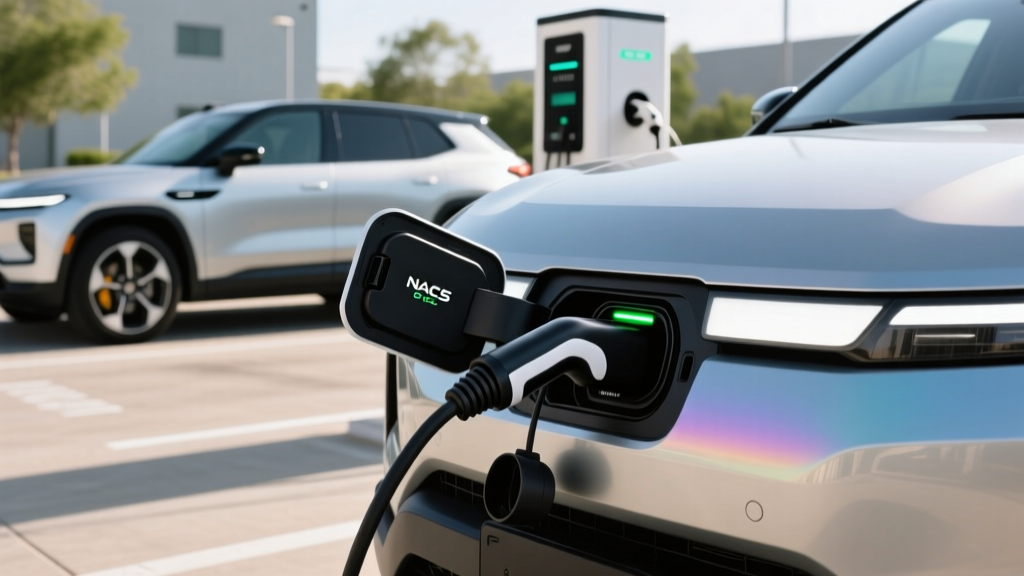
Rivian transitioned to the NACS connector starting with 2025 model-year production. If you own a 2025 or 2026 R1T or R1S, your truck already has a NACS port natively — no adapter required for Tesla Superchargers or NACS-equipped public stations.
If you own a 2022–2024 Rivian with the original CCS1 port, you have two adapter scenarios:
- NACS DC adapter (CCS → NACS): Lets you plug into Tesla Supercharger stalls and NACS-native DC fast chargers. Rivian began offering an official CCS-to-NACS adapter through its gear shop, and third-party options from brands like A2Z and Lectron are also available. Expect to pay $150–$300 for a quality adapter rated for 250+ kW.
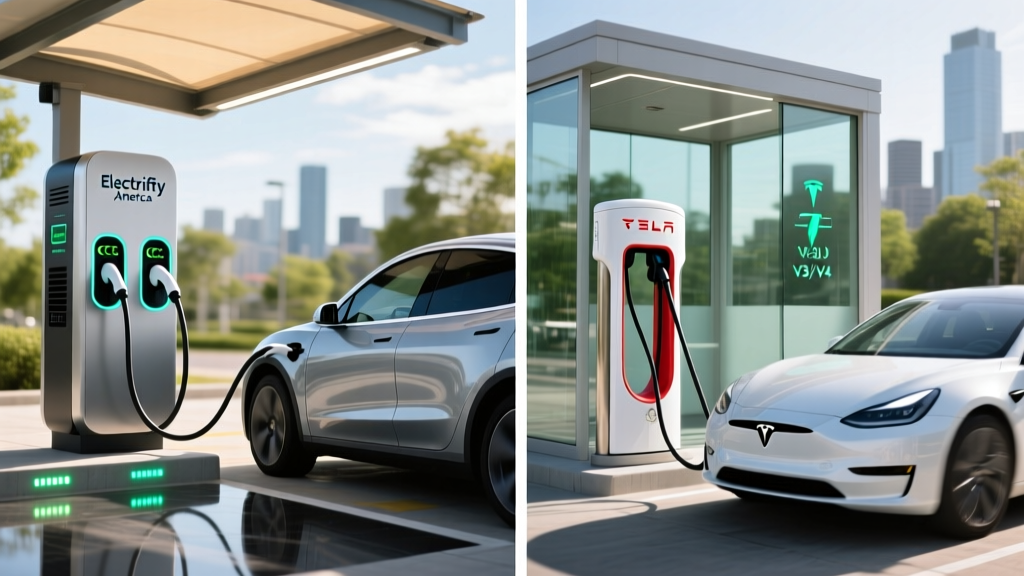
- CCS DC charging (no adapter): You can still use Electrify America, EVgo, and other CCS1-equipped networks natively. These networks are adding NACS cables, but CCS remains widely available.
| Model Year | Native Port | Tesla Supercharger Access | Adapter Needed |
|---|---|---|---|
| 2022–2024 | CCS1 | Yes (via adapter) | NACS DC adapter (CCS1 → NACS) |
| 2025–2026 | NACS | Yes (native) | CCS1 adapter (only for legacy CCS stations) |
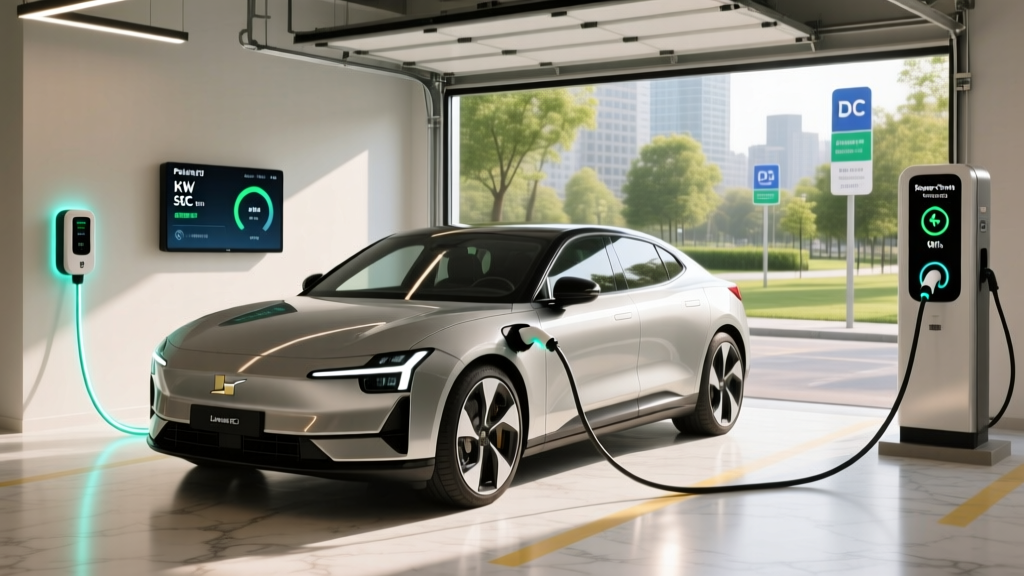
Level 2 home charging note: All Rivians use a J1772 inlet for AC Level 2 charging regardless of model year (the J1772 pins are integrated into both CCS and NACS connectors). Any standard J1772 Level 2 home charger works with every Rivian without an adapter.
Charging Levels Explained: Speeds, kW, and Range Per Hour
Before choosing equipment, understand the three charging tiers. The distinction between kW (power — how fast energy flows) and kWh (energy — battery capacity) is critical. A Rivian R1T Dual-Motor has a ~128.9 kWh battery pack (Large) or ~92 kWh (Standard). Charging speed is measured in kW; the battery stores energy in kWh.
| Level | Voltage | Power (kW) | Miles of Range Per Hour | Best Use Case |
|---|---|---|---|---|
| Level 1 | 120V AC | 1.2–1.9 kW | 3–5 mi/hr | Overnight trickle; emergency top-ups |
| Level 2 (Home) | 240V AC | 7.2–19.2 kW | 20–56 mi/hr | Daily home charging; primary method |
| DC Fast Charging | 400V+ DC | 50–220 kW | 150–600+ mi/hr (peak) | Road trips; rapid replenishment |
Rivian-specific DC fast charging data:
- R1T/R1S Dual-Motor (Large Pack, 128.9 kWh): Peaks at ~220 kW on NACS Supercharger V4 or CCS stations. Expect 10–80% in approximately 28–34 minutes. Sustained rate averages ~130–150 kW across the full curve due to taper above 60% SoC.
- R1T/R1S Standard Pack (~92 kWh LFP): Peaks at ~180 kW. 10–80% in roughly 25–30 minutes. LFP chemistry tolerates frequent 100% charging better than NMC.
- R1T/R1S Tri-Motor (Max Pack, ~149 kWh): Larger battery absorbs more power longer. Peaks at ~220 kW, 10–80% in ~35–40 minutes.
Home Level 2 Charger Installation: Electrical Requirements and Costs
Most Rivian owners install a 240V Level 2 wall connector in their garage. Here is what that project actually involves.
Electrical Requirements
The Rivian onboard charger accepts up to 11.5 kW (48A) on 2025+ models and 11.5 kW on most 2022–2024 builds. To deliver this, you need a dedicated 60A circuit (NEC 80% rule: a 48A continuous load requires a 60A breaker). If your panel has spare capacity, a licensed electrician runs 6 AWG copper wire from the panel to a NEMA 14-60 outlet or hardwired wall connector.
If you only need 7.7 kW (32A), a 40A circuit with 8 AWG wire suffices — a lower-cost option if your panel is tight on capacity.
Panel Upgrade Considerations
Homes with 100A service panels often lack room for a 60A EV circuit. Upgrading to a 200A panel costs $1,500–$3,500 depending on your utility and local codes. Some homeowners opt for a smart panel-level load management device (e.g., Emporia or Span) to avoid a full upgrade. Always have an electrician perform a load calculation before committing to a circuit size.
| Component | Low End | High End | Notes |
|---|---|---|---|
| Level 2 Charger (hardware) | $350 | $750 | Grizzl-E, ChargePoint, Wall Connector |
| Electrician labor (standard install) | $400 | $1,200 | Depends on wire run length, conduit |
| Permit and inspection | $50 | $300 | Varies by municipality |
| Panel upgrade (if needed) | $1,500 | $3,500 | 100A → 200A service upgrade |
| Total (no panel upgrade) | $800 | $2,250 | |
| Total (with panel upgrade) | $2,300 | $5,750 |
Federal incentive: The IRS residential clean energy credit (IRC §25D) covers 30% of home charger hardware and installation costs up to $1,000 through 2032. This is separate from the §30D vehicle purchase credit. Check irs.gov for current-year eligibility, as income and census-tract rules may apply for the §30C commercial alternative.
Level 2 Charger Equipment Recommendations for Rivian
Below are proven Level 2 chargers that pair well with Rivian's 11.5 kW onboard charger. All use J1772 connectors (universal for AC charging on every Rivian).
| Charger | Max Power | Cable Length | Smart Features | Price (MSRP) |
|---|---|---|---|---|
| Tesla Wall Connector (J1772) | 11.5 kW / 48A | 24 ft | Wi-Fi, OTA updates, load sharing | $475 |
| ChargePoint Home Flex | 12 kW / 50A | 23 ft | App scheduling, Alexa, amperage adjustable | $599 |
| Grizzl-E Smart | 11.5 kW / 46A | 24 ft | OCPP, rugged outdoor rating, -40°F | $499 |
| Emporia Vue EV Charger | 11.5 kW / 48A | 24 ft | Energy monitoring, solar integration | $399 |
| Rivian Wall Charger | 11.5 kW / 48A | 25 ft | Rivian app integration, LED status ring | $550 |
Our pick for most Rivian owners: The Rivian Wall Charger offers the cleanest integration with the Rivian app and vehicle scheduling. If you want energy monitoring or plan to add solar, the Emporia Vue is a strong value alternative at $399. For extreme cold climates, the Grizzl-E's -40°F rating and IP67 enclosure are hard to beat.
Cost to Charge a Rivian: Home vs. Public vs. Gas
Charging economics depend on where and when you plug in. Here are real-world cost scenarios for a 2026 Rivian R1T Dual-Motor Large Pack (128.9 kWh usable, ~330 EPA miles).
| Scenario | Rate ($/kWh) | Full-Pack Cost | Cost Per Mile |
|---|---|---|---|
| Home (off-peak utility rate) | $0.09–$0.14 | $11.60–$18.05 | $0.035–$0.055 |
| Home (standard rate, no TOU) | $0.16–$0.22 | $20.62–$28.36 | $0.062–$0.086 |
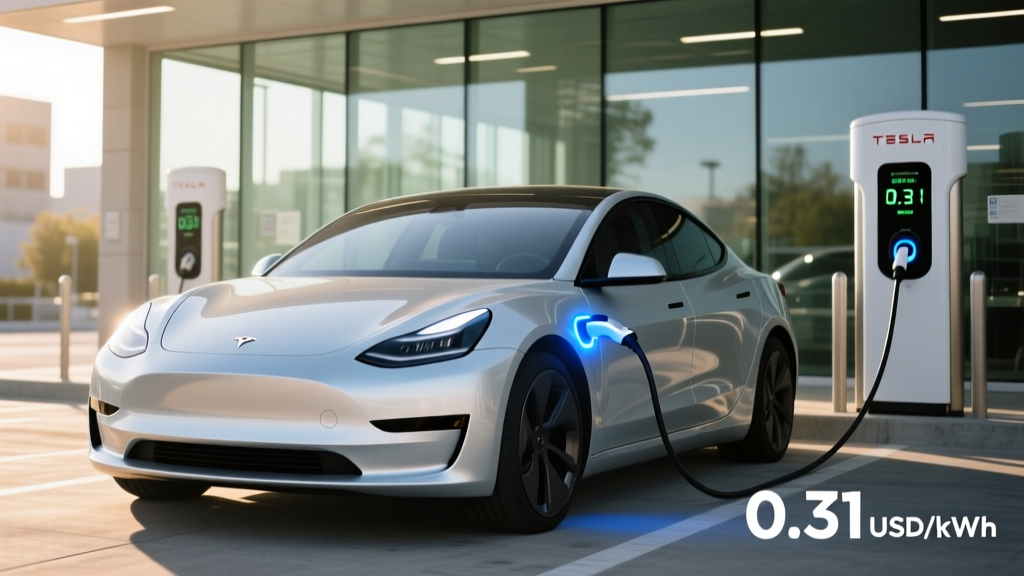
| Tesla Supercharger (average) | $0.28–$0.36 | $36.09–$46.40 | $0.109–$0.141 |
| Electrify America / EVgo DC | $0.35–$0.55 | $45.12–$70.90 | $0.137–$0.215 |
| Gas truck (20 MPG, $3.40/gal) | — | $56.10 (equiv.) | $0.170 |
The bottom line: Home charging on off-peak rates costs roughly $0.04–$0.05 per mile — about one-quarter the per-mile cost of a comparable gas truck. Even at Supercharger rates ($0.11–$0.14/mi), the R1T undercuts gasoline. The worst-case public DC scenario ($0.55/kWh at some urban chargers) can briefly exceed gas costs, which is why home charging is the economic foundation of EV ownership.
Safety, Code, and Installation Best Practices
Level 2 charging involves sustained high-current draw — 48 amps for hours at a time. Proper installation is non-negotiable.
- Dedicated circuit: Your EV charger must have its own dedicated breaker. Never share a circuit with other large appliances.
- GFCI protection: NEC 2020+ requires GFCI protection for outdoor receptacles used for EV charging. Hardwired installations may have different requirements — your electrician will confirm based on local code.
- Outdoor rating: If mounting outside, ensure the charger carries at least a NEMA 4 (weatherproof) or IP65/IP67 rating. All chargers listed above meet this standard.
- Permit and inspection: Most jurisdictions require an electrical permit for a new 240V circuit. The inspection verifies wire gauge, breaker size, grounding, and proper torque on connections. Skipping this can void homeowner's insurance coverage for electrical fires.
- Wire gauge: 6 AWG copper for 60A circuits; 8 AWG for 40A circuits. Aluminum wire requires a larger gauge — your electrician will spec this correctly.
Using the NACS DC Adapter for Rivian on the Road
For 2022–2024 Rivian owners with the CCS-to-NACS adapter, here is what to expect at a Tesla Supercharger stall:
- Plug sequence: Attach the adapter to the Supercharger cable first, then insert the adapter's CCS end into your Rivian's charge port. Ensure a firm, full-depth connection — a loose seat can trigger a fault.
- Initiating the session: Use the Rivian app or in-vehicle navigation to initiate charging if Auto Charge is enabled. Some Supercharger stalls require you to tap a credit card on the station's reader — Tesla has opened payment to non-Tesla vehicles at many locations.
- Speed expectations: Supercharger V3 stalls deliver up to 250 kW, but your Rivian's CCS-to-NACS adapter and onboard systems typically peak around 200–220 kW. Expect 10–80% in ~30 minutes on a V3 stall. V4 Superchargers (newer, higher-power cabinets) may deliver closer to the R1T's full 220 kW peak.
- Charge curve reality: Peak kW only applies at low SoC (typically 10–30%). Above 60%, the charge rate tapers significantly — often to 50–80 kW. This is normal battery management, not a fault. Plan stops to charge from 10–80% rather than 10–100% to minimize time at the stall.
Cold-weather note: In sub-freezing temperatures, your Rivian will precondition the battery when a charger is set as the navigation destination. This is essential for achieving advertised charge speeds. Without preconditioning, a cold-soaked battery may accept only 30–50 kW initially, adding 10–15 minutes to your stop. Always navigate to the charger rather than just driving up.
Frequently Asked Questions
How much does it cost to install a home EV charger for my Rivian?
A standard 240V/48A Level 2 installation with no panel upgrade typically runs $800–$2,250 including hardware, electrician labor, and permit. If your home needs a panel upgrade from 100A to 200A service, add $1,500–$3,500. The federal §25D residential clean energy credit covers 30% of the cost (up to $1,000) — check current-year rules on irs.gov.
How fast will each charging level add range to my Rivian?
Level 1 (120V) adds 3–5 miles per hour — useful only for overnight trickle or emergencies. Level 2 (240V, 48A) adds roughly 30–37 miles per hour on the R1T, fully replenishing the Large Pack in about 11 hours. DC fast charging adds 150–600+ miles per hour at peak power, with a 10–80% session taking 28–40 minutes depending on pack size.
Which connector and charger is compatible with my Rivian?
For AC Level 2 home charging: any J1772 charger works with every Rivian model year. For DC fast charging: 2025+ Rivians have a native NACS port. 2022–2024 Rivians have CCS1 and need a NACS DC adapter to use Tesla Superchargers. Refer to the connector compatibility table above for your specific model year.
How much does charging cost per mile compared to gas?
Home charging on off-peak rates costs $0.035–$0.055 per mile in a Rivian R1T — roughly 70–80% cheaper than a 20 MPG gas truck at $3.40/gallon ($0.17/mi). Public DC fast charging at $0.28–$0.55/kWh ranges from $0.11 to $0.22 per mile, still generally competitive with or cheaper than gasoline.
What electrical upgrades might I need for a home charger?
If your electrical panel is 100A or has limited spare breaker slots, you may need a panel upgrade to 200A ($1,500–$3,500). An electrician will perform a NEC Article 220 load calculation to determine whether your existing panel can support a 60A dedicated EV circuit. Load-management devices can sometimes avoid a full panel upgrade.
Does the NACS DC adapter affect charging speed on my older Rivian?
Minimally. A quality CCS-to-NACS adapter rated for 250+ kW introduces negligible resistance. Your 2022–2024 Rivian will still peak near its rated ~200–220 kW at compatible Supercharger stalls. The limiting factor is the vehicle's battery management system and charge curve, not the adapter itself.