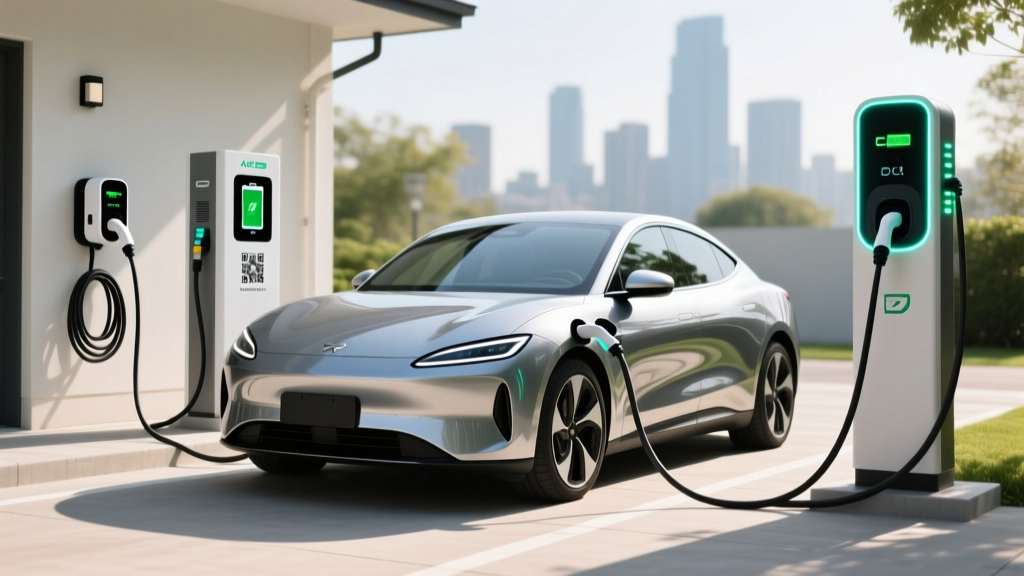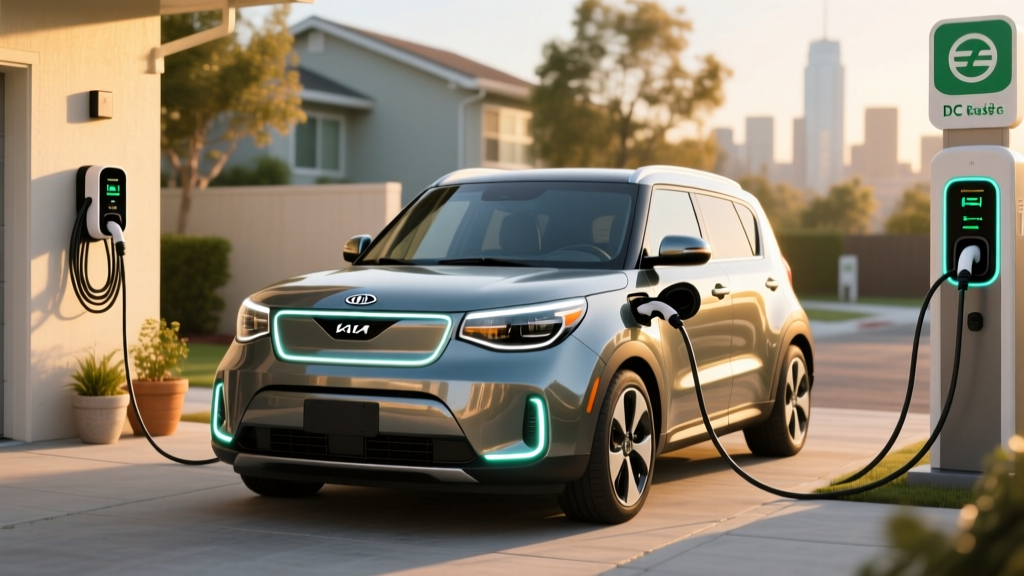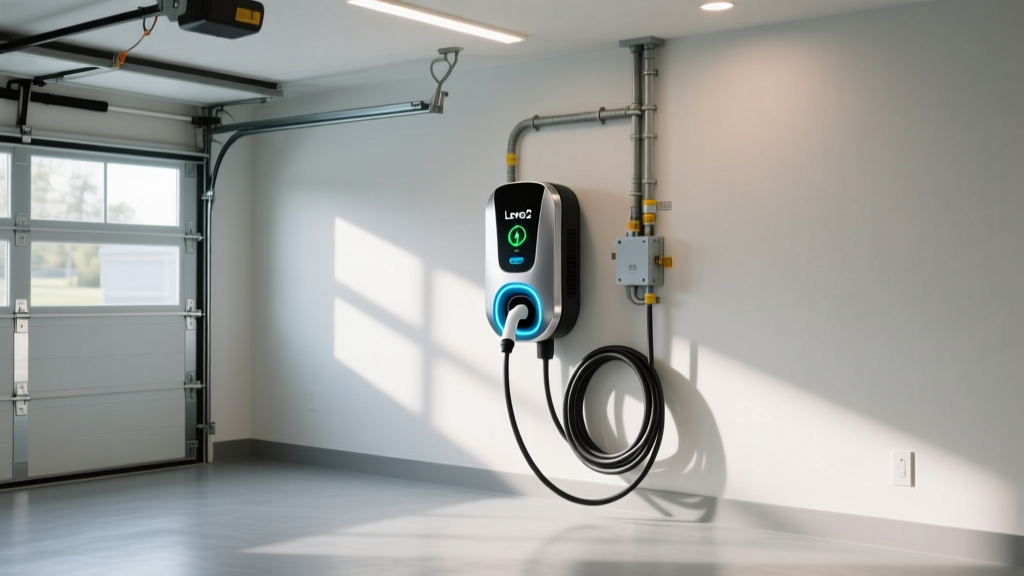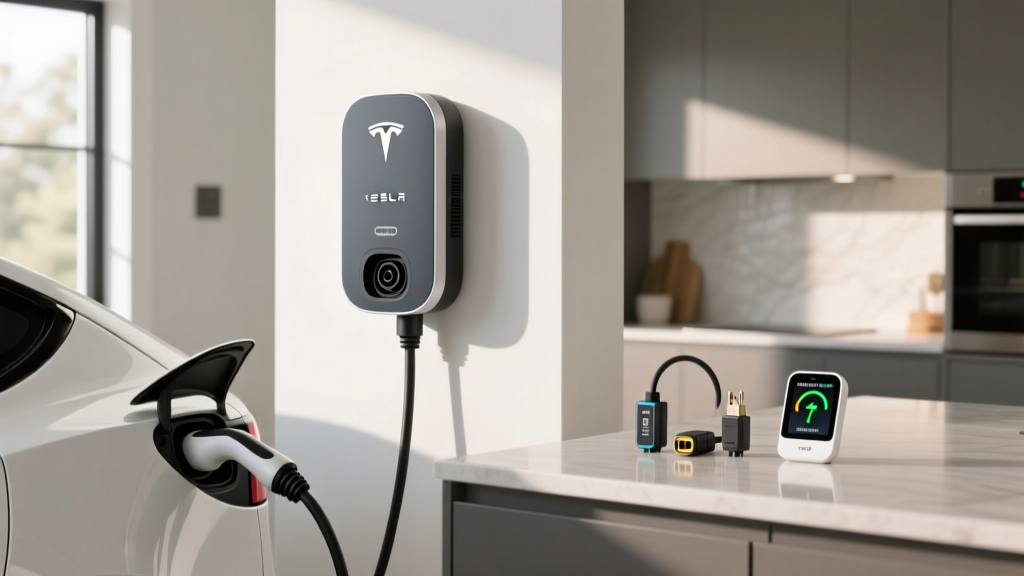
If you're shopping for an electric vehicle in 2026, you've likely encountered the term NACS charge port — the North American Charging Standard that Tesla pioneered and that nearly every major automaker has now adopted. Whether your EV ships with a native NACS port or you're navigating the transition from CCS1, understanding how this connector affects your home charging setup, public charging access, and long-term ownership costs is essential.
This guide breaks down the electrical requirements, real installation costs, connector compatibility, and equipment you need to charge efficiently at home — with exact numbers, not marketing fluff.
What Is the NACS Charge Port and Why Does It Matter?
The NACS (North American Charging Standard) connector, originally developed by Tesla and opened to other manufacturers in late 2022, has become the dominant EV charging connector in North America. As of the 2025-2026 model years, vehicles from Ford, General Motors, Rivian, Volvo, Polestar, Mercedes-Benz, Nissan, Fisker, BMW, Hyundai, and Kia either ship with a native NACS charge port or offer it as the standard configuration.
Physically, the NACS connector is significantly smaller and lighter than the CCS1 (Combined Charging System) plug. It uses the same pins for both AC Level 2 charging and DC fast charging, eliminating the need for separate AC and DC inlet sections. For home charging, this means a NACS-equipped vehicle can plug directly into a NACS wall connector without an adapter.
The practical implication: if you're buying a 2026 EV with a NACS charge port, your home charger and public charging options are converging on a single standard — but the transition period still creates compatibility questions that this guide addresses.
Charging Levels Explained: Speeds, Power, and Range Added
Before selecting equipment, you need to understand the three charging levels and what they deliver in real-world terms. A critical distinction: kW (kilowatts) measures power — the rate of energy delivery — while kWh (kilowatt-hours) measures energy — the total capacity stored in your battery. Think of kW as the flow rate of a hose and kWh as the size of the tank you're filling.
| Level | Voltage | Max Power (kW) | Miles of Range Added per Hour | Typical Use Case |
|---|---|---|---|---|
| Level 1 | 120V AC | 1.4–1.9 kW | 3–5 miles | Overnight top-up, PHEVs, low-mileage drivers |
| Level 2 | 240V AC | 7.2–19.2 kW | 20–60 miles | Primary home charging, workplace, destination |
| DC Fast Charging | 400–900V DC | 50–350+ kW | 150–1,000+ miles (equivalent rate) | Road trips, highway corridors, rapid top-ups |
For most EV owners, Level 2 home charging is the daily workhorse. A typical 60 kWh battery (like the one in a base Tesla Model 3 or Volvo EX30) charged at 11.5 kW (48A) will go from 10% to 80% in roughly 3.5 to 4 hours. A larger 100 kWh pack (Ford F-150 Lightning Extended Range) at the same rate takes about 6 hours for the same 10-80% session.
DC fast charging speeds vary dramatically by vehicle. A Hyundai Ioniq 5 with its 800V architecture can sustain peak rates above 230 kW, reaching 10-80% in approximately 18 minutes at a compatible 350 kW station. A Chevrolet Equinox EV, limited to roughly 150 kW peak, will take closer to 30 minutes for the same session. And remember: charging slows significantly above 80% State of Charge (SoC) to protect battery health — the published 10-80% time is the useful metric, not 0-100%.
Home Charger Installation: Electrical Requirements and Real Costs
Installing a Level 2 home charger for your NACS-equipped EV involves electrical work that ranges from straightforward to complex depending on your home's panel capacity and the distance from the panel to your garage or driveway.
Electrical Specifications
A standard Level 2 home charger requires a 240V dedicated circuit. The most common configurations:
- 40A circuit / 32A continuous — delivers 7.7 kW. Sufficient for most daily charging needs and compatible with a NEMA 14-50 outlet or hardwired connection.
- 50A circuit / 40A continuous — delivers 9.6 kW. A popular sweet spot for faster overnight charging.
- 60A circuit / 48A continuous — delivers 11.5 kW. Ideal for larger batteries (80+ kWh) or households with two EVs sharing charging time.
- 80A circuit / 64A continuous — delivers 15.4 kW. Requires substantial panel capacity; typically hardwired only.
The National Electrical Code (NEC) requires that continuous loads (like EV charging, which runs for 3+ hours) use only 80% of a circuit's rated capacity. So a 50A breaker supports a maximum continuous draw of 40A.
Panel Capacity and Upgrade Considerations
Most modern homes have a 200A main electrical panel. Before adding a 40-60A EV circuit, your electrician will perform a load calculation to ensure your panel can handle the additional draw alongside existing loads (HVAC, electric range, dryer, water heater). Homes with gas appliances and 200A service usually accommodate a 40-50A EV circuit without an upgrade.
Older homes with 100A or 150A panels, or homes with multiple high-draw electric appliances, may require a panel upgrade to 200A or even 400A. This is one of the most significant — and often overlooked — costs in EV home charging.
| Component | Cost Range | Notes |
|---|---|---|
| Level 2 Charger (Equipment) | $300 – $750 | NACS wall connector, 32A-48A, smart features |
| Electrical Labor (Standard Install) | $500 – $1,500 | Short run from panel, garage or exterior wall mount |
| Electrical Labor (Long Run / Complex) | $1,500 – $3,000+ | Conduit runs 50+ ft, trenching, attic routing |
| Permit and Inspection | $50 – $250 | Varies by municipality; required by code |
| Panel Upgrade (if needed) | $1,500 – $4,000 | 100A to 200A upgrade; 400A can exceed $5,000 |
| NEMA 14-50 Outlet (optional) | $150 – $400 | Allows portable charger use; GFCI breaker required |
Total typical install (no panel upgrade): $850 – $2,250. With a panel upgrade, expect $2,500 – $6,000+ total. Always get a load calculation and itemized quote from a licensed electrician before committing.
Connector Compatibility: NACS, CCS1, and Adapter Realities
The 2025-2026 model years represent a transition period. Here's how the connector landscape breaks down for home and public charging:
| Connector | Brands Using It (Native) | Adapter Needed for NACS Chargers? |
|---|---|---|
| NACS (native) | Tesla, Ford, GM, Rivian, Volvo, Polestar, Nissan (Ariya 2026+), Mercedes-Benz, BMW, Hyundai (2026+), Kia (2026+) | No — plug directly into NACS wall connectors and Superchargers |
| CCS1 | Hyundai (2024-2025 models), Kia (2024-2025), VW, Audi, Porsche, BMW (2024-2025), Stellantis | Yes — CCS1-to-NACS adapter required for Tesla Superchargers and NACS-equipped public stations |
| CHAdeMO | Nissan Leaf (legacy) | Yes — CHAdeMO-to-NACS adapters exist but are rare and expensive ($400+) |
If you own a CCS1-equipped EV and want to use Tesla Superchargers (now open to non-Tesla vehicles via the NACS standard), you'll need a CCS1-to-NACS adapter. Tesla sells an official adapter for approximately $250, and third-party options from brands like Lectron and A2Z are available for $150-$200. These adapters work for DC fast charging but add a connection point that slightly reduces convenience.
For home Level 2 charging, the situation is simpler: most third-party Level 2 chargers (ChargePoint, Emporia, Wallbox) now offer both NACS and J1772 connector options. If your EV has a NACS charge port, buy the NACS-terminated version. If it has a J1772 port (the legacy AC standard that CCS1 uses for Level 2), a simple J1772-to-NACS adapter ($50-$80) handles it.
How Much Does Charging Cost Per Mile vs. Gas?
One of the strongest economic arguments for EV ownership is fuel cost savings, but the actual numbers depend heavily on where and when you charge. Here's a realistic breakdown:
| Charging Scenario | Rate ($/kWh) | Vehicle Efficiency (kWh/100mi) | Cost Per Mile |
|---|---|---|---|
| Home Level 2 (off-peak utility rate) | $0.08 – $0.14 | 28 kWh | $0.022 – $0.039 |
| Home Level 2 (standard residential rate) | $0.14 – $0.20 | 28 kWh | $0.039 – $0.056 |
| Public Level 2 (workplace/destination) | $0.20 – $0.35 | 28 kWh | $0.056 – $0.098 |
| DC Fast Charging (Electrify America, EVgo) | $0.35 – $0.55 | 30 kWh* | $0.105 – $0.165 |
| Tesla Supercharger (average 2026) | $0.28 – $0.40 | 28 kWh | $0.078 – $0.112 |
*Highway driving at DC fast-charging speeds typically reduces efficiency by 5-10% due to higher speeds and aerodynamic drag.
For comparison, a gasoline vehicle averaging 28 MPG at $3.40/gallon (2026 national average) costs approximately $0.121 per mile. A fuel-thirsty truck at 18 MPG costs $0.189 per mile.
The takeaway: home charging at off-peak rates delivers fuel costs 60-80% lower than gasoline. Even exclusive DC fast charging is often cheaper per mile than gas, though the savings narrow considerably. According to fueleconomy.gov, most EVs achieve 100-130 MPGe combined, translating to roughly 3-4x the energy efficiency of a comparable gasoline vehicle.
Recommended NACS Home Chargers: 2026 Equipment Picks
Here are specific Level 2 chargers that pair natively with a NACS charge port, based on power output, reliability, smart features, and value:
Tesla Wall Connector (Gen 4)
- Power Output: Up to 11.5 kW (48A on a 60A circuit)
- Connector: Native NACS
- Cable Length: 24 feet
- Smart Features: Wi-Fi, OTA updates, load sharing (pair two units on one circuit), Powerwall integration
- Price: ~$475
- Best For: Tesla owners and NACS-native EVs who want the simplest, most integrated experience
Emporia Vue Level 2 Charger (NACS version)
- Power Output: Up to 11.5 kW (48A)
- Connector: NACS (also available in J1772)
- Cable Length: 24 feet
- Smart Features: Energy monitoring via Emporia Vue panel integration, solar-aware charging, scheduling, off-peak optimization
- Price: ~$400
- Best For: Solar-equipped homes and users who want whole-home energy visibility
ChargePoint Home Flex (NACS configuration)
- Power Output: Up to 12 kW (50A on a 60A circuit; configurable from 16A-50A via DIP switch)
- Connector: NACS (2025+ models)
- Cable Length: 23 feet
- Smart Features: Wi-Fi, app-based scheduling, Alexa integration, flexible amperage configuration
- Price: ~$550
- Best For: Households wanting adjustable amperage to match panel capacity
Wallbox Pulsar Plus (NACS)
- Power Output: Up to 11.5 kW (48A)
- Connector: NACS
- Cable Length: 25 feet
- Smart Features: Wi-Fi + Bluetooth, Eco-Smart solar charging mode, Power Boost load management
- Price: ~$500
- Best For: Compact form factor and solar integration without a whole-home monitor
Safety, Code Requirements, and Installation Best Practices
EV charging is a high-draw, long-duration electrical load. Cutting corners on installation creates fire risk and can void your homeowner's insurance coverage. Here's what code requires and what best practices dictate:
- Dedicated circuit: Your EV charger must be on its own dedicated breaker — it cannot share a circuit with other outlets or appliances. This is a NEC requirement for continuous loads.
- GFCI protection: The 2020 NEC and later require GFCI (Ground Fault Circuit Interrupter) protection for all 240V EV charging outlets. Hardwired installations may have different requirements depending on local code. Note: some chargers have built-in GFCI, which can cause nuisance tripping when paired with a GFCI breaker — consult your electrician.
- Outdoor rating: If your charger is installed outdoors or in an unenclosed carport, it must carry a NEMA 4 rating (weatherproof). All chargers listed above meet this standard.
- Permit and inspection: Nearly all jurisdictions require an electrical permit for a new 240V circuit. The inspection verifies wire gauge, breaker sizing, grounding, and bonding. Do not skip this — unpermitted work can cause insurance claim denials.
- Wire gauge: A 60A circuit typically requires 6 AWG copper wire (or 4 AWG aluminum). Your electrician will size wire based on circuit amperage and run length to minimize voltage drop.
- EVSE listing: Ensure your charger is UL-listed or ETL-listed. Non-listed chargers (often found on marketplace sites at suspiciously low prices) may not meet safety standards and will fail inspection.
Frequently Asked Questions
How much does it cost to install a home EV charger for a NACS vehicle?
A standard Level 2 NACS home charger installation costs between $850 and $2,250 when no panel upgrade is needed. This includes the charger unit ($300-$750), electrician labor ($500-$1,500 for a typical garage install), and a permit ($50-$250). If your home requires a panel upgrade from 100A to 200A, add $1,500-$4,000. Always get a load calculation first.
How fast will each charging level add range to my EV?
Level 1 (120V) adds roughly 3-5 miles of range per hour — adequate only for plug-in hybrids or very low daily mileage. Level 2 (240V, 40-48A) adds 20-40 miles per hour, fully replenishing most EVs overnight. DC fast charging at 150-350 kW can add 150-300+ miles in 20-30 minutes, but speeds taper above 80% SoC.
Which connector and charger is compatible with my NACS charge port?
Any NACS-terminated Level 2 charger (Tesla Wall Connector, ChargePoint Home Flex NACS, Emporia Vue NACS) will plug directly into your vehicle. For public DC fast charging, NACS vehicles can use Tesla Superchargers natively and can access CCS1 stations using a NACS-to-CCS1 adapter (approximately $100-$200). Legacy CHAdeMO stations require a more expensive adapter and are increasingly rare.
How much does charging cost per mile compared to gasoline?
Home charging at off-peak utility rates ($0.08-$0.14/kWh) costs roughly $0.02-$0.04 per mile for a typical EV achieving 28 kWh/100mi — about 70-80% less than a 28 MPG gas car at $3.40/gallon ($0.12/mile). Even public DC fast charging at $0.35-$0.55/kWh ($0.10-$0.17/mile) generally beats gasoline on cost, though the savings shrink.
What electrical upgrades might I need for a home Level 2 charger?
If you have a 200A panel with gas appliances, you likely need no upgrade — a 40-60A dedicated circuit is typically accommodated. If you have a 100A or 150A panel, or an all-electric home with high simultaneous loads (heat pump, electric range, dryer, water heater), your electrician's load calculation may require a panel upgrade to 200A ($1,500-$4,000) or the use of an automated load management device that throttles charger amperage when other loads are active.