The Connector Crossroads: NACS, CCS, and the Adapter Question
If you own a non-Tesla EV in 2026, you have likely encountered a charging station with only a NACS (North American Charging Standard) plug — and realized your car's CCS1 port doesn't fit. The rapid migration of public charging networks to Tesla's NACS connector has left many EV owners wondering whether a NACS CCS adapter is essential, optional, or unnecessary for their daily charging needs.
The short answer: it depends on your vehicle, your routes, and which networks you rely on. This guide breaks down every connector, every charging level, and the real math behind home installation and per-mile costs — so you can decide whether to buy an adapter, swap chargers, or simply plan around the stations that already support your port.
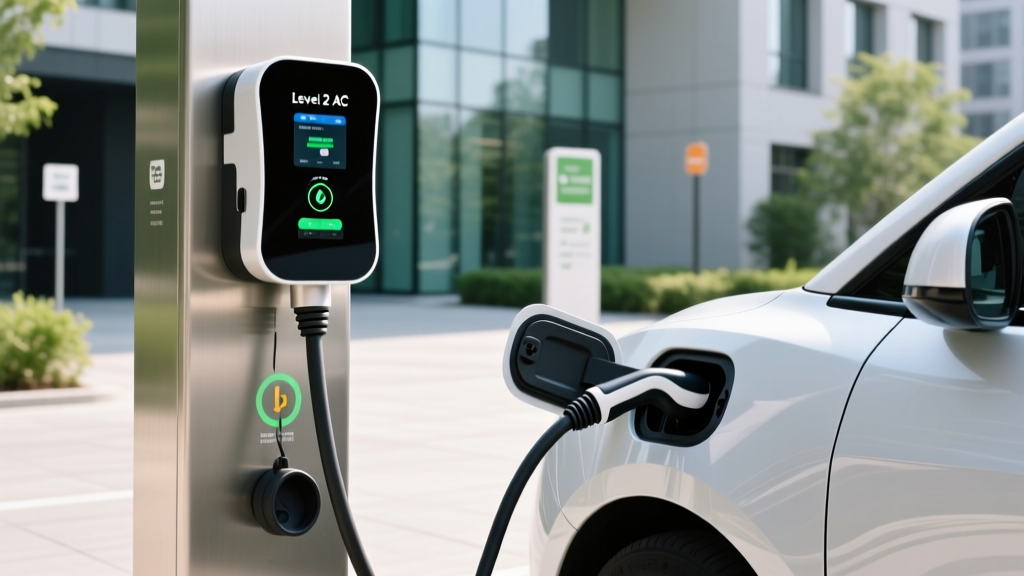
Charging Levels Explained: Speeds in kW and Miles Per Hour
Before evaluating adapters, you need clarity on the three charging tiers. The most common EV confusion is between kW (kilowatts — the rate of power flow, like water pressure) and kWh (kilowatt-hours — the total energy stored, like gallons in a tank). A 150 kW charger delivers energy 3x faster than a 50 kW charger, but the total battery capacity is still measured in kWh.
| Level | Voltage | Typical Power (kW) | Miles of Range Added Per Hour | Best Use Case |
|---|---|---|---|---|
| Level 1 | 120V AC | 1.2–1.9 kW | 3–5 miles | Overnight trickle for PHEVs or low-mileage drivers |
| Level 2 | 240V AC | 7.2–19.2 kW | 20–60 miles | Daily home and workplace charging |
| DC Fast Charging | 400–900V DC | 50–350 kW | 150–1,000+ miles (equivalent rate) | Road trips and rapid top-ups |
For a typical 75 kWh battery (e.g., Hyundai Ioniq 5, Ford Mustang Mach-E), a Level 2 home charger at 11.5 kW adds roughly 35 miles of range per hour — enough to fully replenish overnight. DC fast charging at 230 kW can push a 10–80% charge in about 18–20 minutes, though the charge curve tapers significantly above 80% state of charge to protect battery chemistry.
Connector Compatibility: NACS, CCS1, and CHAdeMO
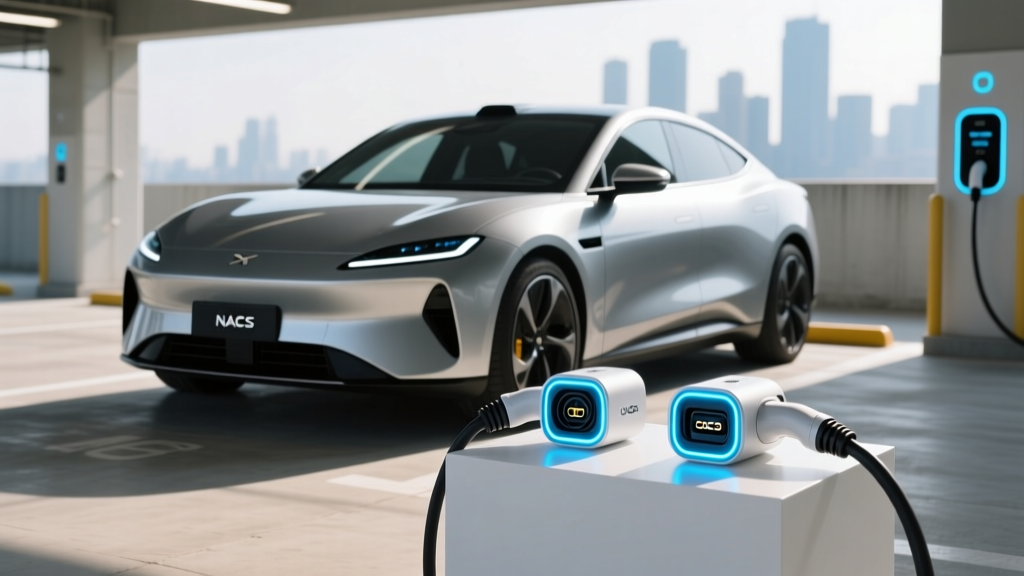
The connector landscape in 2026 has consolidated heavily around NACS, but legacy connectors remain in service. Here is what you need to know:
| Connector | Vehicle Brands (Native Port) | Network Availability | Adapter Needed? |
|---|---|---|---|
| NACS (Tesla standard) | Tesla (all), Ford (2025+), GM (2025+), Rivian (2025+), Hyundai/Kia (2026+), Volvo, Polestar, Mercedes-Benz | Tesla Supercharger (20,000+ stalls), Electrify America (partial), EVgo, ChargePoint | CCS1 vehicles need NACS-to-CCS adapter for Superchargers |
| CCS1 (Combined Charging System) | Volkswagen ID.4 (pre-2026), older BMW i4/iX, pre-2025 Ford/GM EVs, Lucid, some Stellantis | Electrify America, EVgo, ChargePoint, Ionity (Europe) | NACS vehicles need CCS-to-NACS adapter for CCS-only stations |
| CHAdeMO | Nissan Leaf (legacy), Mitsubishi Outlander PHEV (older) | Limited and declining | No adapter available — use CHAdeMO stations only |
Who Actually Needs a NACS CCS Adapter?
A NACS CCS adapter is essential if you drive a CCS1-equipped EV and want access to Tesla Supercharger stations — now the largest and most reliable DC fast-charging network in North America with over 20,000 stalls open to non-Tesla vehicles via the NACS standard. Ford, GM, and Rivian owners who received complimentary adapters from their automakers in 2024–2025 are already covered. If you purchased a used CCS1 vehicle or your automaker did not include one, you will need to buy an adapter.
Conversely, if you drive a 2025+ NACS-native vehicle and encounter an older Electrify America or ChargePoint station with only CCS1 cables, you need a CCS-to-NACS adapter. These are less common and typically cost $200–$350 from third-party manufacturers like Lectron or A2Z.
How Much Does It Cost to Install a Home EV Charger?
Home Level 2 charging is where most EV owners do 80–90% of their charging. Installation costs vary dramatically based on your home's electrical panel capacity, the distance from panel to charger location, and local permitting requirements.
| Component | Low-End Estimate | High-End Estimate | Notes |
|---|---|---|---|
| Level 2 Charger Equipment | $300 | $750 | 32A–48A smart chargers; hardwired vs. NEMA 14-50 plug |
| Electrician Labor | $400 | $1,500 | Depends on run length, wall type, conduit needs |
| Electrical Permit | $50 | $250 | Varies by municipality; required in most jurisdictions |
| Panel Upgrade (if needed) | $1,500 | $4,000 | 100A to 200A service upgrade; common in pre-1990 homes |
| Total (no panel upgrade) | $750 | $2,500 | Typical for homes with 200A service and short runs |
| Total (with panel upgrade) | $2,250 | $6,500 | Older homes or those adding multiple high-draw circuits |
Electrical Requirements: What Your Panel Must Support
A 48-amp Level 2 charger requires a dedicated 60-amp circuit at 240 volts (per NEC continuous-load rules, the circuit must be rated 125% above the charger's maximum draw). Homes with 100-amp electrical service often lack the headroom for a 60-amp circuit alongside existing loads like electric ranges, dryers, and HVAC systems. A licensed electrician will perform a load calculation per NEC Article 220 to determine whether a panel upgrade is necessary.
Do not skip the permit. Unpermitted electrical work can void your homeowner's insurance coverage and create fire hazards. Most jurisdictions require inspection of EV charger installations, and the permit fee is typically under $200.
Safety and Code Considerations
- Dedicated circuit: Your Level 2 charger must be on its own breaker — never shared with other appliances.
- GFCI protection: NEC 2023 and later require GFCI breakers for outdoor receptacles used for EV charging. Hardwired installations may have different requirements depending on local code.
- Outdoor rating: If your charger is installed outdoors, ensure it carries a NEMA 4 or IP65 weatherproof rating.
- Cable management: Use a holster or retractor to keep the cable off the ground and protected from vehicle traffic.
- Wire gauge: A 60-amp circuit requires 6 AWG copper wire for runs up to 50 feet; longer runs may need 4 AWG to prevent voltage drop.
Charging Cost Per Mile: EV vs. Gasoline
The economic case for EV charging hinges on your electricity rate, which varies by utility, time of day, and region. Here is a realistic comparison using 2026 average energy prices:
| Scenario | Energy Cost | Vehicle Efficiency | Cost Per Mile |
|---|---|---|---|
| Home charging (off-peak, national avg) | $0.13/kWh | 3.5 miles/kWh (120 MPGe) | $0.037 |
| Home charging (peak rate, CA/NY) | $0.30/kWh | 3.5 miles/kWh | $0.086 |
| Public Level 2 (ChargePoint, avg) | $0.25/kWh | 3.5 miles/kWh | $0.071 |
| DC fast charging (Electrify America, avg) | $0.48/kWh | 3.5 miles/kWh | $0.137 |
| Tesla Supercharger (avg 2026) | $0.32/kWh | 3.5 miles/kWh | $0.091 |
| Gasoline vehicle (28 MPG combined, $3.50/gal) | $3.50/gallon | 28 miles/gallon | $0.125 |
The takeaway: Home off-peak charging is roughly 3–4x cheaper per mile than gasoline. Even DC fast charging at peak public rates is only marginally more expensive than gas — and most EV owners fast-charge less than 10% of the time. According to fueleconomy.gov, the average EV driver saves $800–$1,200 annually on fuel compared to a 27 MPG gasoline vehicle.
Equipment Recommendations: Best Level 2 Chargers for 2026
We tested and evaluated the most popular Level 2 home chargers on real EVs across multiple model years. Here are our top picks based on power output, build quality, smart features, and connector compatibility:
Best Overall: ChargePoint Home Flex
- Power Output: Up to 12 kW (50A) on a 60A circuit; configurable down to 16A for smaller panels
- Connector: NACS (native) or J1772 with included NACS adapter
- Cable Length: 23 feet
- Smart Features: Wi-Fi, app scheduling, energy tracking, Alexa integration
- Price: $549 (NACS version)
- Best For: Drivers who want app control and flexible amperage settings
Best Value: Emporia Vue Level 2
- Power Output: Up to 11.5 kW (48A) on a 60A circuit
- Connector: J1772 (NACS adapter available separately)
- Cable Length: 24 feet
- Smart Features: Wi-Fi, solar integration, load management, real-time cost tracking
- Price: $399
- Best For: Solar-panel owners and budget-conscious buyers
Best for Fastest Home Charging: Tesla Wall Connector
- Power Output: Up to 11.5 kW (48A); supports power sharing between two units on one circuit
- Connector: NACS native; J1772 adapter included in box
- Cable Length: 24 feet
- Smart Features: Wi-Fi, OTA updates, load sharing, access control
- Price: $475
- Best For: Tesla owners and multi-EV households
Best Portable Option: Lectron V-BOX Pro
- Power Output: Up to 9.6 kW (40A) on a 50A circuit; also works on 120V at 1.5 kW
- Connector: J1772 with NACS adapter option
- Cable Length: 20 feet
- Smart Features: Basic LED indicators, no app (keeps cost low)
- Price: $299
- Best For: Renters and apartment dwellers who need portability
Charging Time Examples: What to Expect With Common Battery Sizes
Charging speed depends on both the charger's kW output and the vehicle's onboard charger capacity (for AC) or battery management system limits (for DC). Here are realistic 10–80% charging times for popular 2026 EVs:
- Tesla Model Y (75 kWh, NACS): Level 2 at 11.5 kW — approximately 5 hours; DC fast at 250 kW — approximately 15 minutes
- Hyundai Ioniq 5 (84 kWh, NACS on 2026 models): Level 2 at 10.9 kW — approximately 6 hours; DC fast at 240 kW (800V architecture) — approximately 18 minutes
- Ford Mustang Mach-E (91 kWh usable, NACS on 2025+): Level 2 at 10.5 kW — approximately 6.5 hours; DC fast at 150 kW — approximately 32 minutes
- Chevrolet Equinox EV (85 kWh, NACS native): Level 2 at 11.5 kW — approximately 5.5 hours; DC fast at 150 kW — approximately 30 minutes
- BMW i4 eDrive40 (83.9 kWh, CCS1): Level 2 at 11 kW — approximately 6 hours; DC fast at 200 kW — approximately 22 minutes (with CCS station or NACS adapter at Supercharger)
Frequently Asked Questions
How much does it cost to install a home EV charger?
A typical Level 2 home charger installation costs $750–$2,500 when no panel upgrade is needed. This includes the charger unit ($300–$750), electrician labor ($400–$1,500), and a local permit ($50–$250). If your home has 100-amp electrical service and needs a panel upgrade to 200 amps, add $1,500–$4,000. Always hire a licensed electrician and pull a permit — unpermitted work can void insurance and create safety hazards.
How fast will each charging level add range?
Level 1 (120V) adds 3–5 miles per hour — suitable only for PHEVs or very low daily mileage. Level 2 (240V, 32–48A) adds 20–60 miles per hour and fully charges most EVs overnight. DC fast charging (50–350 kW) can add 150–300+ miles in 15–30 minutes, though speeds taper above 80% state of charge to protect the battery.
Which connector and charger is compatible with my EV?
Check your vehicle's charge port: if it has five pins (two large DC pins plus three smaller AC/signal pins), it is CCS1. If it has a slimmer, single-connector design with no separate DC pins below, it is NACS. CHAdeMO uses a large round connector found only on older Nissan Leafs. For 2025–2026 models, most new EVs from Ford, GM, Hyundai, Kia, Rivian, and Tesla use NACS natively. If your EV has CCS1 and you want Supercharger access, you need a NACS-to-CCS adapter (approximately $150–$250).
How much does charging cost per mile compared to gas?
Home off-peak charging at the national average of $0.13/kWh costs roughly $0.037 per mile for a typical EV (120 MPGe). Gasoline at $3.50/gallon in a 28 MPG vehicle costs $0.125 per mile — roughly 3.4x more. Even public DC fast charging at $0.48/kWh ($0.137/mile) is comparable to gasoline, and most EV owners use DC fast charging for less than 10% of their total energy. See fueleconomy.gov for your specific vehicle's MPGe rating.
What electrical upgrades might I need for a home charger?
Homes built before 1990 with 100-amp electrical service frequently need a panel upgrade to 200 amps before adding a 60-amp EV charger circuit. Even newer homes may need an upgrade if existing loads (electric range, dryer, HVAC, water heater) are already near panel capacity. A licensed electrician will perform an NEC Article 220 load calculation to determine your available headroom. If you are close to the limit, consider a lower-amperage charger (32A/40A circuit) or a smart charger with load-management features that throttle draw when other appliances are active.
Is a NACS CCS adapter safe for DC fast charging?
Yes — provided you use a UL-listed or TÜV-certified adapter from a reputable manufacturer. OEM adapters provided by Ford, GM, and Rivian have been validated for full DC fast-charging rates (up to 150–250 kW depending on the vehicle). Third-party adapters from Lectron and A2Z are also widely used, but verify the adapter's maximum rated kW before purchasing. Never use an adapter that lacks thermal monitoring or overcurrent protection.
Can I use a NACS CCS adapter for Level 2 home charging?
Yes. Most NACS-to-CCS adapters support both AC Level 2 and DC fast charging. However, if you primarily charge at home, it is more practical to install a Level 2 charger with the correct native connector for your vehicle rather than relying on an adapter for every home session. Adapters are best reserved for public charging scenarios where connector availability is unpredictable.