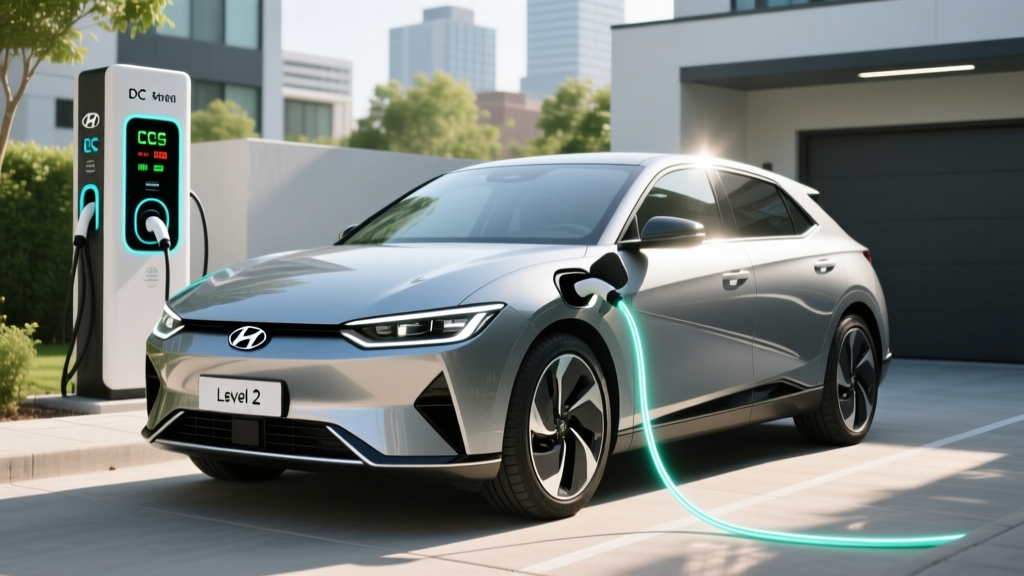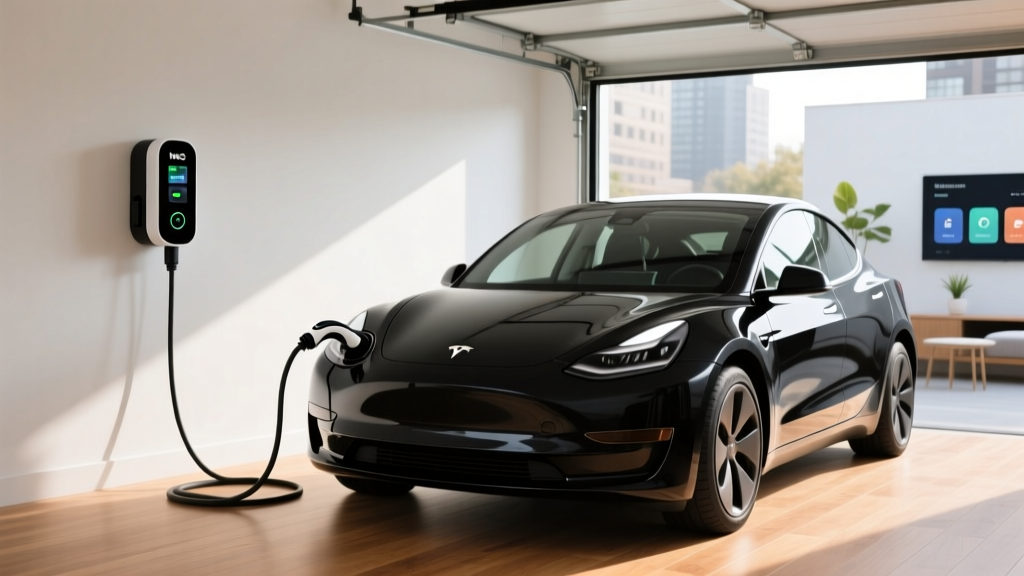
The North American Charging Standard (NACS) has become the dominant connector for new electric vehicles sold in the United States. What began as Tesla's proprietary plug is now the default for Ford, GM, Hyundai, Kia, Rivian, Volvo, Polestar, and nearly every major automaker entering the 2025–2026 model years. If you're buying a NACS-equipped EV — or planning to — your home charging setup needs to match.
This guide covers the electrical requirements, realistic installation costs, equipment recommendations, and per-mile charging economics for NACS cars in 2026. We'll be precise about numbers: kW (power, or how fast energy flows) versus kWh (energy, or how much your battery holds), because confusing them is the single most common mistake new EV owners make.
Charging Levels Explained: How Fast Each Adds Range to NACS Cars
Every NACS vehicle supports three tiers of charging. The speed depends on both the vehicle's onboard charger (for AC charging) and its DC fast-charge architecture. Here's what to expect:
| Level | Voltage | Power (kW) | Miles of Range Added per Hour | Typical Use Case |
|---|---|---|---|---|
| Level 1 | 120V AC | 1.0–1.4 kW | 3–5 mi/hr | Emergency/trickle; overnight for PHEVs |
| Level 2 (Home/Public AC) | 240V AC | 7.2–19.2 kW | 25–75 mi/hr | Daily home charging; destination charging |
| DC Fast Charging | 400–800V DC | 50–350 kW | 150–1,200+ mi/hr (peak) | Road trips; 10–80% in 18–40 min |
Key nuance: Level 2 speed depends on your EV's onboard charger. Most NACS cars have an 11.5 kW onboard charger (e.g., Ford F-150 Lightning, GM Ultium vehicles), meaning a 48A circuit delivers roughly 37–44 miles of range per hour. Tesla's Model Y and Model 3 accept up to 11.5 kW on a 48A Wall Connector. Hyundai's Ioniq 5, now NACS-equipped for 2026, accepts 10.9 kW on Level 2 but dominates on DC fast charging with its 800V architecture.
DC fast charging reality check: A NACS car rated for 250 kW peak charging will not sustain that rate for the full session. Charging curves taper significantly above 80% State of Charge (SoC) to protect battery health. Expect a 250 kW-capable vehicle to average roughly 150–180 kW over a 10–80% session, translating to 18–25 minutes depending on battery size and temperature.
Home Electrical Requirements for NACS Level 2 Charging
Level 2 home charging requires a dedicated 240V circuit — the same voltage your electric dryer or oven uses. The amperage determines your charging speed:
- 40A circuit (32A continuous): Delivers 7.7 kW. Adds ~25–30 miles of range per hour. Adequate for most daily driving needs. Uses a NEMA 14-50 outlet or hardwired connection.
- 48A circuit (40A continuous): Delivers 9.6 kW. Adds ~32–38 miles per hour. Common for larger-battery NACS cars like the F-150 Lightning Extended Range.
- 60A circuit (48A continuous): Delivers 11.5 kW. Adds ~40–44 miles per hour. The maximum most NACS onboard chargers accept. Requires hardwiring (NEC code prohibits NEMA plugs above 50A).
- 80A circuit (64A continuous): Delivers 15.3+ kW. Only useful for vehicles with larger onboard chargers (rare) or future-proofing. Requires a 200A+ electrical panel.
Panel capacity reality: Most homes built before 2010 have a 100A or 150A main service panel. Adding a 48A or 60A EV circuit may require a panel upgrade to 200A — particularly if you already have electric heating, an electric range, and a dryer. A licensed electrician will perform a load calculation per NEC Article 220 to determine whether your panel can handle the additional draw.
Permit requirements: Virtually every jurisdiction in the U.S. requires an electrical permit for a new 240V circuit. Costs typically range from $50–$250 depending on your municipality. The permit triggers an inspection, which protects you: it verifies the work meets National Electrical Code (NEC) standards and keeps your homeowner's insurance valid.
How Much Does It Cost to Install a Home Charger for NACS Cars?
Installation costs vary enormously based on your home's electrical infrastructure, the distance from panel to charging location, and local labor rates. Here's a realistic breakdown based on 2025–2026 market data:
| Component | Simple Install (panel nearby, no upgrade) | Moderate Install (longer run, conduit) | Complex Install (panel upgrade required) |
|---|---|---|---|
| EVSE Equipment (Level 2 charger) | $400–$700 | $400–$700 | $400–$700 |
| Electrical Labor (licensed electrician) | $300–$800 | $800–$2,000 | $1,500–$3,000 |
| Materials (wire, conduit, connectors) | $100–$300 | $300–$800 | $400–$1,200 |
| Electrical Permit | $50–$150 | $50–$200 | $100–$250 |
| Panel Upgrade (if needed) | $0 | $0 | $1,500–$4,000 |
| Total Estimated Cost | $850–$1,950 | $1,550–$3,700 | $3,900–$9,150 |
Federal tax credit note: The IRS §30D alternative fuel vehicle refueling property credit can cover up to 30% of home charger equipment and installation costs (capped at $1,000) if you live in an eligible census tract. Check the IRS guidance for current eligibility rules, as census-tract qualifications and income limits apply.
NACS, CCS1, and CHAdeMO: Connector Compatibility for Every EV
The connector landscape in 2026 has largely consolidated around NACS, but millions of CCS1-equipped EVs remain on the road, and legacy CHAdeMO vehicles (Nissan Leaf, older Mitsubishi models) still need public charging access. Here's what fits what:
| Connector | Native Fitment | Adapter Needed? | Notes |
|---|---|---|---|
| NACS (Tesla standard) | Tesla (all), Ford, GM, Hyundai, Kia, Rivian, Volvo, Polestar, Lucid, Fisker, Mercedes (2026+) | None for NACS vehicles | Now the de facto North American standard; access to Tesla Supercharger network |
| CCS1 | Legacy VW ID.4 (pre-2025), BMW i4/iX (some trims), Stellantis, older Hyundai/Kia | CCS-to-NACS adapter ($200–$400) for Supercharger access | Being phased out on new models; still widely available at Electrify America, EVgo |
| CHAdeMO | Nissan Leaf (discontinued after 2025), used Mitsubishi Outlander PHEV | No reliable DC fast adapter exists | Network shrinking; plan charging carefully |
Adapter reality for NACS cars at non-Tesla chargers: Most NACS-equipped vehicles from Ford, GM, and Hyundai ship with or offer a CCS-to-NACS adapter, allowing access to Electrify America and other CCS networks. Tesla's Supercharger network, which now serves non-Tesla NACS vehicles at many locations, requires no adapter for NACS cars. If your NACS vehicle didn't come with a CCS adapter, budget $200–$400 for an OEM-approved unit — third-party adapters may not support full charging speeds or could void warranty provisions.
Cost to Charge NACS Cars: Per-Mile Economics vs. Gas
One of the strongest ownership arguments for NACS cars is fuel cost savings — but the math depends heavily on where and when you charge. Here are realistic 2026 scenarios based on national averages:
| Charging Scenario | Cost per kWh | Cost per Mile | Annual Fuel Cost (12,000 mi) |
|---|---|---|---|
| Home Level 2 (off-peak/utility EV rate) | $0.08–$0.12 | $0.023–$0.034 | $275–$410 |
| Home Level 2 (standard residential rate) | $0.14–$0.18 | $0.040–$0.051 | $480–$615 |
| Public Level 2 (ChargePoint, workplace) | $0.20–$0.35 | $0.057–$0.100 | $685–$1,200 |
| DC Fast Charging (Tesla Supercharger avg.) | $0.28–$0.40 | $0.080–$0.114 | $960–$1,370 |
| DC Fast Charging (Electrify America, EVgo) | $0.35–$0.55 | $0.100–$0.157 | $1,200–$1,885 |
| Gas Vehicle (27 MPG, $3.40/gal) | — | $0.126 | $1,510 |
The bottom line: If you charge primarily at home on an off-peak utility rate, a NACS EV costs roughly $0.03 per mile to "fuel" — about 75% less than a comparable gas vehicle. Even exclusive DC fast charging at Tesla Superchargers costs less per mile than gasoline. The savings erode if you rely heavily on premium-priced public Level 2 or non-Tesla DC networks, which is why home charging access remains the single biggest factor in EV ownership satisfaction.
Best Level 2 Chargers for NACS Cars: 2026 Equipment Picks
With NACS now the standard, most major EVSE manufacturers offer native NACS connectors. Here are proven options matched to common home electrical configurations:
Best Overall: Tesla Wall Connector (NACS)
- Power Output: Up to 11.5 kW (48A continuous on a 60A circuit)
- Connector: Native NACS, 24-ft cable
- Smart Features: Wi-Fi connectivity, OTA firmware updates, load sharing between multiple units, Power-Share with Tesla Powerwall
- Price: ~$475
- Best For: Tesla owners and any NACS vehicle; the most cost-effective high-power option. Works with all NACS cars, not just Teslas.
Best Smart Charger: ChargePoint Home Flex (NACS)
- Power Output: Up to 12 kW (50A adjustable on a 60A circuit); configurable down to 16A for smaller panels
- Connector: Native NACS (2025+ models), 23-ft cable
- Smart Features: App-based scheduling, energy tracking, Alexa/Google integration, flexible amperage via DIP switch
- Price: ~$550–$650
- Best For: Homes where you want to adjust amperage without an electrician visit; detailed energy reporting.
Best Budget: Emporia Vue Level 2 (NACS)
- Power Output: Up to 11.5 kW (48A on a 60A circuit)
- Connector: Native NACS, 24-ft cable
- Smart Features: Energy monitoring via Emporia Vue panel integration, solar-aware charging, scheduling
- Price: ~$350–$400
- Best For: Budget-conscious buyers who want smart features; excellent if you already use Emporia home energy monitoring.
Best for High-Power Needs: Grizzl-E Smart (NACS)
- Power Output: Up to 11.5 kW (48A); ruggedized for extreme temperatures (-40°F to 122°F)
- Connector: Native NACS, 24-ft cable
- Smart Features: OCPP-compatible (useful for fleet/workplace), adjustable amperage, built-in GFCI
- Price: ~$500–$600
- Best For: Cold-climate garages and outdoor installations; Canadian-built with exceptional build quality.
Safety, Code, and Installation Considerations
Level 2 EV charging draws sustained high current for hours — more like a welding machine than a household appliance. Proper installation isn't optional; it's a fire-safety and insurance requirement.
Dedicated circuit: NEC 625 requires EVSE to be on a dedicated circuit with no other loads. A 60A breaker serving your EV charger cannot also serve an outlet or light in the garage.
GFCI protection: The 2023 NEC update (adopted by most states by 2025–2026) requires GFCI protection for all EVSE outlets. Hardwired EVSE units have built-in ground-fault protection, so this primarily affects NEMA 14-50 receptacle installations. Your electrician should install a GFCI breaker or confirm the EVSE provides equivalent protection.
Outdoor rating: If your charging location is exposed (carport, driveway, uncovered parking), choose an EVSE rated NEMA 4 or NEMA 4X for weather resistance. All the chargers recommended above carry outdoor ratings, but the connector holster should also be sheltered to prevent water ingress into the plug face.
Wire gauge: For a 60A circuit, 4 AWG copper wire is standard. Longer runs (over 100 feet from panel to charger) may require 3 AWG to prevent voltage drop. Your electrician will calculate this based on NEC Table 310.15.
NEMA 14-50 vs. hardwired: A NEMA 14-50 outlet gives you portability — you can unplug the EVSE and take it when you move. However, outlets are limited to 50A (40A continuous), capping you at 9.6 kW. For 48A continuous (11.5 kW), hardwiring is required by code. Hardwired installations are also more reliable long-term: NEMA 14-50 receptacles have been associated with overheating in high-draw EV applications, and several EVSE manufacturers now recommend hardwiring for any installation above 40A.
DC Fast Charging Times for Common NACS Vehicles
On a road trip, your NACS car's DC fast-charge capability determines how long you'll spend at Superchargers and other DC stations. Here are real-world 10–80% times based on manufacturer data and independent testing:
- Tesla Model 3 Long Range (75 kWh battery, 250 kW peak): ~22–25 minutes on a 250 kW Supercharger. Sustains ~170 kW average to 80%.
- Tesla Model Y Long Range (75 kWh, 250 kW peak): ~24–27 minutes. Slightly slower due to higher vehicle weight.
- Ford F-150 Lightning Extended Range (131 kWh, 150 kW peak): ~38–44 minutes. Large battery means longer absolute time despite decent peak rate.
- Hyundai Ioniq 5 (84 kWh, 800V, 240 kW peak): ~18–20 minutes. The 800V architecture sustains high power longer than 400V competitors.
- GM Cadillac Lyriq (102 kWh, 190 kW peak): ~30–34 minutes on a capable DC charger.
- Rivian R1T Dual-Motor (149 kWh Max Pack, 200+ kW peak): ~40–48 minutes. Enormous battery; plan longer stops on road trips.
Preconditioning matters: NACS vehicles that support battery preconditioning (Tesla's navigation-to-Supercharger feature, Hyundai's winter mode) will warm the battery to optimal temperature before arriving at the charger. In cold weather (below 40°F), preconditioning can reduce your 10–80% time by 5–10 minutes and increase the sustained charge rate by 20–40%. Always navigate to your charging stop using the vehicle's built-in navigation to trigger preconditioning automatically.
Frequently Asked Questions
How much does it cost to install a home EV charger for my NACS car?
Expect $850–$1,950 for a straightforward installation where your electrical panel has spare capacity and the charger is within 30 feet. If conduit runs are long or the panel needs upgrading to 200A, costs climb to $3,900–$9,150. Get three quotes from licensed electricians and confirm they include permit costs.
Can I charge a non-Tesla NACS car at a Tesla Supercharger?
Yes. Tesla has opened thousands of Supercharger stalls to non-Tesla NACS vehicles from Ford, GM, Rivian, Hyundai, and others. Use the Tesla app to initiate the session. As of 2026, most Supercharger locations in the U.S. support non-Tesla NACS cars, though some older stalls with short cables may be restricted to Tesla vehicles due to reach limitations.
Do I need a CCS adapter if my car has NACS?
If you want access to Electrify America, EVgo, and other CCS-based DC networks, yes. Most automakers include or offer a CCS-to-NACS adapter for $200–$400. However, with NACS Supercharger coverage now extensive across the U.S., many NACS owners rarely need CCS access for road trips.
What electrical upgrades might I need for a Level 2 charger?
The most common upgrade is a panel service increase from 100A or 150A to 200A, which costs $1,500–$4,000. Your electrician will perform a NEC Article 220 load calculation. Alternatives include smart panels with load-management software (e.g., Span electrical panel) that dynamically reduce EV charging when other appliances draw power, avoiding a full panel upgrade.
Is Level 1 (120V) charging practical for NACS cars?
Only as a supplement. At 1.0–1.4 kW, Level 1 adds roughly 3–5 miles of range per hour — about 36–60 miles overnight. That works for plug-in hybrids or BEVs driven fewer than 30 miles daily, but it's impractical as a primary charging method for any full-size NACS battery (75–131 kWh). A full Level 1 charge from empty could take 60–100+ hours.
How much does charging cost per mile compared to gas?
Home charging at off-peak rates costs roughly $0.03 per mile — about 75% less than a 27 MPG gas car at $3.40/gallon ($0.13/mile). Even public DC fast charging at $0.35/kWh costs around $0.10 per mile, still cheaper than gas. The savings are greatest when you charge at home, which is why a Level 2 installation pays for itself within 2–4 years for most drivers.