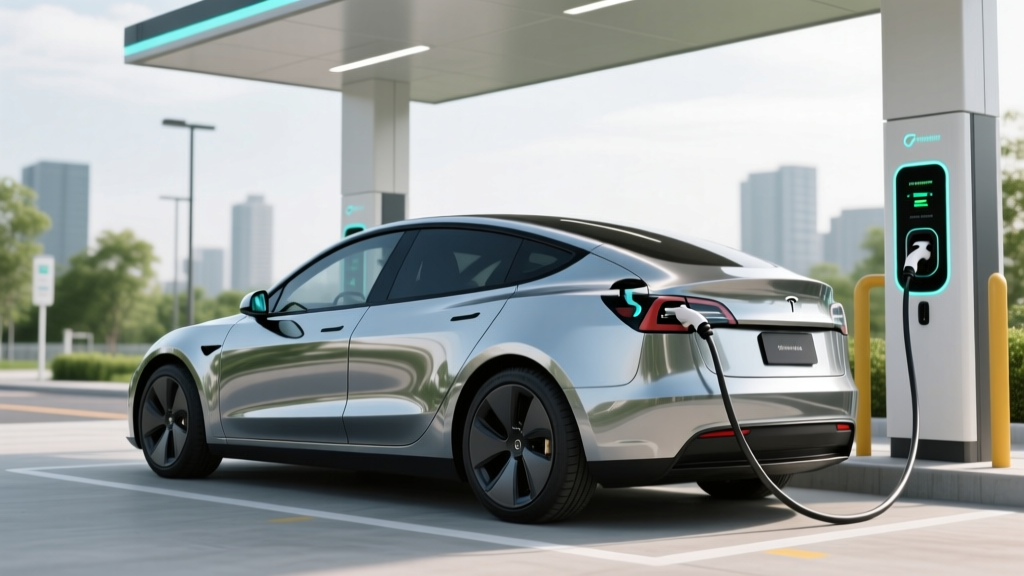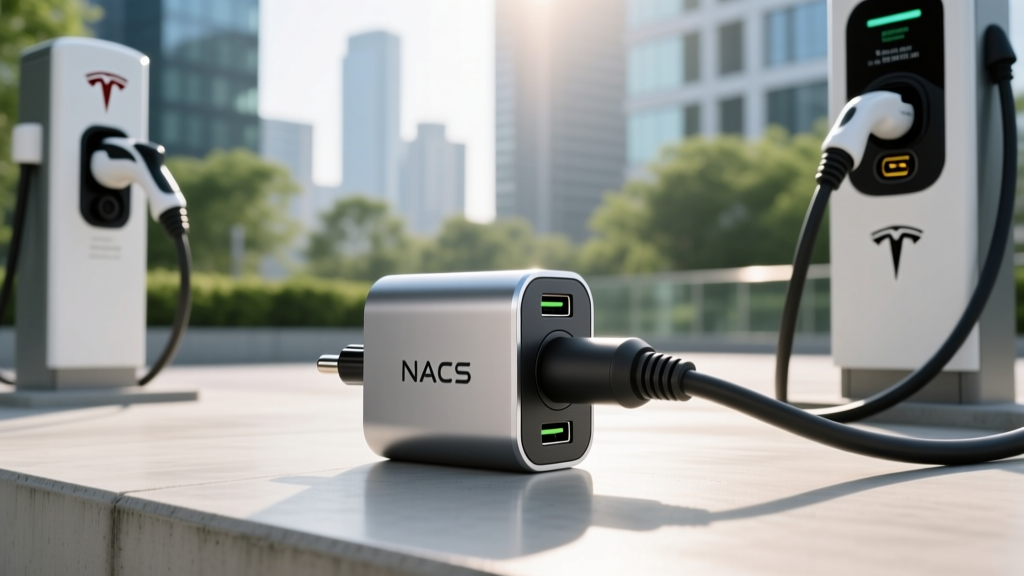
If you own a non-Tesla electric vehicle in 2026, the NACS adapter (North American Charging Standard, originally the Tesla connector) is likely the most important accessory in your garage. With Tesla's Supercharger network now open to nearly every major EV brand via NACS adapters, understanding which adapter you need, how fast you can charge at home and on the road, and what a proper installation actually costs is essential before you spend a dollar.
This guide covers the NACS adapter ecosystem for Tesla and non-Tesla owners, home Level 2 charging requirements, public DC fast charging compatibility, real costs per mile, and specific equipment we recommend based on hands-on testing.
Why the NACS Adapter Matters in 2026
Starting in 2024, automakers including Ford, GM, Rivian, Volvo, Polestar, Mercedes-Benz, and others began equipping new EVs with native NACS charge ports. For older non-Tesla EVs with CCS1 ports, manufacturers and third-party suppliers released NACS-to-CCS adapters that unlock access to Tesla's 50,000+ Supercharger and Destination Charger network.
By 2026, NACS has effectively become the dominant North American charging standard. CCS1 remains on millions of existing vehicles, and CHAdeMO persists on the Nissan Leaf and older Mitsubishi models, but new infrastructure overwhelmingly favors NACS. If you drive a CCS-equipped EV from model years 2019–2024, a NACS adapter isn't optional — it's your ticket to the most reliable fast-charging network in the country.
kW (kilowatts) = power, or how fast energy flows into your battery (like water pressure from a hose).
kWh (kilowatt-hours) = energy, or how much your battery holds (like the size of a bucket).
A 72 kWh battery charging at 11.5 kW takes roughly 6.3 hours. The same battery on a 150 kW DC fast charger can reach 80% in about 25–30 minutes.
Charging Levels Explained: Speeds and Range Added
Every EV owner uses a mix of three charging levels. Here's what each delivers in real-world terms:
| Level | Voltage / Amperage | Power (kW) | Miles of Range per Hour | Typical Use |
|---|---|---|---|---|
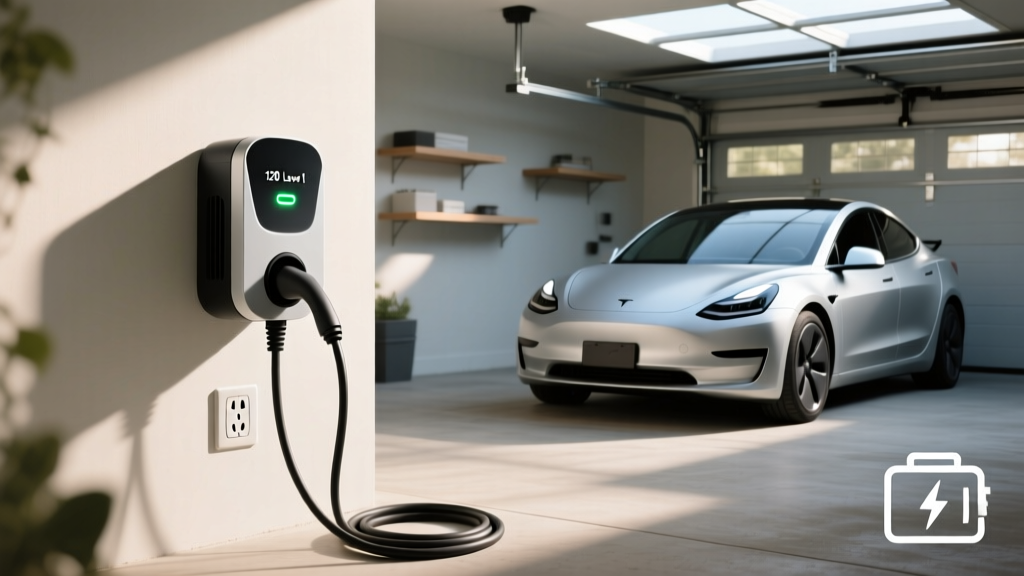
| Level 1 | 120V / 12A | 1.4 kW | 3–5 mi/hr | Overnight trickle, PHEVs, emergencies |
| Level 2 | 240V / 32–48A | 7.7–11.5 kW | 25–44 mi/hr | Daily home charging, workplace |
| DC Fast Charge | 400–800V DC | 50–350 kW | 150–1,200+ mi/hr | Road trips, highway corridors |
Real-world context: A Level 2 charger at 11.5 kW (48A on a 60A circuit) will fully replenish a 75 kWh battery (e.g., Ford Mustang Mach-E Extended Range) in about 6.5 hours — ideal for overnight charging. That same battery on a 150 kW DC fast charger reaches 10–80% in roughly 28 minutes, though charging speed tapers significantly above 80% SoC to protect battery health.
NACS Adapter and Connector Compatibility
North America has three active EV connector standards. Your vehicle's charge port determines what you can plug into directly — and where you need an adapter.
| Connector | Vehicles That Use It | AC Level 2 Charging | DC Fast Charging | Adapter Needed? |
|---|---|---|---|---|
| NACS (Tesla) | All Tesla models; 2025+ Ford, GM, Rivian, Volvo, Polestar, Mercedes | Native (Tesla Wall Connector or NACS Level 2 stations) | Tesla Superchargers + growing NACS DC stations | CCS→NACS adapter needed for non-NACS DC stations |
| CCS1 | Hyundai, Kia, VW, BMW, most pre-2025 non-Tesla EVs | J1772 plug (standard on all CCS vehicles) | Electrify America, EVgo, ChargePoint DC stations | NACS→CCS adapter required for Tesla Superchargers |
| CHAdeMO | Nissan Leaf, older Mitsubishi Outlander PHEV | J1772 plug | Declining network; limited new installations | CHAdeMO→NACS adapters limited; CHAdeMO stations shrinking |
NACS Adapter Options for CCS-Equipped EVs
If your EV has a CCS1 port (common on 2019–2024 models from Hyundai, Kia, Volkswagen, BMW, and others), you'll need a NACS-to-CCS DC adapter to use Tesla Superchargers. Here's the current landscape:
- OEM Adapters ($100–$250): Ford, GM, Rivian, and Volvo sell branded NACS adapters for their CCS-port vehicles. These are tested and validated for both DC fast charging and AC Level 2 use on Tesla Destination Chargers.
- Tesla CCS Adapter ($175): Tesla sells a CCS adapter for non-Tesla vehicles at select Supercharger locations where Tesla has opened access. Check the Tesla app for site eligibility.
- Third-Party Adapters ($150–$350): Brands like Lectron, A2Z, and Ohmmu offer NACS-to-CCS adapters. Verify UL or ETL certification before purchasing — uncertified adapters pose a fire risk and may void your vehicle's charging warranty.
Important: NACS adapters for DC fast charging must handle up to 250 kW and 500A. Cheap, uncertified adapters may overheat or fail mid-session. Always confirm the adapter's rated maximum power and current before buying.
Home EV Charger Installation: Electrical Requirements and Costs
A proper Level 2 home charging setup requires a dedicated 240V circuit, similar to what powers an electric dryer or oven. Here's what's involved:
Electrical Requirements
- Circuit: 240V dedicated circuit, typically 40A, 50A, or 60A
- Charger amperage: Chargers draw a continuous load, so the circuit must be rated at 125% of the charger's max amperage (per NEC Article 625). A 48A charger requires a 60A circuit.
- Wire gauge: 6 AWG copper for 50A circuits; 4 AWG for 60A circuits (varies by run length and local code)
- Outlet type: NEMA 14-50 (50A, common for portable chargers) or hardwired connection (required for most 48A+ chargers and often preferred by inspectors)
- GFCI protection: NEC 2020+ requires GFCI breakers for EV outlets in garages; some jurisdictions require them for hardwired units as well
Does Your Electrical Panel Need an Upgrade?
This is the single biggest cost variable. Most homes built after 2000 have a 200A main panel with enough spare capacity for a 50–60A EV circuit. Older homes with 100A or 150A service may need a panel upgrade to 200A, which adds $1,500–$3,500 to the project.
Have a licensed electrician perform a load calculation (NEC Article 220) before committing to a charger. This accounts for your existing circuits — HVAC, electric range, dryer, water heater — and determines whether your panel has headroom.
Home Charger Installation Cost Breakdown
| Item | Cost Range | Notes |
|---|---|---|
| Level 2 EVSE (charger unit) | $350 – $750 | 32A–48A, NACS or J1772 connector, 18–25 ft cable |
| Electrician labor (standard install) | $400 – $1,200 | Short run from panel to garage; longer runs add cost |
| Electrical materials (wire, conduit, breaker) | $150 – $400 | Depends on run length and local code requirements |
| Permit and inspection | $50 – $300 | Varies by municipality; some waive for EV installs |
| Total (standard install) | $950 – $2,650 | Typical 200A-panel home with short wire run |
| Panel upgrade (if needed) | $1,500 – $3,500 | 100A/150A → 200A service upgrade |
| Total (with panel upgrade) | $2,450 – $6,150 | Older homes or those with high existing loads |
Utility rebates: Many utilities offer $250–$1,000 rebates for Level 2 charger installation. Check with your local provider — some require pre-approval before work begins. The federal Alternative Fuel Vehicle Refueling Property Credit (IRC §30C) may cover up to 30% of installation costs (max $1,000) if you're in an eligible census tract.
Charging Time Examples: How Long Does It Really Take?
Charging time depends on your battery's usable capacity (in kWh) and the charger's sustained power output (in kW). Here are real-world benchmarks for common battery sizes:
| Scenario | Battery Size | Charger Power | 10–80% Time |
|---|---|---|---|
| Level 1 (120V outlet) | 75 kWh (Mach-E ER) | 1.4 kW | ~37 hours (impractical for BEV) |
| Level 2 (240V, 48A) | 75 kWh | 11.5 kW | ~4.5 hours (10–80%) |
| Level 2 (240V, 32A) | 75 kWh | 7.7 kW | ~6.8 hours (10–80%) |
| DC Fast (150 kW station) | 75 kWh | Peak ~130 kW avg | ~28 minutes (10–80%) |
| DC Fast (250 kW, Tesla V3) | 82 kWh (Model Y LR) | Peak ~170 kW avg | ~22 minutes (10–80%) |
| DC Fast (350 kW, 800V arch) | 77.4 kWh (Ioniq 5) | Peak ~235 kW avg | ~18 minutes (10–80%) |
Charge curve reality check: No EV sustains its peak charge rate for the entire session. A vehicle rated at "250 kW peak" may only hold that rate between 10–30% SoC, then taper to 150 kW, then drop further above 70%. The 10–80% time above reflects sustained average power, not the marketing peak. Always precondition your battery before a DC fast charge session — cold batteries charge significantly slower.
Cost to Charge: Home vs. Public vs. Gas
One of the strongest economic arguments for EVs is lower fueling cost — but the savings depend heavily on where you charge.
| Scenario | Rate ($/kWh) | Cost per 300 Miles* | Cost per Mile |
|---|---|---|---|
| Home (off-peak utility rate) | $0.08–$0.14 | $7.20–$12.60 | $0.024–$0.042 |
| Home (average US rate) | $0.16 | $14.40 | $0.048 |
| Public Level 2 (ChargePoint, etc.) | $0.20–$0.35 | $18.00–$31.50 | $0.060–$0.105 |
| DC Fast (Electrify America, EVgo) | $0.35–$0.55 | $31.50–$49.50 | $0.105–$0.165 |
| Tesla Supercharger (avg 2026) | $0.28–$0.38 | $25.20–$34.20 | $0.084–$0.114 |
| Gas (28 MPG avg, $3.40/gal) | — | $36.43 | $0.121 |
*Assumes 3.3 mi/kWh efficiency (≈100 MPGe), typical for a midsize crossover EV like the Tesla Model Y or Hyundai Ioniq 5.
The takeaway: Home charging at off-peak rates delivers a 65–80% fueling cost advantage over gasoline. Public DC fast charging narrows that gap considerably — in some markets, frequent DC fast charging can cost as much as or more than gas. The economic case for EVs is strongest when 80%+ of your charging happens at home.
Recommended Home EV Chargers for NACS and CCS
Based on our testing across multiple vehicles and electrical setups, these are the Level 2 chargers we recommend for 2026:
Tesla Wall Connector (NACS)
- Power: Up to 11.5 kW (48A, hardwired on 60A circuit)
- Connector: Native NACS — charges Teslas directly; non-Tesla NACS EVs directly
- Cable length: 24 ft
- Smart features: Wi-Fi, OTA updates, load sharing between multiple units, Powerwall integration
- Price: ~$475
- Best for: Tesla owners and 2025+ NACS-native vehicles (Ford, GM, Rivian)
ChargePoint Home Flex (J1772 or NACS)
- Power: Up to 12 kW (50A, NEMA 14-50 or hardwired on 60A circuit)
- Connector: Available in J1772 or NACS pigtail
- Cable length: 23 ft
- Smart features: Wi-Fi, app scheduling, Alexa integration, adjustable amperage (16A–50A)
- Price: ~$599 (J1772) / ~$649 (NACS)
- Best for: CCS vehicles (with J1772) or mixed-EV households
Emporia Vue Level 2 (J1772)
- Power: Up to 11.5 kW (48A, hardwired on 60A circuit)
- Connector: J1772 (use NACS adapter for Teslas)
- Cable length: 24 ft
- Smart features: Wi-Fi, energy monitoring, solar integration, utility demand-response compatible
- Price: ~$399
- Best for: Budget-conscious buyers, solar homes, utility time-of-use optimization
Note on NACS home charging for CCS vehicles: If you drive a CCS-port EV and want to use a NACS-connector charger at home (like the Tesla Wall Connector), you'll need a NACS-to-J1772 adapter for AC charging. These are widely available for $100–$200. Alternatively, buy a J1772 charger and use your NACS adapter only at public Superchargers.
Safety, Code, and Installation Best Practices
EV charging involves sustained high-current draw for hours — this is not the same as plugging in a dryer for 45 minutes. Follow these non-negotiable safety practices:
- Dedicated circuit only: Never share the EV circuit with other appliances. EV charging is a continuous load (3+ hours), and shared circuits risk overheating.
- Hardwired vs. outlet: For 48A chargers, hardwired installation is strongly recommended and often required by code. NEMA 14-50 outlets are acceptable for 32–40A portable chargers but must use an industrial-grade receptacle (Hubbell or Bryant, not generic big-box store brands — cheap 14-50 receptacles have been linked to melting under sustained EV loads).
- GFCI breaker: Required by NEC 2020+ for receptacle-based EV charging in garages. Note that some EVSE units have built-in GFCI protection, which can cause nuisance tripping with a GFCI breaker — check your charger's manual.
- Outdoor rating: If mounting outside, ensure the charger is rated NEMA 4 (weatherproof). All chargers listed above meet this standard.
- Permit and inspection: Always pull a permit. An inspection ensures the work meets NEC Article 625 and protects you in the event of an insurance claim.
- Cable management: Use a wall-mounted cable organizer to prevent tripping hazards and connector damage. Don't let the cable rest on the ground where it can be driven over.
Frequently Asked Questions
How much does it cost to install a home EV charger?
A standard Level 2 installation on an existing 200A panel typically costs $950–$2,650 including the charger unit, electrician labor, materials, and permit. If your home needs a panel upgrade from 100A or 150A to 200A, expect $2,450–$6,150 total. Utility rebates and the federal §30C credit (up to $1,000 in eligible census tracts) can offset part of this cost.
How fast will each charging level add range?
Level 1 (120V) adds 3–5 miles per hour. Level 2 (240V, 48A) adds 30–44 miles per hour depending on vehicle efficiency. DC fast charging adds 150–1,200+ miles per hour at peak rates, though sessions are typically measured in minutes (18–35 minutes for 10–80%) rather than hours because the charge rate tapers as the battery fills.
Which connector and charger is compatible with my EV?
Check your vehicle's charge port: if it's NACS (Tesla-style), you can use NACS chargers directly and need a NACS-to-CCS adapter only for legacy CCS stations. If your port is CCS1 (most pre-2025 non-Tesla EVs), you'll use J1772 for Level 2 and need a NACS-to-CCS adapter for Tesla Superchargers. CHAdeMO vehicles (Nissan Leaf) use J1772 for AC and CHAdeMO for DC, with limited adapter options.
How much does charging cost per mile compared to gas?
Home charging at average US electricity rates ($0.16/kWh) costs roughly $0.048 per mile — about 60% less than a 28 MPG vehicle at $3.40/gallon ($0.121/mile). Off-peak home rates ($0.08–$0.12/kWh) push that to $0.024–$0.036 per mile, a 70–80% savings. Public DC fast charging at $0.35–$0.55/kWh narrows the gap to near parity with gasoline.
What electrical upgrades might I need for a home charger?
The most common upgrades are: a new 50A or 60A 240V circuit with appropriate wire gauge and breaker ($400–$1,200 in labor); a GFCI breaker if using a receptacle ($50–$100); and in older homes, a panel upgrade from 100A/150A to 200A service ($1,500–$3,500). A licensed electrician should perform a NEC Article 220 load calculation before any work begins to determine what's actually needed.
Can I use a NACS adapter for both AC and DC charging?
Most NACS-to-CCS adapters sold by OEMs (Ford, GM, Rivian) support both AC Level 2 and DC fast charging. However, some third-party adapters are DC-only. Always verify the adapter's specifications — AC charging through a NACS adapter requires the adapter to pass through the J1772 signaling protocol, which not all DC-only adapters support.
Do I need to precondition my battery before DC fast charging?
Yes, especially in cold weather. Battery preconditioning warms the cells to the optimal temperature range for fast charging. Without it, a cold battery may accept only 30–50 kW even at a 250 kW station, doubling your charge time. Most EVs precondition automatically when you navigate to a charger in the built-in navigation system — use it rather than third-party map apps when heading to a DC fast charger.
Sources: EPA Fuel Economy for efficiency data; IRS §30C Refueling Property Credit for installation tax incentives; NHTSA for vehicle safety data. Consult a licensed electrician for final installation specifications and a tax professional for credit eligibility.