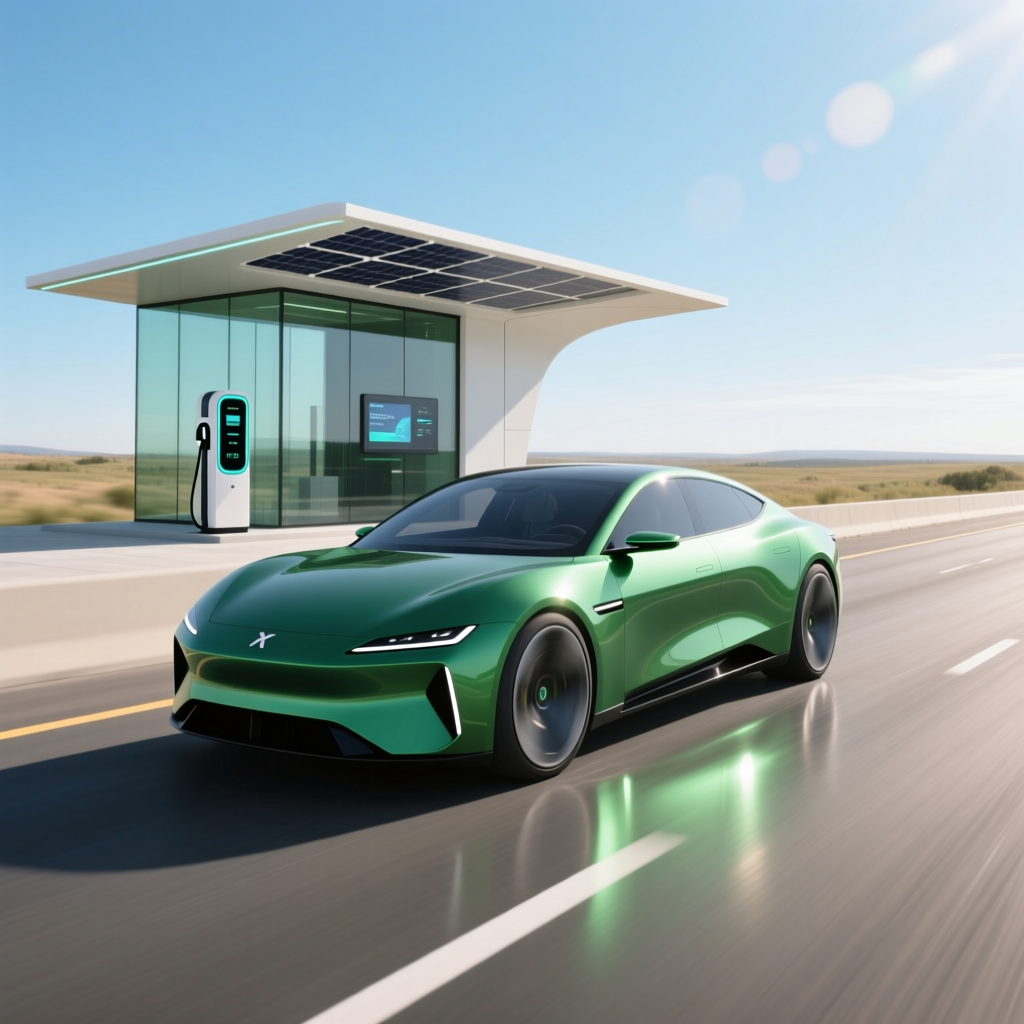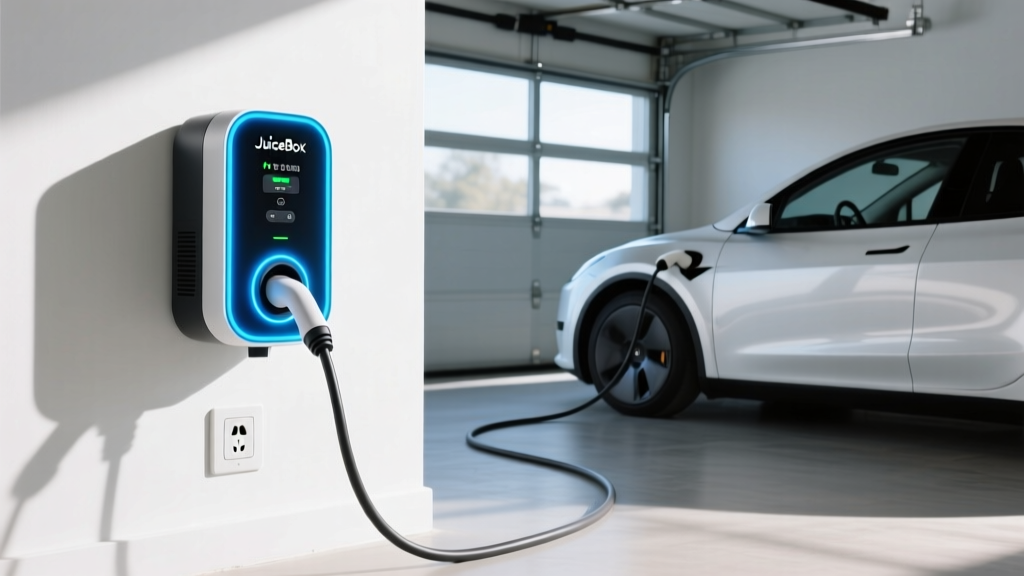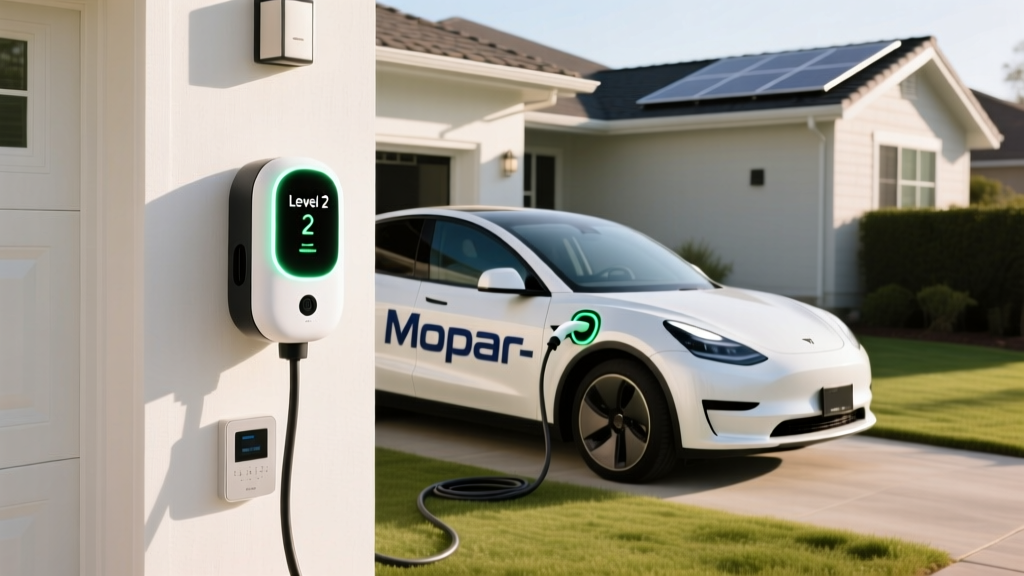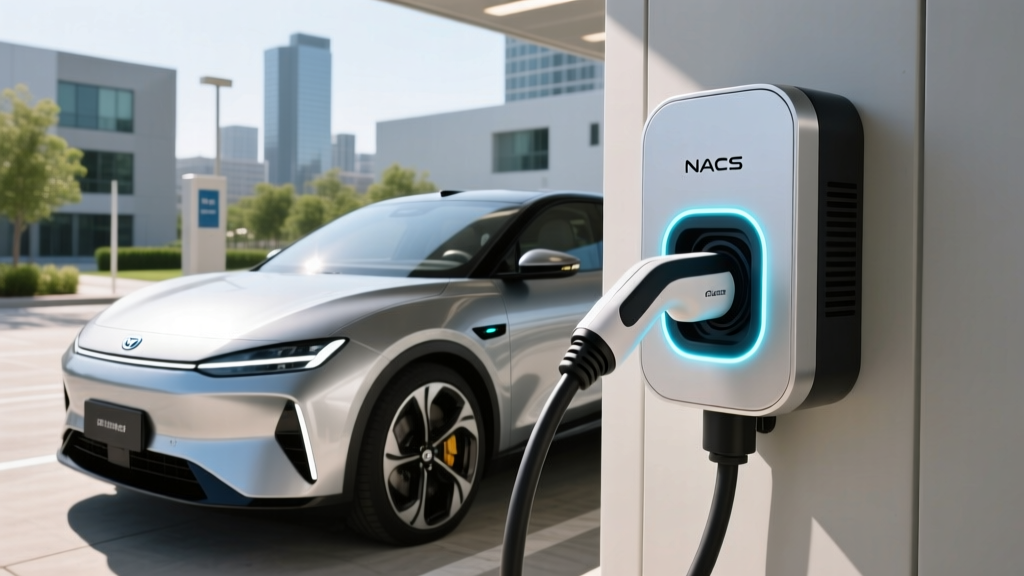
If you own a GM electric vehicle — whether it's a Chevrolet Equinox EV, Blazer EV, Cadillac Lyriq, or GMC Sierra EV — the charging landscape has shifted dramatically. General Motors adopted the North American Charging Standard (NACS) for its EVs starting with the 2025 model year, and by 2026, the transition is in full swing. But for owners of 2024 and earlier GM EVs built with CCS1 ports, accessing Tesla's Supercharger network requires a NACS adapter. This guide covers exactly what you need: adapter compatibility, home charging setup, installation costs, and real-world charging economics.
Why the NACS Adapter Matters for GM EV Owners
GM committed to adopting Tesla's NACS connector across its EV lineup beginning with 2025 models. Vehicles like the 2025+ Chevrolet Equinox EV, 2025+ Cadillac Lyriq, and 2026 Blazer EV ship from the factory with a native NACS port. However, thousands of GM EVs on the road — including the 2022–2024 GMC Hummer EV, 2022–2024 Cadillac Lyriq, and 2024 Chevrolet Blazer EV — were built with the CCS1 (Combined Charging System) connector.
Starting in 2024, GM began providing approved NACS adapters to CCS1-equipped EV owners, granting access to Tesla's network of over 20,000 Superchargers across North America. By 2026, this adapter program is well-established, but confusion persists around which adapter to use, charging speeds, and home setup requirements.
| Vehicle | Model Years | Native Port | NACS Adapter Needed? | Supercharger Access |
|---|---|---|---|---|
| Chevrolet Bolt EV/EUV | 2017–2023 | CCS1 | Yes (GM-approved) | Yes, with adapter |
| Cadillac Lyriq | 2023–2024 | CCS1 | Yes (GM-approved) | Yes, with adapter |
| Cadillac Lyriq | 2025–2026 | NACS | No | Yes, native |
| GMC Hummer EV | 2022–2024 | CCS1 | Yes (GM-approved) | Yes, with adapter |
| Chevrolet Blazer EV | 2024 | CCS1 | Yes (GM-approved) | Yes, with adapter |
| Chevrolet Blazer EV | 2025–2026 | NACS | No | Yes, native |
| Chevrolet Equinox EV | 2024 | CCS1 | Yes (GM-approved) | Yes, with adapter |
| Chevrolet Equinox EV | 2025–2026 | NACS | No | Yes, native |
| GMC Sierra EV | 2024–2026 | NACS | No | Yes, native |
| Chevrolet Silverado EV | 2024–2026 | NACS | No | Yes, native |
Critical note: Only use the GM-approved NACS adapter provided or authorized by General Motors. Third-party adapters may not support the communication protocol required for Supercharger authentication and could void your vehicle's charging system warranty.
Charging Levels Explained: Speeds in kW and Miles Per Hour
Before we break down home installation, let's clarify the three charging levels and what they mean in practical terms. Remember: kW (kilowatts) measures power — the rate at which energy flows into your battery. kWh (kilowatt-hours) measures energy — the total capacity stored in your battery. A 85 kWh battery charged at 11.5 kW takes roughly 7.4 hours from empty to full.
| Level | Voltage | Power (kW) | Miles of Range Added Per Hour | Best Use Case |
|---|---|---|---|---|
| Level 1 | 120V AC | 1.0–1.4 kW | 3–5 miles | Overnight trickle; PHEVs; emergencies |
| Level 2 | 240V AC | 7.2–19.2 kW | 20–60 miles | Daily home charging; workplace |
| DC Fast Charging | 400–800V DC | 50–350 kW | 150–1,200 miles (theoretical) | Road trips; rapid top-ups |
For context, a 2026 Chevrolet Equinox EV with its 85 kWh (usable) Ultium battery and EPA-estimated 319 miles of range will gain roughly 35–40 miles of range per hour on a 48-amp Level 2 home charger (11.5 kW). On a 150 kW DC fast charger, that same vehicle can charge from 10% to 80% in approximately 30 minutes, adding around 200 miles of range.
Real-world charging curve reality: Peak DC fast-charging rates (say, 190 kW on the Lyriq) are only sustained between roughly 10–40% State of Charge (SoC). Above 60%, the charge rate tapers significantly. Above 80%, it drops to under 40 kW to protect battery health. This is why manufacturers quote 10–80% times rather than 0–100%.
Home Level 2 Charger Installation: Costs, Electrical Requirements, and What to Expect
A Level 2 home charger is the single most impactful upgrade for daily EV ownership. Most GM EV owners charge 80–90% of their energy at home, making this installation the foundation of your charging strategy.
Electrical Requirements
A standard Level 2 home charger requires a 240V dedicated circuit, similar to what powers an electric dryer or oven. The most common configurations:
- 40-amp circuit / 32-amp continuous: Delivers 7.7 kW. Sufficient for most daily needs. Requires a NEMA 14-50 outlet or hardwired connection.
- 50-amp circuit / 40-amp continuous: Delivers 9.6 kW. The sweet spot for most EV owners. Uses a NEMA 14-50 outlet.
- 60-amp circuit / 48-amp continuous: Delivers 11.5 kW. Ideal for larger batteries like the Ultium platform's 85–200+ kWh packs.
- 80-amp circuit / 64-amp continuous: Delivers 15.4 kW. Requires hardwired connection and a robust electrical panel. Best for GMC Hummer EV or Silverado EV owners wanting maximum speed.
Panel upgrade reality: Many homes built before 2000 have 100-amp electrical panels. Adding a 50-amp EV circuit to an already-loaded 100A panel may require a panel upgrade to 200 amps, which typically costs $1,500–$3,000 on top of the charger installation. Homes with existing 200A panels usually have sufficient headroom. Your licensed electrician will perform a load calculation per NEC Article 220 to determine this.
Installation Cost Breakdown
| Component | Low End | Typical | High End | Notes |
|---|---|---|---|---|
| Level 2 Charger (hardware) | $300 | $500 | $750 | 32A–48A smart chargers |
| Electrician labor (standard install) | $400 | $800 | $1,500 | Short run from panel, same wall |
| Electrical permit | $50 | $125 | $300 | Varies by municipality |
| Conduit/wiring (long run) | $0 | $200 | $800 | If panel is far from garage |
| Panel upgrade (if needed) | $1,500 | $2,200 | $3,500 | 100A to 200A upgrade |
| Total (no panel upgrade) | $750 | $1,625 | $3,350 | Most common scenario |
| Total (with panel upgrade) | $2,250 | $3,825 | $6,850 | Older homes |
The federal government offers a tax credit under IRS Form 8911 for home EV charging equipment — up to 30% of the cost (hardware + installation), capped at $1,000. This credit is subject to income limitations and census-tract eligibility requirements. Consult a tax professional for your specific situation.
Recommended Level 2 Chargers for GM EVs (NACS and CCS1)
Your charger choice depends on whether your GM EV has a native NACS port or requires the CCS1-to-NACS adapter. Here are our top picks for 2026:
ChargePoint Home Flex (NACS)
- Power Output: Up to 12 kW (50A) — adjustable down to 16A
- Connector: NACS (native); CCS1 version also available
- Cable Length: 23 feet
- Smart Features: Wi-Fi, Alexa/Google Home integration, scheduled charging, energy tracking via app
- Price: ~$549
- Best For: 2025+ GM EVs with native NACS ports; flexible amperage for various panel capacities
Emporia Level 2 EV Charger
- Power Output: Up to 11.5 kW (48A)
- Connector: J1772 (use with your GM-supplied CCS1 mobile cord) or NACS version
- Cable Length: 24 feet
- Smart Features: Wi-Fi, energy monitoring, integrates with Emporia Vue home energy panel
- Price: ~$399
- Best For: Budget-conscious owners; excellent energy monitoring for solar homes
Wallbox Pulsar Plus (NACS)
- Power Output: Up to 11.5 kW (48A)
- Connector: NACS (2025+ models); J1772 version available
- Cable Length: 25 feet
- Smart Features: Wi-Fi + Bluetooth, load balancing, Power Sharing for dual-charger setups
- Price: ~$499
- Best For: Two-EV households; compact form factor; load management on limited panels
For CCS1-equipped GM EVs (2024 and earlier): You can purchase a Level 2 charger with a J1772 connector and use the J1772-to-CCS1 adapter that came with your vehicle, or opt for a NACS charger and use a NACS-to-CCS1 adapter. The simplest approach: buy a charger matching your vehicle's native port and keep your adapter for public DC fast charging.
Charging Cost Per Mile: EV vs. Gas in 2026
One of the strongest arguments for EV ownership is lower per-mile fuel costs — but the savings depend heavily on where and when you charge. Let's run the numbers using a 2026 Chevrolet Equinox EV (319 EPA miles, ~85 kWh usable battery, ~3.7 miles/kWh efficiency) versus a comparable 2026 Chevrolet Equinox gas AWD (28 MPG combined).
| Charging/Fuel Scenario | Rate | Cost Per Mile | Annual Cost (12,000 mi) |
|---|---|---|---|
| Home Level 2 (off-peak, $0.12/kWh) | $0.12/kWh | $0.032 | $389 |
| Home Level 2 (avg US residential, $0.17/kWh) | $0.17/kWh | $0.046 | $548 |
| Public Level 2 (network avg, $0.30/kWh) | $0.30/kWh | $0.081 | $973 |
| DC Fast Charging (avg, $0.42/kWh) | $0.42/kWh | $0.114 | $1,362 |
| Tesla Supercharger (avg, $0.30/kWh) | $0.30/kWh | $0.081 | $973 |
| Gas Equinox AWD (28 MPG, $3.40/gal) | $3.40/gal | $0.121 | $1,457 |
Source: Electricity rates from EIA monthly data; fuel economy from fueleconomy.gov.
The takeaway: Home off-peak charging saves roughly $1,000–$1,100 per year versus gas. Even public DC fast charging is competitive with gasoline on a per-mile basis. The key is maximizing home charging — owners who charge 90%+ at home see the strongest economics.
DC Fast Charging with Your NACS Adapter: What to Expect at Superchargers
When you plug your CCS1-equipped GM EV into a Tesla Supercharger using the GM-approved NACS adapter, here's what happens in practice:
- V2 Superchargers (150 kW): Your GM EV will typically peak between 120–150 kW depending on battery SoC and temperature. A Cadillac Lyriq (102 kWh usable) will charge 10–80% in approximately 35–40 minutes.
- V3 Superchargers (250 kW): Most GM Ultium-platform vehicles can accept up to 190–200 kW peak. Expect 10–80% in roughly 25–30 minutes for an Equinox EV, and 35–40 minutes for the larger Lyriq or Hummer EV battery.
- V4 Superchargers (350 kW, rolling out): Current GM EVs won't fully utilize 350 kW — the vehicle's onboard charge acceptance is the limiting factor, not the charger. Expect similar speeds to V3 for most models.
Adapter speed limitation: The GM-approved NACS adapter supports up to approximately 200 kW DC fast charging. This is sufficient for all current GM EVs, as none exceed 200 kW peak charge acceptance. Future GM models on the 800V Ultium architecture may push higher.
Authentication: With the GM-approved adapter, Supercharger authentication happens automatically through your vehicle's built-in telematics — no Tesla app required. The charge session bills to the payment method linked in your myChevrolet, myCadillac, or myGMC app.
Safety, Electrical Code, and Installation Best Practices
Home EV charger installation is electrical work that must comply with the National Electrical Code (NEC) and local building codes. Key requirements:
- Dedicated circuit: Your Level 2 charger must be on its own dedicated breaker — it cannot share a circuit with other appliances.
- GFCI protection: NEC 2020 (Article 625.54) requires GFCI protection for all EV receptacles rated 150V to ground or less and 60A or less. Most hardwired chargers have built-in ground-fault protection. If using a NEMA 14-50 receptacle, your electrician will install a GFCI breaker.
- Outdoor rating: If your charger is mounted outdoors (carport, driveway), ensure the unit carries a NEMA 4 or NEMA 4X rating for weather resistance. All chargers recommended above are outdoor-rated.
- Permit and inspection: Most jurisdictions require an electrical permit for EV charger installation. Your electrician typically pulls this. A post-installation inspection ensures code compliance — don't skip this step, as it may affect home insurance coverage.
- Cable management: Use a holster or cable organizer to keep the charging cable off the ground, preventing damage and tripping hazards.
Frequently Asked Questions
How much does it cost to install a home EV charger?
A typical Level 2 home charger installation costs between $750 and $3,350 when no panel upgrade is needed — this includes the charger hardware ($300–$750), electrician labor ($400–$1,500), permit ($50–$300), and any additional wiring. If your home needs a panel upgrade from 100A to 200A, add $1,500–$3,500. The IRS alternative fuel refueling property credit (Form 8911) can offset up to $1,000 of this cost.
How fast will each charging level add range to my GM EV?
Level 1 (120V): approximately 3–5 miles per hour. Level 2 (240V, 48A): approximately 35–40 miles per hour for an Equinox EV. DC Fast Charging (150 kW+): approximately 150–200 miles in 25–30 minutes (10–80% SoC). Exact rates depend on your specific model's battery size and efficiency.
Which connector and charger is compatible with my GM EV?
GM EVs from model year 2025+ have a native NACS port and can plug directly into Tesla Superchargers and NACS-equipped home chargers. GM EVs from 2024 and earlier have a CCS1 port and require the GM-approved NACS adapter for Supercharger access. For home Level 2 charging, CCS1 vehicles can use any J1772 charger (J1772 is the AC standard that CCS1 incorporates) or a NACS charger with appropriate adapter.
How much does charging cost per mile compared to gas?
Home charging at off-peak rates ($0.12/kWh) costs roughly $0.032 per mile for an Equinox EV — about 74% less than a gas Equinox at $3.40/gallon ($0.121/mile). Even public DC fast charging at $0.42/kWh ($0.114/mile) is slightly cheaper than gasoline. The savings are greatest when you charge at home overnight.
What electrical upgrades might I need for a home charger?
The most common upgrade is a panel capacity increase from 100A to 200A, needed when your existing panel lacks headroom for a 40–60A dedicated EV circuit. Your electrician will perform an NEC Article 220 load calculation. Other possible upgrades: running new conduit from the panel to the garage (if the panel is on the opposite side of the house), upgrading the meter base, or adding a sub-panel. Homes with 200A+ service typically need no panel upgrade.
Can I use a third-party NACS adapter instead of the GM-approved one?
GM strongly recommends using only its approved adapter. Third-party adapters may lack proper communication protocol support for Supercharger authentication, may not handle the thermal load of sustained DC fast charging, and could potentially void your vehicle's electrical system warranty. The GM-approved adapter is provided free or at minimal cost to eligible CCS1-equipped vehicle owners.
Will using the NACS adapter at Superchargers damage my CCS1 port?
No. The GM-approved adapter is engineered to mate precisely with your vehicle's CCS1 inlet and the NACS Supercharger connector. It includes proper thermal management and communication pass-through. Treat the adapter like any charging cable — keep the contacts clean, don't force connections, and store it in a protective case when not in use.
The Bottom Line for GM EV Owners
The NACS adapter is your bridge to the largest and most reliable DC fast-charging network in North America. If you own a 2022–2024 GM EV with CCS1, request your GM-approved adapter through your brand's owner app if you haven't already. For home charging, invest in a quality Level 2 charger matched to your panel capacity — a 48-amp unit on a 60-amp circuit is the sweet spot for most Ultium-platform vehicles. Budget $1,500–$2,500 for a professional installation, factor in the potential panel upgrade cost for older homes, and claim the IRS refueling property credit where eligible. With a solid home setup and Supercharger access via your NACS adapter, the GM EV ownership experience in 2026 is as practical as it gets.