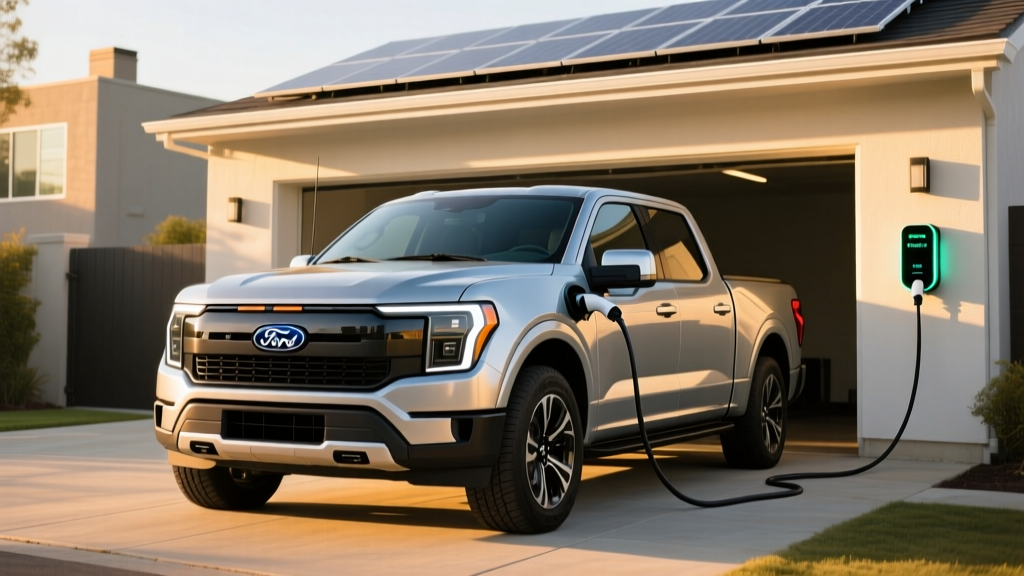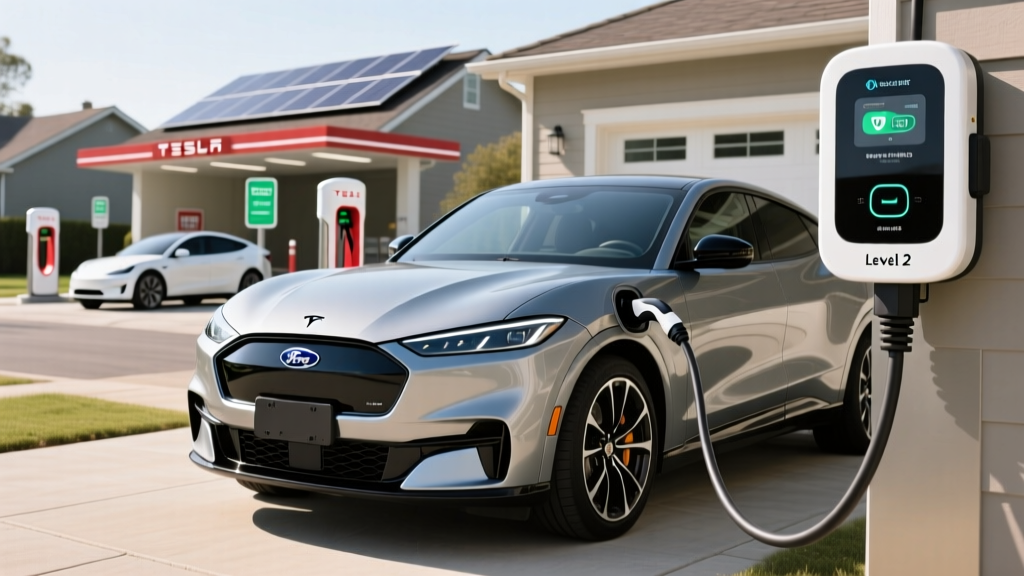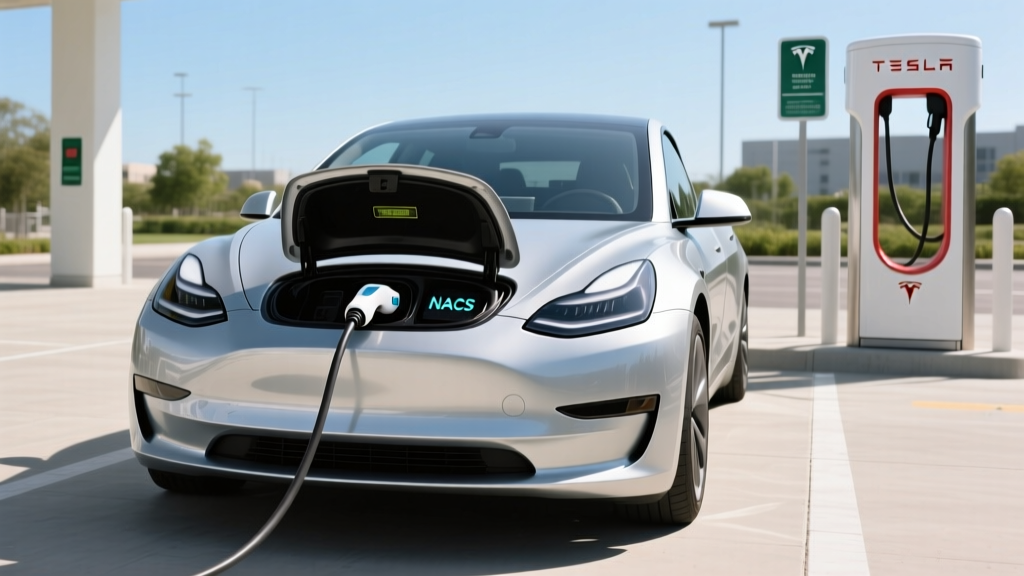
The North American Charging Standard (NACS) has won the connector war. As of 2026, every major automaker selling in the U.S. — Ford, GM, Hyundai, Kia, Rivian, BMW, Mercedes, Volvo, and more — has either adopted the native NACS port on new models or committed to doing so. But millions of EVs on the road today still carry CCS1 or CHAdeMO ports, and their owners need a reliable NACS adapter to access Tesla's Supercharger network, now the largest and most reliable DC fast-charging infrastructure in North America.
This guide covers everything you need to know about NACS adapters: which one fits your vehicle, how fast you'll actually charge, what it costs to install a home charger alongside your adapter strategy, and how to avoid common pitfalls like panel upgrades and connector mismatches.
Why a NACS Adapter Matters in 2026
Tesla opened its Supercharger network to non-Tesla EVs starting in 2024, and by 2026, over 15,000 Supercharger stalls across the U.S. support vehicles using the NACS connector. The network consistently delivers higher uptime and fewer broken stalls than competing CCS networks, according to J.D. Power's annual EV charging satisfaction studies. If your EV has a CCS1 or CHAdeMO port, a NACS adapter is your bridge to this infrastructure.
Here's the reality: without a NACS adapter, your DC fast-charging options on road trips are limited to Electrify America, EVgo, and ChargePoint stations — networks that, while improving, still suffer from higher downtime rates and more fragmented payment systems. The adapter unlocks roughly 40% more fast-charging locations on major highway corridors.
Charging Levels Explained: Speeds, Power, and Range Added
Before choosing an adapter, understand the three charging levels you'll encounter. Note: kW (kilowatts) measures power — how fast energy flows. kWh (kilowatt-hours) measures energy — how much the battery holds. These are not interchangeable.
| Level | Power Source | Max Power (kW) | Miles of Range Added per Hour | Typical Use |
|---|---|---|---|---|
| Level 1 | 120V household outlet | 1.2–1.9 kW | 3–5 miles | Overnight trickle; PHEVs, low-mileage drivers |
| Level 2 | 240V (dryer/outlet or hardwired) | 7.2–19.2 kW | 20–65 miles | Daily home charging; overnight full charge |
| DC Fast Charging | 480V+ public station | 50–350 kW | 150–1,000+ miles (per hour equivalent) | Road trips; 10–80% in 15–40 minutes |
Real-world charging time examples (10–80% SoC):
- Hyundai Ioniq 5 (84 kWh battery, NMC): 10–80% in ~18 minutes on a 350 kW DC fast charger, tapering significantly above 80%.
- Ford Mustang Mach-E (91 kWh usable, NMC): 10–80% in ~25 minutes at 150 kW; ~45 minutes at 50 kW.
- Chevrolet Equinox EV (85 kWh, NMC): 10–80% in ~22 minutes at 150 kW.
- Nissan Leaf (60 kWh, CHAdeMO only): 10–80% in ~40 minutes at 50 kW — CHAdeMO caps at 50 kW for the Leaf.
NACS Adapter Compatibility: Which One Fits Your EV?
Not every NACS adapter works with every EV. The adapter you need depends on your vehicle's native charge port. Here's the breakdown by connector type:
| Your EV's Port | Adapter Needed | DC Fast Charge Support | Level 2 AC Support | Example Vehicles |
|---|---|---|---|---|
| CCS1 (Combo) | NACS-to-CCS1 adapter | Yes (up to vehicle's max kW) | Yes (with J1772-to-NACS adapter or combo unit) | Ford Mach-E (2021–2024), VW ID.4, Hyundai Ioniq 5 (pre-2025), Kia EV6, BMW i4 |
| CHAdeMO | NACS-to-CHAdeMO adapter | Limited — CHAdeMO protocol caps at 50–100 kW | Separate J1772 adapter needed for Level 2 | Nissan Leaf, older Mitsubishi Outlander PHEV |
| Native NACS | None needed | Native | Native | Tesla all models, Ford F-150 Lightning (2025+), GM Ultium vehicles (2025+), Rivian (2025+) |
Key caveat for CHAdeMO owners: The CHAdeMO protocol itself limits DC fast-charging speeds regardless of the adapter. Even if you plug into a 250 kW NACS Supercharger stall via an adapter, a Nissan Leaf will still max out at approximately 50 kW. The adapter doesn't override the vehicle's onboard charging protocol limitations.
CCS1 adapter buyers — look for these specs:
- Rated for at least 250 kW DC (to avoid bottlenecking your vehicle's charge speed)
- IP55 or higher weather rating for outdoor use
- UL-listed or certified to SAE J3400 standards
- Compact form factor — you'll carry this in your trunk
Home Charger Installation: Costs, Electrical Requirements, and Panel Upgrades
Most EV owners do 80% or more of their charging at home on a Level 2 charger. A NACS adapter is primarily for DC fast charging on the road, but if your EV has a CCS port and you install a NACS home charger (now available from several manufacturers), you'll need the adapter at home too — or you can install a CCS-compatible Level 2 charger and save the adapter for road trips.
Electrical Requirements for Level 2 Home Charging
A Level 2 charger requires a 240V dedicated circuit, similar to what an electric dryer or oven uses. The amperage depends on the charger:
- 32A circuit (40A breaker): Delivers 7.7 kW — sufficient for most EVs overnight
- 48A circuit (60A breaker): Delivers 11.5 kW — faster charging, requires thicker wire
- 80A circuit (100A breaker): Delivers 19.2 kW — maximum Level 2 speed, rare in residential
The National Electrical Code (NEC) requires the circuit breaker to be rated at 125% of the continuous load. So a 48A charger needs a 60A breaker, and a 32A charger needs a 40A breaker.
Installation Cost Breakdown
| Cost Component | Simple Install (Near Panel) | Standard Install (20–50 ft run) | Complex Install (Panel Upgrade + Long Run) |
|---|---|---|---|
| Level 2 Charger Equipment | $350–$700 | $350–$700 | $350–$700 |
| Electrician Labor | $300–$600 | $600–$1,500 | $1,500–$3,000 |
| Permit & Inspection | $50–$150 | $50–$200 | $100–$300 |
| Electrical Panel Upgrade (if needed) | $0 | $0 | $1,500–$3,500 |
| Total Estimated Cost | $700–$1,450 | $1,000–$2,400 | $3,450–$7,500 |
Safety and Code Requirements
Per NEC Article 625, your home EV charger installation must include:
- Dedicated circuit: The EV charger cannot share a circuit with other appliances
- GFCI protection: Required for all outdoor receptacles; hardwired units may have built-in GFCI
- Outdoor rating: If mounted outside, the charger must carry a NEMA 4 or IP55+ rating
- Proper wire gauge: 6 AWG copper for 48A; 8 AWG for 32A (verify with your electrician)
- Permit and inspection: Required in virtually all U.S. jurisdictions — skipping this can void home insurance
Level 2 Home Charger Recommendations (2026)
Whether you choose a NACS-connector charger (for native NACS vehicles) or a J1772/CCS charger (for older EVs), here are top-performing units based on reliability, features, and value:
Tesla Wall Connector (NACS)
- Power: Up to 11.5 kW (48A)
- Connector: NACS native
- Cable: 24 ft
- Smart features: Wi-Fi, OTA updates, load sharing with second unit, access control
- Price: ~$475
- Best for: Tesla owners and 2025+ NACS-native vehicles
ChargePoint Home Flex (J1772)
- Power: Up to 12 kW (50A) — adjustable down to 16A
- Connector: J1772 (works with all CCS EVs; NACS EVs use Tesla's J1772 adapter)
- Cable: 23 ft
- Smart features: Wi-Fi, Alexa, scheduling, energy tracking via app
- Price: ~$550–$700
- Best for: CCS1-port EVs (Ioniq 5, Mach-E, ID.4) — no adapter needed at home
Emporia Vue Level 2 (J1772)
- Power: Up to 11.5 kW (48A)
- Connector: J1772
- Cable: 24 ft
- Smart features: Wi-Fi, solar integration, whole-home energy monitoring, load management
- Price: ~$399–$450
- Best for: Budget-conscious buyers; solar-panel homes
Hardwired vs. plug-in (NEMA 14-50): Hardwired installations deliver the full rated amperage and avoid the 80% NEC derating rule that limits a 50A NEMA 14-50 outlet to 40A continuous (9.6 kW max). If your charger is rated for 48A, hardwire it.
Cost to Charge: Home vs. Public vs. Gas
Charging cost is where EV ownership economics either shine or disappoint — depending on where and when you charge. Here's a realistic breakdown using 2026 electricity rates:
| Charging Scenario | Avg. Cost per kWh | Cost to Add 200 Miles (at 3 mi/kWh) | Cost Per Mile |
|---|---|---|---|
| Home (off-peak utility rate) | $0.08–$0.14 | $5.33–$9.33 | $0.027–$0.047 |
| Home (standard residential rate) | $0.14–$0.20 | $9.33–$13.33 | $0.047–$0.067 |
| Public Level 2 (ChargePoint, etc.) | $0.25–$0.49 | $16.67–$32.67 | $0.083–$0.163 |
| DC Fast Charging (EA, EVgo) | $0.35–$0.55 | $23.33–$36.67 | $0.117–$0.183 |
| Tesla Supercharger (NACS, non-Tesla pricing) | $0.28–$0.45 | $18.67–$30.00 | $0.093–$0.150 |
| Gas vehicle (27 MPG avg, $3.40/gal) | — | $25.19 | $0.126 |
The takeaway: Home off-peak charging is dramatically cheaper than gas — roughly 3–5 cents per mile vs. 12–13 cents. But frequent reliance on DC fast charging at $0.45–$0.55/kWh can push your per-mile cost above a fuel-efficient gas car. The economics favor home chargers overwhelmingly.
For the federal Alternative Fuel Vehicle Refueling Property Credit, homeowners may qualify for a 30% tax credit on home charger equipment and installation, capped at $1,000. Eligibility depends on census-tract requirements — check IRS Form 8911 and consult a tax professional.
Road Trip Strategy: NACS Adapter + Supercharger Network
With a NACS adapter in your trunk, your road-trip charging options expand significantly. Here's how to plan:
- Route planning: Use A Better Routeplanner (ABRP) or your vehicle's built-in navigation. Filter for NACS/Supercharger stations along your route.
- Preconditioning: If your EV supports it, precondition the battery before arriving at a DC fast charger. Cold batteries charge slower — preconditioning warms the pack to optimal temperature, enabling peak charge rates. This can shave 5–10 minutes off a 10–80% session.
- Adapter handling: Keep the adapter in a padded case in your frunk or trunk. NACS-to-CCS1 adapters typically weigh 1.5–2.5 lbs and are roughly the size of a large water bottle.
- Payment: Tesla's Supercharger network for non-Tesla EVs requires the Tesla app for activation and payment. Download it before your trip and add a payment method.
- Speed expectations: Most Supercharger V3 stalls deliver up to 250 kW. Your actual speed depends on your vehicle's max charge rate — a Hyundai Ioniq 5 can accept up to 238 kW, while a Ford Mach-E peaks around 150 kW.
Frequently Asked Questions
How much does it cost to install a home EV charger?
A standard Level 2 home charger installation costs $1,000–$2,400 including equipment, electrician labor, and permits for a typical 20–50 foot circuit run. If your home needs an electrical panel upgrade (common in pre-1990 homes with 100A panels), total costs can reach $3,450–$7,500. Always get a load calculation from a licensed electrician first.
How fast will each charging level add range?
Level 1 (120V) adds 3–5 miles per hour — suitable only for PHEVs or very low daily mileage. Level 2 (240V) adds 20–65 miles per hour depending on amperage, fully recharging most EVs overnight in 6–10 hours. DC fast charging adds 150–1,000+ miles per hour equivalent, delivering a 10–80% charge in 15–40 minutes depending on the vehicle and station power.
Which connector and charger is compatible with my EV?
Check your vehicle's charge port: if it has a CCS1 (Combo) port, you need a NACS-to-CCS1 adapter for Tesla Superchargers and a J1772 connector for Level 2 home charging. If your EV already has a native NACS port (2025+ Tesla, Ford, GM, Rivian models), no adapter is needed. CHAdeMO vehicles (Nissan Leaf) need a NACS-to-CHAdeMO adapter, but DC speeds are protocol-limited to 50–100 kW.
How much does charging cost per mile compared to gas?
Home off-peak charging costs approximately $0.03–$0.05 per mile, while a comparable gas vehicle at 27 MPG and $3.40/gallon costs about $0.13 per mile. Public DC fast charging at $0.35–$0.55/kWh costs $0.12–$0.18 per mile — sometimes exceeding gas costs. The financial advantage of EVs depends heavily on access to affordable home charging.
What electrical upgrades might I need for a home charger?
The most common upgrade is a panel capacity increase. Homes with 100A or 125A service panels may need a 200A upgrade ($1,500–$3,500) to safely support a 40A–60A EV circuit alongside existing loads. Other potential upgrades include: replacing a NEMA 10-50 (3-prong, no ground) with a NEMA 14-50 (4-prong, grounded), adding a sub-panel in the garage, or upgrading service from the utility transformer. A licensed electrician's load calculation will identify what's needed before you buy equipment.
Can I use a NACS adapter for Level 2 home charging too?
Technically yes — some adapters support both DC fast charging and AC Level 2. However, most EV owners find it more practical to install a J1772 Level 2 charger at home (no adapter needed for CCS vehicles) and reserve the NACS adapter for DC fast charging on road trips. Carrying the adapter back and forth between your garage and trunk daily is inconvenient and increases wear.
Are aftermarket NACS adapters safe?
Only purchase adapters that are UL-listed or certified to SAE J3400 standards. Avoid uncertified adapters from unknown marketplace sellers — they may lack proper thermal management, overcurrent protection, or weather sealing. OEM adapters from Ford, GM, and Hyundai (provided to buyers of affected models) are the safest option. Aftermarket options from Lectron, A2Z, and Tesla's official CCS adapter (for Tesla vehicles visiting CCS stations) are widely used and properly certified.