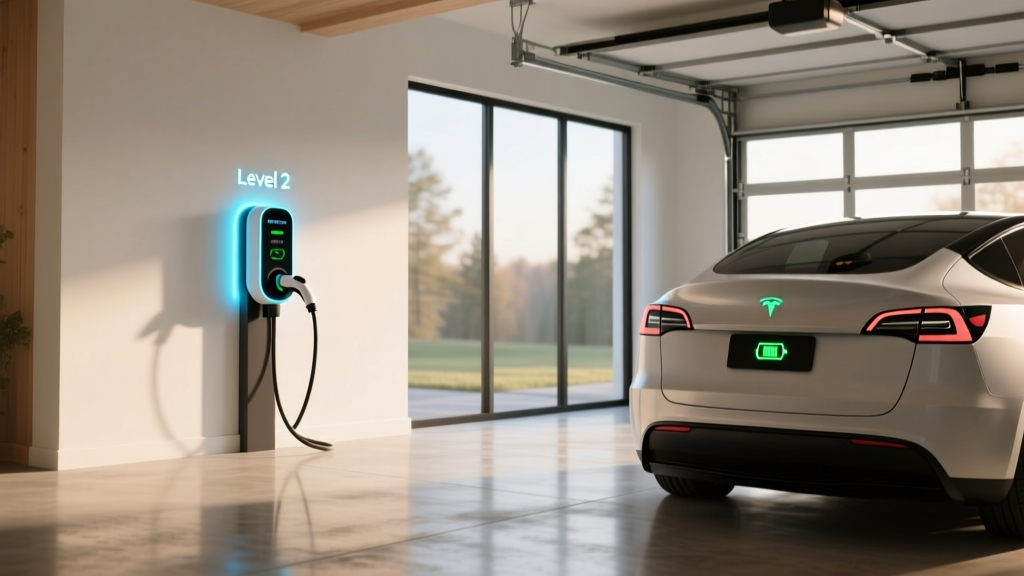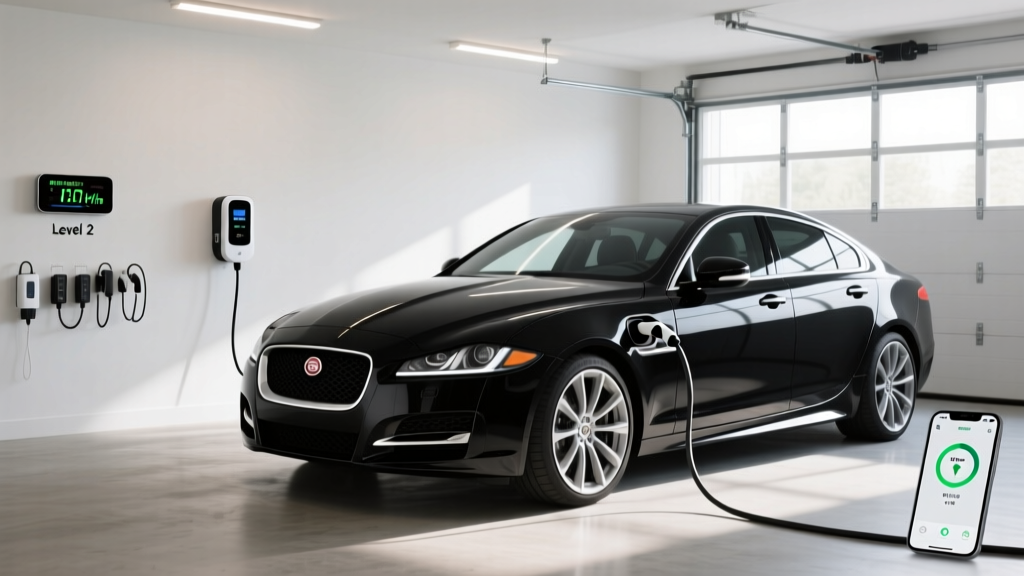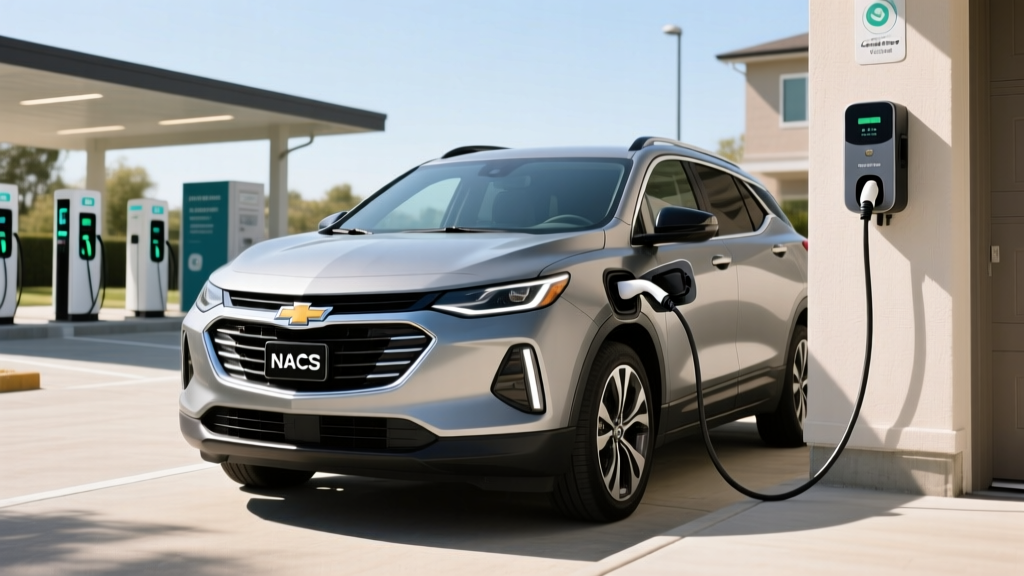
The 2026 Chevy Equinox EV ships with a CCS1 charge port, but the North American charging landscape has decisively shifted toward NACS (the Tesla connector). For Equinox EV owners, that means a NACS adapter for Chevy Equinox EV isn't just a nice-to-have — it's the key to unlocking the Supercharger network, future-proofing your home setup, and simplifying public charging. This guide walks through every charging scenario Equinox EV owners will face, from the electrical panel in your garage to the 350 kW stall on the interstate.
Equinox EV Charging Specs at a Glance
Before we talk adapters and installers, here are the hard numbers for the 2026 Equinox EV. These specs determine what charger you need, how long sessions take, and whether your electrical panel can handle the load.
| Spec | Value |
|---|---|
| Usable battery capacity | ~85 kWh (Ultium platform, NMC chemistry) |
| EPA range (FWD 3LT) | 319 miles |
| Real-world range (highway/cold) | ~250–285 miles (expect 15–20% loss at 75 mph or below freezing) |
| Max DC fast charge rate | ~150 kW peak |
| 10–80% DC fast charge time | ~30 minutes (peak conditions, preconditioned battery) |
| Level 2 onboard charger | 11.5 kW (48A at 240V) |
| Level 2 charge time (0–100%) | ~8.5 hours |
| Charge port (factory) | CCS1 (J1772 + DC pins) |
| Base MSRP (2LT FWD) | $34,900 (before any incentives) |
| Battery/powertrain warranty | 8 years / 100,000 miles |
Why You Need a NACS Adapter for Chevy Equinox EV
GM committed to adopting NACS as its native charge port starting with 2025-model-year vehicles, but the Equinox EV launched with CCS1 and continues with it for 2026. That means your Equinox can plug into CCS stations natively, but you'll need an adapter to access:
- Tesla Superchargers — over 30,000 stalls in North America, many now open to non-Tesla EVs via the "Open Supercharger" program
- NACS-equipped public chargers — Electrify America, EVgo, and ChargePoint are progressively adding NACS cables alongside CCS
- Future home chargers — new Level 2 units increasingly ship with NACS connectors rather than J1772
Adapter Options and Compatibility
GM offers an official CCS-to-NACS adapter for Equinox EV owners, and third-party options (such as those from Lectron or A2Z) are also available. Here's what to verify before purchasing:
| Connector Type | Native to Equinox EV? | Adapter Needed? | Where You'll Find It |
|---|---|---|---|
| CCS1 (J1772 + DC pins) | Yes | No | Most public DC fast chargers (EA, EVgo, ChargePoint) |
| J1772 (Level 1/2 AC) | Yes (upper portion) | No | Public Level 2, home chargers with J1772 cables |
| NACS (Tesla) | No | Yes — CCS-to-NACS adapter | Tesla Superchargers, newer NACS public chargers, NACS home units |
| CHAdeMO | No | Yes (rare, expensive) | Legacy Nissan Leaf stations — largely obsolete |
The official GM adapter supports DC fast charging up to the Equinox EV's peak rate (~150 kW). Third-party adapters vary — confirm the rated DC amperage before buying. A quality CCS-to-NACS adapter costs between $150 and $250.
Charging Levels Explained: kW, Speed, and Time
There are three charging levels available to Equinox EV owners. The critical distinction: kW (kilowatts) measures power — how fast energy flows into your battery. kWh (kilowatt-hours) measures energy — the total capacity stored. Think of kW as the speed of water through a hose, and kWh as the size of the bucket.
| Level | Voltage | Max Power (kW) | Miles of Range Added Per Hour | Typical Use Case |
|---|---|---|---|---|
| Level 1 | 120V AC | 1.4 kW | ~3–5 miles/hour | Emergency top-off, overnight trickle (adds ~40 mi in 10 hrs) |
| Level 2 | 240V AC | Up to 11.5 kW (Equinox max) | ~30–38 miles/hour | Daily home charging, workplace, public Level 2 |
| DC Fast Charge | 400V+ DC | Up to 150 kW (Equinox peak) | ~200–350 miles/hour (peak, tapering above 80%) | Road trips, quick top-ups |
Charging Time Examples for the Equinox EV's ~85 kWh Battery
- Level 1 (1.4 kW): 10–80% in roughly 50+ hours. Not practical for daily use.
- Level 2 at 48A / 11.5 kW: 10–80% in approximately 5.5 hours. Full 0–100% overnight (~8.5 hrs).
- Level 2 at 32A / 7.7 kW: 10–80% in approximately 8 hours. Acceptable but slower.
- DC Fast Charge at 150 kW peak: 10–80% in ~30 minutes. Note: the charge curve tapers significantly above 80% SoC — charging from 80–100% can take nearly as long as 10–80%.
Home Charger Installation: Requirements, Costs, and Gotchas
To unlock the Equinox EV's full 11.5 kW Level 2 capability at home, you need a 240V circuit rated for at least 60 amps (the continuous-load rule requires the circuit to be rated 125% above the charger's max draw — 48A × 1.25 = 60A). Here's what that actually involves.
Electrical Requirements
- Voltage: 240V (split-phase, standard US residential)
- Amperage: 60A dedicated circuit for a 48A charger, or 50A circuit for a 40A charger
- Wiring: 6 AWG copper (60A) or 8 AWG copper (50A), run in conduit if exposed
- Breaker: Dedicated 2-pole breaker in your main panel
- Outlet vs. hardwired: A NEMA 14-50 outlet offers portability; hardwired is often required for 60A+ and eliminates a failure point
Will You Need a Panel Upgrade?
If your home has a 100A main service panel, adding a 60A EV circuit will likely exceed available capacity — especially if you already run electric HVAC, a dryer, and an electric range. A panel upgrade to 200A typically costs $1,500–$3,000 on top of the charger install. Homes with 200A service usually have enough headroom, but a licensed electrician must perform a load calculation per NEC Article 220.
Installation Cost Breakdown
| Component | Cost Range | Notes |
|---|---|---|
| Level 2 charger (equipment) | $350 – $750 | Smart Wi-Fi chargers; dumb units from $250 |
| Electrician labor | $500 – $2,000 | Depends on run length, wall type, conduit needs |
| Permit & inspection | $50 – $300 | Required in most jurisdictions; varies by municipality |
| Panel upgrade (if needed) | $1,500 – $3,000 | 100A to 200A upgrade; not always required |
| Total (no panel upgrade) | $900 – $3,050 | Typical suburban home with 200A panel |
| Total (with panel upgrade) | $2,400 – $6,050 | Older homes with 100A service |
Always get at least two quotes from licensed electricians and confirm they pull a permit. Unpermitted work can void home insurance claims and create fire risk. For detailed guidance, the National Electrical Code (NEC/NFPA 70) governs EV charging installations.
Recommended Home Chargers for the Equinox EV
Since the Equinox EV uses CCS1 natively but benefits from a NACS adapter for Tesla Superchargers and future-proofing, you have two home charger paths: buy a CCS1/J1772 charger (plug in natively) or buy a NACS charger and use your adapter every time. Most Equinox owners opt for a J1772/NACS dual-compatible setup or choose J1772 and keep the NACS adapter for road trips.
Emporia Vue Level 2 Charger
- Power: 48A / 11.5 kW (240V)
- Connector: J1772 (NACS version also available)
- Cable length: 24 ft
- Smart features: Wi-Fi, app scheduling, solar integration, energy monitoring
- Price: ~$399
Best for: Budget-conscious owners who want full 48A and smart scheduling. The J1772 version plugs directly into the Equinox EV with no adapter needed at home.
ChargePoint Home Flex
- Power: Up to 50A / 12 kW (configurable 16–50A)
- Connector: J1772 (NACS adapter included in newer models)
- Cable length: 23 ft
- Smart features: Wi-Fi, Alexa, app scheduling, amperage adjustment
- Price: ~$599
Best for: Flexibility. The adjustable amperage lets you match your circuit capacity — set it to 40A on a 50A breaker if your panel is tight.
Tesla Wall Connector (NACS)
- Power: Up to 48A / 11.5 kW (240V, 60A circuit)
- Connector: NACS native
- Cable length: 24 ft
- Smart features: Wi-Fi, firmware updates, power sharing (multiple units)
- Price: ~$450
Best for: Equinox owners who also own a Tesla or want a NACS-native home setup. Requires the CCS-to-NACS adapter for each home charging session — a minor inconvenience but future-proof.
Cost to Charge: Equinox EV vs. Gas — Per-Mile Breakdown
One of the strongest arguments for the Equinox EV is fuel cost savings. Here's what charging actually costs in 2026 across common scenarios, compared to a gas-powered Equinox AWD (rated at 26 MPG combined).
| Scenario | Rate | Cost per kWh | Cost per Mile (EV) | Cost per Mile (Gas, $3.40/gal, 26 MPG) |
|---|---|---|---|---|
| Home off-peak (utility time-of-use) | $0.09–$0.13/kWh | $0.11 avg | $0.033 | $0.131 |
| Home standard rate | $0.14–$0.18/kWh | $0.16 avg | $0.048 | $0.131 |
| Public Level 2 (workplace, mall) | $0.20–$0.35/kWh | $0.28 avg | $0.084 | $0.131 |
| DC Fast Charge (Electrify America, Tesla) | $0.35–$0.55/kWh | $0.45 avg | $0.135 | $0.131 |
The Equinox EV averages roughly 3.0 miles per kWh (based on its EPA efficiency rating of ~113 MPGe combined, per fueleconomy.gov). At home off-peak rates, you're paying about a quarter of what gas costs per mile. Even at DC fast-charge prices, the EV is roughly cost-neutral with gas — and most owners charge at home 85–90% of the time.
Annual Fuel Cost Estimate
Driving 12,000 miles/year with 90% home charging at $0.14/kWh and 10% DC fast charging at $0.45/kWh:
- Equinox EV: ~$570/year
- Gas Equinox (26 MPG, $3.40/gal): ~$1,569/year
- Annual savings: ~$999
Safety, Code, and Practical Considerations
EV charging involves sustained high-current draw — this isn't plugging in a lamp. Here's what to get right:
- Dedicated circuit: Your Level 2 charger must have its own breaker. Never share a circuit with other appliances.
- GFCI protection: NEC 2020+ requires GFCI protection for EV charging outlets in garages and outdoors. Hardwired installations may have different requirements — your electrician will confirm.
- Outdoor rating: If mounting outside, ensure the charger carries a NEMA 4 (or IP65+) rating for weather resistance. All chargers listed above qualify.
- Cable management: A 24-foot cable dragging on a garage floor degrades over time. Wall hooks or retractors extend cable life.
- Load management: Some smart chargers (Emporia, ChargePoint) offer load-sharing features that monitor your panel's total draw and throttle charging if needed — useful in homes with tight electrical capacity.
- Permit: Most jurisdictions require an electrical permit for new 240V circuits. The inspection ensures your install meets NEC code and protects your insurance coverage.
Tax Credits and Incentives for Home Charging
The federal §30D clean vehicle credit applies to the Equinox EV itself (up to $7,500, subject to MSRP caps of $55,000 for SUVs, buyer income limits, and battery-sourcing requirements — verify current-year rules at irs.gov). For the charger installation, the Alternative Fuel Vehicle Refueling Property Credit (§30C) offers up to $1,000 (30% of hardware and installation costs, capped at $1,000) for home charging equipment placed in service. This credit is available through 2032 but has census-tract eligibility requirements. Consult a tax professional for your specific situation.
Frequently Asked Questions
How much does it cost to install a home EV charger for the Equinox EV?
Expect $900–$3,050 total (equipment + electrician + permit) if your home already has a 200A panel. Add $1,500–$3,000 if a panel upgrade from 100A to 200A is needed. The charger unit itself costs $350–$750 for a quality smart unit.
How fast will each charging level add range to the Equinox EV?
Level 1 (120V) adds roughly 3–5 miles per hour — impractical for daily use. Level 2 (240V, 48A) adds about 30–38 miles per hour, fully recharging overnight. DC fast charging at 150 kW peak can add 150+ miles in 15 minutes, but the rate tapers significantly above 80% SoC.
Which connector and charger is compatible with my Equinox EV?
The 2026 Equinox EV uses a CCS1 port natively. For Level 1 and Level 2 AC charging, J1772 plugs connect directly. For Tesla Superchargers and NACS-equipped stations, you need a CCS-to-NACS adapter ($150–$250). At home, a J1772 charger (like the ChargePoint Home Flex) plugs in natively with no adapter needed.
How much does charging cost per mile compared to gas?
At home off-peak rates (~$0.11/kWh), the Equinox EV costs about $0.033 per mile. A gas Equinox at 26 MPG with $3.40/gallon fuel costs $0.131 per mile. Home charging is roughly 75% cheaper per mile. Public DC fast charging (~$0.45/kWh) is approximately cost-neutral with gas at $0.135/mile.
What electrical upgrades might I need for a Level 2 charger?
You need a dedicated 240V circuit — 60A for a 48A charger, or 50A for a 40A unit. If your home has a 100A service panel, a panel upgrade to 200A is likely required ($1,500–$3,000). Homes with 200A service typically have sufficient capacity. A licensed electrician must perform a NEC Article 220 load calculation to confirm.
Do I need the NACS adapter for home charging?
No. At home, a J1772-equipped Level 2 charger plugs directly into the Equinox EV's CCS port without any adapter. The NACS adapter is needed only when using Tesla Superchargers or NACS-only public stations. If you install a Tesla Wall Connector at home (NACS native), you would need the adapter for every home session — most Equinox owners choose a J1772 home charger instead.