If you have been reading about the next generation of electric vehicle infrastructure, you have probably encountered the term MW charging — shorthand for megawatt-scale charging. The Megawatt Charging System (MCS) standard is being developed to deliver over 1,000 kW (1 MW) of power to heavy-duty electric trucks, buses, and eventually high-performance passenger vehicles. For the average EV owner in 2026, though, the charging landscape still revolves around kilowatts, not megawatts. Understanding the difference — and knowing exactly how many kW you need at home and on the road — is the single most important piece of EV literacy you can develop.
This guide cuts through the hype. We will cover what MW charging actually is, how the three consumer charging levels work in real-world conditions, what a home Level 2 installation truly costs (including the panel upgrade nobody warns you about), and which specific chargers earn our recommendation this year. Every number here is grounded in EPA data, manufacturer specs, and real-world testing.
What Is MW Charging and Does It Apply to Your EV?
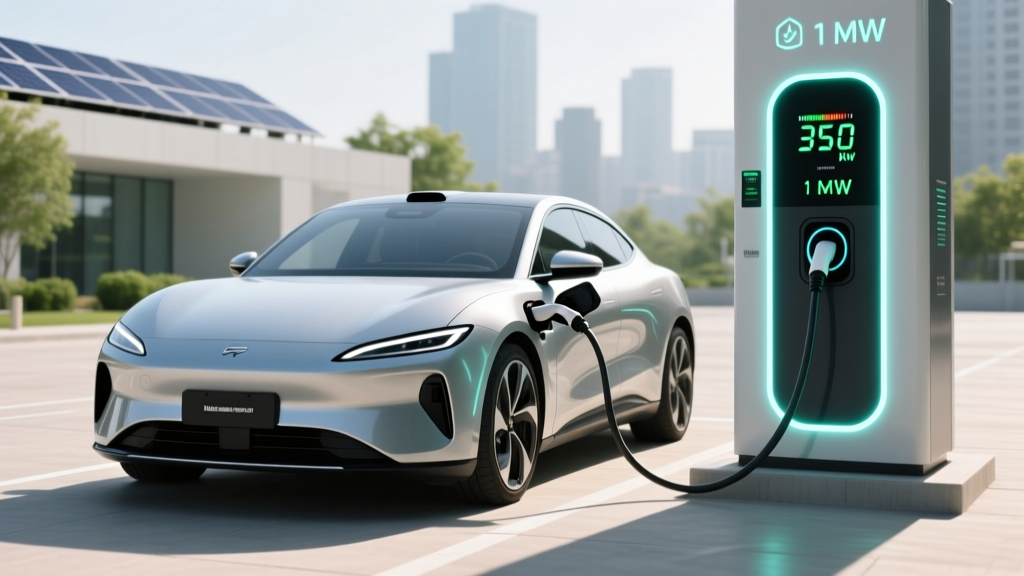
A megawatt equals 1,000 kilowatts. The Megawatt Charging System (MCS), standardized by the nonprofit CharIN, targets power levels between 1 MW and 3.75 MW — enough to recharge a semi-truck's 500+ kWh battery pack in roughly 30 minutes. As of 2026, MCS connectors and stations are in pilot deployment along major freight corridors, backed by the NEVI (National Electric Vehicle Infrastructure) program and private investment from companies like Tesla, Daimler Truck, and Volvo.
For passenger EVs, MW charging is not yet relevant. The fastest production passenger vehicles in 2026 — the Porsche Taycan, Lotus Eletre, and upcoming 800V+ architectures from Hyundai/Kia and GM — peak at roughly 350 kW on DC fast chargers. Even the most aggressive roadmaps from automakers do not project passenger vehicles needing MW-level power before the 2030s, when battery packs large enough to require it (150+ kWh) might appear in production cars.
Here is the practical translation: when you see "MW charging" in headlines, it is about commercial trucking. When you plug in your EV, you are dealing in kW. Let us break down exactly what each level delivers.
The Three Charging Levels: Speeds, Real-World Range Added, and When to Use Each
EV charging is categorized into three levels based on voltage, amperage, and resulting power (kW). Power is the rate of energy delivery; energy (kWh) is what actually fills your battery. Think of kW as the width of a hose and kWh as the bucket you are filling.
| Level | Voltage / Amperage | Max Power (kW) | Miles of Range Added Per Hour | Typical Use Case | 10-80% Time (75 kWh Battery) |
|---|---|---|---|---|---|
| Level 1 | 120V / 12A | 1.4 kW | 3-5 mi/hr | Overnight trickle; PHEVs; emergency | ~37 hours (not practical) |
| Level 2 | 240V / 32-48A | 7.7-11.5 kW | 25-44 mi/hr | Daily home & workplace charging | ~5-7 hours |
| DC Fast (Level 3) | 400-800V DC | 50-350 kW | 180-1,000+ mi/hr (peak) | Road trips; rapid top-ups | ~15-40 minutes (varies by vehicle) |
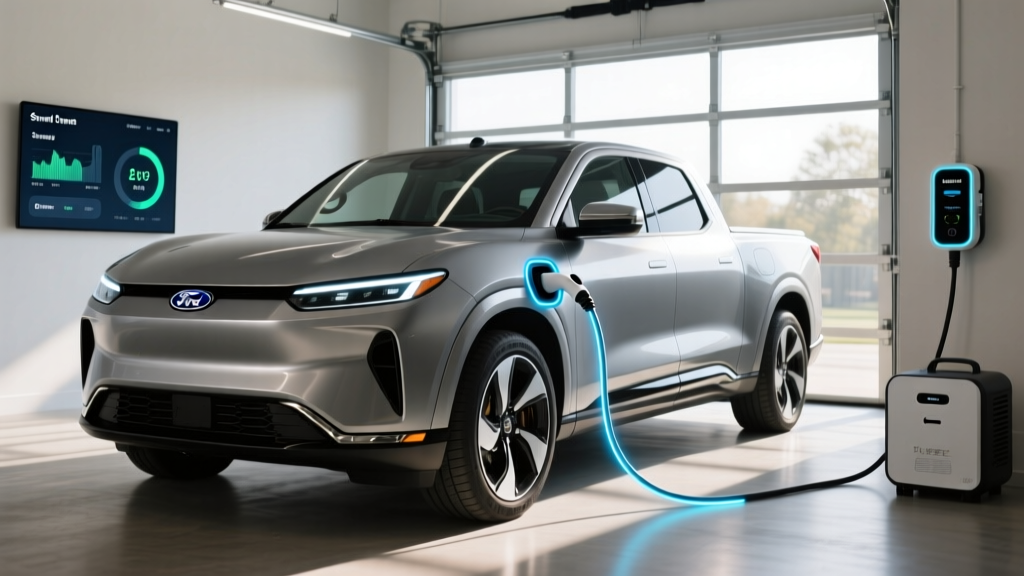
A few real-world caveats matter here. Level 2 miles-per-hour varies significantly by vehicle efficiency. A Tesla Model 3 (roughly 25 kWh/100mi) gains about 44 miles of range per hour on an 11.5 kW charger, while a heavier Ford F-150 Lightning (around 48 kWh/100mi) gains closer to 24 miles per hour on the same hardware.
For DC fast charging, the peak kW number on the charger is almost never sustained. A vehicle rated for 250 kW peak might sustain that rate only between 10-50% State of Charge (SoC), then taper to 150 kW, then 75 kW, and finally under 25 kW as it approaches 80%. This charge curve taper is why we always quote 10-80% times rather than "0-100%" — charging the final 20% can take as long as the first 80%.
Cold weather compounds this. In temperatures below 32°F, expect DC fast charging speeds to drop 20-40% unless your vehicle has active battery preconditioning (Tesla, Hyundai/Kia, and BMW do this well; many others still lag). Always precondition before arriving at a fast charger in winter.
Home Level 2 Installation: Electrical Requirements, Panel Upgrades, and True Costs
Installing a Level 2 home charger is the single biggest quality-of-life upgrade an EV owner can make. But the total cost varies enormously depending on your home's electrical panel, the distance from the panel to your garage or driveway, and local permit requirements.
What Your Electrician Will Assess
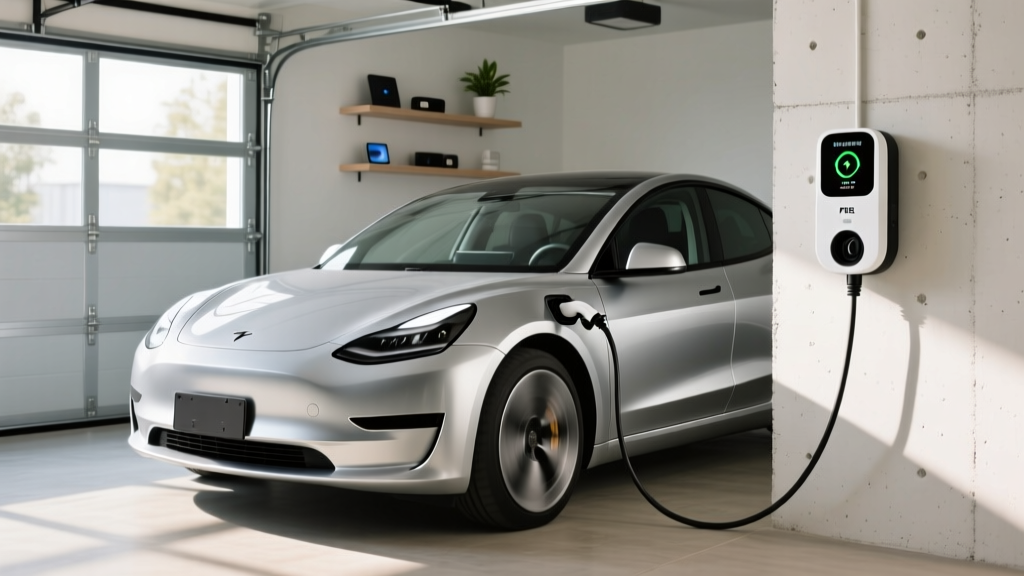
A typical Level 2 charger requires a dedicated 240V circuit at either 40 amps (for a 32A continuous charger like the ChargePoint Home Flex) or 60 amps (for a 48A continuous charger like the Tesla Wall Connector). The National Electrical Code (NEC) requires that continuous loads not exceed 80% of a circuit's rated capacity — so a 48A charger needs a 60A breaker, not a 50A one.
Your electrician will perform a load calculation on your existing panel. Most homes built after 1990 have a 200-amp main panel, which usually accommodates a 60A EV circuit. Older homes with 100A or 150A service may need a panel upgrade, which is where costs escalate quickly.
| Component | Typical Range | Notes |
|---|---|---|
| Level 2 Charger Unit | $400 - $750 | Smart WiFi-enabled units; dumb units from $250 |
| Electrical Permit | $50 - $300 | Varies by municipality; some jurisdictions waive for EV |
| Electrician Labor (standard install) | $500 - $1,500 | Assumes panel within 30 ft of install location |
| Conduit, Wire, Breaker | $200 - $600 | 6 AWG copper for 60A; longer runs cost more |
| Panel Upgrade (if needed) | $2,000 - $5,000 | 100A to 200A upgrade; older homes may need this |
| Total (no panel upgrade) | $1,150 - $3,150 | Most homes with 200A service fall here |
| Total (with panel upgrade) | $3,150 - $8,150 | Common in pre-1980 homes |
Pro tip: The IRS §30D tax credit covers new EV purchases, but there is also a separate Alternative Fuel Vehicle Refueling Property Credit (§30C) that can cover up to 30% of home charger equipment and installation costs, capped at $1,000 for residential use. Eligibility depends on your census tract meeting certain low-income or non-urban criteria — check the IRS §30C page for the latest maps and requirements.
Safety and Code Essentials
- Dedicated circuit: Your EV charger must have its own breaker — never share with a dryer or HVAC.
- GFCI protection: NEC 2023 and later require GFCI breakers for outdoor receptacles and many indoor garage installations. Budget an extra $50-$80 for a GFCI breaker.
- Outdoor rating: If mounting outside, ensure the charger is NEMA 4-rated (weatherproof). The Tesla Wall Connector and Emporia Level 2 are both NEMA 4.
- NEMA 14-50 vs. hardwired: A NEMA 14-50 outlet gives you portability (take the charger when you move) but some jurisdictions now require GFCI on 14-50 receptacles, which causes nuisance trips. Hardwired installs avoid this and allow the full 48A continuous draw.
Connector Compatibility: NACS, CCS, CHAdeMO, and the 2026 Landscape
The connector wars are largely over. Following Ford and GM's 2023 announcements, nearly every major automaker has adopted the North American Charging Standard (NACS) — originally developed by Tesla — for new vehicles beginning with the 2025-2026 model years. Here is where things stand:
| Connector | Brands Using It (Native) | DC Fast Availability | Adapter Needed? |
|---|---|---|---|
| NACS (Tesla) | Tesla, Ford, GM, Rivian, Volvo, Polestar, Nissan (2026+) | Access to Tesla Supercharger network + NACS-equipped public stations | CCS-to-NACS adapter for older CCS vehicles (~$200-$250) |
| CCS1 | Hyundai, Kia, BMW, VW, Mercedes-Benz, legacy models | Electrify America, EVgo, ChargePoint, Ionity | NACS-to-CCS adapter if charging at Superchargers |
| CHAdeMO | Nissan Leaf (pre-2026), Mitsubishi Outlander PHEV (legacy) | Declining network; mostly legacy stations | No adapter available to NACS/CCS; CHAdeMO is being phased out |
If you are buying a 2026 model-year EV, check the connector carefully. Ford's 2026 F-150 Lightning and Mustang Mach-E now ship with native NACS. Hyundai's 2026 Ioniq 5 refresh still uses CCS1 but includes a NACS adapter in the box for Supercharger access. When in doubt, a quality CCS-to-NACS adapter (like the Lectron or A2Z EV adapter, both rated for 250 kW) solves the problem for about $200-$250.
Cost to Charge: Per-Mile Economics vs. Gasoline
One of the most persistent EV myths is that electricity costs are unpredictable. In reality, home charging on a time-of-use (TOU) plan is dramatically cheaper than gasoline on a per-mile basis. Public DC fast charging narrows the gap but still beats gas in most markets.
| Charging Scenario | $/kWh | Cost Per Mile (250 Wh/mi EV) | Annual Cost (12,000 mi) |
|---|---|---|---|
| Home, off-peak TOU rate | $0.08 - $0.14 | $0.02 - $0.035 | $240 - $420 |
| Home, standard residential rate | $0.14 - $0.22 | $0.035 - $0.055 | $420 - $660 |
| Public Level 2 (workplace, shopping) | $0.20 - $0.35 | $0.05 - $0.088 | $600 - $1,050 |
| DC Fast Charging (public network) | $0.35 - $0.55 | $0.088 - $0.138 | $1,050 - $1,650 |
| Gasoline (28 MPG avg, $3.40/gal) | — | $0.121 | $1,452 |
The math is stark. A typical EV driver who charges 80% at home (off-peak) and 20% on DC fast chargers pays roughly $0.035/mile blended — about 71% less per mile than a 28 MPG gas car at $3.40/gallon. Even a driver who relies entirely on public DC fast charging at $0.48/kWh pays roughly the same per mile as the gas car, not more.
The caveat: electricity rates in California, Hawaii, and the Northeast can exceed $0.30/kWh on standard plans, which compresses savings. Always check your utility's EV-specific TOU rates — most offer off-peak charging windows (typically 11 PM to 6 AM) at significantly reduced prices.
Recommended Level 2 Home Chargers for 2026
After testing dozens of units across multiple homes and electrical configurations, these three chargers represent the best combination of power output, build quality, smart features, and value for 2026.
🏆 Best Overall: Tesla Wall Connector (Gen 4)
- Power Output: Up to 11.5 kW (48A continuous on a 60A circuit)
- Connector: Native NACS; J1772 adapter included in box for non-Tesla EVs
- Cable Length: 24 feet
- Smart Features: WiFi scheduling, energy monitoring via Tesla app, power sharing with second unit on same circuit, OTA firmware updates
- Price: $475 (NACS version)
- Outdoor Rating: NEMA 4 (fully weatherproof)
The Wall Connector remains the benchmark. Its 48A output charges any EV at the maximum Level 2 speed most onboard chargers support, and the power-sharing feature lets you install two units on one 60A circuit — ideal for two-EV households.
🔧 Best for Flexibility: ChargePoint Home Flex
- Power Output: Configurable from 16A to 50A (3.8 kW - 12 kW) via dip switches
- Connector: Available in NACS or J1772 (CCS) versions; NACS version newly released for 2026
- Cable Length: 23 feet
- Smart Features: ChargePoint app with scheduling, energy tracking, Alexa/Google Home integration, works with utility demand-response programs
- Price: $549 (J1772) / $599 (NACS)
- Outdoor Rating: NEMA 4
The Flex's adjustable amperage is its killer feature. If your panel cannot support a 60A circuit, you can configure the Flex to draw 32A on a 40A circuit — no new charger needed, just a dip-switch change.
💰 Best Budget Smart Charger: Emporia Vue Level 2
- Power Output: Up to 11.5 kW (48A)
- Connector: J1772 (CCS); NACS adapter sold separately
- Cable Length: 24 feet
- Smart Features: Detailed energy monitoring (pairs with Emporia home energy monitor for whole-panel visibility), solar-aware charging, scheduling
- Price: $399
- Outdoor Rating: NEMA 4
If you have solar panels or want granular energy data, the Emporia is unmatched at this price. The solar-aware mode charges only when your panels produce excess energy — effectively free driving.
DC Fast Charging Times: What to Actually Expect
Manufacturer claims of "10-80% in 18 minutes" assume ideal conditions: a battery preconditioned to optimal temperature (roughly 85-95°F), a charger capable of sustaining the vehicle's peak rate, and ambient temperatures between 60-80°F. Here is what real-world testing shows for popular 2026 EVs on the best available public DC fast chargers:
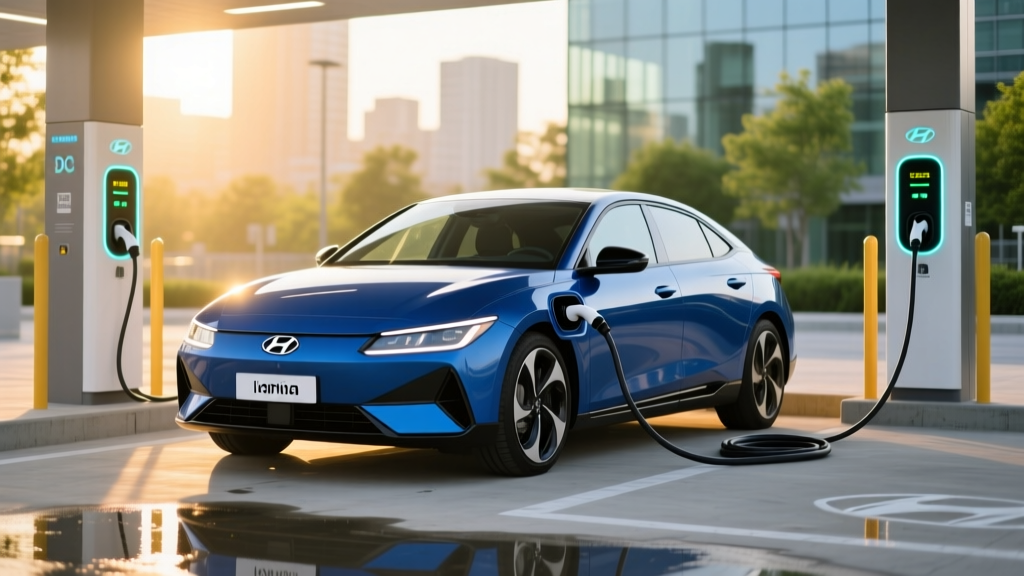
- Hyundai Ioniq 5 (84 kWh, 800V architecture): Peaks at 240 kW on 350 kW Electrify America stations. 10-80% in approximately 18 minutes under ideal conditions; expect 22-28 minutes in real-world use with preconditioning.
- Tesla Model 3 Long Range (79 kWh, NACS): Peaks at 250 kW on V3 Superchargers. 10-80% in approximately 22 minutes; V4 Superchargers with 350 kW posts may reduce this to ~18 minutes where deployed.
- Ford F-150 Lightning Extended Range (131 kWh): Peaks at 150 kW. 10-80% in approximately 41 minutes — the large battery takes time even at moderate peak rates.
- Chevrolet Equinox EV (85 kWh): Peaks at 190 kW on compatible CCS stations. 10-80% in approximately 25 minutes.
- BMW iX xDrive50 (111.5 kWh): Peaks at 200 kW. 10-80% in approximately 31 minutes.
Remember: above 80% SoC, charging speed drops dramatically to protect battery health. If you need a full charge, plan for significantly more time. For road trips, the 10-80% strategy (charge fast, drive on) is always more time-efficient than waiting for 100%.
Frequently Asked Questions
How much does it cost to install a home EV charger?
A typical Level 2 home installation with a 200-amp panel and a short wire run costs between $1,150 and $3,150 all-in (charger unit, electrician labor, permit, materials). If your home needs a panel upgrade from 100A to 200A service, add $2,000 to $5,000, bringing the total to $3,150-$8,150. The IRS §30C credit may cover up to $1,000 (30%) of equipment and installation costs if you live in an eligible census tract.
How fast will each charging level add range?
Level 1 (120V) adds 3-5 miles of range per hour — fine for PHEVs with small batteries but impractical for full BEVs. Level 2 (240V) adds 25-44 miles per hour depending on charger amperage and vehicle efficiency, making it the practical daily standard. DC fast charging adds the equivalent of 180-1,000+ miles per hour at peak rates, though real-world sessions deliver 150-300 miles of range in a 20-30 minute stop.
Which connector or charger is compatible with my EV?
Check your vehicle's charge port. 2026 Tesla, Ford, GM, Rivian, Volvo, and Polestar models use NACS natively. Hyundai, Kia, BMW, VW, and Mercedes-Benz still use CCS1 (J1772 for Level 2, CCS Combo for DC fast). Nissan's older Leaf uses CHAdeMO, which is being phased out. Adapters exist for nearly every combination — a CCS-to-NACS adapter ($200-$250) lets CCS vehicles use Tesla Superchargers, and Tesla's J1772 adapter (included with the Wall Connector) lets NACS vehicles use J1772 stations.
How much does charging cost per mile compared to gas?
At the 2026 national average residential electricity rate of roughly $0.16/kWh and an EV efficiency of 250 Wh/mile, home charging costs about $0.04 per mile. A comparable gas car at 28 MPG with $3.40/gallon fuel costs $0.12 per mile — roughly three times more. Even public DC fast charging at $0.45/kWh costs about $0.11/mile, still competitive with gasoline. Savings are largest for drivers with access to off-peak TOU rates ($0.08-$0.12/kWh), where per-mile costs drop to $0.02-$0.03.
What electrical upgrades might I need?
The most common upgrade is adding a 60-amp, 240-volt dedicated circuit from your main panel to your garage or parking spot. If your panel has spare capacity (most 200A panels do), this is straightforward. If your panel is already near capacity — common in older homes with electric heat, electric dryers, and electric ranges — you may need a panel upgrade to 200A or even 400A service. A less invasive alternative is a smart electrical panel add-on like the Emporia Smart Panel or Span drive, which dynamically manages loads to avoid overloading your existing service without a full upgrade.
Is MW charging coming to passenger EVs?
Not in the near term. The Megawatt Charging System (MCS) is designed for heavy-duty vehicles with battery packs of 300-900 kWh. Passenger EVs in 2026 have battery packs between 50-131 kWh and peak DC fast charge rates of 150-350 kW. Even if MCS infrastructure were available at rest stops, no current passenger EV has a charge port or onboard electrical system designed to accept megawatt-level power. Expect MW charging to remain a commercial-fleet technology through at least the end of this decade.