If you've searched for a Ford Mustang supercharged model—perhaps eyeing the Shelby GT500's 760-hp supercharged 5.2L V8—you're likely weighing raw performance against the rising appeal of electric alternatives like the Ford Mustang Mach-E. While the supercharged Mustang relies on high-octane fuel stops, the Mach-E taps into electrons. This guide breaks down exactly how EV charging works, what it costs to install at home, and how per-mile expenses compare to filling up a supercharged V8.
Charging Levels Explained: Speeds in kW and Miles Per Hour
Before plugging in, you need to understand the difference between kW (kilowatts) and kWh (kilowatt-hours). kW measures power—the rate at which energy flows into the battery, like water pressure from a hose. kWh measures energy—the total capacity stored in the battery, like gallons in a tank. A 91 kWh battery charged at 11 kW takes longer than one charged at 150 kW.
| Level | Voltage | Max Power (kW) | Miles of Range Added Per Hour | Typical Use Case |
|---|---|---|---|---|
| Level 1 | 120V AC | 1.2–1.9 kW | 3–5 mi/hr | Overnight trickle; PHEV top-offs |
| Level 2 | 240V AC | 7.2–19.2 kW | 20–60 mi/hr | Home daily charging; workplace |
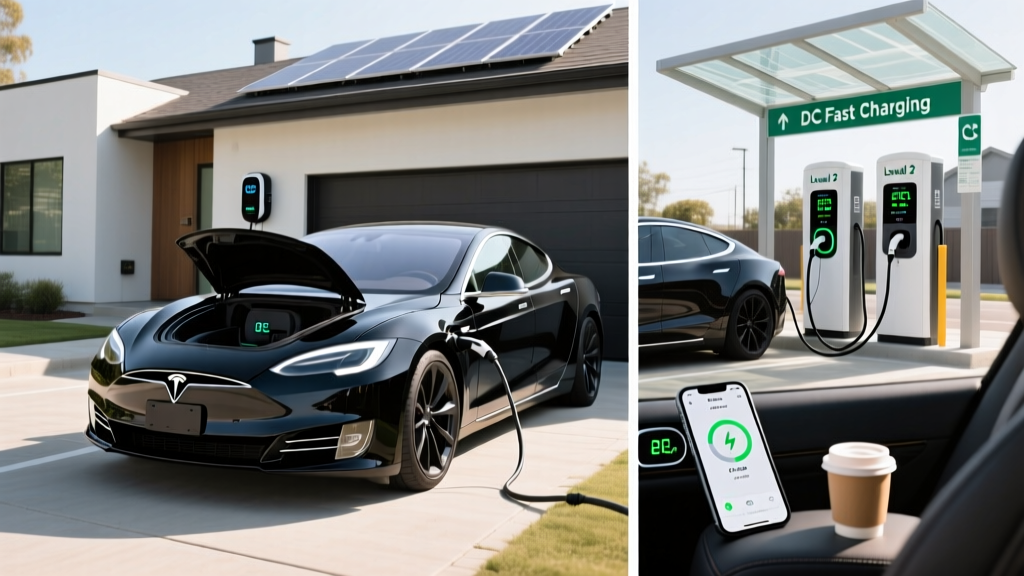
| DC Fast Charge | 400–800V DC | 50–350 kW | 150–1,000+ mi/hr (peak) | Road trips; 10–80% in 18–45 min |
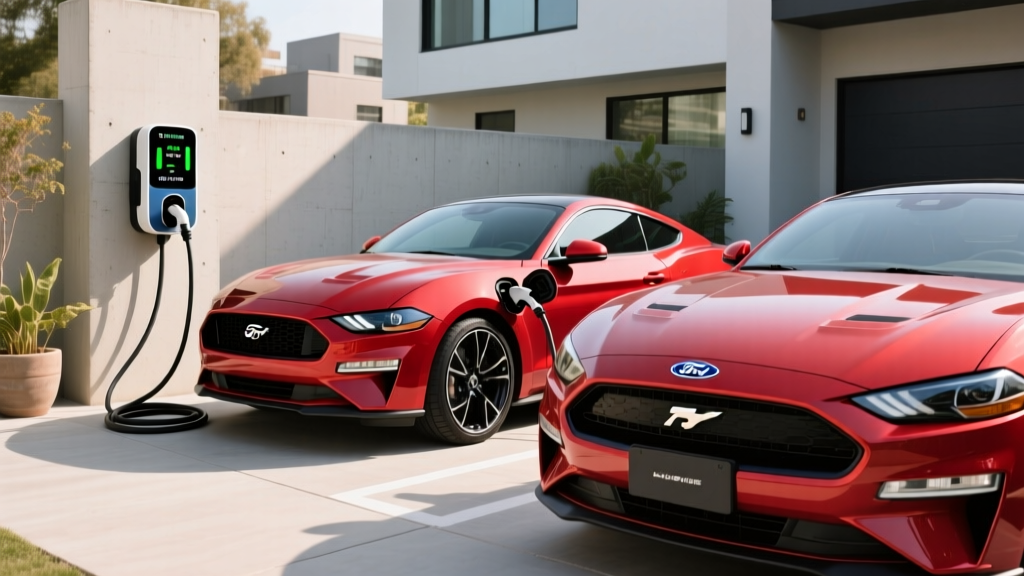
The Mustang Mach-E (Extended Range, RWD) carries a 91 kWh usable battery and accepts up to 150 kW peak DC fast charging. At a 150 kW station, it can recover 10–80% in roughly 45 minutes. On a 48-amp Level 2 home charger (11.5 kW), a full charge takes approximately 9–10 hours. By contrast, a supercharged Shelby GT500 with its 16-gallon tank refuels in under five minutes but averages just 12–14 MPG combined per fueleconomy.gov.
Home Charger Installation: Electrical Requirements and Real Costs
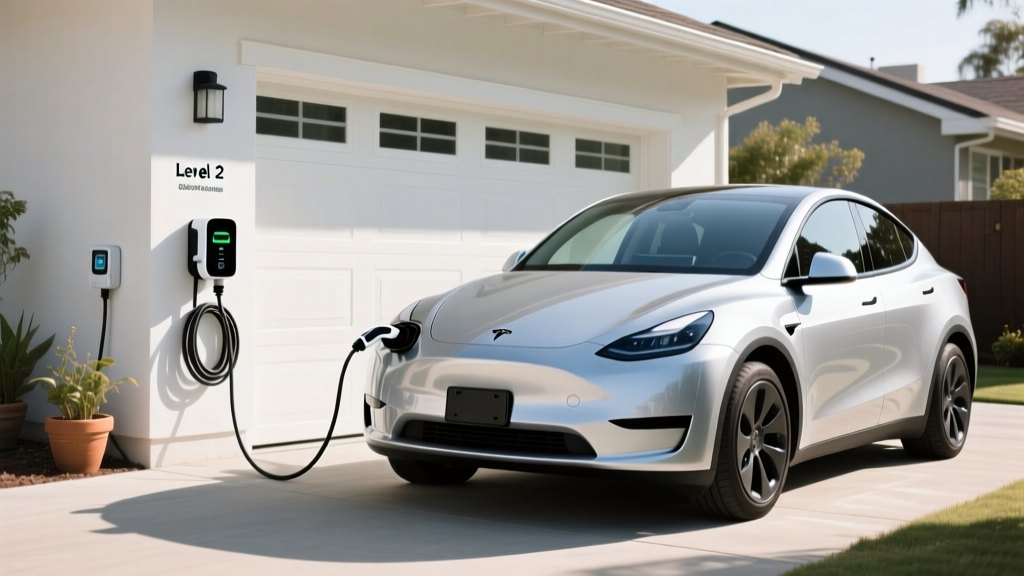
Most EV owners do 80% or more of their charging at home. A proper Level 2 setup requires a dedicated 240V circuit—similar to what powers an electric dryer or oven. The most common configuration is a NEMA 14-50 outlet on a 50-amp breaker, delivering up to 40 amps (9.6 kW) continuously to the vehicle (the National Electrical Code requires circuits to operate at 80% of breaker capacity for continuous loads).
Here's what a typical installation looks like in 2026:
| Component | Low Estimate | High Estimate | Notes |
|---|---|---|---|
| Level 2 Charger (hardware) | $300 | $700 | 32A–48A smart chargers |
| Electrician labor | $400 | $1,500 | Varies by run length, conduit, wall type |
| Electrical permit | $50 | $200 | Required in most jurisdictions |
| Panel upgrade (if needed) | $1,500 | $4,000 | Older 100A panels may need 200A service |
| Total (no panel upgrade) | $750 | $2,400 | Most homes with 200A service |
| Total (with panel upgrade) | $2,250 | $6,400 | Homes built before ~1990 |
When You'll Need a Panel Upgrade
If your home has a 100-amp main service panel—or if your existing panel is near capacity with HVAC, electric range, dryer, and water heater loads—adding a 50-amp EV circuit may require a service upgrade to 200 amps. A licensed electrician will perform a load calculation per NEC Article 220. Some utilities offer rebates for panel upgrades tied to EV adoption; check with your local provider.
Safety and Code Considerations
- Dedicated circuit: Your Level 2 charger must be on its own breaker—never share a circuit with other appliances.
- GFCI protection: NEC 2020 and later require GFCI protection for EV outlets in garages; some chargers have built-in GFCI, which can avoid nuisance tripping.
- Outdoor rating: If your charger is installed outside, ensure it carries a NEMA 4 or NEMA 4X rating for weather resistance.
- Cable management: Use a holster or retractor to keep cables off the ground and away from vehicle traffic paths.
Connector Compatibility: NACS, CCS1, and CHAdeMO
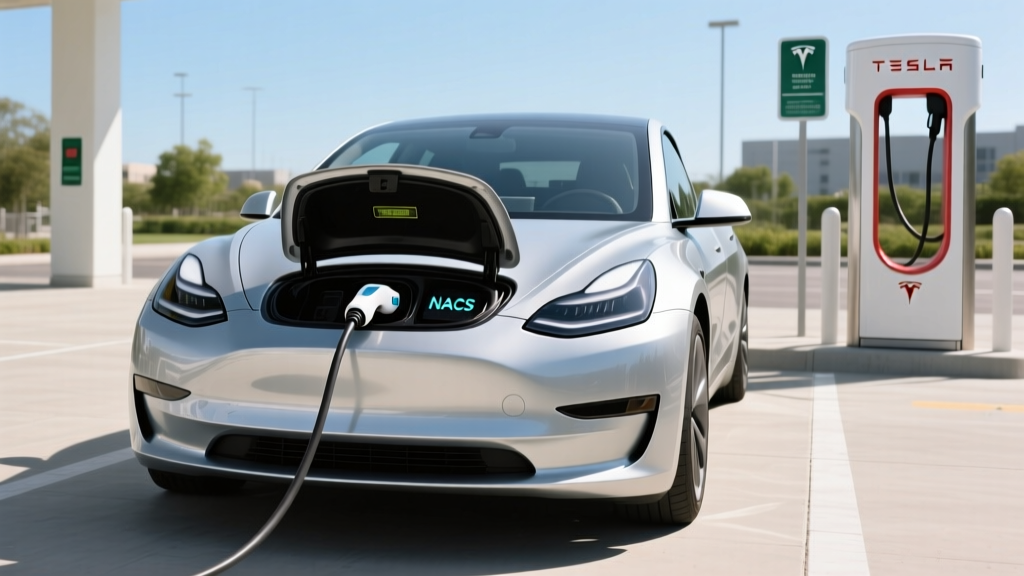
The connector landscape has shifted dramatically. As of 2025–2026, NACS (North American Charging Standard)—originally Tesla's proprietary connector—has been adopted by Ford, GM, Rivian, Volvo, and most major automakers. The Mustang Mach-E now ships with a native NACS charge port on 2025+ models. Earlier model years (2021–2024) use CCS1 and require a CCS-to-NACS adapter (provided by Ford for Supercharger access).
| Connector | Brands Using It (2026) | DC Fast Charging? | Adapter Needed? |
|---|---|---|---|
| NACS (Tesla) | Tesla, Ford, GM, Rivian, Volvo, Polestar, Fisker | Yes (up to 350 kW at V4 Superchargers) | CCS→NACS adapter for older non-Tesla EVs |
| CCS1 | Hyundai, Kia, VW, BMW, older Ford/GM models | Yes (up to 350 kW at Electrify America) | NACS→CCS adapter at Tesla Superchargers |
| CHAdeMO | Nissan Leaf (legacy); being phased out | Yes (up to 100 kW) | Limited network; plan for CCS/NACS adapter |
For public DC fast charging, the Mustang Mach-E (2025+ NACS models) can use Tesla Superchargers directly. For Electrify America or EVgo stations, you may need a NACS-to-CCS adapter, which Ford and third-party suppliers offer.
Cost to Charge vs. Fueling a Supercharged Mustang
This is where the math gets compelling. The supercharged Shelby GT500 requires premium fuel (91+ octane) and delivers approximately 12 MPG combined. At $4.20/gallon for premium (2026 national average), that's $0.35 per mile just in fuel.
| Scenario | Cost Per kWh / Gallon | Cost Per Mile | Annual Cost (12,000 mi) |
|---|---|---|---|
| Mach-E: Home off-peak (utility rate) | $0.13/kWh | $0.04 | $480 |
| Mach-E: Home peak rate | $0.22/kWh | $0.07 | $840 |
| Mach-E: Public Level 2 (ChargePoint, etc.) | $0.35/kWh | $0.11 | $1,320 |
| Mach-E: DC Fast (Electrify America) | $0.48/kWh | $0.15 | $1,800 |
| Shelby GT500: Premium gasoline | $4.20/gal (12 MPG) | $0.35 | $4,200 |
The Mach-E Extended Range averages roughly 3.2 miles per kWh (approximately 101 MPGe combined per EPA data). Even at the most expensive DC fast-charging rates, the Mach-E costs less than half per mile compared to the supercharged GT500. For home-charging scenarios, the savings are dramatic: $3,720 per year in fuel savings alone at 12,000 miles driven.
Charging Time Examples for Common EV Battery Sizes
Real charging times depend on the battery's state of charge, ambient temperature, and the charger's sustained output—not just peak kW. Batteries charge fastest between 10–50% SoC and taper significantly above 80% to protect cell longevity. This is called the charging curve, and it means a "150 kW peak" charger rarely averages 150 kW over the full session.
- Mustang Mach-E (91 kWh, Extended Range): 10–80% in ~45 min at a 150 kW DC fast charger; ~9.5 hours on a 48A Level 2 home charger.
- Ford F-150 Lightning (131 kWh, Extended Range): 10–80% in ~55 min at 150 kW; ~14 hours on a 48A Level 2 charger.
- Tesla Model Y (75 kWh, Long Range): 10–80% in ~25 min at a 250 kW V3 Supercharger; ~8 hours on a 48A Level 2 charger.
- Hyundai Ioniq 5 (77.4 kWh): 10–80% in ~18 min at a 350 kW charger (800V architecture); ~7.5 hours on a 48A Level 2 charger.
Preconditioning the battery—warming it to optimal temperature before a DC fast session—can shave 5–10 minutes off your charge time in cold weather. Most EVs, including the Mach-E, do this automatically when you navigate to a fast charger.
Recommended Level 2 Home Chargers for 2026
ChargePoint Home Flex
- Power: Up to 12 kW (50A) — adjustable down to 16A for lower-capacity panels
- Connector: NACS or J1772 (CCS-compatible with adapter)
- Cable length: 23 feet
- Smart features: Wi-Fi, app scheduling, Alexa integration, energy tracking
- Price: ~$549
Wallbox Pulsar Plus
- Power: Up to 11.5 kW (48A)
- Connector: NACS or J1772
- Cable length: 25 feet
- Smart features: Wi-Fi + Bluetooth, load balancing (shares circuit with dryer), compact form factor
- Price: ~$449
Tesla Wall Connector (Universal)
- Power: Up to 11.5 kW (48A)
- Connector: NACS native; includes J1772 adapter for non-Tesla EVs
- Cable length: 24 feet
- Smart features: Wi-Fi updates, power sharing between multiple units, access control
- Price: ~$599
Emporia Level 2 EV Charger
- Power: Up to 11.5 kW (48A)
- Connector: J1772 (NACS adapter available separately)
- Cable length: 24 feet
- Smart features: Integrates with Emporia home energy monitor, solar-aware scheduling
- Price: ~$399 (best value pick)
All recommended chargers are UL-listed, carry at least a 3-year warranty, and support both indoor and outdoor installation (verify NEMA rating for outdoor use).
Frequently Asked Questions
How much does it cost to install a home EV charger?
For most homes with an existing 200-amp electrical panel, expect $750–$2,400 total (charger hardware + electrician + permit). If your home needs a panel upgrade from 100A to 200A service, add $1,500–$4,000, bringing the total to $2,250–$6,400. Always get a licensed electrician to perform a load calculation first.
How fast will each charging level add range?
Level 1 (120V): 3–5 miles of range per hour. Level 2 (240V, 48A): 25–35 miles per hour for the Mach-E. DC fast charging: at 150 kW, the Mach-E adds roughly 150+ miles in 30 minutes (peak), though the charge curve tapers above 80%.
Which connector/charger is compatible with my EV?
2025+ Ford Mustang Mach-E models use NACS natively and can charge at Tesla Superchargers without an adapter. 2021–2024 Mach-E models use CCS1 and require a CCS-to-NACS adapter for Supercharger access. Check your vehicle's charge port or owner's manual to confirm.
How much does charging cost per mile vs. gas?
At home on an off-peak utility rate ($0.13/kWh), the Mach-E costs about $0.04/mile. A supercharged Shelby GT500 on premium fuel costs about $0.35/mile. That's a $3,720 annual difference at 12,000 miles per year.
What electrical upgrades might I need?
The most common upgrade is a panel service increase from 100A to 200A, needed in older homes with high electrical loads. You may also need a new conduit run from the panel to the garage or driveway, especially if the panel is on the opposite side of the house. A licensed electrician will assess this during a site visit. Per the IRS §30D guidelines, some home charging equipment may qualify for the Alternative Fuel Vehicle Refueling Property Credit (up to $1,000), though eligibility depends on census tract requirements—consult a tax professional.