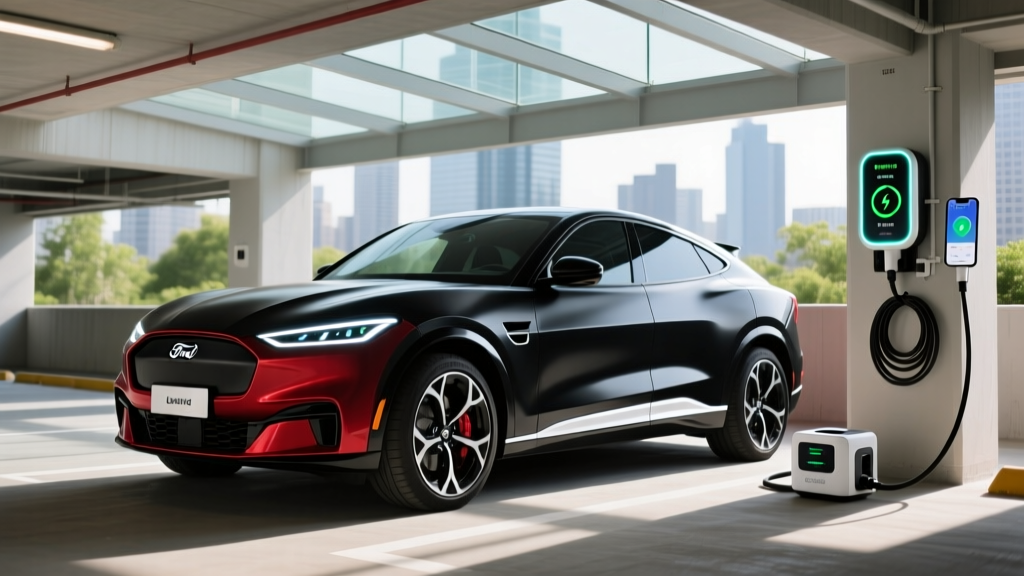
The Ford Mustang Mach-E remains one of the most compelling electric SUVs on the market, but extracting its full potential depends entirely on how you charge it. Whether you own the Standard Range model with its 75.7 kWh usable battery or the Extended Range variant packing 98.8 kWh of NMC chemistry, your charging setup dictates daily convenience, battery longevity, and whether you actually achieve the EPA-estimated range on the sticker.
This guide covers exactly what Mach-E owners need to know about charging hardware, home electrical requirements, real-world charging speeds, and the true cost per mile — with specific numbers for every Mach-E battery configuration currently on the road.
Mustang Mach-E Range and Battery Specs by Model Year
Before selecting a charger, you need to know what you're filling. The 2025-2026 Mustang Mach-E lineup uses two battery packs, both employing nickel-manganese-cobalt (NMC) chemistry optimized for energy density:
| Configuration | Usable Battery (kWh) | EPA Range (miles) | Real-World Highway Expectation | Peak DC Charge Rate |
|---|---|---|---|---|
| Standard Range RWD | 75.7 kWh | 250 mi | ~210-225 mi | 150 kW |
| Extended Range RWD | 98.8 kWh | 320 mi | ~270-290 mi | 150 kW |
| Extended Range AWD | 98.8 kWh | 290-312 mi | ~250-275 mi | 150 kW |
| GT (AWD, Ext. Range) | 98.8 kWh | 260-280 mi | ~220-250 mi | 150 kW |
Charging Levels Explained: Speeds in kW and Miles Per Hour
EV charging operates on three tiers. The critical distinction: kW (kilowatts) measures power — how fast energy flows into the battery. kWh (kilowatt-hours) measures energy — the total capacity of the battery itself. Think of kW as the flow rate of a hose, and kWh as the size of the bucket.
| Level | Voltage | Max Power (kW) | Miles Added Per Hour | Best Use Case |
|---|---|---|---|---|
| Level 1 | 120V AC | 1.2-1.9 kW | 3-5 mi/hr | Overnight trickle, emergency top-off |
| Level 2 | 240V AC | 7.2-19.2 kW | 20-60 mi/hr | Daily home charging, workplace |
| DC Fast Charging | 400-800V DC | 50-350 kW | 150-1,000+ mi/hr | Road trips, rapid top-up |
The Mustang Mach-E's onboard charger accepts up to 10.5 kW on Level 2 AC (48 amps). This means even if you install a 19.2 kW (80-amp) home charger, the Mach-E will only draw 10.5 kW. For DC fast charging, Ford quotes a peak rate of 150 kW, though this is not sustained across the entire charge session.
Real Charging Times for the Mach-E
Here's what actual charging sessions look like for the Extended Range (98.8 kWh) pack:
- Level 1 (120V, 12A): 0-100% in approximately 55-60 hours. Adding 50 miles overnight requires ~12 hours plugged in.
- Level 2 (240V, 48A / 10.5 kW): 10-80% in roughly 7-8 hours. Full charge from empty: ~9.5 hours.
- DC Fast Charge (150 kW peak): 10-80% in approximately 45 minutes at a compatible station. Note: charge rate tapers significantly above 80% to protect battery health — expect the final 20% to take nearly as long as the first 60%.
Home Charger Installation: Electrical Requirements and Costs
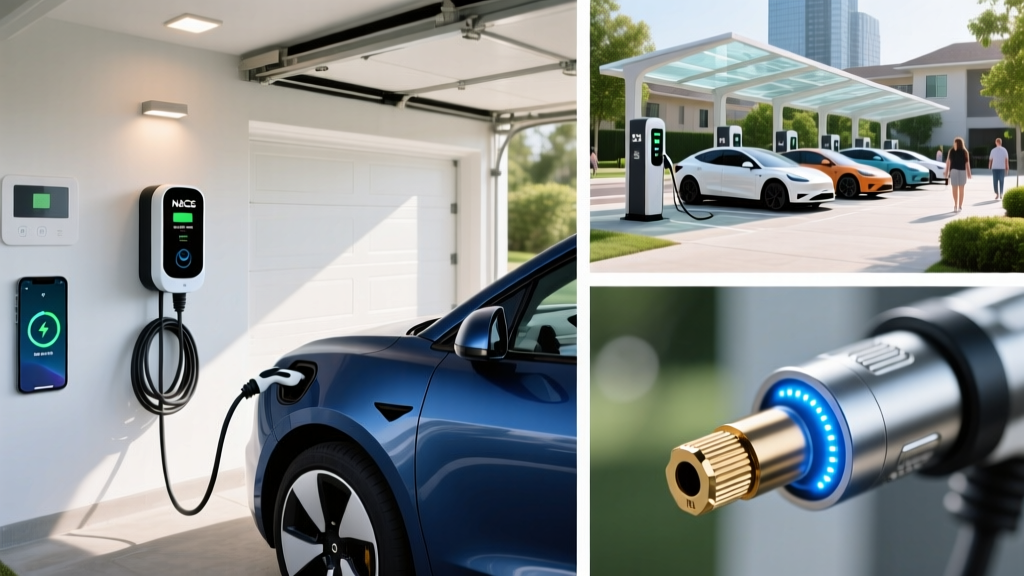
Installing a Level 2 home charger is the single most impactful upgrade for daily EV ownership. For the Mach-E, a properly sized 240V circuit lets you wake up every morning with a full battery, eliminating range anxiety for daily driving.
Electrical Requirements
The Mach-E's 10.5 kW onboard charger pairs best with a 48-amp (60-amp breaker) Level 2 station. Here's what your electrical system needs:
- Circuit: Dedicated 60-amp, 240V circuit (NEC requires breakers sized at 125% of continuous load, so 48A continuous = 60A breaker)
- Wire: 6 AWG copper (THHN in conduit or NM-B/Romex where code permits)
- Panel capacity: Minimum 200-amp service is strongly recommended; older 100-amp panels will likely need an upgrade
- NEMA outlet vs. hardwired: NEMA 14-60 outlet allows charger portability; hardwired eliminates the outlet failure point and may be required by local code for circuits above 40A
Panel Upgrade Considerations
If your home has a 100-amp electrical panel — common in homes built before the 1990s — adding a 60-amp EV circuit may exceed your panel's capacity, especially if you run electric heating, an electric dryer, and an electric oven simultaneously. A licensed electrician will perform a load calculation per NEC Article 220 to determine if your panel can handle the addition.
Panel upgrades from 100A to 200A typically cost $1,500-$3,500 depending on your utility's requirements, local labor rates, and whether a new meter base or service drop is needed. In some cases, a smart panel load manager (like the Emporia VUE with automatic load shedding) can avoid a full panel upgrade by dynamically reducing charger power when other high-draw appliances activate.
Installation Cost Breakdown
| Component | Typical Cost Range | Notes |
|---|---|---|
| Level 2 Charger (48A) | $400-$750 | ChargePoint Home Flex, Emporia J1772, Ford Connected Charge Station |
| Electrician Labor (standard install) | $300-$800 | Short run from panel to garage; longer runs cost more |
| Permit & Inspection | $50-$200 | Required by most jurisdictions; varies by municipality |
| Wire & Conduit Materials | $100-$400 | Depends on run length and local code requirements |
| Panel Upgrade (if needed) | $1,500-$3,500 | 100A to 200A service upgrade |
| Total (no panel upgrade) | $850-$2,150 | Most homes with 200A service |
| Total (with panel upgrade) | $2,350-$5,650 | Older homes with 100A service |
Federal Tax Credit: Under current IRS rules, the Residential Clean Energy Credit covers 30% of home EV charger equipment and installation costs, up to $1,000. This credit applies through 2032. Consult a tax professional for eligibility.
Connector Compatibility: NACS, CCS, and Adapter Needs
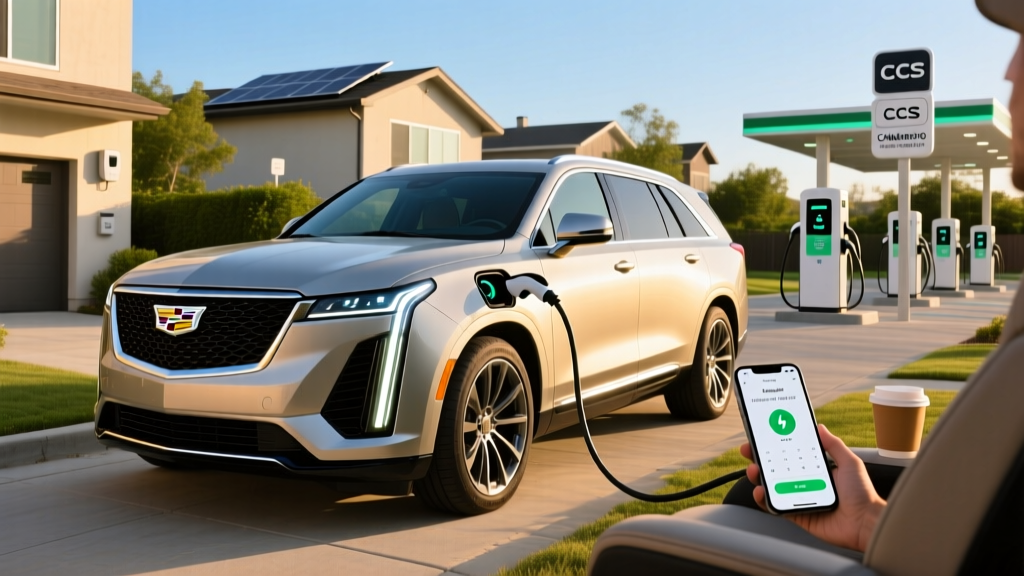
The Mustang Mach-E shipped with a CCS1 (Combined Charging System) port from its 2021 launch through the 2024 model year. Beginning with the 2025 model year, Ford transitioned the Mach-E to the NACS (North American Charging Standard) — the Tesla-designed connector now adopted industry-wide.
| Model Year | Built-In Connector | Tesla Supercharger Access | CCS Public Charging |
|---|---|---|---|
| 2021-2024 Mach-E | CCS1 | Requires NACS-to-CCS adapter (Ford-provided or aftermarket) | Native — no adapter needed |
| 2025-2026 Mach-E | NACS | Native — direct Supercharger access | Requires CCS-to-NACS adapter for Electrify America, etc. |
What this means practically: If you own a 2021-2024 Mach-E, you can access Tesla's Supercharger network (over 25,000 stalls in North America) using Ford's provided NACS adapter. If you own a 2025+ model, you'll need a CCS adapter for non-Tesla DC fast-charging networks like Electrify America or EVgo — though most networks are adding NACS cables to new and retrofitted stations.
For home Level 2 charging, all Mach-E model years use the standard J1772 connector (which is incorporated into both CCS1 and NACS for AC charging). Any J1772 home charger works with every Mach-E regardless of model year.
Recommended Home Chargers for the Mustang Mach-E
These stations are matched to the Mach-E's 10.5 kW onboard charger capability. All prices reflect current retail as of early 2026:
ChargePoint Home Flex
- Power: Up to 12 kW (50A), configurable down to 16A
- Connector: J1772 (NACS version available)
- Cable: 23 feet
- Smart features: Wi-Fi, app scheduling, energy tracking, Alexa integration
- Price: ~$550-$650
- Best for: Owners wanting app control and flexible amperage for older panels
Emporia Level 2 EV Charger
- Power: Up to 11.5 kW (48A)
- Connector: J1772
- Cable: 24 feet
- Smart features: Wi-Fi, real-time energy monitoring via Emporia VUE integration, load management
- Price: ~$400-$500
- Best for: Budget-conscious buyers and homes needing load management to avoid panel upgrades
Ford Connected Charge Station
- Power: Up to 12 kW (48A)
- Connector: J1772
- Cable: 25 feet
- Smart features: FordPass app integration, scheduled charging, dealer support
- Price: ~$600-$700
- Best for: Mach-E owners wanting OEM integration and dealer-install packages
Tesla Universal Wall Connector
- Power: Up to 11.5 kW (48A)
- Connector: Built-in NACS + J1772 adapter tip
- Cable: 24 feet
- Smart features: Wi-Fi, over-the-air updates, Powerwall integration, access control
- Price: ~$600
- Best for: Multi-EV households with both NACS and CCS vehicles
Cost to Charge: Per Mile vs. Gasoline
One of the strongest ownership arguments for the Mach-E is fuel cost savings — but the actual savings depend heavily on where and when you charge. Here's a realistic breakdown using the Extended Range AWD model (averaging 2.8 miles per kWh):
| Charging Scenario | Cost per kWh | Cost per Mile | Annual Cost (12,000 mi) |
|---|---|---|---|
| Home — Off-Peak TOU Rate | $0.08-$0.12 | $0.03-$0.04 | $340-$515 |
| Home — Standard Residential Rate | $0.14-$0.18 | $0.05-$0.06 | $600-$770 |
| Public Level 2 (ChargePoint, etc.) | $0.25-$0.49 | $0.09-$0.18 | $1,075-$2,100 |
| DC Fast Charging (Electrify America, EVgo) | $0.35-$0.55 | $0.13-$0.20 | $1,500-$2,400 |
| Gas Equivalent (25 MPG SUV, $3.40/gal) | — | $0.14 | $1,630 |
Safety, Code, and Installation Best Practices
EV charging draws sustained high current for hours — this is fundamentally different from short-burst appliances like a microwave. Proper installation protects your home and your investment:
- Dedicated circuit: NEC 625 requires EV charging equipment to be on its own dedicated branch circuit. No sharing with other outlets or appliances.
- GFCI protection: 2020 NEC and later require GFCI protection for all 120V and 240V receptacles used for EV charging in garages. Hardwired installations may be exempt depending on jurisdiction.
- Outdoor rating: If your charger mounts outside, ensure the unit carries a NEMA 4 (weatherproof) rating. All recommended units above meet this standard.
- Permit and inspection: Most municipalities require an electrical permit for new 240V circuits. The inspection verifies wire gauge, breaker sizing, grounding, and GFCI compliance — this protects your home insurance coverage in the event of an electrical fire.
- WiFi connectivity: Smart chargers with load management can prevent breaker trips by dynamically adjusting power draw, especially important in homes with limited panel headroom.
Always hire a licensed electrician familiar with NEC Article 625 (Electric Vehicle Charging System Equipment). Ask for proof of EV charger installation experience — improper installations have caused residential fires.
Frequently Asked Questions
How much does it cost to install a home EV charger for my Mustang Mach-E?
A standard Level 2 installation with a 48-amp charger on an existing 200-amp panel typically costs $850-$2,150 including equipment, labor, materials, and permits. If your home requires a panel upgrade from 100A to 200A, total costs range from $2,350-$5,650. The federal Residential Clean Energy Credit covers 30% of the cost (up to $1,000).
How fast will each charging level add range to my Mach-E?
Level 1 (120V) adds approximately 3-5 miles per hour — adequate only for overnight top-offs if you drive less than 40 miles daily. Level 2 (240V, 48A) adds roughly 32-37 miles per hour, fully recharging the Extended Range battery overnight. DC fast charging at 150 kW can add up to 59 miles in 10 minutes under ideal conditions (low state of charge, warm battery), but the charge curve tapers significantly above 80%.
Which connector is compatible with my Mustang Mach-E?
All Mach-E model years use the J1772 connector for Level 2 AC charging — any standard home charger will work. For DC fast charging: 2021-2024 models have a CCS1 port (use a NACS adapter for Tesla Superchargers); 2025-2026 models have a NACS port (use a CCS adapter for Electrify America and similar networks). Ford provides adapters for most model years.
How much does charging a Mach-E cost per mile versus gas?
Charging at home on off-peak electricity ($0.10/kWh) costs approximately $0.035 per mile — about 75% less than a comparable 25 MPG gas SUV at $3.40/gallon ($0.14/mile). Even at standard residential rates ($0.16/kWh), the Mach-E costs roughly $0.057/mile. However, exclusive DC fast charging ($0.45/kWh) costs $0.16/mile, which exceeds gasoline costs in many markets.
What electrical upgrades might I need for a home charger?
Homes with 200-amp electrical service typically need only a new dedicated 60-amp breaker and a wire run to the garage. Homes with 100-amp service — common in pre-1990 construction — may require a full panel upgrade ($1,500-$3,500) or a smart load management system that reduces charger power when other major appliances are running. Your electrician will perform a load calculation to determine requirements.
Sources: EPA Fuel Economy, Ford Mustang Mach-E Specifications, IRS Residential Clean Energy Credit. Specifications reflect 2025-2026 model year data. Real-world range and charging times vary based on temperature, driving style, terrain, and battery preconditioning.