Mustang GT Supercharged vs. EVs: The Real Cost and Performance Showdown
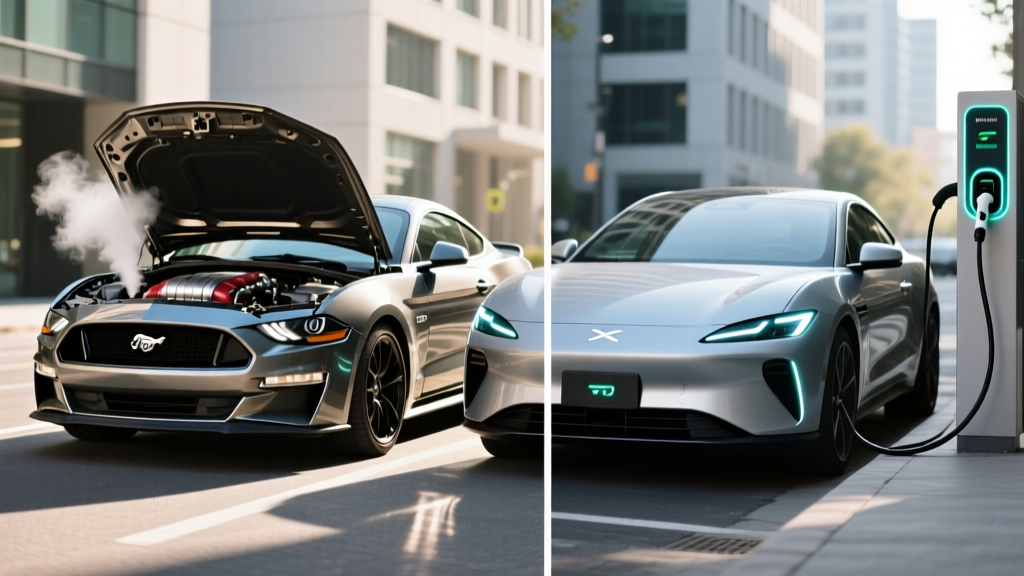
If you've searched for a Mustang GT supercharged, you're likely weighing raw V8 performance against the rising tide of electric alternatives. The 2026 Ford Mustang GT with a supercharger kit pushes 600+ horsepower and delivers visceral, tire-shredding acceleration. But what happens when you compare its fueling economics and real-world performance against a high-output EV like the Tesla Model 3 Performance or the Ford Mustang Mach-E GT?
This guide breaks down the charging and fueling infrastructure behind both worlds — from Level 1 and Level 2 home charging to DC fast charging, electrical panel upgrades, connector compatibility, and cost-per-mile math. Whether you're cross-shopping a supercharged GT or trying to understand what EV ownership actually looks like in 2026, the numbers below will give you a precise, spec-driven comparison.
Charging Levels Explained: Level 1, Level 2, and DC Fast Charging
EV charging is measured in kW (kilowatts), which represents power — the rate at which energy flows into the battery. The battery itself stores energy measured in kWh (kilowatt-hours). Confusing these two is the most common EV literacy mistake. Think of kW as the speed of water flowing through a hose, and kWh as the total volume of the bucket.
| Level | Voltage / Amperage | Power (kW) | Miles of Range Added Per Hour | Typical Use Case |
|---|---|---|---|---|
| Level 1 | 120V / 12A | ~1.4 kW | 3–5 mi/hr | Overnight trickle, PHEVs, emergencies |
| Level 2 | 240V / 32–48A | 7.7–11.5 kW | 25–44 mi/hr | Home daily charging, workplace |
| DC Fast Charging | 400–800V DC | 50–350 kW | 150–1,000+ mi/hr (peak) | Road trips, highway corridors |
Real-world context: A 75 kWh battery charged on a Level 2 home charger at 11.5 kW will go from 10% to 80% in roughly 4.5 hours. That same battery on a 250 kW DC fast charger (like a Tesla V3 Supercharger) can reach 10–80% in about 18–22 minutes, though the charge curve tapers significantly above 80% to protect battery health. Peak kW is never sustained for the entire session — expect an average rate of 100–150 kW during a typical 10–80% session.
How Much Does It Cost to Install a Home EV Charger?
Installing a Level 2 home charger is the single biggest infrastructure decision for EV owners. The total cost depends on your electrical panel's capacity, the distance from the panel to the charger location, and local permit fees.
| Component | Low-End Estimate | High-End Estimate | Notes |
|---|---|---|---|
| Level 2 Charger Equipment | $350 | $750 | Smart Wi-Fi chargers (Emporia, ChargePoint, Wallbox) |
| Electrician Labor (240V/50A circuit) | $600 | $2,000 | Varies by run length, conduit, and local rates |
| Permit & Inspection | $50 | $300 | Required in most jurisdictions |
| Electrical Panel Upgrade (if needed) | $1,500 | $4,000 | Older homes with 100A service may need 200A upgrade |
| Total (no panel upgrade) | $1,000 | $3,050 | Most homes built after 2000 |
| Total (with panel upgrade) | $2,500 | $7,050 | Older homes, high-load panels |
Panel upgrade gotcha: Many homes built before 1990 have 100-amp electrical panels. Adding a 40A or 50A dedicated EV circuit may push total load beyond the panel's capacity, triggering a mandatory upgrade to 200A service. A licensed electrician should perform a load calculation before installation. Some utilities offer rebates covering $200–$500 of panel upgrade costs — check your local provider.
The IRS §25C credit may cover up to 30% of home energy improvements, but as of 2026, the separate §30C EV charger credit has specific census-tract eligibility requirements. Consult a tax professional before claiming.
Connector Compatibility: NACS, CCS1, and CHAdeMO
The connector landscape in 2026 has largely consolidated around NACS (North American Charging Standard), the Tesla-originated plug now adopted by Ford, GM, Rivian, Volvo, Hyundai/Kia, and most major automakers. CCS1 remains on some legacy models, and CHAdeMO is effectively discontinued for new vehicles.
| Connector | Compatible Brands | Adapter Needed? |
|---|---|---|
| NACS (Tesla-style) | Tesla, Ford (Mach-E, F-150 Lightning), GM, Rivian, Volvo, Hyundai/Kia (2025+), BMW (2025+) | None for Tesla Superchargers; CCS-to-NACS adapters for older CCS stations |
| CCS1 | VW ID.4 (pre-2025), some legacy models, Electrify America stations | NACS-to-CCS adapter needed at Tesla Superchargers |
| CHAdeMO | Nissan Leaf (discontinued), Mitsubishi Outlander PHEV (older) | Limited public infrastructure; adapter options scarce |
For home Level 2 charging, all EVs use the J1772 connector (or a NACS plug with integrated J1772 pins on Teslas and newer Ford/GM EVs). Home chargers with a J1772 plug will work with any EV; Tesla owners use the included J1772 adapter, and newer NACS-native vehicles plug directly into NACS-equipped home chargers.
Cost to Charge vs. Fueling a Mustang GT Supercharged
The 2026 Mustang GT with a supercharger kit (dealer-installed Roush or Whipple units pushing 600–700 HP) typically achieves 12–16 MPG combined under enthusiastic driving. Let's compare its fueling cost against a high-performance EV like the Tesla Model 3 Performance (82 kWh usable battery, 315 miles EPA range).
| Scenario | Mustang GT Supercharged (14 MPG) | EV (3.5 mi/kWh, e.g., Model 3 Perf.) |
|---|---|---|
| Home Charging (off-peak, $0.13/kWh) | N/A (gas only) | $0.037/mile |
| Home Charging (peak, $0.28/kWh) | N/A | $0.080/mile |
| Public Level 2 ($0.35/kWh) | N/A | $0.100/mile |
| DC Fast Charging ($0.48/kWh) | N/A | $0.137/mile |
| Gasoline ($3.50/gal, premium required) | $0.250/mile | N/A |
| Gasoline ($4.20/gal, premium) | $0.300/mile | N/A |
The verdict on cost per mile: Even at peak residential electricity rates, charging at home costs roughly one-third to one-quarter what a supercharged GT spends on premium fuel per mile. On DC fast charging — the most expensive EV scenario — the EV still costs less than half per mile compared to the supercharged GT on $3.50/gal premium.
Over 15,000 annual miles, the Mustang GT supercharged at 14 MPG on $3.50 premium fuel costs approximately $3,750/year in fuel. An EV charged primarily at home off-peak costs roughly $555/year in electricity — a $3,195 annual savings.
Charging Time Examples for Common EV Battery Sizes
How long charging takes depends on the battery's usable capacity (kWh), the charger's power output (kW), and the charge curve taper above 80% State of Charge (SoC). Here are real-world estimates:
- Ford Mustang Mach-E GT (91 kWh usable, NMC): Level 2 at 11.5 kW → 10–80% in ~5.5 hours. DC fast at 150 kW peak → 10–80% in ~32 minutes.
- Tesla Model 3 Performance (82 kWh usable, NMC): Level 2 at 11.5 kW → 10–80% in ~5 hours. DC fast at 250 kW peak (V3 Supercharger) → 10–80% in ~22 minutes.
- Hyundai Ioniq 5 (77.4 kWh usable, NMC, 800V architecture): Level 2 at 10.9 kW → 10–80% in ~5.2 hours. DC fast at 350 kW peak → 10–80% in ~18 minutes (one of the fastest-charging EVs available).
- Chevrolet Equinox EV (85 kWh usable, NMC): Level 2 at 11.5 kW → 10–80% in ~5 hours. DC fast at 150 kW peak → 10–80% in ~30 minutes.
Charge curve reality: The peak kW figure printed in brochures is only sustained at low SoC (typically 10–40%). Above 60%, the rate tapers to protect the battery. A "250 kW capable" vehicle might average only 120–140 kW across a full 10–80% session. Preconditioning the battery (heating it to optimal temperature before arriving at the charger) is essential for hitting peak rates, especially in cold weather.
Recommended Home Level 2 Chargers for 2026
Based on reliability, smart features, and compatibility, these are the top Level 2 home chargers for 2026:
Emporia Vue Level 2 Smart Charger
- Power Output: 48A / 11.5 kW (hardwired) or 40A / 9.6 kW (NEMA 14-50 plug)
- Connector: J1772 (works with all EVs; Tesla owners use adapter)
- Cable Length: 24 ft
- Smart Features: Wi-Fi, energy monitoring, solar integration, scheduled charging, utility demand-response
- Price: ~$399
- Best For: Solar-panel owners, energy-cost optimization
ChargePoint Home Flex
- Power Output: Up to 50A / 12 kW (hardwired) or 40A / 9.6 kW (plug-in)
- Connector: J1772 (NACS adapter included for newer models)
- Cable Length: 23 ft
- Smart Features: Wi-Fi, Alexa integration, amperage adjustment (16–50A), ChargePoint network access
- Price: ~$699
- Best For: Flexibility across panel capacities, network ecosystem
Tesla Wall Connector (Gen 4)
- Power Output: 48A / 11.5 kW (hardwired, 60A circuit required)
- Connector: NACS native (J1772 adapter included)
- Cable Length: 24 ft
- Smart Features: Wi-Fi, OTA updates, power sharing between multiple units, vehicle-specific access control
- Price: ~$475
- Best For: Tesla and NACS-native vehicle owners (Ford, GM, Rivian 2025+)
Wallbox Pulsar Max
- Power Output: 48A / 11.5 kW (hardwired)
- Connector: J1772 or NACS (configurable)
- Cable Length: 25 ft
- Smart Features: Wi-Fi, Bluetooth, Eco-Smart solar mode, load balancing, IP65 outdoor rating
- Price: ~$599
- Best For: Outdoor installations, solar integration
Safety, Electrical Code, and Installation Requirements
Home EV charger installation must comply with the National Electrical Code (NEC) and local amendments. Key requirements:
- Dedicated circuit: A Level 2 charger requires its own dedicated 240V circuit — typically 50A or 60A breaker for a 40A or 48A charger (NEC requires the breaker to be rated at 125% of the continuous load).
- NEMA 14-50 vs. hardwired: Plug-in chargers using a NEMA 14-50 receptacle offer portability but are limited to 40A (9.6 kW). Hardwired connections support up to 48A (11.5 kW) and eliminate the receptacle as a failure point. Some jurisdictions now require hardwired installations for circuits above 40A.
- GFCI protection: NEC 2020 and later require GFCI protection for outdoor receptacles. Hardwired chargers with built-in ground-fault protection may not require an external GFCI breaker, but local inspectors vary.
- Outdoor rating: If your charger is installed outdoors or in an unsealed garage, ensure it carries at least an IP54 (splash-proof) or IP65 (dust-tight, water-jet resistant) rating.
- Permit and inspection: Most municipalities require an electrical permit and a post-installation inspection. Skipping this can void homeowner's insurance coverage for electrical fires and create liability issues during home sales.
Warning: Never use extension cords or plug adapters to connect a Level 2 charger to an undersized outlet. A 40A continuous draw on a 30A circuit is a fire hazard. Always hire a licensed electrician who will pull the proper permits.
Mustang GT Supercharged vs. EV Performance: The Numbers
For buyers cross-shopping a supercharged Mustang GT against a performance EV, here's how the specs compare in 2026:
| Specification | 2026 Mustang GT (Supercharged, Roush Phase 2) | 2026 Tesla Model 3 Performance | 2026 Ford Mustang Mach-E GT |
|---|---|---|---|
| Horsepower | ~670 HP | 510 HP | 480 HP |
| 0–60 mph | ~3.3 sec | 2.9 sec | 3.5 sec |
| EPA Range / Tank Range | ~280 mi (16-gal tank, 14 MPG combined) | 315 mi (EPA) | 292 mi (EPA) |
| Real-World Highway Range | ~240 mi (aggressive driving) | ~260 mi (70 mph, moderate temps) | ~235 mi (70 mph, moderate temps) |
| Refuel / Recharge Time (10–80%) | ~5 minutes (gas station) | ~22 min (250 kW DC fast) | ~32 min (150 kW DC fast) |
| Cost Per Mile (home / gas) | $0.25/mile (premium gas) | $0.037/mile (off-peak home) | $0.046/mile (off-peak home) |
| Annual Fueling Cost (15k mi) | ~$3,750 | ~$555 | ~$690 |
| Base MSRP (approx.) | $55,000 + ~$8,000 supercharger kit | $54,990 | $59,995 |
| Federal Tax Credit (§30D) | Not eligible | Up to $7,500 (subject to IRS sourcing rules) | Up to $7,500 (subject to sourcing rules) |
| Powertrain Warranty | 5 yr / 60,000 mi (Ford; supercharger may void) | 8 yr / 120,000 mi (battery & drive unit) | 8 yr / 100,000 mi (battery components) |
Tax credit caveat: The §30D federal EV tax credit of up to $7,500 requires meeting battery component and critical mineral sourcing thresholds, buyer income caps ($300K joint / $150K single MAGI), and MSRP limits ($55K for sedans, $80K for SUVs/trucks). The credit can now be transferred to the dealer at point of sale as an instant discount. Always verify eligibility on IRS.gov before purchase.
Frequently Asked Questions
How much does it cost to install a home EV charger?
Expect $1,000–$3,050 for a standard Level 2 installation (equipment + electrician + permit) in a home with adequate 200A panel capacity. If your home needs a panel upgrade from 100A to 200A, add $1,500–$4,000. Most installations completed in 2026 fall in the $1,200–$2,500 range for homes built after 2000.
How fast will each charging level add range?
Level 1 (120V) adds 3–5 miles per hour — suitable only for PHEVs or overnight trickle charging. Level 2 (240V, 48A) adds 25–44 miles per hour, enough to fully replenish most EV batteries overnight. DC fast charging at 150–350 kW can add 150–1,000+ miles per hour at peak, but sessions are typically measured in 10–80% time: 18–35 minutes depending on the vehicle.
Which connector/charger is compatible with my EV?
In 2026, most new EVs use NACS (Tesla's standard). Older CCS1 vehicles can use NACS-to-CCS adapters. For home Level 2 charging, a J1772-equipped charger works with every EV on the road (Tesla owners use an adapter, or choose a NACS-native charger like the Tesla Wall Connector).
How much does charging cost per mile vs gas?
Home charging at off-peak rates ($0.13/kWh) costs roughly $0.037/mile for an efficient EV. A Mustang GT supercharged at 14 MPG on $3.50 premium fuel costs $0.25/mile — nearly 7× more. Even DC fast charging at $0.48/kWh ($0.137/mile) is about half the per-mile cost of premium gasoline.
What electrical upgrades might I need?
Homes with 100A electrical service often need a panel upgrade to 200A before adding a 40–50A EV circuit. Homes with existing 200A panels may still need a load calculation if they have multiple high-draw appliances (electric range, dryer, HVAC). Some utilities offer managed charging programs that allow smaller panels by limiting charger amperage during peak demand.
Does a supercharger kit void my Mustang GT warranty?
Dealer-installed supercharger kits from Roush or Whipple typically include their own 3-year/36,000-mile powertrain warranty that supplements Ford's factory coverage. However, Ford may deny powertrain claims if they determine the supercharger caused a failure. Third-party installed kits carry higher warranty risk. Always get warranty terms in writing before installation.