If you have ever pulled up to a highway DC fast-charging station and watched the dollar counter spin past $25, $35, or even $45 for a single session, you are not alone. Public fast-charging prices have diverged sharply across networks and regions, and knowing which stations charge the most — and why — is essential for any EV owner planning road trips in 2026.
This guide breaks down the most expensive Supercharger and public DC fast-charging networks in the United States, explains the pricing mechanics behind peak and idle fees, and shows you exactly how to minimize what you pay per kilowatt-hour (kWh). We will also cover the full spectrum of EV charging — from Level 1 trickle charging at home to Level 2 installation and connector compatibility — so you can build a charging strategy that keeps public fast-charging as an occasional tool, not a daily expense.
How DC Fast Charging Works (and Why It Costs More)
DC fast charging (DCFC) delivers direct current straight to your EV's battery at high power levels — typically 50 kW to 350 kW at the stall. That is fundamentally different from the alternating current (AC) you get from a home Level 2 charger, which your car's onboard converter must change to DC before it reaches the battery. Because DCFC stations skip that onboard conversion step, they can push energy much faster.
But the infrastructure is expensive to build and operate. A single 350 kW DC fast-charging stall can cost $50,000 to $150,000 to install, including the transformer upgrade, switchgear, and utility demand charges. Networks pass those costs to drivers through per-kWh pricing that often runs two to four times what you pay for home electricity.
Here is how the three charging levels compare in real-world speed:
| Level | Voltage | Power (kW) | Miles of Range Added Per Hour | Typical Use Case |
|---|---|---|---|---|
| Level 1 | 120V AC | 1.0–1.4 kW | 3–5 miles/hr | Overnight top-up, PHEVs, emergencies |
| Level 2 | 240V AC | 3.3–19.2 kW | 12–75 miles/hr | Daily home/work charging |
| DC Fast | 200–900V DC | 50–350 kW | 150–1,200+ miles/hr (peak) | Road trips, quick highway stops |
Key distinction: kW (kilowatts) measures the rate of energy delivery — think of it as the width of the hose. kWh (kilowatt-hours) measures the total amount of energy delivered — the total volume of water that flowed through. Your electricity bill and charging receipts are based on kWh consumed, while the charger's speed rating is in kW.
Ranking the Most Expensive Supercharger and DC Fast-Charging Networks
Pricing for public DC fast charging in the US is notoriously fragmented. Rates vary by state, city, time of day, membership tier, and even the specific station's utility demand charges. Below is a ranked breakdown of the major networks based on typical non-member and member per-kWh pricing as of early 2026.
1. Electrify America — Often the Priciest
Electrify America (EA) consistently ranks among the most expensive DC fast-charging networks. Non-member (Guest) rates frequently hit $0.56–$0.68/kWh in high-cost states like California, New York, and Massachusetts. Even Pass+ members paying $7/month see rates of $0.44–$0.54/kWh in many metro areas. EA also enforces idle fees of $0.40/minute if your car remains plugged in after reaching its charge limit.
2. Tesla Supercharger — Variable but Rising
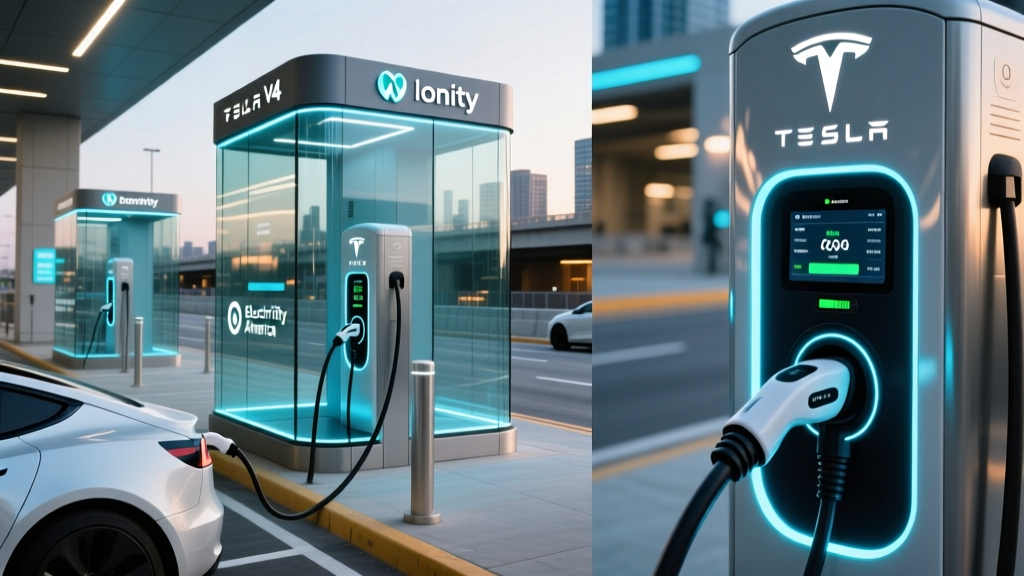
Tesla Supercharger pricing depends heavily on location and time of day. In expensive markets (urban California, Northeast corridor), peak rates can reach $0.52–$0.61/kWh. Off-peak rates in lower-cost regions may drop to $0.28–$0.35/kWh. Tesla also charges idle fees ($1.00/minute at full stations) and has introduced congestion pricing at select urban stalls. With the Supercharger network now open to non-Tesla EVs via the built-in Magic Dock NACS adapter or third-party J1772-to-NACS adapters, more drivers are encountering these rates.
3. EVgo — Membership Matters
EVgo's standard (non-member) rates often run $0.49–$0.63/kWh depending on location. Their EVgo Plus membership ($4.99/month) can drop rates by $0.10–$0.15/kWh. EVgo's partnership with GM's Ultium Charge network and their newer 350 kW stalls offer fast charging, but the pricing premium remains in many markets.
4. ChargePoint / Independent Operators
ChargePoint's DC fast stations are typically priced by the site host, so rates vary wildly — from $0.30/kWh at a subsidized retail location to $0.69/kWh at a premium highway stop. Always check the ChargePoint app before plugging in. Other independent operators (e.g., Blink, Francis Energy) may post even higher rates in areas with limited competition.
5. Shell Recharge / BP Pulse
Oil-company-backed networks tend to cluster around $0.45–$0.58/kWh. Shell Recharge stations at travel plazas often carry a premium due to convenience. BP Pulse membership can reduce costs modestly.
Charging Time Examples: 10–80% for Common EV Battery Sizes
Charging speed depends on your EV's maximum DC charge acceptance rate, the stall's power output, battery temperature, and the state of charge (SoC). All lithium-ion batteries charge fastest between roughly 10–50% SoC and taper significantly above 80% to protect cell health. Here are realistic 10–80% times for popular 2025–2026 EVs at a capable DC fast charger:
| Vehicle | Battery (kWh usable) | Peak DC Rate (kW) | 10–80% Time (min) | Notes |
|---|---|---|---|---|
| Hyundai Ioniq 5 (2025) | 77.4 (NMC) | 240 kW (800V) | ~18 min | Sustains high rate to ~60% SoC |
| Tesla Model Y LR (2025) | 75 (NMC) | 250 kW | ~25 min | Tapers above 55% |
| Ford F-150 Lightning ER (2025) | 131 (NMC) | 150 kW | ~41 min | Large battery, moderate peak rate |
| Chevrolet Equinox EV (2025) | 85 (NMC) | 150 kW | ~30 min | Good sustained curve |
| BMW iX xDrive50 (2025) | 105.2 (NMC) | 200 kW | ~31 min | Strong 800V architecture |
Preconditioning matters. If your EV's battery is cold (below ~60°F / 15°C), the vehicle may limit charge acceptance to protect the cells. Most modern EVs automatically precondition the battery when you navigate to a DC fast charger — always use your car's built-in navigation to route to a charger so preconditioning engages.
Home Level 2 Charger Installation: Costs, Electrical Requirements, and Equipment
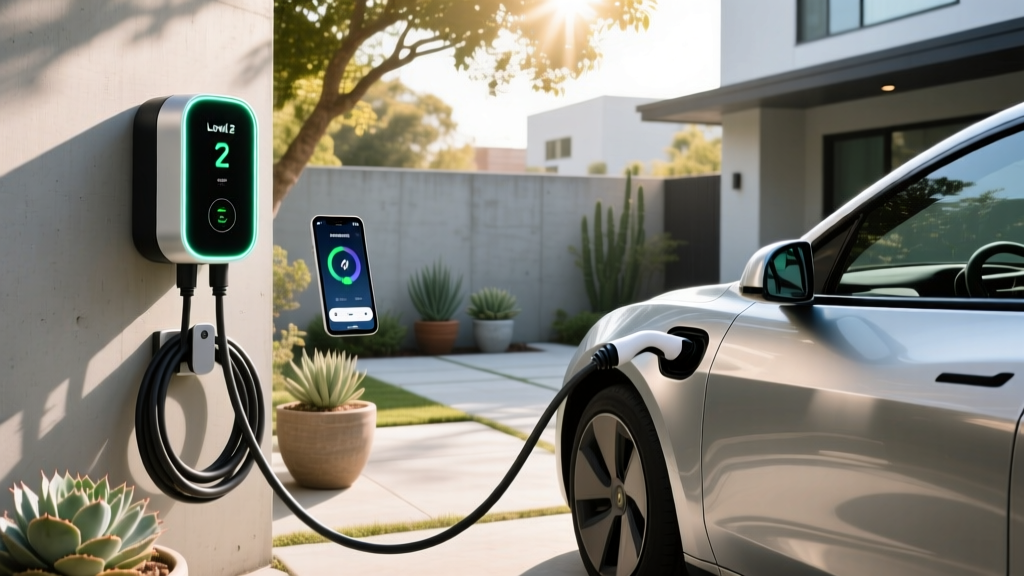
The single best way to avoid the most expensive Supercharger and public DCFC rates is to charge at home. A Level 2 home charger on a 240V circuit adds 20–45 miles of range per hour for most EVs, easily replenishing a full day's driving overnight. Here is what installation actually involves.
Electrical Requirements
A typical Level 2 home charger requires a 240V dedicated circuit at 40A to 60A. The most common setup is a NEMA 14-50 outlet (the same type used for electric ranges) on a 50A breaker, which safely delivers 40A continuous (80% of breaker rating per NEC Article 210.20). Hardwired installations at 48A (on a 60A breaker) are increasingly popular for maximum charging speed.
Your home's electrical panel must have sufficient spare capacity. A 200A panel is standard in modern homes and usually accommodates a 50A EV circuit. Older homes with 100A panels often require a panel upgrade to 200A — this is the single biggest cost variable in home charger installation.
| Component | Low Estimate | High Estimate | Notes |
|---|---|---|---|
| Level 2 Charger Equipment | $350 | $750 | Quality smart chargers (Emporia, ChargePoint, Wallbox) |
| Electrician Labor (standard install) | $400 | $1,200 | Depends on run length from panel to garage/driveway |
| Permit & Inspection | $50 | $250 | Varies by municipality; required by NEC |
| Electrical Panel Upgrade (if needed) | $1,500 | $3,500 | 100A → 200A upgrade; not needed in most newer homes |
| Total (no panel upgrade) | $800 | $2,200 | Most installations fall in $1,000–$1,500 |
| Total (with panel upgrade) | $2,300 | $5,700 | Older homes may require this |
Tip: The federal Alternative Fuel Vehicle Refueling Property Credit (IRC §30C) covers up to 30% of home charger equipment and installation costs (max $1,000), subject to census-tract eligibility. Check IRS guidance for current-year rules, as eligibility depends on whether your home is in a qualifying non-urban census tract.
Recommended Level 2 Home Chargers (2026)
Emporia Vue Level 2 EV Charger
- Power: 48A / 11.5 kW (hardwired, 60A breaker)
- Connector: NACS (Tesla) native; J1772 adapter included
- Cable Length: 24 ft
- Smart Features: Wi-Fi, scheduling, energy monitoring via Emporia app, solar integration
- Price: ~$399
- Best For: Budget-conscious buyers wanting full smart features
ChargePoint Home Flex
- Power: Up to 50A / 12 kW (configurable 16A–50A)
- Connector: J1772 (NACS adapter available separately)
- Cable Length: 23 ft
- Smart Features: Wi-Fi, Alexa, ChargePoint app scheduling, flexible amperage
- Price: ~$699
- Best For: Flexibility across circuit sizes and proven reliability
Wallbox Pulsar Plus
- Power: 48A / 11.5 kW (hardwired)
- Connector: J1772 or NACS (configurable at purchase)
- Cable Length: 25 ft
- Smart Features: Wi-Fi + Bluetooth, Power Sharing for two units on one circuit, myWallbox app
- Price: ~$649
- Best For: Multi-EV households (Power Sharing feature)
Tesla Wall Connector
- Power: 48A / 11.5 kW (hardwired, 60A breaker)
- Connector: NACS native; J1772 adapter available from Tesla
- Cable Length: 24 ft
- Smart Features: Wi-Fi, OTA updates, Power Sharing, load management
- Price: ~$475
- Best For: Tesla owners or households with NACS-equipped EVs
Safety and Electrical Code Requirements
- Dedicated circuit: Your EV charger must be on its own dedicated breaker — never share a circuit with other major appliances.
- GFCI protection: NEC 2020 and later require GFCI protection for all EV charging outlets (Article 625.54). Hardwired chargers may have GFCI built into the unit.
- Outdoor rating: If installing outside, the charger and any receptacle must carry a NEMA 4 (weather-resistant) rating. All chargers listed above are outdoor-rated.
- Permit and inspection: Most jurisdictions require an electrical permit and post-installation inspection. Skipping this can void your homeowner's insurance coverage for electrical fires.
- Wire gauge: A 50A circuit requires 6 AWG copper wire (THHN in conduit or NM-B cable). A 60A circuit requires 4 AWG. Your electrician will spec this based on run length and local code.
Connector Compatibility: NACS, CCS1, and CHAdeMO Explained
The North American charging connector landscape has consolidated rapidly since Tesla opened its Supercharger network and the NACS (North American Charging Standard, SAE J3400) connector became the de facto standard. Here is where things stand in 2026:
| Connector | Brands Using It (Native) | DCFC Network Access | Adapter Needed? |
|---|---|---|---|
| NACS (J3400) | Tesla, Ford, GM, Rivian, Volvo, Polestar, Mercedes, Hyundai/Kia (2025+), BMW, Toyota (bZ series 2026+) | Tesla Supercharger + growing NACS stations on EA, EVgo | CCS→NACS adapter for legacy CCS stations (~$200–$300) |
| CCS1 | Older Ford/GM/Hyundai/Kia/VW/BMW models (pre-NACS transition), Lucid, some Stellantis | Electrify America, EVgo, ChargePoint DCFC | NACS→CCS1 adapter for Tesla Superchargers (Magic Dock at select stalls) |
| CHAdeMO | Nissan Leaf (legacy only — discontinued for 2026) | Limited; shrinking network | No reliable CHAdeMO→NACS adapter exists |
Bottom line for 2026 buyers: NACS is the clear winner. If you are purchasing a new EV, prioritize a model with a native NACS port for the broadest DC fast-charging access. CCS1 owners can still access most networks, and Tesla's Magic Dock adapter (built into select Supercharger stalls) allows CCS1 vehicles to charge without carrying a separate adapter. CHAdeMO is effectively end-of-life for new vehicles.
Cost Per Mile: EV Charging vs. Gasoline
The financial case for EVs rests heavily on where you charge. Let us compare real per-mile fuel costs across scenarios using a midsize crossover baseline (3.5 mi/kWh efficiency, comparable to a Tesla Model Y or Hyundai Ioniq 5) versus a 28 MPG combined gas crossover:
| Scenario | Rate | Cost Per Mile | Annual Fuel Cost (12,000 mi) |
|---|---|---|---|
| Home charging (national avg electricity) | $0.16/kWh | $0.046 | $548 |
| Home charging (off-peak TOU rate) | $0.09/kWh | $0.026 | $309 |
| Public Level 2 (workplace/retail) | $0.25/kWh | $0.071 | $857 |
| DCFC — Tesla Supercharger (avg) | $0.38/kWh | $0.109 | $1,303 |
| DCFC — Electrify America (Guest) | $0.56/kWh | $0.160 | $1,920 |
| Gasoline (28 MPG, $3.40/gal) | $3.40/gal | $0.121 | $1,457 |
The takeaway is stark: home charging makes an EV dramatically cheaper to fuel than any gas car. But if you rely exclusively on the most expensive DC fast-charging networks (like Electrify America at Guest rates), your per-mile cost can actually exceed gasoline. This is why home Level 2 installation is the highest-ROI investment an EV owner can make.
According to fueleconomy.gov, the average 2025 EV achieves 100–130 MPGe combined, translating to roughly 3.0–4.0 miles per kWh. Your actual efficiency depends on driving style, temperature, and terrain — expect 10–20% lower efficiency in sustained cold weather (below 30°F) due to battery heating demands and increased cabin HVAC load.
How to Avoid Overpaying at Public DC Fast Chargers
If you must use public fast charging — on road trips or because you lack home charging — these strategies reduce your cost per session:
- Subscribe to the network's membership plan. Electrify America's Pass+ ($7/month) typically saves $0.10–$0.15/kWh. EVgo Plus ($4.99/month) offers similar discounts. If you DCFC more than twice a month, the membership pays for itself.
- Charge during off-peak hours. Many Supercharger stations and some EA/EVgo locations offer lower rates between 9 PM and 6 AM. Tesla's in-app navigation shows time-of-day pricing for each stall.
- Use your automaker's free charging credits. Many 2025–2026 EVs include complimentary charging — e.g., Hyundai offers 2 years of complimentary Electrify America charging (capped at 800 kWh) on the Ioniq 5 and Ioniq 6. GM provides Ultium Charge credits on new Silverado EV and Blazer EV purchases.
- Target 80% and go. The charge curve tapers sharply above 80% SoC, meaning you pay the same per-kWh rate but receive energy much more slowly. Charging from 80% to 90% can take as long as 10% to 50%. Unplug at 80% and continue your trip — it is faster and cheaper.
- Check PlugShare or A Better Routeplanner (ABRP) before your trip. These apps show real-time pricing, station status, and user reviews. Some locations (hotels, shopping centers) offer free or discounted Level 2 charging that can offset DCFC costs.
Frequently Asked Questions
How much does it cost to install a home EV charger?
A standard Level 2 home charger installation costs $800–$2,200 when your electrical panel has sufficient capacity (most 200A panels do). If your home has an older 100A panel that needs upgrading, add $1,500–$3,500 for the panel upgrade, bringing the total to $2,300–$5,700. Equipment itself runs $350–$750 for a quality smart charger. Always get a permit and inspection — it protects your home insurance coverage.
How fast will each charging level add range?
Level 1 (120V) adds 3–5 miles per hour — suitable for PHEVs with small batteries or emergency trickle charging. Level 2 (240V, 40–48A) adds 25–45 miles per hour for most EVs, fully replenishing overnight. DC fast charging (50–350 kW) can add 150–1,200+ miles per hour at peak rates, though real-world sessions are limited by battery taper above 80% SoC.
Which connector is compatible with my EV?
For 2025–2026 model-year EVs, NACS (SAE J3400) is now the dominant standard, adopted by Tesla, Ford, GM, Hyundai/Kia, Rivian, BMW, Mercedes, Volvo, and Toyota. Older CCS1-equipped EVs still access Electrify America, EVgo, and ChargePoint DCFC stations. CHAdeMO is limited to legacy Nissan Leaf models with a shrinking station network. Check your vehicle's charge port or owner's manual for confirmation.
How much does charging cost per mile vs. gas?
Home charging on average US electricity ($0.16/kWh) costs roughly $0.046/mile — about one-third the cost of gasoline at $3.40/gal and 28 MPG ($0.121/mile). However, the most expensive DC fast-charging networks at $0.56+/kWh can push EV fueling costs to $0.16/mile or higher, exceeding gas. The economics strongly favor home charging.
What electrical upgrades might I need for a home charger?
The most common upgrade is a panel capacity increase from 100A to 200A, required in older homes where the existing panel lacks spare breaker slots or amperage headroom for a dedicated 50–60A EV circuit. Other potential upgrades include running new conduit from the panel to the garage or driveway, adding a sub-panel for detached garages, or upgrading the utility service drop if your home's total load calculation (per NEC Article 220) exceeds your current service. A licensed electrician should perform a load calculation before quoting your installation.
Is the most expensive Supercharger always the fastest?
No. Price and speed are not directly correlated. A Tesla V3 Supercharger stall delivering 250 kW may cost $0.38/kWh in a low-cost market, while an Electrify America 350 kW stall in California may charge $0.64/kWh. Your actual charging speed depends on your EV's charge acceptance rate, not the stall's maximum output. A vehicle limited to 150 kW peak (e.g., Ford F-150 Lightning) charges at the same speed on a 150 kW or 350 kW stall.
For authoritative information on EV efficiency ratings and MPGe data, visit fueleconomy.gov. For federal tax credit and charger incentive details, consult the IRS credits and deductions page.