If you've been driving a 2005 Chevrolet Monte Carlo Supercharged SS — that supercharged 3.8L V6 pushing 240 horsepower and roughly 18 MPG combined — you already know the visceral appeal of a torquey, front-wheel-drive grand coupe. But with gas prices volatile and a new generation of EVs offering 300+ miles of EPA range, many longtime Monte owners are asking the practical question: what would it actually take to switch to electric, and how does charging work?
This guide is written for exactly that transition. We'll walk through every charging concept you need to understand — from kilowatt basics to home installation costs — using the kind of real numbers that let you compare your Monte Carlo's fuel bill against an EV's electricity bill with confidence.
Charging Levels Explained: Level 1, Level 2, and DC Fast Charging
Before anything else, let's clear up the single most important distinction in EV literacy: kW (kilowatts) measure power — how fast energy flows into the battery. kWh (kilowatt-hours) measure energy — the total capacity of the battery, like gallons in a gas tank. A 75 kWh battery charged at 7.5 kW takes roughly 10 hours from empty. Confusing these two is the most common EV mistake; we'll keep them strictly separated throughout this guide.
EVs charge at three distinct levels, each with different infrastructure requirements and speeds:
| Level | Voltage | Power (kW) | Miles of Range Added per Hour | Typical Use Case |
|---|---|---|---|---|
| Level 1 | 120V AC | 1.0–1.4 kW | 3–5 mi/hr | Overnight top-ups, PHEVs, emergency |
| Level 2 | 240V AC | 3.3–19.2 kW | 12–75 mi/hr | Daily home/work charging |
| DC Fast Charging | 200–800V DC | 50–350 kW | 150–1,200+ mi/hr (peak) | Road trips, rapid top-ups |
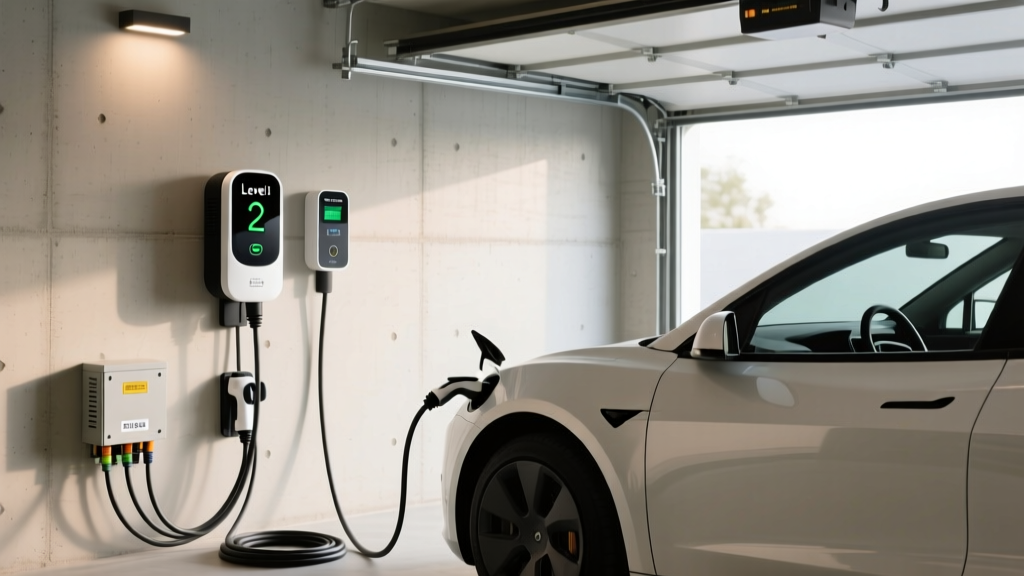
Real-world context for a former Monte Carlo driver: If you choose a 2026 Hyundai Ioniq 6 (EPA 361 miles, 77.4 kWh battery), Level 2 home charging at 11.5 kW adds roughly 44 miles of range per hour — meaning an overnight session from 10 PM to 6 AM easily replenishes 350+ miles. On a DC fast charger peaking at 240 kW, that same Ioniq 6 charges from 10–80% in approximately 18 minutes, though the charge curve tapers significantly above 80% to protect battery health.
How Much Does It Cost to Install a Home EV Charger?
This is the question that stops most prospective EV buyers. The answer depends heavily on your home's existing electrical panel, the distance from the panel to your garage or parking spot, and local permit requirements. Here's a realistic breakdown based on 2026 national averages:
| Component | Simple Install (panel nearby, 200A service) | Complex Install (long run, panel upgrade needed) |
|---|---|---|
| Level 2 EVSE equipment (hardwired, 48A) | $500–$700 | $500–$700 |
| Electrician labor (licensed) | $600–$1,200 | $1,500–$3,000 |
| Electrical permit | $50–$200 | $50–$300 |
| Panel upgrade (100A → 200A), if needed | $0 | $1,500–$3,500 |
| Conduit, wiring, misc. materials | $100–$300 | $400–$800 |
| Total estimated range | $1,250–$2,400 | $3,950–$8,300 |
The panel-upgrade gotcha: Many older homes — particularly those built before the 1990s — have 100-amp or even 60-amp electrical service. A 48-amp Level 2 charger draws 11.5 kW continuously, which requires a dedicated 60-amp circuit (NEC code mandates chargers operate at 80% of the circuit breaker rating). If your panel is already near capacity running central air, an electric range, and a dryer, you may need a service upgrade. Budget for this possibility; a licensed electrician can perform a load calculation during an initial consultation, often for $100–$200.
The IRS Residential Clean Energy Credit (IRC §25C) covers up to 30% of home EV charger equipment and installation costs, capped at $1,000 per year through 2032. This is separate from the §30D new-vehicle credit and applies specifically to the charging hardware and labor.
Which Connector and Charger Is Compatible with My EV?
The connector landscape in 2026 has simplified considerably since the North American Charging Standard (NACS) became the dominant plug. Here's what you need to know by brand:
| Connector Type | Brands Using It Natively | Notes |
|---|---|---|
| NACS (Tesla-style) | Tesla, Ford, GM, Rivian, Volvo, Polestar, Mercedes, Nissan (2026+), Honda (2026+) | Access to Tesla Supercharger network; becoming the universal standard |
| CCS1 (Combo) | Hyundai, Kia, BMW, Stellantis/Jeep, VW (remaining models) | Widely supported at Electrify America, EVgo; adapters available |
| CHAdeMO | Nissan Leaf (legacy only) | Effectively discontinued for new vehicles after 2025 |
Adapter reality: If you buy a CCS1-equipped vehicle like the 2026 Hyundai Ioniq 5, you can purchase a CCS-to-NACS adapter ($200–$300) to access Tesla Superchargers. Ford and GM went the other direction — their vehicles ship with NACS ports and include a NACS-to-CCS adapter for legacy Electrify America stations. For home charging, most Level 2 EVSEs now ship with a NACS connector or offer both options at purchase.
Level 2 Charger Equipment Picks: Power, Cable Length, and Smart Features
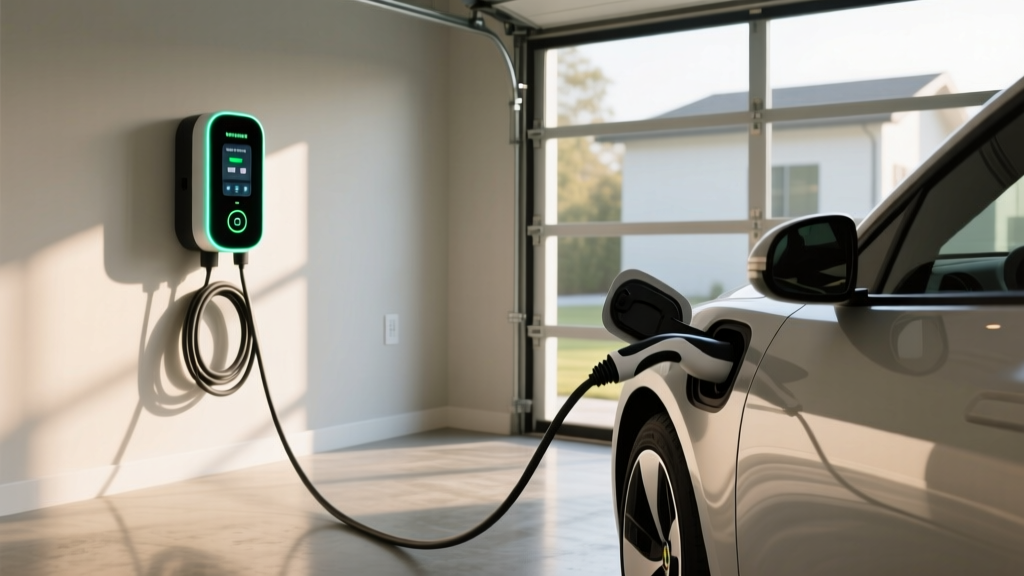
Not all Level 2 chargers are equal. Here are four 2026 recommendations spanning budget to premium, all hardwired for maximum reliability:
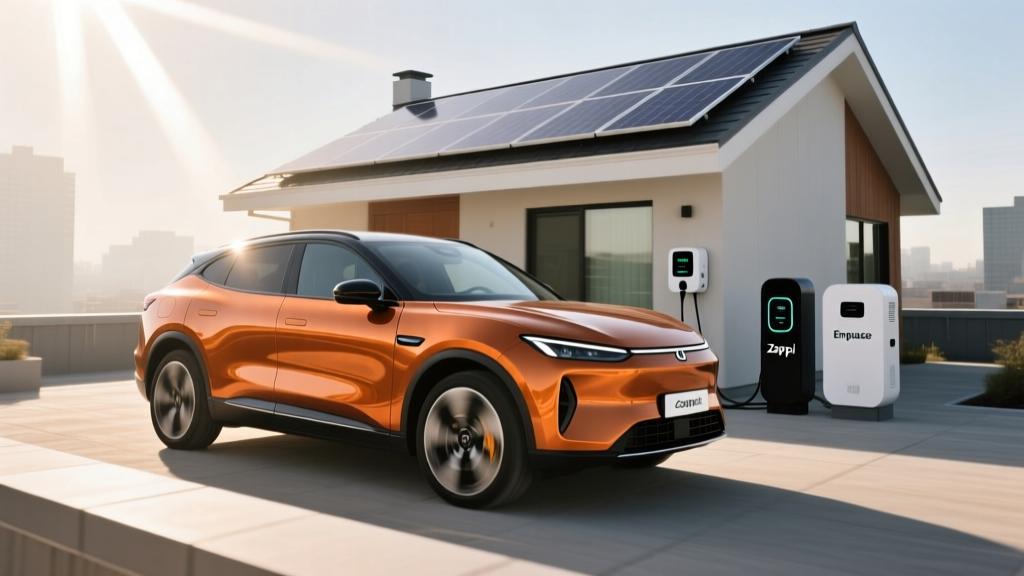
Emporia Vue EV Charger
Power: 48A / 11.5 kW
Connector: NACS or J1772
Cable: 24 ft
Smart features: Energy monitoring, solar integration, scheduled charging, load management
Price: ~$499
Best for: Budget-conscious buyers wanting full smart features
ChargePoint Home Flex
Power: Up to 50A / 12 kW (adjustable)
Connector: NACS or J1772
Cable: 23 ft
Smart features: App scheduling, Alexa integration, flexible amperage
Price: ~$649
Best for: Homes with variable panel capacity (adjustable amps)
Tesla Wall Connector
Power: 48A / 11.5 kW
Connector: NACS (native)
Cable: 24 ft
Smart features: Wi-Fi updates, power sharing (up to 6 units on one circuit), vehicle integration
Price: ~$475
Best for: Tesla and NACS-native vehicle owners
Grizzl-E Smart
Power: 40A / 9.6 kW
Connector: J1772 or NACS
Cable: 24 ft
Smart features: OCPP-compatible, extreme cold rated (-40°F), rugged aluminum case
Price: ~$549
Best for: Cold-climate and outdoor installations
Cost to Charge Per Mile: EV Electricity vs. Your Monte Carlo's Gas Bill
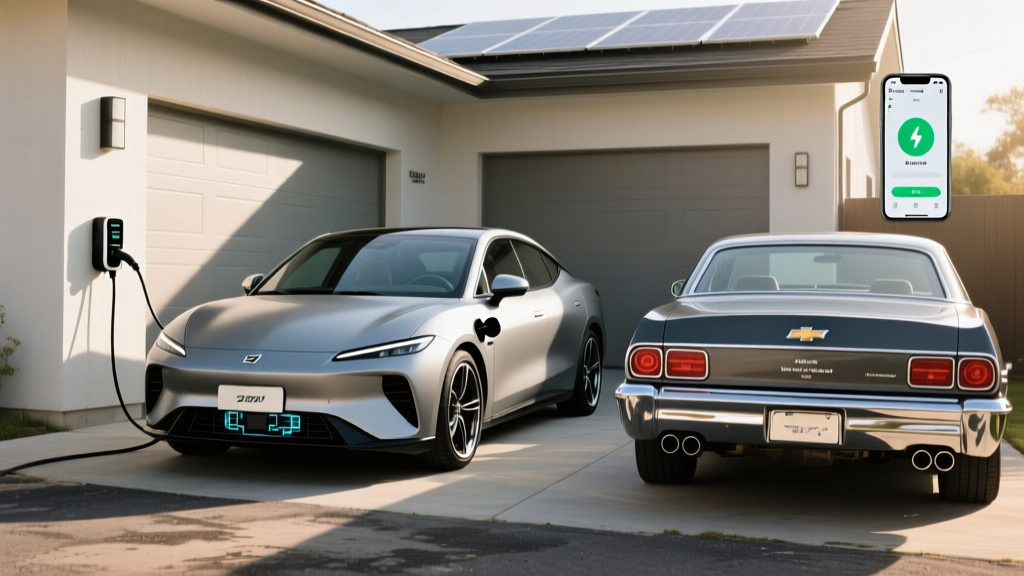
This is where the ownership math gets compelling. Let's compare your 2005 Monte Carlo Supercharged SS (roughly 18 MPG combined on premium fuel) against a representative 2026 EV — the Chevrolet Equinox EV (EPA 319 miles, 85 kWh usable, 3.5 mi/kWh efficiency).
| Scenario | Monte Carlo SS (18 MPG, premium) | Equinox EV (3.5 mi/kWh) |
|---|---|---|
| Home charging (off-peak, $0.12/kWh) | — | $0.034/mile |
| Home charging (standard, $0.18/kWh) | — | $0.051/mile |
| Public Level 2 ($0.30/kWh) | — | $0.086/mile |
| DC fast charging ($0.48/kWh avg.) | — | $0.137/mile |
| Gasoline ($3.80/gal premium) | $0.211/mile | — |
| Gasoline ($4.50/gal premium) | $0.250/mile | — |
Annual savings at 12,000 miles/year: Charging primarily at home on off-peak electricity ($0.12/kWh), the Equinox EV costs roughly $408/year in energy. The Monte Carlo at $3.80/gal premium costs $2,532/year. That's $2,124 in annual fuel savings — or $10,620 over five years, before factoring in the Monte's oil changes, transmission fluid, and supercharger belt maintenance that EVs simply don't require.
According to fueleconomy.gov, the average EV driver saves $800–$1,200 annually on fuel compared to a comparable gas vehicle, with savings scaling higher for drivers trading in less efficient vehicles like a supercharged V6.
Charging Time Examples: What to Expect with Common Battery Sizes
Charging speed isn't linear. Lithium-ion batteries accept charge fastest between roughly 10–50% State of Charge (SoC), then taper progressively to protect cell longevity. Here's what real charging sessions look like for popular 2026 EV battery sizes:
| Vehicle (Battery kWh) | Level 1 (1.4 kW) | Level 2 (11.5 kW) | DC Fast (10–80%) |
|---|---|---|---|
| Chevy Equinox EV (85 kWh) | ~60 hrs (empty→full) | ~7.5 hrs | ~22 min (peak 190 kW) |
| Tesla Model Y (75 kWh) | ~54 hrs | ~6.5 hrs | ~18 min (peak 250 kW) |
| Hyundai Ioniq 5 (77.4 kWh) | ~55 hrs | ~6.8 hrs | ~18 min (peak 240 kW, 800V) |
| Ford F-150 Lightning (131 kWh ext.) | ~94 hrs | ~11.5 hrs | ~36 min (peak 155 kW) |
The charge curve matters: That "18-minute" DC fast charge is specifically for 10–80%. Pushing from 80–100% on DC fast charging can take an additional 20–30 minutes as the battery management system restricts current. For road trips, plan to charge to 80% and go — it's dramatically faster than waiting for a full battery.
Safety, Electrical Code, and Installation Requirements
Home EV charging involves sustained high-current draw — often 8+ hours at 48 amps. This isn't like plugging in a dryer for 45 minutes. The National Electrical Code (NEC) and local building codes enforce specific requirements:
- Dedicated circuit: Your Level 2 charger must be on its own dedicated breaker — no sharing with other appliances. A 48A charger requires a 60A breaker (the 80% continuous-load rule per NEC Article 210.20).
- GFCI protection: NEC 2020 and later require GFCI protection for all EV charging outlets (not required for hardwired installations in most jurisdictions, which is why hardwired is often preferred).
- Outdoor rating: If your charger is installed outdoors or in an unsealed garage, it must carry a NEMA 4 or NEMA 4X rating for weather resistance. All chargers listed above meet this standard.
- Wire gauge: A 60A circuit requires minimum 4 AWG copper wire (or 3 AWG aluminum) for runs under 50 feet. Longer runs may need thicker wire to prevent voltage drop. Your electrician will calculate this.
- Permit and inspection: Virtually all jurisdictions require an electrical permit for EV charger installation. The inspection ensures the work meets code — don't skip this step, as unpermitted work can void homeowner's insurance claims related to electrical fires.
Real-world tip: Get three quotes from licensed electricians who specifically list EV charger installation experience. General electricians sometimes oversize or undersize circuits due to unfamiliarity with the NEC Article 625 EV-specific provisions. The NHTSA doesn't regulate chargers directly, but UL-listed (Underwriters Laboratories) EVSE equipment is essential — never buy unlisted chargers from unknown marketplace sellers.
Frequently Asked Questions
How much does it cost to install a home EV charger?
A straightforward Level 2 installation with an adequate 200A panel runs $1,250–$2,400 including equipment, electrician labor, and permit. If your home needs a panel upgrade from 100A to 200A, expect $3,950–$8,300 total. The federal §25C credit covers 30% of equipment and installation up to $1,000.
How fast will each charging level add range?
Level 1 (120V) adds 3–5 miles per hour — suitable only for plug-in hybrids or overnight trickle-charging. Level 2 (240V, 48A) adds 30–44 miles per hour depending on vehicle efficiency, fully replenishing most EVs overnight. DC fast charging adds 150–300+ miles in 15–25 minutes, tapering above 80% SoC.
Which connector/charger is compatible with my EV?
In 2026, NACS is the dominant standard — Tesla, Ford, GM, Rivian, Volvo, Honda, and Nissan use it natively. Hyundai, Kia, and BMW still use CCS1 but include or sell NACS adapters. CHAdeMO is discontinued for new vehicles. For home Level 2 charging, buy an EVSE matching your vehicle's native port to avoid daily adapter hassle.
How much does charging cost per mile vs. gas?
Home off-peak charging at $0.12/kWh costs roughly $0.03–$0.05 per mile for a typical EV. Compare that to a 2005 Monte Carlo SS at 18 MPG on $3.80 premium: $0.21 per mile. Even DC fast charging at $0.48/kWh ($0.14/mile) undercuts gasoline. Most EV owners charge 80%+ of their miles at home.
What electrical upgrades might I need?
Homes with 100A service or panels near capacity often need a service upgrade to 200A ($1,500–$3,500). Some utilities offer "make-ready" programs that cover panel upgrade costs for EV adoption. An electrician's load calculation will determine if your existing panel can handle a 60A dedicated circuit alongside your current appliances. Homes built after 2000 rarely need upgrades.
Switching from a supercharged V6 grand tourer to an EV is a genuine shift in how you think about "refueling." The up-front infrastructure investment — typically $1,200–$2,500 for a clean home install — pays for itself within 12–18 months through fuel savings alone. Once you experience waking up every morning to 300+ miles of range without a single gas station visit, the Monte Carlo's premium fuel receipts become a memory you won't miss.