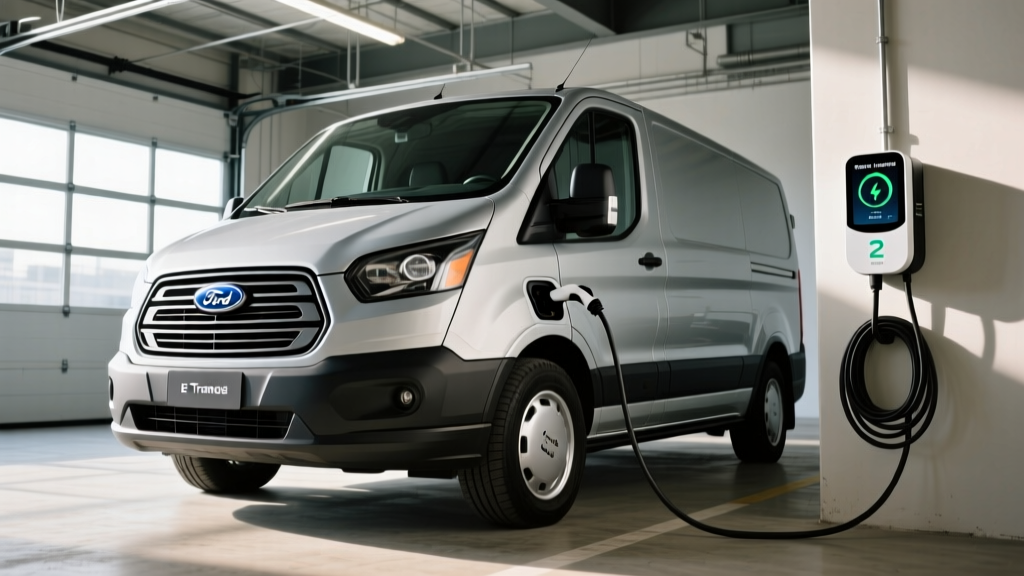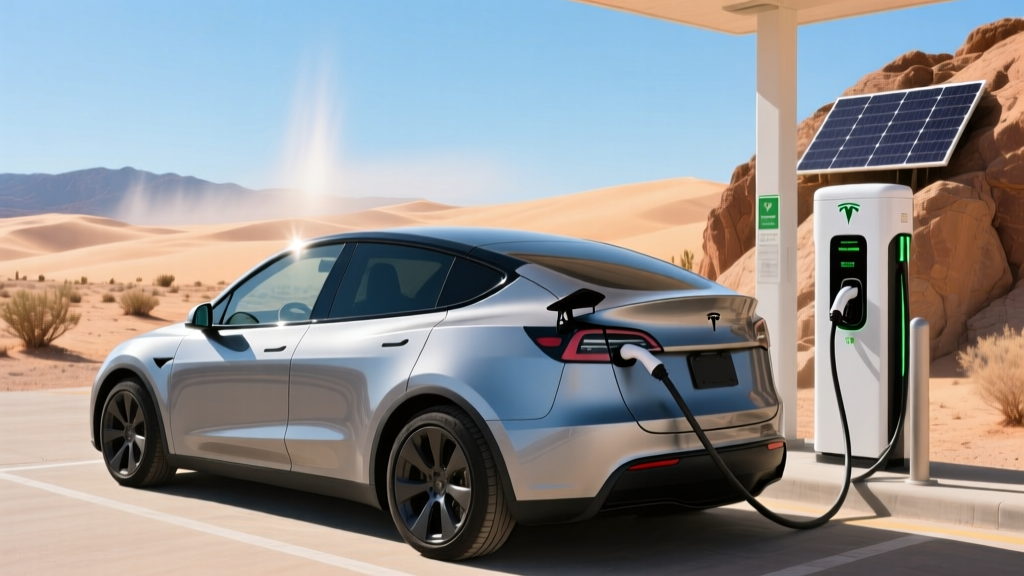
If you're mapping an EV road trip through Southern California's high desert, the Mojave Supercharger along Interstate 15 is likely on your route. This station sits at a critical corridor between Los Angeles and Las Vegas, making it one of the most-used Tesla Supercharger stops in the region. But whether you're topping off in Mojave or installing a Level 2 charger in your garage, understanding the mechanics of EV charging — power rates, connectors, real-world costs — is what separates confident EV ownership from anxious guesswork.
This guide covers everything from public DC fast charging at stations like the Mojave Supercharger to the full economics and electrical requirements of home charging in 2026.
Charging Levels Explained: Speeds, Power, and Real-World Range Gains
EV charging operates across three primary tiers. The critical distinction: kW (kilowatts) measures the rate of power delivery — how fast energy flows into your battery. kWh (kilowatt-hours) measures total energy capacity — the size of your battery. Think of kW as water pressure and kWh as the size of the tank.
| Level | Voltage | Power (kW) | Miles of Range/Hour | Typical Use |
|---|---|---|---|---|
| Level 1 | 120V AC | 1.0–1.4 kW | 3–5 mi/hr | Overnight trickle, PHEV top-ups |
| Level 2 | 240V AC | 3.3–19.2 kW | 12–75 mi/hr | Home daily charging, workplace |
| DC Fast Charge | 400–800V DC | 50–350 kW | 150–1,000+ mi/hr (peak) | Road trips, rapid top-ups |
At a V3 Tesla Supercharger like those found at the Mojave station, peak power reaches 250 kW. Vehicles on 800V architectures (Hyundai Ioniq 5, Kia EV6, Porsche Taycan) at 350-kW Electrify America stalls can see even faster peak rates. But peak is not sustained — charging curves taper significantly above 80% state of charge (SoC) to protect battery health. A typical session from 10–80% at a 250 kW stall takes 18–25 minutes depending on battery size, chemistry, and temperature.
The Mojave Supercharger: What to Expect on the I-15 Corridor
The Mojave Supercharger serves as a pivotal waypoint on the LA-to-Vegas route. Located near the junction of CA-14 and I-15, it offers V3 stalls capable of delivering up to 250 kW to compatible Tesla vehicles. With the Supercharger network now open to non-Tesla EVs via the built-in CCS adapter (or NACS-equipped vehicles from Ford, GM, Rivian, and others that adopted the North American Charging Standard), this station is increasingly relevant beyond the Tesla ecosystem.
Home Level 2 Charging: Electrical Requirements and Installation Costs
Most EV owners do 80–90% of their charging at home. A Level 2 home charger on a 240V circuit delivers between 7.7 kW (32A) and 11.5 kW (48A) on a typical hardwired installation, adding 25–45 miles of range per hour — enough to fully replenish any EV overnight.
Electrical Panel and Circuit Requirements
A Level 2 charger requires a dedicated 240V circuit. The most common configurations:
- 40A circuit / 32A continuous: Delivers 7.7 kW. Requires a 40A breaker with 8 AWG copper wire. Works for most daily needs.
- 50A circuit / 40A continuous: Delivers 9.6 kW. Requires a 50A breaker with 6 AWG copper wire. Common for larger batteries.
- 60A circuit / 48A continuous: Delivers 11.5 kW. Requires a 60A breaker with 6 AWG (short runs) or 4 AWG copper wire. Fastest residential AC option.
Electrical code (NEC Article 625) requires that continuous loads — and EV charging qualifies — must not exceed 80% of the circuit breaker rating. This is why a 50A breaker supports only 40A of continuous charging current.
Panel Capacity and Upgrade Reality
Before installing, your electrician will perform a load calculation on your electrical panel. Many older homes have 100A or 125A main service, and adding a 40–60A EV circuit may push total demand beyond the panel's rated capacity. If so, a panel upgrade to 200A service is required.
| Item | Low End | High End | Notes |
|---|---|---|---|
| Level 2 Charger (Equipment) | $350 | $750 | Smart Wi-Fi chargers; basic units from $250 |
| Electrician Labor (install) | $400 | $1,500 | Depends on run length, conduit, wall type |
| Electrical Permit | $50 | $250 | Varies by municipality |
| Panel Upgrade (if needed) | $1,500 | $4,000 | 200A service upgrade; not always required |
| Total (no panel upgrade) | $800 | $2,500 | Most installations fall in $1,000–$1,800 |
| Total (with panel upgrade) | $2,300 | $6,500 | Older homes with 100A service |
The federal Alternative Fuel Vehicle Refueling Property Credit (IRS Form 8911) covers up to 30% of home charging equipment and installation costs, capped at $1,000, but only if you live in a qualifying census tract. Check the latest IRS guidance for eligibility.
Connector Compatibility: NACS, CCS, and CHAdeMO in 2026
The connector landscape has shifted dramatically. As of 2026, the North American Charging Standard (NACS) — originally Tesla's proprietary connector — has become the dominant standard, adopted by Ford, GM, Rivian, Volvo, Polestar, Mercedes-Benz, BMW, Hyundai, Kia, and most major automakers. CCS1 remains on many 2022–2024 model-year vehicles still on the road, while CHAdeMO is effectively legacy (Nissan Leaf being the primary holdout).
| Connector | Brands Using It | Adapter Needed? |
|---|---|---|
| NACS (Tesla-style) | Tesla, Ford, GM, Rivian, Volvo, Polestar, Hyundai, Kia, BMW, Mercedes (new models) | No — native on new vehicles |
| CCS1 | VW ID.4 (2021–2024), older Hyundai/Kia, BMW i4/iX (pre-2025), many 2022–2024 EVs | NACS-to-CCS adapter (~$150–$250) for Tesla Superchargers |
| CHAdeMO | Nissan Leaf (all years), Mitsubishi Outlander PHEV (older) | Limited public availability; no adapter to NACS/CCS |
If you own a CCS-equipped vehicle, Tesla sells a CCS-to-NACS adapter (~$170) enabling access to the Supercharger network. Non-Tesla EVs with native NACS can use Superchargers directly. Always verify your vehicle's specific connector before purchasing a home charger — most 2026 charger models now ship with NACS connectors or offer CCS as an option.
Cost to Charge: Home vs. Public vs. Gas Per Mile
The economic case for EV charging hinges on where and when you charge. Home charging on a time-of-use (TOU) plan dramatically undercuts public DC fast charging, and both typically beat gasoline on a per-mile basis.
| Scenario | $/kWh | Cost Per Mile | Annual (12,000 mi) |
|---|---|---|---|
| Home (off-peak TOU rate) | $0.08–$0.14 | $0.03–$0.05 | $360–$600 |
| Home (standard rate, no TOU) | $0.15–$0.22 | $0.05–$0.07 | $600–$840 |
| Public Level 2 (ChargePoint, EVgo) | $0.25–$0.49 | $0.08–$0.16 | $960–$1,920 |
| DC Fast (Supercharger / EA) | $0.30–$0.55 | $0.10–$0.18 | $1,200–$2,160 |
| Gasoline (28 MPG avg, $3.80/gal) | — | $0.14 | $1,680 |
According to fueleconomy.gov, the average 2026 EV achieves between 2.5 and 4.0 miles per kWh depending on efficiency. Vehicles like the Tesla Model 3 and Hyundai Ioniq 6 push toward 4.0 mi/kWh, while heavier SUVs like the Rivian R1S sit closer to 2.5 mi/kWh. Your actual cost per mile scales directly with vehicle efficiency.
Charging Time by Battery Size: 10–80% Estimates
The 10–80% window is the practical fast-charging standard — charging above 80% slows dramatically as the battery management system reduces current to protect cell health. Here's what to expect at different charger types for common battery sizes:
| Battery Size | Example Vehicles | Level 2 (11.5 kW) | DC Fast (150 kW) | DC Fast (250 kW) | DC Fast (350 kW) |
|---|---|---|---|---|---|
| 60 kWh | Chevy Equinox EV, base Model 3 | 3.5 hrs | ~25 min | ~18 min | ~15 min* |
| 77 kWh | Ford Mustang Mach-E ER, Model Y LR | 4.5 hrs | ~32 min | ~22 min | ~18 min* |
| 100 kWh | Tesla Model S/X, Rivian R1T Max | 6 hrs | ~42 min | ~28 min | ~22 min* |
*350 kW times apply only to 800V-architecture vehicles (Ioniq 5, EV6, Taycan, e-GT). Vehicles on 400V systems cannot accept 350 kW and will charge at similar rates to the 250 kW column.
Charge curve taper is real: a vehicle peaking at 250 kW may only sustain that rate between 10–30% SoC before stepping down to 150 kW, then 100 kW, then 50 kW as it approaches 80%. Total session time depends on the area under the curve, not the peak number.
Recommended Home Chargers for 2026
These Level 2 chargers represent the best combination of reliability, power output, smart features, and value for home installation:
Tesla Wall Connector (Gen 4)
- Power: Up to 11.5 kW (48A)
- Connector: NACS native
- Cable: 24 ft
- Smart: Wi-Fi, OTA updates, power sharing
- Price: ~$475
- Best for: Tesla/NACS-equipped owners
ChargePoint Home Flex
- Power: Up to 12 kW (50A)
- Connector: NACS or CCS (configurable)
- Cable: 23 ft
- Smart: Wi-Fi, app scheduling, Alexa
- Price: ~$550
- Best for: Multi-EV households, CCS vehicles
Emporia Level 2 Smart Charger
- Power: Up to 11.5 kW (48A)
- Connector: NACS or J1772
- Cable: 24 ft
- Smart: Wi-Fi, energy monitoring, solar integration
- Price: ~$400
- Best for: Budget-conscious, solar homes
Grizzl-E Smart
- Power: Up to 10 kW (40A)
- Connector: NACS or J1772
- Cable: 24 ft
- Smart: Wi-Fi, OCPP, adjustable amperage
- Price: ~$450
- Best for: Cold climates, durable build
Safety, Electrical Code, and Installation Best Practices
EV charging is a high-draw, long-duration electrical load — more like running an electric furnace than plugging in a phone. Proper installation isn't optional; it's a safety and insurance requirement.
- Dedicated circuit: Your EV charger must have its own dedicated breaker — never share a circuit with other appliances. NEC 625.40 requires this for all EVSE installations.
- GFCI protection: NEC 2023 (Article 625.54) now requires GFCI protection for all receptacle-based EV charging outlets (NEMA 14-50). Hardwired installations are exempt but still recommended to have ground-fault monitoring built into the EVSE.
- Outdoor rating: If mounting outside, ensure the charger carries a NEMA 4 (weather-resistant) or IP55+ rating. Most quality chargers meet this, but verify before purchase.
- Permit and inspection: Nearly all jurisdictions require an electrical permit for EV charger installation. Your electrician pulls the permit; the city inspector verifies the work. Skipping this can void home insurance claims related to electrical fires.
- Wire gauge and run length: Longer wire runs from panel to charger require thicker gauge wire to minimize voltage drop. A 100-foot run at 48A may need 4 AWG or even 3 AWG copper — your electrician will calculate this per NEC Chapter 9 voltage-drop recommendations.
Frequently Asked Questions
How much does it cost to install a home EV charger?
A typical Level 2 home charger installation costs between $800 and $2,500 when no panel upgrade is needed. This includes the charger ($350–$750), electrician labor ($400–$1,500), and the permit ($50–$250). Homes needing a 200A panel upgrade should budget $2,300–$6,500 total. Get at least three quotes from licensed electricians, and ask whether the quote includes the permit and final inspection.
How fast will each charging level add range?
Level 1 (120V) adds 3–5 miles of range per hour — adequate for plug-in hybrids with small batteries but impractical for full EVs. Level 2 (240V) adds 12–75 miles per hour depending on amperage and vehicle acceptance rate. DC fast charging adds 150–1,000+ miles per hour at peak, though sustained rates taper — a typical 10–80% session takes 18–40 minutes depending on battery size, charger power, and vehicle architecture.
Which connector/charger is compatible with my EV?
For 2025–2026 model-year vehicles, most new EVs use NACS (the Tesla connector standard). Vehicles from 2022–2024 may still have CCS1. The Nissan Leaf uses CHAdeMO. Check your vehicle's charge port or owner's manual. For home chargers, buy the connector that matches your vehicle natively. If you drive a CCS vehicle and want Supercharger access, a NACS-to-CCS adapter (~$150–$250) bridges the gap.
How much does charging cost per mile vs. gas?
Home charging on off-peak rates costs $0.03–$0.05 per mile for an efficient EV — roughly one-quarter to one-third the cost of gasoline at $3.80/gallon and 28 MPG. Public DC fast charging at $0.35–$0.55/kWh costs $0.10–$0.18 per mile, which is comparable to or slightly higher than gas. The savings case for EVs is strongest when you can charge at home consistently. Per fueleconomy.gov, EVs convert 77–85% of electrical energy to wheel motion, versus 12–30% for gasoline vehicles.
What electrical upgrades might I need?
The most common upgrade is a panel capacity increase. If your home has 100A or 125A service and is already running significant loads (electric range, dryer, HVAC, water heater), adding a 40–60A EV circuit may exceed capacity. A licensed electrician will perform a NEC Article 220 load calculation. Other possible upgrades: replacing a fuse box with a breaker panel, adding a sub-panel closer to the garage to reduce wire run length, or upgrading the utility service drop from the street. Utility companies sometimes offer rebates for panel upgrades tied to EV adoption — check with your local provider.