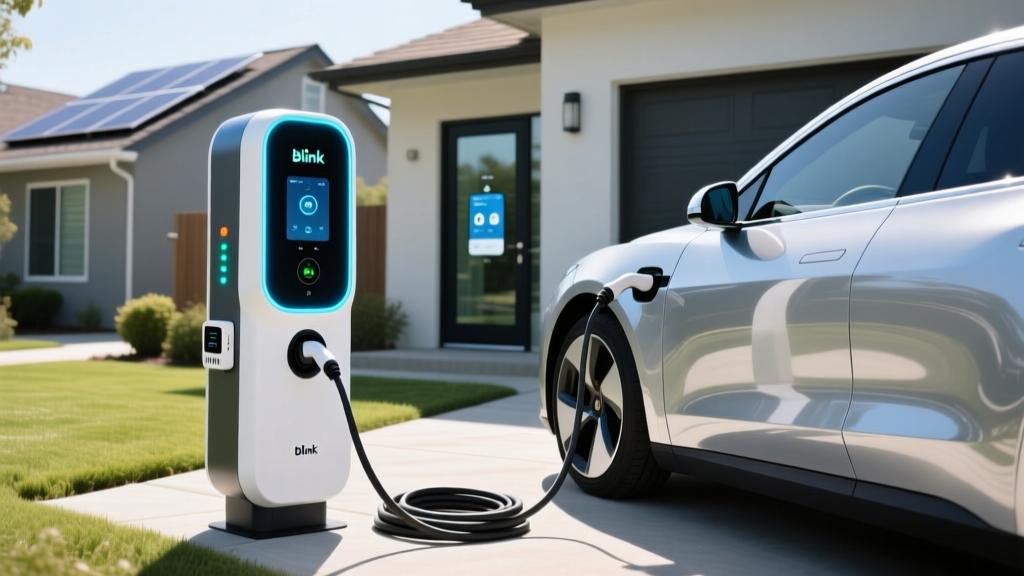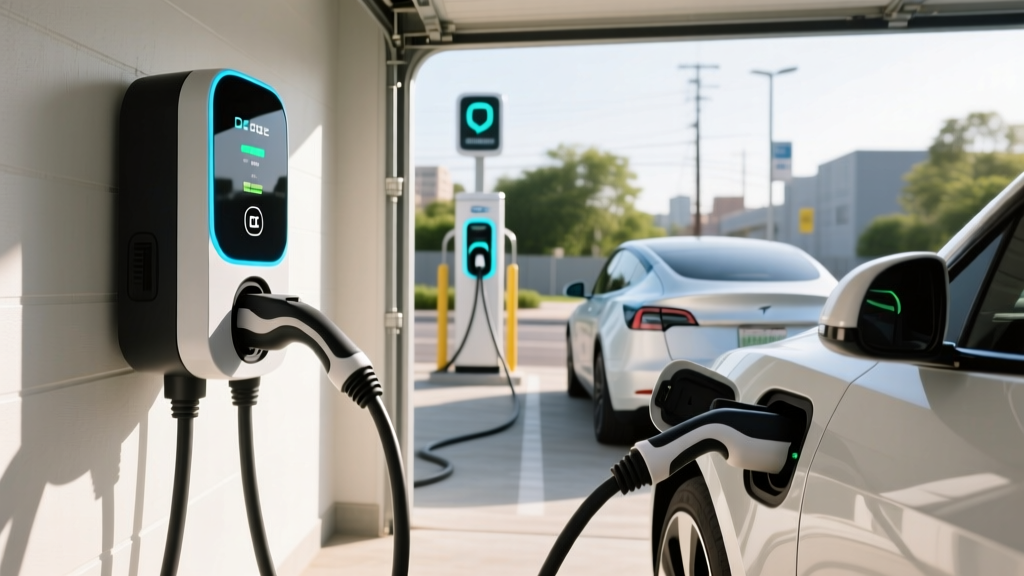
If you have searched for a "Moeve charging station" near you or seen the Moeve brand (the rebranded identity of Circle K's fuel and convenience network across Europe and expanding markets) while planning EV road trips, you are likely wondering how these chargers fit into a broader EV charging strategy. Moeve operates both public DC fast-charging sites and, through partner networks, offers home Level 2 charging equipment. This guide breaks down exactly what Moeve-branded and Moeve-adjacent charging stations deliver in kilowatts (kW), what home installation actually costs, and how the per-mile cost compares to gasoline in 2026.
Charging Levels Explained: Speeds in kW and Miles Per Hour
Every Moeve charging station you encounter — whether a public DC fast charger at a Circle K/Moeve convenience stop or a Level 2 unit installed in your garage — falls into one of three categories. Here is what each delivers in practical terms:
| Level | Voltage / Power | kW Output | Miles of Range Added Per Hour | Best For |
|---|---|---|---|---|
| Level 1 | 120V AC / 12A | ~1.4 kW | 3–5 mi/hr | Overnight top-offs, PHEVs |
| Level 2 | 240V AC / 32–48A | 7.7–11.5 kW | 25–44 mi/hr | Daily home charging |
| DC Fast | 400–800V DC | 50–350 kW | 150–1,200+ mi/hr (peak) | Road trips, quick top-ups |
Moeve's public DC fast-charging stations in Europe typically deliver between 150 kW and 350 kW per stall, with newer ultralong-range sites capable of the upper end. In practical terms, a modern EV like the Hyundai Ioniq 5 (84 kWh battery, 310 mi EPA range) charging at a 350 kW Moeve station can add 10–80% state of charge in approximately 18 minutes — though sustained rates taper above 80% SoC as the battery management system protects cell health.
For home charging, Moeve-partnered Level 2 wallboxes typically output between 7.4 kW (single-phase, 32A) and 11 kW (three-phase, 16A) in European markets, or 11.5 kW (240V/48A) in North American configurations. That translates to a full overnight recharge for most EVs with 250–350 miles of EPA range.
Home Installation: Electrical Requirements and Real Costs
Installing a Level 2 Moeve-compatible home charging station requires a dedicated 240-volt circuit. Here is what a licensed electrician will assess:
- Circuit requirement: A 50-amp breaker (for a 40A continuous charger) or 60-amp breaker (for a 48A continuous charger). The National Electrical Code (NEC) requires the circuit to be rated 125% above the charger's continuous draw.
- Wire gauge: 6 AWG copper for 50A circuits; 4 AWG for 60A circuits. Longer wire runs (over 50 feet from panel to garage) may require thicker gauge to prevent voltage drop.
- Panel capacity: Most modern homes with 200-amp service can accommodate a Level 2 charger. Homes with 100-amp panels — common in pre-1980 construction — often require a panel upgrade costing $1,500–$3,000.
- Permits: Nearly all jurisdictions require an electrical permit for EV charger installation. Costs range from $50–$250 depending on locality.
- GFCI protection: NEC 2020 and later require GFCI protection for outdoor receptacles. Hardwired chargers (no plug) can bypass this requirement and are generally recommended for reliability.
| Cost Component | Low Estimate | High Estimate | Notes |
|---|---|---|---|
| Level 2 charger equipment | $350 | $750 | Smart Wi-Fi-enabled units |
| Electrician labor (standard install) | $400 | $1,200 | Depends on wire run length |
| Electrical permit | $50 | $250 | Varies by jurisdiction |
| Panel upgrade (if needed) | $1,500 | $3,000 | 100A → 200A service upgrade |
| TOTAL (no panel upgrade) | $800 | $2,200 | Typical scenario |
| TOTAL (with panel upgrade) | $2,300 | $5,200 | Older homes |
The IRS §30D clean vehicle credit does not cover home charger installation directly, but the separate §25C Energy Efficient Home Improvement Credit may cover up to 30% of charger equipment and installation costs (capped at $1,000) for qualifying taxpayers. Consult a tax professional for eligibility.
Connector Compatibility: NACS, CCS1, and CHAdeMO
Before purchasing or using any Moeve charging station, confirm which connector your EV requires. The North American market has largely consolidated around NACS (North American Charging Standard, originally Tesla's connector), while European Moeve stations use CCS2. Here is the compatibility landscape for 2026:
| Connector | Brands Using It (2026) | Adapter Needed? |
|---|---|---|
| NACS | Tesla, Ford, GM, Rivian, Hyundai, Kia, BMW, Mercedes (new models) | No — native on 2025+ models |
| CCS1 | Older VW ID.4, Hyundai Ioniq 5 (pre-2025), some Stellantis models | CCS-to-NACS adapter (~$200) needed for Tesla Superchargers |
| CHAdeMO | Nissan Leaf (legacy only, discontinued) | Limited adapter options; network declining |
Moeve's European DC fast stations are equipped with CCS2 connectors (the European standard). If you are driving in North America and using Moeve-affiliated networks through roaming agreements, verify whether the station offers NACS or CCS1 cables. Many newer public stations now offer dual-cable pedestals or NACS-native connectors as automakers complete the transition.
Cost to Charge: Per-Mile Economics vs Gasoline
The financial case for electric driving hinges on your cost per mile. Here is how different charging scenarios stack up against a comparable gasoline vehicle achieving 28 MPG combined (based on fueleconomy.gov averages):
| Scenario | Rate ($/kWh) | Cost Per Mile* | vs Gas (28 MPG @ $3.40/gal) |
|---|---|---|---|
| Home off-peak (utility TOU rate) | $0.09–$0.13 | $0.03–$0.04 | 70–75% cheaper |
| Home standard rate | $0.15–$0.18 | $0.05–$0.06 | 55–65% cheaper |
| Public Level 2 (Moeve/network) | $0.25–$0.39 | $0.08–$0.13 | 10–40% cheaper |
| DC Fast Charging (public) | $0.35–$0.55 | $0.11–$0.18 | Comparable to gas |
| Gasoline (28 MPG) | — | $0.12/mi | Baseline |
*Based on an EV averaging 3.0 miles per kWh (≈100 MPGe equivalent). Actual efficiency varies by model — the Tesla Model 3 achieves ~4.0 mi/kWh, while the Ford F-150 Lightning averages ~2.0 mi/kWh.
The takeaway: home charging on off-peak rates is where EVs deliver massive savings. Exclusive reliance on DC fast charging can approach or even exceed gasoline costs, which is why a home Level 2 Moeve-compatible charging station is the single best investment for EV ownership economics.
Charging Time Examples: What to Expect by Battery Size
Charge times depend on battery capacity (kWh), the charger's peak power (kW), and the vehicle's charge curve. Most EVs accept peak power only between roughly 10–50% SoC, then taper progressively. Here are real-world benchmarks:
Small Battery (60 kWh — e.g., Chevy Equinox EV)
- Level 1 (1.4 kW): 0–100% in ~43 hours
- Level 2 (11.5 kW): 0–100% in ~5.2 hours
- DC Fast (150 kW): 10–80% in ~22 min
Mid Battery (84 kWh — e.g., Hyundai Ioniq 5)
- Level 1 (1.4 kW): 0–100% in ~60 hours
- Level 2 (11.5 kW): 0–100% in ~7.3 hours
- DC Fast (350 kW): 10–80% in ~18 min
Large Battery (131 kWh — e.g., Ford F-150 Lightning Extended)
- Level 1 (1.4 kW): 0–100% in ~94 hours
- Level 2 (11.5 kW): 0–100% in ~11.4 hours
- DC Fast (150 kW): 10–80% in ~55 min
PHEV (18 kWh — e.g., Toyota RAV4 Prime)
- Level 1 (1.4 kW): 0–100% in ~12.5 hours
- Level 2 (7.7 kW): 0–100% in ~2.3 hours
- DC Fast: Not available (most PHEVs)
For context, Moeve's 350 kW DC fast stalls are best utilized by vehicles with 800V battery architectures (Hyundai Ioniq 5/6, Kia EV6/EV9, Porsche Taycan) that can sustain high charge rates. Vehicles limited to 400V architectures will peak at 150–250 kW even at a 350 kW stall.
Recommended Equipment: Level 2 Chargers for Home Use
Whether you are setting up a Moeve-branded wallbox or selecting a compatible third-party unit, here are proven Level 2 home chargers with specific specifications:
Emporia Level 2 Smart Charger
- Power: 48A / 11.5 kW (240V)
- Connector: NACS (J3400) or J1772
- Cable length: 24 ft
- Smart features: Wi-Fi, app scheduling, solar integration, energy monitoring
- Price: ~$399
- Best for: Budget-conscious buyers wanting smart features
ChargePoint Home Flex
- Power: Up to 50A / 12 kW (240V, adjustable)
- Connector: NACS or J1772
- Cable length: 23 ft
- Smart features: Wi-Fi, app, Alexa, flexible amperage
- Price: ~$549
- Best for: Flexible amperage to match panel capacity
Tesla Wall Connector
- Power: 48A / 11.5 kW (240V)
- Connector: NACS native
- Cable length: 24 ft
- Smart features: Wi-Fi, OTA updates, power sharing (multiple units)
- Price: ~$450
- Best for: Tesla owners or NACS-native EVs
Grizzl-E Smart
- Power: 40A / 9.6 kW (240V)
- Connector: J1772 or NACS
- Cable length: 24 ft
- Smart features: OCPP-compatible, app, outdoor-rated (IP67)
- Price: ~$499
- Best for: Outdoor installations, extreme climates
Safety, Code, and Outdoor Installation Considerations
Whether installing a Moeve-branded home charger or any Level 2 unit, these safety and code requirements protect your home and vehicle:
- Dedicated circuit: Your EV charger must be on its own dedicated breaker — never shared with other appliances. This prevents overloading and tripping.
- Hardwired vs plug: Hardwired installations (no NEMA 14-50 receptacle) eliminate GFCI nuisance tripping, provide a cleaner install, and are generally preferred by electricians for 48A+ chargers.
- Outdoor rating: If mounting outside, ensure the charger carries at least an IP55 rating (protected against water jets). IP67 is ideal for harsh climates.
- Cable management: A retractable cable holster prevents tripping hazards and protects the cable from UV degradation and physical damage.
- Load management: If your panel is near capacity, some smart chargers (like Emporia) offer real-time load monitoring that dynamically adjusts charge rate to prevent panel overload — avoiding a costly panel upgrade.
- UL certification: Only purchase chargers with UL (Underwriters Laboratories) or ETL listing. Uncertified chargers from overseas marketplaces may lack proper safety protections and can void homeowner's insurance claims.
Frequently Asked Questions
How much does it cost to install a home EV charger?
A typical Level 2 home charger installation costs between $800 and $2,200 when your electrical panel has sufficient capacity. This includes the charger unit ($350–$750), electrician labor ($400–$1,200), and permits ($50–$250). If your home has an older 100-amp panel that needs upgrading to 200 amps, add $1,500–$3,000 to the total. Always get at least two quotes from licensed electricians and confirm they have specific EV charger installation experience.
How fast will each charging level add range?
Level 1 (120V) adds 3–5 miles per hour — adequate only for plug-in hybrids with small batteries or very low daily mileage. Level 2 (240V, 32–48A) adds 25–44 miles per hour, fully recharging most EVs overnight in 5–10 hours. DC fast charging (50–350 kW) adds 150–1,200+ miles per hour at peak, enabling 10–80% charges in 18–55 minutes depending on battery size and vehicle architecture.
Which connector is compatible with my EV?
For 2025 and newer models, most major automakers have adopted NACS (the Tesla-originated standard). This includes Ford, GM, Hyundai, Kia, BMW, and Rivian. If you drive an older model with CCS1 (pre-2025 VW ID.4, older Hyundai/Kia models), you will need a CCS-to-NACS adapter (~$150–$250) to access Tesla Superchargers and an increasing number of NACS-only public stations. CHAdeMO is effectively discontinued outside legacy Nissan Leaf owners.
How much does charging cost per mile vs gas?
Home charging on off-peak electricity rates costs approximately $0.03–$0.04 per mile — roughly 70–75% less than gasoline at $3.40/gallon in a 28 MPG vehicle ($0.12/mile). Standard home rates ($0.15–$0.18/kWh) still deliver 55–65% savings. Public DC fast charging at $0.35–$0.55/kWh narrows the gap, costing $0.11–$0.18/mile, which is comparable to or slightly above gasoline. The economic advantage of EVs depends heavily on reliable home charging access.
What electrical upgrades might I need?
The most common upgrade is a panel replacement from 100-amp to 200-amp service, required in many older homes. This costs $1,500–$3,000. Other potential upgrades include: replacing a Federal Pacific or Zinsco panel (known fire hazards, $2,000–$4,000 replacement), running new conduit for detached garages ($500–$1,500 for trenching), or installing a smart load-management device ($200–$400) to avoid a panel upgrade entirely. A licensed electrician's initial assessment (often $100–$200, sometimes credited toward installation) will identify exactly what your home requires.
Can I use a Moeve charging station network card at other public chargers?
Moeve's charging network in Europe operates on open roaming protocols. Many Moeve RFID cards and app accounts can activate chargers on partner networks through interoperability agreements, similar to how Electrify America, EVgo, and ChargePoint cross-roam in the US. Check your specific Moeve account terms for roaming coverage before relying on a single network for long-distance travel.