Quick Verdict: What Model Y Standard Range Owners Need to Know
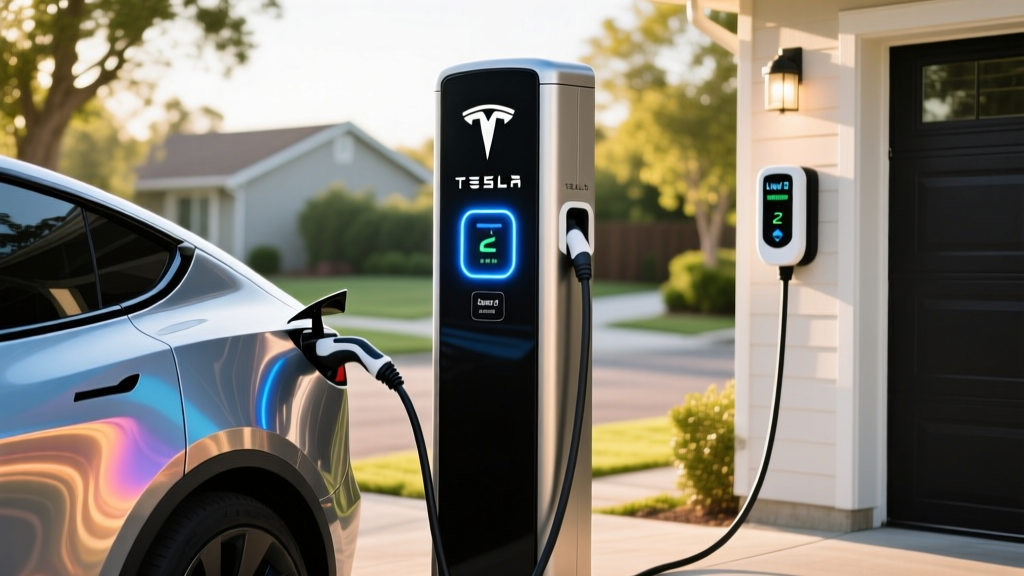
If you own or are shopping for a Model Y Standard Range, charging strategy is the single biggest factor in your daily satisfaction. The 2026 Model Y Standard Range (Rear-Wheel Drive) pairs a ~60 kWh usable LFP (lithium iron phosphate) battery with EPA-estimated 283 miles of range and a NACS charge port. On a DC fast charger, it peaks around 170 kW, reaching 10-80% in roughly 25 minutes. At home on a 240V/48A Level 2 circuit, you'll recover about 32 miles of range per hour — enough to fully replenish overnight.
This guide walks through every charging scenario — home installation, public networks, cost per mile, and equipment picks — with exact numbers so you can budget and plan with confidence.
Charging Levels Explained: Speeds and Range Added Per Hour
Before plugging in anywhere, it's critical to understand the difference between kW (kilowatts — the rate of power delivery) and kWh (kilowatt-hours — the total energy stored in your battery). Think of kW as how fast water flows from a hose, and kWh as the size of the bucket. Your Model Y Standard Range has roughly 60 kWh of usable battery capacity; how fast that bucket fills depends on the kW output of your charger.
| Level | Voltage / Amperage | Max Power (kW) | Miles of Range Added Per Hour | Best For |
|---|---|---|---|---|
| Level 1 (120V) | 120V / 12A | ~1.4 kW | ~3-4 mi/hr | Emergency trickle / overnight top-off |
| Level 2 (240V) | 240V / 48A | ~11.5 kW | ~32 mi/hr | Daily home charging |
| DC Fast Charging | 400V architecture | 170 kW (peak) | ~200+ mi in 15 min | Road trips and rapid replenishment |
Level 1 is barely practical as a primary strategy. Plugging into a standard 120V household outlet adds roughly 3-4 miles of range per hour — a full charge from empty would take over 60 hours. It works if you drive under 30 miles daily and can leave the car plugged in overnight.
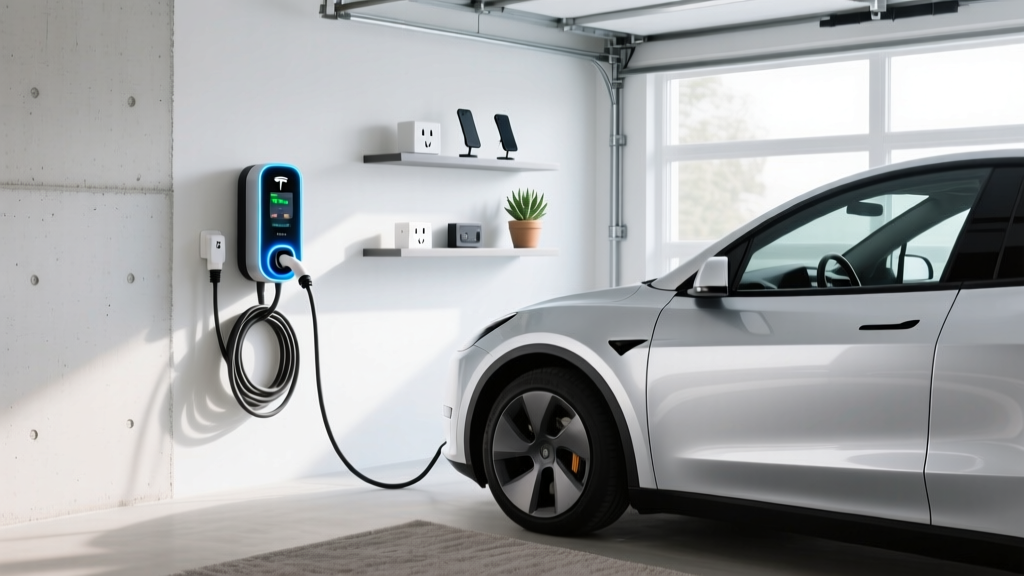
Level 2 is the home charging standard. A hardwired 48A wall connector on a 60A dedicated circuit delivers ~11.5 kW, adding about 32 miles per hour. A full charge from 10% takes roughly 5-6 hours. This is the setup most Model Y owners rely on for daily driving.
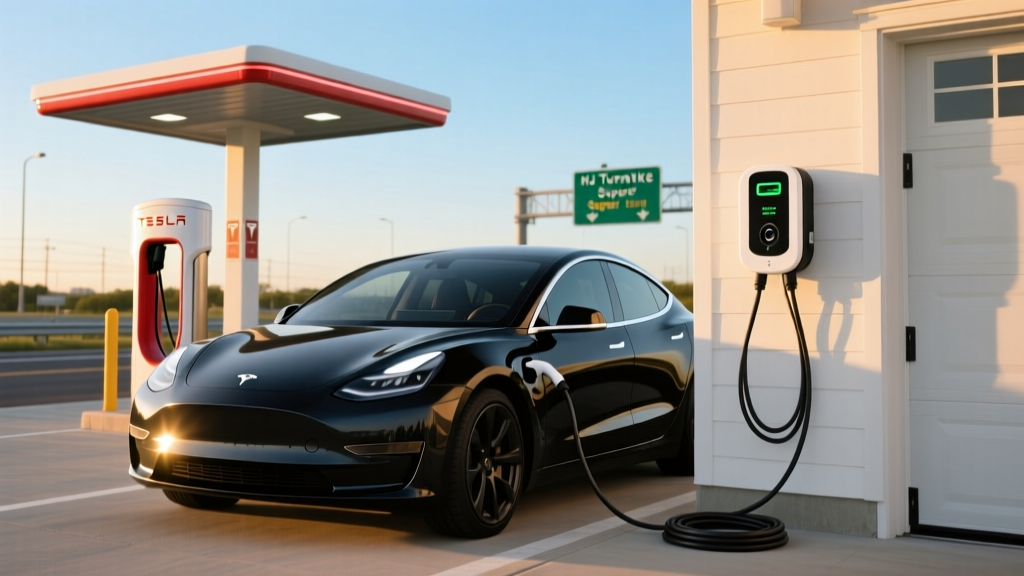
DC Fast Charging is for road trips and quick top-ups. Tesla's V4 Superchargers and third-party networks (via the native NACS port) deliver peak rates up to 170 kW on the Standard Range trim. Expect a 10-80% session in approximately 25 minutes. Note that charge speed tapers significantly above 80% — charging from 80-100% on DC can take as long as the 10-80% session due to battery protection protocols.
Home Charger Installation: Electrical Requirements, Permits, and Costs
Installing a Level 2 home charger is the single best upgrade a Model Y Standard Range owner can make. Here's exactly what's involved.
Electrical Requirements
For optimal Level 2 charging, you need a 240V dedicated circuit rated for 60 amps, which supports a 48A continuous-draw wall connector. If your electrical panel has limited capacity, a 40A circuit (supporting 32A continuous, ~7.7 kW) is a viable alternative, adding about 22 miles per hour — still adequate for most daily needs.
The charger should be hardwired (not plugged into a NEMA 14-50 outlet) for maximum safety and reliability, as hardwired connections avoid the thermal issues some outlets develop under sustained high-amperage loads. If you do use a NEMA 14-50 receptacle, ensure your electrician installs a commercial-grade outlet (Hubbell or Bryant) and verifies torque specs on all connections.
Panel Upgrade Considerations
Many older homes have 100A or 125A main panels that may not have spare capacity for a 60A EV circuit. A licensed electrician will perform a NEC Article 220 load calculation to determine available headroom. If your panel is maxed out, options include:
- Panel upgrade to 200A: $2,000-$4,500 depending on your utility and local labor rates
- Smart load management device: Products like the Emporia VUE or Span smart panel can dynamically throttle the charger when household demand is high — $500-$1,500 installed
- Lower-amperage circuit: Dropping to a 30A or 40A circuit may fit within existing panel capacity without an upgrade
Installation Cost Breakdown
| Item | Cost Range | Notes |
|---|---|---|
| Level 2 Charger (Equipment) | $400 - $650 | Tesla Wall Connector, ChargePoint, Emporia |
| Electrician Labor | $600 - $2,000 | Depends on run length, conduit, wall material |
| Electrical Permit | $50 - $250 | Varies by municipality |
| Panel Upgrade (if needed) | $2,000 - $4,500 | 100A → 200A service upgrade |
| Total (no panel upgrade) | $1,050 - $2,900 | Typical scenario for modern homes |
| Total (with panel upgrade) | $3,050 - $7,400 | Older homes with 100A service |
The federal Alternative Fuel Vehicle Refueling Property Credit (IRC §30C) may cover up to 30% of home charger equipment and installation costs (capped at $1,000), subject to census-tract eligibility. Check with a tax professional before claiming.
Connector Compatibility: NACS, CCS, and Public Charging Access
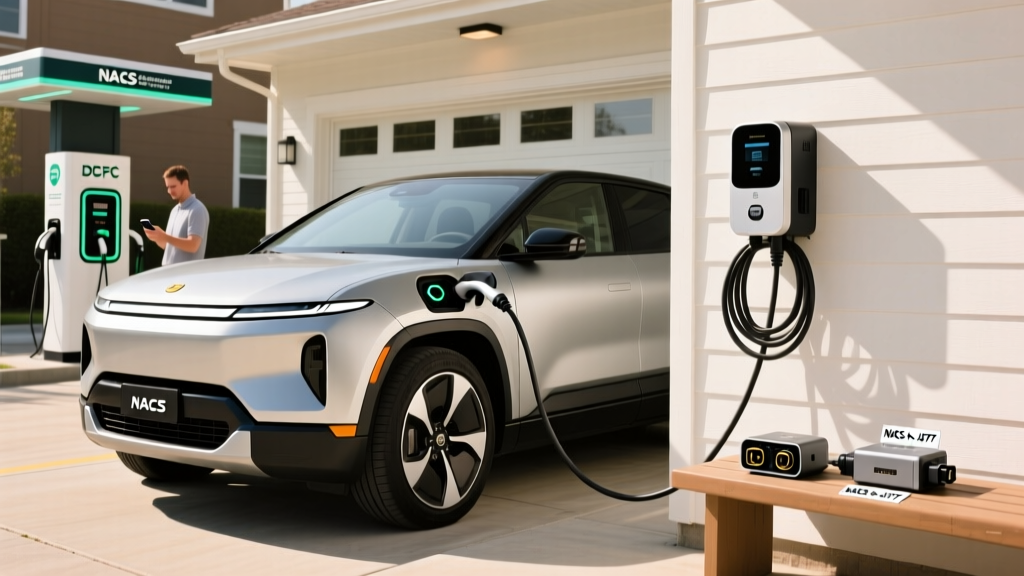
The 2026 Model Y Standard Range comes equipped with a NACS (North American Charging Standard) port — Tesla's proprietary connector, now adopted industry-wide. This gives you native access to the entire Tesla Supercharger network (over 30,000 stalls in North America as of 2026) without any adapter.
| Connector Type | Native Support? | Adapter Needed? | Network Examples |
|---|---|---|---|
| NACS (Tesla) | Yes — built-in | None | Tesla Supercharger, Tesla Destination |
| CCS1 | No | NACS-to-CCS adapter (~$200-$300) | Electrify America, EVgo, ChargePoint (CCS stalls) |
| CHAdeMO | No | Not available for NACS vehicles | Legacy Nissan Leaf network (declining) |
| J1772 (Level 2 public) | No | Tesla J1772 adapter (included with vehicle) | Public Level 2 at malls, workplaces, hotels |
With the opening of the Supercharger network to non-Tesla EVs and the industry-wide shift to NACS, the Model Y's native connector is now the most future-proof option on the market. However, if you frequently travel in areas where Electrify America or EVgo are the primary DC options, investing in a NACS-to-CCS adapter from a reputable manufacturer like Lectron or A2Z expands your charging map significantly.
Cost to Charge: Home vs. Public vs. Gas Comparison
One of the strongest financial arguments for the Model Y Standard Range is the per-mile energy cost. Here's how charging scenarios compare, using the EPA efficiency rating of approximately 28 kWh/100 miles (roughly 120 MPGe combined, per fueleconomy.gov).
| Scenario | Rate | Cost Per Mile | Cost for 300-Mile Trip |
|---|---|---|---|
| Home (off-peak utility rate) | $0.12/kWh | $0.034 | $10.08 |
| Home (average US rate) | $0.17/kWh | $0.048 | $14.28 |
| Public Level 2 (network pricing) | $0.30/kWh | $0.084 | $25.20 |
| DC Fast Charging (Supercharger) | $0.35/kWh | $0.098 | $29.40 |
| Gas SUV (25 MPG, $3.40/gal) | $3.40/gallon | $0.136 | $40.80 |
At home on off-peak rates, the Model Y Standard Range costs roughly 3.4 cents per mile — less than one-quarter the cost of a comparable gas SUV. Even at DC fast-charging prices, you're still saving about 28% per mile versus gasoline. Over 15,000 annual miles, home charging saves approximately $1,500-$1,800 per year compared to a 25 MPG gas crossover at current fuel prices.
Pro tip: Many utilities offer time-of-use (TOU) plans with super off-peak rates between midnight and 6 AM. Scheduling your Model Y to charge during these windows (easily set in the Tesla app) can drop your effective rate to $0.06-$0.09/kWh in some regions, bringing cost per mile below 2 cents.
Charging Time Examples: 10-80% and Full Sessions
Understanding real charge times helps you plan road trips and daily routines. The Model Y Standard Range's ~60 kWh LFP battery charges at different rates depending on the source. Below are realistic estimates accounting for charge-curve taper — the phenomenon where charging slows above ~50-60% state of charge to protect the battery.
| Charging Method | Session | Estimated Time | Notes |
|---|---|---|---|
| Level 1 (120V / 12A) | 10-80% | ~45+ hours | Not practical as primary method |
| Level 2 (240V / 48A hardwired) | 10-80% | ~4 hours | Ideal overnight routine |
| Level 2 (240V / 32A) | 10-80% | ~5.5 hours | 40A circuit / 32A continuous |
| Tesla V4 Supercharger (170 kW peak) | 10-80% | ~25 minutes | Peak rate sustained to ~50%, then tapers |
| 50 kW DC Fast Charger | 10-80% | ~55 minutes | Older CCS stations with NACS adapter |
Preconditioning matters: When navigating to a Supercharger in the Tesla app or in-car navigation, the Model Y automatically warms the battery to optimal charging temperature. In cold weather (below 40°F), preconditioning can shave 5-10 minutes off your 10-80% time and improve peak charge rate. Always route through the car's navigation to a Supercharger to trigger this feature — arriving at a fast charger with a cold battery can cut your charge speed in half.
Best Home Chargers for the Model Y Standard Range
Here are three Level 2 chargers we recommend based on power output, build quality, smart features, and NACS compatibility.
Tesla Wall Connector (Gen 3)
- Power Output: Up to 11.5 kW (48A)
- Connector: Native NACS — no adapter needed
- Cable Length: 24 feet
- Smart Features: Wi-Fi updates, load sharing with second unit, access control
- Price: ~$475
- Best For: Tesla-exclusive households wanting seamless integration
ChargePoint Home Flex (NACS version)
- Power Output: Up to 12 kW (50A adjustable)
- Connector: NACS (2025+ models) or J1772 with adapter
- Cable Length: 23 feet
- Smart Features: App scheduling, Alexa integration, detailed energy tracking
- Price: ~$599
- Best For: Multi-EV households (non-Tesla guests can use with J1772 adapter)
Emporia Level 2 EV Charger
- Power Output: Up to 11.5 kW (48A)
- Connector: J1772 (NACS adapter included) or native NACS variant
- Cable Length: 24 feet
- Smart Features: Integration with Emporia VUE energy monitor, solar-aware scheduling, load management
- Price: ~$399
- Best For: Budget-conscious buyers and solar panel owners wanting energy visibility
Safety and Code Requirements for Home EV Charging
A Level 2 charger draws sustained high current for hours — more continuous load than almost any other household appliance. Proper installation isn't optional; it's essential for safety and insurance compliance.
- Dedicated circuit: Your EV charger must be on its own dedicated breaker — never shared with other appliances. A 60A breaker for 48A continuous draw follows the NEC 80% rule (continuous loads cannot exceed 80% of breaker rating).
- GFCI protection: NEC 2020 and later require GFCI protection for EV charging outlets (not required for hardwired installations in most jurisdictions, which is another reason to hardwire).
- Outdoor rating: If your charger is installed outdoors or in an exposed carport, ensure the unit carries a NEMA 4 (weatherproof) rating. All three chargers recommended above are outdoor-rated.
- Wire gauge: A 60A circuit typically requires 6 AWG copper wire (THHN in conduit) or 4 AWG for longer runs. Your electrician will size appropriately based on run distance and local code.
- Permit and inspection: Every jurisdiction requires an electrical permit for a new 240V circuit. The inspection ensures proper grounding, torque, and overcurrent protection. Do not skip this step — unpermitted work can void homeowner's insurance coverage in the event of an electrical fire.
Frequently Asked Questions
How much does it cost to install a home EV charger for a Model Y Standard Range?
Expect $1,050 to $2,900 for a standard installation (equipment, electrician labor, and permit) if your electrical panel has sufficient capacity. If your home needs a panel upgrade from 100A to 200A service, total costs can reach $3,050 to $7,400. The federal §30C tax credit may offset up to $1,000 of these costs depending on your census tract.
How fast will each charging level add range to my Model Y?
Level 1 (120V) adds about 3-4 miles per hour. Level 2 (240V/48A) adds approximately 32 miles per hour. DC fast charging at a Tesla Supercharger can add over 200 miles in about 15 minutes at peak rate, though the charge curve tapers significantly above 80% state of charge.
Which connector and charger is compatible with the Model Y Standard Range?
The 2026 Model Y uses a native NACS port. It charges natively at all Tesla Superchargers and Destination chargers. For CCS1 stations (Electrify America, EVgo), you'll need a NACS-to-CCS adapter (~$200-$300). For public Level 2 J1772 stations, Tesla includes a J1772 adapter with the vehicle.
How much does charging cost per mile compared to gas?
At the US average residential electricity rate (~$0.17/kWh), the Model Y Standard Range costs about 4.8 cents per mile. A comparable 25 MPG gas SUV at $3.40/gallon costs about 13.6 cents per mile. Home charging on off-peak rates can drop below 3 cents per mile, saving $1,500+ annually over 15,000 miles.
What electrical upgrades might I need for a home charger?
If your home has a 200A panel with spare breaker slots, you likely need nothing beyond the dedicated 60A circuit. Homes with 100A or 125A panels, or those running multiple high-draw appliances (electric range, dryer, HVAC), may need a panel upgrade or a smart load-management device. Your electrician will perform a NEC Article 220 load calculation to determine your exact needs.
Can I charge the Model Y Standard Range to 100% regularly?
Yes. The Model Y Standard Range uses an LFP (lithium iron phosphate) battery, which Tesla recommends charging to 100% at least once per week for accurate state-of-charge calibration. This is a key advantage over NMC-based Long Range and Performance trims, which benefit from daily limits of 80% to slow long-term degradation. See Tesla's battery care guidance for model-specific recommendations.