If you own or are shopping for a Tesla Model Y Performance, understanding how charging infrastructure directly impacts your real-world driving range is the single most important ownership variable you control. The 2023 Model Y Performance range carries an EPA estimate of 303 miles on its 75 kWh (usable) NMC battery pack, but real-world highway driving at 75 mph typically yields 250–270 miles, and cold-weather conditions can push that below 220 miles. The gap between sticker and reality is closed not by driving slower, but by charging smarter — knowing exactly how fast you can replenish, what equipment to install, and what it all costs.
This guide breaks down every charging scenario a Model Y Performance owner will face: home Level 2 installation, public DC fast charging, connector standards, and the electrical upgrades your home might need. We'll use the 2023 Model Y Performance as our reference vehicle, but the principles apply across the EV market.
Understanding Charging Levels: kW, kWh, and Miles Per Hour
Before plugging in anywhere, you need to distinguish two terms that get confused constantly:
- kWh (kilowatt-hour) is energy — the amount of electricity stored in your battery. The 2023 Model Y Performance holds roughly 75 kWh usable.
- kW (kilowatt) is power — the rate at which electricity flows into your battery. A 48-amp Level 2 charger delivers up to 11.5 kW; a DC fast charger can deliver 250 kW.
Think of kWh as gallons in a tank and kW as the flow rate of the hose filling it. Here's how each charging level translates to actual range recovery for a Model Y Performance (which averages roughly 3.5 miles per kWh):
| Charging Level | Voltage / Amperage | Max Power (kW) | Miles of Range Added Per Hour | Typical Use Case |
|---|---|---|---|---|
| Level 1 | 120V / 12A | ~1.4 kW | ~4–5 mi/hr | Emergency / overnight trickle |
| Level 2 (Home) | 240V / 48A | 11.5 kW | ~35–40 mi/hr | Daily home charging |
| Level 2 (Public) | 240V / 32–40A | 7.7–9.6 kW | ~25–33 mi/hr | Workplace, shopping, hotels |
| DC Fast (V3 Supercharger) | 400V+ DC | 250 kW (peak) | ~1,000+ mi/hr (peak) | Road trips, rapid top-ups |
Level 1 charging is impractical as a primary strategy for the Model Y Performance. Going from 20% to 80% SoC (about 45 kWh) on Level 1 takes roughly 32 hours. Level 2 at home is where 85% or more of your charging should happen.
Home Level 2 Charger Installation: Costs, Requirements, and Panel Upgrades
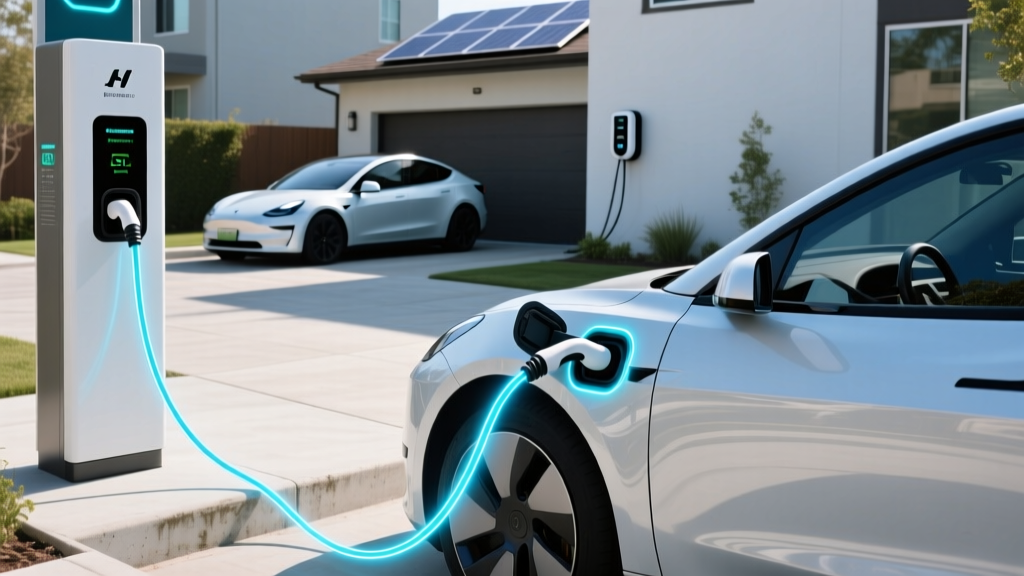
Installing a 240V Level 2 charger at home is the single highest-impact upgrade you can make for daily EV ownership. For the 2023 Model Y Performance, a full Level 2 session from 10% to 90% SoC takes approximately 7–8 hours — perfect for overnight replenishment.
Electrical Requirements
A proper home Level 2 installation for a Model Y Performance requires:
- Circuit: Dedicated 60-amp breaker (supports continuous 48-amp draw per NEC 80% rule)
- Wire: 6 AWG copper (or 4 AWG aluminum) in conduit
- Outlet: NEMA 14-60 receptacle, or hardwired connection (preferred for reliability)
- Panel capacity: At least 60 amps of spare capacity on your main electrical panel
Most modern homes with 200-amp service panels have sufficient headroom. Older homes with 100-amp panels frequently do not — and this is where costs escalate significantly.
Installation Cost Breakdown
| Cost Component | Simple Install (Panel Adjacent) | Complex Install (Long Run + Panel Upgrade) |
|---|---|---|
| Level 2 Charger Equipment | $400–$600 | $400–$600 |
| Electrician Labor (2–4 hrs standard) | $600–$1,200 | $1,500–$3,000 |
| Permit & Inspection | $100–$300 | $150–$500 |
| Wire, Conduit, Breaker | $150–$400 | $400–$1,000 |
| Electrical Panel Upgrade (if needed) | N/A | $2,000–$5,000 |
| Total Estimated Cost | $1,250–$2,500 | $4,450–$10,100 |
The variance is enormous, which is why getting three quotes from licensed electricians is non-negotiable. Ask each to evaluate your panel's spare capacity and the conduit run length from panel to garage or driveway.
DC Fast Charging: Superchargers, Charge Curves, and 10–80% Times
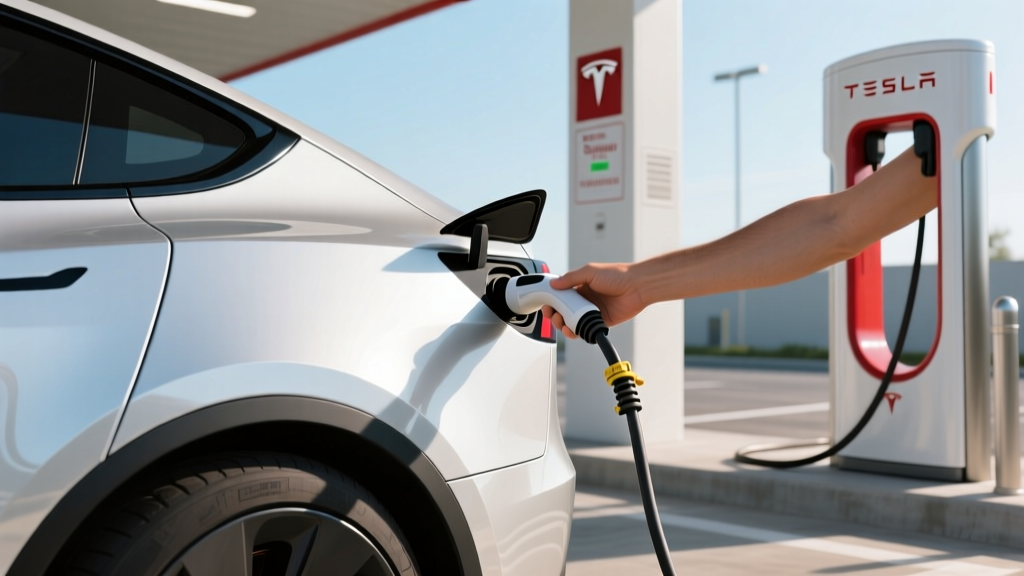
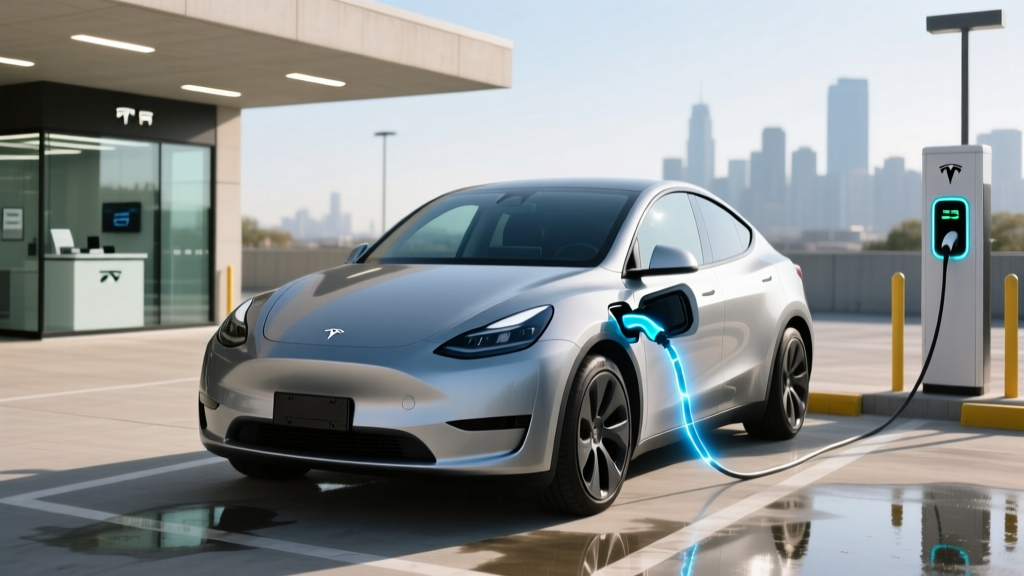
The 2023 Model Y Performance supports peak DC fast charging at 250 kW on Tesla's V3 Supercharger network. However, peak rate is not sustained rate — and understanding the charge curve is essential for road-trip planning.
How the Charge Curve Actually Works
When you plug into a V3 Supercharger at 10% SoC with a preconditioned battery, the Model Y Performance will pull close to 250 kW for roughly the first 15–20% of the session. As the battery fills, the vehicle's battery management system (BMS) progressively reduces charge rate to protect cell longevity:
- 10–30% SoC: ~200–250 kW (fastest phase)
- 30–50% SoC: ~150–200 kW
- 50–80% SoC: ~80–150 kW (progressive taper)
- 80–100% SoC: ~30–50 kW (trickle phase — avoid unless necessary)
The result: a 10–80% charge takes approximately 25–30 minutes under ideal conditions (warm battery, V3 Supercharger). Charging from 10–100% takes closer to 55–65 minutes. This is why road-trip strategy focuses on 10–80% sessions — the last 20% takes nearly as long as the first 70%.
Preconditioning Matters
If you navigate to a Supercharger using the Tesla's built-in navigation, the car automatically begins preconditioning the battery 10–20 minutes before arrival, warming it to optimal charging temperature. Without preconditioning (e.g., arriving at a charger via third-party app), peak charge rates can drop by 30–50%, especially in cold weather. Always route through the car's nav system for the fastest charge.
Connector Compatibility: NACS, CCS, and the Adapter Landscape
The 2023 Model Y Performance was built with Tesla's proprietary connector, which was subsequently renamed the North American Charging Standard (NACS) after Tesla opened the specification in late 2022. As of 2026, NACS has become the dominant connector standard in North America, adopted by Ford, GM, Rivian, Hyundai, and most major automakers.
| Connector Standard | Primary Users | Max DC kW | Model Y Compatibility |
|---|---|---|---|
| NACS (Tesla) | Tesla, Ford, GM, Rivian, Hyundai, Volvo | Up to 350 kW | Native — no adapter needed |
| CCS1 | Legacy VW, BMW, older non-Tesla EVs | Up to 350 kW | Via Tesla CCS adapter (~$175) |
| CHAdeMO | Nissan Leaf, Mitsubishi Outlander PHEV | Up to 100 kW | Not compatible — no adapter available |
| J1772 (AC Level 1/2) | All non-Tesla EVs | N/A (AC only) | Via Tesla J1772 adapter (included) |
As a Model Y Performance owner, you have native access to the Tesla Supercharger network — the most reliable and extensive DC fast-charging network in North America with over 6,000 stations and 60,000+ individual stalls. You can also access Electrify America, EVgo, and other CCS-based networks using Tesla's CCS adapter, though reliability at non-Tesla networks remains inconsistent based on our testing.
Cost to Charge: Home vs. Public vs. Gas Comparison
One of the strongest ownership arguments for the Model Y Performance is fuel cost savings. But the actual numbers depend heavily on where and when you charge.
| Charging Scenario | Cost per kWh | Cost to Add 200 Miles | Cost per Mile |
|---|---|---|---|
| Home (Off-Peak Utility Rate) | $0.08–$0.12 | $4.57–$6.86 | $0.023–$0.034 |
| Home (Standard Residential Rate) | $0.14–$0.18 | $8.00–$10.29 | $0.040–$0.051 |
| Tesla Supercharger (Avg US) | $0.28–$0.36 | $16.00–$20.57 | $0.080–$0.103 |
| Electrify America / EVgo | $0.32–$0.48 | $18.29–$27.43 | $0.091–$0.137 |
| Gas Equivalent (30 MPG, $3.50/gal) | N/A | $23.33 | $0.117 |
The Model Y Performance averages approximately 3.5 miles per kWh (or 28 kWh per 100 miles) in mixed driving, per fueleconomy.gov. At home off-peak rates, you're paying roughly one-quarter to one-third what a comparable gas performance SUV would cost. Even at Supercharger rates, you're typically saving 15–30% versus gasoline.
However, if you rely exclusively on public DC fast charging at $0.35–$0.48/kWh, your per-mile cost approaches or exceeds that of a fuel-efficient gas car. This is why home charging access is the single biggest financial variable in EV ownership.
Recommended Home Charging Equipment for the Model Y Performance
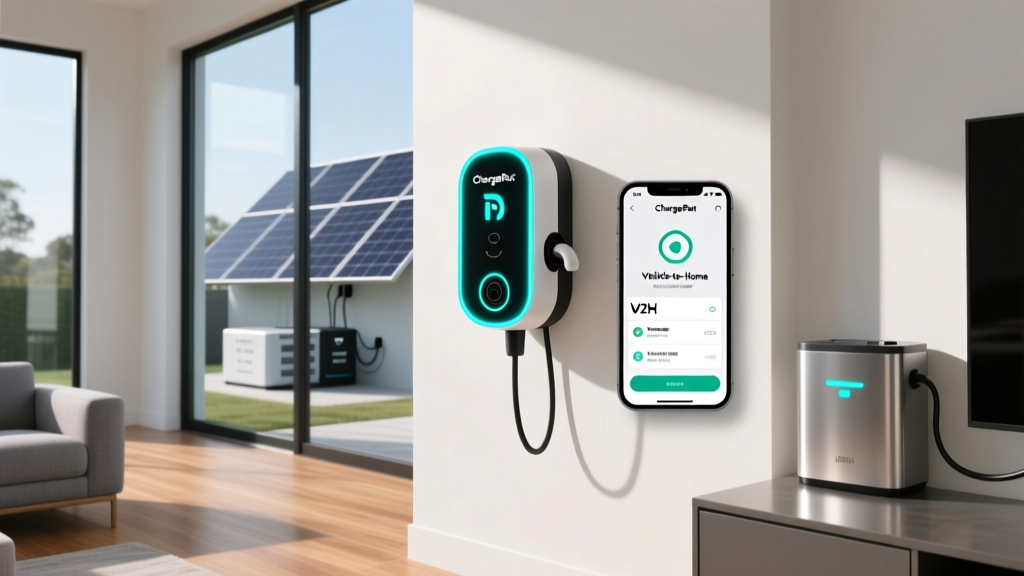
The Model Y Performance can accept up to 11.5 kW (48 amps) on Level 2 AC charging. To get the full rate, you need a 48-amp-capable charger on a 60-amp circuit. Here are our top equipment picks as of 2026:
Tesla Wall Connector
- Power Output: 11.5 kW (48A max)
- Connector: NACS native
- Cable Length: 24 ft
- Smart Features: Wi-Fi, OTA updates, power sharing between two units, access control
- Price: ~$425
- Verdict: Best integration for Tesla owners. Cleanest install with NACS plug — no adapter needed.
ChargePoint Home Flex
- Power Output: Up to 12 kW (50A, configurable down to 16A)
- Connector: J1772 (NACS adapter included or use Tesla's J1772 adapter)
- Cable Length: 23 ft
- Smart Features: Wi-Fi, Alexa integration, scheduling, detailed energy tracking via app
- Price: ~$550–$650
- Verdict: Best for mixed-EV households. Adjustable amperage means it works on smaller circuits.
Emporia Level 2 EV Charger
- Power Output: 11.5 kW (48A)
- Connector: J1772 (use Tesla adapter)
- Cable Length: 24 ft
- Smart Features: Wi-Fi, solar integration, energy monitoring, works with Emporia home energy panel
- Price: ~$350–$400
- Verdict: Best budget smart charger. Excellent if you have or plan to add solar.
Grizzl-E Smart
- Power Output: 10 kW (40A)
- Connector: J1772 (use Tesla adapter)
- Cable Length: 24 ft
- Smart Features: Wi-Fi, OCPP protocol, works with multiple charging apps
- Price: ~$400–$500
- Verdict: Rugged Canadian-built unit rated to -40°F. Best for extreme cold climates and outdoor installs.
For a single-Tesla household, the Tesla Wall Connector is the clear recommendation — native NACS plug, best price for 48-amp output, and seamless integration with the Tesla app. For households with both a Tesla and a non-Tesla EV, the ChargePoint Home Flex offers the most flexibility.
Safety, Electrical Code, and Permit Requirements
A Level 2 EV charger is a significant electrical load — comparable to an electric oven or dryer. Cutting corners on installation creates fire risk and may void your homeowner's insurance. Here's what code compliance requires:
- Dedicated circuit: The charger must be on its own dedicated breaker — never shared with other appliances or outlets.
- GFCI protection: The 2020 and 2023 National Electrical Code (NEC) requires GFCI protection for all EV charging receptacles, including 240V outlets. Hardwired installations may have different requirements depending on jurisdiction.
- Outdoor rating: If your charger is mounted outside, the unit must carry a NEMA 4 or NEMA 4X rating. All four chargers recommended above meet this standard.
- Permit: Most jurisdictions require an electrical permit for EV charger installation. The permit fee typically runs $100–$300 and includes a post-install inspection. Skipping the permit risks code violations, insurance claim denials, and issues at home sale.
- Load calculation: Your electrician must perform a NEC Article 220 load calculation to verify your panel can handle the additional 48-amp continuous load. If the calculation shows insufficient capacity, a panel upgrade is mandatory — not optional.
Some utilities offer rebates of $250–$1,000 for permitted Level 2 installations, and certain states offer additional tax credits. Check with your local utility and your tax professional about eligibility. Note that the federal IRS §30D tax credit applies to vehicle purchases, not charging equipment — though the separate §30C alternative fuel vehicle refueling property credit may cover up to $1,000 of home charger installation costs if you live in an eligible census tract.
Frequently Asked Questions
How much does it cost to install a home EV charger for a Model Y Performance?
For a straightforward installation with a 200-amp panel and a short conduit run, expect $1,250–$2,500 total (equipment, electrician, permit, and materials). If your home requires a panel upgrade from 100A to 200A service, total costs can reach $4,500–$10,000. Always get three quotes from licensed electricians and ask for a detailed load calculation.
How fast will each charging level add range to my Model Y Performance?
Level 1 (120V) adds roughly 4–5 miles per hour. Level 2 (240V, 48A) adds approximately 35–40 miles per hour. A Tesla V3 Supercharger at peak rate can add over 200 miles in 15 minutes, though the full 10–80% session takes 25–30 minutes due to charge-curve tapering.
Which connector is compatible with the 2023 Model Y Performance?
The 2023 Model Y Performance uses the NACS (Tesla) connector natively for both AC and DC charging. You can access CCS1-based public chargers using Tesla's CCS adapter (~$175). The included J1772 adapter allows use of non-Tesla Level 2 chargers. CHAdeMO chargers are not compatible.
How much does charging a Model Y Performance cost per mile compared to gas?
Charging at home on off-peak electricity ($0.10/kWh) costs approximately $0.028 per mile. Using Tesla Superchargers ($0.32/kWh average) costs roughly $0.091 per mile. A comparable gas performance SUV at 25 MPG with $3.50/gallon fuel costs $0.14 per mile. Home charging delivers 75–80% fuel cost savings versus gasoline.
What electrical upgrades might my home need for a Level 2 charger?
The most common upgrade is a panel capacity increase from 100 amps to 200 amps, which costs $2,000–$5,000. You may also need a new dedicated 60-amp breaker, conduit runs through walls or underground, and a NEMA 14-60 outlet or hardwired junction box. Your electrician's load calculation will determine exactly what's required. Homes built after 2000 with 200-amp panels rarely need upgrades.
Can I charge my 2023 Model Y Performance at non-Tesla Superchargers?
Yes, with conditions. Tesla has opened portions of its Supercharger network to non-Tesla EVs via the Magic Dock adapter at select stations. For accessing other networks like Electrify America or EVgo, you'll need Tesla's CCS1 adapter. However, the Tesla Supercharger network remains the most reliable option, with fewer out-of-service stalls and simpler plug-and-charge authentication.
Does frequent DC fast charging degrade the Model Y Performance battery?
Research from NREL and real-world fleet data show that moderate DC fast charging (2–3 times per week) causes marginally more degradation than Level 2 charging — roughly 1–3% additional capacity loss over 100,000 miles. Tesla's BMS and thermal management system actively protect the battery. The 2023 Model Y's battery warranty covers 8 years or 120,000 miles (whichever comes first) against degradation below 70% of original capacity. For daily use, Level 2 home charging is recommended; reserve DC fast charging for road trips.