Quick Verdict: What Model Y Long Range Owners Need to Know About Charging
If you're researching the Model Y longest range configuration, you're looking at the 2025/2026 Tesla Model Y Long Range AWD with an EPA-estimated 320 miles of range (real-world highway driving typically yields 270–290 miles, and cold weather can drop that to 230–250 miles). That's backed by an ~82 kWh usable battery (NMC chemistry) and a peak DC fast-charge rate of 250 kW on V3 Superchargers.
But range is only half the equation. How you charge — at home, on the road, and at what cost — determines whether the Model Y Long Range delivers on its efficiency promise or becomes a source of frustration. This guide covers the exact electrical requirements, install costs, charge times, and per-mile economics you need before plugging in.
- EPA sticker: 320 miles
- Real-world highway (70 mph, 72°F): ~275–290 miles
- Cold weather (32°F, highway): ~230–250 miles (25–30% loss typical for NMC packs without heat pump preconditioning)
- Efficiency: 122 MPGe combined / 28 kWh/100mi (source: fueleconomy.gov)
Charging Levels Explained: kW, Miles Per Hour, and What They Mean
The single most important distinction in EV charging: kW (kilowatts) measures power — the rate at which energy flows into your battery. kWh (kilowatt-hours) measures energy — the total capacity of your battery. Think of kW as the width of a hose and kWh as the size of the bucket. The Model Y Long Range has an ~82 kWh bucket; how fast you fill it depends on the kW rate.
| Level | Voltage / Amps | Power (kW) | Miles of Range Added Per Hour | 0–80% Time (approx.) |
|---|---|---|---|---|
| Level 1 (120V household) | 120V / 12A | ~1.4 kW | ~3–4 mi/hr | ~60+ hours |
| Level 2 (240V home/public) | 240V / 48A | ~11.5 kW | ~30–37 mi/hr | ~7–8 hours (full) |
| DC Fast (V3 Supercharger) | 400V architecture | Peak 250 kW | ~1,000+ mi/hr (peak) | ~25–30 min (10–80%) |
Charging curve reality: The Model Y Long Range will not sustain 250 kW for the entire session. Peak rate applies roughly between 10–30% State of Charge (SoC). From 30–60%, expect ~150–180 kW. Above 80%, the rate tapers sharply to protect battery health — often dropping below 50 kW. This is why manufacturers quote 10–80% times rather than 0–100%.
Home Level 2 Installation: Electrical Requirements, Panel Upgrades & Costs
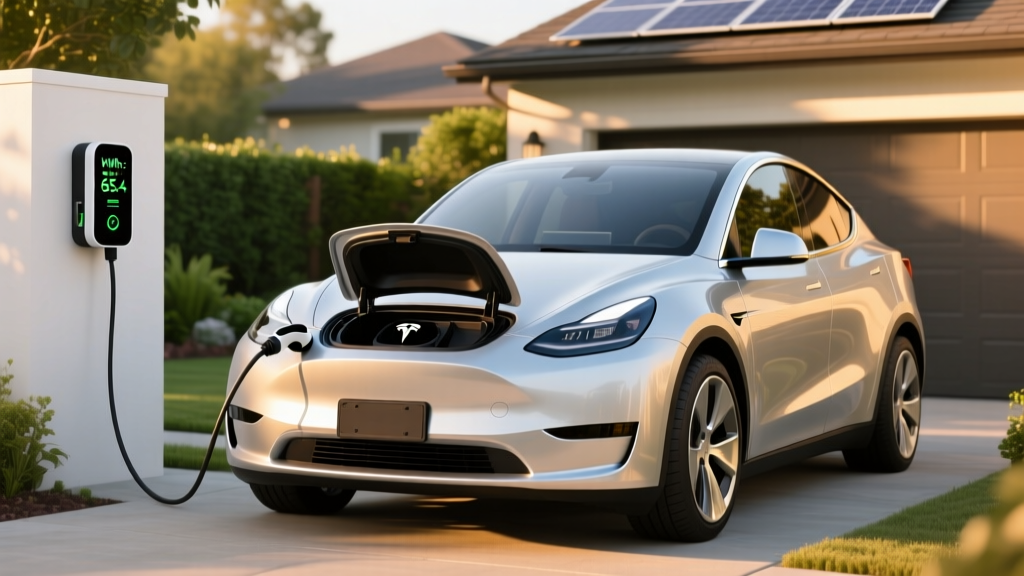
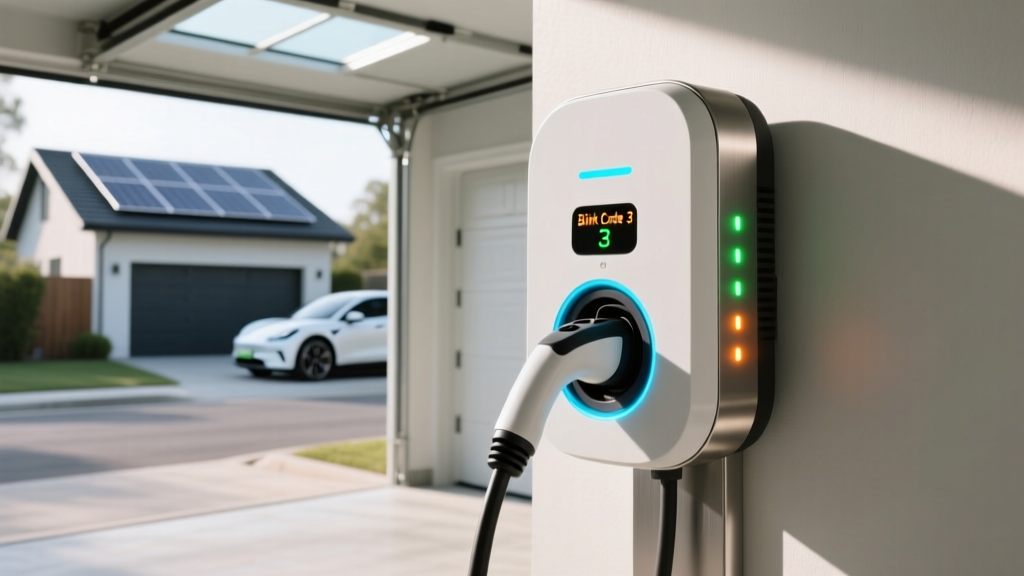
Level 2 home charging is where most Model Y owners do 85–95% of their charging. The Tesla Wall Connector (Gen 3) delivers up to 11.5 kW (48A) on a 60A dedicated circuit, adding roughly 37 miles of range per hour — enough to fully replenish a depleted Model Y Long Range overnight.
Electrical Requirements
- Circuit: 60A dedicated breaker (240V) for full 48A continuous charge rate; a 50A breaker / 40A charge is acceptable if panel capacity is limited
- Wire gauge: 6 AWG copper (THHN in conduit) for 60A; 8 AWG for 50A
- Panel capacity: Your main service panel must have physical breaker space AND sufficient amperage headroom. A 200A panel is standard for modern homes; older 100A panels often require an upgrade
- Permit: Required in virtually all US jurisdictions — typically a $50–$200 electrical permit
Will You Need a Panel Upgrade?
If your home has a 100A service panel, adding a 60A EV circuit will likely exceed capacity (the NEC 80% rule means a continuous 48A load counts as 60A against your panel's rating). A panel upgrade to 200A costs $1,500–$3,500 depending on your utility and region. Homes built after 2000 with 200A panels usually have sufficient headroom, but an electrician's load calculation is mandatory.
| Component | Simple Install (panel nearby) | Complex Install (long run / panel upgrade) |
|---|---|---|
| Charger hardware (Tesla Wall Connector) | $475 | $475 |
| Electrician labor (2–8 hrs @ $85–$150/hr) | $250–$500 | $800–$2,000 |
| Materials (wire, conduit, breaker) | $100–$200 | $300–$600 |
| Permit | $50–$150 | $50–$200 |
| Panel upgrade (if needed) | $0 | $1,500–$3,500 |
| Total | $875–$1,325 | $3,125–$6,775 |
Federal incentive note: The §30D alternative fuel vehicle refueling property credit covers up to 30% of home charger equipment and installation costs (capped at $1,000). Income limits and census-tract eligibility apply — verify current-year rules at irs.gov.
Connector Compatibility: NACS, CCS & Adapter Realities
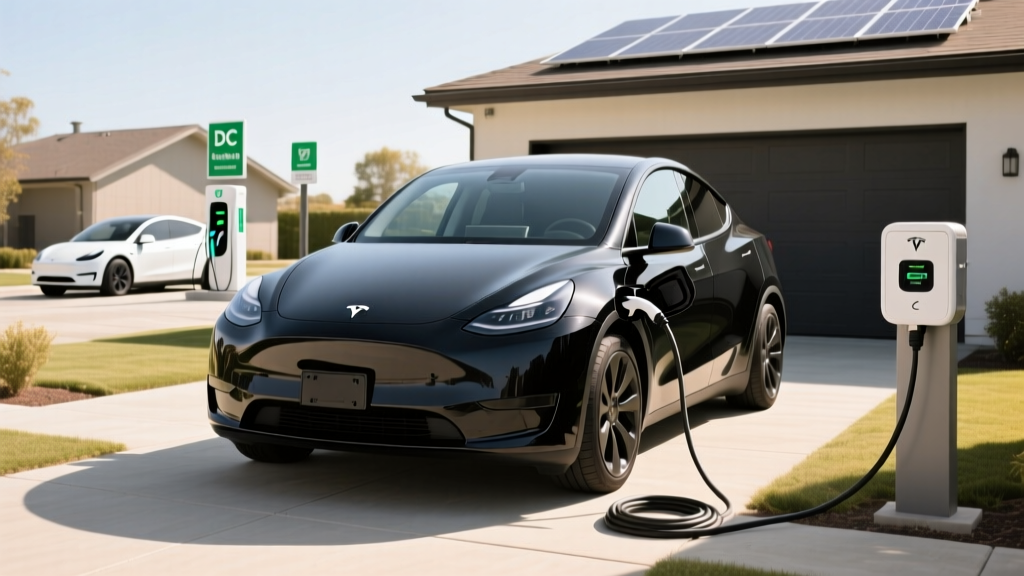
Tesla uses the North American Charging Standard (NACS) connector — now adopted industry-wide. The Model Y Long Range ships with a native NACS port. Here's how that translates across charging networks:
| Network / Standard | Connector | Compatible? | Adapter Needed? |
|---|---|---|---|
| Tesla Supercharger (V2/V3/V4) | NACS | ✅ Native | No |
| Electrify America / EVgo / ChargePoint (CCS stations) | CCS1 | ✅ With adapter | NACS-to-CCS adapter (~$175–$250) |
| CHAdeMO (Nissan Leaf-era stations) | CHAdeMO | ❌ Not practical | No reliable adapter available |
| Level 2 public (J1772 stations) | J1772 | ✅ With adapter | J1772-to-NACS (included with vehicle) |
By 2026, most major DC fast-charging networks are transitioning to NACS connectors, but CCS1 stations remain common. Carrying a NACS-to-CCS adapter in your frunk ensures you're never stranded at a CCS-only plaza.
Cost to Charge: Home vs. Public vs. Gas Comparison
The economics of charging a Model Y Long Range vary dramatically depending on where and when you plug in. Below, we model costs based on the vehicle's real-world efficiency of ~28 kWh/100 miles:
| Scenario | Rate | Cost per 100 Miles | Cost per Mile |
|---|---|---|---|
| Home off-peak (utility time-of-use) | $0.09/kWh | $2.52 | $0.025 |
| Home standard rate | $0.16/kWh | $4.48 | $0.045 |
| Public Level 2 (ChargePoint, etc.) | $0.30/kWh | $8.40 | $0.084 |
| DC Fast Charging (Supercharger avg.) | $0.35/kWh | $9.80 | $0.098 |
| Gas equivalent (28 MPG avg, $3.50/gal) | $3.50/gallon | $12.50 | $0.125 |
Annual savings estimate: At 12,000 miles/year and home off-peak charging, a Model Y Long Range owner spends ~$302/year on electricity vs. ~$1,500 for gas in a comparable 28 MPG crossover — a $1,198 annual fuel savings. Even exclusive Supercharger use ($1,176/year) undercuts gasoline.
Recommended Home Charging Equipment for the Model Y Long Range
Not all Level 2 chargers are equal. Here are three proven options matched to the Model Y's 11.5 kW onboard charger maximum:
🏆 Best Overall: Tesla Wall Connector (Gen 3)
- Power output: Up to 11.5 kW (48A)
- Connector: Native NACS — no adapter needed
- Cable length: 24 ft
- Smart features: Wi-Fi updates, power sharing (pair two units on one circuit), load management
- Price: $475
- Why: Seamless Tesla integration, fastest Level 2 rate for Model Y, clean aesthetic
🔌 Best Universal: ChargePoint Home Flex
- Power output: Up to 12 kW (50A, configurable down to 16A)
- Connector: J1772 (NACS adapter needed) or NACS version available
- Cable length: 23 ft
- Smart features: App scheduling, Alexa integration, flexible amperage for panel-limited homes
- Price: $549–$599
- Why: Adjustable amperage means you can install on a 20A–60A circuit — ideal for older panels
💰 Budget Pick: Emporia Vue Level 2
- Power output: Up to 11.5 kW (48A)
- Connector: J1772 or NACS
- Cable length: 24 ft
- Smart features: Energy monitoring, solar integration, scheduling
- Price: $399
- Why: Lowest price for full 48A output; excellent energy monitoring via Emporia ecosystem
Safety, Code & Installation Best Practices
EV charging is a high-draw, continuous electrical load — the National Electrical Code (NEC) treats it seriously. Key requirements and best practices:
- Dedicated circuit: Your Level 2 charger must be on its own dedicated breaker — no sharing with other appliances
- GFCI protection: NEC 2020+ requires GFCI protection for outdoor receptacles; hardwired installations (recommended) may bypass this in some jurisdictions, but a GFCI breaker adds safety
- Outdoor rating: If installing outdoors, the charger must carry a NEMA 4 or IP65 weather rating (Tesla Wall Connector and ChargePoint Home Flex both qualify)
- Hardwired vs. plug: Hardwired installations (no plug) are preferred for 48A+ chargers — they eliminate a failure point and avoid NEC receptacle-rating complications. A NEMA 14-50 plug is acceptable at 40A or below
- Load calculation: A licensed electrician must perform a NEC Article 220 load calculation to confirm your panel can handle the continuous draw
Frequently Asked Questions
How much does it cost to install a home EV charger for a Model Y Long Range?
A straightforward installation (electrical panel near the garage, 200A service) typically costs $875–$1,325 including the Tesla Wall Connector, electrician labor, materials, and permit. Complex installations requiring long wire runs, conduit, or a panel upgrade to 200A can reach $3,125–$6,775. Always get 2–3 quotes from licensed electricians.
How fast will each charging level add range to the Model Y Long Range?
Level 1 (120V): ~3–4 miles per hour. Level 2 (240V, 48A): ~30–37 miles per hour. DC Fast (250 kW V3 Supercharger): up to 175 miles in 15 minutes at peak rate, though the charge curve tapers significantly above 60% SoC.
Which connector is compatible with the Model Y Long Range?
The Model Y uses the native NACS connector for both Level 2 and DC fast charging. It is directly compatible with all Tesla Superchargers and the growing number of NACS-equipped public stations. For legacy CCS1 stations, a NACS-to-CCS adapter (~$175–$250) is required. A J1772-to-NACS adapter (typically included with the vehicle) handles public Level 2 stations.
How much does charging a Model Y Long Range cost per mile vs. gas?
Home off-peak charging costs approximately $0.025/mile. Standard-rate home charging: ~$0.045/mile. Supercharger average: ~$0.098/mile. A comparable 28 MPG gas crossover at $3.50/gallon costs ~$0.125/mile. Even the most expensive charging scenario (public DC fast) beats gasoline per mile.
What electrical upgrades might I need for a home charger?
The most common upgrade is a panel upgrade from 100A to 200A service ($1,500–$3,500) if your existing panel lacks capacity for a 60A dedicated circuit. You may also need a new breaker slot, heavier-gauge service entrance wiring, or utility coordination. Homes with 200A panels built after 2000 rarely need upgrades — but a professional load calculation is the only way to confirm.
Does DC fast charging degrade the Model Y Long Range battery?
Occasional DC fast charging has minimal impact. Tesla's battery management system (BMS) actively manages cell temperature and limits charge rate to protect longevity. Frequent daily DC fast charging (especially to 100% SoC) will accelerate degradation — Tesla recommends keeping daily charge limits at 80% for NMC chemistry and using DC fast charging primarily for road trips. The battery warranty covers 8 years / 120,000 miles with a minimum 70% capacity retention threshold.