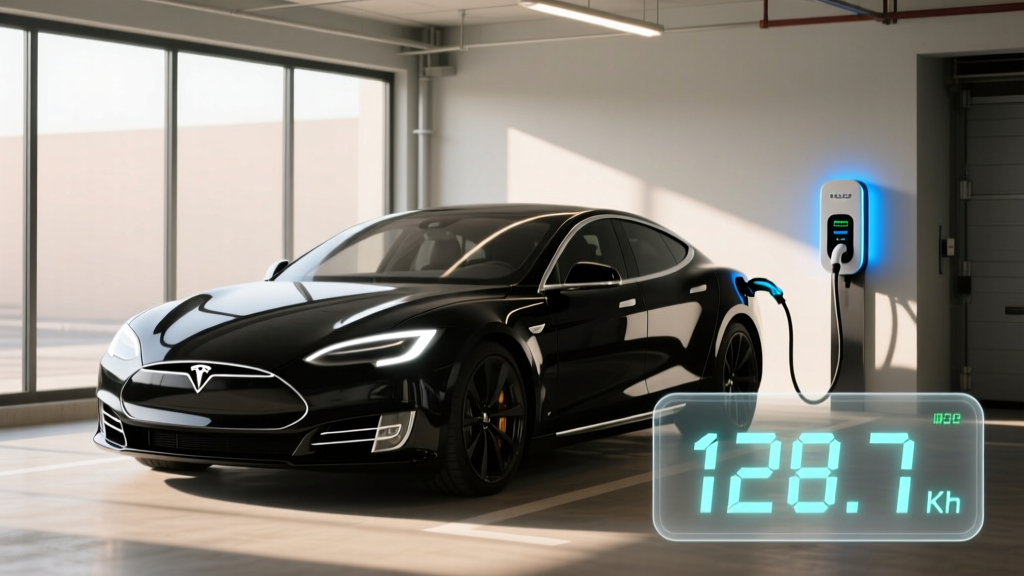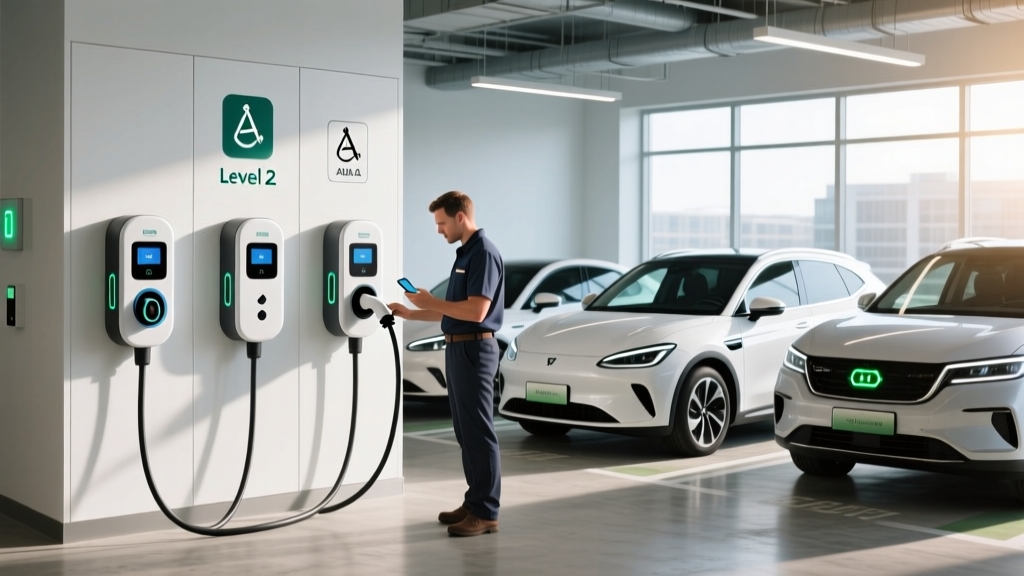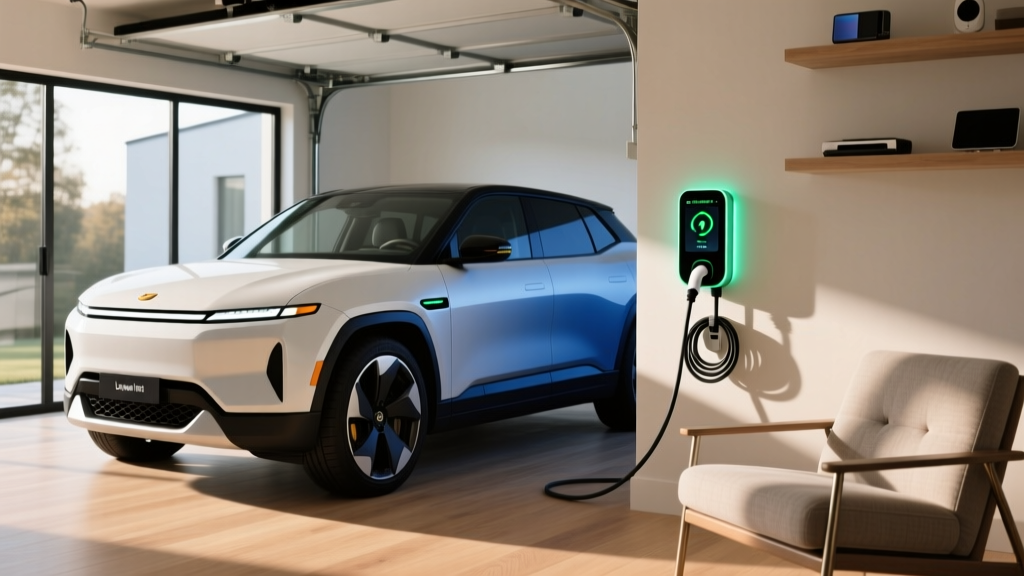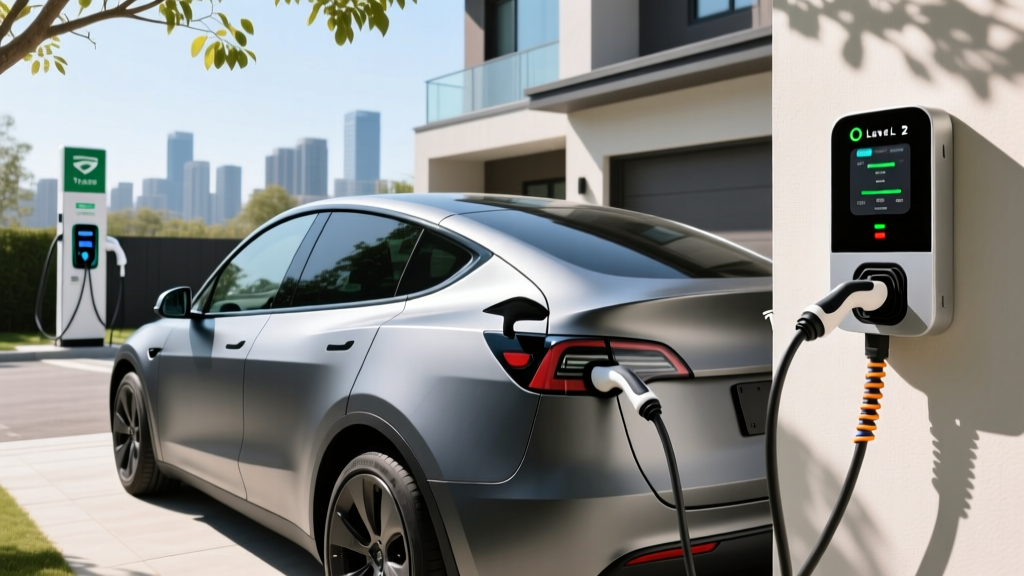
If you own or are considering a Tesla Model Y Long Range RWD — including the China-built (Shanghai Gigafactory) variants exported to select markets — understanding your charging options is the single most important ownership decision after the purchase itself. The China-export Model Y Long Range RWD typically ships with a CATL or LG Energy Solution battery pack in the 75–82 kWh usable range, paired with Tesla's NACS (North American Charging Standard) port in North America or a CCS2 port in European and Asia-Pacific markets. This guide breaks down exactly how to charge it at home, on the road, and what equipment you need, with real numbers — not marketing fluff.
Understanding Charging Levels: How Fast Will Each Add Range?
EV charging operates on three primary tiers. The critical distinction: kW (kilowatts) measures power — how fast energy flows into your battery. kWh (kilowatt-hours) measures energy capacity — how much your battery holds. Think of kW as the width of a hose and kWh as the size of the bucket.
| Level | Voltage / Amps | Power (kW) | Miles of Range / Hour | Best For |
|---|---|---|---|---|
| Level 1 (120V) | 120V / 12A | ~1.4 kW | 3–5 mi/hr | Overnight top-ups, low daily mileage |
| Level 2 (240V) | 240V / 32–48A | 7.7–11.5 kW | 25–44 mi/hr | Daily home charging, full overnight refill |
| DC Fast Charging | 400–800V DC | 50–250 kW | 150–1,000+ mi/hr (peak) | Road trips, rapid top-ups |
For the Model Y Long Range RWD (China-built), the onboard charger accepts up to 11.5 kW on Level 2 (48A at 240V). On DC fast charging via Tesla Supercharger V3/V4 stalls, it peaks at approximately 250 kW, though sustained rates depend on battery temperature and state of charge (SoC). Expect a 10–80% charge in roughly 25–30 minutes at a V3 Supercharger under optimal conditions — with the charge curve tapering significantly above 80% SoC to protect battery longevity.
Home Charging Installation: Electrical Requirements & Costs
Home Level 2 charging is the backbone of practical EV ownership. For the Model Y Long Range RWD, you'll want a 240V circuit capable of delivering at least 40A (for a 48A continuous-capable charger, electrical code requires the circuit be rated at 125% of the continuous load — so a 60A breaker is standard for a 48A charger).
What Electrical Upgrades Might You Need?
Before installing, assess your home's electrical panel:
- Panel capacity: Most modern homes have 200A service. A 60A EV circuit consumes 30% of that. If your panel is already heavily loaded (electric range, dryer, HVAC, hot tub), you may need a panel upgrade to 300–400A or a load-management device.
- Available breaker slots: You need two adjacent slots for a 240V double-pole breaker.
- Wire gauge: A 60A circuit requires 6 AWG copper wire (THHN in conduit or NM-B/Romex rated for 60A where local code permits). Longer runs may require 4 AWG to minimize voltage drop.
- Permits: Nearly all jurisdictions require an electrical permit for a new 240V circuit. Permit fees typically range from $50–$250 depending on locality.
| Cost Component | Typical Range | Notes |
|---|---|---|
| Level 2 Charger (hardware) | $400–$700 | 48A smart charger, NACS connector |
| Electrician labor (standard install) | $500–$1,500 | Short run from panel to garage, no panel upgrade |
| Electrical permit | $50–$250 | Varies by municipality |
| Panel upgrade (if needed) | $1,500–$4,000 | 200A → 300/400A service; not always required |
| Conduit/wire (long runs) | $200–$800 | Adds $5–$15/ft for runs over 50 ft |
| Total (no panel upgrade) | $950–$2,450 | Most common scenario for modern homes |
| Total (with panel upgrade) | $2,450–$6,450 | Older homes with 100–150A service |
Always get at least two quotes from licensed electricians and confirm they pull the required permit. Unpermitted work can void homeowner's insurance coverage and cause issues at resale. For the final electrical specification, defer to a licensed electrician who can evaluate your specific panel load.
Which Connector Is Compatible with the Model Y Long Range RWD (China)?
This is where the China-built Model Y adds complexity. Tesla's Shanghai Gigafactory exports vehicles to multiple regions, and the charge port varies by destination market:
| Market / Region | Charge Port | Home Charging | Public DC Fast Charging |
|---|---|---|---|
| North America (US/Canada) | NACS (Tesla proprietary) | NACS Wall Connector or J1772 with adapter | Tesla Supercharger; CCS via Magic Dock adapter at select stalls |
| Europe | CCS2 | Type 2 cable (included) | CCS2 public chargers; Tesla Supercharger (CCS2-equipped) |
| China (domestic) | GB/T | GB/T home charger | GB/T public DC network |
| Australia / NZ / Asia-Pacific | CCS2 | Type 2 cable | CCS2 public chargers |
Key takeaway: If you're importing or purchasing a China-built Model Y Long Range RWD in North America, it will have a NACS port and is fully compatible with the Tesla Supercharger network and Tesla Wall Connector. No adapter is needed for Tesla's ecosystem. For non-Tesla public chargers using CCS1, Tesla now offers the Tesla CCS Adapter (~$175) or you may use stations equipped with Tesla's Magic Dock. As of 2026, the NACS standard has been widely adopted by other automakers, meaning NACS-equipped Supercharger stalls are increasingly open to non-Tesla EVs — but your Model Y has native access.
Recommended Home Charging Equipment for the Model Y
Here are three proven Level 2 chargers well-suited to the Model Y Long Range RWD, evaluated on power output, cable length, smart features, build quality, and price:
Tesla Wall Connector (Gen 3)
- Power Output: Up to 11.5 kW (48A at 240V)
- Connector: NACS (native Tesla)
- Cable Length: 24 ft
- Smart Features: Wi-Fi for firmware updates, load sharing between multiple units, access control
- Price: ~$475
- Best For: Tesla-only households; cleanest integration with the car's app and scheduling
ChargePoint Home Flex
- Power Output: Up to 12 kW (50A at 240V) — configurable via DIP switches
- Connector: NACS (2025+ models) or J1772 (with Tesla adapter included)
- Cable Length: 23 ft
- Smart Features: Wi-Fi, app-based scheduling, energy tracking, Alexa/Google Home integration
- Price: ~$599–$649
- Best For: Multi-EV households or those wanting detailed energy analytics
Emporia Vue Level 2 Charger
- Power Output: Up to 11.5 kW (48A at 240V)
- Connector: J1772 (NACS adapter required for Tesla) or NACS (newer SKUs)
- Cable Length: 24 ft
- Smart Features: Wi-Fi, app scheduling, integration with Emporia home energy monitor, solar-aware charging
- Price: ~$399–$499
- Best For: Budget-conscious buyers; excellent value with robust smart features
For the Model Y Long Range RWD (China-built with NACS), the Tesla Wall Connector offers the most seamless experience — no adapter needed, and the car's built-in charge scheduling integrates directly. If you also own a non-Tesla EV, the ChargePoint Home Flex with its configurable amperage is the more versatile pick.
Cost to Charge: Home vs. Public vs. Gas Comparison
One of the strongest economic arguments for the Model Y Long Range RWD is the cost-per-mile advantage of electricity over gasoline. Here's how it breaks down across common charging scenarios:
| Charging Scenario | Cost per kWh | Cost to Add 200 Miles* | Cost per Mile |
|---|---|---|---|
| Home (off-peak utility rate) | $0.08–$0.14 | $5.60–$9.80 | $0.028–$0.049 |
| Home (average US rate, ~$0.16) | $0.16 | $11.20 | $0.056 |
| Public Level 2 (ChargePoint, EVgo L2) | $0.25–$0.49 | $17.50–$34.30 | $0.088–$0.172 |
| Tesla Supercharger (avg US) | $0.28–$0.36 | $19.60–$25.20 | $0.098–$0.126 |
| Electrify America / third-party DCFC | $0.35–$0.55 | $24.50–$38.50 | $0.123–$0.193 |
| Gas equivalent (25 MPG, $3.40/gal) | — | $27.20 | $0.136 |
*Based on the Model Y Long Range RWD consuming approximately 3.5–4.0 miles per kWh (roughly 25–28 kWh per 100 miles), per EPA data on fueleconomy.gov. Actual consumption varies with speed, temperature, and terrain.
The bottom line: Home charging on an off-peak rate is roughly one-quarter to one-third the per-mile cost of gasoline. Even Tesla Supercharging at $0.32/kWh averages cheaper than gas in most US markets. The cost advantage narrows significantly if you rely exclusively on expensive public DC fast chargers — another reason home Level 2 installation pays for itself within 1–3 years for most drivers.
DC Fast Charging Times: 10–80% Expectations
The Model Y Long Range RWD's ~78 kWh usable battery charges on DC fast chargers at rates that depend on the charger's peak output and the battery's charge curve. Here are realistic 10–80% times across common charger types:
- Tesla Supercharger V4 (250 kW peak): ~25–28 minutes. The car peaks around 250 kW at low SoC but tapers to ~100 kW by 60% and ~40 kW by 80%.
- Tesla Supercharger V3 (250 kW peak): ~27–32 minutes, depending on battery preconditioning.
- 150 kW DCFC (Electrify America, EVgo): ~35–40 minutes (10–80%).
- 50 kW DCFC (older CHAdeMO/CCS stations): ~70–85 minutes (10–80%) — avoid these for road trips if possible.
Preconditioning matters: When you navigate to a Supercharger in the Model Y's built-in navigation, the car automatically warms the battery to optimal charging temperature. Without preconditioning — for example, arriving at a non-Tesla DCFC after cold-soaking — your peak charge rate may be 30–50% lower for the first 5–10 minutes. Always use in-car navigation to route to chargers when possible.
Safety, Electrical Code & Best Practices
EV charger installation must comply with the National Electrical Code (NEC) and local amendments. Key requirements:
- Dedicated circuit: Your Level 2 charger must be on its own dedicated double-pole breaker — no sharing with other appliances.
- GFCI protection: NEC 2020 and later require GFCI protection for all 240V EV charging outlets (NEMA 14-50). Hardwired installations may be exempt in some jurisdictions — ask your electrician.
- Outdoor rating: If mounting outdoors, the charger must carry a NEMA 4 or IP65 rating. The Tesla Wall Connector and ChargePoint Home Flex both qualify.
- Cable management: Avoid running charging cables across walkways or driveways where they create trip hazards or can be damaged by vehicles.
- Load management: If your panel is near capacity, consider a smart load-management system (e.g., Emporia's load balancer or the Department of Energy-recommended solutions) that dynamically reduces charger draw when other high-load appliances activate.
Frequently Asked Questions
How much does it cost to install a home EV charger for the Model Y Long Range RWD?
For a typical installation with no panel upgrade, expect $950–$2,450 total (charger + electrician + permit). If your home needs a panel upgrade from 100/150A to 200A+, add $1,500–$4,000. Always get itemized quotes and confirm the permit is pulled.
Can I charge the China-built Model Y on non-Tesla public chargers?
In North America, yes — with the Tesla CCS Adapter (~$175), you can use any CCS1-equipped DC fast charger (Electrify America, EVgo, etc.). Without the adapter, you're limited to Tesla Superchargers and destination chargers. In Europe and Asia-Pacific, the CCS2 port works natively with the public charging network.
How fast does the Model Y Long Range RWD charge at home on Level 2?
At 11.5 kW (48A, 240V), you'll add approximately 40–44 miles of range per hour. A full charge from 10% to 100% takes roughly 7–8 hours — ideal for overnight charging. At 32A (7.7 kW), expect about 28–30 miles per hour and a 10–100% time of approximately 10 hours.
Is a NEMA 14-50 outlet better than hardwiring the charger?
A NEMA 14-50 outlet offers portability — you can unplug and take the charger when you move. However, hardwired installations eliminate the GFCI breaker requirement (in many jurisdictions), reduce failure points, and are generally preferred for permanent installations. Discuss both options with your electrician.
Does frequent DC fast charging degrade the Model Y battery?
DC fast charging generates more heat than Level 2, which accelerates degradation slightly over time. Tesla's battery management system actively mitigates this. Data from long-term fleet studies suggests exclusive DCFC use may add 1–3% additional degradation over 100,000 miles compared to primarily Level 2 charging. For daily use, Level 2 is recommended; reserve DCFC for road trips. Tesla's battery warranty covers 8 years / 120,000 miles with a minimum 70% capacity retention threshold — see Tesla's warranty documentation for full terms.
What about the §30D federal tax credit and home charger credit?
The §30D clean vehicle credit applies to the vehicle purchase (up to $7,500, subject to MSRP caps, buyer income limits, and battery sourcing requirements — see IRS guidelines). Separately, the §30C Alternative Fuel Vehicle Refueling Property Credit may cover up to 30% of home charger equipment and installation costs (capped at $1,000), but only if you live in an eligible census tract. Consult a tax professional for your specific eligibility.