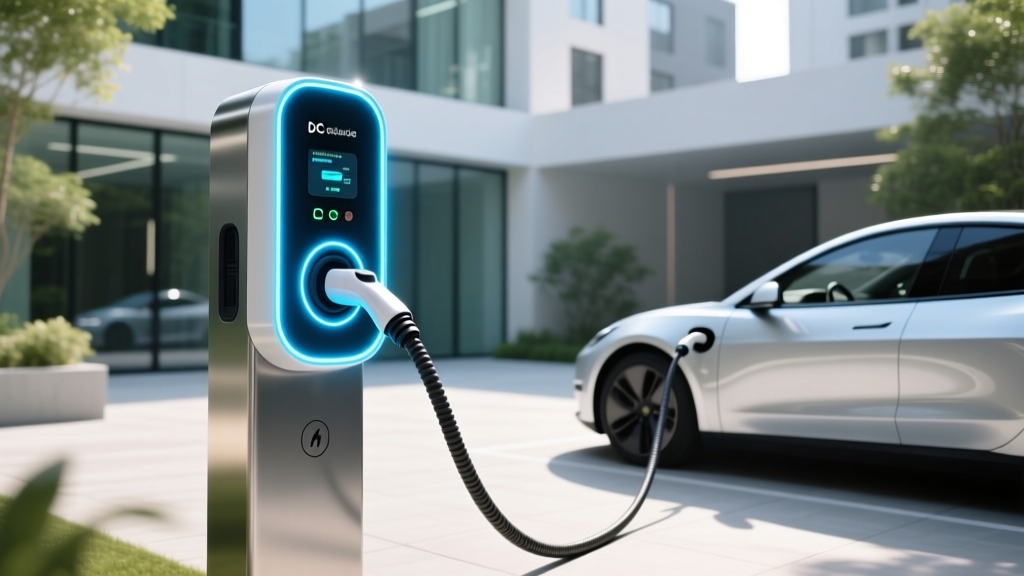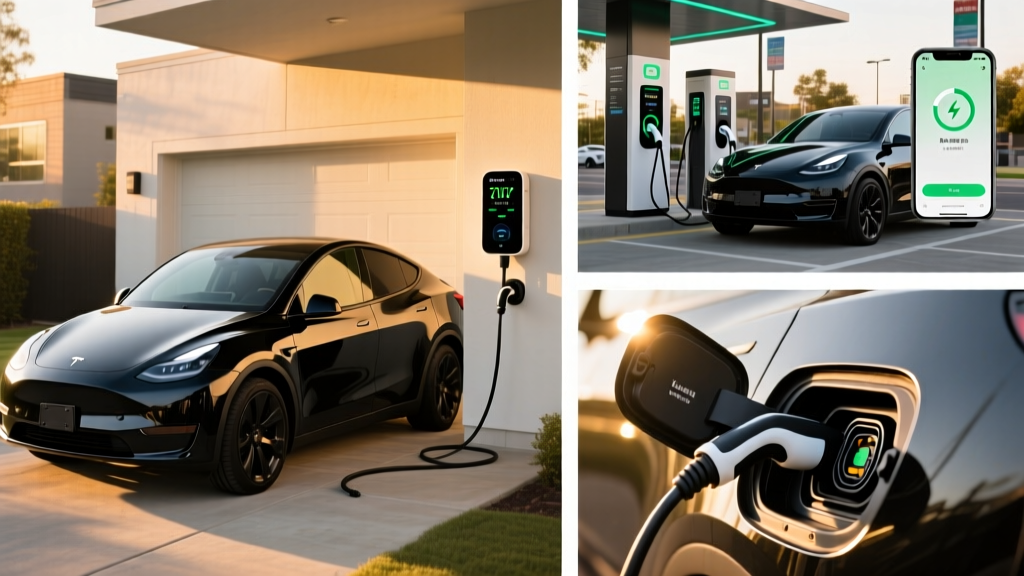
The Tesla Model Y Long Range AWD is one of the most popular electric vehicles on the road, and for good reason: an EPA-estimated 337 miles of range, dual-motor all-wheel drive, and access to Tesla's Supercharger network. But owning one means understanding how to charge it efficiently, affordably, and safely — whether you're plugging in at home, pulling up to a Supercharger, or relying on public Level 2 stations.
This guide covers everything a Model Y Long Range AWD owner (or prospective buyer) needs to know about charging: the three charging levels and how fast each adds range, what a home Level 2 installation actually costs, which connectors you'll encounter, and how your per-mile fuel cost compares to a gas-powered SUV. We'll use the 2026 Model Y Long Range AWD's specs throughout — an 82 kWh battery pack (75 kWh usable), 250 kW peak DC fast-charge capability, and an 11.5 kW onboard charger for Level 2.
Understanding the Three Charging Levels
EV charging is categorized into three levels, each defined by voltage, power output (measured in kilowatts, or kW), and how quickly they replenish your battery's energy capacity (measured in kilowatt-hours, or kWh). The distinction between kW and kWh matters: kW is the rate of energy flow (like water pressure from a hose), while kWh is the total energy stored (like the size of the bucket). The Model Y Long Range AWD's 75 kWh usable battery is the bucket — the charger's kW rating determines how fast you fill it.
| Level | Voltage | Max Power (kW) | Miles of Range Added per Hour | Typical Use Case |
|---|---|---|---|---|
| Level 1 (120V) | 120V AC | ~1.4 kW | ~3–5 mi/hr | Overnight trickle, emergency top-up |
| Level 2 (240V) | 240V AC | Up to 11.5 kW (Model Y onboard limit) | ~30–44 mi/hr | Daily home charging, workplace, public L2 |
| DC Fast Charging | 400V+ DC | 250 kW peak (Supercharger V4) | ~800+ mi/hr (at peak) | Road trips, rapid top-ups |
Level 1 is included with the car via the Tesla Mobile Connector and a standard NEMA 5-15 plug. It adds roughly 4 miles of range per hour — enough if you drive under 40 miles daily and can leave the car plugged in for 10+ hours. For most owners, Level 1 is a backup option.
Level 2 is where daily charging happens. The Model Y Long Range AWD's onboard charger accepts up to 11.5 kW (48 amps), meaning a properly wired 60-amp dedicated circuit will fill the battery at the car's maximum AC rate. At 11.5 kW, you'll recover roughly 44 miles of range per hour — a full overnight session easily replenishes a day's driving.
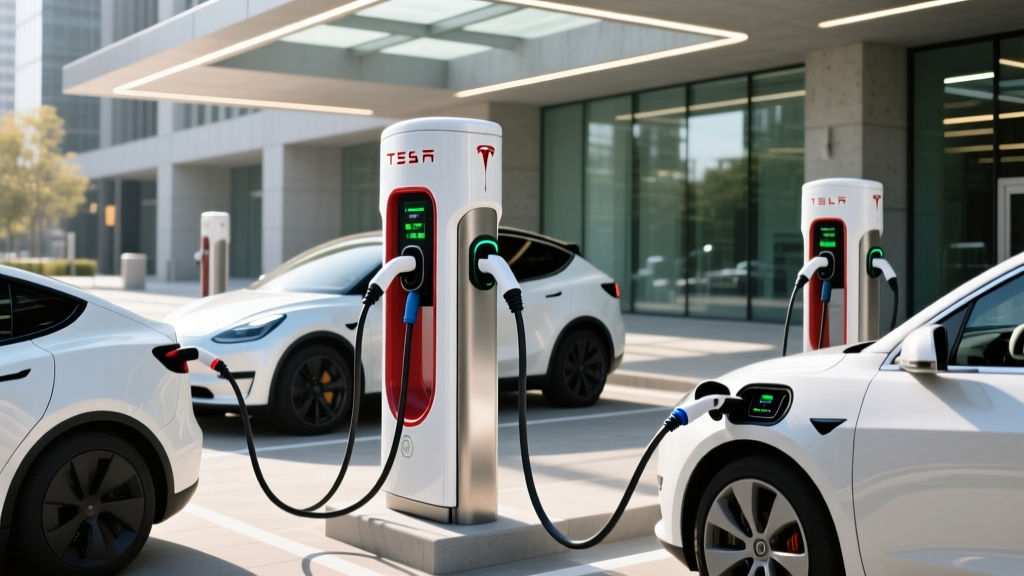
DC fast charging bypasses the onboard charger and sends direct current straight to the battery. At a Tesla Supercharger V4 stall (250 kW peak), the Model Y Long Range AWD can add up to ~200 miles in 15 minutes under ideal conditions. However, peak rate isn't sustained — the charge curve tapers significantly above 60% state of charge (SoC) to protect battery health. Expect a 10–80% session to take approximately 25–30 minutes.
Home Level 2 Installation: What It Takes and What It Costs
Installing a home Level 2 charger is the single biggest quality-of-life upgrade for a Model Y owner. You'll need a 240-volt circuit — the same voltage your electric dryer or oven uses — and a hardwired wall connector or a 240V outlet (NEMA 14-50 is the most common).
Electrical Requirements
To achieve the Model Y's full 11.5 kW AC charge rate (48A), you need a dedicated 60-amp circuit with appropriately rated wiring (typically 6 AWG copper for runs under 50 feet, 4 AWG for longer runs). The National Electrical Code (NEC) requires that continuous loads — and EV charging qualifies — use no more than 80% of a circuit's rated capacity. That's why a 48A charger requires a 60A breaker.
If you opt for a NEMA 14-50 outlet (which the Tesla Mobile Connector can plug into with the appropriate adapter), you'll have a 50A circuit, which limits you to 40A continuous draw, or roughly 9.6 kW. That still delivers ~37 miles of range per hour — more than adequate for overnight charging.
Panel Upgrade Considerations
Many homes built before 2000 have 100-amp electrical panels. If your panel is already near capacity — running central AC, an electric range, a dryer, and an electric water heater — adding a 60A EV circuit may require a panel upgrade to 200 amps. This is one of the most variable costs in a home charger installation and one that many online guides understate.
A licensed electrician will perform a load calculation per NEC Article 220 to determine whether your existing panel can support the additional circuit. If an upgrade is needed, expect it to add $1,500–$3,500 to the project and potentially require a utility coordination visit.
Permits and Inspections
Most jurisdictions require an electrical permit for a new 240V circuit. Permit fees typically range from $50 to $200, and a city or county inspector will verify the work after installation. Skipping the permit risks code violations, insurance coverage issues, and problems during a future home sale.
| Item | Typical Cost Range | Notes |
|---|---|---|
| Level 2 charger equipment | $200–$600 | Tesla Wall Connector ~$420; third-party smart chargers $350–$600 |
| Electrician labor (standard install) | $500–$1,500 | Varies by run length, wall type, and conduit needs |
| Electrical materials (wire, conduit, breaker) | $100–$400 | Longer runs and outdoor mounting increase cost |
| Permit fee | $50–$200 | Required in most jurisdictions |
| Panel upgrade (if needed) | $1,500–$3,500 | Only if existing panel lacks capacity |
| Total (no panel upgrade) | $850–$2,700 | Most homeowners fall in the $1,200–$1,800 range |
| Total (with panel upgrade) | $2,350–$6,200 | Common in older homes with 100A service |
Federal Tax Credit for Home Charging Equipment
The IRS §30C Alternative Fuel Vehicle Refueling Property Credit covers 30% of the cost of home EV charging equipment and installation, up to $1,000, for equipment placed in service through 2032. Eligibility depends on census-tract requirements (the property must be in a qualifying non-urban or low-income area). Check the IRS §30C page and consult a tax professional to confirm eligibility for your address.
Connectors and Compatibility: NACS, CCS, and Adapters
The 2026 Tesla Model Y Long Range AWD comes equipped with the North American Charging Standard (NACS) connector natively — Tesla's proprietary plug that has become the de facto industry standard. Ford, GM, Rivian, Hyundai, and most other major automakers have adopted NACS for their 2025–2026 models, meaning Tesla Supercharger stalls are now serving a rapidly expanding non-Tesla fleet as well.
Here's how connector compatibility breaks down for the Model Y:
| Connector Type | Native Compatibility | Adapter Needed? | Where You'll Find It |
|---|---|---|---|
| NACS (Tesla) | Yes — native | No | Tesla Superchargers, Tesla Destination Chargers, newer public stations |
| CCS1 | No | Tesla CCS Adapter (~$175–$250) | Electrify America, EVgo, non-Tesla DC fast networks |
| CHAdeMO | No | Third-party adapter (limited availability) | Largely legacy — being phased out in the US |
| J1772 (Level 2) | No | Tesla J1772 Adapter (included with vehicle) | Public Level 2 stations, workplace chargers |
The Tesla CCS adapter is worth purchasing if you regularly travel in areas where Electrify America or other CCS-only networks are the primary DC fast-charging option. At Electrify America stalls, the Model Y can accept up to its 250 kW peak rate through CCS with the adapter, though real-world charge sessions will follow the same taper curve as on Superchargers.
Charging Cost: Home vs. Public vs. Gas
One of the Model Y Long Range AWD's strongest ownership arguments is fuel cost savings — but the actual savings depend heavily on where and when you charge. Let's break down realistic $/kWh scenarios and compare them to a gas-powered compact SUV averaging 28 MPG combined.
The Model Y Long Range AWD achieves approximately 28 kWh/100mi (per fueleconomy.gov), meaning it uses 0.28 kWh per mile driven.
| Charging Scenario | Typical $/kWh | Cost per Mile (Model Y) | Cost per Mile (Gas SUV at $3.50/gal) |
|---|---|---|---|
| Home — off-peak utility rate | $0.08–$0.12 | $0.022–$0.034 | $0.125 |
| Home — standard residential rate | $0.13–$0.18 | $0.036–$0.050 | $0.125 |
| Public Level 2 (ChargePoint, etc.) | $0.20–$0.35 | $0.056–$0.098 | $0.125 |
| Tesla Supercharger (national avg.) | $0.28–$0.36 | $0.078–$0.101 | $0.125 |
| Electrify America / third-party DCFC | $0.32–$0.48 | $0.090–$0.134 | $0.125 |
At home on an off-peak rate, the Model Y costs roughly 3 cents per mile to fuel — about one-quarter the cost of a 28 MPG gas SUV. Even at Supercharger rates, you're typically paying 20–25% less per mile than gas. The savings are most dramatic when you charge at home on a time-of-use (TOU) plan, scheduling sessions for late-night off-peak windows.
Over 12,000 miles of annual driving, home off-peak charging costs approximately $340/year versus $1,500/year for gas — a savings of roughly $1,160 annually. Over five years, that's $5,800 in fuel savings, offsetting a meaningful portion of the vehicle's price premium over a gas equivalent.
Recommended Home Charging Equipment
The Model Y Long Range AWD's 11.5 kW onboard charger means you'll benefit from a 48-amp (60A circuit) Level 2 charger to maximize AC charging speed. Here are proven options:
Tesla Wall Connector
- Power output: Up to 11.5 kW (48A)
- Connector: NACS (native Tesla)
- Cable length: 24 feet
- Smart features: Wi-Fi enabled, over-the-air firmware updates, power-sharing between two units on one circuit, load management
- Price: ~$420
- Best for: Tesla-only households wanting the simplest, most integrated experience
ChargePoint Home Flex
- Power output: Up to 12 kW (50A), configurable down to match your circuit
- Connector: NACS (2025+ models) or J1772 with adapter
- Cable length: 23 feet
- Smart features: Wi-Fi, ChargePoint app with scheduling and energy tracking, Alexa integration, flexible amperage settings
- Price: ~$550
- Best for: Multi-EV households or those wanting detailed energy analytics
Grizzl-E Smart
- Power output: Up to 10 kW (40A)
- Connector: J1772 (use included Tesla adapter) or NACS version available
- Cable length: 24 feet
- Smart features: Wi-Fi, OCPP-compatible, adjustable amperage (16/24/32/40A)
- Price: ~$450
- Best for: Budget-conscious buyers who need rugged, outdoor-rated equipment (IP67 rated, -40°F operating temp)
Safety, Code, and Best Practices
Home EV charging involves sustained high-current draw — often 8–12 hours at a time. This is fundamentally different from intermittent appliance use and demands proper installation:
- Dedicated circuit: Your Level 2 charger must have its own dedicated breaker. Sharing a circuit with other 240V appliances is a code violation and a fire risk.
- GFCI protection: NEC 2020 and later require GFCI (ground-fault circuit interrupter) protection for outdoor receptacles used for EV charging. Hardwired installations may have different requirements depending on jurisdiction.
- Outdoor rating: If your charger is installed outdoors or in an unconditioned garage, ensure the unit carries at minimum a NEMA 4 (weather-resistant) or IP65/IP67 rating. All three chargers recommended above meet this standard.
- Wire gauge and run length: Longer wire runs require thicker gauge wire to prevent voltage drop. Your electrician will calculate this per NEC Table 310.16. For runs exceeding 50 feet, expect material costs to increase.
- Load management: If your panel is tight on capacity but you don't want to pay for a full upgrade, some smart chargers (including the Tesla Wall Connector with Power Sharing) can dynamically limit draw based on real-time panel load. This is a code-compliant alternative to a panel upgrade in some cases.
Real-World Charging Times for the Model Y Long Range AWD
Manufacturer-quoted charge times assume ideal conditions — warm battery, low state of charge, and peak-rate charger availability. Here's what to expect in practice:
| Scenario | Charger Type | Time | Notes |
|---|---|---|---|
| 10–80% DC fast charge | Tesla Supercharger V4 (250 kW) | ~25–30 min | Rate tapers significantly above 60% SoC; preconditioning via navigation routing is essential |
| 10–80% DC fast charge | Electrify America (350 kW stall, CCS adapter) | ~28–33 min | Model Y caps at 250 kW regardless of stall rating |
| 0–100% Level 2 (home) | Tesla Wall Connector (11.5 kW / 48A) | ~7.5–8 hours | Overnight session covers a full depletion — rare in daily use |
| Daily top-up (30% to 80%) | Home Level 2 (11.5 kW) | ~3.5 hours | Typical daily session for a 250-mile-range buffer |
| Trickle charge (20–50%) | Level 1, 120V (1.4 kW) | ~16 hours | Emergency only — impractical as a primary strategy |
A note on preconditioning: When you set a Supercharger as your navigation destination, the Model Y automatically warms or cools the battery to its optimal charging temperature before you arrive. Without preconditioning — especially in cold weather — your initial charge rate can be 30–50% below peak, adding 10+ minutes to a session. Always navigate to your charger.
Frequently Asked Questions
How much does it cost to install a home EV charger for the Model Y?
A standard Level 2 installation with no panel upgrade typically costs $850–$2,700, with most homeowners spending around $1,200–$1,800. If your home needs a 200A panel upgrade, total costs can reach $2,350–$6,200. The IRS §30C credit may cover 30% of equipment and installation costs, up to $1,000, if your census tract qualifies.
How fast will each charging level add range to the Model Y Long Range AWD?
Level 1 (120V) adds about 3–5 miles per hour. Level 2 (240V, 48A) adds approximately 44 miles per hour at the Model Y's 11.5 kW onboard limit. DC fast charging at a 250 kW Supercharger can add up to 200 miles in 15 minutes at peak rate, though the charge curve tapers above 60% SoC.
Which connectors are compatible with my Model Y Long Range AWD?
The 2026 Model Y has a native NACS connector, compatible with all Tesla Superchargers and Destination Chargers without an adapter. For J1772 public Level 2 stations, Tesla includes a J1772 adapter. For non-Tesla DC fast networks using CCS1, you'll need the Tesla CCS adapter (~$175–$250). CHAdeMO is largely obsolete and adapter support is limited.
How much does charging the Model Y cost per mile compared to gas?
At home on off-peak electricity ($0.10/kWh), the Model Y costs roughly 3 cents per mile — about 75% less than a 28 MPG gas SUV at $3.50/gallon (12.5 cents/mile). Even at Supercharger national average rates (~$0.32/kWh), you'll pay about 9 cents per mile, still 28% cheaper than gas.
What electrical upgrades might I need for a home charger?
If your home has a 200-amp panel with available capacity, you likely need only a new 60A breaker and a wire run to your garage or parking spot. Homes with 100A panels or heavy existing electrical loads may require a panel upgrade to 200A ($1,500–$3,500). A licensed electrician will perform an NEC Article 220 load calculation to determine your specific requirements.
Does cold weather affect charging speed?
Yes. Lithium-ion batteries charge more slowly when cold because the electrolyte becomes more viscous, increasing internal resistance. In sub-freezing temperatures, a cold-soaked Model Y battery may initially accept only 30–50 kW at a DC fast charger until it warms up. The Model Y's battery preconditioning feature mitigates this when you navigate to a charger — always use it in winter.
For authoritative specifications on the Model Y Long Range AWD's efficiency and range, refer to the EPA's fueleconomy.gov listing. For home charging equipment tax credit eligibility, consult the IRS §30C guidelines. Tesla's official Home Charging Installation guide provides additional specifications and recommended electrician networks.