If you're researching the Model X free Supercharger benefit in 2026, you've likely encountered conflicting information. Tesla's unlimited free Supercharging promotions have evolved significantly since the early days, and understanding what's actually available today — versus what it costs to charge a Model X at home — is essential for making an informed purchase decision.
This guide covers the current state of Tesla's Supercharger perks for the Model X, then pivots to what matters more for most owners: setting up a complete home and public charging ecosystem. We'll cover exact costs, electrical requirements, equipment picks, and the math behind charging versus gasoline.
The State of Model X Free Supercharging in 2026
Let's address the keyword directly. As of 2026, Tesla no longer offers unlimited free Supercharging as a standard perk on new Model X purchases. The legendary "free unlimited Supercharging for the life of the car" benefit ended for new orders back in 2019, though it occasionally resurfaces as a limited-time promotional incentive — typically tied to end-of-quarter delivery pushes or specific inventory clearance events.
Here's what you might encounter:
- Transferable free Supercharging: Some used Model X vehicles from 2017–2019 retain transferable free Supercharging. These command a premium on the used market — often $3,000–$8,000 above comparable non-free-Supercharging examples.
- Promotional credits: Tesla periodically offers 10,000–40,000 free Supercharger miles as a referral or delivery incentive. These expire (typically within 12–24 months) and are not permanent.
- Owner referral credits: Active referral programs occasionally grant Supercharging credits, but these are finite and time-limited.
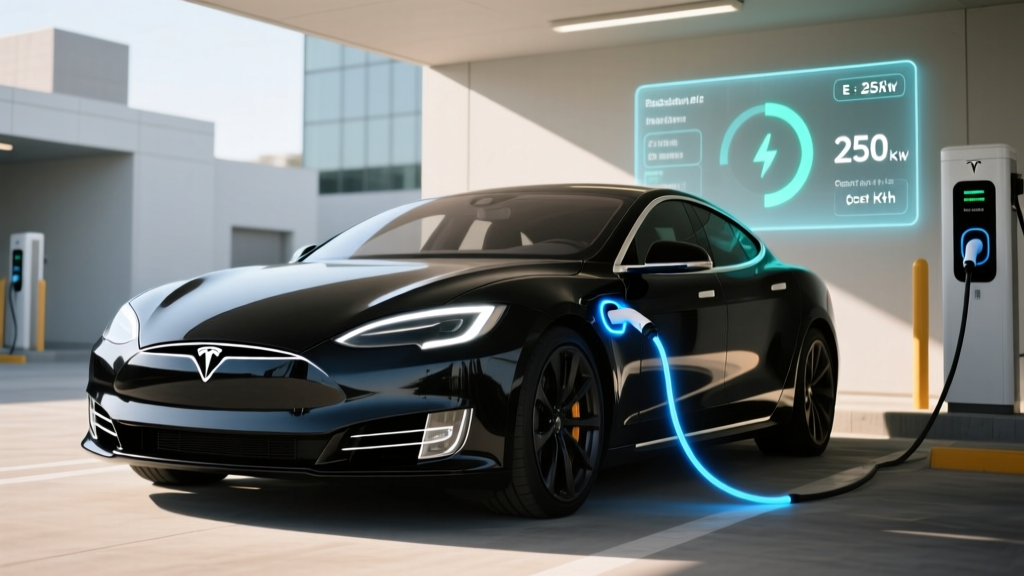
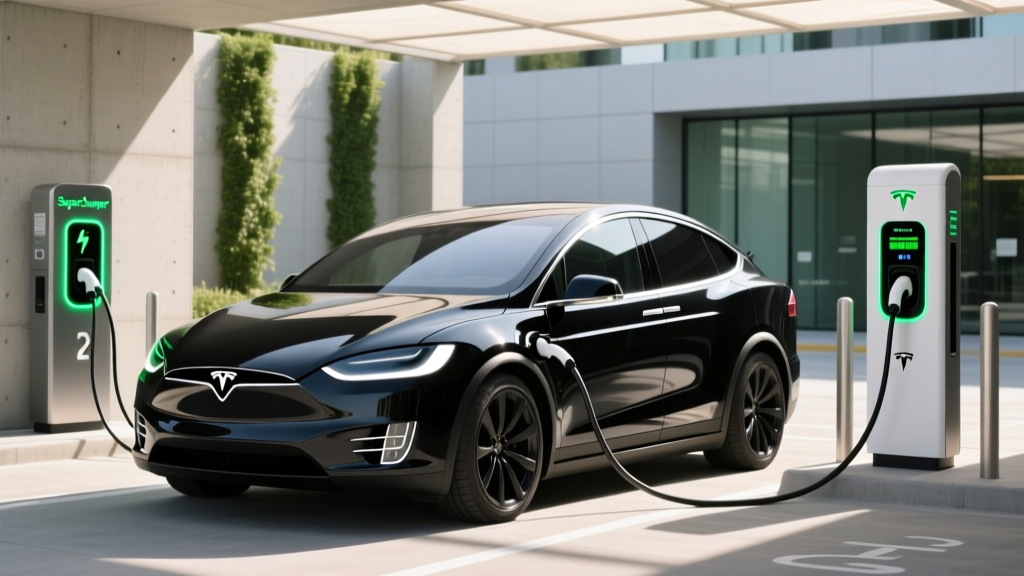
The practical reality: plan your ownership costs assuming you'll pay for Supercharging. In 2026, Tesla Supercharger rates average $0.28–$0.42/kWh depending on location, time of day, and whether you're charging at a V3 (250 kW peak) or V4 stall. For a Model X with its 100 kWh battery pack, a 10–80% session (roughly 70 kWh) costs approximately $19.60–$29.40 at public rates.
Charging Levels Explained: Speeds, Power, and Range Added
Before choosing equipment, you need to understand the three charging tiers available to every Model X owner. The critical distinction: kW (kilowatts) measures power — how fast energy flows into the battery. kWh (kilowatt-hours) measures energy — how much total capacity the battery stores. Think of kW as the flow rate of a hose and kWh as the size of the bucket.
| Level | Voltage | Max Power (kW) | Miles of Range Added per Hour | Best Use Case |
|---|---|---|---|---|
| Level 1 (120V) | 120V AC | 1.4–1.9 kW | 3–5 mi/hr | Emergency/overnight trickle |
| Level 2 (240V) | 240V AC | 7.7–19.2 kW | 22–58 mi/hr | Daily home charging |
| DC Fast Charging | 400V+ DC | 50–250 kW | 180–750+ mi/hr (peak) | Road trips, rapid top-ups |
The Model X accepts up to 17 kW on Level 2 (using its dual onboard chargers on certain trims) and peaks at 250 kW on DC fast charging at V3 Superchargers. A 10–80% DC fast-charge session takes approximately 27–32 minutes under ideal conditions, though the charge curve tapers significantly above 60% state of charge to protect battery health.
Home Charger Installation: Costs, Electrical Requirements, and Gotchas
Home Level 2 charging is where 80–90% of all Model X charging will happen. The question isn't whether you need a home charger — it's how much the installation will cost and whether your electrical panel can handle it.
Electrical Requirements for a Model X Home Charger
To charge a Model X at its maximum Level 2 rate of 17 kW, you need a 240V circuit rated for at least 80 amps (NEC code requires circuits to be rated at 125% of continuous load, so a 64A continuous draw requires an 80A breaker). However, most homeowners install a 60A circuit supporting a 48A continuous charger, which delivers roughly 11.5 kW — enough to fully replenish a Model X overnight in about 9–10 hours from near-empty.
A more common and practical setup:
- 60A breaker / 48A charger: ~11.5 kW, adds ~35 miles of range per hour
- 50A breaker / 40A charger: ~9.6 kW, adds ~29 miles of range per hour
- 30A breaker / 24A charger: ~5.8 kW, adds ~17 miles of range per hour (adequate for lighter daily driving)
Installation Cost Breakdown
Here's where real numbers matter. National averages for a Level 2 home charger installation in 2026:
| Component | Simple Install (Near Panel) | Complex Install (Long Run / Panel Upgrade) |
|---|---|---|
| Level 2 Charger Equipment | $400–$700 | $400–$700 |
| Electrician Labor (2–4 hrs simple / 6–12 hrs complex) | $300–$800 | $1,200–$3,000 |
| Electrical Permit | $50–$150 | $50–$200 |
| Conduit, Wiring, Miscellaneous Materials | $50–$150 | $200–$600 |
| Panel Upgrade (if needed: 100A → 200A service) | N/A | $1,500–$4,000 |
| Total Estimated Cost | $800–$1,800 | $3,350–$8,500 |
The panel upgrade is the variable that shocks many buyers. Homes built before the 1990s often have 100-amp electrical service. Adding a 60A EV circuit to a maxed-out 100A panel requires upgrading to 200A service — a $1,500–$4,000 job that involves the utility company, new meter hardware, and potentially new service entrance wiring. Always have a licensed electrician perform a load calculation before committing to a charger amperage.
Federal incentive note: The IRS §30C alternative fuel vehicle refueling property credit offers up to $1,000 (30% of cost, capped) for home EV charger equipment and installation, subject to income and census-tract eligibility. This is separate from the §30D vehicle tax credit. Consult a tax professional for your specific situation.
Connector Compatibility: NACS, CCS, and Adapters
The Tesla Model X uses the NACS (North American Charging Standard) connector natively — Tesla's proprietary design that has now been adopted industry-wide. This means your Model X plugs directly into every Tesla Supercharger and Destination Charger without any adapter.
But what about non-Tesla public charging networks?
| Connector Type | Model X Compatibility | Adapter Needed? | Network Examples |
|---|---|---|---|
| NACS (Tesla) | Native — direct plug | No | Tesla Supercharger, Tesla Destination |
| CCS1 | With adapter | Yes — Tesla CCS Adapter (~$175–$250) | Electrify America, EVgo, ChargePoint (CCS stalls) |
| CHAdeMO | With adapter (limited availability) | Yes — third-party adapter ($300+) | Legacy Nissan/Mitsubishi stations (declining) |
| J1772 (Level 2 public) | With included Tesla Mobile Connector adapter | Included with vehicle | Public Level 2 stations, workplaces, hotels |
In 2026, the CCS adapter is essential for Model X owners who travel outside well-covered Supercharger corridors. Electrify America and EVgo stations predominantly use CCS1 connectors, and while more networks are adding NACS cables, CCS remains the dominant non-Tesla DC fast-charge standard. Budget for the Tesla CCS adapter as a necessary accessory.
Charging Cost Per Mile: Model X vs Gasoline SUV
The financial case for electric ownership hinges on fuel cost. Here's how the Model X stacks up against a comparable gasoline large SUV — we'll use the BMW X5 xDrive40i (21 MPG combined) as a baseline — across different charging scenarios.
| Scenario | Cost per kWh | Model X Cost per Mile | Gas SUV Cost per Mile (21 MPG) | Annual Savings (12,000 mi) |
|---|---|---|---|---|
| Home Charging (off-peak utility rate) | $0.11/kWh | $0.033 | $0.167 | $1,608 |
| Home Charging (average US rate) | $0.17/kWh | $0.051 | $0.167 | $1,392 |
| Tesla Supercharger (average) | $0.34/kWh | $0.102 | $0.167 | $780 |
| Non-Tesla DC Fast ( Electrify America) | $0.43/kWh | $0.129 | $0.167 | $456 |
Calculations assume the Model X consumes approximately 3.0 miles/kWh (roughly 33 kWh/100mi) in mixed driving, per EPA data on fueleconomy.gov. Gas prices assumed at $3.50/gallon national average.
The takeaway is clear: home charging is where the savings live. Even at average utility rates, the Model X costs roughly 70% less per mile to "fuel" than a gasoline equivalent. Exclusive Supercharger reliance narrows the gap to roughly 40% savings — still meaningful, but less dramatic. This is why the free Supercharger perk, while nice, matters less than having reliable home charging infrastructure.
Best Home Chargers for the Tesla Model X (2026 Picks)
With the Model X capable of accepting up to 17 kW on Level 2, you want a charger that can deliver meaningful power. Here are three recommended units based on real-world performance, build quality, and feature sets:
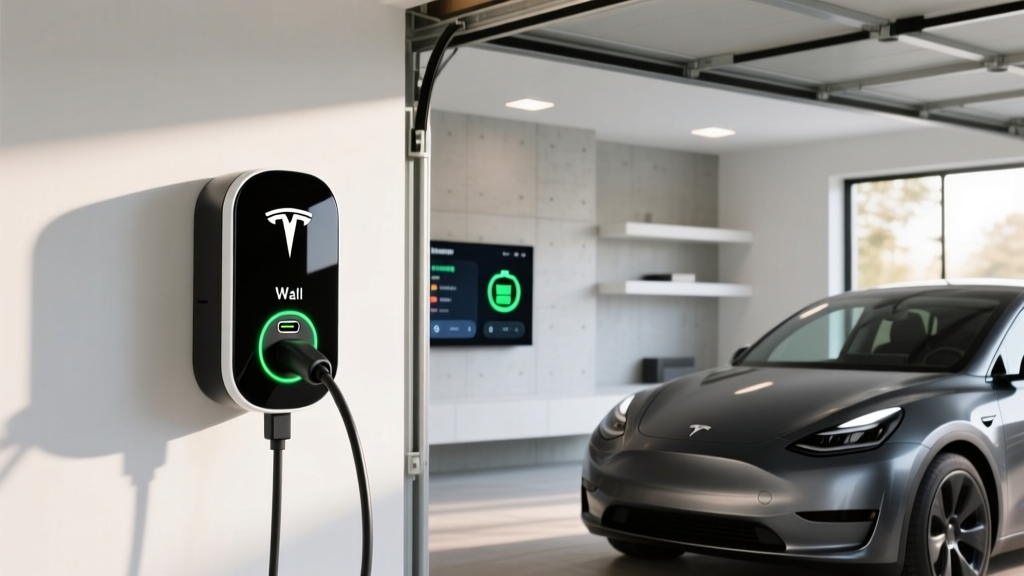
Tesla Wall Connector (Gen 3)
- Power Output: Up to 11.5 kW (48A on 60A circuit)
- Connector: NACS native
- Cable Length: 24 feet
- Smart Features: Wi-Fi, OTA updates, power-sharing with second unit, access control
- Price: ~$475
- Verdict: The default choice for Tesla owners. Seamless integration, clean aesthetics, and power-sharing lets you install two units on a single 60A circuit. Lacks a built-in display and energy metering beyond the app.
ChargePoint Home Flex (NACS version)
- Power Output: Up to 12 kW (50A on 60A circuit) — configurable from 16A to 50A
- Connector: NACS (2025+ models) or J1772 with adapter
- Cable Length: 23 feet
- Smart Features: Wi-Fi, Alexa integration, detailed energy tracking, scheduling, flexible amperage dip-switch
- Price: ~$599
- Verdict: Best for homes with mixed EV fleets or owners who want granular energy data. The adjustable amperage is excellent for panels with limited headroom.
Emporia Vue Level 2 Charger
- Power Output: Up to 11.5 kW (48A on 60A circuit)
- Connector: NACS (2025+ version) or J1772
- Cable Length: 24 feet
- Smart Features: Wi-Fi, integration with Emporia Vue home energy monitor, solar-aware charging, EV energy tracking
- Price: ~$399
- Verdict: Best budget smart charger. The solar integration is ideal for homes with rooftop panels — schedule charging to coincide with peak production. Build quality is solid but not premium.
All three chargers are NEMA 4 rated for outdoor installation and include GFCI (Ground Fault Circuit Interrupter) protection as required by NEC 2023/2026 code for EV charging circuits. Hardwired installation is strongly recommended over plug-in (NEMA 14-50) for circuits above 40A, as high-amperage receptacles have been linked to overheating incidents when not torqued to specification.
Safety, Code, and Installation Best Practices
EV charging places a sustained high-amperage load on your electrical system — unlike any other household appliance. A 48A continuous draw running for 6–8 hours every night is a serious electrical demand. Here's what proper installation requires:
- Dedicated circuit: Your EV charger must have its own dedicated breaker — no shared circuits with other appliances.
- GFCI protection: NEC 625.54 requires GFCI protection for all EV charging outlets. Hardwired units with integrated GFCI satisfy this requirement.
- Outdoor rating: If installing outdoors (garage exterior, driveway), the charger must carry a NEMA 4 or NEMA 4X rating for weather resistance.
- Wire gauge: A 60A circuit requires 4 AWG copper wire (THHN in conduit) or 2 AWG aluminum. Your electrician will size this based on run length and local code.
- Permit and inspection: Virtually all jurisdictions require an electrical permit for EV charger installation. The inspection ensures the work meets NEC Article 625 (Electric Vehicle Charging System Equipment). Do not skip this — unpermitted work can void homeowner's insurance claims.
- Load calculation: Per NEC 220.82/220.87, your electrician must verify that adding the EV circuit doesn't exceed 80% of your panel's rated capacity. If it does, a panel upgrade or a smart load-management device (like the Emporia Smart Panel or Span drive) is required.
Frequently Asked Questions
How much does it cost to install a home EV charger for a Model X?
A straightforward installation near your electrical panel typically costs $800–$1,800 including equipment, labor, and permit. If your home requires a panel upgrade from 100A to 200A service, or the charger is located far from the panel requiring long conduit runs, costs can reach $3,350–$8,500. Always get at least two quotes from licensed electricians and verify they perform a proper NEC load calculation.
How fast will each charging level add range to the Model X?
Level 1 (120V standard outlet) adds 3–5 miles per hour — essentially useless for a 100 kWh battery unless you drive very little daily. Level 2 at 48A/11.5 kW adds roughly 35 miles per hour, fully recharging overnight. DC fast charging at a V3 Supercharger (250 kW peak) can add up to 175 miles in 15 minutes, though the charge curve tapers significantly above 60% SoC. Plan road-trip stops around 10–80% charges of roughly 27–32 minutes.
Which charger and connector is compatible with my Model X?
The Model X uses the NACS connector natively. At home, the Tesla Wall Connector is the simplest option. For public non-Tesla DC fast charging, you'll need the Tesla CCS1 adapter (~$175–$250) for Electrify America, EVgo, and similar networks. For public Level 2 (J1772 stations), the Tesla Mobile Connector includes a J1772 adapter in the box.
How much does charging the Model X cost per mile vs gas?
Home charging at the US average rate of $0.17/kWh costs approximately $0.051 per mile. A comparable gasoline SUV at 21 MPG and $3.50/gallon costs $0.167 per mile. That's a savings of roughly $1,392 per year over 12,000 miles. Exclusive Supercharger use at $0.34/kWh still saves about $780 annually versus gasoline.
What electrical upgrades might I need for a home charger?
The most common and costly upgrade is a panel service increase from 100A to 200A, which runs $1,500–$4,000. Older homes may also need new service entrance wiring from the utility. If your panel is at capacity but you don't want to upgrade, consider a lower-amperage charger (24A–32A) or a smart load-management system that dynamically reduces charger draw when other appliances activate. Your electrician's load calculation will determine what's feasible.
Does the Model X free Supercharger benefit transfer to a second owner?
It depends on the vehicle's model year and original purchase terms. Free Supercharging tied to the original owner (non-transferable) was common on 2017–2019 vehicles after policy changes. Some earlier vehicles carry transferable free Supercharging that passes to subsequent owners. Tesla's policy has shifted multiple times — verify the specific vehicle's Supercharging status through Tesla's account system before purchasing a used Model X with this expectation.
Should I charge my Model X to 100% daily?
No. For daily driving, Tesla recommends setting the charge limit to 80–90% to prolong battery longevity. The Model X uses NMC (nickel manganese cobalt) battery chemistry, which degrades faster when held at 100% state of charge for extended periods. Reserve 100% charges for road trips where you need maximum range. This practice, combined with avoiding frequent deep discharges below 10%, helps maintain long-term battery State of Health (SoH). Tesla's battery warranty covers 8 years/150,000 miles with a minimum 70% capacity retention threshold, per Tesla's warranty documentation.