If you've searched for Model S free Supercharger eligibility, you've likely encountered a tangle of forum posts, expired referral codes, and legacy promises. The short answer in 2026: unlimited free Supercharging is essentially a relic, limited to a handful of original-owner vehicles from 2012–2017 or specific promotional transfer windows. For nearly every Model S on the road today — including the current dual-motor and Plaid trims — Supercharging is a paid service billed per kWh.
But the bigger question for owners and prospective buyers isn't whether Tesla gives away electrons — it's how to build a charging strategy that minimizes cost and maximizes convenience. Below, we break down what free Supercharging actually means in 2026, then map the complete charging ecosystem: home Level 2, public DC fast networks, connector standards, installation costs, and the real per-mile economics of running a Model S.
The Truth About Model S Free Supercharger Access
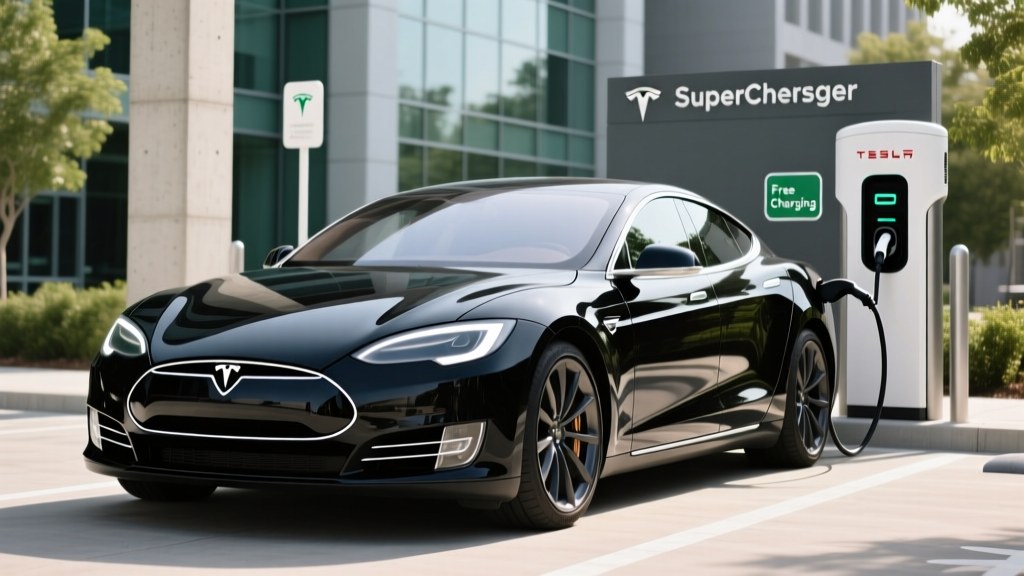
Tesla's original unlimited free Supercharging program launched with the 2012 Model S as a way to reduce range anxiety during the early adoption era. Vehicles ordered before January 15, 2017, and delivered before April 2017, received transferable unlimited free Supercharging — meaning the perk stayed with the car through subsequent ownership. A second wave (January–March 2017 orders) received non-transferable free Supercharging tied to the original owner.
Since then, Tesla has periodically reintroduced limited-time referral or promotional free Supercharging credits — typically 10,000 miles or 12 months — but these are time-bound and account-specific. As of 2026, no new Model S (Long Range at $74,990 MSRP or Plaid at $89,990) ships with lifetime free Supercharging as standard.
If you're evaluating a used Model S and the listing claims "free Supercharging," verify the VIN with Tesla directly. Transferable free Supercharging is encoded in the vehicle's configuration and can be confirmed through the Tesla app or a service center query. Expect a premium on resale for these units — typically $3,000–$6,000 above comparable vehicles without the perk.
Charging Levels Explained: Speeds and Range Added
Understanding the three tiers of EV charging is foundational. The key distinction: kW (kilowatts) measures power — how fast energy flows into the battery. kWh (kilowatt-hours) measures energy capacity — the size of the battery itself. A 100 kWh battery charged at 10 kW would theoretically take 10 hours from empty to full; at 250 kW, roughly 24 minutes (though real-world charge curves taper significantly above 80% SoC).
| Level | Voltage | Power (kW) | Miles Added/Hour | 10–80% Time |
|---|---|---|---|---|
| Level 1 (120V) | 120V / 12A | ~1.4 kW | ~3–4 mi/hr | ~60+ hours |
| Level 2 (240V Home) | 240V / 48A | ~11.5 kW | ~30–35 mi/hr | ~7–8 hours |
| Level 2 (Public) | 208–240V / 32–80A | 7.2–19.2 kW | ~20–55 mi/hr | ~4–9 hours |
| DC Fast (V3 Supercharger) | 400V+ DC | Peak 250 kW | ~170 mi in 15 min | ~25–30 min |
| DC Fast (V4 Supercharger) | 800V+ DC | Peak 350 kW | ~200 mi in 15 min | ~18–22 min |
Real-world caveat: The Model S Long Range carries an EPA range of 405 miles. In highway driving at 75 mph, expect roughly 320–350 miles of usable range. In cold weather (below 32°F), that figure can drop to 260–300 miles due to cabin heating demands and battery chemistry resistance. DC fast charging speeds also taper sharply above 80% State of Charge (SoC) — the final 20% can take as long as the first 80%.
Home Charger Installation: Electrical Requirements and Costs
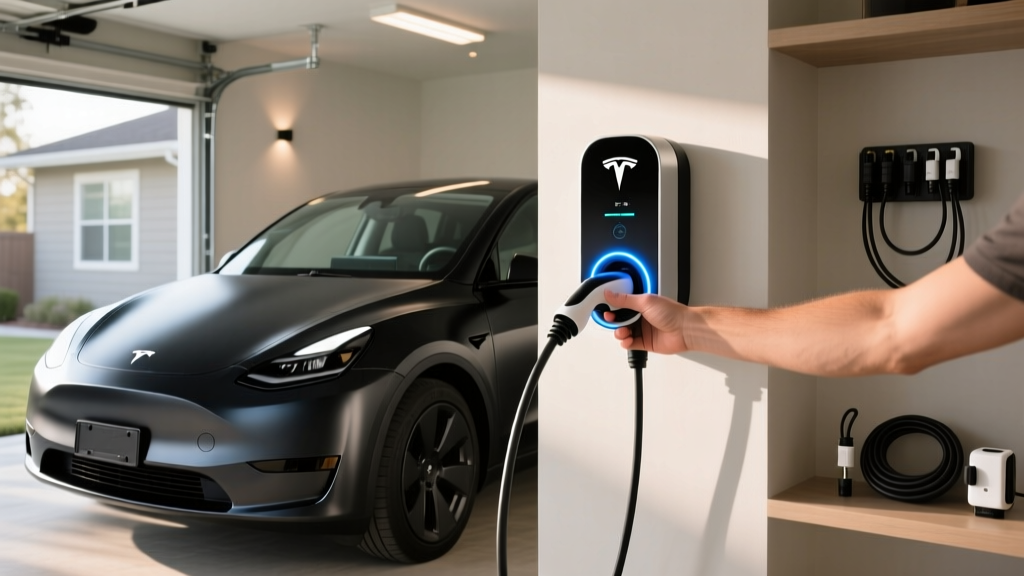
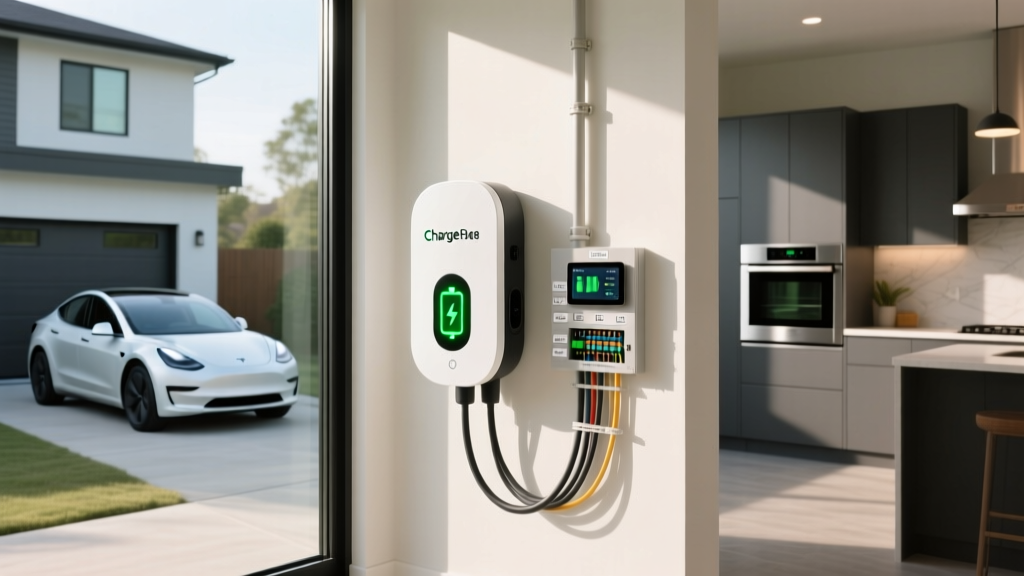
For daily driving, a Level 2 home charger is the backbone of EV ownership. The Tesla Wall Connector (Gen 3) delivers up to 11.5 kW (48 amps) on a 60-amp dedicated circuit and remains the most integrated option for Model S owners. But installation costs vary dramatically based on your electrical panel's capacity and the distance from the panel to your parking location.
Electrical Requirements
- Circuit: 60-amp dedicated breaker for full 48A continuous output (NEC requires 125% headroom for continuous loads)
- Wire: 6 AWG copper THHN for runs under 50 feet; 4 AWG for longer runs to mitigate voltage drop
- Panel capacity: Minimum 200-amp service recommended; older 100-amp panels often require an upgrade
- GFCI protection: Required by NEC 2020+ for outdoor receptacles; Tesla Wall Connector hardwired units have built-in ground-fault protection
- Permit: Required in nearly all US jurisdictions; typically $50–$250 depending on municipality
| Component | Simple Install (Same Wall) | Moderate (20–40 ft Run) | Complex (Panel Upgrade + Long Run) |
|---|---|---|---|
| Charger Equipment | $400–$500 | $400–$500 | $400–$500 |
| Electrical Labor | $300–$600 | $600–$1,200 | $1,500–$3,000 |
| Materials (Wire, Conduit) | $50–$150 | $150–$400 | $400–$800 |
| Permit | $50–$150 | $100–$200 | $150–$300 |
| Panel Upgrade (if needed) | $0 | $0 | $1,500–$3,500 |
| Total | $800–$1,400 | $1,250–$2,300 | $3,950–$8,100 |
Panel upgrade reality: Homes built before 1990 frequently have 100-amp or 150-amp panels already near capacity. Adding a 60-amp EV circuit may push load calculations beyond the panel's rating, triggering a mandatory upgrade to 200-amp service. This is the single largest cost variable and the one most online guides undercount. Always have a licensed electrician perform a load calculation before committing to a charger purchase.
Connector Compatibility: NACS, CCS1, and Adapter Realities
Tesla's proprietary connector, now standardized as NACS (North American Charging Standard), is native to all Model S vehicles. With the industry-wide adoption of NACS beginning in 2024–2025, most new public DC fast chargers from Electrify America, EVgo, and ChargePoint now include NACS cables alongside or in place of CCS1.
| Connector | Native? | Adapter Needed? | Availability (2026) |
|---|---|---|---|
| NACS (Tesla) | Yes | No | Universal on Tesla Superchargers; growing on public networks |
| CCS1 | No | Tesla CCS Adapter (included with new vehicles; ~$175 aftermarket) | Legacy public chargers; declining in new installs |
| CHAdeMO | No | Third-party adapter (~$300+; limited availability) | Rare; mostly legacy Nissan Leaf infrastructure |
| J1772 (Level 2) | No | Tesla J1772 adapter (included with vehicle) | Universal on public Level 2 stations |
Every new Model S ships with a J1772 adapter for public Level 2 stations and a CCS1 adapter for non-Tesla DC fast chargers. If you're buying used, confirm both adapters are included — replacements cost $175–$250 combined. The CHAdeMO standard is effectively obsolete for new infrastructure and not worth investing in.
Cost to Charge: Home vs. Public vs. Gas Per-Mile Economics
The financial case for EV ownership hinges on the gap between electricity and gasoline costs. For the Model S Long Range (100 kWh usable battery, EPA combined 120 MPGe), here's what charging actually costs across common scenarios:
| Scenario | Rate | Cost for 100 kWh (Full Charge) | Cost Per Mile |
|---|---|---|---|
| Home Off-Peak (Utility TOU) | $0.08–$0.12/kWh | $8.00–$12.00 | $0.020–$0.030 |
| Home Standard Rate | $0.14–$0.18/kWh | $14.00–$18.00 | $0.035–$0.045 |
| Public Level 2 | $0.25–$0.40/kWh | $25.00–$40.00 | $0.062–$0.100 |
| Tesla Supercharger (V3/V4) | $0.28–$0.42/kWh | $28.00–$42.00 | $0.069–$0.104 |
| Non-Tesla DC Fast | $0.35–$0.55/kWh | $35.00–$55.00 | $0.087–$0.136 |
| Gas Sedan (30 MPG, $3.40/gal) | $3.40/gallon | — | $0.113 |
The takeaway: Home charging at off-peak utility rates delivers fuel costs roughly 70–80% below a 30 MPG gas sedan. Even at standard residential rates, the Model S costs less than half per mile to "fuel." Public DC fast charging narrows the gap — at the high end ($0.55/kWh), it can approach or exceed gasoline costs. This is why a home Level 2 installation pays for itself within 12–24 months for drivers covering 12,000+ miles annually.
For the latest utility rate data and time-of-use plan structures, the U.S. Energy Information Administration publishes monthly state-level averages.
Equipment Recommendations: Best Level 2 Chargers for Model S
Tesla Wall Connector (Gen 3)
- Power: Up to 11.5 kW (48A) on 60A circuit
- Connector: Native NACS — no adapter needed
- Cable Length: 18 ft or 24 ft options
- Smart Features: Wi-Fi, OTA updates, Power Sharing (load-balance up to 6 units on one circuit), Tesla app integration
- Price: ~$425 (18 ft) / ~$475 (24 ft)
- Best For: Tesla-only households; seamless integration
ChargePoint Home Flex
- Power: Up to 12 kW (50A) on 60A circuit; configurable down to 16A
- Connector: J1772 (use Tesla adapter) or NACS version available
- Cable Length: 23 ft
- Smart Features: Wi-Fi, Alexa integration, scheduling, charge history, flexible amperage dial
- Price: ~$550–$650
- Best For: Mixed-fleet households (Tesla + non-Tesla EVs); adjustable amperage for panel-limited homes
Emporia Vue Level 2 Charger
- Power: Up to 11.5 kW (48A) on 60A circuit
- Connector: J1772 (Tesla adapter required) or NACS
- Cable Length: 24 ft
- Smart Features: Energy monitoring integration with Emporia Vue panel monitor, solar-aware scheduling, load management
- Price: ~$400–$500
- Best For: Solar-equipped homes; energy-usage visibility
All three chargers are NEMA 4-rated for outdoor installation. The Tesla Wall Connector is the path of least resistance for Model S owners — native connector, competitive pricing, and deep software integration. The ChargePoint Home Flex earns its place for households that may add a non-Tesla EV or need to dial down amperage for a constrained electrical panel.
Safety, Code, and Installation Best Practices
EV charger installation is not a DIY project. NEC Article 625 governs Electric Vehicle Charging System Equipment and requires:
- Dedicated circuit: The charger must have its own breaker — no shared circuits with other appliances
- GFCI protection: Required for all outdoor installations and plug-in receptacles; hardwired units with integrated ground-fault protection satisfy this requirement
- Outdoor rating: Any charger exposed to weather must carry a NEMA 3R or NEMA 4 rating (all recommended units above qualify)
- Disconnect: A readily accessible disconnect means is required within sight of the charger for circuits over 60 amps or where the breaker is not within line-of-sight
- Load calculation: A licensed electrician must verify that your panel can handle the added continuous load without exceeding 80% of the panel's rated capacity
Permitting and inspection are required in virtually all US jurisdictions. Skipping the permit risks insurance claim denial in the event of an electrical fire and may create liability during a home sale. Budget $50–$300 for the permit and plan for a single inspection visit after installation.
Frequently Asked Questions
How much does it cost to install a home EV charger?
A straightforward Level 2 installation with an adequate 200-amp panel and a short wire run typically costs $800–$1,400 including equipment, labor, and permit. Moderate runs (20–40 feet) push costs to $1,250–$2,300. Homes requiring a panel upgrade from 100A to 200A service should budget $3,950–$8,100 total. Always get a load calculation from a licensed electrician before purchasing equipment.
How fast will each charging level add range to my Model S?
Level 1 (120V) adds approximately 3–4 miles per hour — suitable only for overnight trickle-charging low-mileage drivers. Level 2 (240V, 48A) adds 30–35 miles per hour, replenishing a full Model S battery in 7–8 hours. DC fast charging at a V3 Supercharger (250 kW peak) adds roughly 170 miles in 15 minutes, with a 10–80% charge in approximately 25–30 minutes.
Which connector and charger is compatible with my Model S?
All Model S vehicles use the NACS (Tesla) connector natively. For public Level 2 stations with J1772 connectors, use the included Tesla J1772 adapter. For non-Tesla DC fast chargers with CCS1 cables, use the Tesla CCS adapter (included with new vehicles, ~$175 aftermarket). The Tesla Wall Connector is the simplest home solution — native NACS, no adapter required.
How much does charging cost per mile compared to gasoline?
At home off-peak rates ($0.08–$0.12/kWh), a Model S costs $0.02–$0.03 per mile — roughly 75% less than a 30 MPG gas sedan at $3.40/gallon ($0.113/mile). At Tesla Supercharger rates ($0.28–$0.42/kWh), cost per mile is $0.07–$0.10, still below gasoline in most markets. Public DC fast chargers at peak pricing ($0.55/kWh) can approach gas-equivalent costs.
What electrical upgrades might I need for a home charger?
The most common upgrade is a panel capacity increase from 100A or 150A to 200A service, costing $1,500–$3,500. Other potential needs include: adding subpanels for detached garages ($800–$2,000), upgrading the utility service drop for homes with original 100A meter bases, and installing a smart load management system (e.g., Emporia, Span panel) to avoid panel upgrades by dynamically sharing capacity between the EV charger and other high-draw appliances.
Can I still get free Supercharging on a new Model S?
No. As of 2026, Tesla does not include unlimited free Supercharging with new Model S purchases. Periodic promotional credits (typically 10,000 miles or 12 months) may be offered through referral programs or seasonal incentives, but these are temporary and account-specific. Only certain 2012–2017 Model S vehicles with transferable free Supercharging retain the benefit — verify by VIN before purchasing used.
For official Tesla Supercharger pricing by region and real-time station availability, refer to the Tesla Supercharger network page. For federal and state EV charging incentive programs that may offset home installation costs, consult the Alternative Fuels Data Center.