If you own or are shopping for a Tesla Model 3, protecting its EPA-estimated range and minimizing charging downtime starts with understanding your charging ecosystem. The 2025 Model 3 Long Range AWD delivers an EPA-estimated 341 miles of range from its ~75 kWh (usable) LFP or NMC battery pack, while the Performance variant offers 315 miles. But those numbers only matter if your charging setup keeps the battery healthy and your schedule uninterrupted.
This guide maps every charging level, connector type, home installation requirement, and cost variable you need to keep a Model 3 on the road — whether you're topping off in your garage or pulling into a Supercharger on a cross-country run.
Understanding the Model 3 Range Baseline
Before wiring a charger, anchor your expectations to real-world data. The EPA's fueleconomy.gov lists the 2025 Model 3 Long Range AWD at 341 miles combined, with 132 MPGe. The RWD base model sits at 272 miles on its ~57.5 kWh LFP pack.
| Trim | Battery (usable kWh) | Chemistry | EPA Range | MPGe (combined) | Base MSRP |
|---|---|---|---|---|---|
| RWD | ~57.5 kWh | LFP | 272 mi | 132 MPGe | $38,990 |
| Long Range AWD | ~75 kWh | NMC | 341 mi | 132 MPGe | $45,240 |
| Performance | ~75 kWh | NMC | 315 mi | 121 MPGe | $52,990 |
Charging Levels Explained: kW, Speed, and Time
The single most important distinction in EV charging: kW (kilowatts) measures power — the rate of energy delivery, like water pressure from a hose. kWh (kilowatt-hours) measures energy — the total amount stored in your battery, like gallons in a tank. A 75 kWh battery charged at 7.2 kW takes roughly 10.4 hours from empty; at 250 kW, the math changes dramatically.
| Level | Voltage / Amps | Power (kW) | Miles of Range per Hour | Best For |
|---|---|---|---|---|
| Level 1 (120V) | 120V / 12A | ~1.4 kW | 3–5 mi/hr | Emergency / overnight trickle |
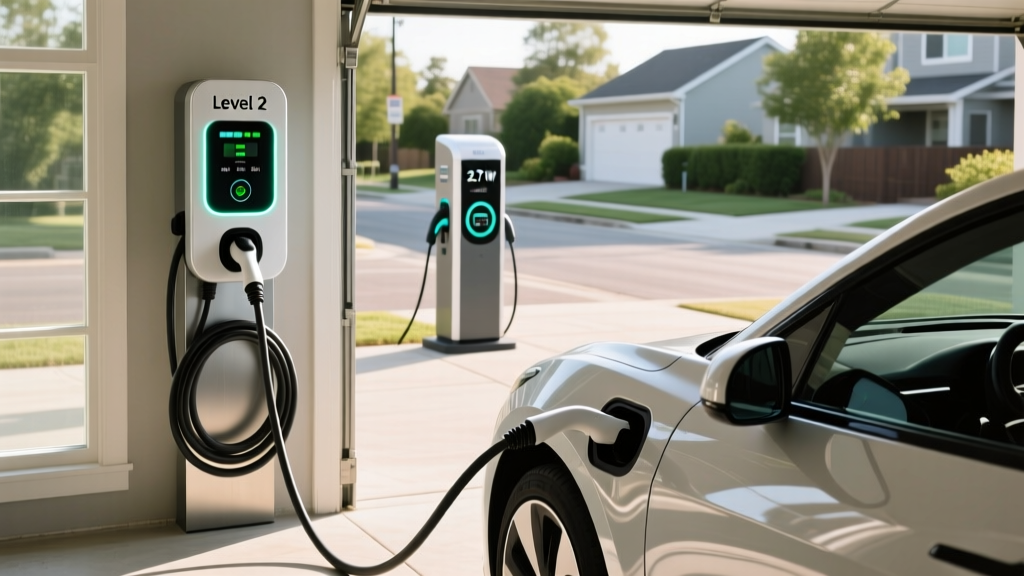
| Level 2 (240V) | 240V / 32–48A | 7.7–11.5 kW | 25–44 mi/hr | Daily home charging |
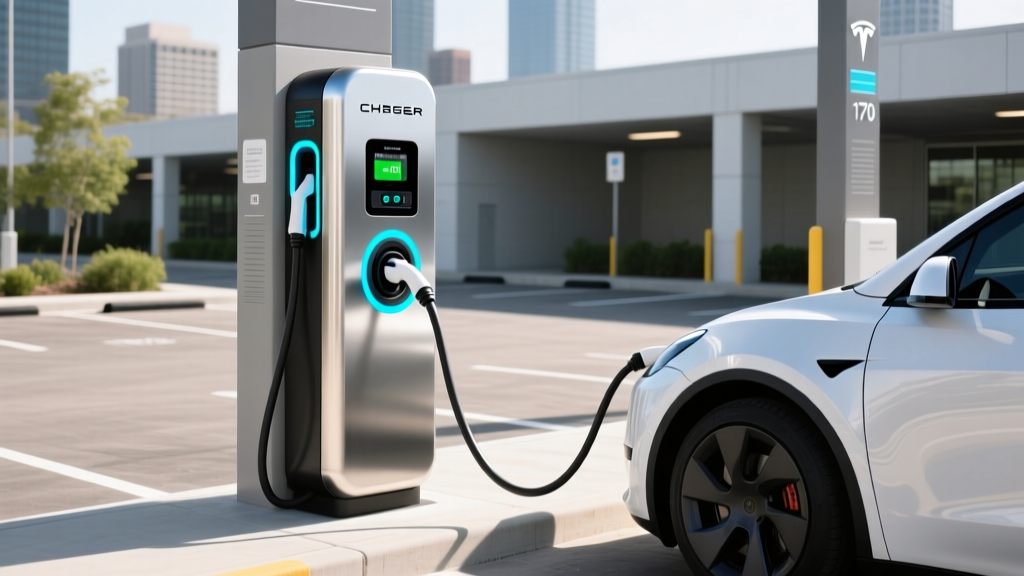
| DC Fast (Supercharger) | 400V+ DC | 150–250 kW peak | ~1,000+ mi/hr (peak) | Road trips |
The Model 3 Long Range accepts up to ~250 kW on a V3 Supercharger, adding roughly 175 miles in 15 minutes under ideal conditions. On a 48A Level 2 home charger (11.5 kW), a full charge from 10% to 90% takes about 6–7 hours — perfectly suited for overnight replenishment.
Home Charger Installation: Costs, Electrical Requirements & Permits
A proper Level 2 home setup is the backbone of convenient Model 3 ownership. Here's what's required and what it costs.
Electrical Requirements
The Tesla Wall Connector or equivalent Level 2 unit requires a dedicated 240V circuit. For a 48A charger, electrical code (NEC 2023 §625.41) mandates the circuit be rated at 125% of the continuous load — meaning a 60A breaker on a 240V line. Your home's main electrical panel must have enough spare capacity (ampacity) to support this.
Panel Upgrade Considerations
Homes with 100A main panels — common in builds before the 1990s — often cannot spare 60A for an EV charger without a panel upgrade to 200A. This is one of the most underestimated costs in home EV charging. A panel upgrade alone can run $1,500–$3,500 before any charger wiring begins.
| Component | Simple Install (panel nearby) | Complex Install (long run / panel upgrade) |
|---|---|---|
| Level 2 Charger (hardware) | $400–$600 | $400–$600 |
| Electrician labor (240V circuit, 60A) | $500–$1,200 | $1,500–$3,000 |
| Permit & inspection | $50–$200 | $100–$350 |
| Panel upgrade (if needed) | N/A | $1,500–$3,500 |
| Total Estimated Cost | $950–$2,000 | $3,500–$7,450 |
Always hire a licensed electrician and pull a permit. Unpermitted EV charger installs can void homeowner's insurance claims and create fire hazards. The National Electrical Code requires GFCI protection for outdoor receptacles and specific wire gauge (typically 6 AWG copper for a 60A circuit).
Connector Compatibility: NACS, CCS, and Adapters
Tesla pioneered the North American Charging Standard (NACS), which is now becoming the dominant connector across the industry. As of 2025, every new Model 3 ships with a native NACS port — no adapter needed at Tesla Superchargers.
| Connector | Model 3 Native? | Adapter Needed? | Network Examples |
|---|---|---|---|
| NACS (Tesla) | Yes | No | Tesla Supercharger, Electrify America (select), EVgo |
| CCS1 | No | Yes (Tesla CCS adapter, ~$175) | Electrify America, EVgo, ChargePoint DC |
| CHAdeMO | No | Yes (aftermarket, ~$300–$450) | Legacy networks (declining) |
| J1772 (Level 2 AC) | No | Yes (included with vehicle) | Public Level 2, non-Tesla home chargers |
For home Level 2 charging, if you buy a non-Tesla charger (ChargePoint, Emporia, etc.), you'll use the J1772-to-NACS adapter that Tesla includes in the glovebox. For public DC fast charging outside the Supercharger network, the Tesla CCS adapter unlocks Electrify America and other CCS stations.
Charging Cost: Per-Mile Economics vs. Gasoline
One of the strongest ownership arguments for the Model 3 is fuel-cost savings. Here's how the numbers break down across scenarios.
| Scenario | Rate ($/kWh) | Cost per 100 Miles | Cost per Mile |
|---|---|---|---|
| Home (off-peak utility rate) | $0.10 | $2.50 | $0.025 |
| Home (national avg residential) | $0.16 | $4.00 | $0.040 |
| Public Level 2 (ChargePoint, etc.) | $0.25–$0.35 | $6.25–$8.75 | $0.063–$0.088 |
| Tesla Supercharger (V3) | $0.28–$0.36 | $7.00–$9.00 | $0.070–$0.090 |
| Gas car (30 MPG, $3.40/gal) | — | $11.33 | $0.113 |
At home off-peak rates, the Model 3 costs roughly one-quarter what a 30 MPG gas car costs per mile. Even at Supercharger prices, you save 20–30% versus gasoline. Over 15,000 miles per year, home charging at the national average saves approximately $1,100 annually versus a comparable gas sedan.
Recommended Home Chargers for the Model 3
Not all Level 2 chargers are equal. Here are three proven options for Model 3 owners, evaluated on power output, cable length, smart features, and price.
Tesla Wall Connector (Gen 3)
Power: Up to 11.5 kW (48A, 240V)
Cable: 24 ft
Connector: Native NACS — no adapter needed
Smart Features: Wi-Fi, OTA updates, power sharing with second unit, load management
Price: ~$475
Verdict: The default choice for Tesla-only households. Cleanest integration, fastest Model 3 Level 2 charging, no adapter hassle.
ChargePoint Home Flex
Power: Up to 12 kW (50A, 240V — configurable)
Cable: 23 ft
Connector: J1772 (use Tesla's included adapter) or NACS pigtail version
Smart Features: Wi-Fi, app scheduling, Alexa integration, energy tracking
Price: ~$550–$650
Verdict: Best multi-EV household pick. If you also own a non-Tesla EV, the J1772 connector works natively with everything.
Emporia Vue Smart Charger
Power: Up to 11.5 kW (48A, 240V)
Cable: 24 ft
Connector: J1772 (use Tesla adapter)
Smart Features: Whole-home energy monitoring integration, solar-aware scheduling, load balancing
Price: ~$400
Verdict: Budget smart pick. Excellent for solar-panel homes wanting to charge only on excess production.
DC Fast Charging Times: Model 3 Battery Sizes
On a V3 Supercharger (250 kW peak) or comparable CCS station, here's what to expect:
| Model 3 Trim | Battery Size | Peak DC Rate | 10–80% Time | Miles Added in 15 min |
|---|---|---|---|---|
| RWD (LFP) | ~57.5 kWh | ~170 kW | ~28 min | ~130 mi |
| Long Range AWD | ~75 kWh | ~250 kW | ~25–30 min | ~175 mi |
| Performance | ~75 kWh | ~250 kW | ~25–30 min | ~170 mi |
Safety, Code, and Smart Charging Practices
Level 2 home charging is safe when installed correctly. Key requirements per NEC Article 625:
- Dedicated circuit: Your EV charger must have its own breaker — never share with appliances.
- GFCI protection: Required for all outdoor EV receptacles (2023 NEC update).
- Outdoor-rated equipment: If mounting outside, the charger must carry a NEMA 4 or IP65 rating.
- Wire gauge: 6 AWG copper for 60A circuits; 4 AWG aluminum as an alternative for longer runs.
- Cable management: Avoid running charging cables across walkways — use a holster or retractor.
For battery longevity, Tesla recommends daily charging to 80% for NMC batteries (Long Range and Performance). The LFP battery in the RWD model can and should be charged to 100% at least weekly to maintain accurate SoC calibration.
Frequently Asked Questions
How much does it cost to install a home EV charger for a Model 3?
A straightforward Level 2 installation with a nearby 200A panel typically costs $950–$2,000 including the charger, electrician labor, and permit. If your home needs a panel upgrade from 100A to 200A, total costs can reach $3,500–$7,450. Always get at least two quotes from licensed electricians.
How fast will each charging level add range to my Model 3?
Level 1 (120V) adds 3–5 miles per hour — essentially overnight trickle charging. Level 2 (240V, 48A) adds 30–44 miles per hour, fully replenishing a Long Range Model 3 overnight. DC fast charging at a V3 Supercharger can add 175 miles in 15 minutes at peak rates, but tapers significantly above 80% SoC.
Which connector and charger is compatible with my Model 3?
The Model 3 uses the NACS connector natively. At home, the Tesla Wall Connector plugs directly in with no adapter. For non-Tesla Level 2 chargers (J1772), use the adapter included with your vehicle. For CCS public DC fast charging, purchase Tesla's CCS adapter (~$175).
How much does charging a Model 3 cost per mile vs. a gas car?
At the national average residential electricity rate ($0.16/kWh), charging a Model 3 Long Range costs approximately $0.04 per mile. A comparable 30 MPG gas car at $3.40/gallon costs $0.113 per mile — nearly three times more. Over 15,000 annual miles, that's roughly $1,100 in annual fuel savings.
What electrical upgrades might my home need for a Level 2 charger?
You need a dedicated 240V/60A circuit. If your panel is already at 200A with spare breaker slots, no upgrade is needed. Homes with 100A panels or maxed-out breaker boxes will likely need a panel upgrade ($1,500–$3,500). A licensed electrician can perform a load calculation to determine your exact requirements.
Sources: U.S. EPA fueleconomy.gov, Tesla Model 3 specifications, IRS §30D Clean Vehicle Credits.