The Tesla Model 3 Performance (2026 model year) delivers an EPA-estimated 315 miles of range from its 82 kWh (usable ~79 kWh) NMC lithium-ion battery pack. But real-world range depends heavily on how and where you charge. Highway driving at 75 mph typically yields 260–280 miles, while cold-weather conditions (below 32°F) can reduce that figure by 15–25%. Understanding charging infrastructure — from your garage to cross-country road trips — is the single biggest factor in whether your Model 3 Performance range meets your daily needs.
Understanding Charging Levels: kW vs kWh
Before plugging in, clarify the most common EV terminology error: kW (kilowatts) measures power — the rate at which energy flows into your battery. kWh (kilowatt-hours) measures energy — the total capacity stored. Think of kW as water pressure and kWh as the size of the tank. Your Model 3 Performance has roughly 79 kWh of usable battery capacity and can accept up to 250 kW of DC fast-charging power at peak.
| Level | Voltage | Power (kW) | Miles Added per Hour | Best Use Case |
|---|---|---|---|---|
| Level 1 (120V) | 120V AC | ~1.4 kW | ~3–5 mi/hr | Overnight trickle, emergencies |
| Level 2 (240V) | 240V AC | 7.7–19.2 kW | ~25–60 mi/hr | Daily home/workplace charging |
| DC Fast Charging | 400–800V DC | 50–250 kW | ~150–1,000+ mi/hr (peak) | Road trips, quick top-ups |
At home on a 48-amp Level 2 circuit (11.5 kW), your Model 3 Performance gains roughly 44 miles of range per hour — enough to fully replenish a daily commute overnight. On a Tesla V4 Supercharger at 250 kW peak, you can add up to 175 miles in roughly 15 minutes under ideal conditions, though sustained rates taper significantly above 60% State of Charge (SoC).
How Fast Will Each Charging Level Add Range?
Charging speed is not linear. The battery management system (BMS) throttles power as the battery fills to protect cell longevity. Here are realistic 10–80% charge times for the Model 3 Performance's ~79 kWh usable pack:
- Level 1 (120V / 1.4 kW): 10–80% in approximately 39+ hours — impractical for full charges, useful only for maintaining SoC or emergency trickle.
- Level 2 (240V / 11.5 kW): 10–80% in approximately 5.5 hours — ideal for overnight replenishment.
- Level 2 (240V / 19.2 kW): 10–80% in approximately 3.5 hours — requires a 100-amp circuit and the vehicle's onboard charger supports up to 11.5 kW on single-phase AC, so speeds above that require commercial three-phase power.
- DC Fast (Tesla Supercharger V3/V4 at 250 kW peak): 10–80% in approximately 25–30 minutes. Peak 250 kW is sustained only between roughly 10–35% SoC, then tapers to ~100 kW by 60%, and ~40 kW above 80%.
- DC Fast (50 kW CHAdeMO/CCS with adapter): 10–80% in approximately 80–90 minutes — usable in a pinch but not recommended for routine fast charging.
The charge curve taper is the reason you should rarely DC fast-charge above 80% on road trips — the last 20% can take as long as the first 60%. Set your charge limit to 80% at Superchargers and top off the remainder at your destination if needed.
Home Charger Installation: Costs, Electrical Requirements & Upgrades
Installing a Level 2 home charger is the single highest-impact upgrade for daily EV ownership. For the Model 3 Performance, a properly installed 240V / 48-amp circuit delivers ~11.5 kW to the vehicle (the car's onboard charger caps AC intake at 11.5 kW), replenishing a full day's driving in a few hours.
Electrical Requirements
A 48-amp continuous-draw charger requires a dedicated 60-amp breaker (NEC code mandates circuits be rated 125% of continuous load). You will need:
- A 240V circuit with a 60-amp breaker
- 6 AWG copper wire (or 4 AWG aluminum) for runs up to ~50 feet; thicker gauge for longer runs
- A NEMA 14-50 receptacle (if using a plug-in charger) or hardwired connection (often preferred for higher-amp circuits and some local codes)
- GFCI protection — required by NEC 2020+ for EV receptacles in garages
Do You Need a Panel Upgrade?
This is the cost variable most homeowners underestimate. If your home has a 100-amp main electrical panel (common in homes built before 2000), adding a 60-amp EV circuit may exceed your panel's capacity, especially if you already run electric range, dryer, and HVAC. A licensed electrician will perform a load calculation to determine whether an upgrade to a 200-amp panel is required. Panel upgrades add $1,500–$4,000 to your project.
| Component | Typical Cost Range | Notes |
|---|---|---|
| Level 2 Charger (Equipment) | $400–$700 | Smart Wi-Fi chargers, 40–48A |
| Electrician Labor | $600–$2,000 | Depends on run length, conduit, wall type |
| Permit & Inspection | $50–$300 | Required by most jurisdictions |
| Electrical Panel Upgrade (if needed) | $1,500–$4,000 | 100A → 200A service upgrade |
| Total (no panel upgrade) | $1,050–$3,000 | Most homes with 200A service |
| Total (with panel upgrade) | $2,550–$7,000 | Older homes with 100A panels |
Always hire a licensed electrician and pull a permit. Unpermitted work can void homeowner's insurance coverage in the event of an electrical fire. Check whether your utility offers rebates — many cover $250–$500 of charger or installation costs.
Which Connector Is Compatible With the Model 3 Performance?
The 2026 Tesla Model 3 Performance ships with the NACS (North American Charging Standard) connector — Tesla's proprietary design that has been adopted by Ford, GM, Rivian, Volvo, Hyundai, and most major automakers as the North American standard. NACS is physically smaller than CCS1 and provides both AC Level 2 and DC fast charging through a single port.
| Connector | Description | Model 3 Compatibility |
|---|---|---|
| NACS (Tesla) | Tesla's native connector; now the North American standard | ✅ Native — no adapter needed |
| CCS1 | Combined Charging System (non-Tesla DC fast standard) | ✅ Via Tesla CCS Adapter (~$175) or Magic Dock at some Superchargers |
| CHAdeMO | Legacy DC fast connector (Nissan Leaf, older stations) | ⚠️ Third-party adapter available but uncommon; limited station availability |
| J1772 | Standard North American AC Level 2 connector | ✅ Via included Tesla J1772 adapter |
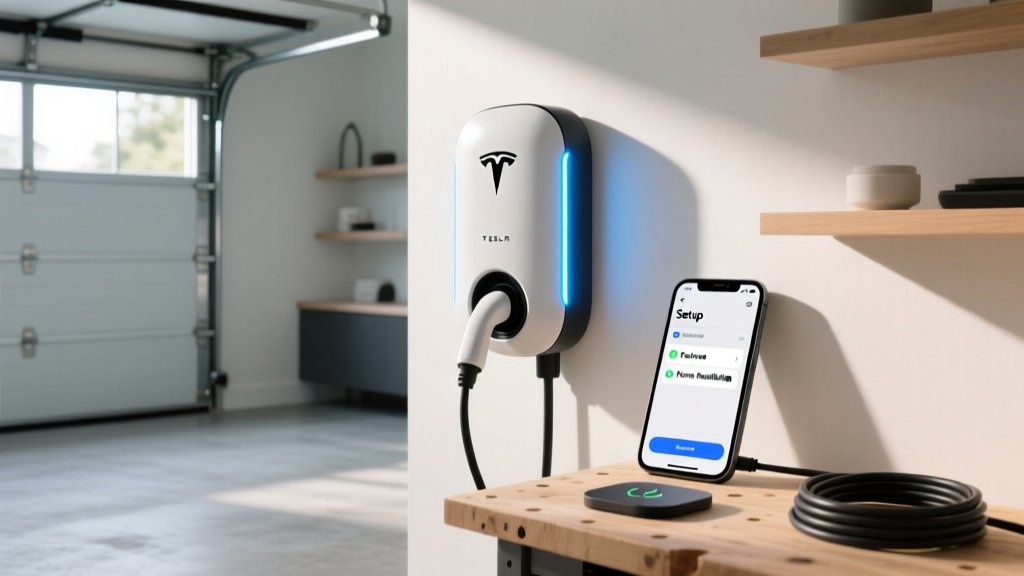
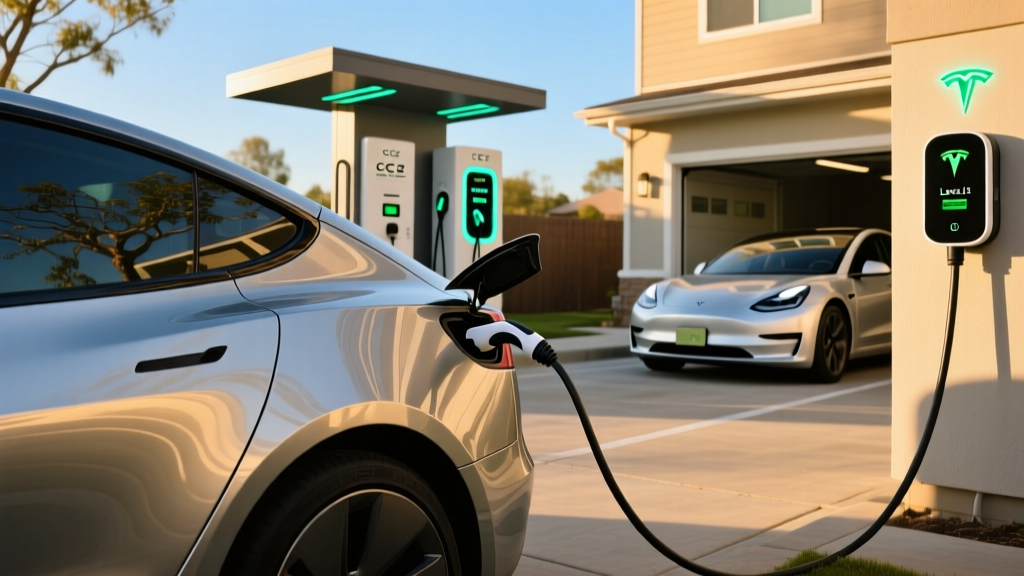
For daily home charging, the Tesla Wall Connector (NACS) is the simplest path. For public Level 2 stations with J1772 connectors, Tesla includes a J1772-to-NACS adapter in the glovebox. For non-Tesla DC fast chargers (Electrify America, EVgo), you will need the Tesla CCS adapter or to seek Supercharger stations equipped with Tesla's Magic Dock (built-in CCS adapter at select stalls).
Charging Cost Per Mile: Home vs Public vs Gas
One of the strongest ownership arguments for the Model 3 Performance is per-mile energy cost — but the savings vary dramatically depending on where you charge.
| Scenario | Rate ($/kWh) | Cost for 79 kWh (10–80%) | Cost per Mile* |
|---|---|---|---|
| Home Off-Peak (utility TOU) | $0.08–$0.12 | $6.32–$9.48 | $0.025–$0.038 |
| Home Standard Rate | $0.13–$0.18 | $10.27–$14.22 | $0.041–$0.057 |
| Public Level 2 (ChargePoint, etc.) | $0.25–$0.49 | $19.75–$38.71 | $0.079–$0.155 |
| Tesla Supercharger (V3/V4) | $0.28–$0.48 | $22.12–$37.92 | $0.088–$0.152 |
| Gas Equivalent (30 MPG, $3.50/gal) | — | — | $0.117 |
*Based on ~250 real-world miles per full charge (10–80% usable window of ~79 kWh, accounting for ~4 mi/kWh real-world efficiency in the Model 3 Performance).
Charging at home on an off-peak utility rate cuts your per-mile cost to roughly one-quarter the price of gasoline. Even at public DC fast-charger rates, the Model 3 Performance typically costs less per mile than a 30 MPG gas car — though the savings narrow significantly. According to fueleconomy.gov, the 2026 Model 3 Performance achieves 113 MPGe combined (30 kWh/100 mi), making it one of the most efficient performance vehicles on the market.
Recommended Level 2 Home Chargers for the Model 3 Performance
Not all Level 2 chargers are equal. The Model 3's onboard charger accepts up to 11.5 kW on AC, so any charger rated 48 amps or above will max out the vehicle's intake. Below are three proven options for 2026:
Tesla Wall Connector (Gen 4)
- Power Output: Up to 48A / 11.5 kW (240V)
- Connector: NACS (native Tesla)
- Cable Length: 24 ft
- Smart Features: Wi-Fi, OTA updates, Power Sharing (link multiple units), Tesla app integration, load management
- Price: ~$475
- Verdict: Best ecosystem integration for Tesla owners. Cleanest install with NACS-native plug.
ChargePoint Home Flex
- Power Output: Configurable 16A–50A / up to 12 kW (240V)
- Connector: J1772 (use Tesla's included J1772 adapter) or NACS pigtail version
- Cable Length: 23 ft
- Smart Features: Wi-Fi, Alexa integration, scheduling, ChargePoint app, amperage adjustable via DIP switches
- Price: ~$550–$650
- Verdict: Best multi-EV household charger. Adjustable amperage works with older panels without requiring a full upgrade.
Emporia Vue Level 2 Charger
- Power Output: Up to 48A / 11.5 kW (240V)
- Connector: J1772 (NACS adapter available)
- Cable Length: 24 ft
- Smart Features: Wi-Fi, energy monitoring, solar integration, scheduling, Emporia app with whole-home energy tracking
- Price: ~$399
- Verdict: Best budget smart charger. Ideal if you already use Emporia's home energy monitor or have solar panels.
For a pure Tesla household, the Wall Connector is the obvious choice. If you plan to add a non-Tesla EV (a growing likelihood given NACS adoption across brands), the ChargePoint Home Flex offers the most flexibility — especially its ability to dial down amperage to 32A or 40A if your panel cannot support a 60-amp circuit.
Safety, Code & Maintenance Considerations
EV charging involves sustained high-current draw — more similar to running a welder than plugging in a phone. Proper installation protects your home and your vehicle's battery:
- Dedicated Circuit: Your Level 2 charger must be on its own dedicated breaker — never shared with other appliances. Sharing a circuit risks tripping breakers or overheating wiring.
- GFCI Protection: NEC 2020 and later require Ground Fault Circuit Interrupter protection for EV receptacles. Hardwired chargers may have GFCI built into the unit. Confirm with your electrician.
- Outdoor Rating: If your charger is installed outdoors (carport, driveway), ensure the unit carries a NEMA 4 or IP65 weather rating. The Tesla Wall Connector and ChargePoint Home Flex are both outdoor-rated.
- Cable Management: Avoid running cables across walkways. Wall-mount cable organizers prevent tripping hazards and connector damage.
- Thermal Monitoring: Quality chargers include internal temperature sensors that throttle power if the plug or wiring overheats. Never use extension cords with EV chargers.
- Annual Inspection: Visually inspect the plug, cable, and receptacle annually for discoloration, melting, or looseness — signs of thermal stress that warrant immediate electrician review.
Public Charging & Road Trip Strategy
The Model 3 Performance's access to the Tesla Supercharger network — over 6,500 stations and 70,000+ stalls across North America as of 2026 — remains its strongest road-trip advantage. Superchargers are consistently the most reliable DC fast-charging network, with real-world uptime above 95% according to third-party tracking.
For non-Tesla networks (Electrify America, EVgo, ChargePoint DC), your CCS adapter unlocks access to thousands of additional stalls. However, reliability varies — plan backup stops and always check station status in your vehicle's navigation or apps like PlugShare before relying on a single station in a charging-desert region.
Road-trip best practices for preserving Model 3 Performance range:
- Set navigation to your Supercharger destination — the vehicle will automatically precondition the battery for optimal charge speed upon arrival.
- Charge to 80% at each stop and drive on. Charging 80–100% at a Supercharger can add 20+ minutes for only ~50 additional miles.
- In cold weather, expect 15–25% range reduction. Plan shorter segments between chargers.
- Use the vehicle's trip planner rather than third-party apps for the most accurate SoC predictions — it accounts for elevation, temperature, and driving style.
Frequently Asked Questions
How much does it cost to install a home EV charger for the Model 3 Performance?
Expect $1,050–$3,000 for a standard Level 2 installation in a home with an existing 200-amp electrical panel. If your home has an older 100-amp panel requiring an upgrade, total costs can reach $2,550–$7,000. The equipment itself (Tesla Wall Connector, ChargePoint Home Flex) runs $400–$700, with electrician labor and permits making up the remainder.
Can I charge the Model 3 Performance on a regular 120V outlet?
Yes, using the Tesla Mobile Connector with the included 120V adapter. However, Level 1 charging delivers only ~1.4 kW (about 3–5 miles of range per hour). A full 10–80% charge would take over 39 hours. Level 1 is practical only for overnight trickle charging if you drive fewer than 30 miles per day, or as an emergency backup.
Does frequent DC fast charging degrade the Model 3 Performance battery?
Modern battery management systems mitigate most fast-charging degradation through thermal management and charge-curve tapering. Tesla's battery warranty covers 8 years or 120,000 miles with a minimum 70% capacity retention. Real-world data from high-mileage Teslas suggests 10–15% total degradation over 150,000 miles with mixed charging. For daily use, Level 2 home charging with a 80% daily charge limit remains the longevity-optimal strategy.
Do I qualify for a tax credit on my home charger installation?
The federal Alternative Fuel Vehicle Refueling Property Credit (IRC §30C) covers 30% of home EV charger equipment and installation costs, up to $1,000, for chargers installed in eligible census tracts. Eligibility depends on your location and income. Consult IRS guidelines or a tax professional to confirm your qualification. Many state utilities also offer additional rebates of $250–$500.
How fast does the Model 3 Performance charge at a Supercharger?
The 2026 Model 3 Performance peaks at 250 kW on V3 and V4 Superchargers. Under ideal conditions (low SoC, preconditioned battery), a 10–80% charge takes approximately 25–30 minutes. Peak rate is sustained only to roughly 35% SoC, then tapers progressively. Above 80%, charging slows dramatically to protect battery health — avoid routine charging above 80% at DC fast stations.