Why Charging Strategy Defines Your Model 3 Long Range Mileage
The Tesla Model 3 Long Range carries an EPA-estimated 363 miles of range on a full charge (2025/2026 model years, rear-wheel and all-wheel drive variants). But the mileage you actually extract—and how quickly you replenish it—depends entirely on how you charge. A well-managed battery charged primarily on Level 2 at home will degrade slower and deliver more consistent real-world range than one repeatedly hammered to 100% on DC fast chargers.
This guide breaks down exactly how each charging level affects your Model 3 Long Range mileage, what it costs to set up at home, and what you'll pay per mile compared to gasoline. We'll cover the electrical specifics, connector standards, and equipment picks that matter in 2026.
Charging Levels Explained: Speeds and Range Added Per Hour
Understanding the three charging tiers is essential. Power is measured in kilowatts (kW)—the rate of energy flow—while battery capacity is measured in kilowatt-hours (kWh), the total energy stored. Confusing the two is the most common EV literacy mistake.
| Level | Voltage | Max Power (kW) | Miles of Range Added/Hour | Best Use Case |
|---|---|---|---|---|
| Level 1 (120V) | 120V AC | 1.4 kW | 3–5 mi/hr | Overnight trickle, emergencies |
| Level 2 (240V) | 240V AC | 11.5–19.2 kW | 30–52 mi/hr | Daily home charging, workplaces |
| DC Fast Charge | 400–800V DC | 50–250+ kW | 150–1,000+ mi/hr (peak) | Road trips, rapid top-ups |
For the Model 3 Long Range's approximately 79 kWh usable battery, Level 1 would require roughly 55+ hours for a full charge—impractical for daily use. Level 2 at 11.5 kW (48A) adds about 30 miles per hour, meaning an overnight session of 8 hours recovers roughly 240 miles. DC fast charging on a Tesla V4 Supercharger peaks at 250 kW, achieving a 10–80% charge in approximately 25–28 minutes, though the charge curve tapers significantly above 80%.
Home Charger Installation: Electrical Requirements and Costs
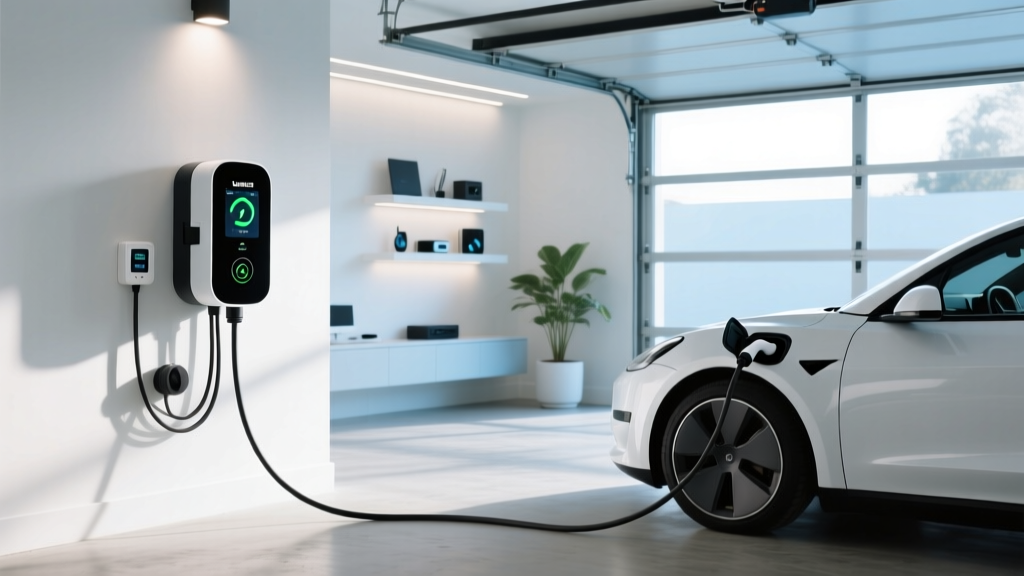
The Model 3 Long Range accepts up to 11.5 kW on Level 2 AC (48 amps continuous, requiring a 60A circuit). Here's what a proper home installation demands.
Electrical Specifications
- Circuit: Dedicated 60-amp breaker for a 48A continuous charger (NEC requires circuits rated at 125% of continuous load)
- Voltage: 240V split-phase (standard US residential)
- Wire gauge: 6 AWG copper (THHN in conduit) or 4 AWG aluminum for runs up to 50 feet; larger gauge for longer runs
- Outlet vs. hardwired: NEMA 14-50 outlet (50A circuit, 40A charging) or hardwired (60A circuit, 48A charging). Hardwired is preferred for higher power and avoids GFCI nuisance trips common on 14-50 receptacles.
Panel Upgrade Considerations
Homes with 100A service panels often lack capacity for a 60A EV circuit alongside existing loads (HVAC, electric range, dryer). A panel upgrade to 200A typically costs $1,500–$3,500. An electrician will perform a load calculation per NEC Article 220 to determine if your current panel can support the charger.
Estimated Home Charger Installation Costs (2026)
| Component | Cost Range | Notes |
|---|---|---|
| Level 2 Charger (Equipment) | $400–$750 | 48A smart Wi-Fi charger |
| Electrical Permit | $50–$250 | Varies by municipality |
| Electrician Labor (standard install) | $500–$1,500 | Panel to garage, <30 ft run |
| Wire, Conduit, Breaker | $150–$400 | 6 AWG copper, 60A breaker |
| Panel Upgrade (if needed) | $1,500–$3,500 | 100A → 200A service |
| Total (no panel upgrade) | $1,100–$2,900 | Typical single-family home |
| Total (with panel upgrade) | $2,600–$6,400 | Older homes with 100A service |
Connector Compatibility: NACS, CCS, and Adapters
The 2026 Tesla Model 3 Long Range uses the North American Charging Standard (NACS) connector natively—no adapter needed for Tesla Superchargers or the growing number of NACS-equipped public stations. Tesla opened Supercharger access to non-Tesla EVs via built-in Magic Dock adapters at select locations, but for Model 3 owners, NACS is seamless.
| Connector | Standard On | Model 3 Compatibility | Adapter Needed? |
|---|---|---|---|
| NACS (Tesla) | Tesla, Ford, GM, Rivian, Hyundai (2025+) | Native | No |
| CCS1 | Most non-Tesla EVs (legacy) | Yes, with adapter | Tesla CCS Adapter (~$175) |
| CHAdeMO | Nissan Leaf (legacy) | No | Not available/supported |
| J1772 (Level 2 AC) | All non-Tesla EVs | Yes, with adapter | Tesla J1772 Adapter (included) |
If you encounter Electrify America or other CCS-only public chargers, Tesla's CCS adapter enables compatibility at up to 170 kW. For home Level 2 charging, the included J1772 adapter handles any non-Tesla wall connector.
Charging Cost Per Mile: EV vs. Gasoline
Electricity pricing varies dramatically by source. Here's how Model 3 Long Range charging costs compare to a gasoline equivalent.
| Charging Scenario | Rate ($/kWh) | Cost for 79 kWh (full) | Cost Per Mile (363 mi range) |
|---|---|---|---|
| Home Off-Peak (national avg) | $0.13 | $10.27 | $0.028 |
| Home Peak / Standard | $0.22 | $17.38 | $0.048 |
| Public Level 2 (ChargePoint, etc.) | $0.35 | $27.65 | $0.076 |
| Tesla Supercharger (avg 2026) | $0.35–$0.45 | $27.65–$35.55 | $0.076–$0.098 |
| Gasoline Equivalent (30 MPG, $3.50/gal) | — | — | $0.117 |
At the Model 3 Long Range's efficiency of roughly 25 kWh/100 miles (132 MPGe combined), home charging at off-peak rates costs about one-quarter the per-mile expense of a 30 MPG gasoline car. Even DC fast charging at Supercharger rates undercuts gasoline on a cost-per-mile basis. Over 15,000 annual miles, home charging saves approximately $1,300–$1,500 versus gasoline.
Equipment Recommendations: Best Level 2 Chargers for Model 3
These chargers pair well with the Model 3 Long Range's 11.5 kW onboard charger and NACS connector.
Tesla Wall Connector
- Power: 11.5 kW (48A) on 60A circuit
- Connector: NACS native
- Cable length: 24 ft
- Smart features: Wi-Fi, OTA updates, Power Sharing (load-balance two units on one circuit), access control
- Price: ~$475
- Verdict: Best integration for Tesla owners; cleanest aesthetic
ChargePoint Home Flex
- Power: Up to 12 kW (50A) on 60A circuit; configurable down to 16A
- Connector: J1772 (use Tesla adapter) or NACS version (2025+)
- Cable length: 23 ft
- Smart features: Wi-Fi, app scheduling, Alexa, utility demand-response programs
- Price: ~$550–$650
- Verdict: Best for multi-EV households or utility rebate eligibility
Emporia Vue Level 2 Charger
- Power: 11.5 kW (48A) on 60A circuit
- Connector: J1772 (NACS version available)
- Cable length: 24 ft
- Smart features: Wi-Fi, solar integration (pairs with Emporia energy monitor), scheduled charging, load management
- Price: ~$400
- Verdict: Best value; ideal for solar-equipped homes
Safety, Code, and Installation Best Practices
A compliant installation protects your home and your warranty. Key requirements per the National Electrical Code (NEC) and best practices for 2026:
- Dedicated circuit: EV chargers drawing over 16A continuous must have their own dedicated breaker—never share with other appliances.
- GFCI protection: NEC 2020+ requires GFCI for outdoor receptacles. However, hardwired chargers avoid the nuisance-trip issues that plague NEMA 14-50 outlets with GFCI breakers. Most quality chargers include built-in ground-fault protection.
- Outdoor rating: If mounted outside, the charger must carry a NEMA 3R or NEMA 4 rating. Tesla Wall Connector and ChargePoint Home Flex are rated for outdoor use.
- Permit and inspection: Most jurisdictions require a permit and final inspection for any new 240V circuit. Skipping this risks insurance claim denial in the event of an electrical fire.
- Surge protection: Consider a whole-home surge protector (Type 2 SPD) at the panel to guard the charger's electronics against voltage spikes.
Optimizing Battery Health for Long-Term Mileage Retention
The Model 3 Long Range uses a nickel-manganese-cobalt (NMC) lithium-ion battery pack. NMC chemistry delivers high energy density but is more sensitive to high state-of-charge (SoC) stress than LFP chemistry found in the Model 3 RWD. To preserve long-term mileage:
- Set daily charge limit to 80% in the Tesla app—reserve 100% for road trips.
- Avoid letting the battery sit above 90% SoC for extended periods.
- Minimize DC fast charging frequency; prioritize Level 2 for daily replenishment.
- Precondition the battery (via Scheduled Departure or navigation to a Supercharger) before fast charging—cold batteries charge slower and experience more stress.
- Tesla's battery warranty covers 8 years or 120,000 miles, whichever comes first, with retention above 70% capacity.
Real-world data from Tesla fleet reports indicates NMC packs lose approximately 10–12% capacity over the first 100,000 miles when charged responsibly, meaning your 363-mile EPA range may settle around 320–325 miles after several years—a manageable trade-off for the performance and range density NMC provides.
Frequently Asked Questions
How much does it cost to install a home EV charger for the Model 3 Long Range?
A standard Level 2 installation with a 60A circuit, hardwired Tesla Wall Connector, and no panel upgrade typically runs $1,100–$2,900 including equipment, permit, labor, and materials. If your home requires a panel upgrade from 100A to 200A service, total costs rise to $2,600–$6,400.
How fast will each charging level add range to my Model 3?
Level 1 (120V) adds 3–5 miles per hour. Level 2 at 11.5 kW adds approximately 30 miles per hour. DC fast charging at a 250 kW Supercharger can add up to 200 miles in about 15 minutes at peak rate, though the charge curve tapers significantly above 50–60% SoC.
Which connector is compatible with my Model 3 Long Range?
Your 2026 Model 3 uses NACS natively for both AC and DC charging. For legacy CCS1 public chargers, you'll need Tesla's CCS adapter (~$175). The included J1772 adapter handles non-Tesla Level 2 stations. CHAdeMO is not supported.
How much does charging cost per mile vs. gas?
Home charging at $0.13/kWh costs roughly $0.028/mile. Public Supercharging at $0.35–$0.45/kWh costs $0.076–$0.098/mile. A comparable 30 MPG gasoline car at $3.50/gallon costs $0.117/mile. Home charging saves 75%+ per mile versus gasoline.
What electrical upgrades might I need for a home charger?
Homes with 100A electrical service often need a panel upgrade to 200A to safely support a 60A EV circuit. An electrician will perform an NEC Article 220 load calculation. You may also need to upgrade wiring from the utility meter to the panel if it's undersized for 200A service.