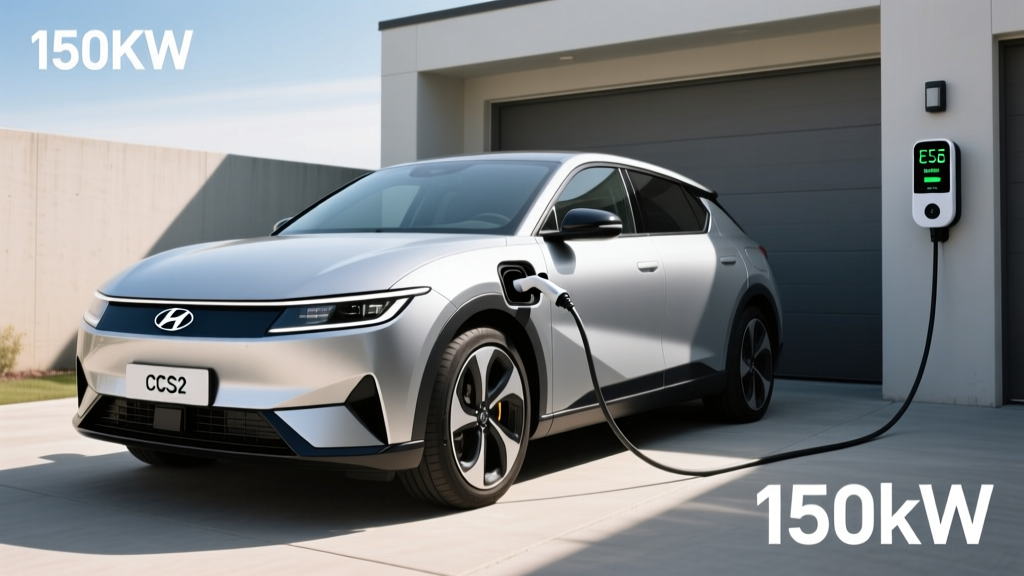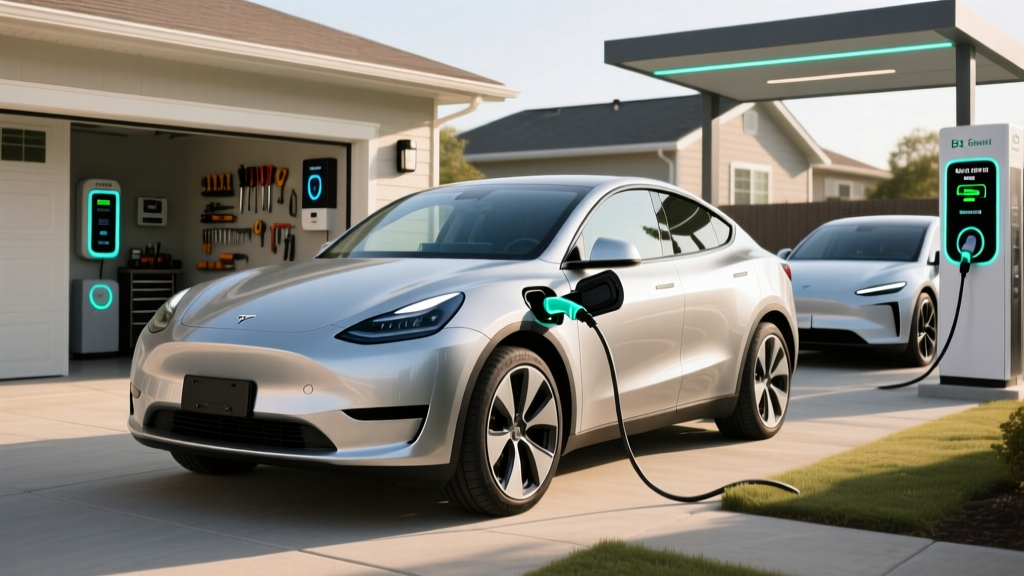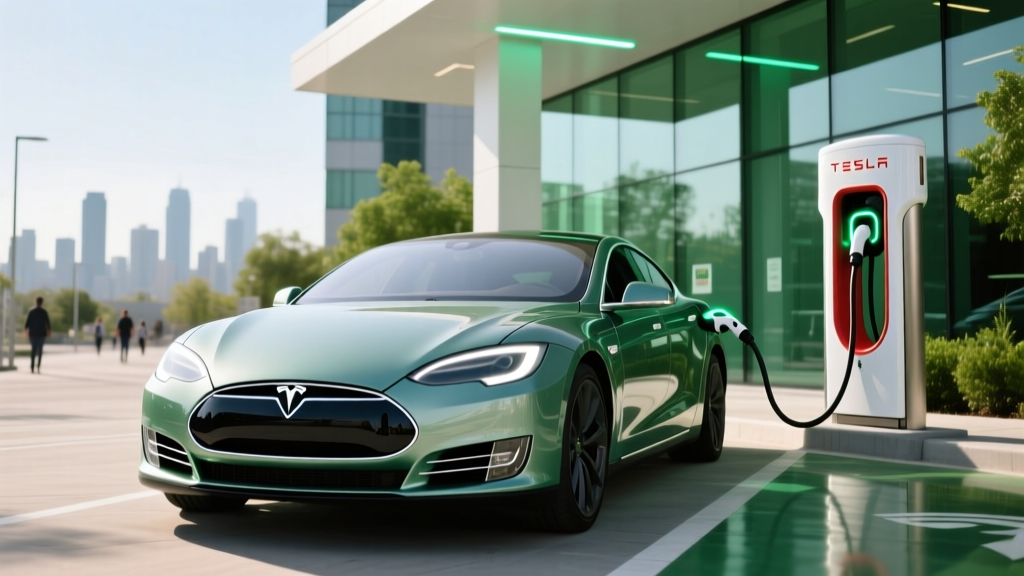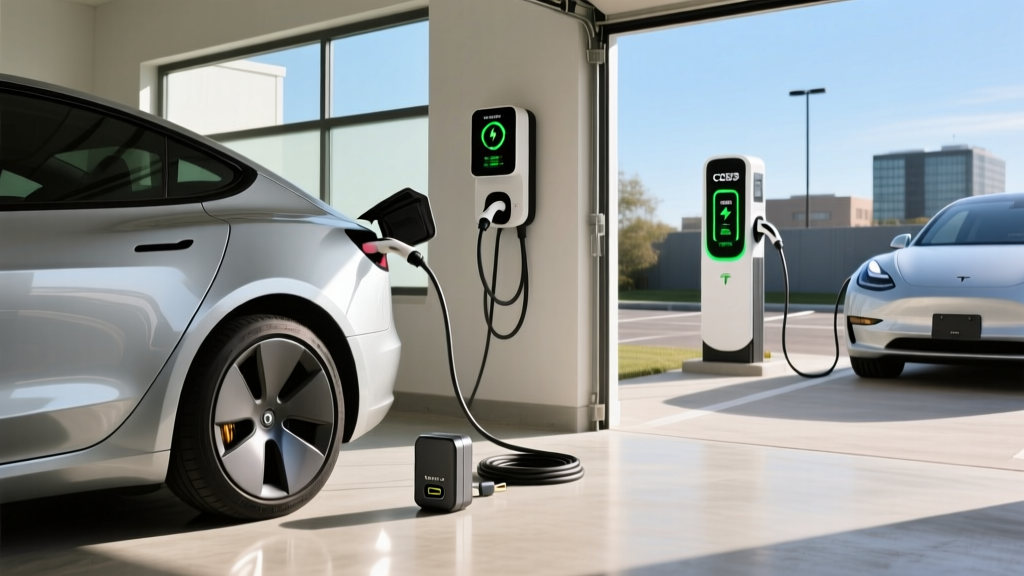
The 2025 Tesla Model 3 Long Range is one of the most efficient electric sedans on the road, pairing a 79 kWh (usable) LFP/NMC battery pack with an EPA-estimated 363 miles of range. But that range figure only matters if you can actually replenish it efficiently. Whether you're plugging into a wall outlet overnight, installing a dedicated 240V home charger, or mapping a cross-country road trip on Superchargers, understanding the charging ecosystem is the single biggest factor in daily EV satisfaction.
This guide breaks down every charging scenario for the 2025 Model 3 Long Range — from Level 1 trickle charging to 250 kW DC fast charging — with exact numbers on speed, cost, equipment, and the electrical work your home might need.
2025 Model 3 Long Range: Key Charging Specs at a Glance
| Spec | 2025 Tesla Model 3 Long Range |
|---|---|
| EPA Range | 363 miles |
| Battery (Usable) | ~79 kWh (NMC chemistry) |
| Max DC Fast Charge Rate | 250 kW peak |
| 10-80% DC Fast Charge | ~27 minutes (V3 Supercharger) |
| Max Level 2 (AC) Acceptance | 11.5 kW (48A onboard charger) |
| Connector | NACS (native Tesla) |
| EPA Efficiency | 132 MPGe combined (25 kWh/100 mi) |
| Base MSRP | $47,740 (before incentives) |
| Battery Warranty | 8 years / 120,000 miles (≥70% retention) |
Charging Levels Explained: Speeds and Range Added Per Hour
EV charging operates across three tiers. The critical distinction: kW (kilowatts) measures power — the rate at which energy flows into your battery. kWh (kilowatt-hours) measures energy — the total capacity stored. Think of kW as the width of a hose and kWh as the size of the bucket. The Model 3 Long Range's bucket holds ~79 kWh; the hose width varies by charging level.
| Level | Voltage / Amperage | Power (kW) | Miles of Range Per Hour | Full Charge Time (0-100%) |
|---|---|---|---|---|
| Level 1 (Standard Outlet) | 120V / 12A | ~1.4 kW | ~4-5 mi/hr | ~55-65 hours |
| Level 2 (Home / Public AC) | 240V / 48A | 11.5 kW | ~37-44 mi/hr | ~7-8 hours |
| Level 2 (40A Circuit) | 240V / 40A | 9.6 kW | ~30-36 mi/hr | ~9-10 hours |
| DC Fast (Tesla V3 Supercharger) | 400V+ DC | 250 kW peak | ~170 mi in 15 min | 10-80% in ~27 min |
| DC Fast (Tesla V4 Supercharger) | 400V+ DC | 250+ kW | Similar to V3 for Model 3 | 10-80% in ~25 min |
Charge curve reality check: The 250 kW peak rate only applies at low states of charge (roughly 10-30%). As the battery fills, the BMS throttles the rate to protect cell health. Expect ~150 kW from 30-50%, ~100 kW from 50-70%, and a steep taper to ~40 kW above 80%. That 10-80% time of 27 minutes assumes you arrive at a low SoC and the battery is preconditioned — meaning the car has warmed the pack to optimal temperature during navigation to the Supercharger.
Home Charging Installation: Electrical Requirements, Costs, and Gotchas
For most Model 3 Long Range owners, a Level 2 home charger is the backbone of daily ownership. You'll plug in at night, wake up to a full battery, and rarely need public charging for daily driving. But installation costs vary dramatically based on your home's electrical infrastructure.
What the Model 3 Long Range Needs
The Model 3's onboard charger accepts up to 11.5 kW (48 amps). To deliver this, you need a 240V circuit rated for 60 amps (EVSE continuous load requires the circuit to be rated 125% above the max draw, so 48A × 1.25 = 60A). A NEMA 14-50 outlet or a hardwired connection both work.
If your electrical panel maxes out at 100A or 150A and is already near capacity, you may need a panel upgrade to 200A — a significant added expense. Homes built after 2000 typically have 200A panels with available headroom; older homes are more variable.
Installation Cost Breakdown
| Component | Simple Install (Panel Nearby) | Complex Install (Long Run / Panel Upgrade) |
|---|---|---|
| Level 2 EVSE Equipment | $400 - $700 | $400 - $700 |
| Electrician Labor (240V circuit) | $500 - $1,200 | $1,500 - $3,000 |
| Permit & Inspection | $50 - $200 | $100 - $300 |
| Electrical Panel Upgrade (if needed) | $0 | $1,500 - $4,000 |
| Conduit / Trenching (outdoor runs) | $0 - $200 | $500 - $2,000 |
| Total Estimated Cost | $950 - $2,300 | $4,000 - $10,000 |
Pro tip: Get at least three quotes from licensed electricians who have specific EV charger installation experience. Ask whether the quote includes permit and inspection — some electricians quote labor only. The IRS §30D credit does not cover home charging equipment for most buyers, but some utilities and state programs offer rebates of $200-$500 for Level 2 installations. Check your local utility's EV program page before scheduling work.
Connector Compatibility: NACS, CCS, and Adapters
The 2025 Tesla Model 3 Long Range comes equipped with the NACS (North American Charging Standard) connector — Tesla's proprietary plug, now adopted industry-wide. This means native access to Tesla's Supercharger network (over 25,000 stalls in North America) without any adapter.
| Connector Type | Compatibility | Notes |
|---|---|---|
| NACS (Tesla) | ✅ Native | All Tesla Superchargers (V2, V3, V4) |
| CCS1 | ⚠️ Adapter Required | Tesla CCS Adapter (~$175); needed for Electrify America, EVgo, etc. |
| CHAdeMO | ❌ Not Supported | No adapter available; network largely retired |
| J1772 (Level 2 public) | ⚠️ Adapter Required | Tesla includes a J1772-to-NACS adapter with the vehicle |
For public non-Tesla DC fast chargers (Electrify America, EVgo, ChargePoint), you'll need Tesla's CCS adapter. The Model 3's software supports CCS charging natively — it's purely a physical connector difference. Keep the CCS adapter in your frunk for road trips outside the Supercharger network.
Level 2 Equipment Recommendations for the Model 3 Long Range
Since the Model 3 can accept up to 11.5 kW (48A), you'll want a charger that can deliver at least that. Here are our top picks, all with NACS connectors (no adapter needed):
Tesla Wall Connector (Gen 3)
- Power Output: 11.5 kW (48A)
- Connector: NACS (native)
- Cable Length: 24 ft
- Smart Features: Wi-Fi, OTA updates, Power Sharing (link two units on one circuit), access control
- Price: ~$475
- Best For: Tesla-only households; seamless integration with the Tesla app
ChargePoint Home Flex
- Power Output: Up to 12 kW (50A) — configurable to circuit size
- Connector: NACS (available with native NACS cable as of 2025)
- Cable Length: 23 ft
- Smart Features: Wi-Fi, ChargePoint app scheduling, Alexa integration, energy tracking
- Price: ~$649
- Best For: Multi-EV households (Tesla + non-Tesla); flexible amperage settings
Emporia Vue Level 2 Charger
- Power Output: 11.5 kW (48A)
- Connector: NACS or J1772 (choose at purchase)
- Cable Length: 24 ft
- Smart Features: Wi-Fi, Emporia app, solar integration, load management
- Price: ~$399
- Best For: Budget-conscious buyers with solar panels; best value-to-feature ratio
Any of these will fully charge a depleted Model 3 Long Range battery in roughly 7-8 hours — more than sufficient for overnight replenishment. The Tesla Wall Connector is the most cost-effective choice if you only own Teslas; the ChargePoint Home Flex earns its premium if you anticipate charging a non-Tesla EV with a CCS-to-NACS adapter.
Cost to Charge: Home vs. Public vs. Gas Comparison
The economic case for the Model 3 Long Range hinges on how and where you charge. Electricity prices vary enormously by region, time of day, and charging location. Here's a realistic breakdown based on national averages and the Model 3's EPA-rated efficiency of 25 kWh/100 miles.
| Scenario | Avg. $/kWh | Cost to Add 200 Miles | Cost Per Mile |
|---|---|---|---|
| Home (Off-Peak / Time-of-Use Rate) | $0.10 | $5.00 | $0.025 |
| Home (National Avg. Residential Rate) | $0.16 | $8.00 | $0.040 |
| Public Level 2 (ChargePoint, etc.) | $0.25 - $0.35 | $12.50 - $17.50 | $0.063 - $0.088 |
| Tesla Supercharger (Avg.) | $0.28 - $0.36 | $14.00 - $18.00 | $0.070 - $0.090 |
| Non-Tesla DC Fast (Electrify America) | $0.35 - $0.48 | $17.50 - $24.00 | $0.088 - $0.120 |
| Gas Equivalent (30 MPG @ $3.50/gal) | — | $23.33 | $0.117 |
The bottom line: Home charging on an off-peak rate costs roughly one-fifth what a comparable gas car spends per mile. Even on Tesla Superchargers, you'll save 20-30% versus gas. The savings evaporate if you rely exclusively on premium-priced non-Tesla DC fast chargers — another reason home Level 2 installation is essential for economical EV ownership.
For a driver covering 12,000 miles per year, the annual fuel cost difference is substantial:
- Home charging at $0.12/kWh: ~$360/year
- Gas car at 30 MPG, $3.50/gallon: ~$1,400/year
- Annual savings: ~$1,040
Safety, Code Requirements, and Best Practices
EV charging involves sustained high-current draw — often 8+ hours at 40-48 amps. This isn't like running a dryer for 45 minutes. The National Electrical Code (NEC) and local building codes reflect this with specific requirements:
- Dedicated circuit: Your Level 2 charger must have its own dedicated breaker — not shared with other appliances.
- 125% rule: The circuit breaker must be rated at 125% of the charger's maximum continuous draw. A 48A charger requires a 60A breaker.
- GFCI protection: NEC 2020 and later requires GFCI protection for outdoor receptacles used for EV charging. Hardwired installations may have different requirements depending on jurisdiction.
- Outdoor rating: If your charger is installed outdoors (garage exterior, driveway), the unit must carry a NEMA 4 or NEMA 4X rating for weather resistance. All three chargers recommended above are outdoor-rated.
- Permit required: Virtually all jurisdictions require an electrical permit for a new 240V circuit. Your electrician should pull this — never skip it, as unpermitted work can void homeowner's insurance claims.
- Wire gauge: 60A circuits typically require 6 AWG copper wire (or 4 AWG aluminum). For runs over 100 feet, your electrician may upsize to compensate for voltage drop.
Load management tip: If your panel is tight on capacity but you don't want to pay for a panel upgrade, consider a smart charger with load management (like the Emporia Vue with its energy monitor) or Tesla's Wall Connector with Power Sharing. These devices dynamically adjust charging amperage based on your home's real-time electrical load, keeping you safely within your panel's capacity.
Public Charging and Road Trip Strategy
The Model 3 Long Range's native Supercharger access remains its strongest public charging advantage. Tesla's network consistently outperforms third-party networks in uptime and reliability. On a typical road trip:
- Plan stops every 200-250 miles (accounting for highway efficiency loss and a safety buffer)
- Preconditioning is automatic when you navigate to a Supercharger via the car's built-in navigation — the battery heats or cools to optimal temperature, enabling faster charging upon arrival
- Charge to 80%, not 100% at DC fast chargers — the taper above 80% makes the last 20% painfully slow (up to 20+ additional minutes for just ~70 miles of range)
- Use the Tesla app or the car's navigation to check real-time stall availability and pricing before arriving
For non-Tesla DC fast networks, your CCS adapter enables access to Electrify America, EVgo, and ChargePoint DC stalls. However, expect slower peak speeds (many non-Tesla stalls cap at 150 kW or deliver inconsistent power) and higher per-kWh pricing. Treat these as backup options, not primary road-trip infrastructure.
Frequently Asked Questions
How much does it cost to install a home EV charger for the Model 3 Long Range?
For a straightforward installation with a 200A panel and the charger located near the panel, expect $950-$2,300 all-in (equipment + electrician + permit). If your panel needs upgrading to 200A or the charger is far from the panel requiring long conduit runs, costs can reach $4,000-$10,000. Always get multiple quotes and confirm the estimate includes permitting.
How fast will each charging level add range to my Model 3?
Level 1 (120V outlet): ~4-5 miles per hour — suitable only for topping off or very low-mileage drivers. Level 2 (240V, 48A): ~37-44 miles per hour — fully replenishes the battery overnight. DC Fast Charging (Tesla V3 Supercharger): up to 170 miles in 15 minutes at low SoC, with the rate tapering as the battery fills.
Which charger connector is compatible with the 2025 Model 3 Long Range?
The Model 3 uses the NACS connector natively. This gives you direct access to all Tesla Superchargers and an increasing number of non-Tesla networks adopting NACS. For CCS-equipped public chargers (Electrify America, etc.), you'll need Tesla's CCS adapter (~$175). Tesla includes a J1772-to-NACS adapter in the vehicle for public Level 2 charging.
How much does charging the Model 3 cost per mile compared to gas?
At home on the national average electricity rate ($0.16/kWh), the Model 3 Long Range costs about $0.04 per mile. A comparable gas car at 30 MPG and $3.50/gallon costs $0.12 per mile — three times more. Even on Tesla Superchargers at ~$0.32/kWh, you'll pay ~$0.08 per mile, still a significant savings over gas.
What electrical upgrades might I need for a home charger?
The most common upgrade is a panel upgrade from 100A or 150A to 200A service, costing $1,500-$4,000. You may also need a new 60A double-pole breaker, 6 AWG copper wiring, and a NEMA 14-50 outlet (or hardwired connection). If your garage is detached or far from the panel, expect additional costs for conduit, trenching, or a sub-panel. A licensed electrician can assess your home's capacity during an initial site visit — most offer this for free or a small fee credited toward the installation.
Does the 2025 Model 3 Long Range qualify for the federal EV tax credit?
Eligibility for the IRS §30D clean vehicle credit depends on several factors: the vehicle's MSRP must be under $55,000 (sedans), your modified adjusted gross income must fall below $150,000 (single) / $300,000 (joint), and the battery must meet critical-mineral and battery-component sourcing requirements that tighten annually. The Model 3 Long Range at $47,740 clears the MSRP cap, but battery sourcing rules are strict. Tesla's website and the IRS's official list at fueleconomy.gov are the best sources for current eligibility — these rules change frequently, so verify before purchasing. The credit can now be transferred to the dealer as a point-of-sale discount.