Why Every EV Owner Needs a Mobile Charger in the Trunk
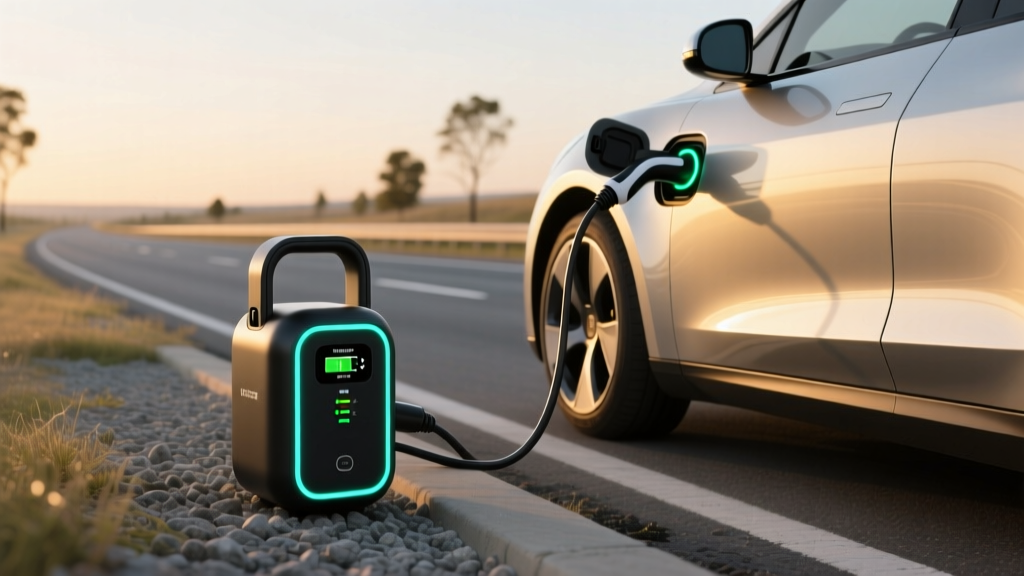
Public charging infrastructure has expanded dramatically, but dead spots still exist. Rural routes, small-town hotels, and aging commercial lots often lack working DC fast chargers—or any charger at all. A mobile EV charger for roadside use isn't just a nice-to-have; it's your insurance policy against a stranded battery. Unlike a fixed wall unit, a portable charger travels with you, plugging into standard 120V outlets (Level 1) or 240V dryer-style receptacles (Level 2) you encounter on the road.
This guide breaks down exactly what portable chargers can deliver, which connectors your EV requires, how fast they'll actually add range, and what to expect when you're counting on a 120V motel outlet to get you to the next Supercharger. We'll also cover the home-installation side, since the best portable units double as your daily Level 2 charger when mounted on a garage wall.
Charging Levels Explained: What Portable Units Actually Deliver
Before comparing hardware, you need to understand the three charging tiers and what each means for a mobile unit you're plugging into an unknown outlet. Power is measured in kW (kilowatts)—the rate of energy flow—while your battery capacity is measured in kWh (kilowatt-hours), the total energy stored. Confusing the two is the single most common EV mistake.
| Level | Voltage | Max Power (kW) | Miles of Range Added per Hour | Typical Use Case |
|---|---|---|---|---|
| Level 1 | 120V AC | 1.2–1.9 kW | 3–5 miles | Standard household outlet; overnight trickle; emergency roadside |
| Level 2 | 240V AC | 3.3–19.2 kW | 12–70 miles | Home wall charger; destination charging; portable 240V units |
| DC Fast | 400–800V DC | 50–350 kW | 150–1,000+ miles (equivalent) | Public fast-charging stations only; not portable |
For a mobile EV charger, you're realistically choosing between Level 1 (anywhere there's a standard outlet) and Level 2 (where you can find a NEMA 14-50 dryer outlet or hardwire at home). DC fast charging requires fixed, grid-connected infrastructure and is not available in a portable form factor.
Real-world caveat: Those "miles per hour" figures assume a vehicle efficiency of roughly 3–4 mi/kWh (typical of a midsize crossover like the Tesla Model Y or Hyundai Ioniq 5). Heavier vehicles like the Rivian R1T or Ford F-150 Lightning will see fewer miles per hour at every level. Cold weather can reduce charging speeds by 20–40% if the battery isn't preconditioned.
How Fast Will a Portable Charger Actually Charge Your EV?
Let's ground this in real numbers. Here's what to expect when charging common battery sizes from 10% to 80% State of Charge (SoC) using portable equipment:
| Battery Size | Example Vehicles | Level 1 (1.4 kW) | Portable Level 2 (7.7 kW) | Portable Level 2 (11.5 kW) |
|---|---|---|---|---|
| 60 kWh usable | Chevy Equinox EV, base Model 3 | ~35 hours | ~6.5 hours | ~4.3 hours |
| 77 kWh usable | Model Y LR, Ioniq 5, EV6 | ~45 hours | ~8.5 hours | ~5.6 hours |
| 100 kWh usable | F-150 Lightning Ext., Rivian R1S | ~58 hours | ~11 hours | ~7.3 hours |
Level 1 is a slow burn—useful for adding 30–40 miles overnight at a hotel when you're truly stuck, but not a practical daily strategy. Portable Level 2 at 7.7 kW (32A on 240V) can fully replenish most EVs overnight, which is why the best mobile chargers ship with swappable plugs for both 120V and 240V service.
Charge curve taper: These times assume a relatively flat charge curve. In reality, most EVs pull peak power between 10–50% SoC, then taper significantly above 80%. Charging from 80–100% can take as long as the 10–80% stretch. For roadside emergencies, aim for 80% and move on.
Connector Compatibility: NACS, CCS, and CHAdeMO in 2026
The connector landscape has consolidated significantly since Ford, GM, Rivian, and most other automakers adopted the North American Charging Standard (NACS) for their 2025–2026 models. Here's where things stand:
| Connector | Brands Using It (2026 Models) | Adapter Availability |
|---|---|---|
| NACS (Tesla-style) | Tesla (all), Ford, GM, Rivian, Volvo, Polestar, Nissan (2025+), Hyundai/Kia (2026+) | Native on new vehicles; CCS-to-NACS adapters widely available |
| CCS1 | Legacy VW ID.4 (pre-2026), BMW iX (pre-2026), older Hyundai/Kia models, Stellantis EVs | NACS-to-CCS adapters available from Tesla and third parties (~$200–$250) |
| CHAdeMO | Nissan Leaf (discontinued 2025), Mitsubishi Outlander PHEV (legacy) | Limited adapter options; network support declining |
For mobile charger buyers: If you drive a 2025–2026 model-year EV from Ford, GM, Rivian, or Tesla, you need a NACS connector on your portable unit. If you're still driving a CCS-equipped vehicle, buy a CCS-native portable charger or plan to carry a NACS-to-CCS adapter for future-proofing. CHAdeMO owners should prioritize CCS/NACS adapters and accept that new portable charger options for their connector are dwindling.
Best Mobile EV Chargers for Roadside Use: 2026 Equipment Picks
These are the portable chargers we recommend based on power output, connector flexibility, build quality, and real-world usability. Prices reflect MSRP as of early 2026.
1. Tesla Mobile Connector (NACS) — Best for Tesla & NACS-Adopting EVs
Power output: Up to 7.7 kW (32A) on 240V NEMA 14-50; 1.2 kW (12A) on 120V
Connector: NACS native
Cable length: 20 feet
Smart features: None (no Wi-Fi/app); basic LED status indicators
Price: ~$275 (includes NEMA 5-15 and NEMA 14-50 adapter heads)
Best for: Tesla owners and Ford/GM/Rivian drivers with NACS ports who want a compact, reliable backup. The interchangeable plug heads are a genuine advantage for road trips where you might encounter a dryer outlet at a rental or RV park.
2. ChargePoint Home Flex (Portable Mode) — Best Smart Portable Level 2
Power output: Up to 12 kW (50A) on 240V hardwire; 7.7 kW (32A) on NEMA 14-50 plug; 1.4 kW on 120V
Connector: NACS or CCS1 (select at purchase)
Cable length: 23 feet
Smart features: Wi-Fi connected, ChargePoint app scheduling, Alexa integration, amperage adjustment via app
Price: ~$599–$649
Best for: Owners who want one unit that serves as a wall-mounted daily charger at home and a portable unit for travel. The app-controlled amperage is valuable: you can dial down to 16A or 24A when plugging into an unknown 240V circuit to avoid tripping a breaker.
3. Lectron V-BOX Pro (NACS/CCS) — Best Budget Portable
Power output: Up to 9.6 kW (40A) on 240V NEMA 14-50; 1.4 kW on 120V
Connector: Available in NACS or CCS1
Cable length: 21 feet
Smart features: Basic LCD screen showing kW draw, voltage, and temperature; no app
Price: ~$330–$380
Best for: Budget-conscious buyers who want more power than the Tesla Mobile Connector without the ChargePoint premium. The LCD readout is genuinely useful for diagnosing sketchy outlets on the road.
4. Emporia Level 2 Portable Charger — Best for Energy Monitoring
Power output: Up to 11.5 kW (48A) on hardwire; 7.7 kW (32A) on NEMA 14-50
Connector: NACS or J1772 (with adapter for CCS)
Cable length: 24 feet
Smart features: Wi-Fi, Emporia app with session tracking, energy cost monitoring, solar integration
Price: ~$499
Best for: Solar-equipped homeowners who want to track charging energy separately and use excess solar production. The 48A hardwire capability makes it a legitimate primary home charger, not just a travel backup.
Using a Mobile Charger at Home: Installation Costs and Electrical Requirements
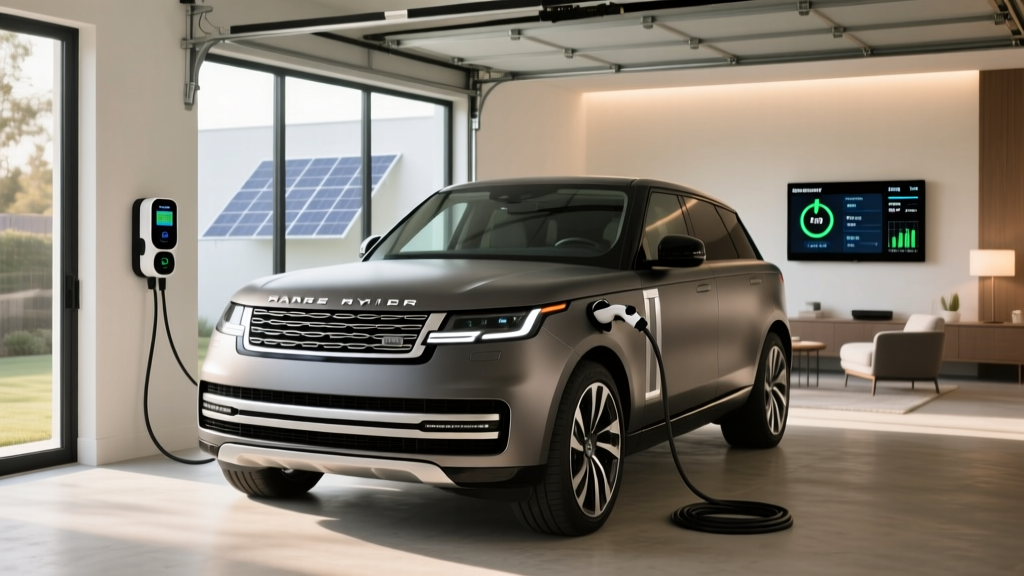
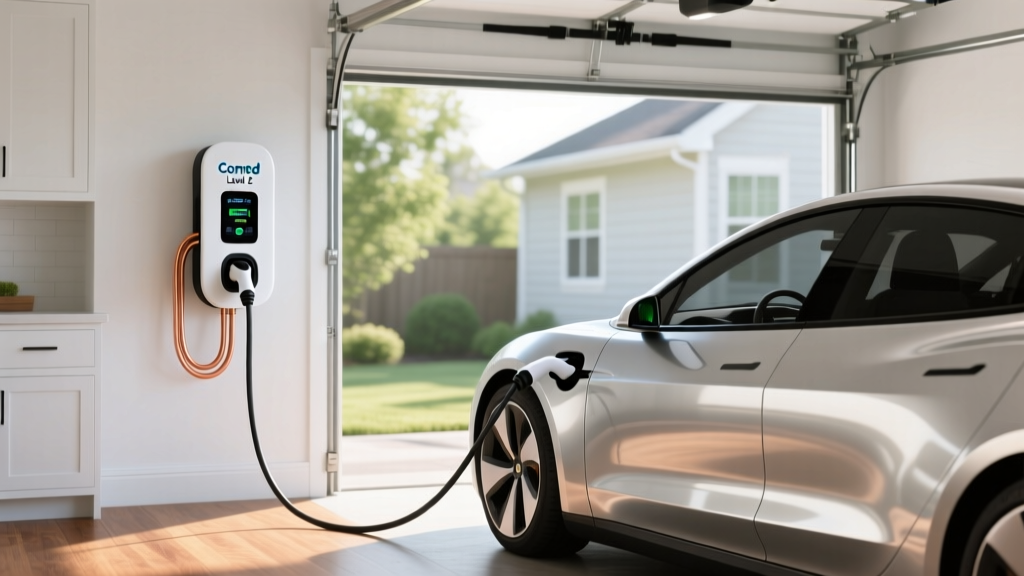
The best portable chargers pull double duty: you mount them on your garage wall for daily use and unplug them for road trips. But achieving full Level 2 speeds at home requires proper electrical infrastructure. Here's what's involved.
Electrical Requirements by Amperage
EV chargers are considered "continuous loads" under the National Electrical Code (NEC), meaning you can only use 80% of a circuit's rated capacity. A 50A breaker supports a 40A charger (9.6 kW); a 60A breaker supports 48A (11.5 kW). Here's the breakdown:
- NEMA 14-50 outlet (50A circuit): Supports up to 40A / 9.6 kW charging. Most common residential EV setup. Requires 6-gauge copper wire (or 4-gauge aluminum).
- Hardwired 60A circuit: Supports up to 48A / 11.5 kW. Requires 4-gauge copper wire. No outlet—charger is permanently connected to a junction box.
- Hardwired 80A circuit: Supports up to 64A / 15.4 kW (for vehicles with large onboard chargers like the Hummer EV). Requires 2-gauge copper wire and a 200A+ electrical panel.
Do You Need a Panel Upgrade?
This is the cost variable that catches homeowners off guard. A Level 2 charger drawing 40A adds a substantial continuous load. If your home has a 100A electrical panel (common in homes built before 1990), you likely need a panel upgrade to 200A before installing a 50A EV circuit. Homes with existing 200A panels usually have sufficient headroom, but an electrician will perform a load calculation to confirm.
| Component | Cost Range | Notes |
|---|---|---|
| Portable Level 2 charger (equipment) | $275–$650 | Depends on brand, amperage, smart features |
| NEMA 14-50 outlet installation (existing 200A panel) | $300–$800 | Varies with wire run distance from panel to garage |
| Hardwired 60A circuit installation | $500–$1,200 | More labor than an outlet; no plug to disconnect for travel |
| Electrical permit | $50–$200 | Required in most jurisdictions; varies by municipality |
| Panel upgrade (100A → 200A) | $1,500–$3,500 | Only needed if existing panel lacks capacity |
| Total (no panel upgrade) | $625–$2,650 | Equipment + outlet/hardwire + permit |
| Total (with panel upgrade) | $2,125–$6,150 | A significant added cost for older homes |
Always hire a licensed electrician and pull a permit. Unpermitted EV charger installations can void homeowner's insurance claims and create fire hazards. The National Electrical Contractors Association maintains a directory of certified installers.
Charging Cost per Mile: Portable, Home, and Public Compared to Gas
One of the strongest arguments for EV ownership is lower fueling cost—but only if you charge smart. Here's a realistic cost breakdown using 2026 electricity rates and a midsize EV averaging 3.5 miles per kWh (roughly 100 MPGe combined, per fueleconomy.gov).
| Charging Scenario | Cost per kWh | Cost per Mile | Annual Cost (12,000 mi) |
|---|---|---|---|
| Home Level 2 (off-peak utility rate) | $0.08–$0.14 | $0.023–$0.040 | $275–$480 |
| Home Level 2 (standard rate, no TOU) | $0.14–$0.20 | $0.040–$0.057 | $480–$685 |
| Public Level 2 (ChargePoint, EVgo, etc.) | $0.25–$0.49 | $0.071–$0.140 | $855–$1,680 |
| DC Fast Charging (Electrify America, Tesla) | $0.32–$0.56 | $0.091–$0.160 | $1,095–$1,920 |
| Gasoline (25 MPG combined, $3.40/gal) | — | $0.136 | $1,632 |
| Gasoline (25 MPG combined, $4.00/gal) | — | $0.160 | $1,920 |
The takeaway: home charging on off-peak rates saves roughly $1,200–$1,600 annually versus gasoline. Exclusive DC fast charging narrows the gap to near-parity with gas. A mobile EV charger used at a 120V outlet on the road costs about the same as home Level 2 (you're paying residential or commercial electricity rates), making it a cost-neutral emergency option.
Safety, Code, and Practical Tips for Roadside Charging
Plugging a high-draw device into an unknown outlet carries real risk. Follow these guidelines:
Safety Requirements
- Dedicated circuit: Your Level 2 charger should be the only load on its circuit. Never share a 14-50 outlet with a dryer or welder simultaneously.
- GFCI protection: NEC 2020 and later require GFCI (Ground Fault Circuit Interrupter) protection for all 120V and 240V EV charging outlets. If you're plugging into an older outlet without GFCI, the risk of shock in wet conditions increases.
- Outdoor rating: If you charge outdoors regularly, ensure your portable unit carries at least a NEMA 4 (weather-resistant) rating. Units rated only for indoor use can fail in rain or snow.
- Thermal monitoring: Quality portable chargers include temperature sensors in the plug head that throttle power if the outlet overheats—a common failure point on aging 14-50 receptacles.
Roadside Charging Tips
- Scout outlets in advance: RV parks, campgrounds, and some hotels have NEMA 14-50 outlets. Apps like PlugShare sometimes list 240V outlet access. Call ahead.
- Carry multiple adapter heads: A NEMA 14-50 (dryer/RV), NEMA 10-30 (older dryer), and NEMA 5-15 (standard 120V) cover 90% of scenarios. Tesla's Mobile Connector includes the two most common.
- Check the outlet physically: Look for scorch marks, loose fit, or a warm faceplate before plugging in. A degraded 14-50 outlet can overheat at sustained 40A draw.
- Dial down amperage when unsure: If your charger allows it (ChargePoint and Emporia do via app), reduce draw to 24A or 16A on unfamiliar circuits. You'll charge slower but avoid tripping breakers or overheating wiring.
Federal Tax Credit for Home Charger Equipment
The IRS §30C Alternative Fuel Vehicle Refueling Property Credit covers 30% of the cost of home EV charging equipment and installation, up to a maximum credit of $1,000. This applies to both the charger hardware and electrician labor.
- The credit applies to equipment placed in service in the current tax year.
- Your home must be in a qualifying census tract (generally non-urban or low-income areas)—check the IRS eligibility tool.
- This is separate from the §30D vehicle purchase credit.
- Consult a tax professional to confirm eligibility; rules are subject to legislative change.
Frequently Asked Questions
Can a mobile EV charger fully replace a wall-mounted home charger?
Yes, if you choose a unit rated for continuous wall-mounted use (like the ChargePoint Home Flex or Emporia Level 2). Many portable chargers are designed for dual duty: mount on a wall bracket for daily charging, unplug for travel. The trade-off is that portable units typically max out at 40–48A, while dedicated wall units can reach 64–80A for vehicles with large onboard chargers.
How much does it cost to install a home EV charger?
Expect $625–$2,650 total for a NEMA 14-50 outlet installation with a portable Level 2 charger, assuming your electrical panel has sufficient capacity. If you need a panel upgrade from 100A to 200A, add $1,500–$3,500. Always get a quote from a licensed electrician and pull a permit.
How fast will each charging level add range?
Level 1 (120V) adds roughly 3–5 miles per hour. Portable Level 2 (240V at 32A/7.7 kW) adds about 25–30 miles per hour for a typical midsize EV. At 48A/11.5 kW, you'll see 35–45 miles per hour. These figures assume ~3.5 mi/kWh efficiency; heavier trucks and SUVs will see less.
Which connector and charger is compatible with my EV?
For 2025–2026 models from Tesla, Ford, GM, Rivian, Volvo, and Polestar, you need a NACS connector. For older CCS-equipped vehicles (pre-2025 VW, BMW, Hyundai, Kia), buy CCS1 or use a NACS-to-CCS adapter. CHAdeMO is effectively discontinued for new vehicles. Check your vehicle's charge port or owner's manual to confirm.
How much does charging cost per mile vs gas?
Home charging at off-peak rates costs $0.02–$0.04 per mile—roughly 70–85% less than gasoline at $3.40/gal and 25 MPG ($0.136/mile). Public DC fast charging at $0.48/kWh costs about $0.09–$0.14 per mile, approaching gas parity. The biggest savings come from charging at home overnight.
What electrical upgrades might I need?
The most common upgrade is installing a new 50A breaker and running 6-gauge wire to a NEMA 14-50 outlet in your garage ($300–$800). If your home has a 100A electrical panel, you'll likely need a panel upgrade to 200A ($1,500–$3,500) to safely support a Level 2 charger alongside existing household loads. An electrician's load calculation will determine this.
Is it safe to use a portable charger in the rain?
Only if the unit carries a NEMA 4 or IP65+ weather-resistance rating. The EV-side connector is designed to be weather-sealed when mated, but the charger's control box and plug head must also be rated for outdoor exposure. Never use an indoor-rated portable unit in wet conditions.