What Is a Mobile DC Fast Charger and Why Does It Matter?
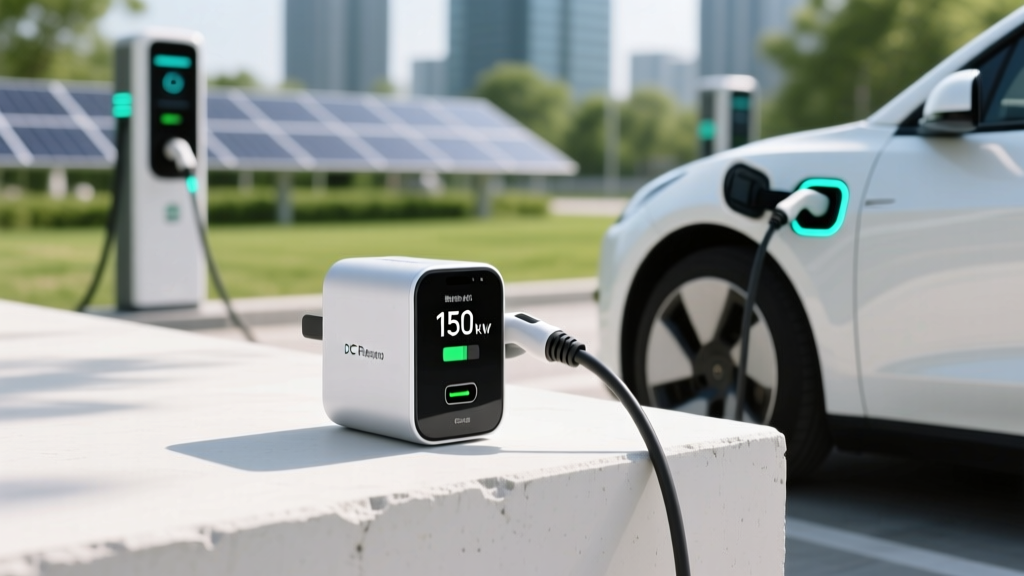
Most EV owners rely on a stationary Level 2 wallbox at home and public DC fast chargers on the road. But a newer category — the mobile DC fast charger — bridges the gap. These are portable units that can deliver direct current (DC) to your EV's battery at rates well above what a standard AC wallbox offers, typically between 7 kW and 40 kW, without requiring a permanent hardwired installation.
For context, a traditional Level 1 cord (120V AC) adds roughly 3–5 miles of range per hour. A Level 2 home charger (240V AC) adds 25–44 miles per hour. A full-scale public DC fast charger at 150–350 kW can push a 10–80% charge in 18–30 minutes. A mobile DC fast charger occupies the space between Level 2 and full public DC fast charging: faster than any home AC setup, but not a replacement for a 350 kW highway station.
Charging Speeds at a Glance: kW vs Miles Per Hour
| Charging Level | Voltage | Typical kW | Miles of Range Added/Hour | 10–80% Time (75 kWh Battery) |
|---|---|---|---|---|
| Level 1 (portable cord) | 120V AC | 1.4–1.9 kW | 3–5 mi/hr | ~38 hours |
| Level 2 (home wallbox) | 240V AC | 7.7–11.5 kW | 25–44 mi/hr | ~5.5–8 hours |
| Mobile DC Fast Charger | 208–240V AC input → DC output | 7–40 kW | 25–130 mi/hr | ~1.5–5.5 hours |
| Public DC Fast Charger | 400–800V DC | 50–350 kW | 150–1,000+ mi/hr | 18–45 minutes |
kW vs kWh — the critical distinction: kW (kilowatts) measures power — the rate at which electricity flows into your battery. kWh (kilowatt-hours) measures energy — the total capacity of your battery. Think of kW as how wide the hose is, and kWh as how big the bucket is. A 40 kW mobile DC fast charger fills a 75 kWh battery (the bucket) in roughly 1.5–2 hours under ideal conditions, minus taper at high state of charge.
How Fast Will a Mobile DC Fast Charger Actually Charge Your EV?
The answer depends on three variables: the charger's maximum DC output (in kW), your vehicle's onboard charge acceptance rate, and the state of charge (SoC) at which you start. Like all lithium-ion batteries, EVs charge fastest between roughly 10% and 50% SoC, then taper significantly above 80% to protect battery health.
Here are realistic 10–80% charging times for common EV battery sizes using different mobile DC fast charger outputs:
| Battery Size (usable kWh) | Example Vehicles | At 10 kW DC | At 20 kW DC | At 40 kW DC |
|---|---|---|---|---|
| 58 kWh (e.g., VW ID.4 Standard) | VW ID.4, base Chevy Equinox EV | ~4.1 hrs | ~2.0 hrs | ~1.0 hr |
| 75 kWh (e.g., Tesla Model Y LR) | Tesla Model Y, Ford Mustang Mach-E ER | ~5.3 hrs | ~2.6 hrs | ~1.3 hrs |
| 84–100 kWh (e.g., Rivian R1T, F-150 Lightning ER) | Rivian R1T, F-150 Lightning, GMC Sierra EV | ~6.5 hrs | ~3.2 hrs | ~1.6 hrs |
These figures assume a preconditioned battery at moderate ambient temperature (65–80°F). In cold weather (below 32°F), expect charging speeds to drop 20–40% unless your vehicle actively warms the battery pack — a process called preconditioning. Tesla, Hyundai/Kia (E-GMP platform), and BMW are among the automakers that do this well; older or budget EVs may not precondition at all, leading to sluggish initial charge rates.
Connector Compatibility: Will a Mobile DC Fast Charger Fit Your EV?
DC charging connectors are not universal. Before purchasing any mobile DC fast charger, confirm which connector your vehicle uses:
| Connector Standard | Brands Using It (2025–2026 Models) | Notes |
|---|---|---|
| NACS (North American Charging Standard) | Tesla (all), Ford (2025+), GM (2025+), Rivian (2025+), Volvo, Polestar, Nissan (2025+), Fisker | Now the dominant standard. Most new EVs ship with NACS or include a CCS-to-NACS adapter. |
| CCS1 (Combined Charging System) | Hyundai, Kia, VW, BMW, Mercedes-Benz, Stellantis, some older Ford/GM models | Still widely available at public stations. Many chargers offer CCS1 connectors. |
| CHAdeMO | Nissan Leaf (legacy), Mitsubishi Outlander PHEV (legacy) | Being phased out. Adapters exist but are expensive ($300–$500). |
Most mobile DC fast chargers on the market ship with either a NACS or CCS1 tethered cable. If you drive a 2024 or earlier CCS-equipped vehicle and want to use a NACS charger, you'll need a CCS-to-NACS adapter — several are available from Tesla and third-party suppliers for $150–$250. The reverse (NACS vehicle → CCS charger) is also possible with similar adapters.
Electrical Requirements and Home Installation Costs
A mobile DC fast charger requires more electrical infrastructure than a standard Level 2 wallbox. Here's what you need to know before calling an electrician:
Voltage and Amperage Requirements
Most portable DC fast chargers in the 10–40 kW range require a 240V circuit (the same as a dryer or oven outlet). Amperage depends on the charger's input rating:
- 10 kW unit: ~40A circuit (240V × 40A = 9.6 kW continuous, derated to 80% per NEC = 7.68 kW usable input, yielding ~10 kW DC output with power-factor correction on higher-end units)
- 20 kW unit: ~60–80A circuit
- 40 kW unit: ~100–150A circuit — this is serious infrastructure
Panel Upgrade Considerations
This is where costs can spiral. Many older homes have a 100A or 150A main electrical panel. Adding a 60A or higher dedicated circuit for a mobile DC fast charger may exceed your panel's capacity, especially if you're already running electric heat, a dryer, and an oven. A panel upgrade to 200A typically costs $1,500–$3,000 before any charger work begins. Homes with a 200A panel usually have headroom for a 40–60A EV circuit, but a licensed electrician must perform a load calculation per NEC Article 220.
Home Installation Cost Breakdown
| Component | Typical Cost Range | Notes |
|---|---|---|
| Mobile DC fast charger unit | $1,500–$6,500 | Varies by kW output and brand; 10–20 kW units on the lower end, 30–40 kW on the higher end |
| Electrical permit | $50–$300 | Varies by municipality; required in virtually all jurisdictions |
| Electrician labor (circuit + outlet/install) | $500–$2,500 | Depends on run length from panel, conduit needs, and local labor rates |
| Panel upgrade (if needed) | $1,500–$3,000 | Required if existing panel lacks capacity; not always necessary |
| Total (no panel upgrade) | $2,050–$9,300 | Most homeowners with 200A panels fall in $3,000–$5,500 range |
| Total (with panel upgrade) | $3,550–$12,300 | Common for older homes with 100A service |
Safety and Code Requirements
- Dedicated circuit: NEC requires a dedicated breaker for EV charging equipment — you cannot share the circuit with other appliances.
- GFCI protection: NEC 2020 and later (including 2023 edition adopted in most states by 2026) requires GFCI (ground-fault circuit interrupter) protection for all EV charging outlets, including 240V receptacles. Some hardwired chargers include internal GFCI; receptacle-based setups need a GFCI breaker.
- Outdoor rating: If installing outside, the charger must carry a NEMA 4 or IP65 rating for weather resistance. Verify the unit's operating temperature range — some budget units are rated only for 32–104°F.
- Disconnect switch: For circuits above 60A, many jurisdictions require a visible disconnect switch within sight of the charger.
How Much Does Charging Cost Per Mile vs Gas?
The economic case for any EV charger — mobile DC fast or otherwise — hinges on your local electricity rates versus gasoline prices. Here's a realistic comparison for 2026:
| Scenario | Rate | Cost to Add 200 Miles (3.5 mi/kWh avg) | Cost Per Mile |
|---|---|---|---|
| Home Level 2 (off-peak utility rate) | $0.09/kWh | $11.43 | $0.057/mi |
| Home mobile DC fast charger (off-peak) | $0.09/kWh + ~10% conversion loss | $12.57 | $0.063/mi |
| Home Level 2 (standard rate, no TOU) | $0.16/kWh | $20.32 | $0.102/mi |
| Public Level 2 (ChargePoint, EVgo, etc.) | $0.25–$0.49/kWh | $31.88–$62.49 | $0.16–$0.31/mi |
| Public DC Fast Charger (Electrify America, Tesla Supercharger) | $0.35–$0.55/kWh | $44.63–$70.18 | $0.22–$0.35/mi |
| Gasoline vehicle (25 MPG combined, $3.30/gal) | $3.30/gal | $26.40 | $0.132/mi |
Key takeaway: A mobile DC fast charger at home, paired with off-peak electricity rates, delivers fuel costs at roughly half the price of gasoline per mile. But if you're relying exclusively on public DC fast charging at $0.40–$0.55/kWh, you're paying more per mile than a 25 MPG gas car. The economics strongly favor home charging.
DC fast charging also involves a small energy conversion loss — typically 5–12% — because the AC-to-DC rectification happens in the charger unit rather than in the vehicle's onboard charger. This means you'll draw slightly more kWh from your panel than the battery actually stores.
Equipment Recommendations: Top Mobile DC Fast Chargers
The mobile DC fast charger market is still relatively niche compared to Level 2 wallboxes, but several credible options exist for 2026:
Emporia J1772/NACS Portable DC Charger (10 kW)
- Output: 10 kW DC
- Connector: NACS or J1772 (configurable at purchase)
- Input: 240V / 50A circuit
- Cable length: 20 ft
- Smart features: Wi-Fi, app-based scheduling, energy monitoring, solar integration
- Weight: ~35 lbs
- Price: ~$1,800–$2,200
- Best for: Owners who want faster-than-Level-2 charging without a permanent install; RV and travel use
Enphase IQ EV Charger with DC Boost (20 kW)
- Output: Up to 20 kW DC
- Connector: NACS (CCS adapter available)
- Input: 240V / 80A circuit
- Cable length: 24 ft
- Smart features: Enphase Energy app, solar-aware charging, load balancing, bidirectional-ready (future V2H)
- Weight: ~48 lbs (head unit; power supply separate)
- Price: ~$3,500–$4,200 (complete kit)
- Best for: Homes with solar panels seeking integrated DC charging; semi-portable install
Autel MaxiCharger DC Portable (40 kW)
- Output: Up to 40 kW DC
- Connector: CCS1 (NACS adapter available separately)
- Input: 208–240V / 100A 3-phase or high-amperage single-phase
- Cable length: 25 ft
- Smart features: RFID access, OCPP protocol support, fleet management, OTA updates
- Weight: ~85 lbs (wheeled cart design)
- Price: ~$5,500–$6,500
- Best for: Fleet operators, commercial use, or homeowners with robust electrical service who want near-public-charger speeds at home
When Does a Mobile DC Fast Charger Make Sense — and When Doesn't It?
A mobile DC fast charger is not the right solution for every EV owner. Here's a practical decision framework:
Choose a mobile DC fast charger if:
- You need faster charging than Level 2 but can't install a permanent DC fast charger (rental property, HOA restrictions, multi-unit dwelling).
- You operate a small fleet and need to move charging equipment between locations.
- You travel to areas with limited public charging infrastructure and want to bring your own DC speed.
- Your home has ample electrical capacity (200A+ panel) and you want 10–20 kW speeds without a fixed wallbox.
Stick with a Level 2 home wallbox (and use public DC on road trips) if:
- Your daily driving is under 60 miles — a Level 2 charger fully replenishes overnight at a fraction of the equipment cost.
- Your home has a 100A panel and a panel upgrade would push total costs above $8,000.
- You have reliable access to public DC fast chargers (Tesla Supercharger, Electrify America, EVgo) along your regular routes.
- You want the simplest, most proven, and least expensive home charging setup.
Frequently Asked Questions
How much does it cost to install a home EV charger?
For a Level 2 wallbox (7.7–11.5 kW), total installed cost typically ranges from $1,000 to $3,500 including the unit, electrician labor, and permit. For a mobile DC fast charger (10–40 kW), expect $2,050–$9,300 without a panel upgrade, or $3,550–$12,300 if your panel needs to be upgraded to 200A. Always get a load calculation from a licensed electrician before committing.
How fast will each charging level add range?
Level 1 (120V): 3–5 miles per hour. Level 2 (240V): 25–44 miles per hour. Mobile DC fast charger (10–40 kW): 25–130 miles per hour. Public DC fast charger (150–350 kW): 150–1,000+ miles per hour. Actual speed depends on your EV's battery size, charge acceptance rate, and battery temperature.
Which connector is compatible with my EV?
If your EV is a 2025+ Tesla, Ford, GM, Rivian, Volvo, or Nissan, it almost certainly uses NACS. If it's a Hyundai, Kia, VW, BMW, or Mercedes-Benz EV, it likely uses CCS1. Older Nissan Leafs use CHAdeMO. Check your owner's manual or the badge near your charge port. Adapters are available for cross-compatibility but add $150–$500 to your setup cost.
How much does charging cost per mile vs gas?
At home with off-peak electricity ($0.09/kWh), an average EV costs about $0.06 per mile to charge. A comparable gas car at 25 MPG and $3.30/gal costs about $0.13 per mile. Public DC fast charging at $0.45/kWh pushes EV cost to roughly $0.29/mile — more expensive than gas. Home charging is where the savings live. Consult fueleconomy.gov for your specific vehicle's kWh/100mi rating to calculate exact costs.
What electrical upgrades might I need?
The most common upgrade is adding a dedicated 240V circuit (40–100A depending on charger). If your main panel is 100A or 150A, you may need a panel upgrade to 200A ($1,500–$3,000). Older homes with knob-and-tube wiring or aluminum branch circuits may need additional remediation. A licensed electrician will perform a NEC Article 220 load calculation to determine what's possible on your existing service. The National Electrical Code governs all requirements.
Can I use a mobile DC fast charger on a standard household outlet?
No. Mobile DC fast chargers require a 240V circuit at 40–100A minimum. A standard 120V/15A household outlet provides only about 1.4–1.9 kW — sufficient for Level 1 trickle charging with the cord that came with your EV, but far below what any DC fast charger needs to operate.
Is a mobile DC fast charger eligible for any tax credits?
The federal Alternative Fuel Vehicle Refueling Property Credit (IRS Form 8911) covers up to 30% of home charging equipment and installation costs, capped at $1,000. This applies to both Level 2 and DC fast charging equipment installed at your primary residence. Eligibility depends on your census tract meeting certain low-income or non-urban criteria. Check current IRS guidelines and consult a tax professional before claiming.