Understanding the Mini Cooper SE Battery and Range Reality
Before plugging in, it is critical to understand the energy capacity of the vehicle. For the 2025/2026 model years, the Mini Cooper SE (J01 platform) features a usable battery capacity of approximately 54.2 kWh. According to fueleconomy.gov, the EPA-estimated range is roughly 190–205 miles depending on wheel size and trim.
Charging Levels: Speeds and Range Added
When discussing charging, we must distinguish between kW (power)—the speed of the flow—and kWh (energy)—the size of the tank. The Mini Cooper SE supports AC charging up to 11 kW (or 22 kW with an optional onboard charger upgrade) and DC fast charging up to 95 kW.
| Level | Power Output | Range Added per Hour | Best For |
|---|---|---|---|
| Level 1 (120V) | ~1.4 kW | ~4–5 miles | Overnight emergencies |
| Level 2 (240V) | 7.2 kW – 11 kW | 25–40 miles | Daily home charging |
| DC Fast (CCS2/NACS) | Up to 95 kW | ~150+ miles in 30 min | Road trips |
Home Installation: Electrical Requirements and Costs
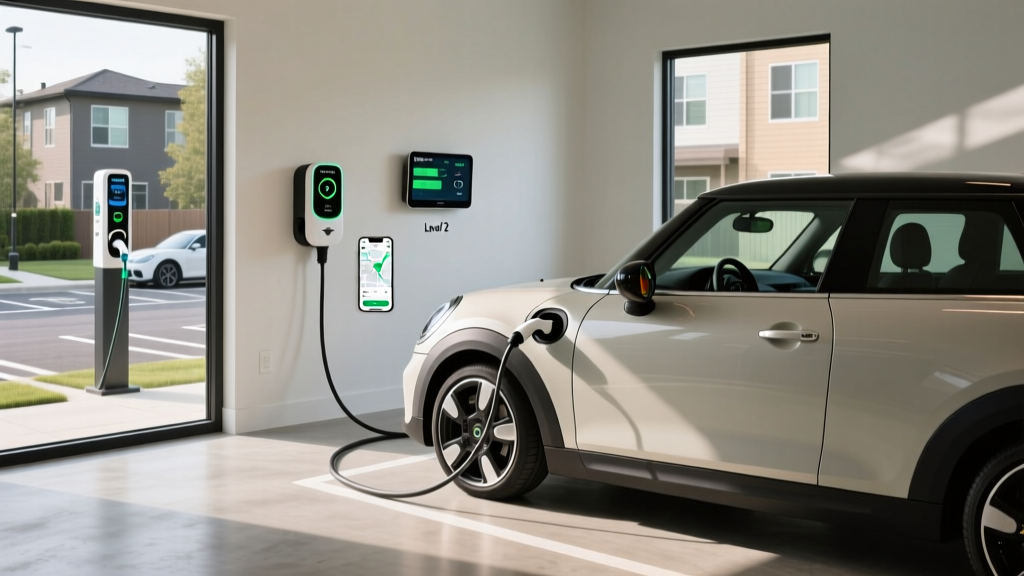
To maximize your Mini Cooper SE range and convenience, a Level 2 home setup is essential. Most homes require a 240V circuit. To support the Mini's 11 kW AC capability, you need a 60-amp breaker and a 48-amp or higher charger.
Panel Upgrade Considerations
Older homes with 100-amp service may need a panel upgrade to 200 amps to support a high-power EV charger alongside modern appliances. This can add $1,500–$3,000 to the project.
| Item | Estimated Cost |
|---|---|
| Level 2 Charger (Hardware) | $400 – $800 |
| Electrician Labor (240V run) | $500 – $1,500 |
| Permit & Inspection | $100 – $300 |
| Panel Upgrade (if needed) | $1,500 – $3,000 |
| Total Typical Range | $1,000 – $5,600 |
Connector Compatibility and the NACS Transition
The 2026 Mini Cooper SE is transitioning toward the NACS (Tesla-style) standard in North America. If your vehicle still arrives with a CCS1 port, you will need a CCS-to-NACS adapter to access the Tesla Supercharger network, which remains the most reliable public option.
| Connector Type | Network Access | Adapter Needed? |
|---|---|---|
| CCS1 | Electrify America, EVgo | Yes (for Superchargers) |
| NACS | Tesla Superchargers | Yes (for non-Tesla DCFC) |
Charging Cost: Electricity vs. Gas
Charging a 54.2 kWh battery at home (at $0.16/kWh national average) costs roughly $8.67 for a full charge. On the road, DC fast charging can cost $0.40/kWh or more, bringing the cost to $21.68. Compared to a gas car getting 30 MPG at $3.50/gallon, the Mini Cooper SE is significantly cheaper to fuel on a per-mile basis.
Recommended Equipment for the Mini Cooper SE
Power: 48A (11.5 kW)
Price: ~$400
Best for: Smart energy management.
Power: Up to 50A (12 kW)
Price: ~$600
Best for: App-based scheduling.
Safety and Code Essentials
Always use a dedicated circuit for your charger. For outdoor installations, ensure the unit is NEMA 4 rated and that the circuit includes a GFCI breaker as per the latest NEC codes. Never use an extension cord for EV charging.
Frequently Asked Questions
How long does it take to charge a Mini Cooper SE from 10-80%?
On a 95 kW DC fast charger, it takes approximately 30 minutes. On a 11 kW Level 2 home charger, it takes about 4.5 hours.
Does the Mini Cooper SE come with a portable charger?
Most trims include a basic Level 1 cord, but a Level 2 wallbox is highly recommended for daily use.