What "Miles Per Kilowatt Hour" Actually Means for Your EV
Before plugging in, every EV owner needs to master two units that get confused constantly: kWh (kilowatt-hours) and kW (kilowatts). Think of kWh as the size of your gas tank — it's how much energy your battery stores. A 2026 Tesla Model Y Long Range, for example, holds about 75 kWh of usable energy. Kilowatts (kW), by contrast, measure power flow — how fast energy moves into that tank. A 48-amp Level 2 home charger delivers up to 11.5 kW; a DC fast charger might push 150–350 kW.
When shoppers ask about miles per kilowatt hour, they're really asking about efficiency: how far the car travels on one unit of stored energy. The EPA expresses this as MPGe (miles-per-gallon-equivalent) or kWh/100 miles. A 2026 Hyundai Ioniq 6 SE achieves roughly 140 MPGe combined, consuming about 24 kWh per 100 miles — or about 4.2 miles per kWh. A heavier, less aerodynamic truck like the Ford F-150 Lightning returns closer to 2.0–2.3 miles per kWh. That efficiency gap cascades into everything else: how far you go on a full charge, how long charging takes, and what each mile costs.
Charging Levels: How Fast Each One Adds Range
Charging speed determines how quickly those miles-per-kWh translate back into usable range. Here's how the three levels stack up in 2026, with realistic miles-added-per-hour figures for an average EV consuming ~30 kWh/100 miles (about 3.3 mi/kWh).
| Level | Voltage / Amperage | Power (kW) | Miles of Range Added per Hour | Best Use Case |
|---|---|---|---|---|
| Level 1 | 120V / 12A | ~1.4 kW | 3–5 mi/hr | Overnight top-ups, PHEVs, emergencies |
| Level 2 | 240V / 32–48A | 7.7–11.5 kW | 25–44 mi/hr | Daily home charging, workplace |
| DC Fast (Level 3) | 400–800V DC | 50–350 kW | 150–1,200+ mi/hr (equivalent) | Road trips, quick top-ups |
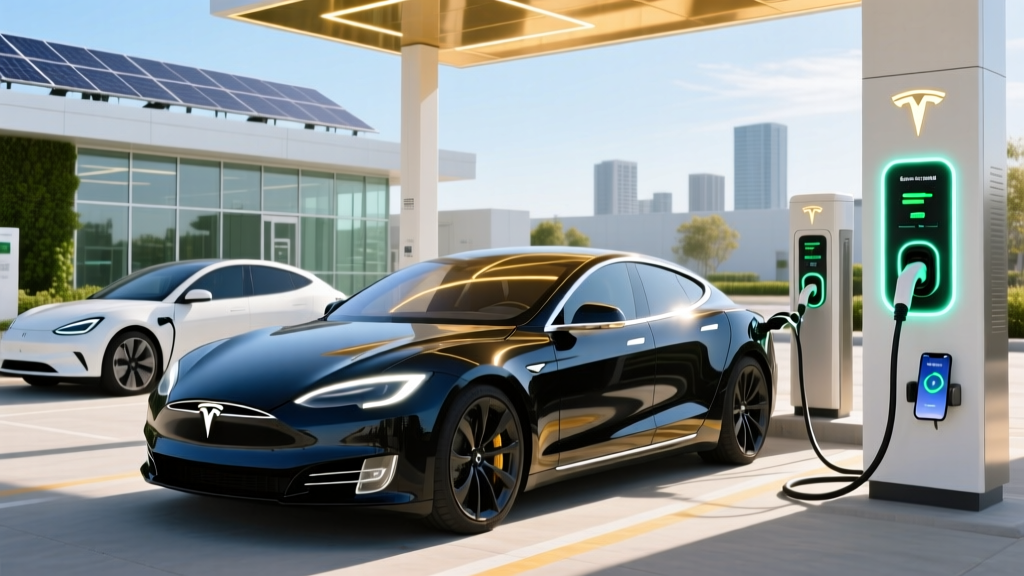
On Level 2 at 11.5 kW, a 75 kWh battery fills from 10% to 80% in roughly 4.5–5 hours. On a 150 kW DC fast charger, that same 10–80% window typically takes 25–35 minutes — but only if the vehicle's charge curve allows it. Most EVs peak at their maximum kW only between ~10–50% state of charge, then taper significantly above 80% to protect the battery. Charging from 80% to 100% on DC fast can take as long as the first 80%.
Home Charger Installation: Electrical Requirements and Real Costs
The single biggest variable in home charging cost isn't the charger itself — it's whether your electrical panel can support a dedicated 240V circuit. A Level 2 charger drawing 48 amps requires a 60-amp dedicated breaker (the National Electrical Code requires circuits to be rated at 125% of continuous load). Many older homes with 100-amp or even 150-amp main panels simply don't have the headroom, especially if you're also running electric heat, a dryer, and an oven.
| Item | Typical Cost Range | Notes |
|---|---|---|
| Level 2 charger (hardware) | $350 – $700 | Smart Wi-Fi models at upper end |
| Electrician labor (basic install) | $500 – $1,500 | Short run from panel, no upgrade |
| Permit and inspection | $50 – $300 | Varies by municipality |
| Panel upgrade (if needed) | $1,500 – $4,000+ | 200A service upgrade for older homes |
| Total (no panel upgrade) | $900 – $2,500 | Most common scenario |
| Total (with panel upgrade) | $2,500 – $6,500 | Homes pre-1990 often need this |
Always get a licensed electrician to assess your panel before purchasing a charger. Some utilities offer rebates of $250–$1,000 for Level 2 installations, and certain states provide additional incentives — check your local utility and state incentive database for current programs. The federal residential clean energy credit may also cover 30% of charger hardware and installation costs up to $1,000, subject to eligibility and current-year IRS rules.
Connector Compatibility: NACS, CCS, and CHAdeMO in 2026
The connector landscape has consolidated significantly. Tesla's North American Charging Standard (NACS) is now the dominant plug in North America, with Ford, GM, Rivian, Volvo, Hyundai, Kia, and most other major automakers equipping NACS ports on 2025–2026 models. CCS1 (Combined Charging System) remains on some legacy and commercial vehicles, while CHAdeMO is effectively discontinued on new passenger EVs (the Nissan Ariana was the last major holdout).
| Connector | Brands Using It (2026) | Adapter Needed? |
|---|---|---|
| NACS (Tesla) | Tesla, Ford, GM, Rivian, Hyundai, Kia, Volvo, Polestar, BMW, Mercedes | CCS-to-NACS adapter for older CCS vehicles at Superchargers |
| CCS1 | Legacy VW ID.4 (pre-2025), some Stellantis, commercial fleets | NACS-to-CCS adapter to use Tesla Superchargers |
| CHAdeMO | Discontinued on new US passenger EVs | N/A — infrastructure shrinking |
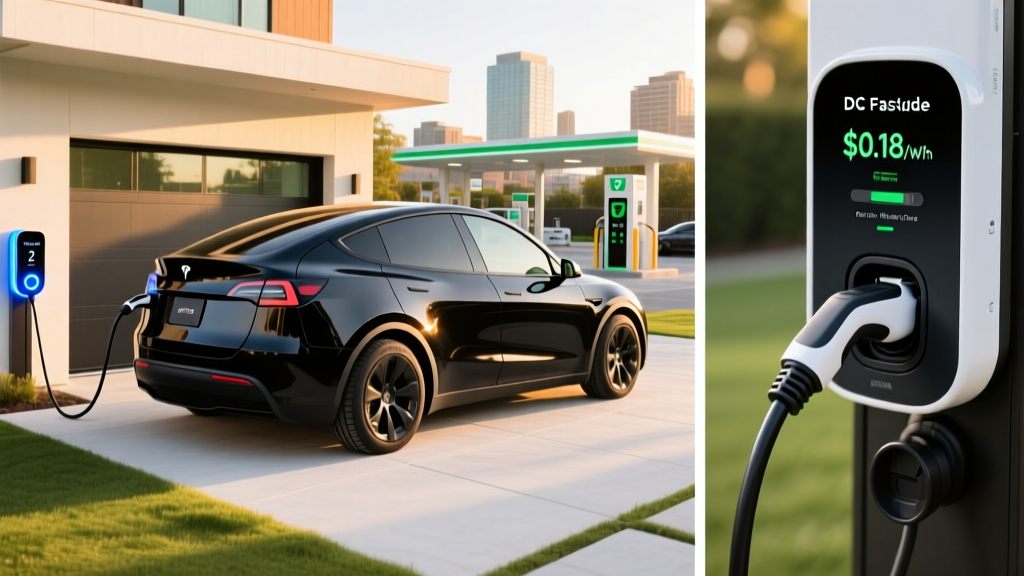
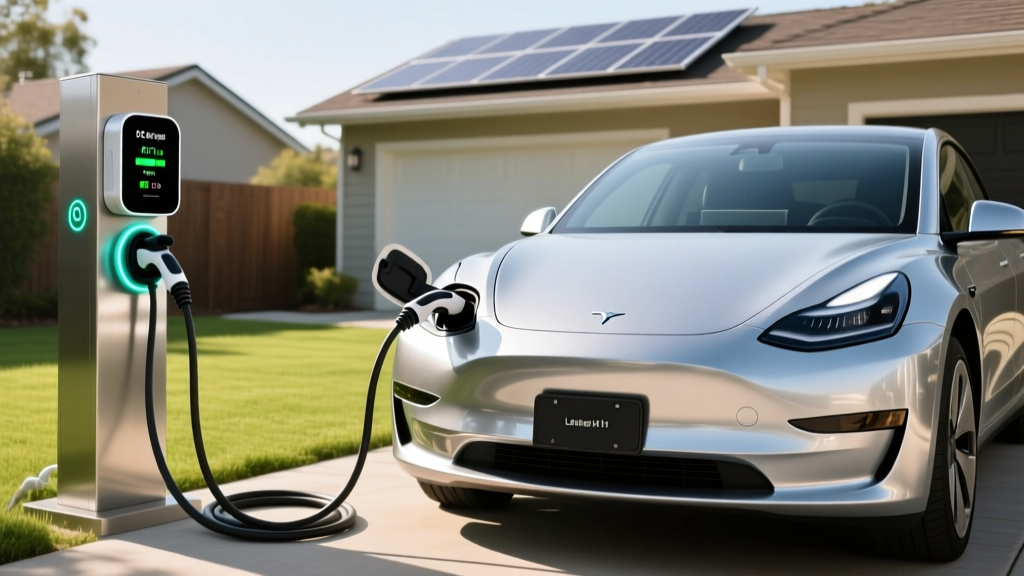
For home Level 2 charging, all EVs use the J1772 standard — or NACS, which now integrates AC charging pins. If you drive a Tesla and buy a third-party Level 2 charger with a J1772 plug, you'll need a J1772-to-NACS adapter (typically $50–$150). Most new wall chargers in 2026 ship with NACS connectors or include both options.
Cost to Charge: Per-Mile Economics vs. Gasoline
Electricity pricing varies dramatically by location, time of day, and whether you're charging at home or on the road. Here's how cost per mile breaks down for an EV averaging 3.3 miles per kWh (30 kWh/100 mi), compared to a 28-MPG gas car using $3.40/gallon fuel.
| Scenario | Price per kWh | Cost per Mile (EV) | Annual Cost (12,000 mi) |
|---|---|---|---|
| Home off-peak (utility rate) | $0.09 – $0.14 | $0.03 – $0.04 | $360 – $480 |
| Home peak / standard rate | $0.15 – $0.25 | $0.05 – $0.08 | $600 – $960 |
| Public Level 2 (network) | $0.25 – $0.49 | $0.08 – $0.15 | $960 – $1,800 |
| DC Fast Charging (public) | $0.35 – $0.69 | $0.11 – $0.21 | $1,320 – $2,520 |
| Gas car (28 MPG, $3.40/gal) | — | $0.12 | $1,440 |
The takeaway: home charging is where EVs win decisively. An owner charging overnight on an off-peak rate spends roughly one-quarter to one-third what a gas-car driver spends per mile. But if you rely exclusively on DC fast charging at $0.50–$0.69/kWh, your fuel cost can actually exceed gasoline. This is why home or workplace Level 2 access is the single most important factor in EV ownership economics.
For real-world efficiency data on specific models, the EPA's fueleconomy.gov lists kWh/100 mi and MPGe figures for every EPA-certified EV sold in the US.
Charging Time Examples: What to Expect by Battery Size
Battery capacity, onboard charger limits, and the vehicle's charge curve all shape how long a session takes. Below are realistic 10–80% times for popular 2026 EVs on both Level 2 and DC fast charging.
| Vehicle | Battery (kWh usable) | Peak DC Fast kW | 10–80% DC Fast | 10–80% Level 2 (11.5 kW) |
|---|---|---|---|---|
| 2026 Tesla Model Y Long Range | ~75 kWh (NMC) | 250 kW | ~25 min | ~4.5 hrs |
| 2026 Hyundai Ioniq 5 (Long Range) | ~77.4 kWh (NMC) | 240 kW (800V) | ~18 min | ~4.7 hrs |
| 2026 Ford F-150 Lightning (Ext. Range) | ~131 kWh (NMC) | 150 kW | ~41 min | ~8 hrs |
| 2026 Chevrolet Equinox EV | ~85 kWh (NMC) | 150 kW | ~30 min | ~5.2 hrs |
Charge-curve reality: Peak kW numbers are just that — a peak sustained for a narrow window. A vehicle rated at 250 kW DC fast charging may only hold that rate from 10–30% SoC, then step down to 150 kW, then 90 kW, then 40 kW above 80%. The "10–80% time" matters far more than the peak number when planning road trips.
Recommended Home Chargers for 2026
These Level 2 wall chargers represent the current market leaders based on build quality, smart features, connector options, and value. All support NACS or J1772 with adapter compatibility.
Tesla Wall Connector
- Power: 11.5 kW (48A) at 240V
- Connector: NACS native
- Cable length: 24 ft
- Smart features: Wi-Fi, OTA updates, power-sharing, load management
- Price: ~$475
- Best for: Tesla and NACS-equipped owners wanting seamless integration
ChargePoint Home Flex
- Power: Up to 12 kW (50A) at 240V, configurable
- Connector: J1772 (NACS adapter available)
- Cable length: 23 ft
- Smart features: Wi-Fi, app scheduling, Alexa, utility demand-response
- Price: ~$599
- Best for: Multi-EV households, utility integration
Emporia Vue Level 2 Charger
- Power: 11.5 kW (48A) at 240V
- Connector: J1772 (NACS adapter included in 2026 kit)
- Cable length: 24 ft
- Smart features: Wi-Fi, energy monitoring, solar integration, load management
- Price: ~$399
- Best for: Budget-conscious buyers wanting energy tracking and solar pairing
Safety, Electrical Code, and Installation Best Practices
EV charging is a continuous high-draw load — more like running an electric furnace than plugging in a lamp. Cutting corners here creates fire risk. Key requirements and recommendations:
- Dedicated circuit: Your Level 2 charger must be on its own dedicated breaker — never shared with other appliances. A 48A charger requires a 60A breaker per NEC Article 625.
- GFCI protection: The 2023 NEC update requires GFCI protection for EV charging outlets (receptacle-based installs). Hardwired units may be exempt in some jurisdictions — your electrician will confirm local code.
- Outdoor rating: If installing outside, ensure the charger carries a NEMA 4 or NEMA 4X rating for weather resistance. Most major chargers (Tesla Wall Connector, ChargePoint Home Flex) are rated for outdoor use.
- Wire gauge: A 60A circuit typically requires 4 AWG copper wire for runs up to ~50 feet. Longer runs may need 3 AWG or larger to prevent voltage drop. Your electrician sizes this.
- Permit and inspection: Nearly all jurisdictions require an electrical permit for a new 240V circuit. Skipping this can void homeowner's insurance coverage in the event of a fire.
- Hardwired vs. plug: Hardwired installs (no plug) are generally preferred for 48A+ chargers — they avoid the heat buildup that can occur in NEMA 14-50 receptacles under continuous load. If you use a receptacle, choose a commercial-grade unit rated for continuous duty.
For authoritative installation guidance, the National Highway Traffic Safety Administration and the Department of Energy's Alternative Fuels Data Center maintain current resources on home EV charging safety and code compliance.
Frequently Asked Questions
How much does it cost to install a home EV charger?
For a straightforward Level 2 install with no panel upgrade, expect $900–$2,500 total (charger hardware + electrician labor + permit). If your home needs a 200-amp panel upgrade — common in houses built before 1990 — add $1,500–$4,000. Federal and utility rebates can offset $250–$1,000 of this cost.
How fast will each charging level add range?
Level 1 (120V) adds 3–5 miles per hour — adequate only for PHEVs or very low daily mileage. Level 2 (240V, 48A) adds 30–44 miles per hour and fully replenishes most EVs overnight. DC fast charging adds the equivalent of 150–1,200+ miles per hour, with 10–80% fills taking 18–41 minutes depending on the vehicle and charger power.
Which connector and charger is compatible with my EV?
Check your vehicle's charge port. Most 2025–2026 EVs from Tesla, Ford, GM, Hyundai, Kia, and Rivian use NACS. Older EVs from VW, BMW, and others may use CCS1 — you'll need a CCS-to-NACS adapter ($100–$250) to access Tesla Superchargers. For home Level 2, all vehicles accept J1772 or NACS; adapters bridge the gap if your charger's plug doesn't match your car's port.
How much does charging cost per mile compared to gas?
At a typical home off-peak rate of $0.12/kWh and an EV efficiency of 3.3 miles/kWh, your cost is roughly $0.036 per mile — about one-third the cost of a 28-MPG gas car at $3.40/gallon ($0.12/mile). However, DC fast charging at $0.50+/kWh can push EV cost per mile to $0.15–$0.21, exceeding gasoline. Home charging access is the decisive factor.
What electrical upgrades might I need?
The most common upgrade is a panel capacity increase. A 48A Level 2 charger draws ~11.5 kW continuously. If your home has a 100A main panel and already runs electric heat, a dryer, and an electric range, you may not have enough headroom. A licensed electrician performs a load calculation to determine if a 200A service upgrade is required. Other potential upgrades: adding a sub-panel near the garage, upgrading service entrance wiring, or replacing an outdated meter socket.
Does miles per kilowatt hour change with temperature?
Yes, significantly. Cold temperatures increase battery internal resistance and require energy for cabin heating. At 20°F, expect 20–35% lower efficiency (fewer miles per kWh) compared to 70°F conditions. Heat pumps — now standard on many 2026 EVs including the Hyundai Ioniq 5, Tesla Model Y, and Kia EV6 — reduce this penalty by roughly half compared to resistive heating. Preconditioning your battery while still plugged in also preserves range by warming the pack using grid power rather than battery energy.