What mi/kWh Actually Means (And Why It Matters More Than MPG)
If you're coming from a gas car, you think in miles per gallon. In the EV world, the equivalent metric is miles per kilowatt-hour (mi/kWh) — a measure of how far your electric vehicle travels on one unit of electrical energy. It's the single most useful number for comparing EV efficiency, estimating charging costs, and predicting real-world range.
Here's the quick math: a car rated at 4.0 mi/kWh with a 75 kWh usable battery will deliver roughly 300 miles of range (75 × 4.0 = 300). A less efficient SUV at 2.8 mi/kWh with that same battery gets only 210 miles. Efficiency is the hidden variable that determines whether a big battery actually translates to big range.
Before we go further, a critical distinction that trips up even experienced buyers: kW (kilowatts) measures power — how fast energy flows into your car, like water pressure from a hose. kWh (kilowatt-hours) measures energy — the total amount stored in your battery, like gallons in a tank. Your charger's kW rating determines charge speed; your battery's kWh capacity determines range. Never use them interchangeably.
How Efficient Are Today's EVs? Real-World mi/kWh Benchmarks
The EPA publishes efficiency ratings as MPGe and kWh/100mi, but mi/kWh is more intuitive for daily use. Here's how popular 2025–2026 models stack up, based on fueleconomy.gov data and real-world testing:
| Vehicle | Battery (kWh usable) | EPA Range | EPA mi/kWh | Real-World mi/kWh* |
|---|---|---|---|---|
| 2025 Tesla Model 3 LR | 75 (NMC) | 341 mi | 4.55 | 3.6–4.1 |
| 2025 Hyundai Ioniq 6 SEL | 77.4 (NMC) | 361 mi | 4.66 | 3.8–4.2 |
| 2026 Chevrolet Equinox EV RS | 85 (NMC) | 319 mi | 3.75 | 3.0–3.4 |
| 2025 Ford F-150 Lightning | 131 (NMC) | 320 mi | 2.44 | 1.9–2.2 |
| 2025 BMW iX xDrive50 | 111.5 (NMC) | 324 mi | 2.91 | 2.4–2.7 |
*Real-world mi/kWh varies by driving style, speed, temperature, terrain, and HVAC use. Highway driving at 75+ mph typically drops efficiency 10–15% below EPA. Cold weather (below 32°F) can reduce it 20–35% depending on whether the vehicle uses a heat pump.
Charging Levels Explained: kW Speeds and Miles Added Per Hour
Your mi/kWh figure directly determines how many miles of range you gain per hour of charging at any given power level. Here's the breakdown:
| Level | Voltage | Power (kW) | Miles of Range Per Hour* | Best For |
|---|---|---|---|---|
| Level 1 | 120V AC | 1.2–1.9 kW | 3–5 mi/hr | Overnight trickle, PHEVs, emergencies |
| Level 2 (Home/Public) | 240V AC | 3.3–19.2 kW | 12–60 mi/hr | Daily home charging, workplace, shopping |
| DC Fast Charging | 400–800V DC | 50–350 kW | 150–700+ mi/hr (peak) | Road trips, rapid top-ups |
*Miles per hour calculated at 3.5 mi/kWh average efficiency. Your actual rate depends on your vehicle's mi/kWh. A highly efficient sedan at 4.5 mi/kWh gains more miles per hour than a heavy truck at 2.4 mi/kWh at the same charger.
A critical reality check on DC fast charging: the peak kW number advertised (say, 250 kW) is only sustained for a portion of the session. As battery State of Charge (SoC) climbs past 50–60%, the charge curve tapers significantly to protect battery health. A vehicle that peaks at 250 kW from 10–40% SoC may drop to 100 kW by 60% and under 50 kW above 80%. That's why we measure fast-charge sessions from 10–80% rather than 0–100%.
DC Fast Charging Times: 10–80% for Common Battery Sizes
Here's how long a 10–80% session actually takes at different charger types, accounting for typical charge-curve taper:
| Battery Size | 50 kW Charger | 150 kW Charger | 250 kW Charger | 350 kW Charger |
|---|---|---|---|---|
| 60 kWh (e.g., Chevy Equinox EV) | ~62 min | ~28 min | ~22 min | ~20 min (if vehicle supports) |
| 77 kWh (e.g., Hyundai Ioniq 5/6) | ~80 min | ~26 min | ~18 min | ~18 min (E-GMP 800V peak) |
| 100 kWh (e.g., Rivian R1S) | ~104 min | ~40 min | ~30 min | ~28 min (if supported) |
| 131 kWh (e.g., F-150 Lightning ER) | ~136 min | ~50 min | ~38 min | N/A (vehicle limited to ~170 kW) |
Key takeaway: a bigger battery takes longer to charge at every level. And your vehicle's maximum charge acceptance rate (in kW) is the bottleneck — plugging a 150 kW-capable car into a 350 kW charger won't speed things up.
Which Connector Does Your EV Use? Compatibility Guide
The connector landscape has shifted dramatically since 2024, when Ford, GM, Rivian, and most major automakers adopted the North American Charging Standard (NACS), originally developed by Tesla. Here's where things stand for 2025–2026 models:
| Connector | Brands Using It (Native) | Adapter Needed? |
|---|---|---|
| NACS (Tesla) | Tesla (all), Ford (2025+), GM (2025+), Rivian (2025+), Hyundai/Kia (2025+), BMW, Mercedes, Volvo, Polestar | Legacy CCS vehicles need NACS adapter for Tesla Superchargers |
| CCS1 | VW/ID.4 (2024 and earlier), older BMW i4/iX, older Hyundai/Kia, Stellantis | CCS-to-NACS adapter increasingly needed as networks convert |
| CHAdeMO | Nissan Leaf (all years), Mitsubishi Outlander PHEV (legacy) | CHAdeMO stations declining; no practical adapter to NACS/CCS |
For 2026 buyers, NACS is effectively the standard. If you're purchasing a new EV, it almost certainly ships with a native NACS port. If you own a 2023–2024 CCS vehicle, budget $200–$400 for a quality CCS-to-NACS adapter (Ford and GM offer them at reduced cost or free for existing owners) to access the Tesla Supercharger network, which now numbers over 25,000 stalls in North America.
CHAdeMO is effectively a dead standard for new vehicles. Nissan Leaf owners should plan charging routes around the shrinking CHAdeMO infrastructure or consider upgrading to a NACS/CCS vehicle for long-distance travel.
Cost to Charge: mi/kWh Translated to Dollars Per Mile
Your mi/kWh efficiency figure is the key to calculating actual fuel cost. Here's the formula:
Cost per mile = Electricity price ($/kWh) ÷ mi/kWh
Let's run real scenarios using a vehicle averaging 3.5 mi/kWh (representative of a midsize crossover like the Hyundai Ioniq 5 or Tesla Model Y):
| Charging Scenario | Avg $/kWh | Cost/Mile (3.5 mi/kWh) | Annual Cost (12,000 mi) |
|---|---|---|---|
| Home Level 2 — Off-Peak TOU Rate | $0.08–$0.12 | $0.023–$0.034 | $274–$411 |
| Home Level 2 — Standard Residential Rate | $0.14–$0.18 | $0.040–$0.051 | $480–$617 |
| Public Level 2 (ChargePoint, etc.) | $0.25–$0.49 | $0.071–$0.140 | $857–$1,680 |
| DC Fast Charging (Electrify America, Tesla) | $0.30–$0.55 | $0.086–$0.157 | $1,029–$1,886 |
| Gas Car at 28 MPG Combined, $3.40/gal | — | $0.121 | $1,457 |
The takeaway is stark: home charging at off-peak rates delivers fuel costs roughly 75–85% below a comparable gas car. But exclusive reliance on DC fast charging can push your per-mile cost to parity with — or even above — gasoline. This is why home Level 2 charging isn't just a convenience; it's the economic foundation of EV ownership.
For the most accurate local electricity rates, check the U.S. Energy Information Administration's state-by-state rate data.
Home Charger Installation: Electrical Requirements, Costs, and Gotchas
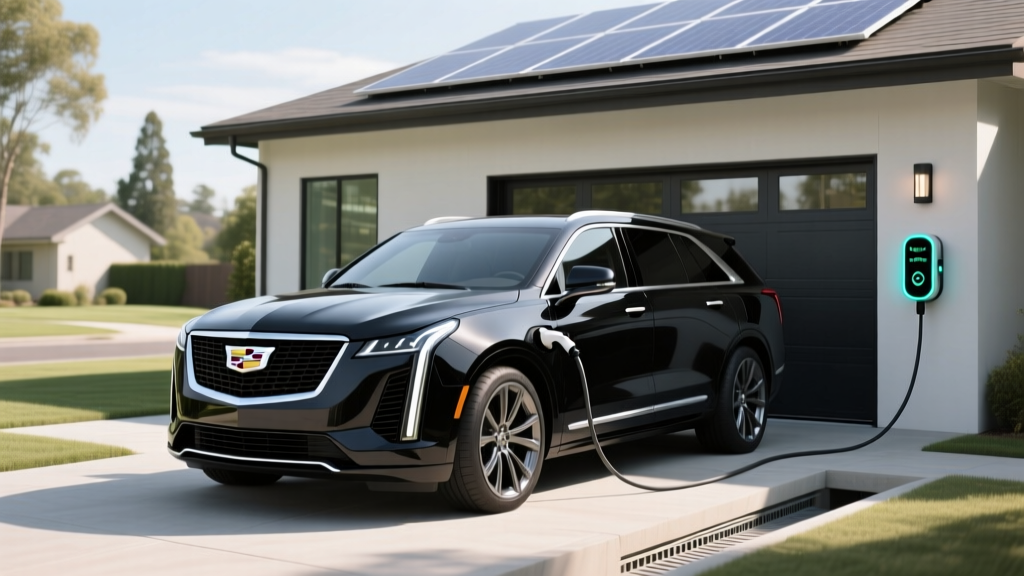
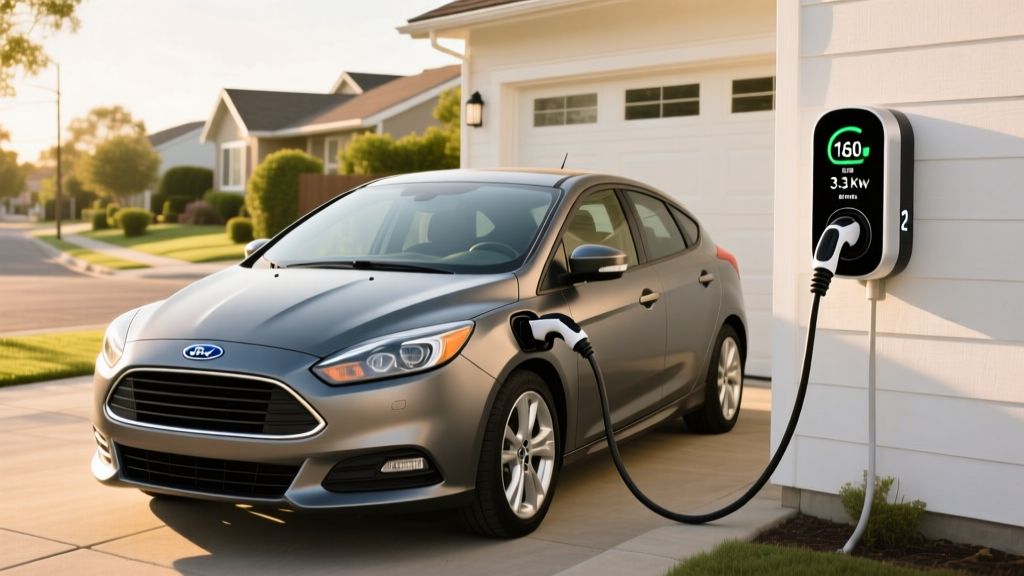
Installing a Level 2 home charger is the single highest-impact upgrade for EV ownership. Here's what it actually requires and costs:
Electrical Requirements
A typical Level 2 home charger runs on a 240-volt dedicated circuit, similar to an electric dryer or oven. Common configurations:
- 32A circuit (7.7 kW): Requires a 40A breaker (NEC requires 125% headroom for continuous loads). Adds ~25–30 miles of range per hour for efficient sedans.
- 40A circuit (9.6 kW): Requires a 50A breaker. The sweet spot for most homes — delivers ~30–38 mi/hr.
- 48A circuit (11.5 kW): Requires a 60A breaker. Maximum for most residential setups; needs robust panel capacity.
- 80A circuit (19.2 kW): Requires a 100A breaker. Rare in homes; typically only available with 200A+ service and significant panel work.
Panel Upgrade Reality Check
Many homes built before 2000 have 100A or 125A main service panels. Adding a 40–60A EV circuit may push total load beyond the panel's capacity — especially if you already have electric range, dryer, and HVAC. An electrician will perform a load calculation to determine if you need a panel upgrade to 200A service.
Panel upgrades typically cost $1,500–$3,500 and can add 1–3 weeks to your installation timeline (permitting and utility coordination). This is the single biggest cost variable that online "home charger cost" calculators routinely ignore.
Installation Cost Breakdown
| Item | Low End | High End | Notes |
|---|---|---|---|
| Level 2 Charger (Equipment) | $300 | $700 | 32A–48A smart chargers; hardwired or NEMA 14-50 plug |
| Electrician Labor | $400 | $1,500 | Depends on run length, wall type, conduit needs |
| Electrical Permit | $50 | $200 | Required by most jurisdictions; inspection included |
| Panel Upgrade (if needed) | $1,500 | $3,500 | 100A→200A service upgrade; utility coordination |
| Total (no panel upgrade) | $750 | $2,400 | Most homes with 200A service |
| Total (with panel upgrade) | $2,250 | $5,900 | Older homes with 100A/125A service |
Safety and Code Considerations
- Dedicated circuit: NEC Article 625 requires EV chargers to have their own dedicated circuit — no sharing with other outlets or appliances.
- GFCI protection: Required for all outdoor installations and many indoor jurisdictions (2023 NEC update expanded this requirement). Your electrician will handle this via a GFCI breaker or built-in charger protection.
- Outdoor rating: If your charger is outdoors (carport, driveway), it must carry a NEMA 4 or IP65 weather rating. All chargers recommended below meet this standard.
- NEMA 14-50 receptacle vs hardwired: A plug-in 14-50 outlet gives you portability (take the charger when you move). Hardwired connections are slightly more reliable (no plug loosening over time) and can support higher amperage (48A+). Many jurisdictions now require GFCI breakers for 14-50 receptacles, adding $50–$100 to the install.
- Utility rebates: Many utilities offer $250–$1,000 rebates for Level 2 charger installation, sometimes covering the entire cost. Check your local utility's EV program before scheduling work.
Best Home EV Chargers for 2026: Power, Features, and Price
Here are our tested recommendations for reliable Level 2 home chargers, each with a native NACS connector (or CCS with NACS adapter option):
ChargePoint Home Flex
- Power: Up to 11.5 kW (48A) adjustable
- Connector: NACS (2025+ models), CCS available
- Cable: 23 ft (standard)
- Smart Features: Wi-Fi, app scheduling, Alexa, utility TOU integration
- Price: ~$549–$649
Best for: Most buyers. Flexible amperage, excellent app, proven reliability.
Tesla Wall Connector
- Power: Up to 11.5 kW (48A)
- Connector: NACS native
- Cable: 24 ft
- Smart Features: Wi-Fi, OTA updates, power sharing (multiple units on one circuit)
- Price: ~$475
Best for: Tesla owners and NACS-native vehicles. Sleek, reliable, great price. No CCS option without adapter.
Emporia Level 2 EV Charger
- Power: Up to 11.5 kW (48A)
- Connector: NACS (2025+), CCS
- Cable: 24 ft
- Smart Features: Wi-Fi, energy monitoring, solar integration, load management
- Price: ~$399–$449
Best for: Budget-conscious buyers with solar panels. Best-in-class energy tracking.
Grizzl-E Smart
- Power: Up to 10 kW (40A)
- Connector: NACS, CCS, J1772 options
- Cable: 24 ft
- Smart Features: Wi-Fi, OCPP protocol, adjustable amperage
- Price: ~$449–$549
Best for: Extreme cold climates. Canadian-built, rated to -40°F, rugged aluminum case.
Preconditioning, Cold Weather, and mi/kWh Optimization Tips
Your mi/kWh efficiency isn't fixed — it responds to how you drive and prepare your vehicle. Three high-impact practices:
1. Precondition the battery before DC fast charging. Most EVs will warm the battery to its optimal temperature window (typically 77–95°F / 25–35°C) when you navigate to a fast charger. This can improve peak charge rates by 20–40% in cold weather. If your car doesn't auto-precondition, do it manually via the app 15–20 minutes before arrival.
2. Use a heat pump when available. Vehicles with heat-pump HVAC systems (standard on most 2025+ Hyundai/Kia, Tesla, BMW, VW models) use 30–50% less energy for cabin heating than resistive heaters. This directly preserves your mi/kWh in winter. If you're shopping for an EV in a cold climate, a heat pump should be a non-negotiable feature.
3. Schedule charging during off-peak hours. Most utilities offer time-of-use (TOU) rates with off-peak electricity at $0.06–$0.10/kWh overnight (typically 10 PM – 6 AM). Setting your charger to delay-start saves $200–$400/year versus standard rates. Every charger recommended above supports scheduled charging via their app.
Frequently Asked Questions
How much does it cost to install a home EV charger?
Expect $750–$2,400 for a standard Level 2 installation (equipment + electrician + permit) if your home already has a 200A electrical panel. If you need a panel upgrade from 100A to 200A service, total costs range from $2,250–$5,900. Utility rebates of $250–$1,000 are widely available and can offset a significant portion. Always get at least two quotes from licensed electricians familiar with EV installations.
How fast will each charging level add range?
Level 1 (120V) adds 3–5 miles of range per hour — adequate for PHEVs with small batteries but impractical for full BEVs. Level 2 (240V) adds 12–60 miles per hour depending on amperage, easily replenishing a full overnight charge. DC fast charging adds 150–700+ miles per hour at peak rates, but actual sessions are measured in 10–80% time (typically 18–40 minutes) due to charge-curve taper above 60% SoC.
Which connector/charger is compatible with my EV?
For 2025–2026 model-year vehicles, NACS is the dominant standard — Tesla, Ford, GM, Rivian, Hyundai, Kia, BMW, and most others have adopted it. Older CCS vehicles (2023–2024 model year) may need a CCS-to-NACS adapter ($200–$400) for Tesla Supercharger access. CHAdeMO is limited to the Nissan Leaf and is a declining network. When buying a home charger, choose one with the connector matching your vehicle's native port.
How much does charging cost per mile vs gas?
Home charging at off-peak rates costs $0.02–$0.05 per mile for a typical EV — roughly 75–85% cheaper than a 28 MPG gas car at $3.40/gallon ($0.12/mile). Public Level 2 and DC fast charging ($0.07–$0.16/mile) narrows the gap but still undercuts gasoline in most scenarios. Your exact cost depends on your vehicle's mi/kWh efficiency and local electricity rates.
What electrical upgrades might I need?
The most common upgrade is a panel service increase from 100A or 125A to 200A, needed when your existing panel can't accommodate a new 40–60A dedicated circuit alongside existing loads (range, dryer, HVAC). The electrician performs a NEC Article 220 load calculation to determine this. In rare cases with very old wiring (knob-and-tube, aluminum branch circuits), partial rewiring may be needed. A 200A panel upgrade costs $1,500–$3,500 and typically takes 1–3 weeks including permitting.
Is mi/kWh or kWh/100mi a better metric?
They convey the same information in different formats. mi/kWh is more intuitive for Americans accustomed to MPG (higher = better). kWh/100mi mirrors the European L/100km format (lower = better). The EPA's fueleconomy.gov site publishes both. To convert: mi/kWh = 100 ÷ kWh/100mi. For example, 25 kWh/100mi equals 4.0 mi/kWh.
Can I use a regular household outlet to charge my EV?
Yes — that's Level 1 charging (120V, 1.2–1.9 kW). It adds only 3–5 miles of range per hour, meaning a full charge of a 75 kWh battery takes 40–60+ hours. This works for plug-in hybrids with 20–40 mile electric ranges or as an emergency backup. For daily BEV use, Level 2 (240V) is strongly recommended.
Sources: U.S. EPA fueleconomy.gov for efficiency and range data; U.S. Energy Information Administration for electricity rates; IRS.gov for clean vehicle credit rules. Always verify current rates, pricing, and tax-credit eligibility before purchasing.