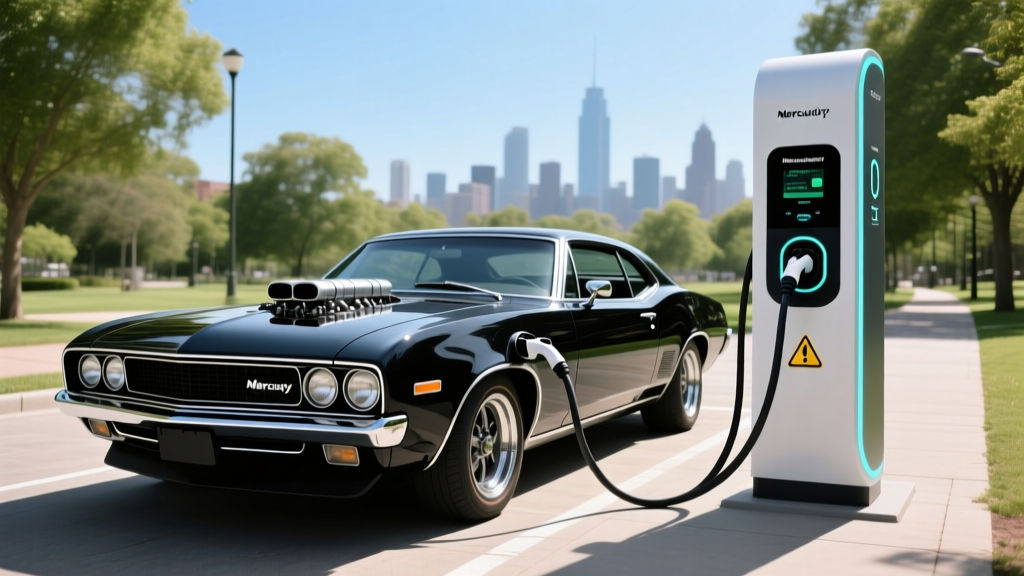
If you've been searching for a Mercury Marauder supercharger, you've likely stumbled into one of the most entertaining keyword collisions in the automotive world. The Mercury Marauder — a full-size, rear-wheel-drive sedan produced most notably in the 2003–2004 model years — is a beloved American V8 muscle sedan. But it has exactly zero compatibility with any electric vehicle charging infrastructure, because it was never an EV, a hybrid, or even a plug-in of any kind.
The word "supercharger" means two very different things depending on context: a mechanical supercharger (a belt-driven air compressor that forces more air into an internal-combustion engine to produce more horsepower) and a Supercharger (Tesla's branded DC fast-charging network for electric vehicles). The Marauder's 4.6-liter DOHC V8 could theoretically be fitted with an aftermarket mechanical supercharger kit, but it will never plug into a Tesla Supercharger stall, an Electrify America station, or any other EV charger on the planet.
That said, if you landed here because you're researching EV charging — whether you're considering an EV swap for a classic project car, shopping for your first electric vehicle, or just want a comprehensive guide to home and public charging — you're in the right place. Below is a complete, data-driven breakdown of how EV charging actually works in 2026.
EV Charging Levels Explained: Level 1, Level 2, and DC Fast Charging
Every EV owner needs to understand three charging levels. The distinction between kW (kilowatts — the rate of power delivery, like water pressure from a hose) and kWh (kilowatt-hours — the total energy stored or delivered, like gallons in a bucket) is the single most important concept in EV ownership. A charger rated at 11.5 kW delivers energy at that rate; a 75 kWh battery needs roughly 75 kWh of energy to fill from empty.
| Level | Voltage | Max Power (kW) | Miles of Range Added per Hour | Typical Use Case |
|---|---|---|---|---|
| Level 1 | 120V AC | 1.4–1.9 kW | 3–5 mi/hr | Overnight trickle, PHEVs, emergencies |
| Level 2 | 240V AC | 7.2–19.2 kW | 20–60+ mi/hr | Home daily charging, workplaces, destinations |
| DC Fast Charge | 400–800V DC | 50–350+ kW | 150–1,000+ mi/hr (peak) | Road trips, highway corridors, quick top-ups |
Level 1 uses a standard household 120V outlet and the portable cord that ships with most EVs. It's adequate for plug-in hybrids with small batteries (15–25 kWh) but painfully slow for a full battery-electric vehicle. Expect to add roughly 40 miles of range overnight — fine for short commutes, inadequate for road trips.
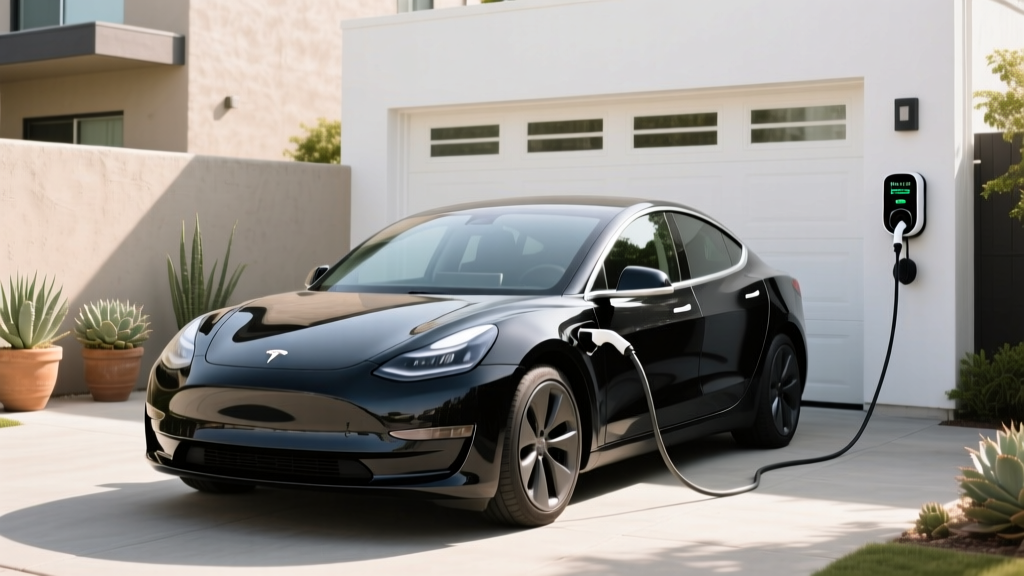
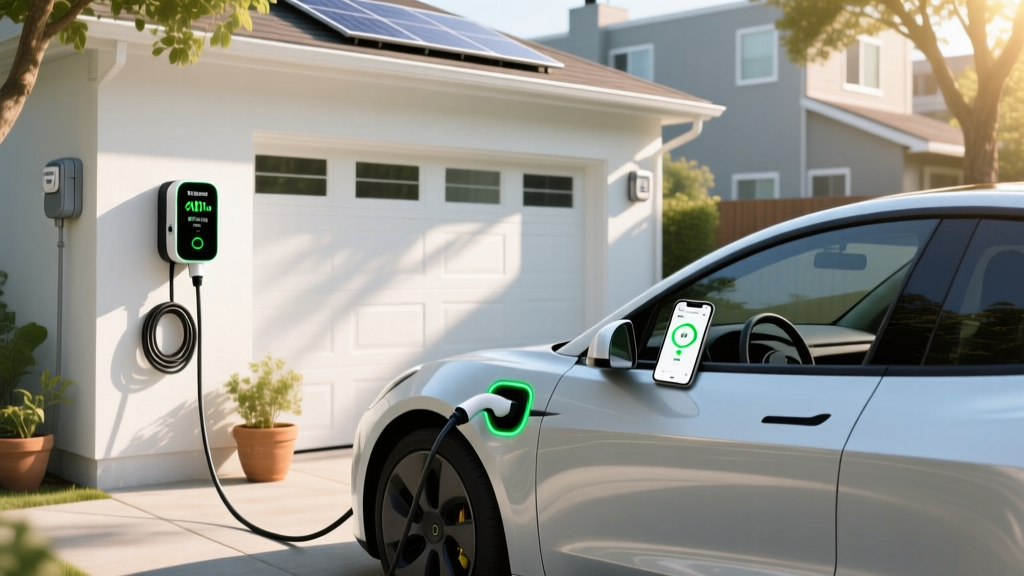
Level 2 is the backbone of practical EV ownership. A 240V circuit — the same voltage your electric dryer uses — delivers enough power to fully recharge most EVs overnight. A 48-amp (11.5 kW) Level 2 station can add roughly 40–45 miles of range per hour, meaning a 300-mile EV recovers fully in 7–8 hours.
DC Fast Charging bypasses the vehicle's onboard charger and feeds DC current directly to the battery. Peak rates of 250–350 kW can add 200 miles in 15–20 minutes on compatible vehicles. However, peak kW is not sustained kW — charging speed tapers significantly above 80% state of charge (SoC) to protect battery health. A "30-minute charge" usually means 10–80%, not 0–100%.
Home Charger Installation: Electrical Requirements and Real Costs
Installing a Level 2 home charger is the single biggest ownership upgrade most EV buyers make. It requires a dedicated 240V circuit, proper overcurrent protection, and often a permit from your local building department. Here's what's involved.
Electrical Specifications
Most residential Level 2 chargers require a 240V, 40-amp or 50-amp dedicated circuit on a NEMA 14-50 receptacle or hardwired directly to your electrical panel. A 48-amp charger (the most common high-power residential unit) requires a 60-amp breaker per the National Electrical Code (NEC) 80% continuous-load rule: 48A continuous draw × 125% = 60A breaker minimum.
Your home's electrical panel must have sufficient spare capacity. Most modern homes with 200-amp service have headroom for a Level 2 circuit. Older homes with 100-amp panels may require a panel upgrade to 200A — a significant additional cost.
Installation Cost Breakdown
| Component | Low End | High End | Notes |
|---|---|---|---|
| Level 2 charging station (equipment) | $350 | $750 | 32A–48A smart chargers; WiFi-enabled models cost more |
| Electrician labor (standard install) | $400 | $1,200 | Depends on panel-to-garage distance, wall type, conduit run |
| Electrical permit | $50 | $200 | Varies by municipality; some jurisdictions waive for EV circuits |
| Panel upgrade (if needed) | $1,500 | $3,500 | 100A to 200A upgrade; not needed in most modern homes |
| Total (no panel upgrade) | $800 | $2,150 | Most installations fall in the $1,000–$1,500 range |
| Total (with panel upgrade) | $2,300 | $5,650 | Older homes with 100A service |
The IRS §30D clean vehicle credit does not cover home charging equipment directly, but the separate §30C Alternative Fuel Vehicle Refueling Property Credit covers up to 30% of home charger installation costs (maximum $1,000) for eligible taxpayers in qualifying census tracts. Check current IRS guidance, as eligibility depends on income and location.
Connector Compatibility: NACS, CCS, and CHAdeMO in 2026
The connector landscape has consolidated significantly. As of 2026, the North American Charging Standard (NACS) — originally developed by Tesla — has been adopted by nearly every major automaker for new vehicles sold in North America. Here's where each connector stands:
| Connector | DC Fast Charge | Level 2 AC | Compatible Brands (New Vehicles) |
|---|---|---|---|
| NACS (J3400) | Yes | Yes (single port) | Tesla, Ford, GM, Rivian, Volvo, Polestar, Mercedes, BMW, Hyundai/Kia (2025+), Honda, Nissan, Fisker, Lucid, Subaru |
| CCS1 (Combo) | Yes | Via J1772 | Legacy VW/Audi ID.4/e-tron (pre-2026), Stellantis EVs, some older models; adapters available for NACS stations |
| CHAdeMO | Yes | Via J1772 | Nissan Leaf (discontinued in US), Mitsubishi Outlander PHEV; essentially legacy |
If you own a CCS1-equipped EV from the 2022–2024 era, NACS-to-CCS adapters (available from Tesla, Ford, and third parties like Lectron) allow access to Tesla Supercharger stalls. These adapters typically support up to 150–250 kW DC fast charging and cost $150–$250. Always verify your vehicle's firmware supports adapter-based charging before purchasing.
Cost to Charge: EV Electricity vs. Gasoline Per Mile
The economic case for EVs hinges on fuel-cost savings, but the numbers vary dramatically depending on where and when you charge. Below is a realistic comparison using national averages.
| Scenario | Cost per kWh | Vehicle Efficiency | Cost per Mile | Annual Cost (12,000 mi) |
|---|---|---|---|---|
| Home charging (off-peak utility rate) | $0.12/kWh | 3.0 mi/kWh (120 MPGe) | $0.040 | $480 |
| Home charging (national avg residential) | $0.17/kWh | 3.0 mi/kWh | $0.057 | $680 |
| Public Level 2 (ChargePoint, EVgo) | $0.25–$0.39/kWh | 3.0 mi/kWh | $0.083–$0.130 | $1,000–$1,560 |
| DC Fast Charging (Electrify America, Tesla) | $0.32–$0.55/kWh | 3.0 mi/kWh | $0.107–$0.183 | $1,280–$2,200 |
| Gasoline (25 MPG combined, $3.40/gal) | — | 25 MPG | $0.136 | $1,632 |
| Gasoline (30 MPG combined, $3.40/gal) | — | 30 MPG | $0.113 | $1,360 |
Key takeaways: Home off-peak charging is 3–4× cheaper per mile than gasoline. Exclusive reliance on DC fast charging can approach or exceed gasoline costs, which is why home Level 2 access remains the economic linchpin of EV ownership. According to fueleconomy.gov, most current EVs achieve 100–130 MPGe combined, translating to roughly 3.0–3.8 miles per kWh.
Charging Time Examples: How Long to Charge Common EV Battery Sizes
Charging time depends on battery capacity (kWh), charger power output (kW), the vehicle's maximum acceptance rate, and the state-of-charge window. Here are real-world benchmarks for popular battery sizes:
60 kWh Battery (e.g., Chevrolet Equinox EV, base Tesla Model 3)
- Level 1 (1.4 kW): ~43 hours (0–100%)
- Level 2, 11.5 kW: ~5.5 hours (0–100%)
- DC Fast, 150 kW peak: ~22 min (10–80%)
82 kWh Battery (e.g., Tesla Model Y Long Range, VW ID.4 Pro S)
- Level 1 (1.4 kW): ~59 hours (0–100%)
- Level 2, 11.5 kW: ~7.5 hours (0–100%)
- DC Fast, 250 kW peak: ~25 min (10–80%)
100+ kWh Battery (e.g., Ford F-150 Lightning Extended, GMC Sierra EV)
- Level 1 (1.4 kW): ~75+ hours (0–100%)
- Level 2, 11.5 kW: ~9.5 hours (0–100%)
- DC Fast, 350 kW peak: ~30–38 min (10–80%)
Charge curve reality check: No EV sustains its peak charge rate for the entire session. A vehicle rated for 250 kW DC fast charging may only sustain that rate between 10–40% SoC, then taper to 150 kW, then 75 kW, then under 25 kW above 90%. This is why manufacturers quote 10–80% times rather than 0–100% — the last 20% can take as long as the first 80%.
Recommended Home Level 2 Chargers for 2026
These are the chargers we recommend based on reliability, smart features, connector flexibility, and value. All units listed are NACS-native or available with NACS connectors for 2025–2026 vehicles.
ChargePoint Home Flex (NACS)
- Power output: Up to 12 kW (50A) — adjustable down to 16A for panel-constrained homes
- Connector: NACS (J3400) native
- Cable length: 23 feet
- Smart features: WiFi scheduling, Alexa integration, energy usage tracking, utility demand-response compatible
- Price: ~$549
- Best for: Most EV owners; flexible amperage handles older panels
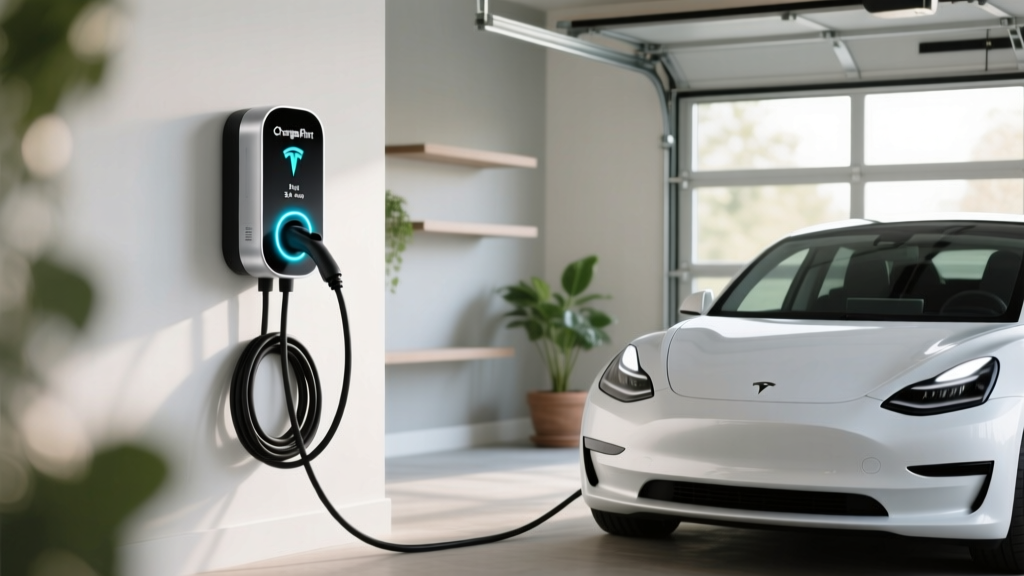
Wall Connector (Tesla, Gen 4)
- Power output: Up to 11.5 kW (48A)
- Connector: NACS native; J1772 adapter available for legacy EVs
- Cable length: 24 feet
- Smart features: WiFi firmware updates, power sharing (link multiple units on one circuit), load management
- Price: ~$475
- Best for: Tesla owners and NACS-adopted vehicles; excellent power-sharing for multi-EV garages
Emporia Vue Level 2 Charger
- Power output: Up to 11.5 kW (48A)
- Connector: NACS or J1772 options
- Cable length: 24 feet
- Smart features: Deep energy monitoring via Emporia Vue panel integration, solar-aware scheduling, EV-only circuit tracking
- Price: ~$399 (charger only); ~$599 bundled with Vue energy monitor
- Best for: Solar homes and energy-monitoring enthusiasts; best value per watt
Safety, Electrical Code, and Installation Best Practices
A Level 2 charger draws significant continuous current for hours at a time. Proper installation isn't optional — it's a safety requirement. Here's what the NEC and best practices demand:
- Dedicated circuit: Your Level 2 charger must have its own breaker — never share a circuit with other appliances. A 48A charger requires a dedicated 60A breaker.
- GFCI protection: NEC 2023 (Article 625.54) requires GFCI protection for all receptacles used for EV charging. Hardwired installations may have different requirements depending on jurisdiction — your electrician will confirm.
- Outdoor rating: If your charger is installed outdoors or in an open carport, both the unit and the receptacle must carry a NEMA 3R or NEMA 4 weather-resistance rating. All recommended chargers above meet this standard.
- Wire gauge: 6 AWG copper wire (THHN in conduit) is standard for a 60A circuit. Longer runs (over 50 feet) may require 4 AWG to prevent voltage drop.
- Permit and inspection: Most jurisdictions require an electrical permit for new 240V circuits. The inspection ensures proper grounding, breaker sizing, and wire routing. Do not skip this — unpermitted work can void home insurance and create fire risk.
Always hire a licensed electrician experienced with EV charger installations. The National Fire Protection Association (NFPA) maintains the NEC standards governing EV supply equipment, and qualified electricians will be current on the latest code cycle.
Frequently Asked Questions
Can a Mercury Marauder use a Tesla Supercharger or any EV charging station?
No. The Mercury Marauder is a gasoline-powered V8 sedan with no electric drivetrain, no battery pack, and no charging port. It cannot use any form of EV charging infrastructure. The "supercharger" associated with the Marauder in aftermarket contexts refers to a mechanical forced-induction device (like a Whipple or Kenne Bell supercharger kit) that increases engine horsepower — an entirely different technology from Tesla's Supercharger DC fast-charging network.
How much does it cost to install a home EV charger?
A standard Level 2 home charger installation (equipment + electrician + permit) typically costs between $800 and $2,150 for homes with adequate 200A electrical service. If your home has a 100A panel that requires upgrading, add $1,500–$3,500. The federal §30C tax credit may cover up to $1,000 (30%) of installation costs for eligible taxpayers in qualifying census tracts.
How fast will each charging level add range?
Level 1 (120V) adds 3–5 miles per hour. Level 2 (240V, 48A) adds roughly 35–45 miles per hour depending on vehicle efficiency. DC fast charging at 150–350 kW can add 150–1,000+ miles per hour at peak rates, but sustained rates taper significantly above 80% SoC, so practical road-trip stops take 20–40 minutes for a 10–80% charge.
Which connector and charger is compatible with my EV?
If you drive a 2025–2026 model-year EV from Tesla, Ford, GM, Rivian, Hyundai, Kia, BMW, Mercedes, Volvo, Honda, Nissan, or most other major brands, your vehicle uses the NACS (J3400) connector. Older EVs (pre-2025) from VW, Audi, and Stellantis may use CCS1, and adapters are available to access NACS/Tesla Supercharger stations. The CHAdeMO connector is essentially discontinued for new vehicles in the US market.
How much does EV charging cost per mile compared to gas?
Home charging at off-peak utility rates (~$0.12/kWh) costs roughly $0.04 per mile — about 3–4× cheaper than gasoline at $3.40/gallon and 25 MPG ($0.136/mile). Even at the national average residential rate ($0.17/kWh), EV charging costs ~$0.057/mile. Exclusive use of public DC fast charging ($0.32–$0.55/kWh) narrows the gap to $0.11–$0.18/mile, approaching gasoline costs.
What electrical upgrades might I need for a home charger?
If your home has a 200A electrical panel with available breaker slots and sufficient calculated load capacity, you likely need no upgrades beyond the dedicated 240V circuit. Homes with 100A panels, full breaker panels, or panels with known safety issues (certain Federal Pacific or Zinsco panels) will require a full panel upgrade ($1,500–$3,500) before a Level 2 charger can be safely installed. Your electrician will perform a load calculation per NEC Article 220 to determine this.
Whether you arrived here chasing a Marauder supercharger myth or genuinely researching EV charging infrastructure, the data above gives you the foundation to make informed decisions. Home Level 2 charging remains the most cost-effective and convenient way to own an electric vehicle, and with 2026's NACS-standardized connector ecosystem, the public charging landscape is more unified than ever.