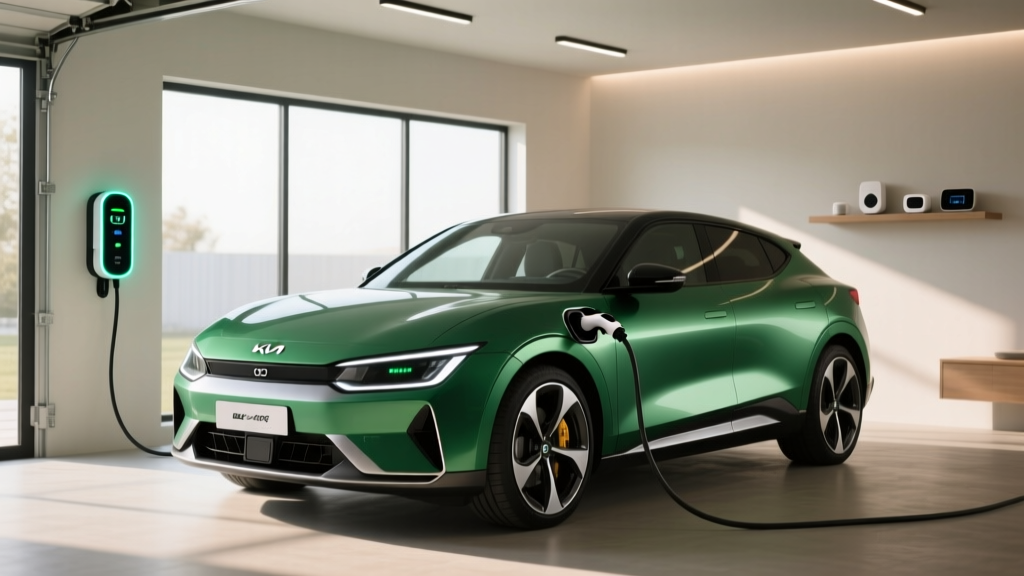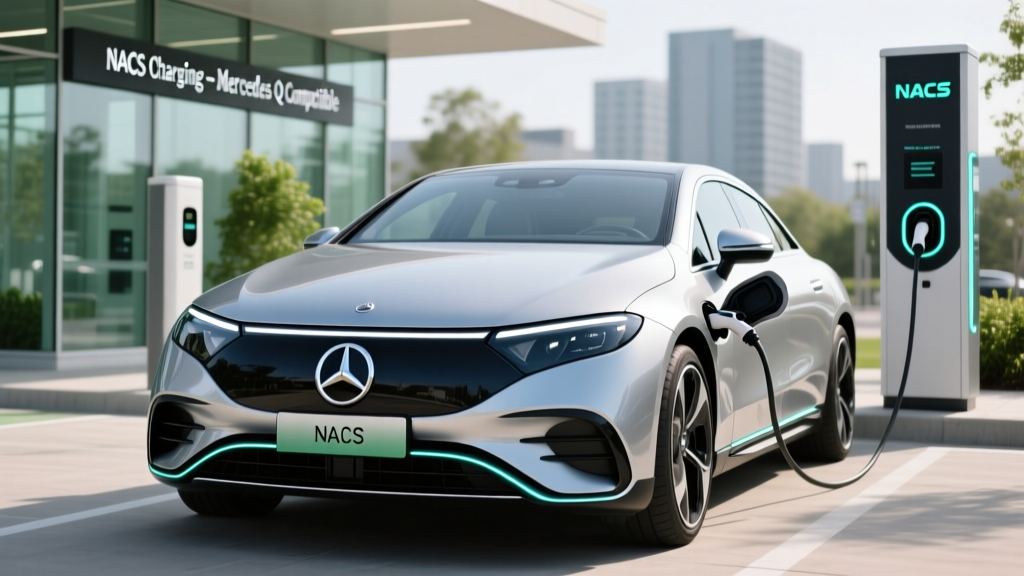
If you drive a Mercedes-Benz EQ vehicle — or are shopping for one — you have probably searched for "Mercedes Supercharger" and landed here. There is no Mercedes-branded Supercharger network; that name belongs to Tesla. But starting in 2025, Mercedes-Benz EVs gained access to the Tesla Supercharger network using the North American Charging Standard (NACS) connector, dramatically expanding fast-charging options for EQ owners. This guide breaks down exactly how that access works, what you need at home, and what it costs per mile.
Mercedes-Benz EVs and the Tesla Supercharger Network
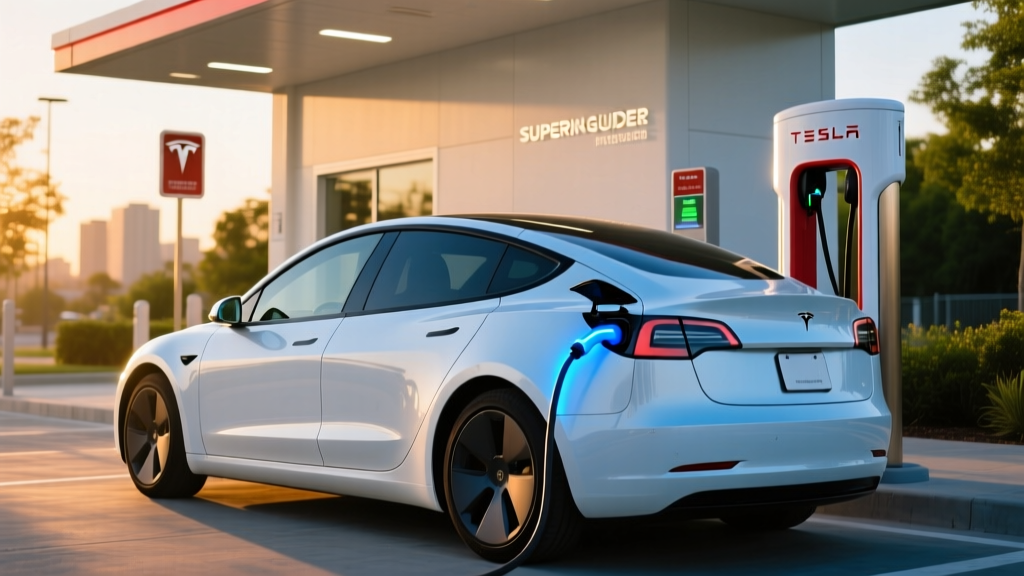
Mercedes-Benz committed to adopting NACS for its North American EVs beginning with the 2025 model year. Vehicles like the 2026 EQE Sedan, EQS Sedan, EQS SUV, and EQB now ship with a native NACS charge port. Owners of 2022–2024 EQ models equipped with CCS1 ports can access Tesla Superchargers using a Tesla-approved CCS-to-NACS adapter (available through Mercedes dealers and Tesla's online store for approximately $199–$249).
The Supercharger network offers over 24,000 stalls across North America. Most V3 Superchargers peak at 250 kW, while newer V4 stalls support up to 350 kW. For a 2026 EQS 450+ with its 118 kWh (usable) NMC battery, a V3 Supercharger session from 10–80% takes roughly 31 minutes under ideal thermal conditions. Real-world sessions may stretch to 38–42 minutes in cold weather or if the battery has not been preconditioned.
Charging Levels Explained: Speeds and Range Added
Understanding the three charging levels is essential for planning both daily driving and road trips. The critical distinction: kW (kilowatts) measures power — how fast energy flows into the battery. kWh (kilowatt-hours) measures energy — the total capacity of the battery. Think of kW as the flow rate of a hose and kWh as the size of the tank.
| Level | Voltage / Amps | Power (kW) | Miles of Range Per Hour | Best Use Case |
|---|---|---|---|---|
| Level 1 (120V) | 120V / 12A | ~1.4 kW | 3–5 mi/hr | Emergency / overnight trickle |
| Level 2 (240V) | 240V / 32A–48A | 7.7–11.5 kW | 22–40 mi/hr | Daily home charging |
| DC Fast Charging | 400V–800V DC | 50–350 kW | 150–500+ mi/hr | Road trips, rapid top-ups |
For a 2026 Mercedes EQE 350+ (90.6 kWh usable battery, EPA-estimated 308 miles of range), a full Level 2 session at 11.5 kW adds roughly 35 miles of range per hour. A 10–80% charge at home on a 48-amp Level 2 station takes approximately 5.5 to 6 hours — ideal for overnight charging. On a DC fast charger at the EQE's peak 170 kW rate, 10–80% takes about 32 minutes.
Home Charging Installation: Costs and Electrical Requirements
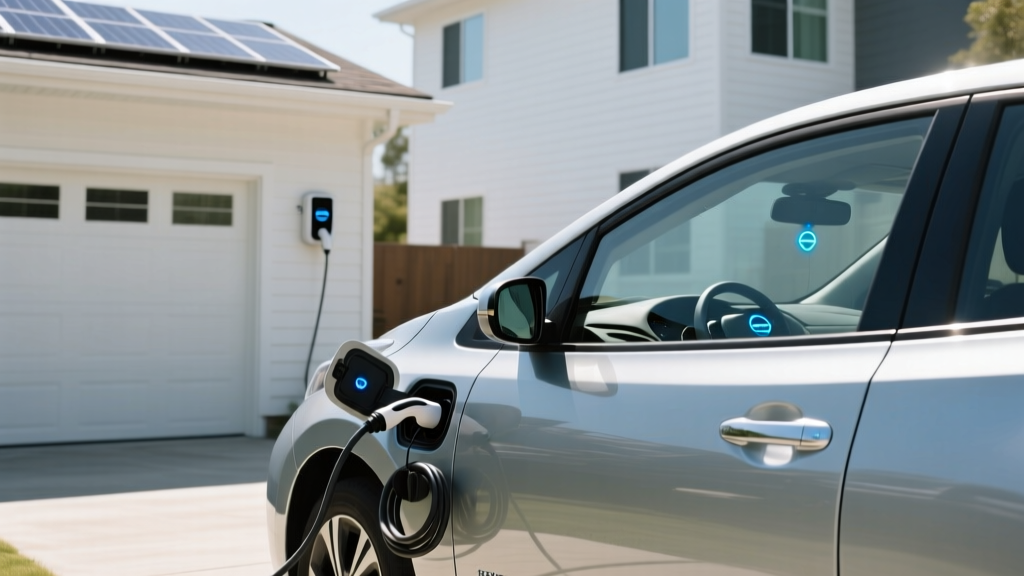
A Level 2 home charger is the single most impactful upgrade for EV ownership. Here is what a typical installation requires and costs for a Mercedes EQ owner.
Electrical Requirements
Most Level 2 chargers for home use require a 240-volt dedicated circuit with a breaker rated for 125% of the charger's continuous draw. Common setups:
- 32-amp charger: Requires a 40-amp breaker, 6-gauge wire
- 40-amp charger: Requires a 50-amp breaker, 6-gauge wire
- 48-amp charger: Requires a 60-amp breaker, 4-gauge wire
The National Electrical Code (NEC) mandates that continuous loads not exceed 80% of the circuit breaker rating. Your electrician will size the breaker and wire accordingly.
Panel Upgrade Considerations
Many homes built before 2000 have 100-amp electrical panels. Adding a 48-amp EV charger may push total load beyond the panel's capacity, requiring a 200-amp service upgrade. This is one of the most significant hidden costs of home EV charging. Signs you may need a panel upgrade:
- Your panel is already near capacity (electric range, dryer, HVAC, water heater)
- You have a 100-amp or smaller service
- Your utility has flagged load limitations in your area
Some utilities offer smart panel load-management devices (like the Span smart panel or Emporia VUE) that can avoid a full upgrade by dynamically throttling the charger when other appliances draw heavy current.
| Component | Typical Cost Range | Notes |
|---|---|---|
| Level 2 Charger (Equipment) | $400 – $750 | 40A–48A NACS hardwired or plug-in |
| Electrician Labor (standard install) | $500 – $1,500 | Depends on run length from panel to garage |
| Electrical Permit | $50 – $200 | Varies by municipality |
| Panel Upgrade (if needed) | $1,500 – $4,000 | 100A → 200A service upgrade |
| Total (no panel upgrade) | $950 – $2,450 | Most common scenario |
| Total (with panel upgrade) | $2,450 – $6,450 | Older homes with 100A service |
Always hire a licensed electrician and pull a permit. Unpermitted work can void home insurance coverage and create fire risk. For detailed guidance on qualified installers, check the U.S. Department of Energy's home charging resources.
Connector Compatibility: NACS, CCS1, and Adapters
The connector landscape has consolidated significantly. As of 2026, NACS (the Tesla-designed connector, now standardized as SAE J3400) is the dominant North American standard. Here is how it affects Mercedes EQ owners:
| Connector | Standard | Mercedes EQ Compatibility | Networks Supported |
|---|---|---|---|
| NACS (J3400) | SAE J3400 | Native on 2025+ EQ models; adapter for 2022–2024 | Tesla Supercharger, Electrify America, EVgo (new stalls) |
| CCS1 | SAE J1772 Combo | Native on 2022–2024 EQ models | Electrify America, EVgo, ChargePoint (existing CCS stalls) |
| CHAdeMO | CHAdeMO | Not supported on any EQ model | Legacy Nissan Leaf network — declining |
For 2022–2024 EQ owners: You can continue using CCS1 stations natively and access Superchargers via a Tesla CCS-to-NACS adapter. Mercedes-Benz has approved specific adapters — check with your dealer for the OEM-recommended unit. Third-party adapters exist but verify they are UL-listed for safety.
For 2025+ EQ owners: Your vehicle has a native NACS port. You can use Tesla Superchargers directly and access legacy CCS1 stations with a NACS-to-CCS adapter (sold by Tesla and third-party manufacturers for ~$150–$229).
Charging Cost Per Mile: Home vs. Public vs. Gas
One of the strongest ownership arguments for an EV is fuel cost savings. Here is how charging a Mercedes EQE 350+ compares to fueling a comparable gas sedan.
| Scenario | Cost per kWh | Cost to Add 200 Miles* | Cost Per Mile |
|---|---|---|---|
| Home (off-peak utility rate) | $0.12/kWh | $6.36 | $0.032/mi |
| Home (average U.S. rate) | $0.17/kWh | $8.99 | $0.045/mi |
| Public Level 2 (ChargePoint, etc.) | $0.30/kWh | $15.87 | $0.079/mi |
| DC Fast Charging (Supercharger avg.) | $0.35/kWh | $18.52 | $0.093/mi |
| DC Fast Charging (Electrify America) | $0.48/kWh | $25.40 | $0.127/mi |
| Gas sedan (30 MPG, $3.40/gal) | — | $22.67 | $0.113/mi |
*Based on the EQE 350+ consuming approximately 3.2 miles/kWh (EPA combined efficiency of ~107 MPGe). Actual consumption varies with temperature, speed, and terrain.
Home charging is dramatically cheaper than gas — roughly one-quarter the per-mile cost at off-peak utility rates. Even DC fast charging at Tesla Supercharger pricing is competitive with gasoline. However, relying exclusively on expensive public DC networks like Electrify America at peak rates can push EV costs above gas. The economics strongly favor home charging.
For current federal incentive details on home charger installation, consult the IRS Residential Clean Energy Credit page — the §30C alternative fuel infrastructure credit may cover up to 30% of home charger equipment and installation costs (capped at $1,000), subject to income and location requirements.
Best Level 2 Home Chargers for Mercedes EQ Owners
With NACS now standard on new Mercedes EVs, your home charger choice should match your vehicle's port. Here are top picks for 2026:
Tesla Wall Connector (NACS)
- Power: Up to 11.5 kW (48A) on a 60A circuit
- Connector: Native NACS — plug directly into 2025+ EQ models
- Cable Length: 24 feet
- Smart Features: Wi-Fi, OTA updates, power sharing between two units, load management
- Price: ~$475
- Verdict: Best value for NACS-equipped Mercedes EVs. Reliable, fast, and well-integrated with Supercharger ecosystem.
ChargePoint Home Flex (NACS or CCS1)
- Power: Up to 12 kW (50A) on a 60A circuit; adjustable down to 16A
- Connector: Available in NACS or CCS1 — choose based on your model year
- Cable Length: 23 feet
- Smart Features: Wi-Fi, app-based scheduling, Alexa integration, amperage adjustment via app
- Price: ~$599 (NACS) / ~$549 (CCS1)
- Verdict: Excellent flexibility for mixed-EV households or owners planning to switch connector types.
Emporia Vue Level 2 Charger (NACS)
- Power: Up to 11.5 kW (48A) on a 60A circuit
- Connector: Native NACS
- Cable Length: 24 feet
- Smart Features: Wi-Fi, solar integration, energy monitoring via Emporia app, time-of-use scheduling
- Price: ~$399
- Verdict: Budget-friendly with excellent energy-tracking features. Ideal for solar-equipped homes.
All three chargers are UL-listed, support hardwired or NEMA 14-50 plug-in installation, and carry an outdoor rating (NEMA 4) for garage or exterior mounting. Hardwired installations are preferred for 48A+ units — a NEMA 14-50 outlet is only rated for 50A continuous, which caps usable current at 40A (9.6 kW).
Safety, Electrical Code, and Permit Essentials
EV charging places a sustained high-current load on your home's electrical system — far more demanding than intermittent appliances like a dryer or oven. Do not cut corners.
- Dedicated circuit: Your EV charger must have its own dedicated breaker — never share a circuit with other appliances.
- GFCI protection: NEC 2023 (Article 625) requires GFCI protection for all EV charging outlets. Hardwired chargers with built-in ground-fault protection may satisfy this requirement, but local inspectors have final say.
- Outdoor rating: If your charger is mounted outside or in an unsealed garage, it must carry at minimum a NEMA 4 weather-resistance rating.
- Wire gauge: Your electrician will size wire based on circuit amperage and run length. Longer runs (over 50 feet) may require thicker wire to minimize voltage drop.
- Permits and inspection: Most jurisdictions require an electrical permit and post-installation inspection. Skipping this step risks insurance denial in the event of a fire.
For a detailed overview of EV-related electrical codes, reference the National Fire Protection Association's NEC resources.
Frequently Asked Questions
How much does it cost to install a home EV charger?
A standard Level 2 home charger installation (48A unit, 240V dedicated circuit, no panel upgrade) typically costs between $950 and $2,450 total, including equipment ($400–$750), electrician labor ($500–$1,500), and permit fees ($50–$200). If your home needs a 200-amp panel upgrade, add $1,500 to $4,000. Always get 2–3 quotes from licensed electricians.
How fast will each charging level add range to my Mercedes EQ?
Level 1 (120V) adds roughly 3–5 miles per hour — adequate only for emergencies or very low-mileage days. Level 2 (240V, 48A) adds approximately 30–40 miles per hour, easily replenishing a full day's driving overnight. DC fast charging at a Tesla Supercharger or Electrify America station can add 150–250 miles in 20–30 minutes, depending on your EQ model's peak charge rate and battery state of charge.
Which connector and charger is compatible with my Mercedes EQ?
2025 and newer Mercedes EQ models have a native NACS (J3400) port and can plug directly into Tesla Superchargers and NACS-equipped public chargers. 2022–2024 EQ models use CCS1 and require a Tesla-approved CCS-to-NACS adapter for Supercharger access. At home, match your Level 2 charger's connector to your vehicle's port, or use an adapter.
How much does charging cost per mile compared to gas?
Home charging at the U.S. average electricity rate of $0.17/kWh costs roughly $0.045 per mile in a Mercedes EQE 350+. A comparable gas sedan at 30 MPG and $3.40/gallon costs about $0.113 per mile. That is a savings of approximately $0.068 per mile, or roughly $1,020 per year at 15,000 miles driven. DC fast charging narrows the gap but still generally beats gasoline on cost.
What electrical upgrades might I need for a home charger?
The most common upgrade is a panel service increase from 100A to 200A, needed in older homes where the existing panel cannot handle the added continuous load of a 48A EV charger. Other potential upgrades include replacing a Federal Pacific or Zinsco panel (known fire hazards), running new conduit for long wire runs, or installing a smart load-management device to avoid a full panel upgrade. Your electrician will perform a load calculation during the initial assessment.
Can I use a Tesla Supercharger with my older CCS-equipped Mercedes EQ?
Yes. Mercedes-Benz has approved the use of Tesla's CCS-to-NACS adapter for 2022–2024 EQ models. The adapter costs approximately $199–$249 and enables access to the full Supercharger network. Ensure your vehicle's software is updated to the latest version, as Mercedes issued OTA updates to enable Supercharger communication protocols for CCS-equipped vehicles.